The Origins of Santa Claus: Saint Nicholas and Early European Folklore
1.1. Saint Nicholas: The Benevolent Gift-Giver
The modern image of Santa Claus finds its origins in the historical figure of Saint Nicholas of Myra, a 4th-century Greek bishop known for his generosity, particularly to children. Saint Nicholas became the patron saint of children, sailors, and merchants and was celebrated for his kindness and miracle-working powers.
Saint Nicholas and Gift-Giving: One of the most famous stories about Saint Nicholas involves his secret delivery of gold to a poor family to prevent the daughters from being sold into slavery or forced into prostitution. This act of giving without expecting anything in return established the foundation for the Santa Claus tradition of gift-giving.
1.2. Santa Claus in Dutch and Germanic Traditions
The figure of Saint Nicholas became deeply embedded in the folklore of various European countries, particularly in the Netherlands and Germany, where he became known as Sinterklaas. Sinterklaas is depicted as a saintly man who brings gifts to well-behaved children, but European folklore also included darker characters who accompanied or opposed him, punishing misbehaving children.
The Duality of Sinterklaas and His Dark Companions: In Dutch and Germanic traditions, Sinterklaas is often accompanied by more sinister figures, such as Black Pete (Zwarte Piet) or Belsnickel, who serve as enforcers of discipline. While Sinterklaas rewards the good, these dark companions punish the bad, creating a balance between rewards and consequences during the holiday season.
2. Krampus: The Christmas Devil
2.1. The Origins of Krampus
Perhaps the most infamous of the dark holiday figures is Krampus, a creature from Central European folklore who is said to accompany Saint Nicholas. While Saint Nicholas brings gifts and joy, Krampus is a fearsome, horned creature who punishes naughty children with switches and chains, even dragging them to the underworld.
The Description of Krampus: Krampus is typically depicted as a half-goat, half-demon figure, with large horns, sharp teeth, a long tongue, and a menacing presence. His appearance alone is enough to instill fear in children, and his actions are even more terrifying—beating misbehaving children with birch branches or hauling them away in sacks.
2.2. The Krampusnacht Tradition
Krampus is celebrated in various parts of Europe, particularly in Austria, Germany, and Hungary, during Krampusnacht (Krampus Night), which occurs on the evening of December 5th, the night before Saint Nicholas Day. During Krampusnacht, people dress up as Krampus and roam the streets, scaring children and adults alike, sometimes engaging in light-hearted mischief and drinking.
The Morality Tale of Krampus: The legend of Krampus serves as a warning to children who misbehave throughout the year. The terrifying image of Krampus reminds them that if they do not follow the rules or behave properly, they may face punishment instead of receiving presents. The fear of Krampus is an effective moral lesson to encourage good behavior, particularly during the holiday season.
2.3. Krampus in Modern Culture
In recent years, Krampus has enjoyed a resurgence in popular culture, particularly in Europe and North America. The creature has become the subject of movies, horror stories, and festivals, drawing attention to the darker side of holiday folklore. While Krampus was once relegated to the fringes of Christmas celebrations, his menacing figure has now found a place in modern holiday festivities.
Krampus as a Symbol of Christmas Fear: Krampus represents the opposite of the joy and warmth of Christmas, embodying fear, punishment, and chaos. His presence in popular culture highlights the contrast between light and darkness, good and evil, that permeates the holiday season.
3. Belsnickel: The Fearsome Holiday Enforcer
3.1. The Legend of Belsnickel
Belsnickel is another dark holiday figure from Germanic folklore, particularly in regions such as the Rhineland and Pennsylvania Dutch communities in the United States. Unlike Krampus, Belsnickel is a human figure, often depicted as a gruff, ragged man who carries a bundle of switches to discipline naughty children and pockets full of treats for the well-behaved.
Belsnickel’s Appearance: Belsnickel is typically portrayed as a man dressed in tattered clothing, fur, and sometimes a mask. He is dirty and unkempt, and his rough appearance serves to frighten children into good behavior.
3.2. The Role of Belsnickel in Christmas Celebrations
Belsnickel traditionally visits homes before Christmas, particularly in early December, to determine whether children have been good or bad. He quizzes them on their behavior, demanding that they recite verses or demonstrate their knowledge of good conduct. If the children succeed, he rewards them with candies and small gifts. However, if they fail or admit to misbehaving, he punishes them with his switches.
Belsnickel as a Judge of Behavior: Unlike Santa Claus, who is typically portrayed as jolly and forgiving, Belsnickel is more of a disciplinarian, enforcing strict moral standards. His presence is both a source of excitement and fear for children, as they know they must prove themselves worthy of rewards or face punishment.
3.3. Belsnickel in Popular Culture
While Belsnickel may not be as well-known as Krampus, he has been featured in various Christmas traditions, particularly in areas influenced by German immigrants. His role in modern celebrations has evolved, with some viewing him as a quirky or humorous figure, while others continue to emphasize his role as a moral enforcer during the holiday season.
Belsnickel’s Modern Influence: In some modern depictions, Belsnickel has taken on a less menacing role, with a focus on his eccentricity rather than his ability to inflict punishment. However, his roots in the darker side of Christmas folklore remain an important part of his character.
4. Black Pete (Zwarte Piet): A Controversial Figure of Discipline
4.1. The Origins of Black Pete
Black Pete, or Zwarte Piet, is a character from Dutch Christmas folklore who serves as a companion to Sinterklaas (Saint Nicholas). According to tradition, Black Pete helps Sinterklaas by delivering gifts and punishing children who have misbehaved. However, Black Pete is a highly controversial figure, primarily due to the racial implications of his portrayal.
The Appearance of Black Pete: Traditionally, Black Pete is depicted as a black man with exaggerated features, dressed in Moorish or Renaissance-style clothing. His appearance has led to accusations of racism, as Black Pete is often portrayed by white actors in blackface, perpetuating negative racial stereotypes.
4.2. The Role of Black Pete in Dutch Christmas Traditions
Black Pete is said to assist Sinterklaas in delivering presents to well-behaved children, but he also serves as an enforcer of discipline. In older versions of the legend, Black Pete would take naughty children away in a sack and bring them back to Spain (where Sinterklaas is said to reside) or punish them with a birch rod.
The Evolution of Black Pete’s Role: In recent decades, the role of Black Pete has softened, with more emphasis placed on his role as a helper rather than a punisher. However, the character’s racial portrayal continues to spark debate in the Netherlands and beyond, leading to calls for a reimagining of the character to eliminate the problematic racial undertones.
4.3. Controversy and Modern Debate
The character of Black Pete has become a flashpoint for discussions about race, tradition, and cultural sensitivity in the Netherlands. Many people argue that the portrayal of Black Pete as a black servant reinforces harmful racial stereotypes, while others defend the character as a harmless and beloved part of Dutch holiday traditions.
The Future of Black Pete: In response to the growing controversy, some regions and cities have adapted their portrayal of Black Pete, depicting him with soot-covered faces (representing chimney sweeps) rather than full blackface. The debate over Black Pete reflects the broader struggle to reconcile tradition with modern values of equality and inclusivity.
5. Other Evil Holiday Figures: The Perchta, Yule Cat, and More
5.1. Perchta: The Belly-Slitting Witch
In Alpine folklore, Perchta is a fearsome witch who is said to roam the countryside during the Twelve Days of Christmas, punishing those who fail to uphold proper traditions. Perchta is particularly known for her gruesome method of punishment: she slits open the bellies of those who misbehave or fail to finish their spinning work, removing their organs and replacing them with straw or stones.
Perchta’s Dual Nature: While Perchta is often depicted as a terrifying figure, she also has a dual nature. In some stories, she rewards those who work hard and follow the rules with small gifts or coins. However, her reputation as the “belly-slit witch” dominates the folklore, making her one of the most feared holiday figures.
5.2. The Yule Cat: A Feline Enforcer of Work
In Icelandic folklore, the Yule Cat (Jólakötturinn) is a monstrous feline that prowls the countryside during Christmas, looking for lazy people who have not received new clothes as gifts—a sign that they have failed to complete their work. Those who do not receive new clothes by Christmas Eve are said to be devoured by the Yule Cat.
The Morality of the Yule Cat: The Yule Cat is often associated with the importance of hard work and industriousness. The fear of being eaten by the Yule Cat was used to encourage people to finish their tasks, particularly during the winter months when the harvest was complete, and weaving or knitting new garments was expected.
5.3. Other Dark Figures of Christmas
Across Europe and other parts of the world, various other dark figures are associated with Christmas and the holiday season. In some regions, these figures serve as reminders of the consequences of laziness, greed, or misbehavior, while in others, they represent the duality of joy and fear that accompanies the winter holidays.
Hans Trapp and the Christmas Scarecrow: In Alsatian folklore, Hans Trapp is a terrifying scarecrow-like figure who punishes children during Christmas. Once a greedy and evil man, Hans Trapp was said to have been excommunicated by the Church and transformed into a monster who stalks the forest, hunting children.
6. The Psychological and Cultural Impact of Evil Santa Figures
6.1. The Role of Fear in Moral Lessons
The existence of evil Santa figures like Krampus, Belsnickel, and Perchta reflects the use of fear as a tool for teaching moral lessons. These figures serve as cautionary tales, warning children and adults alike of the consequences of misbehavior or laziness. The use of fear to enforce moral behavior is a common theme in folklore and myth, particularly in stories aimed at children.
Fear as a Motivator: In many cultures, the fear of punishment is used to encourage good behavior, particularly during times of celebration or religious observance. By linking fear with the holiday season, these figures reinforce the importance of following cultural norms and traditions.
6.2. The Balance Between Reward and Punishment
The dark figures of Christmas often exist in contrast to benevolent holiday figures, creating a balance between reward and punishment. While figures like Santa Claus or Saint Nicholas offer gifts and kindness, their dark counterparts represent the harsher side of morality, reminding people that their actions have consequences.
The Dual Nature of Holiday Celebrations: Holiday celebrations, particularly Christmas, often involve a balance between light and dark, joy and fear. This duality reflects the complexities of human emotion and morality, as well as the understanding that happiness and rewards are often accompanied by challenges and consequences.
6.3. The Evolution of Evil Holiday Figures
As cultures evolve, so too do the stories of these dark holiday figures. While characters like Krampus and Belsnickel were once central to Christmas traditions in certain regions, their roles have shifted over time. In some cases, they have been reimagined as humorous or quirky figures, while in others, they have been embraced by horror and fantasy genres.
Modern Interpretations of Evil Santas: In modern popular culture, the darker aspects of holiday folklore have been explored through horror films, literature, and art. These interpretations often focus on the fear and violence associated with evil holiday figures, adding a new dimension to the celebration of Christmas and the winter holidays.
7. Conclusion: The Dark Side of Santa Claus and Holiday Folklore
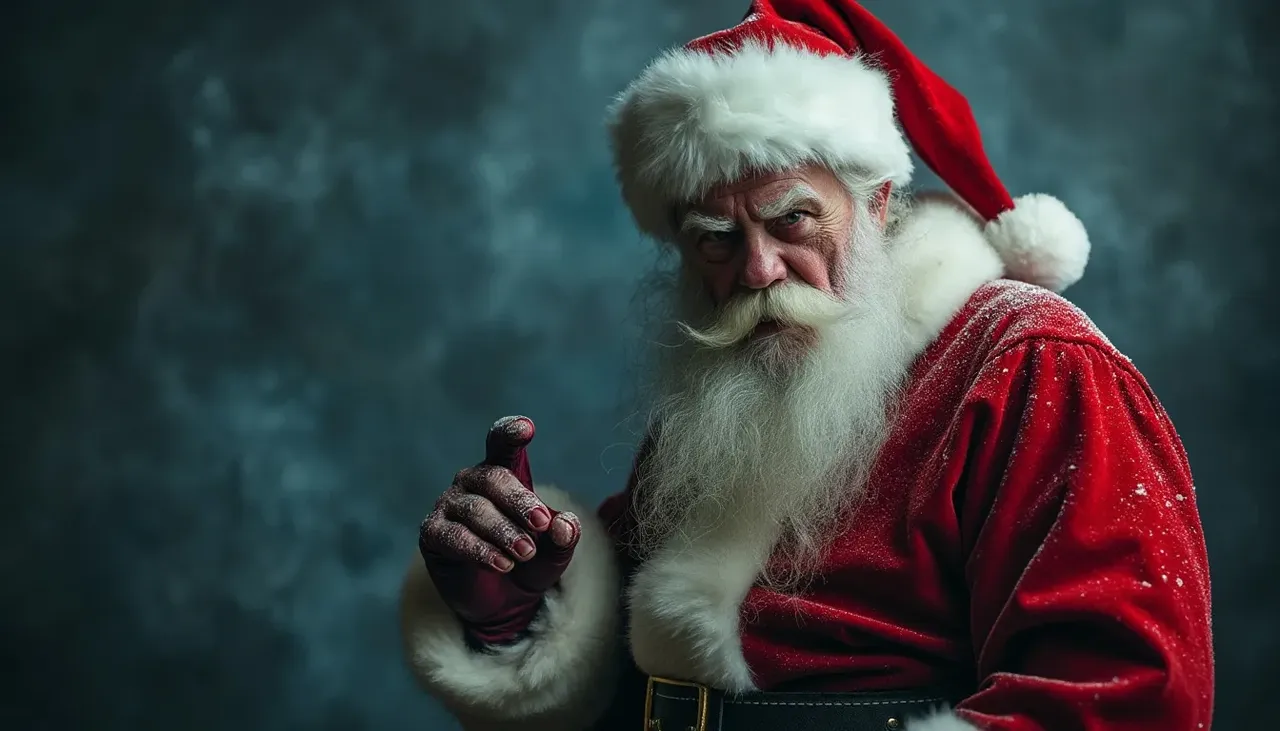
While Santa Claus is widely known today as a symbol of joy, kindness, and gift-giving, his dark counterparts in folklore offer a chilling reminder of the fear and punishment that once accompanied the holiday season. Figures like Krampus, Belsnickel, and Perchta reflect the ancient human understanding of morality, reward, and consequence, using fear as a tool to enforce good behavior.
A Complex Tradition of Fear and Joy: The duality of holiday celebrations, with their blend of light and darkness, mirrors the complexities of human nature. As we celebrate joy and kindness during the holiday season, it is important to remember the darker traditions that have shaped these festivities.
Evil Santa Claus Figures in Modern Culture: The resurgence of interest in evil holiday figures in modern culture highlights the ongoing fascination with fear and punishment during the holidays. Whether through folklore, horror films, or festivals, these dark figures continue to captivate our imaginations, reminding us that even in the most joyful of times, there is a shadow of fear that lingers.