By Scott J. Arnold
How an Invasion of the United States Could Unfold: A Threat from Within
The United States has long been a beacon of opportunity, attracting individuals from around the world to seek freedom and prosperity. However, the country’s vast borders and openness make it vulnerable to those with less benign intentions. While conventional military invasions seem unlikely, the threat of an enemy already inside the country—having illegally crossed the border—is both real and pressing. This hypothetical scenario explores how such an invasion could unfold, examining tactics, vulnerabilities, and long-term consequences.
1. Introduction: The Threat of Border Infiltration
While public discussions often focus on the risk of foreign invasions or large-scale military confrontations, a more insidious threat could emerge from within. An enemy that has already crossed the border illegally may have embedded itself within the fabric of American society, lying in wait for the right moment to strike. This type of covert invasion represents a different kind of warfare, one that does not rely on traditional military forces but instead uses subversion, sabotage, and social unrest to destabilize the country from the inside.
2. Covert Infiltration Tactics
Historical Context of Border Vulnerability
The U.S.-Mexico border has long been a point of concern for national security experts. At nearly 2,000 miles long, it is one of the busiest borders in the world, with thousands of people attempting to cross illegally each year. While the majority of those who cross are looking for work or a better life, the sheer volume of traffic makes it difficult for authorities to catch every potential threat. Historically, porous borders have provided pathways for drug cartels, human traffickers, and even terrorist groups to enter the country undetected.
Modern Methods of Infiltration
In the modern era, technology has enabled more sophisticated methods of crossing the border. Drones, tunnels, and advanced communication systems allow operatives to avoid detection by law enforcement. Some infiltrators might enter the U.S. posing as asylum seekers or workers, while others may use fake identification to blend in with the population. Once inside, these individuals could establish sleeper cells, awaiting instructions from foreign powers or criminal organizations to begin operations.
Case Studies of Infiltration
There are numerous examples of how foreign actors have used border vulnerabilities to infiltrate other countries. Hezbollah, for instance, has established cells in Latin America, using the region as a staging ground for operations against the U.S. These cells could theoretically link up with drug cartels to move people and weapons across the U.S. border without detection. Other groups, such as ISIS, have also attempted to exploit migration patterns to enter Western countries.
3. Criminal Networks and Collaborations
The Role of Cartels and Smuggling Networks
The cartels operating along the U.S.-Mexico border are some of the most powerful and well-organized criminal organizations in the world. These groups already control the flow of drugs, weapons, and people across the border, making them ideal partners for enemy forces looking to infiltrate the U.S. In exchange for money, arms, or protection, cartels could provide logistical support to hostile actors, smuggling operatives into the U.S. undetected.
How Criminal Enterprises Aid Enemy Combatants
Once inside the country, these criminal organizations can provide safe houses, false documents, and access to weapons for enemy operatives. This collaboration blurs the lines between traditional warfare and organized crime, creating a hybrid threat that is difficult for law enforcement to track. The fusion of crime and espionage would allow these enemy combatants to carry out attacks on U.S. soil while remaining hidden within criminal networks.
Hybrid Warfare: The Fusion of Crime and Espionage
This blending of crime and military objectives is known as hybrid warfare, a tactic used by states like Russia and Iran in their efforts to destabilize adversaries. In a U.S. context, hybrid warfare could involve using cartels not just as logistical partners but also as actors in disinformation campaigns, cyber attacks, and even assassinations. These criminal groups, already well-versed in violence and corruption, would become a critical part of the enemy’s plan to subvert the U.S. from within.
4. Sabotage: Targeting U.S. Infrastructure
Key Vulnerabilities in Infrastructure
The U.S. relies on a vast network of critical infrastructure, from energy grids and water supplies to transportation systems and communication networks. Many of these systems are aging and vulnerable to attack. An enemy force that has already infiltrated the country would likely target these key infrastructure points to sow chaos and disrupt the daily lives of Americans. Attacking infrastructure would also make it difficult for the government and military to respond effectively.
Likely Targets: Power Grids, Water Systems, Transportation
The U.S. power grid is one of the most vulnerable parts of its infrastructure. An attack on a regional grid could leave millions of people without electricity, crippling businesses, healthcare facilities, and emergency services. Water systems could also be targeted, creating public panic and health crises. Transportation hubs—such as airports, seaports, and rail systems—would be prime targets as well, as disrupting them would severely limit the country’s ability to move people and goods.
Cascading Effects of Sabotage on Society
An attack on infrastructure would have a domino effect on society. A blackout, for example, would disrupt not just power but also communication systems, banking, and food distribution networks. People may panic, leading to civil unrest, looting, and a breakdown in law and order. Over time, these disruptions could erode public confidence in the government’s ability to protect the country, leading to further destabilization.
5. Cyber Warfare: Invisible Attacks
The Role of Cyber Attacks in Modern Conflict
In today’s world, cyber warfare is a critical component of any conflict. An enemy force that has infiltrated the U.S. could launch cyber attacks on key systems, such as government databases, financial institutions, and military infrastructure. These attacks could be carried out remotely or by operatives on the ground who have access to critical networks. By disrupting these systems, the enemy could cripple the U.S.’s ability to respond to other forms of attack.
Attacks on Financial and Military Systems
Cyber attacks on financial systems could lead to economic chaos, as markets crash and people lose access to their savings. Military systems could also be targeted, disrupting communication between commanders and troops or disabling key weapons systems. These attacks would likely be coordinated with physical sabotage efforts, creating a multi-pronged assault on the U.S. infrastructure.
Disruption of Communication Networks
Perhaps the most critical target for cyber attacks would be the U.S.’s communication networks. Without reliable communication, law enforcement, military, and government officials would struggle to coordinate a response to the attacks. This would leave the country vulnerable to further exploitation by enemy forces.
6. Psychological Warfare and Civil Unrest
How Division Weakens National Unity
An enemy that has infiltrated the U.S. would not only engage in physical attacks but also psychological warfare. By exploiting the country’s existing political and social divisions, the enemy could weaken national unity and create an environment ripe for civil unrest. The U.S. is currently polarized along lines of race, class, and political ideology, and an external force could easily exploit these divisions to destabilize the country further.
Disinformation Campaigns: Social Media and Misinformation
One of the most effective tools for psychological warfare is disinformation. By spreading false information through social media, the enemy could sow distrust in government institutions, spread conspiracy theories, and incite violence. Disinformation campaigns have already been used by foreign actors, such as Russia, to influence U.S. elections and stoke division. In a full-scale infiltration scenario, these campaigns would intensify, leading to mass confusion and paranoia.
Case Studies: Use of Propaganda in Modern Conflict
History is full of examples of how propaganda and psychological operations have been used to weaken a country from within. During the Cold War, both the U.S. and the Soviet Union used propaganda to manipulate public opinion and erode trust in government institutions. In modern conflicts, groups like ISIS have used social media to radicalize individuals and incite lone-wolf attacks in Western countries.
7. Exploiting Political and Social Divisions
Current Divisions in the U.S. Political Landscape
The U.S. is currently experiencing deep political divides. From debates over immigration policy to racial tensions and political extremism, the country is more polarized than it has been in decades. An enemy that has already infiltrated the country could use these divisions to its advantage, amplifying tensions through targeted disinformation campaigns and covert support of extremist groups.
How Foreign Actors Could Exploit These Divisions
Foreign actors have already shown a keen interest in exploiting U.S. divisions. For example, Russian operatives were found to have meddled in the 2016 U.S. election by amplifying both left- and right-wing extremist views online. In an invasion scenario, these tactics would be used on a much larger scale, with operatives actively inciting violence and unrest among U.S. citizens.
Case Studies of Divisive Tactics Used in Other Nations
Countries like Ukraine and Georgia have experienced firsthand how foreign powers use disinformation and division to destabilize their governments. In both cases, Russia used a combination of cyber attacks, propaganda, and support for separatist movements to weaken these countries’ political systems. Similar tactics could be employed against the U.S., particularly by exploiting its existing racial and political divides.
8. Localized Guerrilla Warfare
Hit-and-Run Tactics: How Small Attacks Have Big Impacts
Rather than launching a conventional military assault, an enemy force that has infiltrated the U.S. would likely engage in guerrilla warfare. Small, highly coordinated attacks on law enforcement, military installations, and government facilities could destabilize local communities and sow fear across the country. These hit-and-run tactics would be difficult to predict, making it challenging for U.S. authorities to mount an effective defense.
The Role of Urban Environments in Guerrilla Warfare
Cities would be the ideal battleground for guerrilla warfare, as their dense populations provide cover for enemy operatives. The enemy could hide among civilians, launching surprise attacks before quickly disappearing into the crowd. This type of urban warfare would also strain law enforcement and military resources, as they would need to navigate complex urban environments while minimizing civilian casualties.
Historical Case Studies: How Guerrilla Warfare Succeeded
Guerrilla warfare has been used successfully throughout history to defeat much larger and better-equipped military forces. During the Vietnam War, for example, the Viet Cong used hit-and-run tactics to wear down U.S. forces over time. Similarly, insurgents in Iraq and Afghanistan have used guerrilla tactics to great effect against U.S. and allied forces.
9. Enemy Exploitation of Local Resources
How Infiltrators Use Domestic Assets
Once inside the U.S., enemy operatives could use domestic resources to their advantage. This might include acquiring weapons through legal means, such as gun shows or private sales, or using civilian infrastructure for communication and transportation. By blending in with the local population, these operatives could move freely across the country, gathering intelligence and preparing for larger attacks.
Firearms and Weapons Acquisition
The U.S. has relatively lax gun laws compared to many other countries, making it easy for enemy operatives to acquire firearms once inside the country. These weapons could be used in attacks on law enforcement, government officials, or even civilian targets. Additionally, homemade explosives or other improvised weapons could be used to cause widespread damage.
The Use of Civilian Infrastructure for Combat
In addition to acquiring weapons, enemy operatives could exploit civilian infrastructure for combat operations. For example, they might use rental trucks to carry out vehicle-based attacks, or they could sabotage public transportation systems to create chaos. By using everyday objects and systems, the enemy could launch devastating attacks without needing access to military-grade equipment.
10. Sabotaging U.S. Military Responses
Potential Weaknesses in U.S. Military Mobilization
In the event of an internal invasion, the U.S. military would likely be called upon to restore order and neutralize enemy operatives. However, the military might face significant challenges in doing so, particularly if the enemy has already sabotaged critical infrastructure or communication networks. Without reliable intelligence, the military could struggle to identify and locate enemy cells, leading to delays in response times.
The Role of Intelligence in Sabotaging Responses
Enemy operatives would likely target U.S. intelligence networks, attempting to disrupt the flow of information between military commanders and field units. Cyber attacks on military databases could compromise sensitive information, while physical sabotage of communication lines could prevent troops from receiving orders. These tactics would hinder the military’s ability to coordinate a response, leaving the country vulnerable to further attacks.
Cyber Attacks on Military Communications
In addition to physical sabotage, the enemy could launch cyber attacks on military communication systems. By disabling satellite links, radio networks, or GPS systems, they could effectively blind U.S. forces, preventing them from carrying out coordinated operations. These cyber attacks would likely be synchronized with physical attacks on infrastructure, creating a multi-layered assault that would overwhelm U.S. defenses.
11. The Slow Escalation of Conflict
The Transition from Covert to Overt Conflict
At the beginning of the invasion, enemy operatives would likely operate in the shadows, engaging in covert sabotage and disinformation campaigns. However, as the conflict escalates, these groups may become bolder, launching more visible attacks on government buildings, military bases, or even civilian targets. This shift from covert to overt conflict would signal the beginning of a larger, more dangerous phase of the invasion.
Recognizing the Warning Signs
One of the biggest challenges in responding to an internal invasion is recognizing the warning signs early on. In the initial stages, the enemy’s actions may be mistaken for isolated incidents or criminal activity. However, as the attacks increase in frequency and sophistication, it will become clear that the U.S. is facing a coordinated assault. By that point, however, it may be too late to prevent the conflict from escalating.
How Internal Chaos Could Escalate into Civil War
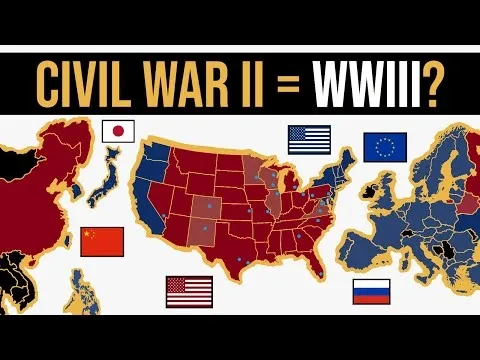
If the enemy is successful in exploiting existing social and political divisions, the U.S. could find itself on the brink of civil war. As law enforcement struggles to maintain order, and as citizens lose faith in the government’s ability to protect them, local militias and armed groups may rise up to defend their communities. This could lead to widespread violence, as different factions fight for control of the country.
12. Militias and Civilian Resistance
The Role of Patriot and Militia Groups
In response to an internal invasion, many patriot and militia groups may take it upon themselves to defend their communities. These groups, which often operate outside of government control, may see the invasion as an opportunity to assert their independence and protect their way of life. While some militias may coordinate with law enforcement, others may act on their own, leading to potential conflicts with both enemy operatives and government forces.
Preppers, Patriots, and Local Defense Units
The rise of the prepper movement in recent years has led to an increase in local defense units, composed of civilians who are prepared to defend their homes and communities in the event of a national emergency. These groups may play a critical role in resisting the enemy, particularly in rural areas where law enforcement presence is limited. However, without proper coordination with government forces, these units could become targets for enemy operatives or even contribute to the chaos.
The Challenges of Coordination Between Civilian and Military Forces
While militias and local defense units may be eager to join the fight against the enemy, coordinating their efforts with government forces will be a significant challenge. These groups often operate independently, and their tactics may conflict with those of the military. Additionally, there is the risk that some militias may turn against the government, further complicating the response to the invasion.
13. National Guard and Federal Military Involvement
National Guard Mobilization: Strengths and Limitations
The National Guard would likely be the first military force to respond to an internal invasion. With units stationed across the country, the National Guard could quickly mobilize to defend key infrastructure and restore order. However, the Guard may be stretched thin, particularly if the enemy is operating in multiple regions simultaneously. Additionally, the Guard’s ability to respond may be hampered by cyber attacks or sabotage of communication networks.
The Role of Federal Law Enforcement Agencies
In addition to the National Guard, federal law enforcement agencies like the FBI and Department of Homeland Security would play a key role in identifying and neutralizing enemy operatives. These agencies have the expertise to track down sleeper cells and dismantle terrorist networks. However, they may face significant challenges if the enemy has successfully infiltrated local law enforcement or government institutions.
Challenges in Coordinating a Domestic Response
One of the biggest challenges in responding to an internal invasion is coordinating the efforts of multiple agencies and military units. The U.S. government is not accustomed to fighting wars on its own soil, and the complexities of managing both civilian and military operations would strain even the most well-prepared agencies. Miscommunication or conflicting objectives between agencies could hinder the response, giving the enemy more time to carry out attacks.
14. Foreign Powers: A Coordinated Attack?
Could This Lead to Involvement from Hostile Nations?
While the initial phase of the invasion may be carried out by operatives already inside the U.S., there is a possibility that foreign powers could use this opportunity to launch a more direct attack on the country. For example, a hostile nation might use the chaos created by the internal invasion to launch a cyber attack on U.S. infrastructure or even deploy conventional military forces.
How Foreign Powers May Exploit Internal Weakness
Foreign powers may also exploit the internal conflict by providing support to enemy operatives. This could include funding, weapons, or intelligence. In a worst-case scenario, multiple hostile nations could coordinate their efforts to overwhelm the U.S. government and military, leading to a full-scale invasion.
Possibilities of Foreign Military Intervention on U.S. Soil
While unlikely, the possibility of foreign military intervention on U.S. soil cannot be entirely ruled out. If the U.S. government is weakened by internal conflict, a hostile nation may see an opportunity to invade. This could lead to a direct military confrontation, with U.S. forces fighting both an internal and external enemy at the same time.
15. Economic Warfare: Disruption of Supply Chains
The Role of Economic Sabotage in Warfare
In addition to physical attacks, an enemy force that has infiltrated the U.S. could engage in economic sabotage. By disrupting supply chains, attacking financial institutions, and causing chaos in the markets, the enemy could weaken the U.S. economy and create widespread panic. Economic warfare would likely be a key component of the invasion, as a weakened economy would make it more difficult for the U.S. to fund its military and law enforcement efforts.
Attacks on Key Supply Chains and U.S. Economy
Supply chains are particularly vulnerable to disruption, as they rely on a delicate balance of transportation, communication, and infrastructure. By targeting ports, rail lines, or trucking companies, the enemy could create shortages of critical goods, leading to panic buying and hoarding. Over time, these disruptions could cripple the U.S. economy, making it harder for the government to respond to the invasion.
Financial Markets and National Panic
Attacks on financial institutions would have a ripple effect on the broader economy. A cyber attack on the New York Stock Exchange, for example, could cause markets to crash, wiping out trillions of dollars in wealth. Panic would spread as people lost access to their savings, leading to bank runs and economic collapse. In such a scenario, the government would struggle to maintain order, as both civilians and businesses looked to protect their interests.
16. Weaponizing Mass Migration
The Use of Mass Migration as a Weapon
An enemy force that has already infiltrated the U.S. could weaponize mass migration to further destabilize the country. By encouraging large groups of people to cross the border illegally, the enemy could overwhelm local resources and create chaos. This tactic has been used by other nations in the past, such as Turkey’s decision to allow Syrian refugees to flood into Europe.
Overloading Local Resources and Law Enforcement
Mass migration would strain local resources, particularly in border towns and cities. Law enforcement, healthcare facilities, and social services would be overwhelmed by the influx of people, making it harder for these institutions to function. This would also create opportunities for enemy operatives to blend in with the migrants, further complicating efforts to identify and neutralize the threat.
Creating Chaos Through Population Movements
In addition to overwhelming resources, mass migration could create chaos by sparking protests and civil unrest. Anti-immigration groups might clash with migrants or law enforcement, leading to violence and further destabilizing the country. The enemy could use these tensions to its advantage, creating a cycle of unrest that weakens the U.S. from within.
17. Lessons from History: Past Invasions and Sabotage
Case Studies: How Invasions from Within Have Succeeded
History is full of examples of how nations have been weakened or even overthrown by internal invasions. One of the most famous examples is the fall of the Roman Empire, which was brought down in part by waves of migration and internal strife. More recently, nations like Ukraine and Georgia have faced internal invasions orchestrated by foreign powers, with devastating consequences.
The Trojan Horse Tactic: Historical Examples
The idea of a Trojan Horse—a seemingly benign force that infiltrates a nation from within—dates back to ancient Greece. The Greeks used a wooden horse to infiltrate the city of Troy, ultimately leading to its downfall. In modern times, the Trojan Horse tactic has been used by nations and terrorist groups to infiltrate other countries and launch attacks from within.
How Modern Nations Have Dealt with Internal Subversion
Many modern nations have faced the challenge of internal subversion. In the 20th century, for example, the Soviet Union used covert operatives to infiltrate Western governments and spread communist propaganda. More recently, nations like Israel have faced internal threats from terrorist groups like Hamas, which use a combination of guerrilla tactics and disinformation to weaken the state.
18. The Role of Technology in Defense
The Role of AI and Surveillance in Combatting Internal Invasion
As technology advances, AI and surveillance systems could play a critical role in detecting and preventing an internal invasion. AI could be used to monitor social media, detect disinformation campaigns, and identify patterns of behavior that suggest an organized attack. Surveillance systems, such as facial recognition technology and drones, could help law enforcement track down enemy operatives before they can launch attacks.
How Advanced Technologies Can Be Used to Detect and Counter Infiltrators
In addition to AI, other advanced technologies could be used to detect infiltrators. For example, biometric systems could be used at border crossings to identify individuals with false identities. Satellites and drones could monitor remote areas for signs of illegal activity. These technologies would provide law enforcement with the tools they need to prevent enemy operatives from crossing the border and carrying out attacks.
Drone Warfare, Robotics, and Future Technologies in Homeland Security
In the future, drones and robotics may play an even larger role in homeland security. Drones could be used to patrol the border or conduct surveillance in urban areas, while robotic systems could be deployed to neutralize threats without risking human lives. These technologies would give law enforcement a significant advantage in the fight against enemy operatives.
19. Long-Term Effects on Society
Social Consequences of a Protracted Internal Conflict
An internal invasion would have far-reaching social consequences for the U.S. Over time, the constant threat of attack would erode public trust in the government and law enforcement. People may begin to take matters into their own hands, forming militias or vigilante groups to protect their communities. This could lead to a breakdown in social order, as different factions fight for control.
The Loss of Civil Liberties in Response to Threats
In response to the invasion, the government may implement new laws or restrictions aimed at protecting national security. These measures could include increased surveillance, curfews, and restrictions on freedom of speech or assembly. While these measures may be necessary to prevent further attacks, they could also lead to a loss of civil liberties, sparking protests and resistance from the public.
The Psychological Toll on the Population
The psychological toll of living under constant threat would also be significant. People may experience increased anxiety, depression, and paranoia as they struggle to cope with the fear of attack. This could lead to widespread mental health issues, further straining the country’s resources and weakening its ability to respond to the invasion.
20. Conclusion: Preparing for the Worst-Case Scenario
What Can Be Done to Prevent Such an Invasion?
Preventing an internal invasion requires a multi-faceted approach. First, the U.S. must strengthen its border security to prevent enemy operatives from entering the country. This includes increasing funding for border patrol agents, investing in advanced surveillance technologies, and improving intelligence-sharing between federal and local agencies. Additionally, the U.S. must address its internal divisions, fostering national unity and resilience against disinformation campaigns.
The Role of Policy in Strengthening Border Security
Policy changes at the federal level will be essential to preventing future infiltrations. This could include tightening immigration laws, increasing penalties for human trafficking and smuggling, and improving vetting procedures for asylum seekers. At the same time, the U.S. must invest in its intelligence and law enforcement agencies, ensuring they have the resources they need to detect and neutralize threats before they escalate.
The Importance of National Unity in Preventing Internal Collapse
Perhaps the most important factor in preventing an internal invasion is national unity. A divided country is much more vulnerable to attack, as enemy forces can exploit internal divisions to weaken the government and sow chaos. By fostering a sense of national pride and unity, the U.S. can build resilience against future threats, ensuring that it remains strong in the face of internal and external challenges.
This expanded article outlines how an invasion of the United States by an enemy that has already crossed the border illegally could unfold. Through covert infiltration, collaboration with criminal networks, sabotage of critical infrastructure, and exploitation of social divisions, the enemy could destabilize the country from within. By understanding these threats and preparing for the worst-case scenario, the U.S. can take steps to protect its citizens and secure its future.