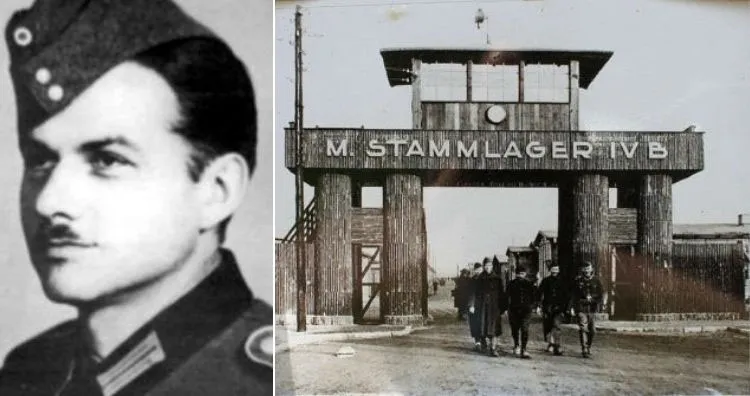
Hanns Scharff: The Gentle Art of Interrogation
During World War II, the Nazi regime was notorious for its brutal and merciless methods of dealing with prisoners, especially enemy soldiers and spies. However, amidst the horrors of the Third Reich, there emerged a remarkable figure whose approach to interrogation stood in stark contrast to the violence and coercion that characterized the regime. Hanns Scharff, one of the most successful interrogators for the Luftwaffe (the German Air Force), developed a method of extracting valuable intelligence from Allied prisoners without resorting to physical violence, threats, or cruelty. His unconventional methods, based on kindness, psychological insight, and trust-building, led to numerous intelligence breakthroughs.
In this 15-page story, we will explore the life and career of Hanns Scharff, his methods, the effectiveness of his approach, and his post-war legacy. Scharff’s story serves as a powerful reminder that even in the darkest of times, there can be a place for humanity and decency, and that success can be achieved through empathy rather than brutality.
Early Life and Unlikely Beginnings
Hanns Joachim Gottlob Scharff was born on December 16, 1907, in Rastenburg, East Prussia (now Kętrzyn, Poland). He was raised in a relatively affluent and cultured family, which exposed him to various languages, art, and culture from an early age. Scharff’s father was a prominent businessman, and his mother was an artist, which gave Scharff a diverse and broad upbringing.
Scharff didn’t originally set out to be a soldier or an interrogator. In fact, he had little connection to military life before the outbreak of World War II. Instead, he pursued a career in business. Scharff worked for a textile company in South Africa in the 1930s, and it was here that he gained fluency in English, a skill that would later prove crucial in his role as an interrogator. He married a South African woman, making his ties to the English-speaking world even stronger. As war loomed, Scharff returned to Germany, but he did not initially join the military.
In 1939, Germany invaded Poland, sparking the beginning of World War II. Scharff, like many men of his age, was eventually conscripted into the German army. Due to his background and linguistic skills, he was assigned to the Luftwaffe, where he quickly made a name for himself—not as a pilot or combat soldier, but as an interrogator.
The Luftwaffe Interrogator: A New Approach
Scharff’s role as an interrogator came about somewhat by accident. Initially, he was not trained for this position, nor was he familiar with the brutal interrogation techniques typically used by the Nazis. However, when he was given the responsibility of interrogating captured Allied pilots and aircrew members, Scharff developed his own approach, one that was diametrically opposed to the methods commonly employed by the Gestapo or other Nazi military units.
While Nazi interrogators often relied on physical torture, fear, and intimidation to extract information from prisoners, Scharff believed in a different philosophy. He was deeply skeptical of the effectiveness of such violent methods, recognizing that torture often led to false or misleading information as prisoners would say anything to stop the pain. Scharff’s approach was grounded in psychology and a keen understanding of human nature. He believed that people were more likely to share valuable information if they were treated with kindness and respect.
The Art of Conversation
Scharff’s primary method of interrogation was simple: conversation. He would engage captured Allied soldiers in friendly, relaxed dialogue, often under the pretense that he already knew everything they might tell him. This was a clever psychological trick. By acting as though he already possessed key information, Scharff would lower the defenses of his prisoners, making them feel that there was little harm in confirming or elaborating on the details he seemed to know.
His interrogations would often start with seemingly innocent small talk—discussions about life back home, families, and hobbies. Scharff would deliberately avoid asking direct military questions, instead allowing the prisoner to speak freely. In this casual atmosphere, prisoners would sometimes let slip vital pieces of intelligence without even realizing it.
Scharff was also a keen observer of body language and tone of voice. He could detect when a prisoner was holding something back or when they might be willing to share more information. By creating a sense of trust and rapport, he was able to coax prisoners into volunteering details they would have never revealed under duress.
Walks in the Countryside
One of Scharff’s most famous techniques involved taking prisoners for walks in the German countryside. Instead of keeping them confined in dark, cold cells, he would invite them to join him on a walk, where the atmosphere was far more relaxed. As they strolled through the fields and woods, Scharff would engage in conversation, sometimes talking about the beauty of nature, other times subtly steering the conversation toward military topics. In this environment, many prisoners felt less like they were being interrogated and more like they were having a casual chat with a friend.
These walks were highly effective. Captured pilots, especially those who had been through the horrors of combat, often appreciated the opportunity to experience a moment of calm and normalcy, which made them more willing to talk. The open, natural environment helped to build a sense of trust and ease, which further encouraged them to open up.
Visits to Comrades
Another innovative technique Scharff used was allowing prisoners to visit their wounded comrades in hospitals. This was a rare privilege, and many prisoners were deeply grateful for the opportunity to see their friends, even under such dire circumstances. Scharff would accompany them on these visits, continuing to build rapport. The prisoners often believed that someone who would grant them such kindness could not be too dangerous or manipulative. This sense of goodwill often led them to share details about their missions or their units.
In some cases, prisoners would even volunteer information in an attempt to repay Scharff for his kindness. They felt indebted to him, not realizing that their cooperation was precisely what he had intended from the start.
Examples of Success
Scharff’s techniques proved highly effective throughout the war, and he was responsible for obtaining crucial intelligence that directly impacted the course of several battles in the European theater.
One of the most notable examples of Scharff’s success involved a British pilot who had been shot down over Germany. During his conversation with the pilot, Scharff never pressed him for details about his mission. Instead, they talked about the pilot’s life, his family, and the war in general. Over time, the pilot relaxed, and during one of their conversations, he mentioned that his squadron was equipped with a new type of radar that allowed them to locate German aircraft more easily.
Scharff immediately recognized the significance of this information. The new radar technology was a closely guarded secret, and the pilot had revealed it without realizing the importance of what he was saying. Scharff passed this intelligence on to his superiors, who used it to develop countermeasures against the radar.
In another case, Scharff interrogated a U.S. bomber pilot who had been captured during a raid over Germany. The pilot was initially hostile and refused to cooperate, but Scharff took him for a walk, allowing the pilot to enjoy the fresh air and talk freely about his experiences. Eventually, the pilot revealed key details about the formation of bomber groups and their rendezvous points, which allowed the Luftwaffe to adjust their tactics and improve their defenses against Allied bombing raids.
These are just two examples of the many successful interrogations Scharff conducted using his unique methods. In both cases, and many others, Scharff never resorted to threats, violence, or coercion. Instead, he relied on building trust and creating an environment in which prisoners felt comfortable sharing information.
The Psychological Genius of Scharff’s Methods
What made Hanns Scharff’s approach so effective? At its core, Scharff’s success was rooted in his deep understanding of human psychology. He realized that people are more likely to talk when they feel respected and valued, rather than when they are frightened or under duress.
Scharff understood that interrogation is a two-way process. He knew that if he made his prisoners feel like they were withholding information that was already known, they would often give in and talk without realizing they were providing new details. His interrogations were masterclasses in subtlety, with Scharff using silence, nonverbal cues, and carefully worded questions to nudge prisoners into revealing key facts.
His refusal to use violence also meant that he avoided the pitfalls of torture-based interrogation. Torture often leads to false confessions or unreliable information, as prisoners will say whatever they think their captors want to hear to make the pain stop. Scharff’s humane approach ensured that the information he gathered was more accurate and reliable, as it was volunteered rather than coerced.
The End of the War and Scharff’s Post-War Life
As World War II came to an end in 1945, Scharff found himself on the losing side, but he was spared from the retribution that many Nazi officials faced. His reputation as an interrogator who did not engage in brutality or war crimes likely contributed to his being treated with relative leniency. In fact, Scharff’s reputation as a humane and effective interrogator spread to the Allied forces, and after the war, he was invited to the United States to teach his interrogation techniques to U.S. military personnel.
Scharff’s approach to interrogation became a model for modern intelligence-gathering techniques. His methods were incorporated into U.S. military training programs, where they influenced the development of more humane and effective interrogation strategies. Scharff himself lectured at the Pentagon and gave seminars on interrogation techniques, becoming something of a legend in military circles.
Following his involvement with the U.S. military, Scharff pursued a second career as an artist and mosaic designer in the United States. He moved to California, where he created mosaics for some of the most iconic buildings in the country, including the Cinderella Castle at Disneyland. His work in art was as meticulous and thoughtful as his work in interrogation, and he became a celebrated artist in his own right.
Legacy of Hanns Scharff
Hanns Scharff’s legacy is a testament to the power of humane treatment, trust-building, and psychological insight in even the most adversarial situations. His methods, which contrasted so sharply with the brutality of the Nazi regime, demonstrate that violence and coercion are not the only—or the most effective—ways to achieve success in interrogation.
Today, Scharff is remembered not only for his role in World War II but also for his contributions to the development of modern interrogation techniques. His story serves as a reminder that empathy, respect, and understanding can often achieve what force and fear cannot.
In a world where interrogation is often associated with darkness and cruelty, Hanns Scharff stands as an example of a different path—one where the gentle art of conversation can unlock the truth more effectively than any form of torture. His methods remain relevant today, offering valuable lessons for military, law enforcement, and intelligence professionals around the world.
Conclusion
Hanns Scharff’s remarkable career as the most successful Nazi interrogator who never physically harmed an enemy soldier is a story of paradox. In the heart of one of the most brutal regimes in modern history, Scharff chose a path of kindness and psychological insight, proving that even in war, human decency can prevail. His methods not only led to valuable intelligence breakthroughs but also changed the way military interrogations were conducted in the years that followed.
Scharff’s legacy is a powerful reminder that success in any field, including interrogation, need not come at the expense of humanity and compassion.