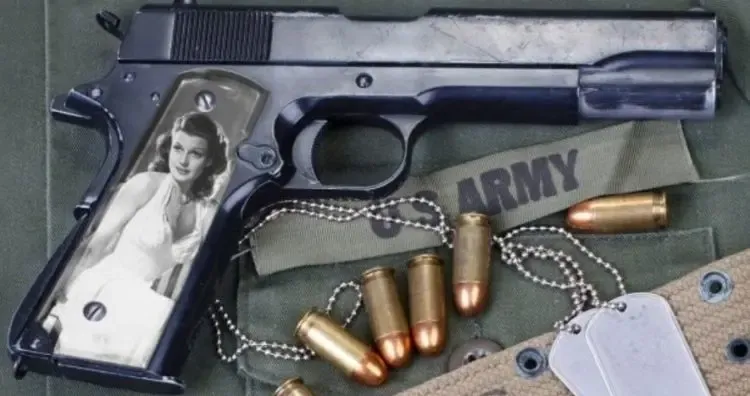
Sweetheart Grips: A Tale of Love and War
During World War II, soldiers on the frontlines found themselves far from the comforts of home and the loved ones they left behind. As they faced the horrors of war, many sought ways to carry a personal piece of their lives with them—a reminder of what they were fighting for. One poignant expression of this emotional connection was the creation of “sweetheart grips,” a unique and touching form of customization for their firearms. These grips were fashioned by soldiers themselves using Plexiglas salvaged from downed aircraft. Inside, soldiers would place photographs of their sweethearts, wives, children, or family members. The sweetheart grips not only served as a source of comfort but also symbolized the intersection of war and personal life, love and duty.
This article explores the history of sweetheart grips, their construction, significance, and the emotional and cultural meaning they held for soldiers and their loved ones during the war.
Origins of Sweetheart Grips
The tradition of customizing weapons is as old as warfare itself. Soldiers throughout history have personalized their equipment to reflect their personalities, victories, or cultural symbols. However, the concept of sweetheart grips arose uniquely during World War II, when soldiers found themselves separated from their loved ones for extended periods. During this time, the materials available to soldiers—such as Plexiglas—combined with the emotional need for a reminder of home, resulted in a creative, practical, and sentimental way for soldiers to stay connected to their families.
Plexiglas, or polymethyl methacrylate (PMMA), was a relatively new material during the war, introduced in the 1930s. Its durability and lightweight nature made it an ideal material for the cockpits of aircraft, especially fighter planes and bombers. When these aircraft were damaged or destroyed in combat, soldiers would scavenge pieces of Plexiglas from the wreckage. This material could be cut and shaped easily, making it perfect for crafting transparent pistol grips.
As soldiers longed to keep a visual reminder of their loved ones close by, they began to create custom grips for their pistols. By placing photographs of wives, girlfriends, children, or even pin-up girls beneath the clear Plexiglas, they personalized their firearms in a way that was both functional and deeply meaningful. The photographs were usually carefully cut to fit the shape of the grip, and in some cases, soldiers would add inscriptions or decorations to further customize the design.
Crafting the Grips: Innovation on the Frontlines
The process of making sweetheart grips required both ingenuity and craftsmanship. While some soldiers had access to basic tools like knives or files, others had to make do with whatever was available to them in the field. Using small saws or heated blades, they would cut the Plexiglas to match the shape of their pistol grips, usually for sidearms like the Colt M1911, one of the most common service pistols during the war.
Once the shape was cut, the soldiers would sand down the edges to ensure a smooth fit on the gun’s handle. They would then choose a cherished photograph to place under the Plexiglas. These photos were usually sent from home in letters or carried by soldiers when they left for war. Soldiers often trimmed the photographs carefully to fit the contours of the grips, ensuring the image was perfectly framed by the Plexiglas.
In some cases, soldiers added additional embellishments to their sweetheart grips. Using small tools or even makeshift engraving devices, they might etch their loved ones’ names, messages, or dates onto the Plexiglas. Others painted the backs of the grips to highlight the photograph more vividly. Despite the hardships of wartime, soldiers poured their creativity into this small but significant project, resulting in grips that were not just functional but deeply personal.
The Emotional Significance of Sweetheart Grips
For many soldiers, their weapons were an extension of themselves—tools for survival in the harshest of environments. Personalizing these weapons gave them a sense of individuality in a situation where uniformity and regulations often stripped away personal identity. Sweetheart grips were one way for soldiers to reclaim a sense of self, and more importantly, to carry a constant reminder of the people they loved most.
The photographs placed under the Plexiglas often showed the faces of wives, girlfriends, or fiancées waiting for the soldier’s safe return. These images were powerful motivators, a visual connection to the soldier’s life back home. As they faced combat, fear, and uncertainty, these photographs provided emotional strength and a sense of purpose. Soldiers would often look at the photographs in quiet moments, drawing comfort from the thought that someone was waiting for them to come home.
For many soldiers, the grips also served as a form of mental and emotional grounding. War often strips individuals of control over their circumstances. In the heat of battle, when death and destruction surrounded them, these simple photographs offered solace. No matter how chaotic the world around them became, the images of their loved ones under the grips remained a source of peace.
In a broader sense, sweetheart grips represented the tension between love and war. The duality of holding a weapon—a tool of destruction—encased with a photograph of someone beloved is symbolic of the difficult choices soldiers faced. They were tasked with taking lives in the name of duty while yearning for the life they had left behind. The grips, in this way, were both a reminder of why they fought and the life they hoped to return to.
Love Letters in Plexiglas: Messages from the Frontline
While photographs were the most common inserts in sweetheart grips, some soldiers went further by incorporating small love letters or messages from their partners into the grips. These tiny notes were folded neatly under the Plexiglas, serving as tangible tokens of affection that could be read or simply carried as a source of strength.
In many cases, these letters reflected the deep longing and emotional distance felt by soldiers and their partners. Soldiers often faced long deployments with little communication from home. Letters could take weeks or months to arrive, and soldiers lived with the constant uncertainty of whether their loved ones were safe or if they would ever return home. The sweetheart grips, with their enclosed notes or photographs, became a way to carry those letters with them at all times.
Some soldiers would etch romantic inscriptions on the grips themselves, such as “Yours Forever” or “Until We Meet Again,” immortalizing their affection in a way that transcended the distance and dangers they faced. These notes often took on heightened significance as the war dragged on and the chances of returning home seemed increasingly uncertain.
The Role of Pin-Up Girls in Sweetheart Grips
Not all sweetheart grips contained images of personal loved ones. For many soldiers, photographs of pin-up girls—glamorous actresses or models of the time—served as a comforting reminder of the world outside the battlefield. During World War II, pin-up culture was widespread, with images of Hollywood stars like Betty Grable, Rita Hayworth, and Veronica Lake adorning lockers, barracks, and even planes.
Pin-up girls were seen as a symbol of beauty, femininity, and normalcy during a time when soldiers were surrounded by the grim realities of war. By including pin-up images in their sweetheart grips, soldiers sought to preserve a sense of joy and escapism, a reminder of the better things in life. While these grips lacked the personal connection of a loved one’s photo, they still carried deep emotional meaning for soldiers seeking comfort amidst the horrors of battle.
A Symbol of Survival
Beyond their emotional and sentimental value, sweetheart grips were also viewed as talismans of survival. Many soldiers believed that these grips brought them luck in combat, offering protection as they faced danger. The photos of their loved ones became symbols of hope and resilience, giving soldiers a psychological edge as they confronted the realities of war.
In some instances, soldiers who survived harrowing encounters credited their sweetheart grips with giving them the courage to persevere. The belief that these grips offered a connection to home was enough to bolster a soldier’s spirit, helping them endure the long months and years of fighting. These grips, with their carefully preserved images, were not merely accessories; they were lifelines to the emotional core of the soldiers who carried them.
Sweetheart Grips and the Home Front
While sweetheart grips provided comfort to soldiers in the field, they also had an important connection to the home front. Women who sent photos to their husbands, fiancés, or boyfriends often understood that these images would be placed in sweetheart grips. The practice was widely known among soldiers, and many women sent specific photographs intended for this purpose.
For families and loved ones, knowing that their image was accompanying a soldier into battle brought both pride and sorrow. They knew their soldier faced immense danger but took comfort in knowing that they could offer emotional support, even from afar. The practice of creating sweetheart grips thus became a shared experience, bridging the gap between the war front and the home front.
After the War: A Lasting Legacy
With the end of World War II in 1945, many soldiers returned home, bringing with them the sweetheart grips that had accompanied them through the conflict. For some, these grips became cherished keepsakes, symbols of the love and hope that had sustained them during the war. Others passed them down to their children or displayed them as reminders of their service.
Sweetheart grips, with their intimate connection to both war and personal life, have since become collectors’ items. Military enthusiasts and historians prize these grips not only for their craftsmanship but for the emotional stories they tell. Each grip is a unique artifact, bearing witness to the personal experiences of soldiers who fought in one of history’s most devastating wars.
Conclusion: Love in the Face of War
The tradition of sweetheart grips is a testament to the power of love and the human need for connection, even in the darkest of times. Soldiers who created these grips found a way to carry a piece of home with them, a reminder of what they were fighting for. The grips served as a personal expression of identity, a talisman for survival, and a symbol of the deep emotional bonds that endure in times of war.
As we look back on World War II and the sacrifices made by those who served, sweetheart grips offer a poignant glimpse into the personal lives of soldiers. They remind us that, amidst the violence and chaos of war, the human heart still yearns for love, connection, and the hope of a better tomorrow.
Leave a Reply