Author: admin

  • Amidst the Fall of Berlin: The Tragic Tale of a Young SS Soldier Forced to Play the Piano for His Life

    By Scott J. Arnold

    Amidst the Fall of Berlin: The Tragic Tale of a Young SS Soldier Forced to Play the Piano for His Life

    The final days of World War II saw the collapse of Nazi Germany and the end of a brutal regime. The Fall of Berlin in April 1945 marked a devastating conclusion to a war that had consumed Europe and the world. It was a time of chaos, destruction, and unimaginable violence, as Soviet forces stormed the German capital, bringing the long-awaited victory to the Allies. Among the countless stories of terror, despair, and cruelty that emerged from this period, one tale stands out as a chilling example of both the human spirit’s endurance and the utter ruthlessness of war: the story of a young SS soldier forced by Soviet troops to play the piano for 22 hours straight under the threat of execution.

    In this article, we will explore the harrowing details of this event, placing it within the broader historical context of the Fall of Berlin. We will examine the psychological torment endured by the soldier, the mindset of the Soviet troops, and the unimaginable pressures of combat that created an atmosphere where cruelty and humanity coexisted in the most bizarre ways.
    Chapter 1: The Fall of Berlin (Page 1-2)

    The Fall of Berlin was the climactic moment of the European theater of World War II. By April 1945, Adolf Hitler’s Third Reich was crumbling under the combined pressure of Allied forces from the West and the relentless advance of the Soviet Union from the East. Soviet forces, under the command of Marshal Georgy Zhukov and Marshal Ivan Konev, launched their final assault on Berlin in mid-April, encircling the city and beginning a brutal siege.

    Berlin, the heart of Nazi Germany, was under intense bombardment, and its defenders – composed of Wehrmacht soldiers, SS units, and even the Hitler Youth – were vastly outnumbered and undersupplied. Civilians cowered in bomb shelters as the Red Army swept through the streets, exacting vengeance for the atrocities committed by the Nazis throughout the war.

    In this nightmarish scenario, the moral lines between combatants were often blurred. Soviet soldiers, many of whom had witnessed the horrors of the Nazi invasion of their homeland, sought retribution in the streets of Berlin. Acts of violence, rape, and revenge killings were common as the Soviet forces took control of the city.

    It was in this chaotic and violent context that the tragic story of a young SS soldier would unfold.
    Chapter 2: The SS Soldier (Page 3-4)

    The identity of the SS soldier remains shrouded in mystery, but his story is emblematic of the desperation felt by the remnants of the Nazi regime in the final days of the war. As part of the elite military wing of the Nazi Party, the SS had been responsible for some of the most heinous war crimes of the conflict, including the enforcement of Hitler’s racial policies and the management of concentration camps.

    By April 1945, even the SS could not escape the inevitability of defeat. The young soldier, likely no older than 18 or 19, was one of thousands conscripted into the final defense of Berlin. His ideological indoctrination and training would have made him a firm believer in Hitler’s vision for Germany, though by this point, it is likely that he, like many others, understood the futility of their efforts.

    Captured by Soviet forces during the final assault on Berlin, this SS soldier’s fate was sealed. However, instead of executing him immediately, his captors devised a more insidious form of psychological torment.
    Chapter 3: The Piano and the Warning (Page 5-6)

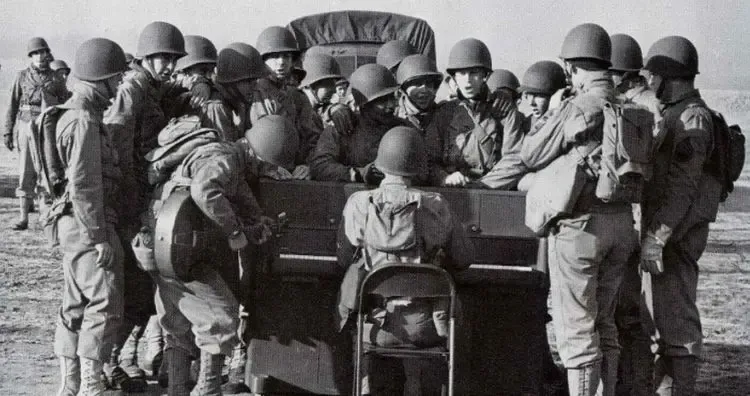
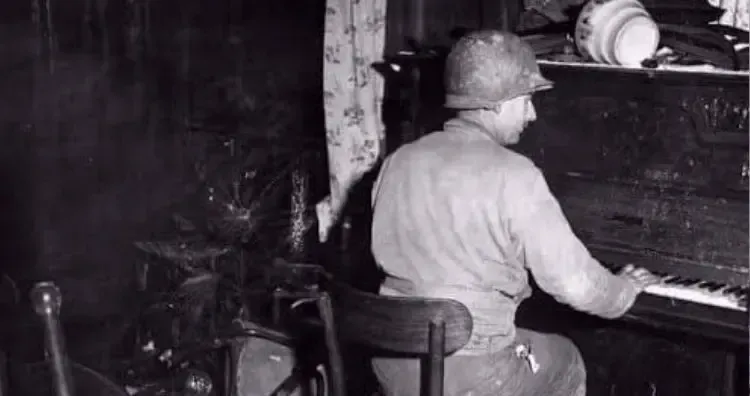
    During the aftermath of his capture, the SS soldier found himself surrounded by Soviet soldiers who had taken over a building that housed a piano. Soviet troops often came across looted or abandoned homes in Berlin, and this piano was likely left behind by a fleeing German family. It was here that the Soviet troops, under the haze of war and likely under the influence of alcohol and adrenaline, forced the SS soldier to sit down at the piano.

    Using sign language and gestures, the Soviets communicated to the young soldier that he would have to play continuously. If he stopped, even for a moment, they warned him that they would execute him on the spot. Whether they wanted to humiliate him or simply toy with their captive remains unclear, but the threat was real. The piano became his lifeline, his only hope of surviving an unimaginable ordeal.
    Chapter 4: 22 Hours of Music (Page 7-8)

    For the next 22 hours, the SS soldier played the piano without rest. His fingers, initially trained and disciplined, would have eventually cramped and ached under the strain. The psychological pressure of knowing that one mistake could result in death was overwhelming. Every note he played was a plea for mercy, but it was also a manifestation of his will to survive.

    Music, under normal circumstances, is a form of expression, but for this young soldier, it became a desperate performance of endurance. His captors likely taunted him throughout the ordeal, mocking his efforts and reminding him of the consequences of failure. Exhaustion, both mental and physical, must have set in within the first few hours, yet he continued, driven by the primal instinct to survive.

    The room must have been filled with a surreal and haunting atmosphere. The sound of the piano, an instrument of beauty, filled the air in a city being torn apart by violence and destruction. As the SS soldier played, Berlin crumbled around him, its people dying in the streets, its buildings reduced to rubble.
    Chapter 5: The Collapse (Page 9-10)

    After 22 grueling hours, the SS soldier could no longer continue. His body, exhausted and trembling, finally gave in. With tears streaming down his face, he collapsed at the piano, unable to play another note. He had endured as long as humanly possible, and in that moment, he may have hoped that his tormentors would show him mercy.

    But mercy was not to be found in the battle-hardened Soviet troops who had forced him to perform this cruel task. Instead, they congratulated him for his efforts, mocking him once more. Then, in a cold and calculated act of cruelty, they shot him dead.

    The soldier’s body slumped over the piano, and the last notes he had played lingered in the air, marking the end of a life cut short by both the brutal regime he served and the brutal revenge of those who had defeated it.
    Chapter 6: The Soviet Perspective (Page 11-12)

    The behavior of the Soviet troops in this story is a reflection of the intense psychological and emotional toll that the war had taken on them. The Red Army had borne the brunt of the fighting on the Eastern Front, suffering horrific losses in battles such as Stalingrad and Kursk. The German invasion of the Soviet Union, known as Operation Barbarossa, had resulted in mass death and destruction, leaving millions of Soviet civilians and soldiers dead.

    By the time the Red Army reached Berlin, many Soviet soldiers were fueled by a desire for vengeance. The atrocities they had witnessed and endured during the war made them ruthless and often indiscriminately cruel in their treatment of German civilians and soldiers alike.

    The SS, in particular, was viewed with special hatred by the Soviets, as this paramilitary organization had been responsible for many of the worst atrocities of the Nazi regime. For Soviet soldiers, the sight of an SS uniform was a reminder of the horrors inflicted on their homeland. The piano ordeal inflicted on the young SS soldier can be seen as an expression of that rage and desire for retribution, mixed with a perverse need to assert dominance over a defeated enemy.
    Chapter 7: The Human Cost of War (Page 13-14)

    The tragic tale of the SS soldier forced to play the piano for his life is just one of countless stories that illustrate the human cost of war. The soldier, no doubt indoctrinated by Nazi propaganda, was a product of the regime he served. Yet, in the end, he was just another young man caught in the machinery of a global conflict that had spiraled out of control.

    War dehumanizes everyone it touches. The Soviet soldiers who forced the young man to play the piano had been dehumanized by the relentless violence and trauma they had experienced. In turn, they dehumanized their captive, reducing him to an object of amusement and cruelty.

    The collapse of Berlin marked the end of one of the most destructive wars in human history, but the scars left by that war would remain for decades. The piano, a symbol of culture and humanity, became in this story a twisted tool of torture and death. It serves as a reminder that even in moments of apparent triumph, war has the power to strip away the very things that make us human.
    Chapter 8: Remembering the Tragedy (Page 15)

    In the years following the war, the story of the SS soldier who played the piano under threat of execution became a dark and poignant anecdote, passed down as a reflection of the horrors that Berlin witnessed in its final days. While the story has never been fully verified in historical documents, it remains a powerful symbol of the cruelty and absurdity of war.

    In remembering this tale, we are reminded not only of the specific tragedy that befell this soldier but also of the countless other lives that were cut short, brutalized, and forever changed by the war. Whether soldiers or civilians, friend or foe, each individual caught in the maelstrom of World War II experienced suffering in ways that are difficult to comprehend fully.

    The story of the SS soldier and his forced piano performance stands as a testament to the lengths to which humans will go to survive and the cruelty that others are capable of inflicting. In the end, it is a tragic reminder of the price of war and the fragile line between life and death in times of unimaginable chaos.
    Conclusion: A Legacy of Suffering

    The Fall of Berlin was a cataclysmic event that brought World War II to a close, but it also revealed the depths of human suffering and cruelty. The story of the young SS soldier forced to play the piano under threat of execution captures the essence of that moment: a mixture of endurance, desperation, and tragic futility.

    As we reflect on the events of that time, we are reminded that history is full of stories like this—stories that show both the best and the worst of humanity. In the end, the SS soldier’s fate serves as a cautionary tale about the dangers of war and the psychological toll it takes on everyone involved.

    May we remember this story not just as a historical curiosity but as a sobering reminder of the human cost of conflict, and may it inspire us to strive for a future where such tragedies no longer occur.


  • Aryan Nations White Supremacist Hate Group

    By Scott J. Arnold

    Aryan Nations White Supremacist Hate Group

    Aryan Nations

    Aryan Nations is a North American antisemitic, neo-Nazi and white supremacist hate group that was originally based in Kootenai County, Idaho, about 2+3⁄4 miles (4.4 km) north of the city of Hayden Lake. Richard Girnt Butler founded Aryan Nations in the 1970s.

    In 2001, the Federal Bureau of Investigation (FBI) classified Aryan Nations as a “terrorist threat.” In a review of terrorist organizations, the RAND Corporation called it the “first truly nationwide terrorist network” in the United States and Canada.
    History

    Aryan Nations beliefs are based on the teachings of Wesley A. Swift, a leading figure in the early Christian Identity movement. Swift was originally exposed to British Israelism while at the Angelus Temple through the teachings of visiting minister Gerald Burton Winrod. Swift was also exposed to Charles Parham’s British Israel teachings at the Angelus Temple. Combining British Israelism, extreme antisemitism, and political militancy, Swift later founded his own church in California in the mid-1940s known as the Anglo-Saxon Christian Congregation. He hosted a daily radio broadcast in California during the 1950s and 1960s. In 1957, the name of his church was changed to the Church of Jesus Christ–Christian, a name which continues to be used by Aryan Nations churches.

    William Potter Gale introduced Richard Girnt Butler to Swift in 1962.  Swift quickly converted Butler, who was an admirer of Adolf Hitler and Wisconsin Senator Joseph McCarthy, to Christian Identity. When Swift died in 1971, Butler fought against Gale, James Warner, and Swift’s widow for control of the Church of Jesus Christ–Christian. Butler eventually gained control of the organization and moved it from California to Idaho in 1973.  After moving to Idaho, Butler founded Aryan Nations as a paramilitary wing of the church with an ideological mixture of Christian Identity and Nazism.[citation needed]

    From 1974 until 2001, the Aryan Nations headquarters was located in a 20-acre (8.1 ha) compound 1.8 miles (3 km) north of Hayden, Idaho. Aryan Nations had a number of state chapters, but it was highly decentralized and the chapters’ ties to the organization’s headquarters were extremely loose. The group hosted an annual World Congress of Aryan Nations at Hayden Lake for Aryan Nations members and members of similar groups.

    Aryan Nations had difficult relations with the city of Coeur d’Alene. In 1986-1987, there were a series of bombings of the homes of local human rights activists, after which, the city and Aryan Nations left each other alone. In 1998, Aryan Nations applied for a permit for a march in downtown Coeur d’Alene. Although the permit was approved, the city declared a public holiday on the same day, resulting in an empty downtown of closed businesses.

    Until 1998, the leadership of Aryan Nations remained firmly in the hands of Richard Girnt Butler. By that time, he was over 80 years old, and his health was poor. As Butler’s health deteriorated, so did his ability to lead the group. This led to a series of violent events in Coeur d’Alene involving skinheads who had infiltrated the group.

    At the annual Aryan Nations World Congress in 2001, Neuman Britton was appointed to lead Aryan Nations as Butler’s successor. Following Neuman’s death in August 2001,Butler appointed Harold Ray Redfeairn of Ohio to lead Aryan Nations as his successor; he had been agitating for control of the organization since the mid-1990s. Redfeairn had brought in Dave Hall, an FBI informant who exposed the group’s illegal activities. After this was discovered, Redfeairn was distrusted by some in the group. Redfeairn and August Kreis III, the propaganda minister for Aryan Nations, formed a splinter group, and Butler expelled them from Aryan Nations.

    A few months later, Redfeairn returned to form an alliance with Butler. Butler’s 2002 World Congress drew fewer than 100 people, and when he ran for mayor, he lost, garnering only 50 votes against more than 2,100 votes. Redfeairn died in October 2003, and Butler died of heart failure in September 2004. At the time of Butler’s death, Aryan Nations had about 200 actively participating members.
    Shooting, lawsuit and breakup

    [edit]

    In September 2000, the Southern Poverty Law Center (SPLC) won a $6.3 million judgment against Aryan Nations from an Idaho jury, who awarded punitive and compensatory damages to plaintiffs Victoria Keenan and her son Jason. The two Native Americans had been beaten with rifles by Aryan Nations security guards in Coeur d’Alene, Idaho in July 1998. The woman and her son were driving near the Aryan Nations compound when their car backfired, which the guards claimed to misinterpret as gunfire. The guards fired at the car, striking it several times. The car crashed and one of the Nations guards held the Keenans at gunpoint, beating them. Two of the assailants, Aryan Nations security chief Edward Jessie Warfield and guard John Yeager, were prosecuted for the attack. Warfield pleaded guilty to aggravated assault and was sentenced to two to five years in prison. Yeager entered an Alford plea for assault and was sentenced to up 2.5 years in prison. A third attacker was never found.

    The SPLC filed suit on behalf of the Keenans. A jury found that Butler and Aryan Nations were grossly negligent in selecting and supervising the guards, and awarded the Keenans $6.3 million. A local attorney from Keenan’s legal team said that the large verdict was partly to compensate the Keenans, but largely to punish Butler and his followers, and serve to deter similar conduct in the future.

    The $6.3 million verdict caused Butler to file for bankruptcy one month later. As part of the bankruptcy process, the group’s property was put up for auction. SPLC loaned the Keenans $95,000 to bid on the 20-acre property. In February 2001, the group’s Hayden Lake compound and intellectual property, including the names “Aryan Nations” and “Church of Jesus Christ Christian”, were transferred to the Keenans. Idaho native and millionaire philanthropist Greg Carr purchased the property from the Keenans, donating it to the North Idaho College Foundation. It has been converted to a park dedicated to peace.

    Local fire departments demolished some of the church’s former buildings by burning them during training exercises. Edgar Steele, the attorney who had represented Butler, was later convicted of hiring a handyman to kill his own wife. In 2014, Steele died while serving a 50-year prison sentence.

  • Countries Around the World That Still Imprison or Execute Homosexuals.

    By Scott J. Arnold

    Countries Around the World That Still Imprison or Execute Homosexuals: A Comprehensive Study
    Table of Contents

    Introduction
    Global Overview of LGBTQ+ Rights
    Countries That Criminalize Homosexuality
    Middle East and North Africa
    Iran
    Saudi Arabia
    Yemen
    Egypt
    United Arab Emirates
    Other MENA countries

    Sub-Saharan Africa
    Nigeria
    Uganda
    Sudan
    Somalia
    Ghana
    Other African countries

    Asia
    Afghanistan
    Pakistan
    Malaysia
    Brunei
    Other Asian countries

    The Role of Religion in Anti-LGBTQ+ Laws
    Legal Discrepancies Between Urban and Rural Areas
    International Pressure and Its Impact on Local Policies
    United Nations and Global Advocacy Organizations
    The Human Rights Debate: Cultural Relativism vs. Universal Rights
    The Role of Activists and LGBTQ+ Movements
    The Influence of Colonialism on Anti-LGBTQ+ Laws
    Case Studies of Individuals Targeted by Anti-LGBTQ+ Laws
    The Intersection of Homosexuality and Gender Identity in Anti-LGBTQ+ Legislation
    Tourism and LGBTQ+ Travel Warnings in Anti-LGBTQ+ Countries
    Legal Developments: Countries That Have Repealed Anti-Homosexuality Laws
    What More Needs to Be Done: Strategies for Global Equality
    Ongoing Threats in Refugee and Diaspora Communities
    Conclusion: The Future of LGBTQ+ Rights Globally

    Chapter 1: Introduction

    Around the world, LGBTQ+ individuals continue to face varying levels of legal discrimination, violence, and social exclusion. In some countries, homosexuality is not only stigmatized but also criminalized, with severe punishments including imprisonment, corporal punishment, and even execution. While many nations have progressed toward equality, others cling to outdated laws, often rooted in colonial legacies or religious doctrines, that target LGBTQ+ communities. In 2023, there remain more than 60 countries where homosexuality is still criminalized, and in several nations, the punishment is as severe as the death penalty.

    This document explores the countries where homosexuality remains a crime, analyzing the legal frameworks, cultural justifications, and the human impact of these laws. We will also examine the role of international advocacy and the global movement toward equality, as well as the obstacles that remain in the fight for LGBTQ+ rights worldwide.
    Chapter 2: Global Overview of LGBTQ+ Rights

    LGBTQ+ rights have advanced significantly in some parts of the world, with countries like Canada, Germany, Argentina, and South Africa recognizing same-sex marriage and offering legal protections against discrimination. However, in other regions, being LGBTQ+ is still considered taboo, and in many cases, it is treated as a criminal act.
    Criminalization of Homosexuality

    In 2023, over 60 countries still criminalize consensual same-sex relationships, and more than 10 countries retain the death penalty for homosexual acts, although executions are rare. These laws often carry long prison sentences, fines, public flogging, and forced labor for those convicted. The death penalty remains an official punishment in a handful of countries, particularly in Middle Eastern nations governed by Sharia law.
    Legal Reforms vs. Backlash

    While a few countries have shown progress by decriminalizing homosexuality, many others are reinforcing or tightening anti-LGBTQ+ laws, often as a response to growing LGBTQ+ visibility or activism. In places like Russia, Poland, and Hungary, governments are passing laws that, while not explicitly targeting LGBTQ+ people for imprisonment, restrict their ability to express their identity freely.
    Chapter 3: Countries That Criminalize Homosexuality
    Classification of Legal Penalties

    Imprisonment: In many countries, people convicted of homosexual acts face imprisonment ranging from a few months to several years, often under vague “morality” or “decency” laws.
    Corporal Punishment: Public flogging or other forms of physical punishment are still used in some countries, particularly in those that apply Sharia law.
    Death Penalty: A small number of countries continue to impose the death penalty, either by hanging, stoning, or other methods, although in some of these countries, actual executions are rare.

    Chapter 4: Middle East and North Africa (MENA)
    Iran

    Iran is one of the most notorious countries for its treatment of LGBTQ+ individuals, with homosexuality being punishable by death under its legal code, particularly for men. The Iranian Penal Code classifies same-sex sexual acts as “sodomy” and specifies that this crime is punishable by execution, typically by hanging. LGBTQ+ Iranians live in constant fear of persecution, often forced into hiding or seeking asylum abroad.

    Public Executions: There have been cases of public executions of gay men, although the actual number of executions related to homosexuality remains unknown due to the lack of transparency in the judicial system.
    Conversion Therapy: In addition to the threat of execution, LGBTQ+ individuals may be subjected to forced conversion therapy, or pressured into undergoing gender reassignment surgery, which the government recognizes as a “cure” for homosexuality.

    Saudi Arabia

    In Saudi Arabia, homosexuality is punishable by death, flogging, or long-term imprisonment. The country’s legal system, which is based on Wahhabi Islam, views homosexuality as an affront to both Islamic law and cultural morality. LGBTQ+ individuals are at risk of entrapment by police or citizens, and public displays of affection or association with LGBTQ+ culture can result in arrests.

    Entrapment: Government officials and religious police are known to use dating apps to entrap LGBTQ+ individuals, leading to arrests, public flogging, and imprisonment.

    Yemen

    Yemen’s penal code, also rooted in Sharia law, mandates the death penalty for men who engage in same-sex acts. Women, though technically subject to lesser penalties, face severe discrimination, imprisonment, and public humiliation for engaging in same-sex relationships. Amid Yemen’s ongoing civil conflict, reports suggest that these laws are still being enforced.
    Egypt

    While Egypt does not officially impose the death penalty for homosexuality, it enforces harsh punishments under broad “morality” laws. LGBTQ+ Egyptians face arrest, lengthy imprisonment, and, in many cases, physical torture while in custody. Police frequently conduct crackdowns targeting LGBTQ+ individuals, particularly in urban areas like Cairo.

    Targeting LGBTQ+ Events: Egyptian authorities often raid gatherings, concerts, or private homes where LGBTQ+ individuals are suspected of congregating. LGBTQ+ Egyptians regularly face humiliation, torture, and blackmail at the hands of the police.

    United Arab Emirates (UAE)

    The UAE imposes strict laws against homosexual behavior, with penalties ranging from imprisonment to flogging. Despite the UAE’s image as a liberal destination for international tourists, the LGBTQ+ community remains heavily policed, and public expressions of same-sex affection are met with arrests and imprisonment.
    Other MENA Countries

    Other countries in the MENA region, including Oman, Qatar, Kuwait, and Morocco, criminalize homosexual behavior to varying degrees. These countries may impose harsh prison sentences, public lashings, and fines, though enforcement varies based on the visibility of LGBTQ+ activity.
    Chapter 5: Sub-Saharan Africa
    Nigeria

    In Nigeria, LGBTQ+ individuals face some of the harshest punishments in the world, particularly in the northern states that enforce Sharia law. Homosexual acts in these regions are punishable by death, while the secular criminal code in the rest of the country imposes lengthy prison sentences. Nigeria’s Same-Sex Marriage Prohibition Act not only criminalizes same-sex relationships but also penalizes anyone who supports or advocates for LGBTQ+ rights.

    Vigilante Justice: In parts of northern Nigeria, public stonings or extrajudicial killings of LGBTQ+ individuals have occurred, with little to no response from the government.

    Uganda

    Uganda is infamous for its Anti-Homosexuality Act, which initially proposed the death penalty for “aggravated homosexuality.” Though the death penalty clause was eventually removed, the current law still mandates life imprisonment for anyone convicted of homosexual acts. The law also criminalizes the “promotion” of homosexuality, meaning that LGBTQ+ advocacy organizations and activists can be prosecuted.

    International Backlash: Uganda’s harsh stance has drawn significant international condemnation, but the government continues to maintain its anti-LGBTQ+ position, with President Yoweri Museveni defending the laws as necessary for protecting “traditional African values.”

    Sudan

    Sudan has recently made moves to soften its stance on homosexuality, reducing the death penalty to life imprisonment for repeat offenders. However, same-sex relationships remain criminalized, and LGBTQ+ individuals face imprisonment, flogging, and social ostracism.
    Somalia

    In Somalia, LGBTQ+ individuals are at extreme risk, particularly in areas controlled by Al-Shabaab, an extremist group that enforces Sharia law. Homosexuality is punishable by death, and there are numerous reports of public executions of individuals accused of same-sex relations.
    Ghana

    While Ghana does not impose the death penalty for homosexuality, it enforces strict anti-LGBTQ+ laws, with individuals facing up to three years in prison for consensual same-sex relationships. LGBTQ+ Ghanaians face widespread societal discrimination and regular police harassment.

    Recent Crackdowns: In 2021, the Ghanaian government proposed new anti-LGBTQ+ legislation that could criminalize even the expression of support for LGBTQ+ rights, increasing penalties for same-sex relationships and advocacy.

    Other African Countries

    Countries such as Tanzania, Zimbabwe, and Mauritania continue to enforce anti-LGBTQ+ laws, imposing long prison sentences or corporal punishment on those convicted of same-sex acts.
    Chapter 6: Asia
    Afghanistan

    Following the Taliban’s takeover in 2021, Afghanistan once again became one of the most dangerous places for LGBTQ+ individuals. The Taliban government enforces Sharia law, under which homosexuality is punishable by death. LGBTQ+ Afghans live in constant fear of persecution, often fleeing the country or going into hiding.
    Pakistan

    In Pakistan, homosexuality is punishable by life imprisonment under the country’s penal code. In some areas, where Sharia law is enforced, individuals convicted of homosexual acts may face corporal punishment or the death penalty. LGBTQ+ Pakistanis are frequently targeted by police and religious authorities.
    Malaysia

    Malaysia’s Sharia-based legal system allows for the imprisonment and public caning of LGBTQ+ individuals. Homosexual acts are illegal, and those convicted face imprisonment for up to 20 years, along with fines and corporal punishment.
    Brunei

    In Brunei, recent changes to the Penal Code have made homosexuality punishable by death, typically by stoning. The introduction of these draconian laws in 2019 led to widespread international condemnation, though the Bruneian government has maintained the legal provisions.
    Other Asian Countries

    Countries such as Indonesia (particularly in Aceh province), Bangladesh, and Maldives criminalize homosexuality and impose severe penalties, including imprisonment and corporal punishment.
    Chapter 7: The Role of Religion in Anti-LGBTQ+ Laws

    Religious beliefs play a central role in the development and enforcement of anti-LGBTQ+ laws in many countries. This chapter explores the influence of Islamic Sharia law, conservative Christian doctrine, and other religious beliefs on the criminalization of homosexuality. While religious interpretations vary widely, conservative elements in many countries use religion to justify harsh punishments for LGBTQ+ individuals.
    Chapter 8: Legal Discrepancies Between Urban and Rural Areas

    In many countries that criminalize homosexuality, enforcement of these laws can vary significantly between urban and rural areas. This chapter examines how urban centers may be more lenient or cosmopolitan, while rural regions tend to enforce anti-LGBTQ+ laws more strictly, often with the support of local religious or tribal leaders.
    Chapter 9: International Pressure and Its Impact on Local Policies

    International organizations, including the United Nations, European Union, and various human rights groups, have long advocated for the decriminalization of homosexuality. This chapter explores how global pressure, including diplomatic sanctions and aid conditionality, has influenced legal reforms in some countries while entrenching opposition in others.
    Chapter 10: United Nations and Global Advocacy Organizations

    The United Nations and global advocacy organizations such as Human Rights Watch, Amnesty International, and ILGA have been instrumental in the fight against anti-LGBTQ+ laws. This chapter discusses their efforts to push for decriminalization, provide support for LGBTQ+ refugees, and hold countries accountable for human rights violations.
    Chapter 11: The Human Rights Debate: Cultural Relativism vs. Universal Rights

    The debate between cultural relativism and universal human rights often arises when discussing LGBTQ+ rights in countries that criminalize homosexuality. This chapter explores the arguments made by governments and leaders who defend anti-LGBTQ+ laws as part of their cultural or religious identity, and how this stance conflicts with international human rights norms.
    Chapter 12: The Role of Activists and LGBTQ+ Movements

    Despite the risks, LGBTQ+ activists in countries with harsh anti-homosexuality laws continue to fight for equality and the decriminalization of same-sex relationships. This chapter highlights the bravery of activists, their strategies for organizing under oppressive regimes, and their partnerships with international organizations.
    Chapter 13: The Influence of Colonialism on Anti-LGBTQ+ Laws

    Many countries that criminalize homosexuality today inherited these laws from their colonial rulers. This chapter examines how British colonial laws in particular shaped anti-LGBTQ+ legal frameworks in Africa, Asia, and the Caribbean, and how the legacy of colonialism continues to affect LGBTQ+ rights.
    Chapter 14: Case Studies of Individuals Targeted by Anti-LGBTQ+ Laws

    This chapter provides case studies of individuals who have been arrested, imprisoned, or executed for homosexuality in countries with harsh anti-LGBTQ+ laws. These stories illustrate the human cost of criminalizing LGBTQ+ identities and the widespread suffering caused by these laws.
    Chapter 15: The Intersection of Homosexuality and Gender Identity in Anti-LGBTQ+ Legislation

    Anti-LGBTQ+ laws often disproportionately affect transgender and gender-nonconforming individuals, who are more visible and therefore more likely to be targeted. This chapter explores the intersectionality of gender identity and sexual orientation in countries where homosexuality is criminalized.
    Chapter 16: Tourism and LGBTQ+ Travel Warnings in Anti-LGBTQ+ Countries

    LGBTQ+ travelers often face unique risks when visiting countries that criminalize homosexuality. This chapter discusses the role of LGBTQ+ travel advisories, the challenges faced by LGBTQ+ tourists, and the responsibility of the travel industry to provide accurate and safe information for LGBTQ+ individuals.
    Chapter 17: Legal Developments: Countries That Have Repealed Anti-Homosexuality Laws

    Despite the persistence of anti-LGBTQ+ laws in many countries, others have made significant progress in repealing such laws. This chapter highlights recent legal reforms in countries like Botswana, Angola, and India, where homosexuality has been decriminalized.
    Chapter 18: What More Needs to Be Done: Strategies for Global Equality

    Eradicating the criminalization of homosexuality requires a coordinated effort by governments, activists, and international organizations. This chapter outlines key strategies, including legal reforms, education, and international advocacy, to achieve global LGBTQ+ equality.
    Chapter 19: Ongoing Threats in Refugee and Diaspora Communities

    LGBTQ+ individuals fleeing persecution often face new challenges when they migrate to countries with more LGBTQ+-friendly laws. This chapter examines the ongoing threats faced by LGBTQ+ refugees and asylum seekers, including discrimination, violence, and limited access to social services.
    Chapter 20: Conclusion: The Future of LGBTQ+ Rights Globally

    The global fight for LGBTQ+ rights has seen both progress and setbacks. While some countries continue to criminalize and persecute LGBTQ+ individuals, others have embraced inclusivity and legal reforms. This chapter looks toward the future, exploring the possibilities for global decriminalization of homosexuality and the role of international cooperation in achieving LGBTQ+ equality.

    This comprehensive study provides a detailed examination of the countries where homosexuality remains criminalized and the severe penalties LGBTQ+ individuals face in these regions. It underscores the importance of global advocacy, education, and legal reforms to protect the rights and dignity of LGBTQ+ people worldwide.

  • Eugenics: A Comprehensive Exploration.

    By Scott J. Arnold

    Eugenics: A Comprehensive 12-Page Exploration

    Eugenics, a term derived from the Greek word “eugenes” meaning “well-born,” refers to the practice of selectively breeding human populations to enhance certain desirable genetic traits while reducing or eliminating undesirable ones. The concept of eugenics has been highly controversial throughout history, particularly due to its association with forced sterilization, racial discrimination, and the atrocities committed during the Holocaust. In this 12-page exploration, we will examine the origins, development, and practice of eugenics, its social and scientific impact, and the ethical debates surrounding its use. We will also explore how eugenics has influenced modern genetic research and its implications for contemporary bioethics.
    1. The Origins of Eugenics: Early Concepts and Influences
    1.1. Ancient Ideas of Selective Breeding and Human Perfection

    The idea of improving the human race through selective breeding is not new. Ancient civilizations, including the Greeks and Romans, practiced forms of selective reproduction to enhance desired traits. Philosophers such as Plato and Aristotle discussed the concept of selective breeding in their writings, although they did not use the term “eugenics.”

    Plato’s Republic: In The Republic, Plato proposed a system where the best citizens would be encouraged to reproduce, while those deemed unfit would be discouraged from having children. This early philosophical reflection on eugenics highlighted the belief that society could benefit from the careful selection of individuals for reproduction.
    Sparta’s Harsh Practices: The Spartan society was notorious for its practices of infanticide and the abandonment of infants deemed unfit for survival. These early forms of population control were grounded in the belief that only the strongest and most physically capable should survive to adulthood, shaping the military and social structure of Sparta.

    1.2. Darwinism and the Scientific Foundation for Eugenics

    The theory of natural selection, as proposed by Charles Darwin in On the Origin of Species (1859), laid the groundwork for the development of eugenics. Darwin’s theory emphasized that species evolve through the survival of individuals who possess advantageous traits, which are then passed down to future generations.

    Herbert Spencer and Social Darwinism: Herbert Spencer, a contemporary of Darwin, extended the concept of natural selection to human societies, arguing that social progress was a result of the “survival of the fittest.” Social Darwinism became a major intellectual foundation for eugenics, as it suggested that human populations could be improved through the encouragement of reproduction among the “fit” and the discouragement of reproduction among the “unfit.”
    Francis Galton and the Birth of Eugenics: Charles Darwin’s cousin, Francis Galton, is credited with coining the term “eugenics” in 1883. Galton believed that intelligence and other desirable traits were inherited and that society could be improved by encouraging the reproduction of individuals with superior traits while discouraging or preventing reproduction among those deemed inferior. Galton’s work laid the foundation for the eugenics movement that would flourish in the early 20th century.

    2. The Rise of Eugenics in the 20th Century
    2.1. The Eugenics Movement in Europe

    The eugenics movement gained significant traction in Europe during the early 20th century, particularly in the United Kingdom and Germany. In the UK, Galton’s ideas were embraced by prominent scientists and intellectuals who believed that controlling reproduction could prevent the degeneration of society.

    Eugenics Societies: The first eugenics societies were established in the UK, where supporters of eugenics advocated for policies aimed at improving the genetic health of the population. These societies held conferences and promoted the idea that intelligence, morality, and other social traits were inheritable and should be encouraged through selective breeding.
    Eugenics in Germany: In Germany, eugenic ideas were intertwined with the growing interest in racial hygiene and the belief in Aryan racial superiority. This led to the development of policies that aimed to prevent the reproduction of those deemed racially or genetically inferior, including disabled individuals and ethnic minorities.

    2.2. The American Eugenics Movement

    Eugenics also gained widespread support in the United States, where the movement was championed by prominent figures in science, medicine, and politics. American eugenicists sought to improve the genetic quality of the population through measures such as forced sterilization, immigration restrictions, and marriage laws.

    The Influence of Charles Davenport: Charles Davenport, a prominent American biologist, was one of the leading figures in the U.S. eugenics movement. He founded the Eugenics Record Office (ERO) in 1910, which collected data on families and individuals deemed to have “defective” traits. The ERO played a key role in promoting eugenic policies in the U.S.
    Immigration and Eugenics: The eugenics movement in the U.S. influenced immigration policy, particularly the Immigration Act of 1924, which restricted the entry of immigrants from regions deemed to have genetically inferior populations, such as southern and eastern Europe. These policies reflected the racial biases of the time and sought to preserve the genetic “purity” of the American population.
    Forced Sterilization: One of the most significant outcomes of the American eugenics movement was the implementation of forced sterilization programs. By the 1930s, more than 30 states had enacted sterilization laws that targeted individuals deemed mentally ill, intellectually disabled, or otherwise unfit for reproduction. These programs disproportionately affected poor, marginalized communities.

    3. Eugenics and the Nazi Regime
    3.1. The Influence of Eugenics on Nazi Ideology

    The eugenics movement had a profound impact on the development of Nazi ideology. Adolf Hitler and other leaders of the Nazi Party were deeply influenced by ideas of racial purity and the belief that the Aryan race was superior to all others. This belief led to the implementation of eugenic policies aimed at “cleansing” the German population of undesirable elements.

    Mein Kampf and Hitler’s Racial Ideas: In Mein Kampf, Adolf Hitler outlined his vision of a racially pure Germany and his belief in the need to eliminate those deemed racially inferior, including Jews, Romani people, and individuals with disabilities. These ideas were closely aligned with the principles of eugenics, which sought to control human reproduction to improve the genetic quality of the population.

    3.2. The Nuremberg Laws and Racial Hygiene

    One of the most notorious applications of eugenic principles in Nazi Germany was the passage of the Nuremberg Laws in 1935. These laws prohibited marriages and sexual relations between Jews and non-Jewish Germans and were designed to prevent the “contamination” of the Aryan race with inferior genetic material.

    Racial Hygiene Programs: The Nazi regime implemented a wide range of racial hygiene programs, including forced sterilization, euthanasia, and the systematic persecution of ethnic minorities. The T4 Program, launched in 1939, involved the murder of tens of thousands of disabled individuals in what the Nazis termed a “euthanasia” campaign. This program served as a precursor to the mass exterminations of the Holocaust.

    3.3. The Holocaust and the Final Solution

    The most horrific consequence of Nazi eugenic policies was the Holocaust, in which six million Jews, along with millions of others deemed racially or genetically inferior, were systematically exterminated. The Nazis justified their genocidal actions as a way to purify the Aryan race and eliminate undesirable elements from the population.

    The Legacy of Nazi Eugenics: The atrocities committed by the Nazis during the Holocaust, including their use of eugenic principles to justify genocide, led to the complete discrediting of eugenics after World War II. The revelations of the Nuremberg Trials and the horrors of the concentration camps exposed the dangers of applying eugenic ideology to human populations.

    4. Eugenics in the Post-War Era: Global Perspectives
    4.1. The Decline of Eugenics After World War II

    Following the end of World War II and the revelations of Nazi atrocities, eugenics fell out of favor in most parts of the world. The association between eugenics and the Holocaust led to widespread condemnation of the movement, and many eugenics programs were shut down.

    The Nuremberg Code: In response to the inhumane medical experiments conducted by the Nazis, the Nuremberg Code was established in 1947 to set ethical guidelines for human experimentation. This code emphasized the importance of informed consent and the protection of human rights in medical research, challenging the principles of eugenics.

    4.2. Continuing Eugenics Programs in Some Countries

    Despite the discrediting of eugenics after World War II, some countries continued to implement eugenics policies well into the 20th century. In Sweden, for example, a forced sterilization program targeting individuals deemed mentally ill or “socially unfit” continued until the 1970s.

    Eugenics in Japan: In Japan, the Eugenic Protection Law of 1948 allowed for the sterilization of individuals with genetic disorders or mental disabilities. This law remained in effect until 1996, reflecting the persistence of eugenic ideas in some parts of the world even after the decline of the movement in Europe and the U.S.

    4.3. Eugenics in Developing Countries

    In some developing countries, eugenic policies were implemented in the form of population control programs. These programs, often promoted by international organizations, included forced sterilizations and the promotion of birth control to reduce the birth rates of certain populations.

    India and China’s Population Control Policies: In the 20th century, both India and China implemented aggressive population control programs. In India, millions of men and women were sterilized during the 1970s as part of a government-led campaign to reduce population growth. In China, the One-Child Policy, introduced in 1980, aimed to limit the population by restricting families to one child, leading to widespread forced abortions and sterilizations.

    5. The Legacy of Eugenics in Modern Science and Bioethics
    5.1. The Impact of Eugenics on Modern Genetics

    Although eugenics as a formal movement declined after World War II, its legacy continues to influence modern genetics and reproductive technologies. The field of genetics, which emerged in the early 20th century, was closely tied to eugenic ideas, particularly the belief that human traits could be controlled through selective breeding.

    The Development of Genetic Screening: Modern genetic screening technologies, such as prenatal testing and gene editing, have their roots in eugenics. These technologies allow parents and medical professionals to identify genetic disorders before birth, raising ethical questions about the potential for selective reproduction based on genetic traits.

    5.2. The Ethical Dilemmas of Genetic Engineering

    The advent of genetic engineering and the potential for gene editing through technologies like CRISPR have revived debates about the ethics of eugenics. While these technologies hold the promise of eliminating genetic diseases and improving human health, they also raise concerns about the possibility of creating “designer babies” and reinforcing social inequalities.

    The Dangers of Genetic Discrimination: Critics of modern genetic technologies warn that they could lead to new forms of genetic discrimination, where individuals with certain genetic traits are devalued or excluded from society. This echoes the concerns raised by the eugenics movement, which sought to eliminate individuals deemed “unfit” based on their genetics.

    5.3. The Role of Bioethics in Preventing a New Eugenics

    In response to the potential dangers of modern genetic technologies, the field of bioethics has emerged as a way to guide the ethical use of these advancements. Bioethicists argue that any use of genetic technologies must prioritize human rights, informed consent, and the protection of vulnerable populations.

    The Need for Ethical Oversight: As genetic technologies continue to advance, it is essential that governments, scientists, and policymakers establish ethical guidelines to prevent the resurgence of eugenic ideologies. This includes ensuring that reproductive technologies are used to benefit individuals and society without reinforcing discrimination or inequality.

    6. Eugenics and Contemporary Social Issues
    6.1. Eugenics and Disability Rights

    One of the most significant legacies of eugenics is its impact on individuals with disabilities. The eugenics movement often targeted people with intellectual and physical disabilities, labeling them as “unfit” for reproduction and advocating for their sterilization or institutionalization. Today, disability rights advocates continue to challenge the remnants of eugenic thinking in society.

    The Disability Rights Movement: The disability rights movement, which gained momentum in the 20th century, has fought against the discrimination and devaluation of people with disabilities. Activists argue that society should focus on inclusion and accessibility rather than attempting to eliminate disabilities through genetic selection or other eugenic practices.

    6.2. Eugenics, Race, and Social Justice

    The eugenics movement was deeply intertwined with ideas of racial superiority and played a significant role in shaping racist policies in the U.S., Europe, and other parts of the world. Today, social justice movements continue to address the legacy of eugenics, particularly in the context of systemic racism and inequality.

    Reparations and Acknowledgment: In recent years, there have been calls for reparations and official apologies from governments that implemented eugenic policies, particularly in the U.S. and Canada, where Indigenous and minority populations were disproportionately targeted for forced sterilization. These efforts aim to address the lasting harm caused by eugenic practices.

    6.3. Eugenics and Reproductive Rights

    The history of eugenics has had a lasting impact on reproductive rights, particularly for marginalized communities. Forced sterilizations and other eugenic policies were often justified as a way to control the reproduction of certain populations, raising ethical questions about the balance between individual rights and public health.

    The Right to Reproductive Autonomy: Advocates for reproductive rights argue that individuals should have the right to make decisions about their own bodies without interference from the state. This includes the right to access contraception, abortion, and fertility treatments, as well as the right to refuse sterilization or other reproductive interventions.

    7. Conclusion: The Complex Legacy of Eugenics

    Eugenics, as a practice and ideology, has left a dark and complex legacy in both scientific and social contexts. While the movement’s original goal of improving the human race through selective breeding may have been rooted in scientific curiosity, its application led to widespread discrimination, human rights abuses, and, in the case of Nazi Germany, genocide.

    Lessons from History: The history of eugenics serves as a powerful reminder of the dangers of using science to justify social inequalities and discrimination. As modern genetic technologies continue to advance, it is crucial to remember the ethical lessons of the past and ensure that these technologies are used to promote human dignity and equality.
    The Need for Ethical Vigilance: Today, the field of genetics holds immense promise for improving human health and well-being. However, the potential for abuse remains, and it is the responsibility of scientists, policymakers, and society as a whole to ensure that genetic advancements are used in ways that respect human rights and avoid repeating the mistakes of the eugenics movement.

    By examining the history of eugenics, we can better understand the complex relationship between science, ethics, and society—and the importance of ensuring that scientific progress benefits all of humanity, rather than reinforcing harmful ideologies of superiority and exclusion.

  • Franklin D. Roosevelt: The Myth of the Opium King and the Truth of His Family Legacy.

    By Scott J. Arnold

    Franklin D. Roosevelt: The Myth of the Opium King and the Truth of His Family Legacy
    Introduction (1-2 pages)

    Brief Overview of FDR: Introduce Franklin D. Roosevelt as one of the most influential U.S. Presidents, known for leading the country through the Great Depression and World War II.
    Statement of the Controversy: Introduce the claim or myth that FDR was linked to the opium trade, clarifying that this myth stems from a misunderstanding of his family history, specifically his maternal grandfather Warren Delano’s role in the opium trade.
    Thesis Statement: The paper will examine the facts surrounding the Roosevelt family’s historical background, differentiate between Roosevelt’s presidency and his grandfather’s activities, and explore how myths about political figures evolve.

    Chapter 1: The Global Context of the Opium Trade (3 pages)

    The Rise of the Opium Trade in the 19th Century: Provide historical context for the opium trade, focusing on the role of Britain and the United States in the trade with China. Discuss how opium was cultivated in India under British control and sold in China, leading to widespread addiction and the Opium Wars.
    American Involvement: Explain how American merchants, primarily based in New England, became involved in the opium trade. Companies from the U.S. transported goods between the U.S., China, and other nations, often profiting from the lucrative opium market.
    The Opium Wars: Summarize the Opium Wars between China and Britain and how the wars forced China to open trade to foreign powers, exacerbating the opium epidemic in China. Discuss how this geopolitical environment facilitated the involvement of American businessmen.

    Chapter 2: Warren Delano’s Role in the Opium Trade (3 pages)

    Who Was Warren Delano?: Introduce Warren Delano, Franklin D. Roosevelt’s maternal grandfather. Describe his background, how he moved to China as part of the mercantile class, and his involvement in the opium trade.
    Delano’s Career in China: Explain how Delano built a fortune through trade with China, primarily by dealing in goods such as tea and silk, but also through opium. Discuss his time working for Russell & Company, one of the most prominent U.S. firms involved in the opium trade.
    The Ethical Ambiguities: Examine Delano’s justification for his involvement in the opium trade. Like many traders of his time, he saw it as a legitimate business, despite the growing moral opposition. Discuss Delano’s letters and records that reveal his perspective on the trade.

    Chapter 3: The Roosevelt Family’s Wealth and Legacy (2 pages)

    Roosevelt Family Background: Outline the Roosevelt family’s origins, particularly their wealth accumulated through land ownership, banking, and other legal enterprises in the U.S. Clarify that the Roosevelts, unlike the Delanos, did not have direct connections to the opium trade.
    Warren Delano’s Contribution: Explain how Franklin D. Roosevelt’s family benefited indirectly from Warren Delano’s wealth, which was partially derived from his time in the opium trade. While some of Delano’s fortune funded the family’s lifestyle, this does not imply direct involvement by FDR or his immediate family.
    FDR’s Childhood and Privilege: Briefly discuss FDR’s privileged upbringing, emphasizing his distance from Delano’s trade activities, and how he pursued a career in politics with no direct link to his grandfather’s mercantile past.

    Chapter 4: Franklin D. Roosevelt’s Political Career and Values (3 pages)

    FDR’s Early Political Career: Outline FDR’s rise in politics, from his time as a state senator to his role as Assistant Secretary of the Navy and later as Governor of New York. Emphasize his focus on public service, social welfare, and progressive reforms, particularly during his time as governor.
    The New Deal: Explore FDR’s New Deal policies during the Great Depression, focusing on economic reform, social security, and labor rights. Highlight how these progressive policies are at odds with the idea that FDR was part of any exploitative global trade, such as the opium trade.
    FDR’s Foreign Policy and World War II: Discuss FDR’s leadership during World War II, his fight against fascism, and his international diplomacy. This section can be used to demonstrate how FDR’s values centered around protecting human rights, in contrast to the exploitative nature of the opium trade.

    Chapter 5: Myths, Conspiracy Theories, and Historical Misunderstandings (2-3 pages)

    The Origin of the Myth: Explain where the myth that FDR was involved in the opium trade originates. Discuss how misinformation, conspiracy theories, or misunderstandings about Warren Delano’s role may have been conflated with FDR’s legacy.
    Conspiracy Theories in Modern Politics: Explore why myths and conspiracy theories often emerge around powerful political figures. Discuss how conspiracy theories can serve as a means of discrediting public figures or simplifying complex historical narratives.
    Debunking the Myth: Reiterate that Franklin D. Roosevelt had no personal involvement in the opium trade and that the myth is based on a distortion of historical facts related to his grandfather. Present primary sources and evidence debunking the claims.

    Chapter 6: Ethical Questions Around Family Legacy and Accountability (2 pages)

    The Ethical Dilemma: Explore the ethical question of how much responsibility one should bear for the actions of their ancestors. Should FDR be judged for Warren Delano’s role in the opium trade?
    Public Figures and Ancestral Legacies: Discuss how public figures, including presidents, often face scrutiny over their family’s past. Consider examples from history where leaders have either embraced or distanced themselves from problematic legacies.
    FDR’s Response to Family Wealth: Analyze FDR’s own attitudes toward wealth and privilege. Despite benefiting from family wealth, he championed policies that aimed to level the playing field for the working class, which many historians see as an attempt to use his privilege for public good.

    Conclusion: The Real Legacy of Franklin D. Roosevelt (2 pages)

    Summarizing FDR’s True Legacy: Conclude by reaffirming Franklin D. Roosevelt’s legacy as a transformative leader in American history, primarily focused on social reform, global leadership during World War II, and efforts to uplift the middle and working class.
    Lessons from Historical Myths: Discuss the importance of understanding the full context of history and the dangers of allowing myths or oversimplified narratives to distort the legacies of important figures.
    FDR in Historical Perspective: Place FDR in a broader historical perspective, acknowledging both his family background and the ways in which he transcended it to become one of America’s most revered presidents.

  • Female Genital Mutilation: A Comprehensive Examination.

    By Scott J. Arnold

    Female Genital Mutilation: A Comprehensive Examination
    Table of Contents

    Introduction
    Definition and Types of Female Genital Mutilation
    Historical and Cultural Context of FGM
    Prevalence and Geographic Distribution
    Health Impacts of Female Genital Mutilation
    Psychological and Social Consequences
    Legal and Human Rights Perspectives
    Efforts to Eradicate FGM
    Role of International Organizations and NGOs
    Case Studies of Communities Practicing FGM
    Religion and FGM: Misconceptions and Realities
    The Role of Gender Inequality and Patriarchy
    Education and Awareness Campaigns
    Voices of Survivors
    FGM in Diaspora Communities
    Legal Protections and Challenges in Prosecution
    Cultural Sensitivity and Community Engagement
    The Role of Healthcare Providers
    Moving Forward: Strategies for Global Elimination
    Conclusion

    Chapter 1: Introduction

    Female Genital Mutilation (FGM) is a harmful practice that affects millions of girls and women worldwide. It is an invasive procedure, often conducted under unsanitary conditions, which results in the partial or total removal of female genitalia for non-medical reasons. FGM is internationally recognized as a violation of human rights and a form of gender-based violence. Despite growing international opposition and ongoing efforts to eradicate the practice, it continues to persist in many countries, largely due to deep-rooted cultural, religious, and social pressures.

    More than 200 million women and girls alive today have undergone FGM, most of them before the age of 15, according to the World Health Organization (WHO). The consequences of FGM are severe, ranging from immediate health complications to long-term psychological and reproductive health impacts. This comprehensive examination seeks to explore the cultural history, legal implications, and current global efforts aimed at eradicating the practice of FGM.
    Chapter 2: Definition and Types of Female Genital Mutilation

    Female Genital Mutilation (FGM) refers to any procedure involving the partial or total removal of the external female genitalia or other injury to the female genital organs for non-medical reasons. The practice varies significantly across communities, but all forms of FGM pose severe risks to the physical and mental health of women and girls.
    Types of FGM (According to WHO)

    Type I (Clitoridectomy): Partial or total removal of the clitoris, which is a sensitive part of the female genitalia essential for sexual pleasure. In some cases, only the clitoral hood is removed, while in more severe cases, the entire clitoris is excised.
    Type II (Excision): The partial or total removal of the clitoris and the labia minora, with or without the removal of the labia majora. This type is common in parts of Africa and the Middle East and is believed to ensure chastity and sexual purity before marriage.
    Type III (Infibulation): The narrowing of the vaginal opening by cutting and repositioning the labia to create a seal, leaving a small hole for the passage of urine and menstrual blood. This procedure is considered one of the most severe forms of FGM and is commonly practiced in Somalia and Sudan.
    Type IV: This category includes all other harmful procedures to the female genitalia for non-medical reasons, such as pricking, piercing, incising, scraping, and cauterization.

    Despite regional differences, all forms of FGM are harmful, serve no health benefit, and are internationally recognized as human rights violations.
    Chapter 3: Historical and Cultural Context of FGM
    Historical Origins

    FGM has been practiced for over 2,000 years, although its exact origins remain unclear. It predates both Christianity and Islam, and historical records suggest that the practice existed in ancient Egypt, where it was performed on royal women to demonstrate their status. Over time, FGM spread to different regions, with varying cultural justifications attached to the practice.
    Cultural Justifications

    FGM is deeply entrenched in the social and cultural fabric of many communities. The reasons for the practice vary between regions, but several key factors remain consistent:

    Rite of Passage: In many cultures, FGM marks a girl’s transition from childhood to womanhood. It is often performed as part of elaborate ceremonies and is regarded as a necessary preparation for marriage.
    Preservation of Purity: FGM is often performed to maintain chastity and virginity before marriage. Communities view it as a way to control a woman’s sexual behavior and to ensure she remains faithful during marriage.
    Marriageability: In some societies, girls who have not undergone FGM are considered unfit for marriage. The practice is believed to enhance cleanliness and fertility, making women more desirable to potential husbands.
    Religious Beliefs: Although no religious texts explicitly call for FGM, the practice is often associated with Islam and Christianity in certain regions. Some practitioners believe that FGM is a religious requirement, despite widespread condemnation of the practice by religious scholars from both faiths.

    Understanding the cultural and historical roots of FGM is essential to developing effective strategies to eradicate the practice. It also highlights the significant challenges in addressing the deeply ingrained nature of FGM in communities where it is seen as integral to social and religious identity.
    Chapter 4: Prevalence and Geographic Distribution

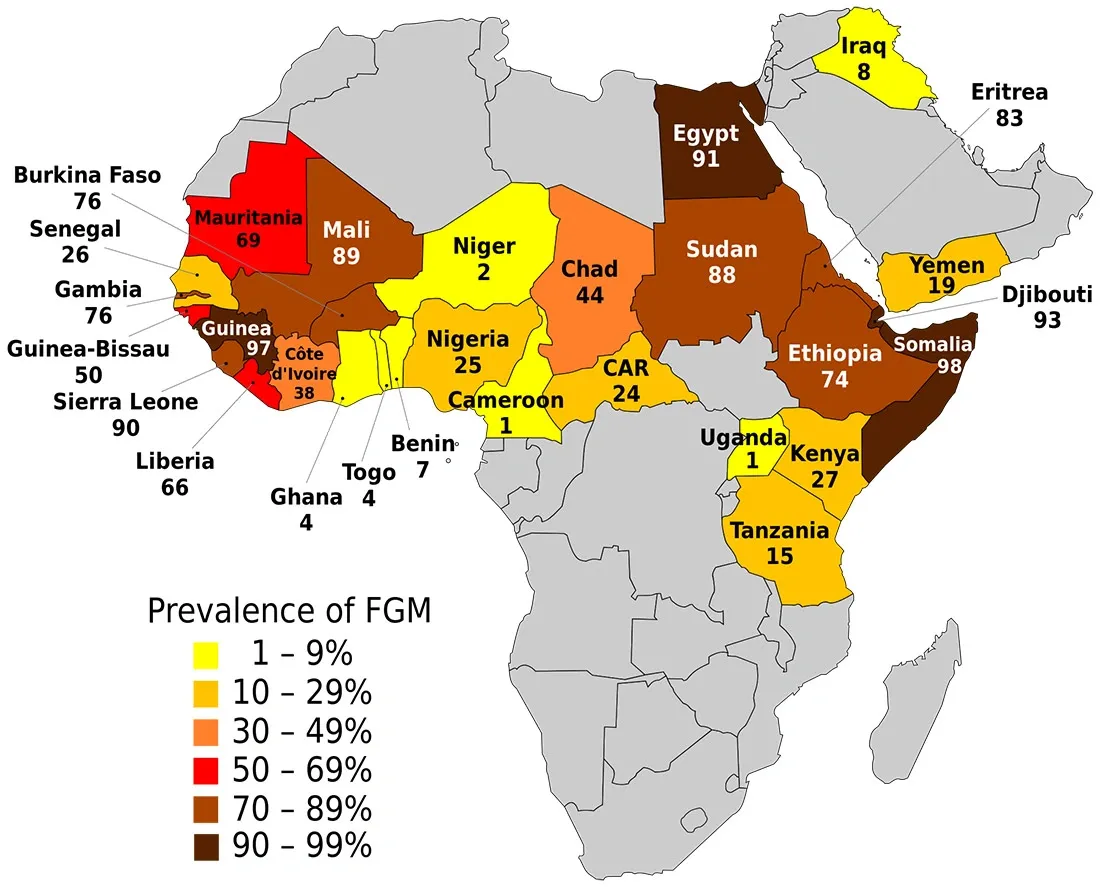
    FGM is most prevalent in Africa, the Middle East, and parts of Asia, but it also occurs within diaspora communities around the world. According to the UNICEF and WHO, FGM is concentrated in 30 countries, particularly in Africa and the Middle East, where the practice is most widespread.
    Prevalence by Region

    Africa:
    In countries such as Somalia, Guinea, and Djibouti, the prevalence of FGM exceeds 90% of the female population. In contrast, other countries like Kenya, Nigeria, and Ghana have reported declines in FGM prevalence due to growing advocacy and legal reforms.
    Middle East and Asia:
    In countries like Yemen and parts of Iraq, FGM is practiced, though its prevalence is lower compared to African nations. Southeast Asian countries such as Indonesia and Malaysia also practice less severe forms of FGM, categorized under Type IV.
    Western Countries:
    As a result of immigration and the movement of people from FGM-practicing countries, the practice has spread to Europe, North America, and Australia. In these regions, the practice often occurs clandestinely, with families sometimes sending girls back to their countries of origin for the procedure.

    Global Trends

    While the overall prevalence of FGM is declining in some areas due to advocacy and legislative efforts, the practice remains persistent in others. There is a growing recognition that targeted, culturally sensitive approaches are essential to addressing the root causes of FGM.
    Chapter 5: Health Impacts of Female Genital Mutilation

    The health consequences of FGM are significant and can last a lifetime. The immediate effects include severe pain, excessive bleeding, and infection, while long-term impacts may involve chronic pain, reproductive health complications, and psychological trauma.
    Immediate Health Impacts

    Severe Pain and Trauma: FGM is usually performed without anesthesia, causing excruciating pain and trauma for the girl or woman.
    Hemorrhage: The cutting involved in FGM often leads to severe bleeding. In some cases, excessive blood loss can result in death, particularly in settings without adequate medical care.
    Infections: Due to the unsanitary conditions in which FGM is often performed, girls are at risk of contracting infections such as tetanus and septicemia. The reuse of unsterilized instruments also increases the risk of HIV transmission.
    Shock: Physical trauma and blood loss can cause shock, which can be life-threatening if not treated promptly.
    Urinary Problems: Swelling and injury to the urethra during FGM can cause urinary retention, painful urination, and infections.

    Long-Term Health Impacts

    Chronic Pain: Many women experience long-term pain in the genital area, particularly during menstruation, urination, and sexual intercourse.
    Reproductive Health Issues: Women who have undergone FGM face a higher risk of complications during pregnancy and childbirth, including obstructed labor, which can be life-threatening. Infibulation (Type III FGM) often requires women to undergo a surgical procedure to reopen the vaginal opening before giving birth.
    Sexual Dysfunction: The removal of sensitive genital tissue, particularly the clitoris, leads to decreased sexual pleasure. Many women report difficulty in achieving orgasm or experiencing any sexual pleasure.
    Infertility: In some cases, the scarring and infections resulting from FGM can cause infertility, further complicating the reproductive health of women.

    Chapter 6: Psychological and Social Consequences

    Beyond the physical health consequences, Female Genital Mutilation (FGM) has profound psychological and social effects. Many women and girls who have undergone FGM experience feelings of trauma, shame, and social isolation.
    Psychological Consequences

    Post-Traumatic Stress Disorder (PTSD): The trauma of undergoing FGM can lead to PTSD, manifesting as nightmares, flashbacks, anxiety, and depression. Girls who undergo the procedure at a young age may carry the emotional scars into adulthood.
    Depression and Anxiety: The emotional toll of FGM is considerable. Many survivors suffer from chronic depression and anxiety due to the pain and trauma they endured, as well as the ongoing physical health problems that result from the procedure.
    Sexual Dysfunction: The physical removal or alteration of genitalia can lead to significant sexual dysfunction, further compounding feelings of worthlessness or isolation in affected women. The inability to experience sexual pleasure can affect intimate relationships, leading to marital difficulties.

    Social Consequences

    Social Isolation: Women who reject FGM or speak out against the practice often face ostracism from their families and communities. This can lead to feelings of abandonment and isolation, as women may be seen as violating cultural norms.
    Stigma and Shame: For many women who undergo FGM, there is a deep sense of shame associated with the procedure, particularly when they experience sexual or reproductive complications. This can result in feelings of inadequacy, especially in cultures where a woman’s worth is closely tied to her reproductive abilities.

    Chapter 7: Legal and Human Rights Perspectives

    Globally, Female Genital Mutilation (FGM) is recognized as a violation of the human rights of women and girls. International treaties and national laws have been enacted to protect women from this harmful practice, though enforcement remains a challenge in many regions.
    International Human Rights Frameworks

    Numerous international agreements call for the eradication of FGM:

    Universal Declaration of Human Rights (UDHR): Protects the right to bodily integrity and condemns harmful practices that degrade human dignity.
    Convention on the Elimination of All Forms of Discrimination Against Women (CEDAW): Calls for the elimination of harmful practices like FGM that discriminate against women and girls.
    Convention on the Rights of the Child (CRC): Recognizes FGM as a violation of children’s rights and calls for its eradication as part of efforts to protect children from harmful traditional practices.

    National Legal Frameworks

    Many countries have enacted specific laws banning FGM, particularly in Africa, Europe, and North America. However, enforcing these laws remains a significant challenge, particularly in rural areas where the practice is deeply ingrained. In countries like Egypt, Kenya, and Sudan, governments have introduced legislation criminalizing FGM, yet prosecutions remain rare due to a combination of community support for the practice and a lack of political will.
    Challenges in Enforcement

    Cultural Resistance: In communities where FGM is seen as a vital part of cultural identity, laws banning the practice often face strong resistance. This cultural attachment to FGM makes enforcement difficult, as families may opt to perform the procedure in secret or travel to neighboring countries where FGM is not prosecuted.
    Weak Legal Systems: In some countries, the lack of robust legal and healthcare systems hinders the enforcement of anti-FGM laws. Even when FGM is illegal, women and girls may have little access to protection or legal recourse.

    Chapter 8: Efforts to Eradicate FGM

    The global movement to end FGM has made significant progress in recent years, with many governments, international organizations, and NGOs taking action to raise awareness and implement strategies to eradicate the practice.
    International Advocacy

    International organizations such as the United Nations, WHO, and UNICEF have launched numerous initiatives aimed at eradicating FGM. These initiatives include public awareness campaigns, legal reforms, and the promotion of gender equality and education for girls.
    Grassroots Efforts

    At the community level, local activists and survivors of FGM have been instrumental in driving change. In countries like Kenya and Ethiopia, grassroots organizations work closely with communities to educate families about the dangers of FGM and provide alternative rites of passage for girls.
    Engagement with Religious and Community Leaders

    One of the most effective strategies in the fight against FGM has been engaging religious and community leaders who hold significant influence within their communities. When these leaders publicly denounce FGM, it can have a powerful impact on shifting cultural norms.
    Chapter 9: Role of International Organizations and NGOs

    Numerous international organizations and NGOs play a pivotal role in the fight against FGM. These groups work to raise awareness, support legal reforms, and provide resources to survivors of FGM.

    UNICEF: Plays a leading role in advocating for the rights of children and women, focusing on ending harmful practices like FGM through education and outreach programs.
    World Health Organization (WHO): Provides critical health information on the risks of FGM and works with governments to develop healthcare guidelines for treating FGM survivors.
    Non-Governmental Organizations (NGOs): Grassroots organizations, such as Equality Now, The Orchid Project, and Forward UK, are actively involved in advocating for the rights of women and girls. They work on providing education, legal support, and healthcare for those affected by FGM.

    Chapter 10: Case Studies of Communities Practicing FGM

    To better understand the persistence of FGM, it is important to explore case studies from different communities where the practice remains widespread. In Somalia, for instance, nearly 98% of women have undergone FGM, making it one of the highest prevalence countries. Similarly, in Sudan, Type III FGM (infibulation) is common, and cultural practices linked to purity and marriageability make it difficult to eradicate the practice.
    Chapter 11: Religion and FGM: Misconceptions and Realities

    One of the most enduring myths about FGM is its association with religion. Although FGM is often justified on religious grounds, there is no major world religion that mandates the practice. This chapter explores how religious leaders and scholars have spoken out against FGM and how religious texts have been misinterpreted to justify the procedure.
    Chapter 12: The Role of Gender Inequality and Patriarchy

    FGM is closely tied to issues of gender inequality and patriarchal structures. The practice is used to control women’s sexuality and reinforce traditional gender roles that prioritize male dominance. This chapter will examine how patriarchal norms perpetuate FGM and how combating gender inequality is key to eradicating the practice.
    Chapter 13: Education and Awareness Campaigns

    Education plays a crucial role in changing attitudes towards FGM. In countries like Kenya and Nigeria, education and awareness campaigns have helped reduce the prevalence of FGM, particularly among younger generations. This chapter explores the impact of education in reducing FGM rates and empowering communities to abandon the practice.
    Chapter 14: Voices of Survivors

    The voices of survivors are central to the global movement to end FGM. Survivors of FGM have been instrumental in raising awareness about the practice and advocating for its eradication. This chapter highlights the personal stories of FGM survivors, focusing on their courage, resilience, and activism.
    Chapter 15: FGM in Diaspora Communities

    FGM is not confined to the countries where it originated. The practice has spread to diaspora communities in Europe, North America, and Australia. This chapter explores how FGM is practiced in immigrant communities, the challenges of enforcing anti-FGM laws in these regions, and the efforts to educate and protect at-risk girls.
    Chapter 16: Legal Protections and Challenges in Prosecution

    This chapter focuses on the legal protections in place to prevent FGM and the challenges involved in prosecuting those who continue to practice it. Despite the existence of anti-FGM laws in many countries, enforcement is often weak, and cultural resistance remains strong. The chapter also examines successful prosecutions and the lessons learned from those cases.
    Chapter 17: Cultural Sensitivity and Community Engagement

    Efforts to eliminate FGM must be carried out with cultural sensitivity to avoid alienating the communities in which the practice is entrenched. This chapter discusses the importance of working with communities to develop culturally appropriate alternatives to FGM and engaging families in the fight against the practice.
    Chapter 18: The Role of Healthcare Providers

    Healthcare providers are often on the front lines of identifying and treating the consequences of FGM. This chapter discusses the critical role that healthcare workers play in FGM prevention, including providing care for survivors, offering education, and reporting cases to the authorities.
    Chapter 19: Moving Forward: Strategies for Global Elimination

    Eradicating FGM requires a comprehensive, multi-faceted approach that includes legal reform, education, community engagement, and international cooperation. This chapter outlines the key strategies that have proven effective in reducing the practice and the steps that must be taken to achieve global elimination.
    Chapter 20: Conclusion

    Female Genital Mutilation (FGM) is a practice that has caused untold suffering for millions of women and girls worldwide. It is a violation of human rights and a manifestation of deeply rooted gender inequality. Despite the significant progress made in recent decades, much work remains to be done to ensure the eradication of this harmful practice. The global community must continue to advocate for the rights of women and girls, challenge harmful cultural norms, and empower survivors to speak out against FGM. Only by working together can we hope to achieve a future where no girl is subjected to the horrors of FGM.

    This expanded document provides a comprehensive examination of FGM, from its historical roots to the global efforts to eradicate it. It underscores the importance of education, legal frameworks, and survivor advocacy in the fight to end this harmful practice.

  • Fidel Castro: Revolutionary Leader and Icon of Cuba

    By Scott J. Arnold

    Fidel Castro: Revolutionary Leader and Icon of Cuba

    Fidel Castro is one of the most iconic and controversial figures in modern history. His leadership of Cuba for almost five decades, from 1959 until his formal resignation in 2008, transformed the country into the first communist state in the Western Hemisphere. While Castro is revered by some as a champion of anti-imperialism and social justice, others criticize him for the repressive nature of his regime, the economic hardships Cuba endured, and the widespread human rights violations during his time in power. This expanded profile of Fidel Castro delves into his early life, revolutionary struggle, time as Cuba’s leader, and his global legacy.
    Early Life and Education

    Fidel Alejandro Castro Ruz was born on August 13, 1926, in Birán, Oriente Province, Cuba. He was the third child of Ángel Castro, a wealthy Spanish immigrant landowner, and Lina Ruz González, a domestic worker who later became Castro’s mother after his father divorced his first wife. Although Fidel grew up in relative wealth, he was exposed to the vast inequalities that existed between the rural peasants who worked on his father’s lands and the wealthier landowners.

    Castro attended several prestigious Jesuit schools, including Colegio de Belén in Havana, where he developed a strong sense of Cuban nationalism. As a young man, he was deeply interested in history and was particularly inspired by Cuban independence figures like José Martí. This laid the foundation for Castro’s later revolutionary beliefs.

    In 1945, Castro enrolled in the University of Havana to study law. It was here that he became politically active, joining student groups that advocated for reforms and a more inclusive Cuban government. While studying law, he was involved in student protests and became a charismatic leader within student movements. His involvement in politics took him to other Latin American countries, where he witnessed firsthand the influence of U.S. imperialism in the region, fueling his anti-imperialist sentiment.
    Early Revolutionary Activities and Moncada Barracks Attack

    After earning his law degree in 1950, Castro started a law practice in Havana but became increasingly frustrated by the corruption and inequality of the Cuban government under President Fulgencio Batista. Batista had seized power in a 1952 coup and quickly established a military dictatorship that was supported by the U.S. government.

    Castro’s legal work defending poor Cubans further radicalized him, and he became determined to overthrow the Batista regime. On July 26, 1953, Castro and a group of 160 rebels launched an attack on the Moncada Barracks in Santiago de Cuba. The assault was intended to spark a nationwide uprising, but it failed disastrously. Many of Castro’s forces were killed or captured. Castro was arrested and sentenced to 15 years in prison, but during his trial, he delivered a powerful speech in his defense, ending with the famous declaration: “History will absolve me.”

    Castro’s imprisonment, however, was short-lived. In 1955, under pressure from the public, Batista granted amnesty to many political prisoners, including Castro. Upon his release, Castro went into exile in Mexico, where he met fellow revolutionary Ernesto “Che” Guevara. This meeting would prove pivotal, as Guevara became one of Castro’s closest allies and a symbol of the Cuban Revolution.
    The Cuban Revolution and Rise to Power

    While in Mexico, Castro formed the 26th of July Movement, named after the failed Moncada Barracks attack. The movement’s goal was to overthrow Batista and establish a new government that would serve the interests of the Cuban people. In late 1956, Castro and 82 rebels, including Guevara, sailed from Mexico to Cuba aboard the yacht Granma. Upon arriving in Cuba, they were ambushed by Batista’s forces, and only a handful of the rebels survived. Castro, Guevara, and others retreated to the Sierra Maestra mountains, where they launched a guerrilla war against the Batista regime.

    Over the next two years, Castro’s guerrilla army grew as it gained support from peasants, workers, and intellectuals disillusioned with Batista’s corruption and brutality. Castro’s forces engaged in a series of successful skirmishes against Batista’s army, who were demoralized and weakened by widespread desertions. The U.S. government, which had previously supported Batista, began to distance itself from him as the situation in Cuba deteriorated.

    By December 1958, Batista’s regime was on the verge of collapse. On January 1, 1959, Batista fled the country, and Fidel Castro’s forces marched triumphantly into Havana, marking the successful culmination of the Cuban Revolution. Castro was hailed as a hero by many Cubans who hoped that his leadership would bring an end to corruption, inequality, and foreign interference in Cuban affairs.
    Consolidation of Power and Marxist Ideology

    After the revolution, Castro quickly moved to consolidate his power. Although he initially claimed to support democracy, Castro postponed elections indefinitely and established a one-party state. His government systematically dismantled opposition forces and imprisoned or executed political rivals, including many who had fought alongside him during the revolution.

    One of the most significant shifts during Castro’s early rule was his alignment with the Soviet Union and the adoption of Marxist-Leninist ideology. While Castro did not initially declare his government to be socialist, by 1961, he openly embraced communism. He nationalized industries, including American-owned businesses, and implemented land reforms aimed at redistributing wealth. These moves, while popular among the Cuban poor, led to the deterioration of relations with the United States.

    The U.S. government, alarmed by Castro’s alliance with the Soviet Union, attempted to overthrow him through various means, including economic embargoes and covert actions. The most famous of these efforts was the Bay of Pigs invasion in 1961, in which a CIA-sponsored force of Cuban exiles attempted to invade the island and overthrow Castro. The invasion was a complete failure, and Castro’s forces quickly defeated the invaders, further solidifying his grip on power.

    Castro used the Bay of Pigs invasion to galvanize popular support, portraying the revolution as a defense of Cuban sovereignty against U.S. imperialism. It also pushed Cuba closer to the Soviet Union, which provided economic and military aid to the island nation.
    Cuban Missile Crisis and Cold War Tensions

    The Cuban Missile Crisis of October 1962 marked one of the most dangerous moments of the Cold War and brought the world to the brink of nuclear war. The crisis began when U.S. intelligence discovered Soviet nuclear missiles being installed in Cuba, just 90 miles off the coast of Florida. The presence of these missiles was a direct response to U.S. aggression against Cuba and the stationing of U.S. missiles in Turkey.

    U.S. President John F. Kennedy demanded the removal of the missiles and imposed a naval blockade around Cuba to prevent further Soviet shipments. For 13 tense days, the world watched as the two superpowers stood on the edge of war. Castro, fearing a U.S. invasion, urged Soviet Premier Nikita Khrushchev to launch a preemptive nuclear strike if necessary.

    Ultimately, the crisis was resolved through diplomatic negotiations, with the Soviet Union agreeing to remove its missiles from Cuba in exchange for a U.S. pledge not to invade the island. The U.S. also secretly agreed to remove its missiles from Turkey. While the crisis ended without conflict, it underscored the geopolitical importance of Cuba in the Cold War and cemented Castro’s role as a key player on the global stage.
    Domestic Policies and Social Reforms

    Domestically, Castro’s government implemented sweeping social reforms, many of which remain defining features of his legacy. Under his leadership, Cuba developed an extensive healthcare system that provided free medical services to all citizens. Despite the country’s limited resources, Cuba’s healthcare system achieved remarkable outcomes, with significant improvements in life expectancy, infant mortality rates, and disease control.

    Education was another cornerstone of Castro’s domestic policies. The government launched a nationwide literacy campaign in the early 1960s, which dramatically reduced illiteracy rates. Education was made free and accessible to all Cubans, and the country developed a reputation for its high-quality education system, particularly in the fields of science and medicine.

    However, these social achievements came at a high cost. Castro’s government severely restricted political freedoms, and Cuba became a one-party state where dissent was not tolerated. The government controlled the media, and political opponents were frequently imprisoned, executed, or forced into exile. Human rights organizations frequently condemned the regime for its lack of political freedoms, including freedom of speech, assembly, and the press.

    The Cuban economy also faced significant challenges. Castro’s policy of nationalizing industries led to the withdrawal of U.S. investments, and the U.S. imposed a strict embargo on Cuba, which crippled the island’s economy. Cuba became heavily reliant on Soviet aid, particularly for oil and food imports. While Cuba’s social programs improved the quality of life for many, economic mismanagement and inefficiency left the country struggling with shortages of basic goods and services.
    Internationalism and Global Influence

    Throughout his time in power, Castro sought to export the Cuban Revolution to other parts of the world. His government provided support to revolutionary movements in Latin America, Africa, and Asia. Cuban troops and advisors were sent to Angola, Mozambique, and Ethiopia to support leftist governments and rebel groups, often aligning with Soviet interests during the Cold War.

    In Latin America, Castro’s influence was particularly strong. Inspired by the Cuban Revolution, several leftist insurgencies attempted to overthrow governments in the region. One of the most famous of these was in Bolivia, where Che Guevara led a failed insurgency before being captured and executed in 1967. Castro’s support for revolutionary movements earned him admiration from leftist leaders and activists around the world, but it also led to further isolation from many Western countries.

    Castro’s internationalism extended to humanitarian missions as well. Cuba became known for sending doctors and medical teams to developing countries, particularly in Africa and Latin America, as part of its commitment to socialist solidarity. This “medical diplomacy” not only helped bolster Cuba’s international reputation but also contributed to Castro’s image as a champion of the Global South.
    Economic Struggles and the Special Period

    The collapse of the Soviet Union in 1991 marked a turning point for Cuba. Without Soviet aid, the Cuban economy went into a tailspin, and the country entered what became known as the “Special Period.” The Special Period was characterized by severe shortages of food, fuel, and other essential goods. The Cuban government was forced to implement austerity measures, rationing, and limited market reforms to prevent economic collapse.

    Castro’s ability to maintain power during this time was a testament to his resilience as a leader, but the Special Period also exposed the deep structural weaknesses of the Cuban economy. Tourism became one of the few sectors that generated foreign currency, and the government began to open the country to limited foreign investment. Despite these measures, the country continued to face significant economic challenges throughout the 1990s and 2000s.
    Resignation and Final Years

    In July 2006, Castro underwent emergency surgery for intestinal bleeding and temporarily transferred power to his younger brother, Raúl Castro. Due to his failing health, Fidel Castro officially resigned as President of Cuba in February 2008, ending nearly 50 years of rule. Raúl Castro formally succeeded him as Cuba’s leader and began implementing modest economic reforms, though the country’s political system remained largely unchanged.

    Fidel Castro spent his final years writing and occasionally commenting on world events through his “Reflections” columns in Cuban state media. He remained an influential figure in Cuban society until his death on November 25, 2016, at the age of 90. His death was met with mixed reactions globally—while some mourned the loss of a revolutionary icon, others saw it as the end of an era of authoritarianism and repression in Cuba.
    Legacy and Historical Impact

    Fidel Castro’s legacy is one of the most polarizing in modern history. For his supporters, he is remembered as a hero who stood up to U.S. imperialism, brought education and healthcare to the masses, and supported revolutionary movements across the world. Castro’s vision of a socialist Cuba became a symbol of resistance to colonialism and capitalism, particularly in Latin America and Africa.

    However, his critics view him as a dictator who ruled through repression, stifled political dissent, and presided over a stagnant economy that left many Cubans in poverty. Human rights abuses, including the imprisonment of political dissidents and the suppression of free speech, are also central to the darker aspects of his legacy.

    Regardless of one’s perspective, there is no doubt that Castro left an indelible mark on Cuba and the world. His ability to maintain power in the face of immense challenges—both from within and outside the country—speaks to his skill as a leader and strategist. His vision of a socialist revolution in the Western Hemisphere reshaped Cuban society and inspired movements far beyond its shores.
    Conclusion

    Fidel Castro’s life and legacy are filled with contradictions. He was both a revolutionary hero and a repressive dictator. He improved the lives of many Cubans through education and healthcare, yet his economic policies led to widespread poverty and emigration. His defiance of the United States made him a symbol of anti-imperialism, but it also led to decades of economic hardship for the Cuban people.

    As the world continues to assess Castro’s impact, it is clear that his influence will be felt for generations to come. Whether viewed as a champion of the oppressed or as a tyrant, Fidel Castro’s role in shaping the history of the 20th century is undeniable. His story is a testament to the power of ideology, the complexities of leadership, and the lasting consequences of revolution.

  • G.I. Steinways: The Story of Steinway & Sons’ Pianos Dropped into Battle for American Troops

    By Scott J. Arnold

    G.I. Steinways: The Story of Steinway & Sons’ Pianos Dropped into Battle for American Troops

    During World War II, American troops faced grueling battles and long stretches of tension-filled downtime. Amidst the chaos and intensity of the war, one company sought to provide soldiers with a moment of peace, relaxation, and even joy: Steinway & Sons, the legendary piano manufacturer. Known for crafting some of the finest pianos in the world, Steinway & Sons contributed to the war effort in an unexpected way by air-dropping specially designed pianos—known as “G.I. Steinways”—into battle zones for American soldiers. These pianos, parachuted into remote locations, provided an escape from the stresses of war through music.

    These G.I. Steinways were specially constructed to withstand the harsh conditions of war, coated in dark blue, grey, or olive drab finishes to blend with military equipment. They came complete with tuning instructions, making it possible for soldiers to maintain them and enjoy music even in the middle of a battlefield. In this article, we will explore the history of Steinway’s contributions to the war, the story behind these air-dropped pianos, and the significance of music during one of the most challenging times in modern history.
    Steinway & Sons: A Legacy of Excellence

    Founded in 1853 by German immigrant Heinrich Engelhard Steinweg, later known as Henry Steinway, Steinway & Sons quickly established itself as one of the most respected piano manufacturers in the world. The company’s pianos were celebrated for their exceptional craftsmanship, tonal quality, and innovation. By the time World War II began, Steinway pianos were a symbol of musical excellence and could be found in concert halls, homes, and schools across the United States and Europe.

    When the war broke out in 1939, Steinway & Sons, like many other American manufacturers, shifted part of its production to support the war effort. While most companies contributed by producing military equipment, ammunition, or vehicles, Steinway continued to produce pianos—though not for civilian use. The company’s dedication to quality and craftsmanship would soon find a new purpose on the battlefield, as Steinway’s pianos were used to provide a much-needed respite for soldiers during the war.
    Music and Morale: The Role of Music in Wartime

    Throughout history, music has played an essential role in boosting the morale of soldiers. During times of war, music has been used to rally troops, lift spirits, and provide a temporary escape from the harsh realities of combat. In World War II, music was especially important for maintaining the emotional and psychological well-being of soldiers who were far from home and facing constant danger.

    Military bands and USO (United Service Organizations) performances were commonplace in the theaters of war, with entertainers like Glenn Miller, Bing Crosby, and the Andrews Sisters traveling to war zones to perform for American troops. These performances gave soldiers a sense of connection to home and a brief reprieve from the grimness of the battlefield. However, for soldiers stationed in remote locations or those engaged in long, drawn-out campaigns, access to music could be limited.

    This is where Steinway & Sons stepped in. Recognizing the need for a way to bring music to the frontlines, Steinway developed a solution that would allow soldiers to create their own music, no matter where they were stationed. These pianos would not only serve as a source of entertainment but also as a reminder of the comforts of home.
    The G.I. Steinways: Pianos Designed for the Battlefield

    In 1942, Steinway & Sons began producing the Victory Vertical Piano, commonly referred to as the G.I. Steinway, for the U.S. military. These pianos were specially designed to be smaller, more portable, and durable enough to withstand the rigors of war. Traditional concert pianos, with their glossy finishes and delicate components, were not suitable for the battlefield, so Steinway engineers set out to create a piano that could be deployed in war zones and still provide a high-quality musical experience.

    The G.I. Steinways were built with a vertical, upright design, as opposed to the larger grand pianos that Steinway was best known for. The upright design allowed for easier transport and handling in the field. To ensure that the pianos could endure the harsh conditions of war, Steinway replaced the usual wood veneers with more durable materials and finished the pianos in military colors—dark blue, grey, and olive drab—so they would blend in with the equipment used by American forces.

    Additionally, these pianos were built with simplicity in mind. Each G.I. Steinway came with a set of tuning instructions so that soldiers could tune the piano themselves, even if they were not professional tuners. These instructions proved invaluable, as the pianos were often subjected to fluctuating temperatures, humidity, and rough handling, all of which could cause the instrument to go out of tune. The ability to tune the piano in the field meant that soldiers could maintain the instrument and continue to enjoy its music over extended periods.

    The pianos were compact enough to be transported by jeep or even air-dropped into battle zones via parachute. They were packed securely in crates and outfitted with large parachutes that would ensure a safe landing. Once on the ground, the pianos could be set up quickly and were ready to play. For soldiers who had spent days or weeks on the frontlines, the sight of a parachuting piano must have been an extraordinary moment of relief and excitement.
    Music on the Frontlines: Soldiers and Their Pianos

    The impact of the G.I. Steinways on the morale of American soldiers cannot be understated. For many soldiers, access to music was a way to cope with the extreme stress and emotional toll of warfare. Playing a piano allowed them to temporarily escape from the violence and chaos around them, providing a sense of normalcy and peace amidst the turmoil of battle.

    Soldiers used the pianos for a variety of purposes. Some gathered around to sing popular songs of the day, such as “Boogie Woogie Bugle Boy” or “In the Mood”, while others played classical pieces or improvised tunes that reminded them of home. In some cases, soldiers who were skilled musicians took on the role of the camp pianist, playing for their fellow troops in makeshift concerts or during moments of downtime.

    The pianos also provided a connection to loved ones back home. Soldiers would sometimes write letters to their families, describing the experience of playing or hearing a piano in the field. For many, these moments of music were a rare opportunity to relax and reflect, offering a brief reprieve from the brutality of combat.

    In a letter from the frontlines, one soldier wrote:

    “When you’re out here, surrounded by the noise of war, there’s something about hearing a piano that takes you back. For a little while, you can close your eyes and forget about everything. It’s like being home again, if only for a moment.”

    This sentiment was shared by countless soldiers who experienced the joy and comfort of hearing a piano in the midst of war.
    The Logistics of Air-Dropping Pianos

    While the idea of air-dropping pianos into a war zone may seem unusual, the logistics of such an operation were surprisingly effective. The G.I. Steinways were designed to be as lightweight and durable as possible, making them suitable for transport by air. The pianos were packed into crates that were specially designed to absorb the impact of landing, ensuring that the instruments were not damaged when they reached the ground.

    The parachutes used to drop the pianos were large enough to slow the descent of the crates, allowing them to land gently in designated drop zones. In some cases, the pianos were delivered directly to military camps, where soldiers would eagerly unpack them and set them up. In other instances, the pianos were dropped into more remote areas, where they could be retrieved and brought to the frontlines.

    Once on the ground, the pianos were quickly put to use. Soldiers would gather around to listen to the music or take turns playing the instrument. The presence of a piano often became a focal point for camaraderie and relaxation, with troops using the opportunity to bond over shared memories of home or favorite songs.
    The Cultural Impact of the G.I. Steinways

    The G.I. Steinways not only provided soldiers with a source of entertainment and relaxation, but they also played a role in preserving American culture during the war. Music, and especially piano music, was a deeply ingrained part of American life during the 1940s. Songs from Broadway shows, jazz standards, and popular tunes filled the airwaves back home, and these same songs were carried to the frontlines through the pianos.

    The pianos became a way for soldiers to stay connected to the cultural life of the United States, even as they fought in distant lands. The familiar melodies reminded them of their families, friends, and the lives they had left behind, providing comfort and reassurance in the face of uncertainty.

    In addition to popular music, some soldiers used the pianos to play classical music, reflecting the diverse musical tastes of the troops. Whether it was a rendition of Beethoven’s Moonlight Sonata or a rousing performance of Gershwin’s Rhapsody in Blue, the pianos allowed soldiers to express their creativity and enjoy a cultural connection that transcended the horrors of war.
    Post-War Legacy and the Enduring Story of the G.I. Steinways

    After the war, the story of the G.I. Steinways became part of the larger narrative of how American companies contributed to the war effort. Steinway & Sons had not only supported the war by producing these special pianos but had also helped sustain the emotional and psychological well-being of soldiers through the power of music.

    Many of the G.I. Steinways survived the war, and some were brought back to the United States, where they became treasured keepsakes for returning veterans. Others remained in Europe, where they continued to be used by soldiers stationed in post-war occupation zones.

    The legacy of the G.I. Steinways lives on in the history of both Steinway & Sons and the broader story of World War II. The pianos represent more than just instruments—they symbolize the resilience of the human spirit and the importance of creativity and culture, even in the darkest of times.
    Conclusion: A Musical Gift in the Midst of War

    The story of Steinway & Sons and the G.I. Steinways is a testament to the power of music to uplift, inspire, and provide comfort during times of unimaginable hardship. By air-dropping pianos into battle zones, Steinway & Sons brought a sense of normalcy and joy to soldiers who were facing the harsh realities of war.

    The G.I. Steinways were more than just pianos—they were symbols of hope, reminders of home, and a source of emotional strength for the men who played them. Through music, soldiers found a way to connect with one another, to relax, and to momentarily forget the violence surrounding them.

    In the annals of World War II history, the G.I. Steinways stand out as a unique and heartwarming chapter, illustrating how even in the midst of conflict, the arts have the power to heal and to bring people together.

  • Franz Stigler: The German Fighter Pilot Who Saved a B-17 Bomber

    By Scott J. Arnold

    Franz Stigler: The German Fighter Pilot Who Saved a B-17 Bomber


    War is often depicted in stark terms of good versus evil, friend versus foe, victory versus defeat. Yet, even in the chaos and brutality of battle, moments of extraordinary humanity sometimes emerge, transcending the violence and hatred that typically define such conflicts. One such story involves Franz Stigler, a German Luftwaffe fighter pilot, and Charlie Brown, the pilot of a crippled American B-17 bomber, in what has become known as “the most incredible encounter between enemies in World War II.”

    This remarkable event took place on December 20, 1943, when Franz Stigler, an ace fighter pilot with 28 confirmed kills, risked his life by sparing and escorting a severely damaged American bomber filled with nine crewmen out of harm’s way. Rather than shoot it down as he had been trained to do, Stigler chose to honor a higher moral code, an act of chivalry that defied the norms of warfare. His decision would ultimately save the lives of the bomber’s crew and stand as a testament to the power of compassion even in the midst of one of history’s most devastating conflicts.

    This story of moral courage, compassion, and redemption has been passed down through history, reminding us that even in the darkest times, humanity can shine through.
    Franz Stigler: The Fighter Pilot

    Franz Stigler was born on August 21, 1915, in Regensburg, Germany. He grew up in a devout Catholic family, where his parents instilled in him the values of discipline, morality, and respect. His father, a pilot during World War I, inspired Franz’s passion for aviation. By the time World War II erupted, Stigler had become an accomplished fighter pilot in the Luftwaffe, the German air force.

    Stigler trained initially as a commercial pilot, flying civilian aircraft. However, like many Germans during the rise of the Nazi regime, he was called to serve in the military. When the war broke out in 1939, he was stationed in Africa, but as the conflict intensified, he was transferred back to Europe, where he flew the Messerschmitt Bf 109, one of the most advanced fighter planes of its time.

    Stigler quickly rose through the ranks of the Luftwaffe, distinguishing himself as a highly skilled and deadly fighter pilot. By 1943, he had amassed 28 confirmed aerial victories, making him one of the most feared aces in the skies. His squadron, JG 27, was renowned for its combat prowess, and Stigler’s reputation for precision and efficiency as a pilot was well-known among his peers.

    However, while Stigler was a formidable fighter, he was also guided by a strong sense of honor. His moral compass was shaped by the teachings of his Catholic upbringing and the influence of his early flight instructor, Gustav Rödel, who had impressed upon him the idea that aerial combat should never be about vengeance or hatred but rather about duty and survival. Rödel had told Stigler early on, “You shoot at a machine, not at a man. If I ever see or hear of you shooting someone in a parachute, I will shoot you myself.”

    This principle of chivalry would become a central part of Stigler’s identity as a fighter pilot, influencing his decision-making throughout the war.
    Charlie Brown and the B-17 Bomber Mission

    On the other side of this incredible story was Second Lieutenant Charlie Brown, a young American bomber pilot from West Virginia. At just 21 years old, Brown was the commander of a B-17 Flying Fortress, a four-engine heavy bomber used by the United States Army Air Forces (USAAF) during World War II. The B-17 was famous for its ability to withstand significant damage and still remain airborne, earning it the nickname “Flying Fortress.”

    On December 20, 1943, Brown and his crew of eight embarked on a bombing mission over Bremen, Germany. Bremen was a major industrial center, home to Focke-Wulf factories that produced fighter planes for the German Luftwaffe. The mission was part of the larger Allied bombing campaign to cripple Germany’s war production capacity and hasten the end of the conflict.

    As Brown and his crew approached their target, they encountered fierce resistance from German anti-aircraft guns, or “flak,” as well as enemy fighters. Their B-17, named Ye Olde Pub, was pummeled by the heavy anti-aircraft fire, which shredded the plane’s fuselage, damaged its engines, and wounded several crew members. Despite the barrage, Brown and his crew managed to drop their bombs on the target, but the damage they had sustained was catastrophic.

    As they turned to head back to their base in England, the crew of Ye Olde Pub found themselves isolated from the rest of their formation. The B-17 had lost altitude and was struggling to stay in the air. Its tail section was severely damaged, one of its engines was failing, and the crew was tending to several injured comrades. In addition to these challenges, the aircraft was leaking fuel and ammunition, making it a sitting duck for any German fighters in the area.

    As the wounded bomber limped away from Bremen, it was spotted by Franz Stigler, who had just returned from a mission of his own. Seeing the lone American bomber, Stigler realized that it was an easy target—shooting it down would have been a routine matter for a pilot of his skill. Moreover, if Stigler succeeded in downing the B-17, it would bring his tally of kills to 29, putting him one step closer to earning the coveted Knight’s Cross, one of Germany’s highest military honors.

    But what happened next would go down in history as one of the most remarkable encounters between enemies in the annals of war.
    The Encounter

    Franz Stigler had every reason to open fire on the crippled B-17. The rules of war were clear: enemy aircraft were to be destroyed on sight. German pilots were under orders to show no mercy, especially to bombers, which were responsible for devastating German cities and factories. Stigler’s duty as a Luftwaffe pilot was to protect his homeland and eliminate any threats to the Reich.

    But as Stigler flew alongside Ye Olde Pub, something extraordinary happened. Instead of seeing the B-17 as just another target, Stigler looked closer and saw the human beings inside the bomber. Through the damaged windows of the aircraft, he could see the injured crew members tending to their wounded comrades. He saw the bullet holes and shrapnel scars that riddled the plane’s fuselage. The aircraft was barely holding together, and Stigler knew it would not make it back to England if it faced any more attacks.

    In that moment, Stigler’s sense of honor and humanity overpowered his duty as a soldier. He recalled the words of his mentor, Gustav Rödel, who had told him that shooting a helpless enemy was not the act of an honorable man. Stigler made a decision that could have cost him his life: he would not shoot down the B-17. Instead, he would try to save the men inside.

    Stigler pulled up alongside the American bomber and made eye contact with Charlie Brown, who was at the controls. At first, Brown was terrified. He assumed that the German fighter pilot was about to finish them off, and with the plane in such a dire condition, there was little they could do to defend themselves. But instead of firing, Stigler signaled to Brown, gesturing with his hands to indicate that he should try to land the plane safely.

    Brown, confused and unsure of Stigler’s intentions, continued to fly the bomber. Stigler then did something even more incredible: he positioned his Messerschmitt next to the B-17 and began escorting it through German airspace. By flying so close to the bomber, Stigler protected it from German anti-aircraft guns and other Luftwaffe fighters who might have attempted to shoot it down. To any German forces observing from the ground or the air, it appeared as though Stigler was attacking the B-17, when in fact he was shielding it.

    For several minutes, Stigler flew in formation with the damaged bomber, guiding it toward the North Sea, where it would be out of range of German defenses. At the edge of German airspace, Stigler gave a final salute to the American crew, then peeled away and returned to his base.

    Charlie Brown and his crew, still stunned by what had just happened, managed to limp their bomber across the North Sea and back to their base in England. They had survived, not because of their skill or luck, but because of the extraordinary kindness of an enemy pilot who chose to spare their lives.
    The Aftermath

    After the encounter, both Stigler and Brown continued to serve in the war, but they did not speak of the incident for many years.

    For Franz Stigler, sparing the B-17 and its crew was a decision that could have had serious consequences. If his superiors had learned that he had deliberately let an enemy aircraft escape, he could have been court-martialed or even executed for treason. In the Nazi regime, acts of mercy toward the enemy were not tolerated. As a result, Stigler kept the incident to himself, knowing that revealing it could put his life in danger.

    Charlie Brown, meanwhile, returned to his unit and continued flying bombing missions over Europe. Like Stigler, he did not speak publicly about the encounter. While he was grateful to have survived, he wasn’t sure how to explain the act of mercy that had saved his crew. He worried that his fellow pilots might not believe him or might question his account of the events.

    It wasn’t until decades later, after the war had ended and both men had retired from military service, that their incredible story came to light.
    The Reunion

    In the late 1980s, Charlie Brown began a search for the German pilot who had saved his life. He was determined to find out who the mysterious Luftwaffe ace was and thank him for his act of compassion. Brown’s search led him to a network of veteran pilots and aviation historians, who helped him track down Franz Stigler, who was living in Canada.

    In 1990, nearly 50 years after their fateful encounter, Brown and Stigler finally met in person. The two men embraced like old friends, their bond forged not in combat but in an extraordinary moment of humanity. Brown thanked Stigler for sparing his life and the lives of his crew, and the two men quickly developed a close friendship. Over the next several years, they became like brothers, visiting each other frequently and sharing their story with the world.

    Their remarkable encounter, once a secret kept out of fear and uncertainty, became a symbol of the power of kindness and moral courage. Brown and Stigler’s story was featured in numerous books, documentaries, and interviews, inspiring people around the world with its message of compassion and the triumph of humanity over hatred.
    The Legacy of Franz Stigler and Charlie Brown

    The story of Franz Stigler and Charlie Brown is more than just a remarkable wartime anecdote; it is a reminder of the capacity for goodness that exists even in the midst of war. In a conflict that claimed the lives of millions and was marked by unspeakable atrocities, Stigler’s decision to spare the crew of Ye Olde Pub stands out as an extraordinary act of chivalry and moral courage.

    Stigler’s decision to save the American bomber crew was not just an act of kindness; it was an act of defiance against the brutal and dehumanizing nature of war itself. It was a reminder that, even in the heat of battle, soldiers on opposing sides are still human beings, deserving of compassion and respect.

    For Charlie Brown and his crew, Stigler’s act of mercy gave them a second chance at life, allowing them to return home to their families and live out their lives in peace. Their gratitude for Stigler’s decision extended far beyond the immediate relief of survival; it shaped their understanding of the complexities of war and the humanity that can exist even between enemies.

    Brown and Stigler’s friendship in the years after the war serves as a testament to the enduring power of forgiveness, reconciliation, and mutual respect. Their story has inspired countless people around the world to believe in the possibility of understanding and compassion, even in the most divided and hostile of circumstances.
    Conclusion

    The encounter between Franz Stigler and Charlie Brown is a story of extraordinary humanity in the midst of one of history’s darkest periods. It is a story of a German ace fighter pilot who risked his life to save the crew of an American bomber, not out of duty, but out of a profound sense of morality and honor. Stigler’s decision to spare Ye Olde Pub and its crew, and the lasting friendship that developed between him and Charlie Brown, remind us that even in the most violent and dehumanizing circumstances, acts of kindness and compassion can prevail.

    Their story serves as a powerful reminder that war, with all its devastation and tragedy, cannot extinguish the basic human capacity for empathy and compassion. Even in the darkest moments of conflict, the light of humanity can shine through. The legacy of Franz Stigler and Charlie Brown lives on as a symbol of the power of moral courage, the strength of compassion, and the enduring hope for reconciliation and peace.

  • Gambino crime family

    By Scott J. Arnold

    Gambino crime family

    Introduction

    The Gambino crime family, one of New York City’s “Five Families,” has been a cornerstone of organized crime in America since its formation in the early 20th century. Emerging from a wave of Italian-American Mafia organizations, the family’s history is intertwined with notorious mob figures, violent power struggles, and significant influence over various illegal enterprises.
    Origins and Early History

    The Gambino family originated from the D’Aquila gang, an early Sicilian Mafia group in New York City led by Salvatore D’Aquila in the 1910s. After D’Aquila’s assassination in 1928, the family underwent significant power shifts, leading to its first major leader, Vincent Mangano, in 1931. Under Mangano, the family expanded its operations, including gambling, extortion, and labor racketeering.
    Rise of Carlo Gambino

    Carlo Gambino took control of the family in 1957 after orchestrating the murder of Albert Anastasia, a powerful and feared leader known for his ruthless enforcement tactics. Gambino’s leadership marked a golden era for the family, solidifying its power and expanding its influence. He established strategic alliances, particularly with the Lucchese family, and avoided direct involvement in narcotics, which helped evade federal scrutiny. Gambino’s reign was defined by his low-profile style and effective control over various criminal enterprises.
    Paul Castellano and Internal Conflict

    Upon Gambino’s death in 1976, leadership passed to his cousin and brother-in-law, Paul Castellano, a businessman-like figure who emphasized white-collar crime over street-level operations. Castellano’s leadership sparked dissent within the family, especially among traditional mobsters who felt alienated by his approach and luxurious lifestyle. This discontent culminated in his assassination in 1985, orchestrated by John Gotti, a charismatic and ambitious capo.
    John Gotti’s Leadership

    John Gotti, often called “The Teflon Don” due to his ability to evade convictions, assumed control after Castellano’s death. Gotti’s flamboyant style and media presence marked a stark contrast to his predecessors. Under Gotti, the Gambino family engaged in drug trafficking, extortion, and other high-profile crimes, but his visibility and recklessness attracted intense law enforcement scrutiny. In 1992, Gotti was convicted on charges including murder and racketeering, largely due to the testimony of his underboss, Salvatore “Sammy the Bull” Gravano.
    Post-Gotti Era and Decline

    Following Gotti’s imprisonment, the family struggled with internal strife and external pressures from law enforcement. Leadership passed to Gotti’s son, John A. Gotti, who attempted to maintain control, but the family’s power continued to wane. The rise of cooperating witnesses and federal crackdowns severely weakened their operations.
    Modern Day Activities

    Today, the Gambino family remains active but significantly diminished compared to its peak. The organization continues to be involved in traditional Mafia activities such as loansharking, gambling, and racketeering, though they operate with a lower profile to avoid the intense surveillance that marked earlier decades.
    Conclusion

    The Gambino crime family’s history is a testament to the volatile and often violent nature of organized crime in America. From its early Sicilian roots to its modern-day operations, the family’s legacy is marked by power struggles, law enforcement battles, and a complex web of criminal activities that have profoundly impacted New York’s underworld. Despite numerous setbacks, the family remains a symbol of the enduring presence of the Mafia in American society.