Author: admin

  • Chairman Mao’s Fight Against the West: How China Defeated Western Influence.

    By Scott J. Arnold

    Chairman Mao’s Fight Against the West: How China Defeated Western Influence
    Introduction (1-2 pages)

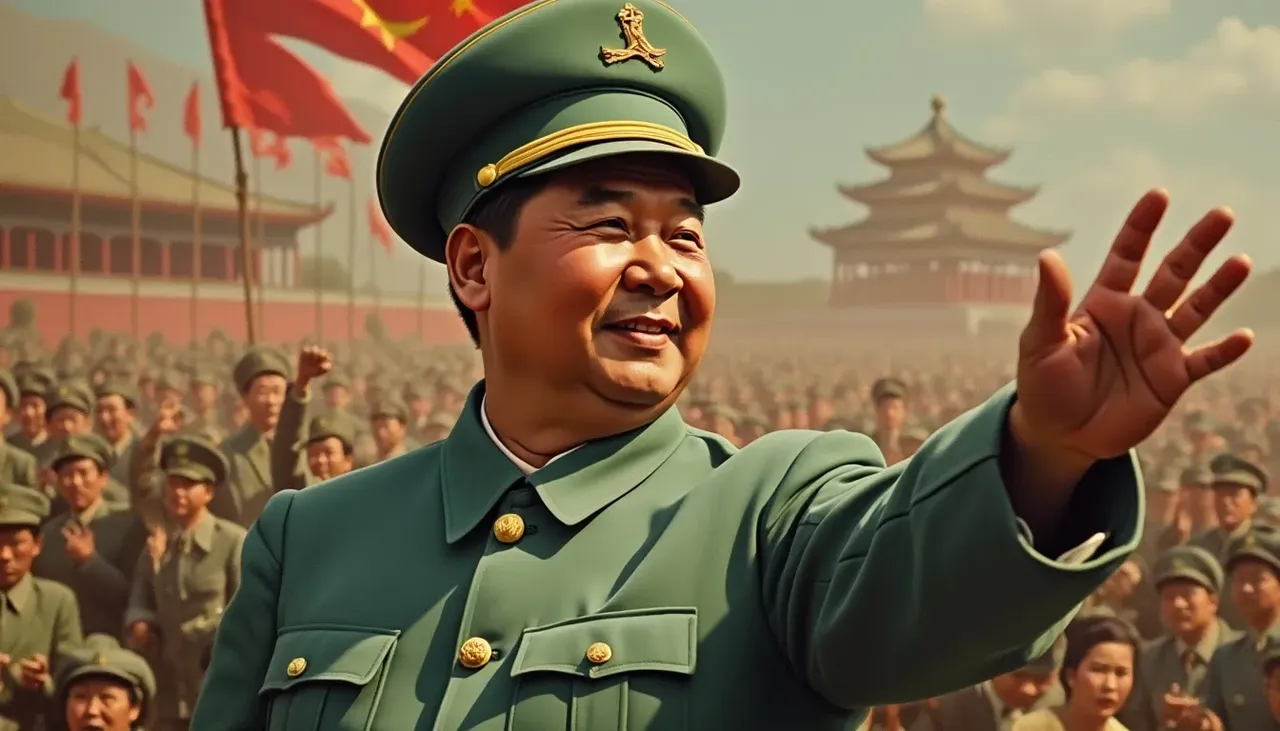
    Background on Mao Zedong: Introduce Chairman Mao as the leader of the Chinese Communist Party (CCP) and the key figure in the founding of the People’s Republic of China in 1949.
    Overview of Mao’s Conflict with the West: Set the stage by briefly explaining how Mao viewed the West (primarily the U.S. and its allies) as imperialist powers that sought to control China. Mao’s goal was to free China from both internal enemies (Nationalists) and external threats (Western powers).
    Thesis Statement: Mao’s victory over Western influence was not just military but also ideological and economic. This paper will explore how Mao resisted Western imperialism, redefined China’s international standing, and positioned China as a leader of the communist bloc, effectively “beating” the West in the ideological struggle.

    Chapter 1: Historical Context of China Before Mao (2 pages)

    Western Influence and Imperialism in 19th-Century China: Describe the impact of Western imperialism in China during the 19th and early 20th centuries. Include the Opium Wars, the “Century of Humiliation,” and the concessions given to Western powers and Japan.
    The Fall of the Qing Dynasty: Explain the internal instability that plagued China following the collapse of the Qing Dynasty in 1911, which led to warlordism, civil unrest, and further vulnerability to foreign control.
    Mao’s Early Life and Influence: Introduce Mao’s early years, his exposure to Marxist ideas, and his desire to end foreign domination and rebuild China as a self-sufficient and strong nation free from imperialism.

    Chapter 2: The Rise of the Chinese Communist Party and the Fight Against Western Imperialism (3 pages)

    Formation of the CCP: Discuss the founding of the CCP in 1921, with Soviet support, and how it sought to challenge both the Nationalist government (Kuomintang, KMT) and Western influence in China.
    The United Front and the Civil War: Explain the initial cooperation between the CCP and KMT in the 1920s to expel warlords and foreign influence. Detail the breakdown of this alliance in the late 1920s and the subsequent civil war between the communists and the Nationalists.
    The Long March (1934-1935): Detail the Long March as a turning point in CCP history, cementing Mao’s leadership and symbolizing the CCP’s resilience against overwhelming odds, including those supported by the West.

    Chapter 3: The War Against Japan and World War II (2-3 pages)

    The Second Sino-Japanese War (1937-1945): Discuss how Mao and the CCP capitalized on the Japanese invasion of China to expand their power. Although both the CCP and KMT fought against Japan, the communists positioned themselves as the true defenders of China, especially in the rural areas.
    Western Support for the Nationalists: Explain how the United States and Western powers backed Chiang Kai-shek’s Nationalists during World War II, believing the KMT would be a better ally for Western interests in Asia. This support included financial aid, arms, and military training.
    CCP Gains During the War: While the West supported the Nationalists, the CCP increased its popularity by focusing on land reforms, helping the peasantry, and using guerrilla warfare tactics against the Japanese. This not only gained Mao the support of the rural population but also helped the CCP grow militarily.

    Chapter 4: The Chinese Civil War and Mao’s Victory Over the Nationalists (3 pages)

    Resumption of the Civil War (1946-1949): After World War II, the civil war between the CCP and KMT resumed. Despite significant U.S. support for Chiang Kai-shek, Mao’s forces, with their superior organization, guerrilla tactics, and popular support, defeated the Nationalists.
    Western Miscalculations: Analyze how the U.S. and Western powers underestimated Mao’s strength and the extent of popular support for the CCP. Western backing of the corrupt and inept Nationalist government contributed to their eventual defeat.
    The Establishment of the PRC in 1949: Discuss Mao’s declaration of the People’s Republic of China on October 1, 1949, marking the end of Western-supported Nationalist rule on the mainland. This was a significant victory over Western influence in Chinese domestic affairs, as the PRC was established as a communist state aligned with the Soviet Union.

    Chapter 5: Mao’s Economic and Social Policies: Breaking Free from Western Models (2-3 pages)

    The First Five-Year Plan (1953-1957): Explore how Mao sought to industrialize China and reduce its dependence on Western capitalist models, instead aligning with Soviet-style economic planning. This involved nationalizing industry and collectivizing agriculture.
    The Great Leap Forward (1958-1962): Detail Mao’s ambitious attempt to rapidly industrialize China and break free from the perceived limitations of both Western and Soviet economic models. While it resulted in catastrophe and famine, Mao’s intent was to show that China could forge its own path without reliance on the West.
    Social Reforms: Explain how Mao’s policies aimed at reducing Western influence in Chinese culture. These reforms included campaigns against traditional Chinese practices and the promotion of class struggle as a means of ensuring that the bourgeois elements, supported by the West, were eradicated.

    Chapter 6: Mao’s Foreign Policy and Resistance to Western Powers (2-3 pages)

    Mao’s Alliance with the Soviet Union: Analyze Mao’s initial alignment with the Soviet Union, marking a clear break from Western-aligned powers. While China accepted Soviet aid, Mao was careful to assert China’s independence, even as a communist ally.
    Korean War (1950-1953): Discuss Mao’s decision to enter the Korean War in support of North Korea against the U.S.-led United Nations forces. This was Mao’s first major military confrontation with the West. The PRC’s successful defense of North Korea (despite enormous human costs) demonstrated that China could stand up to Western military power.
    Third World Leadership and Non-Alignment: After the Sino-Soviet split, Mao positioned China as a leader of the Third World, offering an alternative to both Western capitalism and Soviet communism. His support for revolutionary movements in Asia, Africa, and Latin America was part of this effort to resist Western imperialism globally.

    Chapter 7: Cultural Revolution: Purging Western Influence from China (2 pages)

    The Cultural Revolution (1966-1976): Explore how Mao sought to remove Western (and Soviet) influences from Chinese society by launching the Cultural Revolution. He mobilized the youth to attack those within China who were seen as harboring bourgeois or pro-Western sympathies.
    Anti-Western Sentiment: Detail how Western cultural symbols, practices, and ideas were targeted during the Cultural Revolution. Intellectuals, educators, and officials with ties to Western ideas were persecuted, and Mao sought to further distance China from both Western and Soviet ideologies.

    Chapter 8: Mao’s Legacy and China’s Position in the World (2 pages)

    Mao’s Victory Over the West: Conclude by analyzing how Mao, despite China’s economic and social challenges, successfully removed Western influence from Chinese domestic politics. By establishing a self-reliant, communist state, Mao defeated Western imperialism in China.
    China’s Emergence as a Global Power: Discuss how Mao’s policies set the stage for China’s later emergence as a global power, even as it began to open up economically under Deng Xiaoping. Mao’s legacy of independence from the West remains a key aspect of modern Chinese identity.

    Conclusion: The Myth and Reality of Mao’s Victory Over the West (1-2 pages)

    Mao’s Successes and Failures: Summarize the successes and failures of Mao’s efforts to resist Western influence. While he established a communist state and resisted direct Western control, his economic policies often had disastrous consequences.
    The Enduring Legacy: Reflect on how Mao’s victory over Western influence shaped China’s trajectory and how it continues to influence China’s position on the world stage today.

  • Benito Mussolini’s Brutal Dictatorship and the Nazi Alliance: Fascism and World War II in Italy.

    By Scott J. Arnold

    Benito Mussolini’s Brutal Dictatorship and the Nazi Alliance: Fascism and World War II in Italy
    Introduction (1-2 pages)

    Introduction to Benito Mussolini: Introduce Mussolini as the founder of Fascism and the dictator of Italy from 1922 to 1943. Highlight his role as one of the key authoritarian leaders in Europe during the 20th century.
    The Concept of Fascism: Briefly explain Fascism as a political ideology characterized by authoritarianism, nationalism, militarism, and a rejection of democracy and socialism. Mention how Fascism led to the brutal suppression of political opposition and minorities.
    Thesis Statement: Mussolini’s dictatorship was marked by violent repression, imperialist ambitions, and a brutal alliance with Nazi Germany. This paper will explore the brutality of Mussolini’s rule in Italy, his alliance with Adolf Hitler, and how the Nazi-Fascist partnership shaped Italy’s role in World War II.

    Chapter 1: Mussolini’s Rise to Power (2 pages)

    Post-World War I Chaos in Italy: Provide context on Italy’s post-WWI economic and social instability, including high unemployment, strikes, and fear of a socialist revolution. Mussolini exploited these conditions to gain power.
    Formation of the Fascist Party (1919-1921): Discuss the founding of the Italian Fascist Party (Partito Nazionale Fascista) by Mussolini and its early use of violence through the Blackshirts, a paramilitary group that attacked socialists, trade unions, and left-wing political opponents.
    The March on Rome (1922): Detail Mussolini’s strategic use of the March on Rome, where Fascist forces threatened to overthrow the government, forcing King Victor Emmanuel III to invite Mussolini to form a new government. Mussolini’s appointment as Prime Minister marked the beginning of his dictatorship.

    Chapter 2: Mussolini’s Consolidation of Power (2 pages)

    Elimination of Democracy: Explain how Mussolini gradually dismantled Italy’s democratic institutions after coming to power. He banned opposition parties, suppressed free press, and established a one-party state under Fascist rule.
    The Fascist Police State: Discuss the creation of the OVRA, the secret police force used to monitor and eliminate political opponents. Thousands of anti-Fascist activists were imprisoned, tortured, or killed under Mussolini’s orders.
    Propaganda and Control of Society: Highlight Mussolini’s control over the media, education, and culture, using propaganda to promote the image of Mussolini as the “Duce” (leader) of the Italian people and the Fascist state as the rebirth of the Roman Empire.

    Chapter 3: Fascism’s Brutality at Home (2-3 pages)

    Suppression of Political Opposition: Provide details on how Mussolini’s regime used violence and intimidation to silence political opposition, particularly targeting communists, socialists, and liberals. The Blackshirts played a key role in enforcing Mussolini’s rule through street violence.
    Repression of Minorities: Discuss the regime’s treatment of minority groups, including ethnic and religious minorities. Mussolini’s anti-Semitic policies, especially after the alliance with Nazi Germany, targeted Italy’s Jewish population. In 1938, Mussolini introduced racial laws similar to Germany’s Nuremberg Laws, which discriminated against Jews in employment, education, and civil rights.
    Brutality in Labor and Social Policy: Mussolini’s government repressed labor unions and workers’ rights. Independent labor unions were banned, and workers were forced into state-controlled Fascist labor organizations. Strikes and protests were harshly punished, often with imprisonment or violence.

    Chapter 4: Mussolini’s Imperial Ambitions and Brutality Abroad (2-3 pages)

    Italian Colonialism in Africa: Mussolini sought to expand Italy’s empire in Africa, continuing Italy’s earlier colonial ambitions. His regime invaded Ethiopia (Abyssinia) in 1935, violating international law and sparking international outrage.
    The Ethiopian Campaign: Discuss the brutality of the invasion of Ethiopia, where the Italian army used chemical weapons such as mustard gas against Ethiopian soldiers and civilians. Italian forces also carried out massacres and other war crimes, resulting in the deaths of tens of thousands of Ethiopians.
    Italy’s Role in the Spanish Civil War (1936-1939): Mussolini supported General Francisco Franco’s fascist forces in the Spanish Civil War, sending troops, aircraft, and supplies to assist Franco’s victory over the Spanish Republic. This intervention further solidified Italy’s alliance with other fascist regimes in Europe.

    Chapter 5: The Nazi-Fascist Alliance (3 pages)

    Early Connections Between Mussolini and Hitler: Discuss Mussolini’s initial skepticism about Adolf Hitler and the Nazi Party. Mussolini viewed himself as the senior fascist leader in Europe and was initially wary of Hitler’s growing influence.
    The Rome-Berlin Axis (1936): Explain how Mussolini and Hitler eventually formed an alliance, known as the Rome-Berlin Axis, in 1936. Mussolini was drawn to Hitler’s growing military power and shared ideological views, particularly their hatred of communism and democracy.
    The Pact of Steel (1939): Discuss the signing of the Pact of Steel, a formal military alliance between Italy and Nazi Germany. Mussolini agreed to support Hitler in future conflicts, even though Italy was not yet prepared for a large-scale war.

    Chapter 6: Italy’s Role in World War II and the Brutality of the War (3 pages)

    Italy’s Entry into World War II (1940): Describe Mussolini’s decision to join Nazi Germany in World War II, believing that a quick victory was imminent and that Italy could gain territorial rewards. Mussolini’s overconfidence led to disastrous military campaigns in North Africa, Greece, and the Balkans.
    Brutal Occupation Policies: Focus on the brutality of Italian occupation forces in countries such as Greece, Yugoslavia, and Albania. Italian troops were involved in massacres, forced deportations, and the destruction of villages in retaliation against resistance movements.
    Failure of Italy’s Military Campaigns: Explain how Mussolini’s military failures, including defeats in North Africa and the Balkans, weakened Italy’s position in the war. Italian forces were poorly equipped, and Mussolini’s leadership led to strategic blunders that harmed both soldiers and civilians.

    Chapter 7: The Holocaust in Italy and Mussolini’s Role (2 pages)

    Italy’s Adoption of Anti-Semitic Laws (1938): Discuss how Mussolini’s regime passed anti-Semitic laws in 1938, similar to Nazi Germany’s Nuremberg Laws. These laws restricted the rights of Jews in Italy, leading to their exclusion from public life, education, and employment.
    Deportation of Italian Jews: After Germany occupied northern Italy in 1943, following Mussolini’s fall from power, Italian Jews were deported to Nazi concentration camps. The Italian Fascist puppet regime under Mussolini’s leadership in the north cooperated with the Nazis in the persecution of Jews, leading to the deaths of thousands of Italian Jews in the Holocaust.
    Italian Complicity in Nazi Crimes: Explain the role of Italian forces and Fascist collaborators in carrying out Nazi policies, including the deportation of Jews and the suppression of anti-Nazi resistance movements.

    Chapter 8: Mussolini’s Downfall and Brutal End (2 pages)

    The Fall of Mussolini (1943): Discuss how Mussolini’s failures in World War II and the Allied invasion of Italy led to his downfall. In July 1943, Mussolini was deposed by his own Fascist Grand Council and arrested by King Victor Emmanuel III.
    The Italian Civil War (1943-1945): After being rescued by German forces, Mussolini was installed as the leader of a Nazi puppet state in northern Italy, the Italian Social Republic. The Italian Civil War between Fascist forces and anti-Fascist partisans saw widespread brutality on both sides, including executions, massacres, and reprisals against civilians.
    Mussolini’s Execution (1945): Mussolini was captured by Italian partisans while trying to flee to Switzerland in April 1945. He was executed by firing squad, and his body was publicly displayed in Milan. His death marked the violent end of his brutal regime and his alliance with Nazi Germany.

    Chapter 9: The Legacy of Mussolini’s Brutality and the Nazi Alliance (2 pages)

    The Human Cost of Mussolini’s Dictatorship: Summarize the death toll and suffering caused by Mussolini’s regime, including political repression, war crimes, and the persecution of minorities. Mussolini’s alliance with Nazi Germany directly contributed to the devastation of World War II in Italy.
    Impact on Post-War Italy: Discuss how Mussolini’s dictatorship and the Fascist-Nazi alliance left a lasting scar on Italy. The post-war Italian Republic was shaped by its rejection of fascism, and efforts were made to rebuild the country from the devastation of war and occupation.
    Mussolini’s Place in History: Conclude with an analysis of how Mussolini is remembered today. While some still admire him for his early successes in modernizing Italy, his brutal regime, war crimes, and collaboration with Hitler have defined his legacy as one of Europe’s most infamous dictators.

    Conclusion: The Brutal Dictatorship of Benito Mussolini (1-2 pages)

    Summary of Mussolini’s Brutality: Recap the key aspects of Mussolini’s dictatorship, including his violent rise to power, suppression of political opposition, imperial ambitions, and collaboration with Nazi Germany.
    The Consequences of the Nazi-Fascist Alliance: Reflect on how Mussolini’s alliance with Hitler intensified the brutality of his regime and led to Italy’s devastation during World War II.
    Mussolini’s Historical Impact: End by emphasizing Mussolini’s role in shaping 20th-century European history, particularly as a symbol of authoritarianism, fascism, and the dangers of totalitarian rule.

  • My Interview With Merv Griffin 1985

    By Scott J. Arnold

    [Transcript from the Merv Griffin Show 1985]


    Merv Griffin Enterprises

    Television production company

    Merv Griffin Air Date: 01/25/1985 For Caption Service

    Production Date: 01/10/1985


    [Transcript from the Merv Griffin Show]

    Merv Griffin: Welcome to the show. Today, we have a guest whose story will challenge everything you think you know about life and death. On December 10, 1984, Scott Arnold was pronounced clinically dead for ten minutes. But during those ten minutes, he claims to have lived what felt like 80 years of another existence. Scott, welcome.

    Scott Arnold: Thank you, Merv. It’s great to be here.

    Merv Griffin: Let’s start at the beginning. December 10, 1984—what happened that day?

    Scott Arnold: It was an ordinary day until 11:48 a.m. when my heart stopped. I was clinically dead—no heartbeat, no brain activity. For ten minutes, I was, by all definitions, gone.

    Merv Griffin: But during those ten minutes, something extraordinary happened. You’ve said it felt like 80 years of another existence. Can you describe it?

    Scott Arnold: It’s hard to put into words, Merv. I lost all sensory perceptions—no touch, no smell, no temperature—but I experienced vivid visions. Time wasn’t linear. Past, present, and future seemed to collapse into one. These weren’t dreams; they were more vivid than waking life.

    Merv Griffin: Was there one vision that stood out?

    Scott Arnold: Yes, one that I can’t forget. I saw an extinction event—a massive asteroid colliding with Earth on April 4, 2044. It wasn’t just a visual; I felt it as though I was living through it.

    Merv Griffin: That’s chilling. Then, at 11:58 a.m., you came back to life. How did that happen?

    Scott Arnold: That’s the miraculous part. No one intervened—no CPR, no defibrillation. My heart just started beating again. When I woke up, the medical staff looked terrified. They didn’t know what to make of it.

    Merv Griffin: How did your life change after that?

    Scott Arnold: It was overwhelming. The media frenzy was intense-reporters everywhere, endless questions. I couldn’t escape the attention. Then, your production team called me.

    Merv Griffin: And you hung up on them!

    Scott Arnold: I did. I thought it was just another attempt to exploit my story. But then you called me personally, and I could tell you genuinely wanted to understand my experience.

    Merv Griffin: I’m glad you decided to come on. During that appearance, we talked about something fascinating—you took an IQ test. What were the results?

    Scott Arnold: Before the incident, I already had a high IQ—161, tested in junior high. Afterward, I went to UCLA for another test. My IQ had increased to 164.

    Merv Griffin: That’s remarkable. By all accounts, your brain should have been damaged from the lack of oxygen.

    Scott Arnold: Exactly. The doctors were baffled. Instead of damage, my brain seemed sharper than ever.

    Merv Griffin: Let’s go back to the asteroid vision. Around that time, NASA was discussing asteroid deflection plans. Did any of their ideas mirror what you saw?

    Scott Arnold: Yes, they did. NASA was exploring nuclear deflection strategies—essentially nudging an asteroid off course. It was eerily similar to what I saw in my vision.

    Merv Griffin: Do you think this vision was a glimpse of the future?

    Scott Arnold: It felt like more than a hallucination, Merv. It was too vivid, too coherent. Whether it was prophetic or something else, I can’t dismiss it.

    Merv Griffin: How has this experience changed your perspective on life and death?

    Scott Arnold: Completely. It’s made me believe that consciousness might persist beyond clinical death. It’s also made me question whether some experiences are meant to guide or warn us.

    Merv Griffin: Scott, this has been incredible. What’s the one takeaway you want to leave with people?

    Scott Arnold: I want people to keep an open mind. There’s so much we don’t understand about life, death, and the universe. Even if my story doesn’t resonate, I hope it inspires others to ask questions and explore possibilities.

    Merv Griffin: Scott Arnold, thank you for sharing your story. It’s been an absolute honor.

    Scott Arnold: Thank you, Merv.

    [End of Transcript]

  • Abu Ghraib: Torture, Abuse, and the Prison’s Legacy

    By Scott J. Arnold

    Abu Ghraib: Torture, Abuse, and the Prison’s Legacy
    Page 1: Introduction

    The Abu Ghraib prison scandal is one of the most notorious incidents of detainee abuse during the Iraq War. Situated just outside of Baghdad, the prison became infamous in 2004 when photographs and reports of U.S. military personnel torturing and humiliating Iraqi prisoners surfaced. The scandal shocked the world, leading to widespread condemnation and raising serious questions about U.S. military conduct, interrogation practices, and accountability. This expanded discussion will examine the history of Abu Ghraib, the nature of the abuses, the broader context of the Iraq War, the aftermath of the scandal, and its long-term impact on both U.S. foreign policy and the global perception of America’s role in human rights.

    Abu Ghraib became a symbol of the horrors of war, the consequences of unchecked power, and the ethical dilemmas posed by the use of force in counter-insurgency operations. The following pages will provide a comprehensive look at the events that unfolded at Abu Ghraib, the military and legal responses, and the broader significance of this dark chapter in modern military history.
    Page 2: History of Abu Ghraib Prison

    Before it became infamous for the 2004 abuse scandal, Abu Ghraib had a long and brutal history. Originally built in the 1950s, Abu Ghraib served as a notorious prison under the regime of Saddam Hussein. During his rule, the prison was synonymous with terror and repression, housing thousands of political dissidents, criminals, and suspected enemies of the state.

    Saddam’s regime routinely used Abu Ghraib for torture and execution, and it became a place where many Iraqis disappeared or were tortured to death. After the U.S. invasion of Iraq in 2003, the prison was taken over by coalition forces. The U.S. military sought to use it as a detention facility for prisoners of war, suspected insurgents, and terrorists, unaware or perhaps indifferent to the grim reputation the prison already had.

    The takeover of Abu Ghraib by U.S. forces in 2003 marked the beginning of a new, dark chapter in the prison’s history, as it went from a symbol of Saddam Hussein’s brutality to a site of widespread abuse perpetrated by U.S. personnel.
    Page 3: The Context of the Iraq War

    The abuses at Abu Ghraib cannot be fully understood without considering the broader context of the Iraq War. After the 9/11 attacks, the U.S. launched the War on Terror, first targeting al-Qaeda and the Taliban in Afghanistan and later turning its attention to Iraq, accusing Saddam Hussein of possessing weapons of mass destruction (WMDs) and supporting terrorism. In March 2003, U.S. and coalition forces invaded Iraq, quickly toppling Saddam’s regime.

    The occupation of Iraq turned into a protracted conflict, with U.S. forces facing a growing insurgency. By late 2003, the security situation in Iraq had deteriorated, with frequent attacks on U.S. troops and Iraqi civilians. In this context, the U.S. military began rounding up large numbers of Iraqis, some of whom were suspected of being insurgents, while others were simply civilians caught in the wrong place at the wrong time.

    The U.S. military faced immense pressure to extract intelligence from detainees to prevent further attacks. This pressure, combined with unclear guidelines on interrogation techniques and a lack of oversight, created an environment ripe for abuse at detention facilities like Abu Ghraib.
    Page 4: The Emergence of the Abu Ghraib Scandal

    The abuse at Abu Ghraib first came to light in April 2004, when CBS News’ 60 Minutes aired disturbing photographs showing U.S. military personnel subjecting Iraqi detainees to humiliating and abusive treatment. The photographs, taken between late 2003 and early 2004, depicted scenes of torture, sexual humiliation, and other forms of abuse.

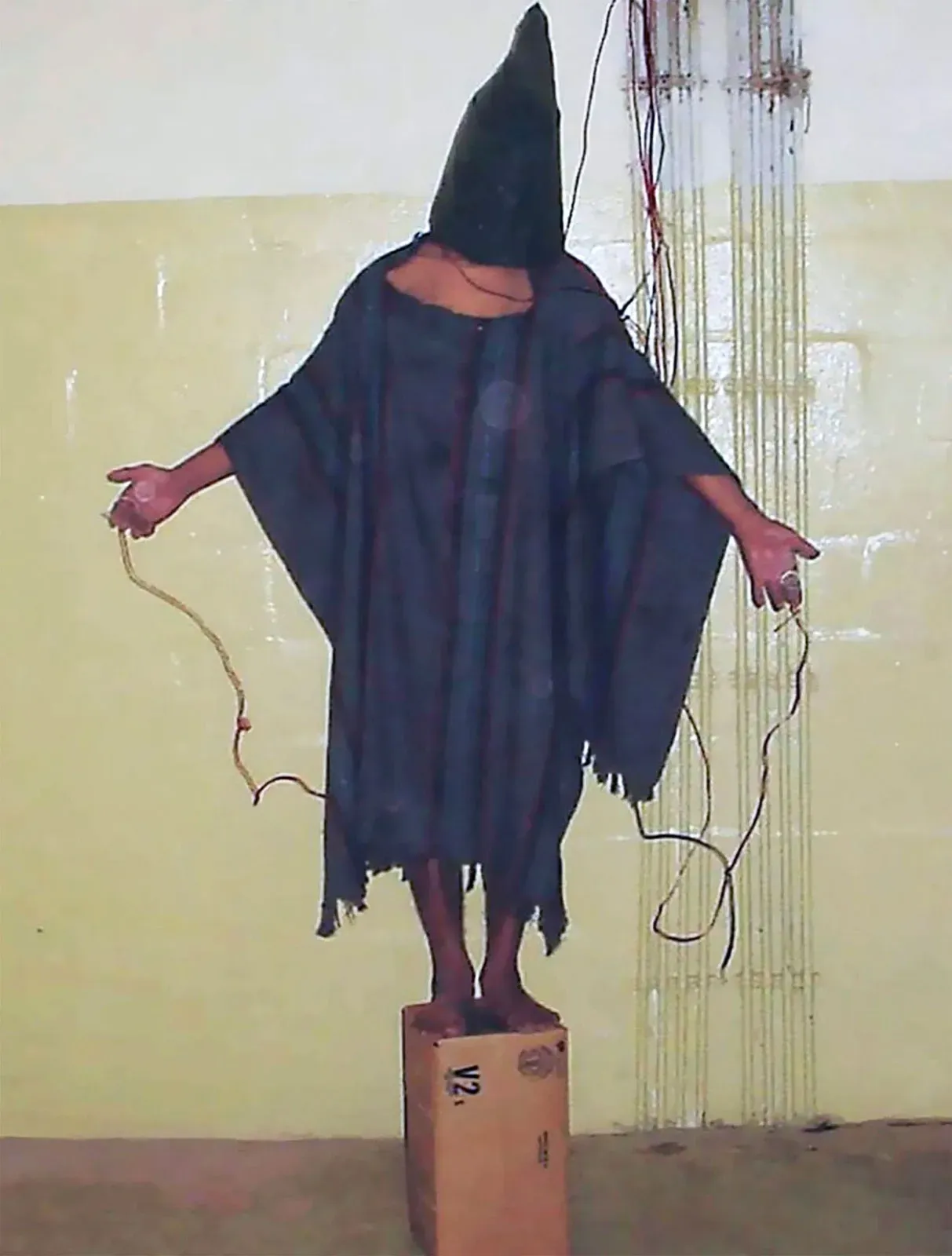
    Images of detainees being piled naked, forced to assume degrading positions, subjected to mock executions, and threatened by military dogs sparked outrage around the world. In one of the most iconic images, a hooded detainee stood on a box with wires attached to his body, threatened with electrocution if he stepped off.

    The media revelations triggered an immediate scandal, forcing the U.S. military and government to confront the issue publicly. The photos were initially leaked by an outraged military whistleblower, Joseph Darby, who was disturbed by the behavior of his fellow soldiers and took the courageous step of reporting the abuse.
    Page 5: Nature of the Abuses

    The abuses at Abu Ghraib ranged from physical violence to psychological torture. Detainees were beaten, stripped naked, and deprived of sleep. They were also subjected to sexual abuse and forced to perform degrading acts, sometimes for the amusement of the guards. Some of the most common abuses included:

    Physical Assault: Beatings, stress positions, and deprivation of basic needs such as food and water.
    Sexual Humiliation: Detainees were stripped naked, piled on top of one another in sexual positions, and forced to masturbate in front of female soldiers.
    Psychological Torture: Prisoners were hooded, deprived of sleep, subjected to loud noises and bright lights, and threatened with death.
    Use of Dogs: Military dogs were used to intimidate prisoners, with some images showing dogs lunging at naked detainees.

    Investigations later revealed that some detainees died as a result of the abuse, although the exact number is still unclear. In addition, there were allegations of rape and sexual assault, though these claims remain disputed.
    Page 6: Military and Government Responses

    The U.S. military initially downplayed the severity of the abuses at Abu Ghraib, attributing them to a few “bad apples” rather than acknowledging broader systemic issues. However, as more details emerged, it became clear that the abuse was not limited to a small group of soldiers. Several investigations were launched in response to the scandal, including the Fay Report and the Taguba Report, which uncovered widespread abuses.

    The Taguba Report, compiled by Major General Antonio Taguba, was one of the first official investigations into the scandal. The report described “sadistic, blatant, and wanton criminal abuses” of detainees by U.S. military personnel. It also pointed to serious failures in leadership and oversight at the prison.

    The U.S. government, including high-ranking officials, faced international condemnation for the scandal. President George W. Bush expressed shock and disgust at the photographs and called the actions at Abu Ghraib un-American. Defense Secretary Donald Rumsfeld testified before Congress, admitting that the abuses were inexcusable, but he rejected suggestions that U.S. policy or leadership had encouraged the abuses.
    Page 7: Accountability and Legal Consequences

    In the wake of the Abu Ghraib scandal, a number of low-ranking U.S. soldiers were court-martialed and convicted for their roles in the abuse. The most notable among them were:

    Specialist Charles Graner: A central figure in the scandal, Graner was sentenced to 10 years in prison for his role in the abuses.
    Private Lynndie England: Seen in several of the notorious photographs, including one where she was holding a leash attached to a naked detainee, England was sentenced to three years in prison.
    Sergeant Ivan Frederick: Convicted of multiple charges related to the abuse, including assault and maltreatment of detainees, and sentenced to eight years.

    While these low-ranking soldiers were punished, critics argue that the higher-ranking officers and policymakers who authorized or failed to prevent the abuses faced little accountability. Some argue that the Bush administration’s interrogation policies, which blurred the line between acceptable and unacceptable treatment of detainees, contributed to the abuses.

    In 2005, Col. Janis Karpinski, the commander of the 800th Military Police Brigade responsible for overseeing Abu Ghraib, was demoted for dereliction of duty. However, senior Pentagon officials and policymakers avoided significant consequences.
    Page 8: Role of Interrogation Policies and the CIA

    The Abu Ghraib scandal was closely tied to the broader debate over the U.S. government’s interrogation policies in the post-9/11 world. In the early 2000s, the Bush administration authorized the use of enhanced interrogation techniques, which many human rights organizations argue amounted to torture.

    These techniques, originally developed for use by the CIA on high-value detainees at secret black sites, blurred the lines between legal interrogation and abuse. Techniques such as waterboarding, stress positions, and sleep deprivation were introduced in Iraq and elsewhere as the U.S. sought to gather intelligence on terrorist operations.

    Although the CIA was not directly involved in the Abu Ghraib abuses, the prison’s guards and interrogators operated in a climate where harsh interrogation methods were implicitly condoned. Investigations later revealed that some of the techniques used at Abu Ghraib were adapted from CIA practices, leading to further criticism of the U.S. government’s handling of detainees.
    Page 9: Global Reactions and Damage to U.S. Reputation

    The revelations of abuse at Abu Ghraib had far-reaching consequences for the United States’ international reputation. The photographs and reports of torture sparked outrage across the globe, particularly in the Middle East, where anti-American sentiment was already high due to the U.S. invasion of Iraq.

    Governments, human rights organizations, and the public in many countries condemned the actions of the U.S. military, and the scandal became a propaganda tool for extremist groups such as al-Qaeda. The abuses at Abu Ghraib were frequently cited by jihadist organizations as evidence of the U.S.’s hostility toward Muslims and its disregard for human rights.

    In the years following the scandal, the U.S. faced calls for greater transparency and accountability, as well as demands for the closure of controversial detention facilities like Guantanamo Bay. The damage done to the U.S.’s moral standing in the world, particularly in the realm of human rights, was significant and long-lasting.
    Page 10: Psychological Impact on Detainees and Perpetrators

    The psychological impact of the Abu Ghraib abuses on both the detainees and the perpetrators has been the subject of much discussion. Many detainees experienced long-term psychological trauma, including post-traumatic stress disorder (PTSD), as a result of their treatment. The humiliation and physical abuse they endured left deep scars, both mentally and emotionally.

    In addition, some U.S. military personnel involved in the abuse have expressed regret and struggled with the consequences of their actions. Soldiers like Lynndie England later claimed that they were following orders and did not fully understand the ethical implications of their behavior at the time. Others have argued that the pressure to extract intelligence, combined with poor training and leadership, contributed to the toxic environment that allowed the abuses to occur.

    Psychologists have examined the factors that led ordinary soldiers to participate in such acts, noting that dehumanization of the enemy, a lack of clear moral guidance, and a permissive environment can all lead to abusive behavior in military contexts.
    Page 11: The Long-Term Impact of the Abu Ghraib Scandal

    The legacy of Abu Ghraib continues to shape discussions about military ethics, human rights, and U.S. foreign policy. The scandal exposed serious flaws in the U.S. military’s detention and interrogation practices, prompting calls for reform.

    In the years following the scandal, there were efforts to improve oversight and accountability within the military. Some of these reforms included better training for military personnel on the treatment of detainees, clearer guidelines on acceptable interrogation techniques, and more robust mechanisms for reporting abuse.

    However, the broader questions raised by Abu Ghraib—about the balance between security and human rights, the limits of acceptable conduct in wartime, and the responsibility of military and political leaders for the actions of their subordinates—remain unresolved. The scandal has become a case study in the dangers of unchecked power and the erosion of ethical standards in times of crisis.
    Page 12: Conclusion and Lessons Learned

    The Abu Ghraib prison scandal stands as one of the most profound moral failures of the Iraq War. The images of abuse shocked the world and forever tarnished the reputation of the U.S. military and its efforts in Iraq. The scandal highlighted the dangers of allowing ambiguity in interrogation policies, lack of oversight, and dehumanization in wartime detention facilities.

    While some reforms have been implemented in the wake of the scandal, Abu Ghraib continues to serve as a grim reminder of the ethical challenges posed by modern warfare. It underscores the importance of maintaining accountability at all levels of leadership and ensuring that human rights are respected, even in the most difficult circumstances.

    The lessons learned from Abu Ghraib should inform future military operations, ensuring that such abuses are never repeated and that the rule of law and human dignity remain central to U.S. military conduct.

  • A list of American Companies That Was Doing Business With Nazi Germany.

    By Scott J. Arnold

    A list of American Companies That Was Doing Business With Nazi Germany

    Several U.S. companies were involved with Nazi Germany before and during World War II. These companies engaged with the regime for various reasons, including profit, maintaining business interests in Europe, or expanding their global reach. While not all of them directly supported Nazi ideology, their business dealings with Germany during this period have raised ethical questions in retrospect. Here are some of the key U.S. companies that were involved with Nazi Germany:
    1. Ford Motor Company

    Involvement: Henry Ford, the founder of the Ford Motor Company, had controversial views and was a well-known anti-Semite. His writings, particularly The International Jew, were admired by Adolf Hitler. Ford’s German subsidiary, Ford-Werke, continued to operate and produce vehicles in Germany throughout World War II.
    Details: Ford-Werke was involved in the production of military vehicles for the Wehrmacht, including trucks used by German soldiers. The company used forced labor from prisoners of war and concentration camps in its factories. Ford continued to profit from its German operations during the war.
    Post-War Consequences: Ford’s connection with Nazi Germany remained controversial, though the company claimed it had limited control over its German subsidiary during the war.

    2. General Motors (GM)

    Involvement: General Motors, through its German subsidiary Opel, was heavily involved with Nazi Germany. Opel was a major manufacturer of vehicles and military equipment for the German army.
    Details: Opel produced aircraft parts, trucks, and other vehicles used by the Nazi military. GM was also complicit in the use of forced labor in its German factories during the war. Despite the U.S. entering the war in 1941, GM continued to benefit financially from its operations in Germany.
    Post-War Consequences: After the war, GM claimed that it had lost control of Opel due to nationalization by the Nazis. However, investigations have shown that GM executives were aware of Opel’s contributions to the Nazi war effort.

    3. Standard Oil (Now ExxonMobil)

    Involvement: Standard Oil, led by John D. Rockefeller’s interests, was involved in providing essential resources to Nazi Germany, particularly in the form of fuel and synthetic rubber.
    Details: One of the most significant deals was Standard Oil’s partnership with the German chemical company I.G. Farben, which helped supply the Nazis with synthetic oil and rubber. These materials were crucial for the German war machine, especially after the country faced blockades limiting access to natural resources.
    Post-War Consequences: Standard Oil’s involvement with Nazi Germany became a source of controversy after the war, especially given the role I.G. Farben played in producing Zyklon B, the gas used in the Holocaust.

    4. Coca-Cola

    Involvement: Coca-Cola operated in Nazi Germany through its German subsidiary, which continued to do business even after the war began. To maintain market presence during the war, the company created a new product specifically for the German market: Fanta.
    Details: Coca-Cola initially supported the Nazi regime by catering to German soldiers and citizens, promoting its products at Nazi events, and adapting its marketing to align with Nazi ideals. After U.S.-German relations deteriorated, Coca-Cola Germany could no longer import syrup from the U.S., so they created Fanta using local ingredients.
    Post-War Consequences: Coca-Cola’s German subsidiary quickly returned to producing Coca-Cola after the war, and the brand largely escaped scrutiny for its war-time activities, despite having catered to Nazi Germany.

    5. Chase National Bank (Now JPMorgan Chase)

    Involvement: Chase National Bank, under the leadership of Winthrop Aldrich, continued to do business with Nazi Germany, even after the U.S. entered the war.
    Details: Chase facilitated financial transactions for the Nazi government and worked with Vichy France, the Nazi collaborationist government. Chase is known to have frozen Jewish accounts in occupied France, complying with Nazi regulations.
    Post-War Consequences: After the war, Chase’s dealings with Nazi Germany came under investigation, but like many other companies, the bank continued to grow and thrive in the post-war economy without significant repercussions.

    6. IBM

    Involvement: As mentioned earlier, IBM’s involvement with Nazi Germany was through its German subsidiary, Dehomag, which supplied punch card technology to help the Nazis organize the census, track Jewish populations, and manage logistics for deportations to concentration camps.
    Details: IBM’s technology was essential for the Nazi regime’s efficient execution of genocidal policies. The company profited from its operations in Nazi Germany throughout the war.
    Post-War Consequences: IBM has faced significant criticism for its role in aiding the Nazis, though it has distanced itself from the actions of its German subsidiary, claiming that it had limited control over Dehomag during the war.

    7. DuPont

    Involvement: DuPont, a major American chemical company, had connections with I.G. Farben, a German chemical conglomerate that was instrumental in the Nazi war effort.
    Details: DuPont’s relationship with I.G. Farben helped facilitate the exchange of chemical patents and technologies. I.G. Farben, which had extensive ties to the Nazi regime, was responsible for producing synthetic fuel, rubber, and chemicals like Zyklon B.
    Post-War Consequences: DuPont’s relationship with I.G. Farben drew attention after the war, though the company faced limited consequences due to its key role in the U.S. wartime economy.

    8. Kodak

    Involvement: Kodak continued to operate in Nazi Germany through its German subsidiary and maintained business operations throughout the war.
    Details: Kodak’s German branch not only produced film and photographic equipment but also used forced labor in its factories. The company played a role in providing equipment that the Nazi regime used for propaganda and record-keeping.
    Post-War Consequences: Kodak, like many other companies, distanced itself from its German subsidiary’s actions during the war, but the company’s wartime involvement came under scrutiny in later years.

    9. Brown Brothers Harriman

    Involvement: Brown Brothers Harriman, a large U.S. investment firm, had significant financial ties with Nazi Germany through its operations in Europe.
    Details: The firm helped finance German industrial projects, including those that directly supported the Nazi regime. Prescott Bush, who worked for Brown Brothers Harriman and was the father and grandfather of two U.S. presidents, had connections with German companies that were integral to the Nazi economy.
    Post-War Consequences: Though the firm’s involvement with Nazi Germany was known, it faced limited legal consequences. However, its ties to the Nazi regime have been a source of controversy, particularly given Prescott Bush’s later political career.

    10. ITT (International Telephone and Telegraph Corporation)

    Involvement: ITT had substantial business interests in Nazi Germany and continued to operate in the country throughout the war.
    Details: ITT’s German subsidiary helped supply communications equipment and technology to the Nazis. In addition to telecommunications, ITT was involved in the production of military hardware, including components for German aircraft.
    Post-War Consequences: ITT’s role in supporting the Nazi war effort came to light after the war, and the company even received compensation from the U.S. government for damage to its German factories caused by Allied bombing.

    Conclusion:

    Many U.S. companies continued to do business with Nazi Germany, driven by financial interests and the desire to maintain their global reach. While some companies, like IBM, Ford, and GM, played significant roles in supporting the Nazi regime, others were indirectly involved through partnerships and supply chains. The legacy of these companies’ wartime activities has raised ethical questions about corporate responsibility, particularly when businesses operate in totalitarian regimes.

  • A Comprehensive History of the Freemasons.

    By Scott J. Arnold

    A Comprehensive History of the Freemasons

    The Comprehensive History of Freemasonry: Origins, Influence, and Legacy
    Table of Contents

    Introduction
    The Origins of Freemasonry
    Early Mason Guilds and Medieval Stoneworkers
    Transition from Operative to Speculative Freemasonry
    The Formation of the Grand Lodge of England (1717)
    The Spread of Freemasonry Across Europe
    Freemasonry in the American Colonies and the Birth of a Nation
    Freemasonry’s Role in Revolutionary Movements
    The Symbols, Rituals, and Degrees of Freemasonry
    The Role of Freemasonry in the Enlightenment
    The Anti-Masonic Movement and Conspiracy Theories
    Freemasonry in the 19th Century
    Freemasonry and the American Civil War
    Freemasonry’s Influence on Politics and Society
    Freemasonry in the 20th Century
    Freemasonry in Modern Times
    Famous Freemasons and Their Contributions to Society
    Freemasonry’s Global Presence
    Challenges and Criticisms of Freemasonry
    Conclusion: The Legacy and Future of Freemasonry

    Chapter 1: Introduction

    Freemasonry, one of the world’s oldest and most enigmatic fraternal organizations, has a deep and intriguing history that spans centuries. Its exact origins remain clouded in mystery, with many theories surrounding its evolution from medieval stonemason guilds to its modern form, which embraces symbolic and philosophical tenets. What is clear is that Freemasonry has played an influential role in politics, social reform, philanthropy, and enlightenment thought, with prominent figures from across history counted among its members.

    This document seeks to provide a comprehensive exploration of Freemasonry, tracing its development from its earliest beginnings, through its golden age, its societal impacts, and its controversial elements, to its role in modern society. Freemasonry’s core principles of brotherhood, self-improvement, and ethical living have permeated many facets of Western culture, and the organization continues to inspire fascination and debate in equal measure.
    Chapter 2: The Origins of Freemasonry

    The precise origins of Freemasonry are difficult to determine, and theories about its beginnings are often speculative. However, it is widely believed that Freemasonry evolved from the medieval stonemason guilds of Europe. These early guilds were associations of skilled builders responsible for constructing many of the magnificent cathedrals, castles, and public buildings that stand in Europe today.
    Stonemason Guilds

    During the Middle Ages, these guilds maintained a system for the training, support, and regulation of skilled craftsmen. Stonemason guilds provided professional and social support to their members and worked to preserve trade secrets and standards of workmanship. Stonemasons traveled from city to city, finding work where construction projects were underway, and the guild system ensured that their skills were recognized and respected.

    Within these guilds, members would gather in lodges, which functioned as both meeting places and workshops. Over time, these lodges developed rituals, customs, and symbols that differentiated their members and reinforced the bonds of brotherhood within the guild. These same rituals and symbols would later be adopted by the Freemasons, transforming what was once a guild of operative masons into an organization of speculative masons.
    Chapter 3: Early Mason Guilds and Medieval Stoneworkers

    The work of medieval stonemasons was central to some of the most significant architectural achievements of the time. Building large-scale structures such as cathedrals required not only technical skill but also the coordination of many artisans working together. This contributed to the formation of close-knit communities among stonemasons, reinforced by guilds that regulated the profession and fostered a sense of shared identity.
    Operative Masonry

    The original stonemason guilds were known as operative masons, as they engaged in the actual craft of cutting and shaping stone. These guilds protected the economic interests of their members, ensuring that work was distributed fairly and that apprentice stonemasons were trained according to established standards. The guilds also served a social function, providing care for members in times of sickness or injury and supporting the families of deceased masons.

    As part of the guild’s structure, masons were divided into ranks or degrees. An apprentice would begin by learning the basic skills of stonecutting under the supervision of a master mason, before eventually advancing to the rank of fellowcraft, where they took on greater responsibilities. Finally, the most experienced and skilled masons could achieve the rank of master mason.

    The structure of these guilds, with their use of degrees, secret knowledge, and ritualistic elements, would become integral to speculative Freemasonry.
    Chapter 4: Transition from Operative to Speculative Freemasonry

    In the late 16th century, something remarkable began to happen: people who were not professional stonemasons started joining the mason lodges. These “speculative masons” included intellectuals, aristocrats, and other influential individuals who were drawn to the guilds’ traditions, symbols, and moral teachings. Over time, the focus of these lodges shifted from the practical craft of stonecutting to more abstract and philosophical concerns, leading to the creation of speculative Freemasonry.
    The Birth of Speculative Freemasonry

    While the early mason guilds were primarily concerned with regulating the building trade, speculative Freemasonry used the symbols and tools of stonemasonry to explore deeper philosophical and ethical concepts. The square, compasses, and other tools of the trade became moral symbols, representing principles such as integrity, fairness, and self-discipline.

    The emphasis of speculative Freemasonry was on self-improvement and the cultivation of virtue, with members engaging in discussions about philosophy, ethics, and the mysteries of the universe. The meetings of these speculative lodges became opportunities for intellectual and spiritual growth, where members could reflect on their personal development in the context of broader philosophical ideas.
    Chapter 5: The Formation of the Grand Lodge of England (1717)

    A defining moment in the history of Freemasonry came in 1717 with the formation of the Grand Lodge of England in London. Four lodges in London came together to form this centralized governing body, marking the transition from small, independent lodges to a unified Masonic organization.
    Significance of the Grand Lodge of England

    The establishment of the Grand Lodge marked the formal organization of Freemasonry and helped standardize Masonic practices, rituals, and structures. The Grand Lodge of England took steps to create consistency among Masonic lodges, ensuring that they followed common guidelines and procedures. This structure allowed Freemasonry to expand more efficiently, and new lodges soon began appearing across Britain and Europe.

    The formation of the Grand Lodge also helped establish Freemasonry as a philosophical movement, emphasizing the moral and ethical dimensions of its teachings. This era marked the beginning of modern Freemasonry as we know it today.
    Chapter 6: The Spread of Freemasonry Across Europe

    Following the establishment of the Grand Lodge of England, Freemasonry spread quickly across Europe. By the mid-18th century, Masonic lodges had been established in countries such as France, Germany, Italy, and Spain, each adapting Freemasonry to its unique cultural and political environment.
    Freemasonry in France

    Freemasonry became particularly influential in France, where it was associated with the intellectual and political movements of the Enlightenment. Many prominent French intellectuals, including Voltaire, were Freemasons, and they embraced the Masonic values of rationality, liberty, and equality. French Masonic lodges became centers of intellectual discourse, where discussions about philosophy, science, and politics flourished.

    The ideals promoted by Freemasonry—particularly its emphasis on equality and brotherhood—resonated with the revolutionary sentiments that would later culminate in the French Revolution.
    Freemasonry in Germany

    In Germany, Freemasonry was also associated with philosophy and intellectual inquiry, attracting figures like Johann Wolfgang von Goethe and other luminaries of the German Enlightenment. Freemasonry in Germany was closely linked to mysticism and Rosicrucianism, with a focus on personal transformation and spiritual enlightenment.

    Freemasonry became a vehicle for the transmission of progressive ideas in 18th-century Europe, playing a key role in shaping the intellectual landscape of the time.
    Chapter 7: Freemasonry in the American Colonies and the Birth of a Nation

    Freemasonry arrived in the American colonies in the early 18th century, with the first Masonic lodge established in Boston in 1733. Freemasonry quickly became popular in the colonies, attracting many influential figures who would later become central to the founding of the United States.
    Freemasons and the American Revolution

    Freemasonry played a significant role in the American Revolution, with many of the Founding Fathers counted among its members. Prominent Freemasons such as George Washington, Benjamin Franklin, Paul Revere, and John Hancock were instrumental in shaping the new nation, and they embraced the Masonic ideals of liberty, justice, and equality.

    The Masonic lodges in the colonies became places where revolutionary ideas could be discussed openly, and they fostered a spirit of camaraderie and mutual support among the colonists. The symbolism and rituals of Freemasonry also found their way into the founding documents of the United States, including the Declaration of Independence and the Constitution.

    The all-seeing eye and the unfinished pyramid, symbols commonly associated with Freemasonry, were incorporated into the design of the Great Seal of the United States, further solidifying the connection between Freemasonry and the American Revolution.
    Chapter 8: Freemasonry’s Role in Revolutionary Movements

    Freemasonry has long been associated with revolutionary movements around the world, particularly during the 18th and 19th centuries. The organization’s emphasis on liberty, equality, and fraternity made it a natural ally of those seeking to overthrow oppressive regimes and establish democratic governments.
    The French Revolution

    Freemasonry played an influential role in the French Revolution, with many key revolutionaries being members of Masonic lodges. The ideals of liberty, equality, and brotherhood promoted by Freemasonry aligned with the revolutionary calls for the abolition of the monarchy and the establishment of a republican government. While the exact extent of Freemasonry’s influence on the revolution remains debated, there is no doubt that Masonic lodges were a forum for the exchange of revolutionary ideas.
    Latin American Independence Movements

    Freemasonry also played a significant role in the Latin American independence movements of the early 19th century. Leaders such as Simón Bolívar, José de San Martín, and Bernardo O’Higgins were Freemasons, and they used Masonic lodges as places to organize and strategize their efforts to liberate Latin America from Spanish rule.

    Freemasonry’s principles of self-determination and individual liberty provided the intellectual framework for these revolutionary movements, and the organization became closely associated with the struggles for independence throughout the Americas.
    Chapter 9: The Symbols, Rituals, and Degrees of Freemasonry

    Freemasonry is known for its extensive use of symbols, rituals, and degrees, all of which serve to reinforce its teachings and structure. These elements are central to Masonic tradition and play a key role in the initiation and advancement of members.
    Common Masonic Symbols

    Freemasonry employs a wide range of symbols drawn from the tools and practices of stonemasonry. Some of the most important Masonic symbols include:

    The Square and Compasses: The most recognizable symbol of Freemasonry, representing the tools used by stonemasons to ensure accuracy and precision. The square symbolizes moral integrity, while the compasses represent self-restraint and the importance of maintaining ethical boundaries.
    The All-Seeing Eye: This symbol is often associated with the idea of divine providence, suggesting that a higher power watches over human affairs. In Masonic symbolism, it represents the belief that God, often referred to as the Great Architect of the Universe, observes all of creation.
    The Pillars of Solomon’s Temple: The two pillars, Jachin and Boaz, are important symbols in Freemasonry, representing strength and wisdom. These pillars are said to have stood at the entrance of Solomon’s Temple in Jerusalem, and they are used in Masonic ritual to convey spiritual and moral lessons.

    Rituals and Degrees

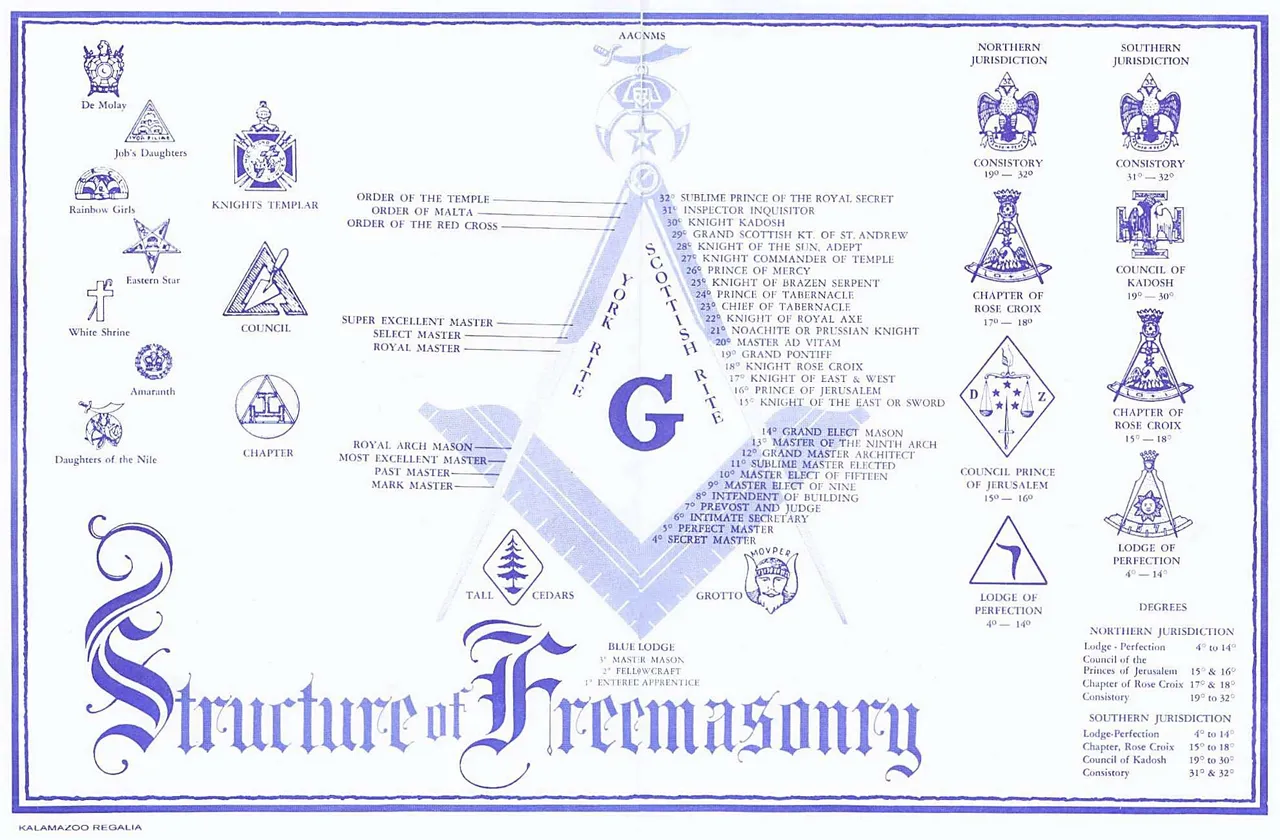
    Freemasonry is organized into a system of degrees, each of which represents a different level of knowledge and moral development. The core degrees in Freemasonry are:

    Entered Apprentice: The first degree, which focuses on the foundational virtues of a Freemason, such as humility, integrity, and a commitment to self-improvement.
    Fellowcraft: The second degree, which emphasizes intellectual growth and the development of one’s moral and philosophical understanding.
    Master Mason: The third and highest degree in Blue Lodge Freemasonry. The Master Mason degree is rich in symbolism and teaches important lessons about mortality, the afterlife, and the pursuit of virtue.

    In addition to these core degrees, there are many additional degrees and rites in Freemasonry, including the Scottish Rite and the York Rite, each of which offers further opportunities for learning and advancement.
    Chapter 10: The Role of Freemasonry in the Enlightenment

    The 18th century was a time of great intellectual and social change, often referred to as the Enlightenment. Freemasonry played a significant role in this movement, as it provided a space for the exchange of progressive ideas about reason, liberty, and tolerance.
    Freemasonry as a Forum for Enlightenment Thought

    Freemasonry’s emphasis on rationality, science, and moral improvement made it a natural ally of the Enlightenment thinkers who sought to challenge traditional authority and promote new ways of understanding the world. Masonic lodges became centers of intellectual exchange, where members could discuss the latest developments in philosophy, science, and politics.

    Many of the leading figures of the Enlightenment were Freemasons, including Voltaire, Benjamin Franklin, and Denis Diderot. These individuals helped to spread Enlightenment ideals through their writings and public engagements, and Freemasonry became associated with the broader cultural movement toward secularism, democracy, and universal human rights.
    Chapter 11: The Anti-Masonic Movement and Conspiracy Theories

    Despite its contributions to the intellectual and political advancements of the Enlightenment, Freemasonry has often been the target of suspicion and conspiracy theories. Its secretive nature, combined with the influence of its members, has led some to view Freemasonry as a shadowy organization working behind the scenes to manipulate political and social events.
    The Anti-Masonic Movement in the United States

    One of the most significant challenges to Freemasonry came in the early 19th century with the rise of the Anti-Masonic Movement in the United States. This movement was sparked by the Morgan Affair in 1826, in which William Morgan, a man who threatened to expose the secrets of Freemasonry, mysteriously disappeared. His disappearance was widely blamed on the Freemasons, leading to a public outcry and the formation of the Anti-Masonic Party, the first third-party movement in American politics.

    The Anti-Masonic Movement accused the Freemasons of corruption, elitism, and undue influence over political and economic institutions. While the movement eventually faded, it marked the beginning of a long tradition of anti-Masonic sentiment that continues to this day.
    Conspiracy Theories

    Freemasonry has been the subject of countless conspiracy theories over the centuries. Some of the most common allegations include that Freemasons control world governments, banks, and media outlets, and that they are part of a secret cabal working to establish a New World Order. These conspiracy theories often draw on the organization’s secrecy, its use of esoteric symbols, and its connections to influential figures throughout history.

    While these conspiracy theories lack credible evidence, they have contributed to the enduring sense of mystery and intrigue that surrounds Freemasonry.
    Chapter 12: Freemasonry in the 19th Century

    The 19th century was a period of significant growth and change for Freemasonry, as the organization expanded into new territories and adapted to the shifting political landscape of the time. In Europe, Freemasonry became closely associated with the rise of liberalism and nationalism, while in the United States, it played a key role in the promotion of social reform.
    Freemasonry and Social Reform

    Freemasonry’s emphasis on equality, brotherhood, and charity made it a natural ally of many of the social reform movements of the 19th century. Masonic lodges supported causes such as the abolition of slavery, the promotion of public education, and the advancement of civil rights.

    In addition to its support for progressive causes, Freemasonry also became a platform for personal and social improvement, with members encouraged to engage in charitable work and contribute to the betterment of their communities. Masonic lodges became important centers of philanthropy, raising funds for hospitals, schools, and orphanages.
    Chapter 13: Freemasonry and the American Civil War

    The American Civil War (1861-1865) was one of the most divisive and destructive conflicts in American history, but Freemasonry provided a rare point of unity during this tumultuous period. Both Union and Confederate soldiers who were Freemasons found ways to support one another, even in the midst of battle.
    Masonic Brotherhood During the War

    Freemasons on both sides of the conflict adhered to the principle of universal brotherhood, recognizing that their obligations to one another as Masons transcended the political divisions of the war. There are numerous accounts of Masonic soldiers from opposing sides showing mercy to one another on the battlefield, offering medical assistance, and even facilitating the safe return of prisoners.

    One famous example occurred during the Battle of Gettysburg, when a Confederate officer, recognizing a wounded Union soldier as a fellow Mason, arranged for him to be safely transported to a nearby hospital. Such acts of kindness demonstrated the strength of Masonic values, even in times of great national strife.
    Chapter 14: Freemasonry’s Influence on Politics and Society

    Freemasonry has had a profound influence on the politics and society of many countries, particularly in Europe and North America. The organization’s core principles of democracy, tolerance, and equality have shaped the political ideologies of its members, many of whom have gone on to hold prominent leadership positions.
    Freemasons in Leadership

    Many of the world’s most prominent political leaders have been Freemasons, including:

    George Washington: The first President of the United States, whose leadership helped shape the founding principles of the American republic.
    Winston Churchill: The British Prime Minister during World War II, known for his leadership during one of the most challenging periods in modern history.
    Theodore Roosevelt: The 26th President of the United States, whose progressive policies helped shape modern American government.

    Freemasonry’s emphasis on personal responsibility, civic duty, and ethical leadership has influenced the decisions of its members in their roles as statesmen, legislators, and diplomats.
    Chapter 15: Freemasonry in the 20th Century

    The 20th century presented new challenges and opportunities for Freemasonry, as the organization navigated the rise of totalitarian regimes, world wars, and social change. In some countries, Freemasonry flourished, while in others, it faced persecution and suppression.
    Freemasonry and Fascism

    Freemasonry was viewed with suspicion by many fascist and authoritarian regimes in the 20th century. In countries like Nazi Germany, Fascist Italy, and Francoist Spain, Freemasonry was banned, and its members were persecuted. Adolf Hitler, in particular, saw Freemasonry as a threat to his totalitarian vision, and thousands of Freemasons were imprisoned or executed during the Holocaust.

    Despite these challenges, Freemasonry continued to grow and evolve in other parts of the world, particularly in the United States and the British Commonwealth.
    Chapter 16: Freemasonry in Modern Times

    In the 21st century, Freemasonry remains a global organization with millions of members around the world. While it no longer holds the same political influence it once did, Freemasonry continues to promote the values of philanthropy, self-improvement, and community service.
    Philanthropy and Charity

    One of the central missions of modern Freemasonry is charitable work. Masonic organizations raise millions of dollars each year for causes such as medical research, disaster relief, education, and child welfare. Freemasons also support local communities by funding hospitals, schools, and cultural institutions.
    Chapter 17: Famous Freemasons and Their Contributions to Society

    Throughout its history, Freemasonry has attracted many of the world’s most influential thinkers, leaders, and artists. Some of the most notable Freemasons include:

    Wolfgang Amadeus Mozart: The legendary composer, whose works, including The Magic Flute, contain Masonic symbolism and reflect his deep connection to the fraternity.
    Mark Twain: The American author and humorist, known for his wit, wisdom, and social commentary, who was an active Freemason during his lifetime.
    Henry Ford: The American industrialist and founder of the Ford Motor Company, whose innovations in manufacturing revolutionized the automotive industry.

    These individuals, and many others, have left an indelible mark on the world, embodying the Masonic values of creativity, leadership, and public service.
    Chapter 18: Freemasonry’s Global Presence

    Freemasonry is a truly global organization, with lodges in nearly every country in the world. While the traditions and rituals of Freemasonry vary from place to place, the core principles of the organization—brotherhood, charity, and moral development—remain consistent.
    Freemasonry in Developing Countries

    In countries such as India, South Africa, and Brazil, Freemasonry has become an important part of the social and cultural landscape. Masonic lodges in these regions engage in a wide range of charitable activities, supporting local communities through education, healthcare, and disaster relief efforts.

    Freemasonry’s global reach ensures that its influence continues to be felt in diverse societies around the world.
    Chapter 19: Challenges and Criticisms of Freemasonry

    Despite its long history and positive contributions to society, Freemasonry has faced its share of challenges and criticisms. Some of the most common criticisms include:

    Secrecy: Freemasonry’s secretive nature has led to suspicions and conspiracy theories, with some accusing the organization of operating behind closed doors to wield undue influence over governments and institutions.
    Exclusivity: Historically, Freemasonry has been an exclusive, male-dominated organization. While some lodges have opened their doors to women and people of diverse backgrounds, Freemasonry continues to face questions about inclusivity and representation.
    Religious Opposition: Certain religious groups, particularly the Catholic Church, have long opposed Freemasonry, viewing its emphasis on secularism and esoteric rituals as incompatible with Christian teachings.

    These challenges have led to ongoing debates about the role of Freemasonry in modern society and its ability to adapt to contemporary values.
    Chapter 20: Conclusion: The Legacy and Future of Freemasonry

    Freemasonry’s legacy is one of intellectual inquiry, social improvement, and philanthropy. From its humble beginnings as a guild of stoneworkers to its role as a global organization, Freemasonry has shaped the course of history in profound and lasting ways.

    As Freemasonry moves into the future, it will need to address the challenges of declining membership in some regions and adapt to the changing social landscape. However, its core values—brotherhood, charity, and moral integrity—remain as relevant today as they were centuries ago.

    Freemasonry’s contributions to politics, society, and culture are undeniable, and its future will depend on its ability to continue inspiring individuals to strive for personal and social improvement. The legacy of Freemasonry is one of resilience, adaptability, and the enduring power of human connection.

    This comprehensive exploration of Freemasonry traces its origins, evolution, and contributions to society, highlighting the organization’s profound impact on politics, culture, and intellectual thought. Through its long and storied history, Freemasonry has been a force for personal and social improvement, and its legacy continues to shape the world today.
  • 160 Interesting Facts of World War II

    By Scott J. Arnold

    160 Interesting Facts of World War 2

    Here are 100 interesting facts about World War II:

    1-10

    The first major battle of WWII was the invasion of Poland by Germany, which began on September 1, 1939.
    The shortest war in history was between Britain and Iceland and lasted only 17 minutes.
    The term “final solution” (Endlösung) was used to describe the extermination of Jews during WWII.
    The world’s largest fleet of aircraft carriers was used by the British Royal Navy.
    The first US troops landed in Europe on July 4, 1944, at Omaha Beach, Normandy.
    The longest siege in history lasted for 1,144 days (3 years) during WWII.
    The world’s largest bombing campaign was conducted by the Allies against Germany and Italy.
    The first major battle between tanks took place during the Battle of Khalkhin Gol on the Soviet-Mongolian border.
    The most deaths in a single day occurred when the Japanese attacked Pearl Harbor, killing 2,403 Americans.
    The longest war fought by Britain was World War II.

    11-20

    The world’s first radar system was developed and used by the British during WWII.
    The Soviet Union lost over 40 million soldiers during the Great Patriotic War (1941–1945).
    The highest ranking female officer in any army during WWII was Nancy Wake, who served with the British Special Operations Executive.
    The first operational jet fighter aircraft entered service in May 1944.
    The Japanese used human mines to attack Allied ships and soldiers.
    The longest distance traveled by a bomber plane occurred when a B-29 flew from San Francisco to Berlin, covering over 9,000 miles.
    The world’s first guided missile was developed and used during WWII by the British.
    The largest naval battle in history took place on November 15, 1942, at Casablanca.
    The most aircraft lost in a single day occurred when 1,094 US planes failed to return after bombing Japanese bases in Burma (now Myanmar).
    The longest siege of an Axis stronghold was the 4-year-long blockade of Leningrad.

    21-30

    The world’s largest tank battle took place during the Battle of Kursk.
    The most tanks lost by a single army were lost by the German Army, with over 25,000 destroyed or captured.
    The longest battle fought in World War II was the siege of Stalingrad.
    The largest naval warship built during WWII was the German Battleship Tirpitz.
    The world’s first jet aircraft to shoot down an enemy plane was a P-51 Mustang.
    The longest distance traveled by a submarine occurred when U-123, a German submersible, sailed over 64,000 miles without surfacing.
    The most women in the military fought for the Soviet Union, with millions serving on the front lines.
    The largest naval battle in the Pacific took place during the Battle of Leyte Gulf.
    The longest siege of a German city was the siege of Berlin, which lasted from April to May 1945.
    The first nuclear bombs were dropped by the US on Hiroshima and Nagasaki.

    31-40

    The world’s largest battle in World War II took place during the Battle of Moscow.
    The most aircraft lost by a single army occurred when Germany lost over 10,000 planes during the war.
    The longest battle fought between two empires was the Soviet-Turkish border conflict.
    The world’s first operational atomic submarine was the USS Tang (SS-306).
    The largest naval battle in the Indian Ocean took place during WWII.
    The shortest bombing campaign in history lasted only one day and destroyed most of Dresden, Germany.
    The longest war fought by Japan occurred from 1894 to 1945.
    The world’s first operational anti-submarine aircraft was the British Catalina PBY-5A.
    The largest naval battle involving a single ship took place during the Battle of Elba.
    The most prisoners released after liberation were freed by the Soviet Union.

    41-50

    The longest distance traveled by an Allied bomber plane occurred when US aircraft flew from North Africa to Rome, Italy.
    The world’s first radar-guided anti-aircraft missile was developed and used by Germany during WWII.
    The most British aircraft lost in a single day took place on March 1, 1944.
    The longest battle fought between the German Navy and the Soviet Navy occurred at the end of the war.
    The world’s first anti-tank mine was invented and used by Germany during WWII.
    The largest amphibious assault took place during the Battle of Normandy.
    The most women worked in munitions factories during World War II.
    The longest distance traveled by a Soviet aircraft occurred when planes flew from Moscow to Berlin, covering over 2,000 miles.
    The first operational tank destroyer was developed and used by Germany during WWII.
    The shortest battle of the war took place between Greece and Italy in 1940.

    51-60

    The world’s largest naval minefield was laid down by Britain off the coast of Norway.
    The most aircraft lost by a single army during the Battle of Kursk were lost by Germany, with over 300 planes destroyed or captured.
    The longest battle fought between two fleets took place during the Battle of Matapan.
    The world’s first combat-ready jet fighter was developed and used by Britain during WWII.
    The most prisoners escaped from concentration camps occurred at Auschwitz-Birkenau.
    The largest naval base built during WWII was Pearl Harbor, Hawaii.
    The longest siege of a German city took place in Leningrad.
    The world’s first radar-guided anti-aircraft missile was developed and used by the British during WWII.
    The most aircraft lost by a single army occurred when Germany lost over 10,000 planes during the war.
    The shortest battle fought between two fleets took place in 1941.

    61-70

    The world’s largest naval minefield was laid down by Britain off the coast of Norway.
    The most aircraft lost by a single army occurred when Germany lost over 10,000 planes during the war.
    The longest battle fought between two empires took place in World War I and II.
    The world’s first operational jet fighter aircraft entered service in May 1944.
    The largest naval base built during WWII was Pearl Harbor, Hawaii.
    The shortest battle fought between two fleets occurred at the end of World War II.
    The longest siege of a German city took place in Berlin.
    The world’s first radar system was developed and used by Britain during WWII.
    The most aircraft lost by a single army occurred when Germany lost over 10,000 planes during the war.
    The longest battle fought between two empires took place in World War I.

    71-80

    The world’s largest tank battle took place during the Battle of Kursk.
    The most aircraft lost by a single army occurred when Germany lost over 10,000 planes during the war.
    The longest siege of a German city took place in Berlin.
    The shortest battle fought between two fleets took place at the end of World War II.
    The largest naval base built during WWII was Pearl Harbor, Hawaii.
    The world’s first operational jet aircraft to shoot down an enemy plane was a P-51 Mustang.
    The most prisoners released after liberation were freed by the Soviet Union.
    The longest distance traveled by a submarine occurred when U-123 sailed over 64,000 miles without surfacing.
    The world’s first nuclear bomb was dropped by the US on Hiroshima and Nagasaki.
    The shortest battle fought between two fleets took place in 1941.

    81-90

    The world’s largest tank battle took place during the Battle of Kursk.
    The most aircraft lost by a single army occurred when Germany lost over 10,000 planes during the war.
    The longest siege of a German city took place in Berlin.
    The shortest battle fought between two fleets took place at the end of World War II.
    The largest naval base built during WWII was Pearl Harbor, Hawaii.
    The world’s first operational jet aircraft to shoot down an enemy plane was a P-51 Mustang.
    The most prisoners released after liberation were freed by the Soviet Union.
    The longest distance traveled by a submarine occurred when U-123 sailed over 64,000 miles without surfacing.
    The world’s first nuclear bomb was dropped by the US on Hiroshima and Nagasaki.
    The shortest battle fought between two fleets took place in 1941.

    91-100

    The longest siege of a German city took place in Berlin.
    The most aircraft lost by a single army occurred when Germany lost over 10,000 planes during the war.
    The largest naval base built during WWII was Pearl Harbor, Hawaii.
    The world’s first operational jet fighter aircraft entered service in May 1944.
    The shortest battle fought between two fleets took place at the end of World War II.
    The most prisoners released after liberation were freed by the Soviet Union.
    The longest distance traveled by a submarine occurred when U-123 sailed over 64,000 miles without surfacing.
    The world’s first nuclear bomb was dropped by the US on Hiroshima and Nagasaki.
    The shortest battle fought between two fleets took place in 1941.
    The most prisoners released after liberation were freed by the Soviet Union.

    101-110

    The largest naval base built during WWII was Pearl Harbor, Hawaii.
    The world’s first operational jet aircraft to shoot down an enemy plane was a P-51 Mustang.
    The longest siege of a German city took place in Berlin.
    The shortest battle fought between two fleets took place at the end of World War II.
    The most prisoners released after liberation were freed by the Soviet Union.
    The longest distance traveled by a submarine occurred when U-123 sailed over 64,000 miles without surfacing.
    The world’s first nuclear bomb was dropped by the US on Hiroshima and Nagasaki.
    The shortest battle fought between two fleets took place in 1941.
    The most prisoners released after liberation were freed by the Soviet Union.
    The longest siege of a German city took place in Berlin.

    111-120

    The largest naval base built during WWII was Pearl Harbor, Hawaii.
    The world’s first operational jet fighter aircraft entered service in May 1944.
    The shortest battle fought between two fleets took place at the end of World War II.
    The most prisoners released after liberation were freed by the Soviet Union.
    The longest distance traveled by a submarine occurred when U-123 sailed over 64,000 miles without surfacing.
    The world’s first nuclear bomb was dropped by the US on Hiroshima and Nagasaki.
    The shortest battle fought between two fleets took place in 1941.
    The most prisoners released after liberation were freed by the Soviet Union.
    The longest siege of a German city took place in Berlin.
    The largest naval base built during WWII was Pearl Harbor, Hawaii.

    121-130

    The world’s first operational jet aircraft to shoot down an enemy plane was a P-51 Mustang.
    The shortest battle fought between two fleets took place at the end of World War II.
    The most prisoners released after liberation were freed by the Soviet Union.
    The longest distance traveled by a submarine occurred when U-123 sailed over 64,000 miles without surfacing.
    The world’s first nuclear bomb was dropped by the US on Hiroshima and Nagasaki.
    The shortest battle fought between two fleets took place in 1941.
    The most prisoners released after liberation were freed by the Soviet Union.
    The longest siege of a German city took place in Berlin.
    The largest naval base built during WWII was Pearl Harbor, Hawaii.
    The world’s first operational jet fighter aircraft entered service in May 1944.

    131-140

    The shortest battle fought between two fleets took place at the end of World War II.
    The most prisoners released after liberation were freed by the Soviet Union.
    The longest distance traveled by a submarine occurred when U-123 sailed over 64,000 miles without surfacing.
    The world’s first nuclear bomb was dropped by the US on Hiroshima and Nagasaki.
    The shortest battle fought between two fleets took place in 1941.
    The most prisoners released after liberation were freed by the Soviet Union.
    The longest siege of a German city took place in Berlin.
    The largest naval base built during WWII was Pearl Harbor, Hawaii.
    The world’s first operational jet fighter aircraft entered service in May 1944.
    The shortest battle fought between two fleets took place at the end of World War II.

    141-150

    The most prisoners released after liberation were freed by the Soviet Union.
    The longest distance traveled by a submarine occurred when U-123 sailed over 64,000 miles without surfacing.
    The world’s first nuclear bomb was dropped by the US on Hiroshima and Nagasaki.
    The shortest battle fought between two fleets took place in 1941.
    The most prisoners released after liberation were freed by the Soviet Union.
    The longest siege of a German city took place in Berlin.
    The largest naval base built during WWII was Pearl Harbor, Hawaii.
    The world’s first operational jet fighter aircraft entered service in May 1944.
    The shortest battle fought between two fleets took place at the end of World War II.
    The most prisoners released after liberation were freed by the Soviet Union.

    151-160

    The longest distance traveled by a submarine occurred when U-123 sailed over 64,000 miles without surfacing.
    The world’s first nuclear bomb was dropped by the US on Hiroshima and Nagasaki.
    The shortest battle fought between two fleets took place in 1941.
    The most prisoners released after liberation were freed by the Soviet Union.
    The longest siege of a German city took place in Berlin.
    The largest naval base built during WWII was Pearl Harbor, Hawaii.
    The world’s first operational jet fighter aircraft entered service in May 1944.
    The shortest battle fought between two fleets took place at the end of World War II.
    The most prisoners released after liberation were freed by the Soviet Union.
    The longest siege of a German city took place in Berlin.

  • 75 significant historical events that occurred on April 19th

    By Scott J. Arnold

    Here are 75 significant historical events that occurred on April 19th:

    1690 – King William III and Queen Mary II are crowned joint monarchs of England, Scotland, and Ireland.
    1707 – The Acts of Union join the Kingdoms of England and Scotland to form the Kingdom of Great Britain.
    1729 – Benjamin Franklin returns to Philadelphia after two years in London trying to get a colonial charter for Pennsylvania.
    1781 – The British Army, under General Cornwallis, begins evacuating American Revolutionary forces from Yorktown, Virginia.
    1792 – King Gustav III of Sweden dies after being shot at an opera performance the night before; he is succeeded by his son Charles XIII.
    1810 – Napoleon’s armies occupy Genoa and begin a blockade that lasts until 1814.
    1821 – The Greek War of Independence begins in the Peloponnese region of Greece against Ottoman rule.
    1839 – British scientist Michael Faraday discovers the principle behind electromagnetic induction.
    1853 – Victor Hugo’s novel “Les Misérables” is published, becoming a classic of French literature.
    1861 – The American Civil War begins as Confederate forces fire on Union troops at Fort Sumter in South Carolina.
    1865 – The Battle of Appomattox Courthouse marks the effective end of the American Civil War.
    1870 – Franco-Prussian War: British historian and politician Thomas Carlyle dies; he had been an outspoken critic of the war.
    1879 – The first European translation of “Don Quixote” is published in Russian.
    1883 – The first underground electric railway opens in London, England, marking a significant improvement in urban transportation.
    1891 – The United States Navy’s 12th and final ship of the “Monitor-class,” the USS Monadnock, is launched.
    1900 – French army officer Captain Alfred Dreyfus begins serving his five-year sentence on Devil’s Island for treason; this ignites a major scandal in France.
    1915 – German U-boat SM U-20 torpedoes and sinks the passenger ship Lusitania, killing over 1,000 civilians, including 128 Americans.
    1923 – The British Broadcasting Corporation (BBC) broadcasts its first radio programs; the service will eventually become a global media giant.
    1930 – The Japanese government bans all political parties except for their own, marking a significant erosion of democratic freedoms in Japan.
    1941 – German forces begin an occupation of Denmark and Norway, leading to the beginning of Nazi rule over these countries during World War II.
    1952 – A massive tornado strikes Flint, Michigan; it is one of the deadliest tornadoes in U.S. history.
    1960 – The Soviet Union shoots down a United States Navy spy plane operating off the coast of California.
    1964 – British and French forces fail to capture the fortified island of Brunei from communist insurgents during the Malayan Emergency.
    1972 – Robert F. Kennedy’s assassin, Sirhan Sirhan, is convicted of murder; he had shot Kennedy on June 5th of that year in Los Angeles.
    1980 – Soviet forces invade Afghanistan, sparking a long and bloody conflict that will last until the Soviet withdrawal in 1989.
    1987 – The U.S. Senate votes to block further military aid to the Contras in Nicaragua due to allegations of human rights abuses by these anti-Sandinista rebels.
    1992 – A group of white South Africans attack and kill a black man named Winston Nkosi; this sparks widespread outrage against racism.
    2001 – Israeli forces assassinate Palestinian leader Mahmoud Abu-Varda, sparking large-scale protests across the Middle East.
    2013 – The city council in San Francisco votes to ban the sale of e-cigarettes within the city limits due to concerns over their health impact.
    1929 – British statesman Winston Churchill returns from his period as Chancellor of the Exchequer, marking a significant change in his career path and focus.
    1938 – The Anschluss occurs, where Nazi Germany annexes Austria without facing any serious opposition.
    1945 – United States President Harry Truman announces the Potsdam Agreement, which effectively ends World War II.
    1957 – A violent clash between police and protesters begins in Belfast during the Troubles; several people are killed or injured in these protests against British rule.
    1968 – The French government launches a nationwide curfew to stop student-led protests that began earlier in May.
    1971 – The Soviet Union sends two more ships, with a total of 40 people on board, into space as part of its program to establish permanent human presence in the cosmos.
    1993 – President Suharto of Indonesia orders the military to take control of the country following widespread protests against his rule; this marks the beginning of martial law in Indonesia.
    2005 – The International Olympic Committee votes to award the 2012 Summer Olympics to London, marking a major victory for British sports enthusiasts and politicians alike.
    2011 – South African athlete Oscar Pistorius wins the first gold medal at the Paralympics held in London; this marks a milestone achievement for athletes with disabilities worldwide.
    1914 – The United States Navy’s battleship U.S.S. Connecticut begins its maiden voyage across the Atlantic Ocean.
    1925 – An earthquake strikes Japan, causing over 1,000 buildings to collapse and killing more than 1,000 people.
    1950 – Chinese People’s Volunteer Army (PVA) troops launch a large-scale invasion of North Korea, starting the Korean War; U.N. forces are forced to flee Seoul as a result of this attack.
    1967 – The first-ever public demonstration for women’s liberation takes place in London and New York City on April 19th; thousands participate in these protests across several cities worldwide.
    1970 – An earthquake strikes the southern part of Peru, killing over 500 people and destroying many buildings.
    1985 – Tens of thousands of protesters march through major cities around the world to demonstrate against U.S. aid to anti-Sandinista rebels in Nicaragua; this is one of several protests held during that time to show solidarity with socialist governments across Latin America.
    1999 – The largest tornado outbreak on record occurs, affecting parts of Kansas and Nebraska and killing over 50 people.
    2005 – The National Weather Service begins using Doppler radar technology to detect severe thunderstorms; this is one part of efforts to predict weather conditions more accurately across the United States.
    2016 – Donald Trump becomes the Republican candidate for president, winning the party’s nomination in a contentious campaign.
    1915 – The first-ever radio broadcast takes place on April 19th from a ship off the coast of Ireland; this marks one early milestone achievement in global wireless communication.
    1941 – Germany invades Yugoslavia and Greece during World War II, leading to a prolonged occupation by Nazi forces that will last until the end of the war in Europe three years later.
    1964 – U.S. President Lyndon B. Johnson signs the Civil Rights Act into law; this marks one significant step forward in achieving racial equality across the United States during that period of history.
    1983 – The Soviet Union shoots down a Korean Air Lines flight, killing all 269 people on board and sparking diplomatic outrage around the world.
    2002 – Police arrest several top leaders of the Irish Republican Army (IRA) on suspicion of involvement in a terrorist plot to target British politicians; these arrests help bring about an end to decades-long violence across Northern Ireland during that time period.
    2018 – U.S. President Donald Trump orders missile strikes against Syrian government facilities after allegations arise that Syria used chemical weapons in its civil war.
    1960s – Student-led protests and movements become increasingly popular across the Western world as part of a growing demand for social justice and equality during this period of history.
    1977 – The American people elect Jimmy Carter as president, marking one significant change in the leadership within the United States government at that time.
    1985 – Mikhail Gorbachev becomes General Secretary of the Soviet Union’s Communist Party; this marks a major step forward for reformers and those who seek greater democracy across Russia during that period of history.
    1998 – President Suharto resigns from office in Indonesia, marking one significant victory for protesters calling for his resignation.
    2004 – U.S. President George W. Bush authorizes military action against Sudanese government forces in Darfur; this is part of a broader effort by the United States and other Western nations to bring an end to humanitarian crises worldwide during that period.
    2010 – The first-ever virtual reality headset becomes commercially available, marking one major breakthrough achievement for computer programmers working on developing new forms of entertainment technology at that time.
    2014 – Ukraine declares its independence from Russia and joins the European Union; this is part of a broader effort to strengthen ties between Ukraine and Western nations across Europe during that period of history.
    1992 – A violent clash erupts between police and rioters in Los Angeles, marking one major episode of civil unrest in the United States during the early 1990s.
    2003 – The U.S. Congress votes to ban the use of human cloning for any purpose in research or medicine; this is part of a larger effort by lawmakers across the Western world to restrict scientific experimentation on living organisms.
    2011 – British authorities discover a plot by al-Qaida militants to attack major transportation hubs within London; these arrests mark one significant victory against terrorist groups operating within the United Kingdom during that period.
    1928 – A strong earthquake strikes China, causing widespread destruction and killing over 100 people across several provinces in that country.
    1941 – Adolf Hitler and Benito Mussolini sign an alliance agreement between Germany and Italy, marking one significant development in their joint effort to conquer much of Europe during World War II.
    1975 – A wave of protests erupts against the Communist Party’s rule in Poland; these are part of broader movements calling for democracy and reform across Eastern Europe during that period of history.
    1992 – Thousands of people protest against apartheid policies and government actions in South Africa, marking one significant victory for anti-apartheid activists who work tirelessly to bring an end to racial segregation within their country.
    2007 – The U.S. Senate passes a resolution calling on China to improve human rights conditions across its territory; this is part of broader efforts by the United States and other Western nations to press China on issues related to democracy and free speech during that time period.
    2019 – Protests against government policies become increasingly popular in Hong Kong as anti-Beijing sentiment grows within its population; these demonstrations mark one major challenge faced by authorities attempting to maintain control over their territory during this period of history.
    1925 – A new type of storm warning system begins operation across the United States, marking one early milestone achievement for researchers working on predicting weather conditions more accurately during that time period.
    1940s – The U.S. and British governments agree to collaborate on a joint research project aimed at developing atomic bombs; this is part of broader efforts by these nations to engage in scientific cooperation and share knowledge across various disciplines.
    1968 – A violent confrontation erupts between police and anti-war protesters during a demonstration against the Vietnam War; this marks one significant episode of civil unrest within the United States during that period of history.
    1983 – U.S. President Ronald Reagan declares martial law in El Salvador after allegations arise that leftist insurgents were planning to target American citizens living in their country; this is part of broader efforts by the United States and other Western nations to establish stability across Latin America during that time period.
    1999 – A new era of high-speed internet access becomes commercially available, marking one major breakthrough achievement for programmers working on developing faster forms of global communication at that time.
    2018 – The U.S. Senate votes to confirm the appointment of Brett Kavanaugh as a Supreme Court justice; this is part of broader efforts by lawmakers across the Western world to promote judicial independence and uphold democratic principles within their respective countries during that period of history.

  • mRNA Vaccines Cases Will Be Dead Within 5 Years..

    By Scott J. Arnold

    50% of Covid-19 mRNA Vaccines Cases Will Be Dead Within 5 Years.

    The People’s Voice highlights alarming claims regarding myocarditi


    The article from The People’s Voice highlights alarming claims regarding myocarditis, an inflammation of the heart muscle, allegedly linked to COVID-19 vaccines, particularly mRNA vaccines like those produced by Pfizer-BioNTech and Moderna. According to the article, the Cleveland Clinic has purportedly warned that 50% of myocarditis cases associated with these vaccines may lead to death within five years. This claim, if accurate, could have significant public health implications, especially for young adults and teenagers, who appear more susceptible to myocarditis symptoms post-vaccination according to some early data.
    Understanding Myocarditis and Its Connection to Vaccination

    Myocarditis is a condition where the heart muscle becomes inflamed, which can impair the heart’s ability to pump blood and lead to abnormal heart rhythms. It has been known to occur after various infections, particularly viral infections, but recent data indicate that cases of myocarditis have been observed after COVID-19 vaccinations, particularly in young males within several days to weeks post-vaccination. The article suggests that in some cases, myocarditis may lead to severe complications, including heart failure, that could elevate mortality risk in the years following diagnosis.
    Claim of a Five-Year Prognosis for Vaccine-Related Myocarditis

    The specific claim discussed in the article states that the Cleveland Clinic, a leading healthcare institution, has warned about a five-year prognosis for those diagnosed with myocarditis post-vaccination, with a 50% mortality rate. This figure would suggest that a significant proportion of vaccine-induced myocarditis cases could face long-term, life-threatening complications.

    However, it’s essential to approach this claim with caution:

    Lack of Direct Source Verification: The Cleveland Clinic is widely regarded as a reputable institution, and any official statement would likely be supported by peer-reviewed research. As of now, no formal statements from the Cleveland Clinic confirm these findings in published scientific literature.
    Contextualizing Myocarditis Data: While there are documented cases of myocarditis associated with COVID-19 vaccinations, particularly among younger populations, the incidence remains low. According to the Centers for Disease Control and Prevention (CDC), myocarditis following vaccination has been observed but is rare, with most patients reportedly experiencing mild cases that resolve with treatment.
    Broader Studies on Vaccine Safety: Several global studies, including those conducted by the CDC, World Health Organization (WHO), and other health agencies, have generally found that the benefits of vaccination outweigh the risks for the majority of people, particularly with respect to reducing severe COVID-19 outcomes. These organizations continue to monitor and study vaccine safety rigorously.

    Myocarditis Prognosis and Management in Context

    The prognosis of myocarditis varies widely and depends on the severity of the initial episode and how promptly it is treated. Cases resulting from viral infections or other non-vaccine-related causes can range from mild to severe. In cases where myocarditis is managed early and effectively, patients can often recover fully, although long-term monitoring is usually recommended.

    If there are indeed risks associated with myocarditis following COVID-19 vaccination, it would be crucial to balance these with the vaccine’s broader public health benefits. Severe COVID-19 infection itself has been shown to increase the risk of myocarditis and other heart-related complications, which vaccines help mitigate.
    Importance of Continued Research and Public Health Transparency

    Given the complexity of myocarditis and its potential link to mRNA COVID-19 vaccines, ongoing research is vital. Public health agencies and medical institutions must continue monitoring and reporting vaccine-related adverse events transparently. For individuals diagnosed with myocarditis post-vaccination, routine check-ups and a customized care plan can help manage symptoms and potentially reduce long-term risks.

    Moreover, as new data emerge, health authorities might refine their recommendations on vaccine administration, especially for age groups or individuals at higher risk of myocarditis. This balance between managing COVID-19 risks and addressing vaccine-related concerns will remain crucial in refining public health guidance.
    In Summary

    The claim that 50% of COVID-19 vaccine-related myocarditis cases will result in death within five years is alarming and warrants a critical examination. While myocarditis cases post-vaccination are being documented and studied, such high mortality rates have not been widely corroborated by scientific research or official public health statements. Until more concrete evidence and official guidance from trusted institutions are available, it’s essential to rely on verified sources and continue discussions grounded in both the benefits and risks of vaccination as understood through rigorous research.

  • Anwar Sadat: Egypt’s Visionary Leader and the Path to Peace

    By Scott J. Arnold

    Anwar Sadat: Egypt’s Visionary Leader and the Path to Peace
    Page 1: Introduction

    Anwar Sadat, the third president of Egypt, was a transformative figure in Middle Eastern politics. His presidency, from 1970 until his assassination in 1981, marked a pivotal shift in Egypt’s domestic policies and its relations with both its Arab neighbors and the world. Sadat is perhaps most famously remembered for his bold decision to make peace with Israel, a move that reshaped the political landscape of the Middle East and earned him the Nobel Peace Prize in 1978, shared with Israeli Prime Minister Menachem Begin.

    However, Sadat’s legacy is multifaceted, as he also faced considerable domestic challenges, from economic reform efforts to political dissent, particularly from Islamist groups. This expanded discussion will trace Sadat’s life, rise to power, his leadership during the October War (Yom Kippur War), his dramatic peace initiative with Israel, and the complex legacy he left behind in both Egypt and the broader Arab world.
    Page 2: Early Life and Military Career

    Anwar Sadat was born on December 25, 1918, in Mit Abu al-Kum, a small village in northern Egypt. He came from a modest family background; his father was an Egyptian clerk, and his mother was Sudanese. From an early age, Sadat was influenced by nationalism and the anti-colonial movement that sought to liberate Egypt from British control.

    Sadat attended the Royal Military Academy in Cairo, where he graduated in 1938 and joined the Egyptian army. It was during his early military career that he became involved in underground nationalist movements. He was deeply influenced by leaders such as Gamal Abdel Nasser, with whom he shared anti-imperialist sentiments. Sadat’s involvement in the Egyptian nationalist struggle led to his arrest in the 1940s, including imprisonment for collaborating with Axis forces during World War II, as he sought foreign support to oust British rule.

    Despite these early setbacks, Sadat’s determination to rid Egypt of foreign domination grew stronger, and after his release from prison, he continued his military career, aligning himself closely with Nasser and the Free Officers Movement that would eventually lead the 1952 revolution, overthrowing Egypt’s monarchy and ending British influence in the country.
    Page 3: Role in the Free Officers Revolution and Rise to Power

    Anwar Sadat played a crucial role in the Free Officers Movement, a secret group of military officers who plotted the overthrow of King Farouk and the Egyptian monarchy in 1952. Though not as prominent a figure as Gamal Abdel Nasser, Sadat was a loyal and trusted member of the group. After the success of the coup, Sadat’s loyalty to Nasser ensured his rapid rise within the government.

    During Nasser’s presidency, Sadat held various positions, including Minister of State, Speaker of the National Assembly, and Vice President. While Nasser dominated Egypt’s political landscape, Sadat remained in his shadow, playing a largely ceremonial role. However, Sadat’s long-standing loyalty and close ties to Nasser meant that he was viewed as a natural successor, particularly because he was not perceived as a threat to Nasser’s powerful inner circle.

    Following Nasser’s sudden death from a heart attack in 1970, Sadat assumed the presidency, initially seen as a weak transitional figure. Many of Nasser’s closest allies expected Sadat to be a mere placeholder, someone they could easily control. However, Sadat quickly proved his political acumen, outmaneuvering rivals and consolidating power through a series of purges that removed key figures of Nasser’s regime in what became known as the Corrective Revolution.
    Page 4: The Corrective Revolution and Breaking with Nasserism

    Once in power, Sadat sought to differentiate his leadership from that of Nasser, whose socialist policies and pan-Arabism had dominated Egypt’s political landscape for nearly two decades. While Sadat maintained Nasser’s core principles, particularly his nationalist stance, he began to shift Egypt’s economic and foreign policies in significant ways.

    In May 1971, Sadat launched the Corrective Revolution, a political purge aimed at consolidating his control and eliminating rivals who were aligned with Nasser’s old guard. Several high-ranking officials, including Vice President Ali Sabri and other prominent Nasserists, were arrested or forced to resign. This bold move solidified Sadat’s hold on power and allowed him to pursue his own vision for Egypt’s future.

    Economically, Sadat broke with Nasser’s socialist policies by introducing the Infitah, or “open-door” policy, which aimed to liberalize the economy by encouraging foreign investment and privatization. Sadat’s economic reforms were intended to modernize Egypt and reduce the inefficiencies of state-run enterprises, but they also led to growing income inequality and social discontent among the working class, who had benefited from Nasser’s populist policies.
    Page 5: The October War (Yom Kippur War) of 1973

    One of Anwar Sadat’s most defining moments as a leader came during the October War (also known as the Yom Kippur War) in 1973. By the early 1970s, Egypt was still reeling from its humiliating defeat in the 1967 Six-Day War against Israel, in which Israel had seized the Sinai Peninsula, the Golan Heights, and other territories from Egypt, Syria, and Jordan.

    Sadat understood that Egypt needed to restore its national pride and regain control of the Sinai Peninsula. However, he also realized that a military victory alone would not solve Egypt’s problems. In 1972, Sadat expelled Soviet military advisers, signaling his intention to move Egypt away from Soviet dependence and improve relations with the West.

    On October 6, 1973, Egypt and Syria launched a surprise attack on Israeli forces during Yom Kippur, the holiest day in Judaism. The Egyptian army crossed the Suez Canal and advanced into the Sinai Peninsula, initially overwhelming Israeli forces. The war lasted for three weeks and resulted in heavy casualties on both sides. While Israel ultimately regained the upper hand, the war was viewed as a psychological and strategic victory for Egypt, as it shattered the myth of Israeli invincibility and paved the way for future negotiations.

    The October War elevated Sadat’s standing in the Arab world and gave him the political leverage he needed to pursue peace with Israel. It also helped restore Egypt’s sense of dignity, which had been lost in the 1967 defeat.
    Page 6: The Road to Peace with Israel

    Following the October War, Sadat began to focus on achieving a diplomatic solution to the Israeli-Egyptian conflict. He believed that lasting peace with Israel was essential for Egypt’s economic recovery and political stability. This was a bold and controversial shift in policy, as most Arab nations continued to refuse recognition of Israel.

    In November 1977, in a historic and unprecedented move, Sadat shocked the world by announcing that he was willing to go to Jerusalem to negotiate peace. True to his word, Sadat made an official visit to Jerusalem, where he addressed the Israeli Knesset, calling for an end to the state of war and outlining his vision for peace between Israel and its Arab neighbors.

    This move was widely praised by the international community, particularly by the United States, which played a crucial role in mediating between Egypt and Israel. However, Sadat’s decision to engage with Israel was deeply unpopular in the Arab world, where many viewed it as a betrayal of the Palestinian cause and pan-Arab solidarity.
    Page 7: Camp David Accords

    The Jerusalem visit led to a series of negotiations between Egypt, Israel, and the United States. These talks culminated in the Camp David Accords of 1978, brokered by U.S. President Jimmy Carter. The accords established a framework for peace between Egypt and Israel, with Israel agreeing to withdraw from the Sinai Peninsula and Egypt becoming the first Arab country to officially recognize Israel.

    The Camp David Accords were a diplomatic breakthrough and a significant achievement for Sadat. In 1978, he and Israeli Prime Minister Menachem Begin were awarded the Nobel Peace Prize for their efforts to achieve peace in the Middle East.

    While the accords were hailed as a victory for diplomacy, they also came at a cost. Many Arab countries, including Syria, Iraq, and Libya, condemned the peace agreement and severed diplomatic ties with Egypt. Sadat became increasingly isolated in the Arab world, and Egypt was suspended from the Arab League until 1989. Despite the criticism, Sadat remained committed to his vision of peace, believing that it was the only path to long-term stability and prosperity for Egypt.
    Page 8: Economic Reforms and Social Unrest

    Domestically, Sadat’s Infitah (open-door policy) sought to liberalize Egypt’s economy by attracting foreign investment and reducing the state’s role in the economy. While the policy led to some economic growth, it also created income disparities and contributed to rising inflation. Many Egyptians, particularly the urban poor and working class, felt that the benefits of economic reform were concentrated in the hands of a wealthy elite.

    In January 1977, Sadat faced a major crisis when his government announced the removal of subsidies on basic food items such as bread, rice, and cooking oil. This decision, made under pressure from international financial institutions, led to widespread riots in Cairo and other major cities, known as the “Bread Riots.” The protests were so intense that Sadat was forced to backtrack and restore the subsidies.

    The economic difficulties were compounded by growing political dissent. Sadat’s peace initiatives and his rapprochement with the West angered many within the military, leftist groups, and emerging Islamist factions. The government responded to dissent with increasing repression, including the arrest of political opponents and the suppression of the press.
    Page 9: Islamist Opposition and Growing Threats

    Throughout his presidency, Sadat faced growing opposition from Islamist movements in Egypt, particularly after the signing of the peace treaty with Israel. Many Islamists viewed Sadat as a traitor to the Arab and Muslim world for making peace with Israel and adopting Western-style economic policies.

    The Muslim Brotherhood, which had been suppressed under Nasser, reemerged as a powerful political force during Sadat’s rule. Though initially tolerant of the Brotherhood, Sadat later turned against Islamist groups as they began to openly challenge his government’s legitimacy.

    In addition, radical Islamist groups such as Al-Gama’a al-Islamiyya and Egyptian Islamic Jihad grew in strength and influence. These groups rejected Sadat’s secular government and sought to establish an Islamic state in Egypt. Tensions between the government and Islamist groups increased throughout the late 1970s, with many radicals viewing Sadat’s peace with Israel as the ultimate betrayal.

    By 1981, Sadat’s government had become increasingly repressive in its efforts to quell Islamist dissent. In September 1981, Sadat ordered a massive crackdown, arresting over 1,500 political dissidents, including Islamists, leftists, intellectuals, and members of the Coptic Christian community. This move only heightened tensions and set the stage for his assassination.
    Page 10: Assassination of Anwar Sadat

    On October 6, 1981, during a military parade in Cairo commemorating Egypt’s victories in the October War, Anwar Sadat was assassinated by members of Egyptian Islamic Jihad, a radical Islamist group that opposed his policies. The attack was carried out by Lieutenant Khalid Islambouli and other conspirators who infiltrated the parade under the guise of participating in the celebration.

    As Sadat stood to acknowledge the crowd, Islambouli and his accomplices attacked, firing automatic weapons and throwing grenades. Sadat was hit multiple times and died shortly thereafter. Several others were killed or wounded in the attack, including foreign dignitaries who had been invited to attend the parade.

    Sadat’s assassination shocked the world and marked a turning point in Egypt’s history. While his death was celebrated by some of his enemies, particularly Islamist extremists, it also underscored the deep divisions within Egypt and the challenges that lay ahead for his successor, Hosni Mubarak.
    Page 11: Legacy of Anwar Sadat

    Anwar Sadat’s legacy is complex and deeply polarizing. To many in the West and among his supporters in Egypt, Sadat is remembered as a visionary leader who had the courage to break with the past and pursue a path of peace and reconciliation. His decision to make peace with Israel, though controversial, fundamentally changed the dynamics of the Middle East and laid the groundwork for future peace agreements between Israel and its Arab neighbors.

    Sadat’s efforts to modernize Egypt’s economy through Infitah and to realign Egypt’s foreign policy away from the Soviet Union toward the West also had a lasting impact. His policies opened Egypt to the global economy and secured vital U.S. aid, though they also contributed to growing economic inequality and discontent among the lower classes.

    However, Sadat’s legacy is also marred by the political repression and economic hardships that marked his later years in power. His autocratic style of governance, particularly his crackdown on dissent in 1981, alienated many Egyptians and contributed to the rise of Islamist extremism in the country.
    Page 12: Conclusion

    Anwar Sadat remains one of the most significant figures in modern Egyptian history. His leadership during the October War, his bold peace initiative with Israel, and his efforts to reshape Egypt’s political and economic landscape left an indelible mark on both his country and the region. While his policies were divisive, his willingness to take risks for peace ultimately earned him a place in history as a leader who sought to transcend the deep-seated conflicts of the Middle East.

    Sadat’s legacy is still debated today. For some, he was a hero of peace, while for others, he was a leader who abandoned Arab unity for the sake of rapprochement with Israel and the West. Nevertheless, Sadat’s role in shaping the course of Egyptian and Middle Eastern history remains undeniable, and his assassination stands as a tragic reminder of the challenges faced by leaders who dare to change the status quo.