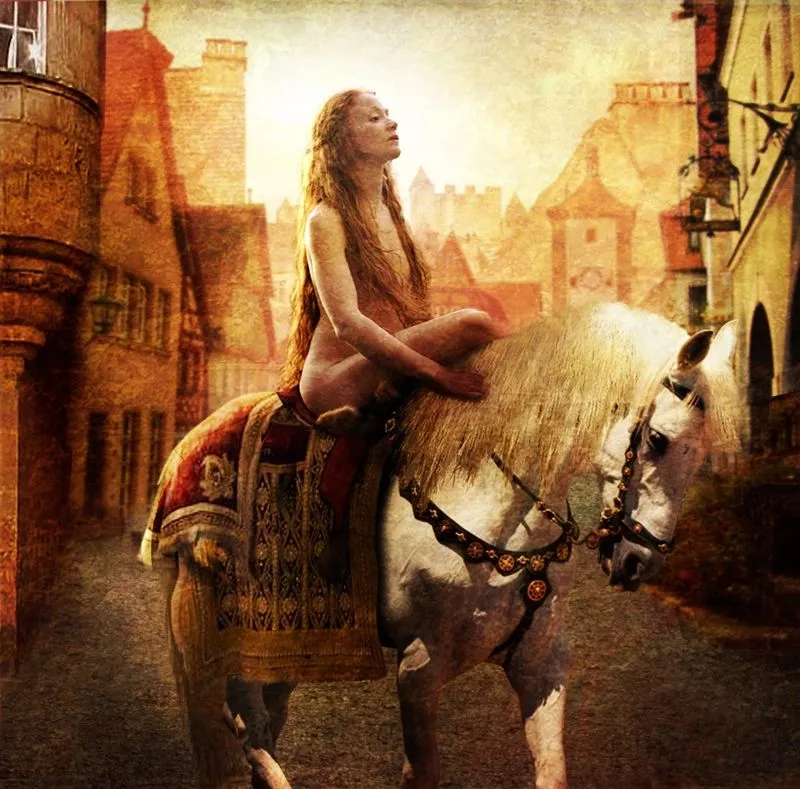
Lady Godiva: A Comprehensive 12-Page Exploration of the Legendary Figure
Lady Godiva’s tale is one of the most enduring legends from medieval England. Known for her daring ride through the streets of Coventry, clothed only in her long hair, Lady Godiva has become a symbol of courage, generosity, and defiance. The story, which blends historical fact with legend, has inspired countless retellings in art, literature, and popular culture. In this 12-page analysis, we will explore the life of Lady Godiva, the historical context of her famous ride, the significance of her story, and its cultural legacy over the centuries.
1. The Historical Lady Godiva: Fact vs. Fiction
1.1. Who Was Lady Godiva?
Lady Godiva, or Godgifu (an Old English name meaning “gift of God”), was a real historical figure who lived in 11th-century England. She was married to Leofric, Earl of Mercia, one of the most powerful noblemen in England during the reign of King Edward the Confessor.
Her Noble Status: Godiva was a wealthy and influential Anglo-Saxon noblewoman, known for her piety and charitable works. Along with her husband, she was a significant landowner, with estates in Coventry, Warwickshire, and other regions.
1.2. Leofric, Earl of Mercia
Leofric, Godiva’s husband, played a crucial role in English politics during a time of considerable upheaval. As one of the most powerful earls in the kingdom, Leofric was a key figure in maintaining order in the Midlands and had close ties to King Edward the Confessor.
Leofric’s Influence: Leofric was known for his military and political might, but historical records also suggest that he was a devout man who supported the construction of religious institutions, including monasteries and churches.
2. The Legendary Ride: Lady Godiva’s Protest
2.1. The Core of the Legend
According to the famous legend, Lady Godiva rode naked through the streets of Coventry to protest her husband’s oppressive taxation of the townspeople. The legend states that Godiva pleaded with her husband to lower the taxes, but Leofric refused, setting what he thought was an impossible condition: he would lower the taxes if she rode naked through the town. To his surprise, she accepted the challenge.
The Ride Itself: Lady Godiva’s ride is said to have taken place while she was covered only by her long hair, which concealed her body from view. Out of respect for her, the people of Coventry were ordered to stay indoors with their windows shuttered, so no one would see her.
2.2. The “Peeping Tom” Element
One of the later additions to the legend is the character of “Peeping Tom,” a curious tailor who defied the order to stay indoors and peeked at Godiva during her ride. As punishment for his disobedience, he was struck blind.
Symbolism of “Peeping Tom”: This aspect of the legend emphasizes the respect the townspeople had for Godiva, as well as the idea of punishment for violating her dignity.
2.3. The Historical Accuracy of the Ride
While Lady Godiva was indeed a real person, there is no direct evidence that her famous ride ever took place. The story first appeared in written form centuries after her death, in the 12th century, in the chronicles of Roger of Wendover.
Roger of Wendover’s Account: Wendover’s account is the earliest written version of the story, though it is more likely an embellishment or creation than a historical fact. The legend reflects the cultural values of the time, particularly themes of humility, generosity, and defiance against authority.
3. The Political Context: Taxes and Power in 11th-Century England
3.1. Anglo-Saxon Taxation
The central issue in the Lady Godiva legend is taxation. During the time of Leofric and Godiva, taxes were a significant burden on both peasants and townspeople, often imposed to support military campaigns, royal projects, or local governance.
Leofric’s Taxes on Coventry: The legend claims that Leofric imposed heavy taxes on the people of Coventry, causing widespread suffering. In reality, Leofric, as the Earl of Mercia, would have had control over local taxes, though there is no specific historical record of him raising taxes to an oppressive level.
3.2. Feudal Society and Power Structures
In feudal England, the noble class held immense power over local economies. Earls like Leofric had the authority to levy taxes, administer justice, and control land. However, their actions were often constrained by their relationships with the king and other nobles.
Godiva’s Influence as a Noblewoman: As the wife of one of the most powerful men in England, Godiva would have had significant influence in the local community, particularly through her charitable works. Her legendary ride can be seen as a metaphor for using personal influence to protect the vulnerable.
4. Religious Devotion and Charitable Works
4.1. Godiva’s Religious Piety
Both Godiva and Leofric were known for their religious devotion. They were patrons of various religious institutions, including monasteries and churches, which played a central role in medieval society.
St. Mary’s Monastery: One of the most significant religious contributions made by Godiva and Leofric was the founding of St. Mary’s Monastery in Coventry. This act of piety demonstrated their commitment to the Church and their desire to ensure the spiritual well-being of their community.
4.2. Medieval Charitable Traditions
Noblewomen like Godiva often played a key role in charitable activities during the medieval period. In a time when the Church was a major provider of social services, Godiva’s donations and charitable efforts would have been significant.
Endowments and Donations: In addition to founding religious institutions, Godiva and Leofric donated large sums of money and land to support the Church. These actions reflected the values of the time, where wealth was often used to secure divine favor and ensure salvation.
5. Gender and Power in Medieval Society
5.1. Women’s Roles in Feudal England
While medieval society was largely patriarchal, noblewomen like Lady Godiva could wield considerable influence, especially through their marriages and control of estates. Women in noble families were often responsible for managing households, overseeing agricultural production, and serving as patrons of the arts and religion.
Godiva’s Authority: As the wife of an earl, Godiva would have had substantial authority in her own right. Her role as a landowner and benefactor of the Church suggests that she had a significant say in the management of her and her husband’s wealth.
5.2. The Feminist Interpretation of Godiva’s Ride
In modern times, Lady Godiva’s ride has been interpreted as an act of defiance and empowerment. The image of a woman challenging authority and standing up for the oppressed has resonated with feminist scholars and activists.
Challenging Male Authority: Godiva’s ride can be seen as a symbolic challenge to male authority, particularly that of her husband. Her willingness to make such a bold statement suggests that women could—and did—exercise agency in medieval society, even within the constraints of a patriarchal system.
6. The Evolution of the Legend in the Middle Ages
6.1. Medieval Chronicles and the Spread of the Legend
The legend of Lady Godiva spread during the medieval period, evolving as it was passed down through oral tradition and written chronicles. The story took on new layers of symbolism, reflecting the values and concerns of the time.
Romanticization of the Story: As the legend spread, it became more romanticized, with later writers adding elements such as the “Peeping Tom” character and emphasizing Godiva’s modesty and virtue.
6.2. Religious Interpretations
Some medieval commentators interpreted Lady Godiva’s ride as a religious allegory, viewing her as a figure of Christian humility and sacrifice. Her willingness to expose herself for the sake of the common people was seen as a Christ-like act of selflessness.
Godiva as a Saintly Figure: In some accounts, Godiva was portrayed as a quasi-saintly figure, whose ride represented her devotion to the poor and oppressed. While she was never canonized, her legend took on a moral and religious significance in the medieval imagination.
7. The Renaissance and Enlightenment: Godiva in Art and Literature
7.1. Renaissance Depictions of Godiva
During the Renaissance, the story of Lady Godiva was revived and depicted in paintings, poetry, and plays. Artists and writers were fascinated by the image of the virtuous noblewoman who defied convention to stand up for her people.
Allegorical Interpretations: In Renaissance art, Lady Godiva’s ride was often depicted allegorically, symbolizing civic virtue, self-sacrifice, and the power of women’s modesty. Her long hair, which covered her naked body, became a symbol of her purity and moral strength.
7.2. Literary Works on Godiva
Writers such as John Speed and Richard Grafton included the story of Lady Godiva in their histories of England, adding to its status as a national legend. Godiva’s story became a way to reflect on themes of power, taxation, and civic duty.
Popularization in Literature: As literacy rates increased, the story of Lady Godiva became more widely known, spreading beyond elite circles and entering popular culture.
8. Victorian Morality and the Godiva Legend
8.1. Tennyson’s “Godiva”
One of the most famous literary adaptations of the Godiva legend came in the Victorian era, with Alfred, Lord Tennyson’s poem Godiva, published in 1842. Tennyson’s version of the story emphasized Lady Godiva’s purity and selflessness, aligning her with Victorian ideals of womanhood.
Godiva as a Moral Example: In Tennyson’s poem, Godiva is portrayed as a moral exemplar, whose willingness to sacrifice her modesty for the greater good made her a symbol of civic virtue. Her ride was seen as an act of quiet heroism, reflecting Victorian values of duty, self-sacrifice, and charity.
8.2. Victorian Art and Imagery
The 19th century also saw an explosion of visual art depicting Lady Godiva. Artists like John Collier and Edmund Blair Leighton painted romanticized images of Godiva’s ride, often emphasizing her beauty and modesty.
Godiva in Pre-Raphaelite Art: The Pre-Raphaelite painters, who were known for their interest in medieval and mythological subjects, found inspiration in the Godiva legend. Their paintings often depicted her as an ethereal, almost otherworldly figure, representing both beauty and moral strength.
9. Godiva in Popular Culture and Folklore
9.1. Godiva in Modern Media
Lady Godiva has continued to captivate audiences in modern times, with her story appearing in films, television shows, and other media. Her image has become iconic, often symbolizing rebellion, sacrifice, and feminine power.
Film and Television Adaptations: Films such as Lady Godiva of Coventry (1955) and references to Godiva in modern television shows reflect the enduring appeal of her legend. Her story has been adapted to fit various genres, from historical drama to romantic fantasy.
9.2. Folklore and Festivals
The legend of Lady Godiva remains an important part of Coventry’s cultural heritage. The annual Godiva Procession, which dates back to the 17th century, celebrates her legacy and draws visitors to the city.
Coventry’s Godiva Festival: Today, Coventry’s Godiva Festival is one of the largest free music festivals in the UK, combining music, art, and history to celebrate the city’s most famous figure. The festival includes a ceremonial procession featuring a symbolic representation of Lady Godiva’s ride.
10. Feminist Interpretations of Lady Godiva
10.1. Godiva as a Feminist Icon
In recent years, Lady Godiva has been reinterpreted as a feminist icon. Her willingness to challenge her husband’s authority and her commitment to social justice have resonated with women’s rights movements.
Godiva and Women’s Autonomy: Godiva’s decision to ride naked through the streets can be seen as a radical assertion of bodily autonomy and agency. In this interpretation, her nudity is not a symbol of vulnerability but of empowerment.
10.2. Reclaiming Godiva in Feminist Art
Feminist artists have used the image of Lady Godiva to challenge traditional gender roles and explore themes of power, control, and the female body. Her story has been reimagined as a critique of patriarchal systems and a celebration of women’s strength.
Contemporary Art: Modern visual artists and performers have drawn on the Godiva legend in their work, using her story to explore issues of gender, sexuality, and political activism.
11. The Global Influence of the Godiva Legend
11.1. Godiva in International Art and Literature
Although Lady Godiva is a distinctly English figure, her legend has transcended national borders, appearing in art and literature around the world. The themes of power, protest, and self-sacrifice resonate across cultures.
French and Italian Interpretations: In France and Italy, the Godiva legend has been adapted into operas, plays, and visual art, often emphasizing the themes of civic duty and personal sacrifice.
11.2. The Chocolate Connection: Godiva as a Commercial Symbol
The famous Belgian chocolate company, Godiva, was named after Lady Godiva in the 1920s, capitalizing on the association between luxury, beauty, and nobility. Today, Godiva chocolates are sold around the world, and the brand’s logo features an image of Lady Godiva on her horse.
The Commercialization of Godiva: While the use of Lady Godiva’s image for commercial purposes may seem far removed from the original legend, it reflects the enduring appeal of her story as a symbol of elegance and generosity.
12. Conclusion: The Enduring Legacy of Lady Godiva
Lady Godiva’s story has survived for nearly a thousand years, evolving from a medieval legend into a powerful symbol of defiance, virtue, and feminine strength. Whether viewed as a historical figure, a moral exemplar, or a feminist icon, Lady Godiva continues to inspire people around the world.
A Symbol of Justice and Sacrifice: At the heart of the Godiva legend is the theme of justice—the idea that one person can stand up against injustice, even at great personal cost. Her story has become a metaphor for the struggle for fairness and equality, a message that remains relevant in modern times.
The Complexity of the Legend: While the historical accuracy of Lady Godiva’s ride remains uncertain, its symbolic meaning has grown more complex over the centuries. Whether as a protest against oppression, an act of civic responsibility, or a display of female autonomy, the legend of Lady Godiva endures as a testament to the power of myth and storytelling.
Conclusion: Lady Godiva Through the Ages
Lady Godiva’s tale is one of history’s most enduring legends, rooted in both fact and fiction. Over the centuries, her story has been reinterpreted and adapted to reflect the cultural and social values of different eras. Whether seen as a champion of the poor, a feminist icon, or a figure of moral purity, Lady Godiva’s legacy continues to inspire, challenging us to think about power, protest, and personal sacrifice in new ways. Her story reminds us that even legends can hold timeless lessons about justice, courage, and the pursuit of equality.
Leave a Reply