Blog

  • Medicine Is Not One-Size-Fits-All: Understanding Side Effects.

    By Scott J. Arnold

    Medicine Is Not One-Size-Fits-All: Understanding Side Effects and Personalized Medicine
    1. Introduction: The Complexity of Modern Medicine
    Medicine is often seen as a science that provides universal solutions to health problems, but the reality is far more complex. What works well for one person may not work, or may even be harmful, for another. This variability in response to medications and treatments is influenced by a multitude of factors, including genetics, age, gender, environment, and lifestyle. Understanding why medicines work differently for different people is crucial in minimizing side effects and improving healthcare outcomes.
    2. The Basics of How Medicines Work: Pharmacodynamics and Pharmacokinetics
    Medicines are designed to interact with the body in specific ways, targeting pathways to alleviate symptoms, fight infections, or manage chronic conditions. Pharmacodynamics refers to how drugs affect the body, while pharmacokinetics involves how the body absorbs, distributes, metabolizes, and excretes drugs. Both processes are influenced by individual differences that can alter how effectively a medicine works and how likely it is to cause side effects. The unique combination of these factors in each person contributes to variations in drug response.
    3. Genetic Variability: The Role of DNA in Drug Response
    One of the most significant factors contributing to differences in medication responses is genetic variability. Genes play a crucial role in determining how drugs are metabolized. For example, variations in the CYP450 family of enzymes, responsible for drug metabolism, can affect how quickly or slowly a drug is processed. A person with a fast-metabolizing enzyme might clear a drug too quickly, reducing its effectiveness, while someone with a slow-metabolizing enzyme could experience heightened effects or toxic side effects. This genetic variability underscores the need for personalized approaches in medicine.
    4. The Rise of Pharmacogenomics: Tailoring Treatments to Genetic Profiles
    Pharmacogenomics is the study of how an individual’s genetic makeup affects their response to drugs. This field aims to optimize drug therapy, ensuring that the right drug is prescribed at the right dose for each individual. For example, certain genetic tests can identify patients who are likely to have adverse reactions to specific medications, such as the blood thinner warfarin or the cancer drug tamoxifen. By incorporating genetic information into prescribing decisions, healthcare providers can minimize side effects and enhance treatment efficacy.
    5. Environmental and Lifestyle Factors: Beyond Genetics
    While genetics play a significant role, environmental and lifestyle factors also contribute to how individuals respond to medication. Diet, smoking, alcohol consumption, stress levels, and exposure to toxins can all impact drug metabolism and effectiveness. For instance, grapefruit juice can interfere with the metabolism of certain drugs, leading to increased side effects. Environmental factors can also affect the gut microbiome, which plays a role in drug absorption and metabolism, further complicating the predictability of drug responses.
    6. Age and Gender: Differences in Drug Response Across Populations
    Age and gender are critical factors that influence how medications work. Older adults often experience changes in body composition, organ function, and metabolism, which can alter how drugs are processed. This can lead to increased sensitivity to medications and a higher risk of side effects. Similarly, gender differences in body fat distribution, hormone levels, and even pain perception can affect drug efficacy and safety. Women, for example, may experience different side effects from medications compared to men due to hormonal variations and differences in body composition.
    7. The Challenge of Dosing: Finding the Right Balance
    Dosing is one of the most challenging aspects of prescribing medications because the optimal dose can vary widely between individuals. Standard dosing regimens are typically based on average responses observed in clinical trials, but these averages may not reflect the needs of every patient. Too low a dose may render the medication ineffective, while too high a dose increases the risk of side effects. Personalized dosing strategies, informed by factors like weight, age, kidney function, and genetic profile, are essential for achieving the best therapeutic outcomes.
    8. Common Side Effects and Their Underlying Causes
    Side effects can range from mild to severe and are often a result of the complex interplay between a drug’s intended effects and the body’s unique response. Common side effects include nausea, dizziness, allergic reactions, and gastrointestinal disturbances. These effects can be caused by the drug’s impact on unintended targets within the body or by variations in how the drug is metabolized and excreted. For instance, nonsteroidal anti-inflammatory drugs (NSAIDs) can cause stomach ulcers in some people due to their effects on the protective lining of the stomach.
    9. The Importance of Personalized Medicine: Moving Toward Individualized Care
    Personalized medicine aims to move beyond the “one-size-fits-all” approach, tailoring treatments to the unique characteristics of each patient. By considering genetic, environmental, and lifestyle factors, personalized medicine seeks to minimize side effects and maximize therapeutic benefits. This approach is particularly important in fields like oncology, where targeted therapies can be matched to the genetic mutations driving a patient’s cancer, leading to more effective and less toxic treatments.
    10. The Future of Medicine: Precision, Prevention, and Patient-Centered Care
    The future of medicine lies in precision and prevention, where treatments are customized not just based on the disease but on the individual patient. Advances in technology, such as artificial intelligence and big data analytics, are enhancing our ability to predict how patients will respond to different treatments. As we continue to deepen our understanding of the factors that influence drug response, the goal is to provide safer, more effective care that reduces the incidence of adverse reactions and improves overall patient outcomes.
    Conclusion: Embracing the Complexity of Individual Responses to Medicine
    The idea that medicine is not the same for everyone is a fundamental principle that underscores the importance of personalized healthcare. Recognizing the diverse factors that influence drug response allows healthcare providers to make more informed decisions, tailoring treatments to meet the specific needs of each patient. As medicine continues to evolve, the focus will increasingly shift toward individualized care, ultimately leading to better health outcomes and a reduction in the burden of side effects.


  • The Origin of Man’s Best Friend

    By Scott J. Arnold

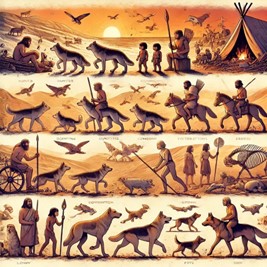
    The Origin of Man’s Best Friend: How Humans and Dogs Became Best Friends 
    Introduction
    The relationship between humans and dogs is a unique and enduring partnership that spans tens of thousands of years. What began as a cautious co-existence between early humans and wild wolves has evolved into a profound bond characterized by mutual trust, companionship, and cooperation. This deep connection is evident in every aspect of human culture, from ancient myths and legends to modern-day life, where dogs continue to play crucial roles as pets, working animals, and emotional companions.
    1. Early Beginnings: The Domestication of Wolves
    The domestication of wolves into dogs likely began between 15,000 and 40,000 years ago during the late Ice Age. As humans formed nomadic hunter-gatherer societies, they encountered wolves, some of which were drawn to human camps by the prospect of food. Over time, a mutualistic relationship developed: wolves benefited from the safety and resources provided by humans, while humans gained valuable assistance in hunting and protection.
    • Mutual Survival Benefits: Wolves that displayed less aggressive behaviors and could coexist near human groups were more likely to survive. These proto-dogs helped humans track and hunt prey, protect camps from predators, and clean up waste. This cooperative arrangement increased the survival chances of both species, leading to a gradual evolution of wolves into domesticated dogs.
    • Social Adaptation and Bonding: Dogs and humans share a similar social structure, including hierarchical pack behaviors and the ability to form complex social bonds. This alignment facilitated the integration of dogs into human communities, as both species could understand and respond to each other’s social cues. This early bonding set the foundation for the development of a deep and enduring friendship.
    2. Evolution from Wolves to Dogs: Physical and Behavioral Changes
    Through selective breeding, early humans shaped the evolution of dogs from their wolf ancestors. Over generations, dogs developed distinct physical and behavioral traits that differentiated them from wolves, including smaller size, shorter snouts, varied coat colors, and a more docile temperament.
    • Neoteny and Behavioral Adaptations: Dogs exhibit neotenous traits, meaning they retain juvenile characteristics into adulthood, such as playfulness, submissiveness, and a dependency on human interaction. These traits made dogs more adaptable to human environments and more responsive to training and socialization.
    • The Role of Natural and Artificial Selection: Natural selection favored wolves that could tolerate human proximity, while artificial selection by humans enhanced traits desirable for specific tasks, such as hunting, herding, and guarding. This process led to the creation of various breeds suited to different roles, from the speedy greyhounds used for hunting to the strong and protective mastiffs used for guarding.
    3. Dogs as Hunting Partners and Their Impact on Human Survival
    One of the earliest roles dogs played in human society was as hunting companions. The ability of dogs to track, chase, and retrieve game made them invaluable to hunter-gatherer societies, significantly increasing the efficiency and success of hunting expeditions.
    • Hunting Strategies and Techniques: Dogs could help flush out prey, locate hidden animals, and even chase down game over long distances. Their keen senses of smell and hearing complemented human hunting skills, creating a synergistic partnership that allowed early humans to access food resources that might otherwise be out of reach.
    • Cultural Significance of Hunting Dogs: In many ancient cultures, hunting dogs were highly prized and often depicted in art, pottery, and burial sites. The value placed on these animals reflects their crucial role in human survival and their status as more than just animals—they were trusted partners in the quest for sustenance.
    4. Guardians and Protectors: The Role of Dogs in Early Human Settlements
    As humans transitioned from nomadic lifestyles to settled agricultural communities, the role of dogs expanded to include guarding and protection. Dogs helped safeguard homes, livestock, and food supplies from wild animals and human intruders.
    • Developing Guard and Herding Breeds: Breeds such as sheepdogs, mastiffs, and terriers were developed to enhance specific protective and herding instincts. These dogs became essential for managing livestock, protecting flocks from predators, and providing early warning against potential threats.
    • Loyal Companions and Family Members: Dogs quickly became integrated into the fabric of daily life in human settlements. They were not only protectors but also companions who provided emotional support, companionship, and a sense of security. This bond extended beyond practicality, as dogs became beloved members of families and communities.
    5. Dogs in Ancient Civilizations: Cultural and Spiritual Roles
    Throughout history, dogs have been revered in various cultures for their loyalty, bravery, and protective qualities. In ancient Egypt, dogs were often associated with the god Anubis, the protector of graves and guide to the afterlife. Similarly, in ancient Greece and Rome, dogs were valued as guardians, hunters, and symbols of fidelity.
    • Mythological and Religious Significance: In many mythologies, dogs were seen as symbols of loyalty, guardianship, and the bridge between the physical and spiritual worlds. For example, in the afterlife beliefs of various ancient cultures, dogs were thought to guide souls on their journey or guard the gates of the underworld.
    • Dogs as Status Symbols: Owning certain breeds of dogs was a status symbol in many societies. In ancient China, noble families often kept dogs as symbols of wealth and power. Similarly, in medieval Europe, hunting dogs were prized possessions of the aristocracy, reflecting both their practical value and their symbolic importance.
    6. The Renaissance of Dogs in Medieval and Renaissance Europe
    In medieval Europe, dogs continued to serve practical roles as hunters, guards, and workers, but they also began to be seen more as companions and pets, especially among the nobility. Paintings from the Renaissance period often depict dogs alongside their owners, reflecting their integral place in family and social life.
    • The Evolution of Pet Ownership: The shift towards keeping dogs as pets marked a significant evolution in the human-dog relationship. Dogs were no longer just tools for work or survival; they were cherished companions, providing comfort, loyalty, and companionship to their human owners.
    • Dogs in Literature and Art: Throughout history, dogs have been immortalized in literature, poetry, and art, symbolizing loyalty, bravery, and unconditional love. From the faithful hound Argos in Homer’s “Odyssey” to the loyal greyhounds of medieval knights, dogs have been celebrated for their unwavering devotion to their human counterparts.
    7. Modern Roles: From Working Dogs to Therapy and Service Animals
    In modern society, dogs continue to play diverse roles that extend far beyond companionship. They serve as working animals in various fields, including law enforcement, search and rescue, and assisting individuals with disabilities.
    • Therapy and Emotional Support: The therapeutic benefits of dogs are widely recognized, with therapy dogs providing comfort and support in hospitals, schools, and nursing homes. The presence of a dog has been shown to reduce stress, anxiety, and depression, highlighting the profound emotional bond between humans and dogs.
    • Service Dogs and Assistance Animals: Trained service dogs assist individuals with disabilities, including those who are visually impaired, hearing impaired, or have mobility challenges. These dogs perform tasks that enhance independence and improve the quality of life for their handlers, further cementing the invaluable role of dogs in human society.
    8. Conclusion: A Bond That Transcends Time
    The relationship between humans and dogs is one of the most remarkable examples of interspecies cooperation in history. From ancient hunting grounds to modern cityscapes, dogs have stood by humans as partners, protectors, and best friends. This bond, built on millennia of shared experiences and mutual benefits, continues to thrive in a world that constantly changes. The story of humans and dogs is not just about companionship—it is about a timeless connection that has shaped both species in profound ways, reminding us that dogs truly are, and always will be, man’s best friend.
    The journey of humans and dogs highlights a unique and enduring friendship that transcends utility and necessity. It speaks to the fundamental human need for connection, loyalty, and unconditional love—qualities that dogs embody like no other creature on Earth.
     

  • The Manhattan Project at Los Alamos: A Pivotal Moment in History

    By Scott J. Arnold

    The Manhattan Project at Los Alamos: A Pivotal Moment in History
    1. Introduction: The Genesis of the Manhattan Project
    The Manhattan Project was a top-secret research and development project during World War II that led to the creation of the first nuclear weapons. Initiated in response to fears that Nazi Germany was developing atomic bombs, the project brought together some of the greatest scientific minds of the 20th century. The heart of the project was located in Los Alamos, New Mexico, where physicists, engineers, and military personnel worked tirelessly to develop the bombs that would ultimately change the course of history.
    2. The Decision to Build the Bomb: A Race Against Time
    The origins of the Manhattan Project can be traced back to fears that Germany was ahead in developing atomic weapons. In 1939, Albert Einstein and physicist Leo Szilard wrote a letter to President Franklin D. Roosevelt warning that Germany might be working on an atomic bomb. This prompted Roosevelt to authorize preliminary research, which eventually evolved into the full-scale Manhattan Project in 1942. The urgency of the war and the potential threat of Nazi Germany acquiring nuclear capability pushed the United States to accelerate its efforts.
    3. The Selection of Los Alamos: A Remote Scientific Hub
    Los Alamos, New Mexico, was chosen as the central site for the Manhattan Project due to its remote location, which provided secrecy and security. Set high in the mountains, the area was isolated from major population centers, making it an ideal place for secretive research. The site was selected by physicist J. Robert Oppenheimer, who became the scientific director of the project. Los Alamos transformed from a quiet mesa into a bustling town of scientists, military personnel, and their families, all dedicated to the mission of building the atomic bomb.
    4. Key Figures: The Brilliant Minds Behind the Bomb
    The Manhattan Project brought together many of the most brilliant scientists of the era, including J. Robert Oppenheimer, Enrico Fermi, Richard Feynman, Niels Bohr, and Edward Teller. Oppenheimer, often called the “father of the atomic bomb,” led the scientific efforts at Los Alamos. His leadership, along with the contributions of other top physicists and engineers, was crucial to overcoming the immense scientific and technical challenges posed by the project. The collaboration between these minds resulted in unprecedented scientific breakthroughs.
    5. The Science of the Bomb: Fission, Plutonium, and Uranium
    The main scientific challenge at Los Alamos was to harness nuclear fission, the process by which the nucleus of an atom splits, releasing an enormous amount of energy. The team focused on developing two types of bombs: one using uranium-235, known as the “Little Boy,” and the other using plutonium-239, known as the “Fat Man.” Creating a self-sustaining chain reaction and achieving critical mass were the key technical hurdles. The project required groundbreaking work in nuclear physics, chemistry, and engineering, leading to the successful design of both bomb types.
    6. The Trinity Test: The First Atomic Explosion
    On July 16, 1945, the first atomic bomb test, known as the Trinity Test, was conducted in the desert near Alamogordo, New Mexico. The test was a pivotal moment in history, marking the first time a nuclear weapon was detonated. Scientists and military personnel watched as the bomb exploded with a blinding flash, creating a massive mushroom cloud. The success of the test validated years of intense work and confirmed that the bombs could be used in warfare. Oppenheimer famously quoted the Hindu scripture Bhagavad Gita: “Now I am become Death, the destroyer of worlds.”
    7. The Bombings of Hiroshima and Nagasaki: A Controversial Decision
    Following the successful Trinity Test, the United States dropped two atomic bombs on Japan in August 1945: “Little Boy” on Hiroshima and “Fat Man” on Nagasaki. The bombings resulted in the deaths of over 200,000 people, most of them civilians, and led to Japan’s surrender, effectively ending World War II. The decision to use the bombs remains one of the most controversial aspects of the Manhattan Project. While some argue that the bombings saved lives by hastening the end of the war, others contend that the use of such destructive weapons was unnecessary and inhumane.
    8. Ethical Dilemmas: The Morality of Nuclear Weapons
    The development and use of the atomic bomb raised profound ethical questions. Many scientists involved in the Manhattan Project, including Oppenheimer, grappled with the moral implications of their work. The bombings of Hiroshima and Nagasaki left a lasting impact on those who witnessed the devastation. The creation of weapons capable of such mass destruction sparked debates about the responsibility of scientists and the ethical limits of technological advancement. The Manhattan Project’s legacy includes not only scientific triumph but also a reminder of the devastating power of nuclear weapons.
    9. The Impact on Science and Warfare: A New Nuclear Age
    The success of the Manhattan Project ushered in the nuclear age, fundamentally changing the nature of warfare and international relations. The advent of nuclear weapons altered global power dynamics and led to the Cold War arms race between the United States and the Soviet Union. The scientific advancements achieved at Los Alamos also spurred further research in nuclear energy, medicine, and other fields. However, the threat of nuclear proliferation and the potential for catastrophic conflict remain enduring challenges.
    10. The Legacy of Los Alamos: Science, Secrecy, and Reflection
    Today, Los Alamos remains a symbol of both scientific achievement and the complexities of wielding immense power. The Los Alamos National Laboratory continues to conduct nuclear research, reflecting the site’s ongoing importance to national security. The legacy of the Manhattan Project is remembered through museums, historical sites, and public education efforts that seek to explore the profound impact of the atomic bomb. As we reflect on the Manhattan Project, it serves as a reminder of the potential consequences of scientific progress and the need for responsible stewardship of powerful technologies.
    Conclusion: The Manhattan Project’s Enduring Significance
    The Manhattan Project at Los Alamos stands as one of the most significant scientific and military endeavors in history. It demonstrated the extraordinary potential of human ingenuity while also highlighting the profound ethical dilemmas that accompany powerful technological advancements. As the world continues to grapple with the legacy of nuclear weapons, the story of Los Alamos serves as both a testament to scientific achievement and a cautionary tale about the responsibilities that come with such power.
     

  • The Incurable Disease of Liberalism

    By Scott J. Arnold

    The Disease of Liberalism: Understanding Its Impact on Society
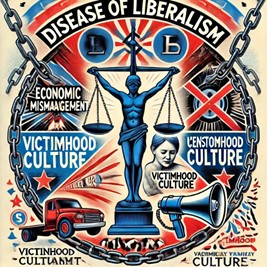
    In today’s rapidly changing world, we find ourselves at the crossroads of societal upheaval and political conflict. The once-principled ideologies that guided our nation have devolved into toxic factions, each claiming moral superiority. Among these, modern liberalism stands out, not as the tolerant and progressive force it once purported to be, but as an increasingly destructive influence that undermines the very foundations of our society. This article delves into what I see as the “disease” of liberalism, examining its impact on our country and why it has led us astray.
    1. A Shift from Personal Responsibility to Victimhood Culture
    Liberalism today has fostered a culture where personal responsibility is often sidelined in favor of victimhood. This victimhood mentality encourages individuals to see themselves as oppressed by external forces rather than masters of their own fate. Every personal shortcoming is now a systemic issue, blamed on everything from institutional racism to patriarchal oppression, often without substantial evidence to back these claims. This mindset not only disempowers individuals but also fosters resentment and division.
    This shift is evident in our schools and universities, where critical race theory, gender studies, and other left-leaning academic disciplines teach young people to view themselves through the lens of oppression and grievance. Rather than focusing on merit, effort, and achievement, the emphasis has turned to identity politics, where the color of one’s skin, gender, or sexual orientation defines their value and societal standing. The result is a generation ill-equipped to deal with adversity, always seeking to blame external factors for their personal and professional failures.
    The decline of accountability is visible everywhere, from the streets of our cities to our classrooms. Instead of teaching our children resilience and the value of hard work, we have replaced these lessons with safe spaces, trigger warnings, and a victim-first mentality. This shift strips people of their agency, creating a population that is more focused on complaining than overcoming challenges. This societal mindset of blaming and finger-pointing has led to the loss of personal agency and the erosion of the American Dream, where effort and ambition once promised success.
    2. Economic Mismanagement and the Redistribution Fallacy
    One of the core tenets of modern liberalism is wealth redistribution, a practice that, while noble in theory, has proven disastrous in practice. Liberals champion the idea of heavy taxation and government handouts as a means of leveling the playing field. However, this approach not only disincentivizes hard work and entrepreneurship but also punishes success. When the fruits of one’s labor are constantly at risk of being taken away, innovation and ambition suffer.
    For example, cities like San Francisco and New York have become symbols of liberal economic policies gone awry. Sky-high taxes, onerous regulations, and an emphasis on welfare over work have created environments where homelessness, drug use, and poverty thrive despite significant government spending to combat these issues. The liberal answer to these problems is often more of the same: higher taxes, more regulations, and increased dependency on government support. This approach ignores the fundamental truth that wealth is created through hard work and innovation, not by redistributing what others have earned.
    California, once the symbol of opportunity and economic vitality, now faces a mass exodus of businesses and residents fleeing to states like Texas and Florida, where lower taxes and fewer regulations create an environment that rewards entrepreneurship. The California model is a cautionary tale of what happens when liberal economic policies are implemented unchecked: economic decline, mass inequality, and a shrinking middle class.
    3. Erosion of Traditional Values and the Family Unit
    Another profound consequence of modern liberalism is the erosion of traditional values, particularly those surrounding the family unit. There is a growing trend among liberal policymakers to undermine the nuclear family, often promoting alternative family structures and pushing radical social agendas in our schools. This attack on the family has led to a breakdown of societal norms and has contributed to rising crime rates, mental health issues, and a loss of community cohesion.
    The decline of the family unit has far-reaching implications. According to studies, children raised in stable, two-parent households are more likely to excel academically, avoid criminal behavior, and achieve higher economic success. Yet, liberal policies that incentivize single parenthood and downplay the importance of fathers in the home are directly contributing to a rise in broken families. These policies, while often framed as compassionate, actually harm the very communities they are meant to help, leading to cycles of poverty and dependence.
    This erosion of family values is further exacerbated by the aggressive push to introduce radical social ideologies into public education. From early childhood, children are being exposed to concepts of gender fluidity, sexual orientation, and anti-traditional family narratives that many parents find inappropriate. The state’s intrusion into the domain of family values has sparked fierce debates and protests, highlighting a growing rift between parents and the public education system. The consequences are already visible: increased rates of anxiety, depression, and confusion among young people who are struggling to navigate a world with few clear boundaries or values.
    4. The Rise of Censorship and Cancel Culture
    Liberalism once championed free speech and the exchange of ideas; today, it has morphed into a force that stifles dissent through cancel culture. Disagreement is no longer tolerated; instead, it is met with aggressive censorship, de-platforming, and social ostracism. This trend has reached unprecedented levels in academia, the media, and on social media platforms, where voices that challenge liberal orthodoxy are silenced or labeled as hateful.
    Consider the countless examples of individuals who have lost their jobs, reputations, or social standing simply for expressing opinions that deviate from the mainstream liberal narrative. In this environment, fear of reprisal stifles honest discussion, leaving society poorer for the lack of diverse viewpoints. Even comedians, once the bastions of free expression, now tread carefully, fearful of saying something that could lead to a social media storm or career-ending backlash.
    This shift towards censorship is a dangerous trend that undermines the very principles of democracy. A society that cannot debate its ideas openly and respectfully cannot solve its most pressing problems. Instead of dialogue, we see a descent into echo chambers where only the loudest and most extreme voices are heard. Cancel culture breeds fear, forcing people to self-censor rather than engage in honest dialogue. This lack of discourse stifles progress and promotes intellectual laziness. In a world where only one viewpoint is allowed, the marketplace of ideas that once fueled American innovation and growth is replaced by a monologue of conformity.
    Conclusion: Fighting the Disease
    Liberalism, once a proud and progressive movement, has devolved into a divisive and destructive force in our society. Its focus on victimhood, economic mismanagement, the erosion of family values, and a rise in censorship has done more harm than good. To combat this, we must return to principles of personal responsibility, economic freedom, respect for traditional values, and the open exchange of ideas.
    The disease of liberalism will not be cured overnight. It will take courage, conviction, and a return to the values that once made our nation great. Only by recognizing the harm being done and actively working to counter it can we hope to rebuild a society grounded in accountability, liberty, and common sense.
    America’s strength lies in its diversity of thought, and the willingness of its people to work together despite their differences. By reclaiming the foundational principles of individual responsibility, free enterprise, family, and open dialogue, we can turn the tide against the divisive forces of modern liberalism and restore the promise of a nation built on freedom and opportunity for all.
     

  • The Origins of the Ku Klux Klan Its Links to the Democrats

    By Scott J. Arnold

    The Origins of the Ku Klux Klan and Its Links to the Democratic Party
    Introduction
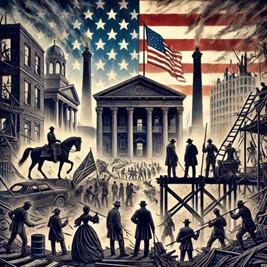
    The Ku Klux Klan (KKK), one of the most notorious hate groups in American history, was founded in the aftermath of the Civil War during the Reconstruction era. Although the group has evolved over time, its origins are deeply tied to post-war Southern resentment and efforts to undermine Reconstruction policies aimed at integrating freed African Americans into society. The KKK’s early ties to the Democratic Party were part of broader efforts by Southern Democrats to resist Republican-led Reconstruction and maintain white supremacy.
    1. The Founding of the Ku Klux Klan
    The KKK was founded in Pulaski, Tennessee, in 1865 by six former Confederate soldiers. Initially formed as a social club, the Klan quickly evolved into a violent organization committed to resisting Reconstruction and restoring white dominance in the South. Under the leadership of former Confederate General Nathan Bedford Forrest, who became the Klan’s first Grand Wizard, the group engaged in acts of terror against African Americans and their allies.
    • Objectives and Tactics: The primary goal of the KKK during its early years was to suppress the political and social gains of freed African Americans. The Klan targeted Black voters, white Republicans, and other supporters of Reconstruction through intimidation, violence, and murder. The KKK used night rides, lynchings, and arson to spread fear and maintain white control.
    • The Democratic Party Connection: At the time, the Democratic Party was the dominant political force in the South and was vehemently opposed to Republican-led Reconstruction efforts. Many Southern Democrats tacitly or openly supported the Klan’s activities, viewing them as a necessary means to restore white Democratic rule in the South. The Klan’s violence served the political interests of Southern Democrats by suppressing the Black vote and dismantling Republican influence.
    2. The Role of the Democratic Party During Reconstruction
    During Reconstruction, the Democratic Party was the primary opposition to the policies of the Republican-controlled federal government, which sought to rebuild the South and integrate formerly enslaved people into American society. Southern Democrats were largely composed of former Confederates and sympathizers who opposed Reconstruction’s efforts to extend civil rights and political power to African Americans.
    • Resistance to Reconstruction Policies: Southern Democrats fiercely resisted measures such as the Civil Rights Act of 1866 and the 14th and 15th Amendments, which granted citizenship and voting rights to Black Americans. The Democratic Party in the South viewed these policies as an existential threat to the social and political order they were determined to restore.
    • Support for the Klan’s Objectives: While not every Democrat was a Klan member, the KKK’s actions aligned with the broader goals of the Democratic Party in the South: to re-establish white supremacy and suppress the political power of Black citizens. Many Democratic leaders turned a blind eye to Klan violence or actively participated in it, using the KKK as a tool to achieve their political ends.
    • The Redeemer Governments: By the late 1870s, the KKK’s violent tactics, combined with political maneuvering by Southern Democrats, helped bring about the end of Reconstruction. “Redeemer” Democrats regained control of Southern state governments, often through voter suppression and violence. These Redeemer governments rolled back civil rights gains and implemented Jim Crow laws that codified racial segregation and disenfranchised Black voters for decades.
    3. Federal Response to the Klan’s Terrorism
    In response to the widespread violence perpetrated by the KKK and other white supremacist groups, the federal government, under Republican leadership, took legislative action to curb the Klan’s influence.
    • The Enforcement Acts: Between 1870 and 1871, Congress passed a series of Enforcement Acts, also known as the Ku Klux Klan Acts, designed to protect Black citizens’ rights to vote, hold office, and serve on juries. These laws authorized federal intervention in states where civil rights were being violated and allowed the prosecution of Klan members.
    • Grant’s Crackdown: President Ulysses S. Grant, determined to uphold the rights of African Americans, used the Enforcement Acts to launch a federal crackdown on the KKK in 1871. Grant declared martial law in several Southern states and deployed federal troops to arrest and prosecute Klan members, leading to the temporary suppression of the organization.
    • The Klan’s Decline: Although the federal crackdown succeeded in significantly weakening the Klan, it did not eliminate white supremacist violence in the South. The Klan’s activities were largely driven underground, but many former members continued to exert influence through local political offices and other means of intimidation.
    4. The Klan’s Evolution and Resurgence
    The KKK experienced several periods of decline and resurgence, often coinciding with moments of racial and social tension in the United States.
    • The Second Klan (1915-1944): The Klan re-emerged in 1915, fueled by anti-immigrant, anti-Catholic, and anti-Semitic sentiments, as well as renewed racism against African Americans. The second iteration of the Klan expanded its membership across the United States, particularly in the Midwest and West, and became a powerful political force in the 1920s.
    • Political Influence in the 1920s: During the 1920s, the Klan had considerable political influence, with members elected to public office at local, state, and national levels. While it no longer had direct ties to the Democratic Party, the Klan’s ideology continued to resonate with many Southern Democrats who opposed civil rights.
    • Civil Rights Era and the Third Klan: The Klan resurged again during the Civil Rights Movement of the 1950s and 1960s, violently opposing efforts to end segregation and protect the voting rights of African Americans. This period of the Klan was marked by bombings, murders, and other acts of terror aimed at civil rights activists.
    5. Modern Perspectives and Disavowal
    Today, the Democratic Party disavows any connection to the Klan, and both major political parties condemn the group’s legacy of hate and violence. The party’s evolution over the 20th century, particularly during the Civil Rights Movement, led to a realignment of political ideologies, with Democrats embracing civil rights and Republicans gaining support in the South.
    • The Civil Rights Realignment: The passage of landmark civil rights legislation in the 1960s, including the Civil Rights Act of 1964 and the Voting Rights Act of 1965, shifted the political landscape. The Democratic Party, once the party of segregationists, became a champion of civil rights, while many Southern white voters shifted their allegiance to the Republican Party.
    • Ongoing Misconceptions: Despite the historical ties between the early Democratic Party and the Klan, modern Democrats have distanced themselves from that legacy. However, the complex history of the KKK’s origins continues to be a point of contention and misunderstanding in contemporary political discourse.
    6. Conclusion
    The origins of the Ku Klux Klan are deeply intertwined with the post-Civil War struggle over Reconstruction and the political realignment of the South. While the Klan initially found support among Southern Democrats, both the group and the party have undergone significant changes over the past century. Understanding the historical context of the KKK’s formation and its connections to the Democratic Party provides a nuanced view of America’s fraught history with race, politics, and violence. Today, both parties unequivocally reject the Klan’s ideology, and efforts continue to educate and address the legacy of hate that the group represents.


  • The KGB: From Its Origins to Present Day

    By Scott J. Arnold

    The KGB: From Its Origins to Present Day
    Introduction
    The KGB (Komitet Gosudarstvennoy Bezopasnosti), or the Committee for State Security, was the Soviet Union’s main security agency from 1954 until its dissolution in 1991. Known for its extensive network of spies, ruthless counterintelligence, and involvement in political repression, the KGB played a crucial role in Cold War espionage and Soviet state control. This article explores the history of the KGB, from its origins to its impact on global intelligence and its enduring legacy.
    1. Origins and Formation of the KGB
    The roots of the KGB can be traced back to the early Soviet security agencies, starting with the Cheka, formed in 1917 under Vladimir Lenin to suppress counter-revolutionary activities. Over the years, the agency evolved through various names, including the OGPU, NKVD, and MGB, before becoming the KGB in 1954.
    • Early Security Agencies: The Cheka, led by Felix Dzerzhinsky, was notorious for its brutal tactics, including executions, imprisonment, and surveillance of political opponents. As the Soviet Union solidified its power, the secret police were restructured to adapt to new challenges, leading to the eventual formation of the KGB.
    • Establishment of the KGB: The KGB was officially established in 1954, merging previous security organizations into a centralized body responsible for intelligence, counterintelligence, internal security, border protection, and the suppression of dissent.
    2. The KGB During the Cold War
    The Cold War was the height of the KGB’s power, as it engaged in espionage, propaganda, and covert operations against Western nations, primarily the United States and its allies. The KGB’s activities were instrumental in shaping the global balance of power during this tense period.
    • Espionage and Spy Networks: The KGB developed an extensive network of spies around the world, infiltrating Western governments, military organizations, and businesses. High-profile spies like Kim Philby and Aldrich Ames provided valuable intelligence that helped the Soviet Union counter Western strategies.
    • Counterintelligence Operations: The KGB’s counterintelligence branch was responsible for identifying and neutralizing foreign spies operating within the Soviet Union. The agency employed sophisticated surveillance, interrogation, and psychological tactics to uncover and dismantle espionage networks.
    3. The KGB’s Role in Political Repression
    Domestically, the KGB was a key instrument of political repression in the Soviet Union, tasked with maintaining the Communist Party’s grip on power. The agency monitored citizens, suppressed dissent, and carried out brutal crackdowns on political opponents.
    • Suppression of Dissidents: The KGB targeted intellectuals, artists, writers, and activists who criticized the Soviet government. Dissidents were often arrested, interrogated, and imprisoned in labor camps or psychiatric hospitals, where they were subjected to harsh conditions.
    • Surveillance and Censorship: The KGB maintained an extensive surveillance apparatus, monitoring communications, infiltrating dissident groups, and controlling the flow of information. Censorship of the press, literature, and art was used to suppress any narrative that challenged Soviet ideology.
    4. High-Profile Operations and Assassinations
    The KGB was notorious for its involvement in high-profile assassinations, sabotage, and other covert actions against perceived enemies of the Soviet state. These operations extended beyond Soviet borders, targeting exiled dissidents and political opponents abroad.
    • Operation VOSTOK: One of the most infamous KGB operations involved the assassination of Ukrainian nationalist leader Stepan Bandera in Munich in 1959. The KGB used poison to carry out the hit, demonstrating its reach and willingness to eliminate threats worldwide.
    • Elimination of Political Opponents: Throughout the Cold War, the KGB was linked to numerous assassinations, including the killing of Bulgarian dissident Georgi Markov in London using a poisoned umbrella. These covert assassinations were part of a broader strategy to silence critics and maintain Soviet control.
    5. The KGB’s Influence on Soviet Foreign Policy
    The KGB played a significant role in shaping Soviet foreign policy by providing intelligence that influenced strategic decisions. The agency’s operations extended into the Third World, where it supported pro-Soviet movements, trained insurgents, and destabilized rival governments.
    • Supporting Revolutionary Movements: The KGB provided support to communist and socialist movements in Latin America, Africa, and Asia, including the training of guerrilla fighters and the provision of arms and funding. These efforts aimed to expand Soviet influence and counter Western intervention.
    • Espionage in the United States: The KGB’s espionage activities in the United States were some of its most extensive, targeting military, technological, and political secrets. KGB operatives recruited American citizens as spies, including highly placed government officials who passed valuable intelligence to Moscow.
    6. The KGB and the Space Race
    The KGB was deeply involved in the space race between the Soviet Union and the United States, conducting espionage to acquire technology and intelligence that would aid Soviet advancements in space exploration.
    • Stealing Technology: The KGB conducted industrial espionage to acquire Western technology and scientific research that would benefit Soviet aerospace programs. This intelligence played a role in the development of Soviet space capabilities, including satellite technology and missile systems.
    • Monitoring Western Progress: The KGB closely monitored NASA and other Western space agencies, using both human intelligence and signal intelligence to gather information on space missions, technological advancements, and strategic priorities.
    7. Challenges and Reforms in the Later Years
    As the Soviet Union entered the 1980s, the KGB faced increasing challenges, including economic decline, internal corruption, and growing public dissatisfaction. Efforts to reform the agency were met with resistance, but some leaders recognized the need for change.
    • Glasnost and Perestroika: During the era of Mikhail Gorbachev’s reforms, the KGB experienced significant pressure to scale back its repressive activities and adapt to a more open political environment. Gorbachev’s policies of glasnost (openness) and perestroika (restructuring) were partially aimed at reducing the KGB’s influence.
    • The Collapse of the Soviet Union: The dissolution of the Soviet Union in 1991 marked the end of the KGB in its original form. The agency was disbanded and replaced by new organizations, including the Federal Security Service (FSB) and the Foreign Intelligence Service (SVR), which continued many of its functions.
    8. The KGB’s Legacy and Influence
    The KGB’s legacy is marked by its significant impact on global intelligence, espionage tactics, and political repression. The agency’s methods and strategies continue to influence modern intelligence practices, particularly in Russia, where former KGB officers hold key positions in government.
    • Training Future Leaders: Many former KGB officers transitioned into influential roles within Russia’s government and business sectors. Notably, Vladimir Putin, who served as a KGB officer before entering politics, exemplifies the ongoing influence of the KGB’s legacy on Russian leadership.
    • Continuing Tactics in Modern Russia: The FSB and SVR, the KGB’s successors, have carried on many of the KGB’s espionage and counterintelligence activities. These agencies continue to be involved in international espionage, cyber warfare, and the suppression of domestic dissent.
    9. KGB in Popular Culture and Media
    The KGB’s reputation for intrigue, secrecy, and ruthlessness has made it a popular subject in books, films, and television series. From spy thrillers to documentaries, the KGB’s role in Cold War espionage has captured the public imagination.
    • Depictions in Film and Literature: Films like “The Spy Who Came in from the Cold” and novels by authors like John le Carré and Tom Clancy have portrayed the KGB as a formidable and often sinister force. These depictions reflect both real and exaggerated aspects of the agency’s operations.
    • Influence on the Spy Genre: The KGB’s involvement in Cold War espionage helped define the spy genre, with stories of double agents, defections, and covert operations becoming staples of popular media. These portrayals continue to shape public perceptions of espionage and intelligence work.
    10. Conclusion: The Enduring Legacy of the KGB
    The KGB remains one of the most infamous intelligence agencies in history, known for its extensive reach, sophisticated espionage tactics, and role in maintaining Soviet state control. Despite the dissolution of the Soviet Union, the legacy of the KGB continues to influence global intelligence practices and modern Russian politics.
    As an agency that operated at the heart of Cold War tensions, the KGB’s history serves as a reminder of the complex and often dangerous world of international espionage. Its impact on the global stage endures, reflecting the enduring allure and intrigue of one of the most powerful intelligence organizations ever created.
     

  • Secrets of Jekyll Island: the Birth of Modern Banking

    By Scott J. Arnold

    The Secrets of Jekyll Island: Unveiling the Birthplace of Modern Banking
    Introduction
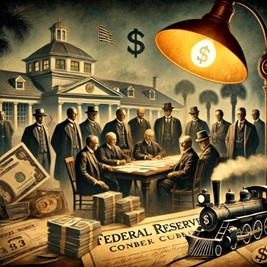
    Jekyll Island, a small barrier island off the coast of Georgia, holds a significant yet secretive place in American history. It was here, in 1910, that a group of the most powerful bankers and financial minds of the time met in secret to lay the groundwork for what would become the Federal Reserve System—the central banking system of the United States. This clandestine meeting at the Jekyll Island Club was shrouded in mystery and has since become the subject of numerous theories and debates about the influence of banks on the U.S. economy. This article explores the history of Jekyll Island, the motives behind the secret meeting, the creation of the Federal Reserve, and the far-reaching impacts of this pivotal moment in American financial history.
    1. Jekyll Island: A Retreat for the Wealthy Elite
    Jekyll Island was purchased in 1886 by a group of wealthy American industrialists and financiers who transformed it into an exclusive retreat known as the Jekyll Island Club. Among its members were some of the most influential and wealthy men of the era, including J.P. Morgan, William Rockefeller, and Joseph Pulitzer. The island was a winter playground for the elite, offering an escape from the bustling cities of the North and a chance to relax in privacy and luxury.
    The club was renowned not only for its exclusivity but also for the power and influence of its members. It was here, away from the public eye, that these captains of industry would discuss business deals, economic strategies, and, on one historic occasion, the future of the American banking system. The isolation of Jekyll Island provided the perfect setting for a secret meeting that would shape the financial landscape of the United States.
    The secluded nature of the island, combined with the wealth and power of its guests, made it an ideal location for discussions that required utmost confidentiality. The Jekyll Island Club represented the pinnacle of American wealth and influence, making it the perfect backdrop for the creation of the Federal Reserve—a system designed to stabilize the American economy but also to protect the interests of the financial elite.
    2. The Panic of 1907: Setting the Stage for Reform
    The origins of the Jekyll Island meeting can be traced back to the financial turmoil of the early 20th century, particularly the Panic of 1907. This financial crisis was triggered by a failed attempt to corner the market on United Copper Company stock, leading to a cascade of bank runs, stock market crashes, and widespread economic instability. The panic exposed the vulnerabilities of the U.S. banking system, particularly its inability to provide liquidity in times of financial stress.
    J.P. Morgan, one of the most powerful bankers of the time, stepped in to orchestrate a private bailout, using his own funds and those of his associates to stabilize the banking system. While Morgan’s intervention was successful in quelling the immediate crisis, it highlighted the lack of a central authority capable of managing monetary policy and providing emergency liquidity. The need for a centralized banking system became increasingly clear, sparking debates about how best to reform the U.S. financial system.
    The Panic of 1907 was a wake-up call for both the public and the financial elite. It underscored the dangers of a fragmented banking system and the need for a central mechanism to prevent future crises. This environment of uncertainty and fear provided the impetus for the secretive meeting on Jekyll Island, where some of the most powerful men in finance would come together to devise a plan for a new central banking system.
    3. The Secret Meeting: Conceiving the Federal Reserve
    In November 1910, six men representing the most influential banks and financial institutions in the United States boarded a private train under conditions of extreme secrecy. They traveled from Hoboken, New Jersey, to Brunswick, Georgia, where they were ferried to Jekyll Island. The group included Senator Nelson Aldrich, Assistant Secretary of the Treasury A. Piatt Andrew, and several top bankers, including Paul Warburg of Kuhn, Loeb & Co., and Frank Vanderlip of National City Bank.
    The men took great pains to keep the meeting secret, using pseudonyms and instructing reporters that they were simply on a hunting trip. The purpose of their clandestine gathering was to draft a proposal for a new central bank that would address the problems exposed by the Panic of 1907. Over the course of ten days, they debated, negotiated, and ultimately laid the foundation for what would become the Federal Reserve System.
    The proposal they drafted emphasized the need for a central authority to manage monetary policy, regulate banks, and act as a lender of last resort. However, it also reflected the interests of the private bankers who attended the meeting, ensuring that the new system would operate independently of direct government control while still protecting the financial elite’s influence over monetary policy. This delicate balance between public oversight and private interests would shape the Federal Reserve’s structure and function for decades to come.
    4. Creating the Federal Reserve: From Proposal to Law
    Following the Jekyll Island meeting, Senator Nelson Aldrich presented the group’s proposal to Congress. However, the initial Aldrich Plan faced significant opposition, particularly from populists and progressives who viewed it as a scheme designed to further entrench the power of Wall Street bankers. Critics argued that the plan concentrated too much power in the hands of private banks and did little to address the needs of ordinary Americans.
    Despite the backlash, the core ideas from the Jekyll Island meeting continued to influence the debate over banking reform. After several years of negotiation and revisions, a new version of the plan, known as the Federal Reserve Act, was passed by Congress and signed into law by President Woodrow Wilson on December 23, 1913. The Federal Reserve System was officially established, creating a network of regional banks overseen by a central Board of Governors.
    The Federal Reserve was designed to be an independent entity, insulated from direct political influence but with public oversight to ensure accountability. It was tasked with managing the nation’s money supply, stabilizing the banking system, and responding to economic crises. While the creation of the Federal Reserve marked a significant step forward in stabilizing the U.S. economy, it also solidified the influence of private bankers, whose interests had played a central role in shaping the institution’s structure.
    5. The Federal Reserve’s Role in the Economy: Power and Controversy
    Since its creation, the Federal Reserve has played a critical role in managing the U.S. economy, using tools like interest rates, open market operations, and reserve requirements to influence economic conditions. The Fed’s ability to act as a lender of last resort has helped prevent bank runs and financial panics, while its monetary policy decisions have been instrumental in controlling inflation and promoting economic growth.
    However, the Federal Reserve’s influence has not been without controversy. Critics argue that the Fed’s policies often favor large financial institutions and Wall Street over ordinary Americans. Decisions such as bank bailouts during the 2008 financial crisis have fueled perceptions that the Fed prioritizes the interests of the wealthy elite, echoing concerns that date back to the institution’s secretive origins on Jekyll Island.
    The Fed’s independence from direct political control has also been a point of contention. While this independence is intended to shield monetary policy from short-term political pressures, it has led to accusations of a lack of accountability and transparency. The complexity of the Fed’s operations and the highly technical nature of its policy decisions make it difficult for the average citizen to understand or influence its actions, contributing to ongoing debates about the institution’s role in a democratic society.
    6. Jekyll Island and Conspiracy Theories: Myths and Realities
    The secrecy surrounding the Jekyll Island meeting and the powerful men involved have fueled numerous conspiracy theories about the Federal Reserve and its role in global finance. Some of these theories suggest that the Federal Reserve was designed not to stabilize the economy but to consolidate control over the U.S. financial system in the hands of a few powerful banking families. These narratives often portray the Federal Reserve as an institution that operates in the shadows, manipulating markets and economies for its own benefit.
    While much of the speculation is rooted in myth rather than fact, the secretive nature of the Jekyll Island meeting does raise legitimate questions about the influence of private interests on public policy. The involvement of bankers and financiers in drafting the blueprint for the Federal Reserve highlights the close relationship between government and the financial sector, a relationship that continues to spark debate about the balance of power in American society.
    The story of Jekyll Island serves as a reminder of the complex and often hidden forces that shape economic policy. While the Federal Reserve has played a vital role in stabilizing the U.S. economy, its origins and continued influence reflect broader tensions between public accountability and private control.
    7. The Legacy of Jekyll Island: Lessons for Today
    The events that transpired on Jekyll Island more than a century ago continue to resonate in contemporary discussions about banking, finance, and economic policy. The Federal Reserve remains a powerful and sometimes polarizing institution, one that is central to the functioning of the global economy. Understanding its origins on Jekyll Island provides valuable insights into the ongoing debates about the role of central banks, the influence of private financial interests, and the importance of transparency and accountability in economic governance.
    As the world faces new financial challenges, from economic inequality to the rise of digital currencies, the legacy of Jekyll Island serves as a cautionary tale about the concentration of power and the need for vigilant oversight of those who control the levers of economic policy. It underscores the importance of maintaining a balance between public good and private interest, a balance that remains as crucial today as it was in 1910.
    8. Moving Forward: The Future of Central Banking
    As we look to the future, the Federal Reserve and other central banks will continue to play a crucial role in navigating economic challenges and maintaining financial stability. However, the lessons of Jekyll Island remind us that the power wielded by these institutions must be accompanied by a commitment to transparency, accountability, and the public interest.
    The challenge moving forward is to ensure that central banks are responsive to the needs of all citizens, not just the financial elite. This requires ongoing scrutiny, open dialogue, and a willingness to adapt to the changing economic landscape. By learning from the past and remaining vigilant in the present, we can work towards a future where the power of central banks serves the broader goal of economic stability and prosperity for all.
    Conclusion
    The meeting on Jekyll Island and the subsequent creation of the Federal Reserve marked a turning point in American financial history. While the Fed has been instrumental in stabilizing the economy and managing monetary policy, its origins in secrecy and the involvement of powerful bankers have left an indelible mark on its legacy. As we continue to debate the role of central banks, the story of Jekyll Island serves as a reminder of the need for vigilance, transparency, and a commitment to serving the public good. The lessons of Jekyll Island remain relevant today, offering insights into the complexities of economic power and the ongoing struggle to balance private interests with public accountability.
     

  • Jackie Coogan: The Child Star Who Changed Hollywood Forever

    By Scott J. Arnold

    The Jackie Coogan Scandal: The Child Star Who Changed Hollywood Forever
    1. Introduction: The Rise of Jackie Coogan, Hollywood’s First Child Star
    Jackie Coogan was one of the most famous child actors of the early 20th century, captivating audiences worldwide with his charm and talent. Discovered by Charlie Chaplin and starring in the classic silent film The Kid (1921), Coogan quickly became a household name and one of the highest-paid actors of his time. However, his story is not just one of early stardom but also of betrayal, financial exploitation, and legal reforms that reshaped Hollywood. Coogan’s experiences as a child star laid bare the vulnerabilities of young performers and led to the creation of crucial laws to protect child actors’ earnings.
    2. Early Life and Discovery: From Vaudeville to Stardom
    Born John Leslie Coogan on October 26, 1914, in Los Angeles, California, Jackie Coogan was introduced to show business at an early age. Both of his parents were involved in entertainment; his father was a vaudeville performer, and his mother was a stage actress. Coogan began performing on stage alongside his parents, showing a natural talent for acting that quickly caught the attention of film industry insiders.
    Coogan’s big break came when he was spotted by Charlie Chaplin, who was immediately impressed by the young boy’s expressive face and comedic timing. Chaplin cast Coogan as his co-star in The Kid, a role that would make him an international sensation. The film’s success catapulted Coogan into superstardom, and he soon became one of the most sought-after child actors in Hollywood.
    3. The Peak of Fame: Hollywood’s Golden Boy
    Throughout the 1920s, Jackie Coogan starred in numerous films, including Oliver Twist (1922), The Rag Man (1925), and Tom Sawyer (1930). He was adored by audiences for his endearing on-screen presence and was one of the highest-earning actors of the silent film era. By the age of ten, Coogan was earning millions, and his image was used to sell merchandise ranging from dolls to peanut butter.
    Coogan’s earnings were astronomical for the time, with estimates suggesting that he made between $3 to $4 million during his childhood—a fortune that would be worth much more in today’s dollars. However, despite his financial success, Coogan’s wealth was not protected, setting the stage for one of Hollywood’s most infamous scandals.
    4. The Betrayal: Loss of a Fortune
    As Coogan approached adulthood, he discovered a harsh reality: nearly all of his earnings were gone. Upon reaching the age of 21, Coogan sought access to his trust fund, only to find that his mother and stepfather had spent nearly all of his money on luxury items, including expensive cars, jewelry, and a lavish lifestyle. Coogan’s stepfather, Arthur Bernstein, who had taken control of Coogan’s finances after his father’s death in a car accident, openly declared that Coogan would not see any of his earnings, claiming, “No promises were ever made to give Jackie anything.”
    The betrayal was a crushing blow to Coogan, who had worked tirelessly throughout his childhood, believing that his earnings were being saved for his future. The public was outraged when the story broke, as Coogan’s situation highlighted the broader issue of financial exploitation of child actors in Hollywood.
    5. The Legal Battle: Coogan vs. His Mother and Stepfather
    In 1938, Coogan sued his mother and stepfather for the mismanagement and misappropriation of his earnings. The legal battle was bitter and highly publicized, drawing attention to the lack of legal protections for child actors at the time. Coogan’s case rested on the argument that his earnings had been mismanaged and spent without his consent, and he sought to recover a portion of his lost fortune.
    Despite the public sympathy for Coogan, the legal outcome was disappointing. He was awarded a mere $126,000 of his original millions, a fraction of what had been lost. The case exposed the gaps in legal safeguards for child actors, as there were no laws at the time to protect the earnings of minors in the entertainment industry. The court’s decision underscored the need for reform and highlighted the broader exploitation of child performers in Hollywood.
    6. The Coogan Law: A Landmark Legal Reform
    The injustice of Jackie Coogan’s situation led to widespread calls for legal reforms to protect the earnings of child actors. In response, California passed the California Child Actor’s Bill, commonly known as the Coogan Law, in 1939. The law was designed to ensure that a portion of a child actor’s earnings would be set aside in a trust—known as a Coogan Account—that could only be accessed by the child when they reached adulthood.
    The Coogan Law mandated that 15% of a child actor’s earnings be placed into a trust account, safeguarded from parental mismanagement. Additionally, it established guidelines for the education, working hours, and welfare of child performers on set. This landmark legislation was a significant step forward in protecting young actors from financial exploitation and ensuring that their hard work would benefit them in the future.
    7. Life After the Scandal: Coogan’s Career and Personal Struggles
    Despite the financial and emotional toll of his legal battles, Jackie Coogan continued to work in Hollywood, though his career never fully regained its former heights. As an adult, Coogan transitioned into character roles, appearing in various films and television shows. He joined the U.S. Army during World War II, serving as a glider pilot in the China-Burma-India theater, a role that brought him admiration and respect.
    In the 1960s, Coogan found renewed fame on television as Uncle Fester in the popular series The Addams Family. The role brought him back into the public eye and endeared him to a new generation of fans. However, Coogan’s personal life remained tumultuous, marked by multiple marriages, financial difficulties, and ongoing struggles stemming from the betrayal of his childhood.
    8. The Broader Impact of the Coogan Scandal on Hollywood
    Jackie Coogan’s case was not just a personal tragedy; it was a turning point for the entertainment industry. The Coogan Law set a precedent for how child actors’ earnings should be managed, inspiring further reforms across the United States and internationally. The case also prompted parents, agents, and studios to take greater responsibility for the welfare of child performers.
    Coogan’s story highlighted the broader exploitation of children in Hollywood, drawing attention to the intense pressures and lack of oversight faced by young actors. It sparked a movement to improve working conditions, protect earnings, and ensure that child actors were treated with the respect and care they deserved.
    9. Other Child Stars Affected by Financial Mismanagement
    Coogan’s ordeal was not an isolated incident; many other child stars have faced similar challenges with financial exploitation and mismanagement. Stars like Shirley Temple, Judy Garland, and Gary Coleman all experienced varying degrees of financial loss due to the actions of parents, managers, or other trusted adults.
    These cases underscore the ongoing need for vigilance in protecting the rights of young performers. The lessons learned from Coogan’s experience have been vital in shaping policies that help prevent such abuses, though challenges remain in ensuring that all child actors receive fair treatment and protection.
    10. The Lasting Legacy of Jackie Coogan
    Jackie Coogan’s legacy is a complex mix of triumph, betrayal, and reform. As one of Hollywood’s first child stars, he set the stage for the generations of young actors who followed. However, his personal tragedy served as a stark warning of the dangers faced by children in the entertainment industry.
    The Coogan Law remains a critical part of Coogan’s enduring legacy, ensuring that future generations of child actors are safeguarded from the financial abuses that marred his own childhood. His story continues to resonate today as a reminder of the importance of protecting vulnerable young performers from exploitation.
    11. Modern Challenges and the Relevance of the Coogan Law Today
    While the Coogan Law was a significant advancement, challenges remain in protecting child actors in today’s entertainment landscape. The rapid growth of digital media, social media influencers, and reality television has introduced new avenues of financial exploitation. Many young performers, particularly those in non-traditional media, still face issues with financial transparency and control.
    Recent updates to the Coogan Law and similar legislation in other states aim to address these evolving challenges, but ongoing advocacy is needed to ensure that the protections remain robust and relevant in a rapidly changing industry.
    12. Conclusion: Jackie Coogan’s Enduring Influence on Entertainment Law
    Jackie Coogan’s story is one of Hollywood’s most poignant tales of early success overshadowed by betrayal and reform. His case exposed the vulnerabilities of child actors and led to transformative changes that have protected countless young performers since. Though Coogan’s personal journey was marred by hardship, his experiences have had a lasting impact, making him not just a cautionary tale but also a pivotal figure in the fight for child actors’ rights.
    Today, the Coogan Law stands as a testament to Coogan’s enduring legacy and the importance of safeguarding the future of young talent in the entertainment industry. His story continues to remind us of the need for ethical oversight, accountability, and the prioritization of the well-being of those who bring joy to audiences at such a young age.
     

  • The Controversy of Taking Down Historical Icons

    By Scott J. Arnold

    The Controversy of Taking Down Historical Icons: Impact on Society, Memory, and Culture
    Introduction
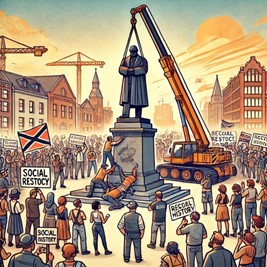
    In recent years, the removal of historical statues and monuments has become a highly contentious issue in the United States and around the world. Statues of figures associated with colonialism, slavery, the Confederacy, and other controversial periods have been defaced, removed, or relocated amid growing demands for a re-examination of history and its public representation. Proponents argue that these removals are necessary to address past injustices and create a more inclusive public space, while critics see them as an erasure of history and a dangerous precedent that threatens to divide society. This article explores the complex debate surrounding the removal of historical icons, examining its impact on society, memory, culture, and the lessons that can be learned from this ongoing struggle.
    1. The Rise of Iconoclasm: A Historical Perspective
    The removal of statues and monuments is not a new phenomenon. Throughout history, societies have re-evaluated their public symbols, often in response to significant political or social changes.
    • Ancient and Medieval Iconoclasm: Iconoclasm, the destruction of religious icons and symbols, dates back to ancient and medieval times. In the Byzantine Empire, waves of iconoclasm saw the destruction of religious images deemed idolatrous. Similarly, the Protestant Reformation led to the removal of Catholic statues, paintings, and relics across Europe as reformers sought to cleanse the church of perceived corruption.
    • Revolutionary Erasures: Political revolutions have also prompted the removal of statues associated with previous regimes. The French Revolution saw the destruction of royal monuments as a rejection of monarchy, while the fall of the Soviet Union led to the dismantling of Lenin and Stalin statues across Eastern Europe.
    • American Civil War Monuments: In the United States, many Confederate statues were erected decades after the Civil War, during periods of racial tension, such as the Jim Crow era and the Civil Rights Movement. These statues have been criticized as symbols of white supremacy and oppression rather than historical remembrance, prompting calls for their removal.
    The current wave of iconoclasm is part of a broader historical pattern where societies confront and re-interpret their public symbols in light of changing values and norms. However, this process is fraught with controversy, as it often involves deeply held beliefs about identity, heritage, and national history.
    2. The Case for Removing Historical Icons: Addressing Injustice and Reclaiming Space
    Supporters of removing controversial statues argue that these monuments represent outdated or harmful values that no longer align with contemporary societal standards. They believe that taking down these icons is a way to address historical injustices and make public spaces more inclusive.
    • Symbolism and Public Space: Statues and monuments are not just artistic works; they are powerful symbols that reflect the values and narratives a society chooses to honor. For many, statues of Confederate leaders, colonialists, or slave owners are painful reminders of oppression and racism. Removing these symbols is seen as an essential step in reclaiming public spaces and ensuring that they reflect a more inclusive and equitable society.
    • Rethinking Historical Narratives: The removal of controversial monuments also prompts a re-evaluation of how history is remembered and taught. It challenges the glorification of figures who contributed to systemic injustices, encouraging a more nuanced understanding of history that includes the perspectives of marginalized groups. By removing statues that celebrate problematic figures, society can make a statement that it no longer condones the values those individuals represented.
    • Creating Opportunities for Education: Removing statues does not necessarily mean erasing history; it can also be an opportunity to educate the public about why these figures are controversial. Some communities have chosen to relocate statues to museums, where they can be contextualized and presented as part of a broader narrative that includes both their accomplishments and their flaws.
    The case for removing historical icons is grounded in the belief that society has a responsibility to confront its past and create public spaces that reflect present-day values of justice, equality, and inclusivity.
    3. The Arguments Against Removal: Preserving History and Avoiding Erasure
    Opponents of removing historical statues argue that taking down monuments, even those representing controversial figures, amounts to erasing history and undermines the ability to learn from the past.
    • Historical Context Matters: Critics contend that statues should be preserved as historical artifacts that provide insight into the values and beliefs of the past. Rather than removing or destroying these monuments, they argue for adding plaques or additional context that explains the figure’s actions and the reasons for the statue’s installation. This approach allows the public to engage critically with history rather than hiding it.
    • Slippery Slope Concerns: There is a fear that removing one controversial statue could set a precedent that leads to the removal of other monuments, potentially including those of figures who, while flawed, made significant contributions to society. The question of where to draw the line—who is worthy of a statue and who is not—becomes a complex and subjective debate that could lead to an endless cycle of removals.
    • Cultural Heritage and Identity: Statues are often seen as part of a community’s cultural heritage, representing shared history and identity. For some, removing statues feels like an attack on their heritage, creating divisions within communities and contributing to cultural and political polarization. This sense of loss can be particularly acute when the statues in question have stood for generations, becoming part of the local landscape and collective memory.
    • Opportunities for Reflection and Dialogue: Rather than removing statues, some suggest using them as focal points for dialogue and reflection. Public discussions, educational programs, and art installations that address the controversial aspects of these figures can turn statues into powerful tools for learning about history’s complexities and fostering understanding among different groups.
    The arguments against removal emphasize the importance of preserving history in its entirety, acknowledging both the good and the bad, and using monuments as catalysts for education and discussion.
    4. The Cultural and Societal Impact of Removing Historical Icons
    The removal of statues has sparked intense cultural and societal debates, reflecting broader struggles over national identity, collective memory, and social justice.
    • Polarization and Divisiveness: The decision to remove or retain controversial statues often reflects deeper political and cultural divides. For some, the removal of statues is a necessary step toward a more just society; for others, it feels like an attack on their values and heritage. These divergent views can exacerbate existing tensions, leading to protests, counter-protests, and in some cases, violence.
    • Reimagining Public Spaces: The removal of statues also opens up opportunities to reimagine public spaces in ways that reflect a broader range of voices and histories. Communities can choose to replace controversial monuments with new art that celebrates figures who have been historically overlooked, such as civil rights leaders, indigenous figures, and women who have contributed to social progress.
    • The Role of Art and Memory: Monuments play a crucial role in shaping collective memory, and their removal can prompt communities to reconsider what values they choose to commemorate. The debate over statues is not just about the individuals they represent but also about the power of art to influence public perception and understanding of history.
    The cultural impact of removing statues extends beyond the physical act of dismantling a monument. It challenges society to confront its past, grapple with difficult questions about identity and memory, and decide how to move forward in a way that honors a more inclusive narrative.
    5. Legal and Policy Implications: Navigating the Path Forward
    The legal and policy implications of removing historical statues are complex and vary significantly across different jurisdictions. Decisions about whether to remove, relocate, or preserve statues often involve local governments, historical preservation societies, and community stakeholders.
    • Local Decision-Making: In many cases, the decision to remove a statue is made at the local level, reflecting the views and values of the community. However, this decentralized approach can lead to inconsistent outcomes, with some cities choosing to remove controversial statues while others opt to keep them.
    • Preservation Laws and Controversies: Historical preservation laws can complicate efforts to remove statues, particularly those that are protected as cultural landmarks. Legal battles over the removal of statues, such as those involving Confederate monuments in the American South, highlight the challenges of balancing historical preservation with evolving social values.
    • Recontextualization as a Policy Alternative: Some cities have chosen to recontextualize rather than remove controversial statues, adding explanatory plaques, integrating monuments into educational programs, or commissioning new art that addresses the statue’s historical context. This approach aims to preserve history while acknowledging the need for a more nuanced understanding.
    The legal and policy landscape surrounding the removal of statues is evolving, reflecting broader debates about how best to honor history while respecting contemporary values.
    6. Moving Forward: Bridging Divides and Finding Common Ground
    As the debate over historical statues continues, finding a path forward that respects both the need for inclusivity and the desire to preserve history is essential.
    • Community Engagement and Dialogue: Engaging communities in open discussions about the role of public monuments can help bridge divides. Public forums, town hall meetings, and collaborative decision-making processes allow diverse voices to be heard and can lead to more balanced and informed outcomes.
    • Educational Initiatives: Schools, museums, and cultural institutions have a crucial role to play in educating the public about the complex histories behind statues. Providing context, exploring multiple perspectives, and highlighting the contributions of marginalized groups can enrich public understanding and encourage critical engagement with history.
    • Honoring Inclusive Histories: Moving forward, communities have an opportunity to rethink who and what they choose to commemorate. By honoring a wider range of figures who have contributed to social progress, communities can create a more inclusive and representative public landscape that reflects the diversity of experiences that have shaped society.
    The controversy over removing historical statues is a reflection of broader cultural and societal challenges. By fostering dialogue, embracing complexity, and seeking common ground, communities can navigate these debates in a way that respects both history and the evolving values of society.
    Conclusion
    The removal of historical statues is a deeply complex issue that touches on questions of memory, identity, and justice. While there are valid arguments on both sides, the debate ultimately reflects a broader struggle over how society chooses to remember its past and envision its future. As communities grapple with these decisions, the challenge lies in finding ways to honor history while also creating a more inclusive and equitable public space. The path forward requires thoughtful engagement, education, and a commitment to understanding the diverse perspectives that shape our shared heritage.
     

  • Hollywood’s Scandalous Practices

    By Scott J. Arnold

    Hollywood’s Troubling Trend: The Subtle Normalization of Disturbing Behaviors
    Amidst the outcry against abuse and misconduct in Hollywood, there is an unsettling undercurrent that critics argue reflects attempts to normalize these behaviors. Whether through media portrayals, celebrity defenses, or cultural narratives, there are ongoing concerns that the entertainment industry is, intentionally or not, blurring the lines of acceptable behavior, downplaying the severity of offenses, and, in some cases, subtly legitimizing actions that should be unequivocally condemned.
    Media Portrayal and the Glamorization of Problematic Characters
    One of the most insidious ways Hollywood influences public perception is through the characters and stories it chooses to tell. Movies and television shows often depict controversial and morally ambiguous characters, sometimes glamorizing or excusing behaviors that would be unacceptable in real life. For example, films and series that center around predatory figures or controversial relationships can desensitize audiences to the real-life implications of these dynamics.
    Take the frequent portrayal of age-gap romances where older, often powerful men engage with much younger women, sometimes barely of legal age. Such storylines are not uncommon, and they often lack critical context or consequences, presenting these relationships as normal, romantic, or even aspirational. While fiction does not directly dictate reality, repeated exposure to these narratives can subtly influence societal norms, making what should be seen as inappropriate appear less so.
    Moreover, Hollywood’s fascination with “bad boy” archetypes or tortured geniuses often skates over the impact of their destructive behavior on others. Audiences are drawn into the complexity of these characters, and empathy can be manipulated to forgive or overlook their flaws. In some cases, the redemption arcs given to deeply flawed or criminal characters serve to humanize and even justify their actions, downplaying the severity of their wrongdoings.
    Celebrity Culture and Public Defenses
    Another troubling aspect is how certain celebrities and public figures defend accused individuals, often framing the conversation around forgiveness, misunderstanding, or even victim-blaming. This can be particularly damaging when influential voices attempt to minimize the allegations against their peers, suggesting that “everyone makes mistakes” or calling accusations “exaggerations” or “misinterpretations.” Such defenses can erode the progress made by survivors in their fight for justice and perpetuate a culture that prioritizes protecting powerful figures over holding them accountable.
    Hollywood’s interconnected web of relationships often means that public and private defenses of accused individuals become part of the broader narrative. When famous actors, producers, or directors publicly express their support for accused friends or colleagues, it can send a message that personal loyalty trumps moral responsibility. This contributes to a culture where accountability is optional and reputation management takes precedence over genuine remorse or change.
    The Role of “Artistic License” as a Shield
    Artistic license is frequently invoked as a defense mechanism in Hollywood, used to justify controversial depictions and the actions of those behind the camera. Directors, writers, and producers often argue that their work reflects complex realities or pushes boundaries in ways that provoke important conversations. However, critics argue that this defense is sometimes used to obscure more nefarious intentions, such as exploiting sensationalist or taboo topics purely for shock value or profit.
    The argument of separating the art from the artist further complicates matters. When celebrated figures are exposed for inappropriate or criminal behavior, a common refrain is that their work should be judged independently of their personal lives. While this perspective has merit in artistic critique, it can also contribute to the normalization of bad behavior by allowing creators to continue thriving professionally without facing meaningful consequences.
    Cultural Shifts and the Rewriting of Narratives
    Hollywood has a significant influence on cultural norms, and the way it tells stories can shape societal attitudes, sometimes pushing boundaries in concerning ways. Over time, behaviors that were once taboo can become normalized through repeated exposure and re-contextualization. This process can be seen in how certain narratives have evolved from being shocking to becoming almost expected parts of entertainment.
    Additionally, there are instances where Hollywood’s rewriting of real-life events through dramatizations or biopics has skewed public understanding of serious issues. When films and TV shows downplay, reframe, or sanitize the actions of problematic figures, it distorts reality, making it harder for audiences to grasp the severity of their behaviors. This blurring of fact and fiction can soften public perception, making heinous actions seem less egregious.
    Normalization Through Media Influence and Social Media Platforms
    Beyond traditional media, social media platforms have become battlegrounds where behaviors are often excused or normalized. Influencers, celebrities, and even fanbases can shift the conversation around allegations, often dismissing or trivializing accusations against favored figures. This “cancel culture” backlash, where fans vehemently defend accused celebrities, plays into the narrative that allegations are mere inconveniences rather than serious claims requiring investigation.
    Platforms like Twitter, Instagram, and TikTok can amplify voices that seek to downplay abuse, spinning narratives that accuse victims of lying or exaggeration. In some instances, influencers have openly mocked movements like #MeToo, portraying them as overly sensitive or reactionary, which can perpetuate a toxic culture that favors the accused over the accusers. The power of fandom and the cult of celebrity often overshadow the need for critical evaluation of facts, pushing the normalization of disturbing behaviors further into mainstream discourse.
    Conclusion: A Call for Responsibility and Cultural Reassessment
    The entertainment industry wields enormous cultural power, and with that power comes a responsibility to not only entertain but also to reflect and respect societal values. The normalization of disturbing behaviors through media portrayals, public defenses, and the influence of celebrity culture undermines efforts to hold individuals accountable and perpetuates a cycle of silence and complicity.
    Addressing these issues requires a collective effort from within Hollywood and beyond. Creators must be mindful of the narratives they promote, and audiences need to critically engage with the content they consume. Moreover, the industry must continue to support reforms that prioritize safety and respect, while also resisting the temptation to excuse or glorify harmful behaviors under the guise of art. Only then can Hollywood begin to rebuild trust and foster an environment that truly reflects the values of accountability and integrity.