Blog

  • The Hypothesis of Nuclear War

    By Scott J. Arnold

    The Hypothesis of Nuclear War: Assessing the Likelihood and Consequences
    Introduction
    The prospect of nuclear war, once a defining fear during the Cold War, has resurfaced in contemporary global discussions amid rising geopolitical tensions. The hypothesis of a potential nuclear conflict examines the scenarios, triggers, and possible outcomes that could lead to the deployment of nuclear weapons, posing existential threats to humanity. This analysis explores the conditions under which nuclear war might occur, the strategic considerations of nuclear-armed states, and the catastrophic impacts such a conflict would have on global security, the environment, and human survival.
    1. The Strategic Landscape and Nuclear Proliferation
    Nuclear weapons are held by nine countries: the United States, Russia, China, the United Kingdom, France, India, Pakistan, North Korea, and Israel (though Israel’s arsenal remains unconfirmed). The existence of these arsenals is primarily justified by deterrence theory, which argues that nuclear weapons prevent large-scale wars by ensuring mutual destruction in the event of a conflict.
    • Deterrence and Mutually Assured Destruction (MAD): The principle of MAD has historically prevented nuclear powers from engaging in direct conflict, as any nuclear exchange would result in unacceptable devastation on both sides. However, this delicate balance relies on rational actors and stable communication, raising concerns about potential miscalculations or misinterpretations.
    • Proliferation and Emerging Nuclear States: The spread of nuclear technology increases the risk of conflict. Countries like North Korea have defied international norms to develop their arsenals, while other nations, such as Iran, have pursued nuclear capabilities under the guise of energy programs. This proliferation heightens the risk of regional conflicts escalating into broader nuclear wars.
    • Technological Advances and Cyber Threats: The advent of advanced technologies, including cyber warfare, artificial intelligence, and hypersonic missiles, introduces new vulnerabilities. Cyberattacks on nuclear command and control systems could trigger false alarms or unauthorized launches, bypassing traditional deterrence mechanisms.
    2. Scenarios That Could Lead to Nuclear War
    While nuclear deterrence has generally maintained peace among great powers, several scenarios could still lead to nuclear conflict, ranging from intentional use to accidental launches.
    • Escalation of Conventional Conflicts: Conventional conflicts between nuclear-armed states, such as the ongoing tensions between India and Pakistan or a potential military confrontation between the US and China over Taiwan, could escalate to the nuclear level if one side feels existentially threatened or cornered.
    • Nuclear Terrorism: Non-state actors acquiring nuclear materials pose a significant threat, as traditional deterrence does not apply to terrorist groups. A nuclear detonation by terrorists in a major city could trigger a severe response from affected nations, potentially involving nuclear retaliation if state sponsorship is suspected.
    • Accidental Launches or Miscommunication: Historical incidents, such as the Cuban Missile Crisis and false alarms during the Cold War, demonstrate the precariousness of nuclear command systems. Human error, technical failures, or misinterpretation of radar signals could lead to unintended nuclear launches.
    • Preemptive Strikes: In a situation where a nuclear state believes an adversary is about to strike, it might consider a preemptive nuclear strike to neutralize the threat. Such logic could apply in highly tense situations, particularly if new technologies shorten decision-making windows.
    3. Potential Consequences of a Nuclear War
    The detonation of nuclear weapons, even on a limited scale, would have catastrophic consequences far beyond the immediate blast zones, affecting global health, climate, and the environment.
    • Immediate Impact and Blast Effects: The explosion of a nuclear weapon releases immense energy, generating temperatures hotter than the sun’s surface, lethal radiation, and shockwaves that can flatten cities. The immediate death toll in targeted areas would be in the hundreds of thousands or even millions, depending on the scale of the attack.
    • Nuclear Fallout and Radiation Sickness: Radioactive fallout would contaminate vast areas, making them uninhabitable for decades. Survivors would suffer from acute radiation sickness, with symptoms ranging from severe burns to organ failure. Long-term exposure would lead to increased cancer rates and genetic mutations.
    • Nuclear Winter: A large-scale nuclear exchange could inject massive amounts of soot and ash into the stratosphere, blocking sunlight and drastically cooling the Earth’s surface in a phenomenon known as nuclear winter. This climatic disruption would severely affect agriculture, leading to global food shortages and mass starvation.
    • Economic Collapse and Societal Breakdown: The economic impact of nuclear war would be devastating, wiping out infrastructure, disrupting global trade, and causing financial markets to crash. The breakdown of societal order, coupled with the collapse of governance in affected regions, would lead to widespread chaos and displacement.
    4. Efforts to Prevent Nuclear War
    Preventing nuclear war requires robust international cooperation, effective arms control measures, and ongoing dialogue between nuclear and non-nuclear states. Key efforts include:
    • Arms Control Agreements: Treaties such as the Non-Proliferation Treaty (NPT), New START, and the Intermediate-Range Nuclear Forces (INF) Treaty have played vital roles in reducing nuclear arsenals and establishing verification mechanisms. However, the erosion of these agreements, exemplified by the US withdrawal from the INF Treaty and uncertainties surrounding New START, poses significant risks.
    • Diplomatic Engagements and Crisis Management: Continuous dialogue between nuclear-armed states, crisis hotlines, and military-to-military communication channels are essential to de-escalate tensions during crises. Diplomatic efforts, including summits and back-channel negotiations, have historically prevented conflicts from spiraling into nuclear exchanges.
    • Nuclear Non-Proliferation and Disarmament Initiatives: Global initiatives such as the Treaty on the Prohibition of Nuclear Weapons (TPNW) aim to stigmatize and eventually eliminate nuclear weapons. While major nuclear powers have not signed the treaty, it reflects growing international pressure to reduce the reliance on nuclear arms.
    • Public Awareness and Advocacy: Grassroots movements and advocacy groups continue to play a critical role in raising awareness about the dangers of nuclear war. Campaigns like the International Campaign to Abolish Nuclear Weapons (ICAN), which won the Nobel Peace Prize in 2017, work to mobilize public opinion against nuclear proliferation.
    5. The Future of Nuclear Deterrence
    The future of nuclear deterrence faces significant challenges as technological advancements, geopolitical shifts, and emerging threats alter the strategic calculus of nuclear states.
    • Modernization of Nuclear Arsenals: Major nuclear powers are modernizing their arsenals, developing new delivery systems, and expanding their nuclear capabilities. This arms race, coupled with the deployment of tactical nuclear weapons, increases the likelihood of their use in regional conflicts.
    • The Role of Emerging Powers: The emergence of new nuclear states and the growing assertiveness of existing ones, such as North Korea’s continued missile tests, complicates global security dynamics. The involvement of multiple actors increases the risk of miscalculations and unintended escalations.
    • Technological Disruption: Innovations in cyber warfare, artificial intelligence, and missile defense systems are reshaping the landscape of nuclear strategy. Cyberattacks that compromise nuclear command and control systems pose a direct threat to global security, as do AI-driven decision-making processes that could reduce the time available for human intervention.
    6. Conclusion: A Call for Renewed Vigilance and Diplomacy
    The hypothesis of nuclear war happening is not merely theoretical; it is a real and present danger that requires constant vigilance, robust diplomatic efforts, and a commitment to disarmament. The catastrophic consequences of nuclear conflict underscore the need for renewed international cooperation, strengthened arms control agreements, and the development of crisis management frameworks that can prevent accidental or intentional nuclear exchanges. As global tensions continue to simmer, the world must prioritize the reduction of nuclear risks to safeguard humanity’s future.
    Efforts to reduce nuclear arsenals, enhance verification measures, and promote non-proliferation are essential steps toward a safer world. The international community must remain steadfast in its resolve to prevent nuclear war, understanding that the stakes have never been higher.

     

  • The NRA: From Its Origins to the Present Day

    By Scott J. Arnold

    The NRA: From Its Origins to the Present Day
    Introduction
    The National Rifle Association (NRA) is one of the most influential advocacy groups in the United States, known primarily for promoting gun rights and advocating for the Second Amendment. Founded in the late 19th century, the NRA has evolved from a focus on marksmanship and gun safety to becoming a powerful political force. This article explores the history of the NRA, its rise to prominence, and its ongoing impact on American politics and gun culture.
    1. Origins of the NRA
    The NRA was founded on November 17, 1871, by Union veterans William C. Church and George Wingate in New York. Initially, the organization’s primary mission was to improve marksmanship and promote rifle shooting among Americans. At the time, military leaders were concerned about the poor marksmanship displayed by soldiers during the Civil War, which highlighted the need for better training.
    • Early Mission and Training Programs: The NRA’s early efforts focused on teaching marksmanship and gun safety. It established shooting ranges and conducted training programs for civilians and military personnel. The association quickly gained support and expanded its activities across the country.
    • Shooting Competitions and Youth Programs: The NRA organized shooting competitions, including the prestigious National Matches, which helped establish the association’s reputation in the shooting sports community. The NRA also developed programs for youth, such as the Boy Scouts marksmanship badge, fostering a culture of responsible gun ownership.
    2. Expanding Influence in the 20th Century
    Throughout the early 20th century, the NRA continued to promote shooting sports and gun safety. In 1934, the NRA formed the Legislative Affairs Division to monitor firearm-related legislation, marking the beginning of its involvement in political advocacy. This division would later become the foundation for the NRA’s influential lobbying efforts.
    • Support for Firearms Legislation: In its early years, the NRA supported certain gun control measures, such as the National Firearms Act of 1934 and the Gun Control Act of 1968, which were aimed at regulating the sale and ownership of firearms. These laws focused on curbing the proliferation of fully automatic weapons and restricting firearm sales to criminals and mentally ill individuals.
    • Evolving Stance on Gun Rights: By the 1970s, the NRA’s stance on gun control began to shift. As public debates over gun regulation intensified, the NRA increasingly positioned itself as a staunch defender of the Second Amendment, opposing efforts to impose stricter firearm regulations.
    3. The 1977 Cincinnati Revolt: A Turning Point
    The NRA’s transformation into a political powerhouse began with the 1977 annual meeting in Cincinnati, known as the “Cincinnati Revolt.” Dissatisfied with the leadership’s focus on sportsmanship and hunting, a faction of NRA members led by Harlon Carter pushed for a more aggressive defense of gun rights. This internal coup led to a significant change in the organization’s direction.
    • Focus on Political Advocacy: After the Cincinnati Revolt, the NRA intensified its lobbying efforts and became deeply involved in politics, particularly at the federal and state levels. The association’s leadership embraced a hardline stance against gun control, emphasizing the defense of individual rights to bear arms.
    • The Creation of the Institute for Legislative Action (ILA): In 1975, just before the Cincinnati Revolt, the NRA established the Institute for Legislative Action (ILA) as its lobbying arm. The ILA became instrumental in shaping the NRA’s political strategy, mobilizing members, and influencing legislation related to gun rights.
    4. The Rise of the NRA’s Political Influence
    Throughout the 1980s and 1990s, the NRA emerged as one of the most powerful lobbying groups in Washington, D.C., with a substantial influence on U.S. politics. The organization endorsed pro-gun candidates, mobilized its vast membership base, and lobbied against gun control measures.
    • Support for Pro-Gun Legislation: The NRA played a crucial role in advocating for the Firearm Owners Protection Act of 1986, which rolled back certain restrictions imposed by earlier gun control laws. The act protected gun owners’ rights, limited federal oversight of firearm sales, and safeguarded gun shows from strict regulations.
    • Opposition to the Assault Weapons Ban: One of the NRA’s most high-profile battles was against the Federal Assault Weapons Ban of 1994. Despite its passage, the NRA successfully lobbied for a sunset clause, which led to the ban expiring in 2004. The NRA’s opposition to the ban solidified its reputation as a formidable force in the gun rights movement.
    5. The NRA and Gun Culture in America
    The NRA has been instrumental in shaping American gun culture, promoting the idea that gun ownership is both a constitutional right and a core aspect of American identity. Through its publications, advertising campaigns, and outreach programs, the NRA has fostered a sense of community among gun owners.
    • Education and Safety Programs: The NRA continues to emphasize gun safety through educational initiatives like the Eddie Eagle GunSafe program, which teaches children about firearm safety, and the NRA Training Department, which certifies instructors to provide firearms training across the country.
    • Promotion of Self-Defense and Personal Protection: The NRA has increasingly focused on the right to self-defense, promoting concealed carry laws and supporting the expansion of stand-your-ground laws. This emphasis has resonated with millions of Americans who view firearms as essential tools for personal protection.
    6. Controversies and Legal Battles
    The NRA has faced numerous controversies and legal challenges over the years, including accusations of financial mismanagement, ethical violations, and clashes with gun control advocates. High-profile mass shootings have intensified scrutiny of the NRA’s influence on gun legislation.
    • Response to Mass Shootings: The NRA has often been criticized for its response to mass shootings, such as the Sandy Hook Elementary School shooting in 2012 and the Parkland, Florida shooting in 2018. The NRA’s stance has consistently emphasized addressing mental health issues, improving school security, and protecting the rights of law-abiding gun owners.
    • Internal Turmoil and Legal Issues: In recent years, the NRA has faced internal strife, including allegations of financial improprieties by top executives, including CEO Wayne LaPierre. These controversies have led to legal battles with the New York Attorney General’s office, which filed a lawsuit seeking to dissolve the organization due to alleged financial misconduct.
    7. The NRA’s Influence on Elections and Legislation
    The NRA’s political influence extends beyond lobbying. The organization has been a major player in U.S. elections, endorsing pro-gun candidates, funding political campaigns, and mobilizing voters through its vast grassroots network.
    • Campaign Contributions and Endorsements: The NRA Political Victory Fund (NRA-PVF) endorses candidates who support gun rights, often giving them high ratings based on their voting records. The NRA’s financial contributions and endorsements can significantly impact elections, especially in swing states and districts.
    • State-Level Advocacy: In addition to federal lobbying, the NRA actively engages in state-level advocacy, pushing for the expansion of concealed carry laws, the passage of “constitutional carry” measures, and the rollback of restrictive gun laws.
    8. Opposition and the Gun Control Debate
    The NRA’s influence has not gone unchallenged. The gun control debate in the United States is highly polarized, with organizations such as Everytown for Gun Safety, Moms Demand Action, and the Brady Campaign working to counter the NRA’s messaging and lobbying efforts.
    • Calls for Stricter Gun Control: Gun control advocates argue that the NRA’s influence has impeded efforts to implement common-sense gun reforms, such as universal background checks, red flag laws, and restrictions on high-capacity magazines. These groups continue to challenge the NRA’s positions through public campaigns, legal action, and legislative advocacy.
    • Public Opinion and Shifts in Support: While the NRA remains a powerful force, public opinion on gun control has shifted, particularly in the wake of mass shootings. Polls indicate growing support for measures such as background checks, putting pressure on lawmakers to balance gun rights with public safety concerns.
    9. The NRA in the Digital Age
    In recent years, the NRA has leveraged digital platforms and social media to reach a broader audience. The NRA’s media presence, including NRATV, YouTube videos, and social media channels, has amplified its messages on gun rights, self-defense, and American values.
    • Outreach and Member Engagement: The NRA uses digital tools to mobilize members, raise funds, and advocate for its positions. Online petitions, email campaigns, and social media activism have become central to the NRA’s strategy in shaping public discourse on firearms.
    • Adapting to Modern Challenges: The NRA’s digital presence has allowed it to adapt to changing media landscapes, but it has also faced criticism for its messaging tactics, which some view as divisive. The NRA’s use of social media to respond to gun control advocates and shape narratives has made it a prominent voice in the ongoing debate.
    10. Conclusion: The Future of the NRA
    The NRA’s legacy is marked by its unwavering defense of the Second Amendment and its profound impact on American gun culture and politics. Despite facing internal challenges, legal battles, and growing opposition, the NRA remains a potent force in the national debate over gun rights.
    As the NRA navigates a rapidly changing political landscape, its ability to adapt and mobilize its supporters will be crucial to its continued influence. The future of the NRA will likely be shaped by ongoing legal challenges, shifting public attitudes, and the evolving nature of the gun rights movement in America.
     

  • Nikola Tesla: The Visionary Genius Who Electrified the World

    By Scott J. Arnold

    Nikola Tesla: The Visionary Genius Who Electrified the World
    1. Introduction: The Legacy of Nikola Tesla
    Nikola Tesla was a visionary inventor, electrical engineer, and futurist whose innovations laid the foundation for modern electrical power systems. Born in the 19th century, Tesla’s work revolutionized the way electricity is generated, transmitted, and used, making him one of the most influential figures in the history of technology. Despite his extraordinary contributions, Tesla’s life was marked by rivalry, financial struggles, and unfulfilled dreams. His pioneering work in alternating current (AC) power, wireless communication, and numerous other fields cemented his status as a scientific genius, but he often lived in the shadow of other inventors, like Thomas Edison. Today, Tesla is celebrated as a hero of innovation, whose ideas continue to shape the world.
    2. Early Life: From Smiljan to the World of Science
    Nikola Tesla was born on July 10, 1856, in Smiljan, a small village in what is now Croatia, then part of the Austrian Empire. He was the fourth of five children in a Serbian Orthodox family. His father, Milutin Tesla, was a priest and writer, while his mother, Georgina Đuka Tesla, was an inventor in her own right, known for her ability to create household devices. From a young age, Tesla displayed a remarkable memory and a keen interest in science and technology, often constructing intricate mechanical models.
    Tesla’s education began at the Higher Real Gymnasium in Karlovac, where he developed a fascination with electricity. He continued his studies at the Austrian Polytechnic in Graz, Austria, where he excelled in physics and mathematics but struggled with formal academic life. Tesla left school without a degree and experienced a period of uncertainty, but his passion for innovation and discovery never wavered. This passion would eventually lead him to become one of the most important inventors of the modern era.
    3. The Early Career: Working Across Europe
    After leaving school, Tesla worked in various technical and engineering positions across Europe. In 1881, he moved to Budapest, where he worked at the Central Telephone Exchange and first conceived of the rotating magnetic field, a principle that would later be crucial to the development of alternating current (AC) motors. This idea came to him while observing a sunset, illustrating Tesla’s unique ability to draw inspiration from the world around him.
    In 1882, Tesla moved to Paris to work for the Continental Edison Company, where he gained valuable experience in electrical engineering. His work involved designing and improving electrical equipment, which further fueled his interest in power systems. During this time, Tesla began to envision a future where AC power could be used to transmit electricity over long distances, a concept that was radically different from the direct current (DC) systems being developed by Thomas Edison.
    4. The Move to America: Working with Edison
    In 1884, Tesla immigrated to the United States, arriving in New York City with little more than a letter of introduction to Thomas Edison, the renowned inventor and businessman. Tesla began working for Edison’s company, Edison Machine Works, where he was tasked with improving Edison’s DC generators. Although the two men shared a passion for innovation, their approaches to electrical engineering were fundamentally different, leading to tensions between them.
    Edison was a staunch advocate of direct current (DC) power, while Tesla believed that alternating current (AC) was a more efficient and scalable solution. Tesla proposed several improvements to Edison’s DC systems, but Edison dismissed many of his ideas. After months of frustration and a broken promise of financial reward, Tesla left Edison’s company, determined to pursue his own vision of an AC-powered future.
    5. The War of Currents: Tesla vs. Edison
    Tesla’s departure from Edison’s company marked the beginning of a bitter rivalry between the two inventors, known as the War of Currents. While Edison promoted DC power, Tesla championed AC, which could transmit electricity over much greater distances with less power loss. In 1887, Tesla partnered with industrialist George Westinghouse, who saw the potential of Tesla’s AC system and provided the resources needed to develop it further.
    The War of Currents became a public battle, with Edison launching a smear campaign against AC power, labeling it dangerous and even electrocuting animals in public demonstrations to prove his point. Despite Edison’s efforts, the technical superiority of AC won out. In 1893, Westinghouse and Tesla’s AC system was chosen to power the World’s Columbian Exposition in Chicago, a stunning display of electrical lighting that captured the world’s attention and marked a major victory for Tesla’s vision.
    6. Inventions That Changed the World: AC Motors and More
    Tesla’s contributions to electrical engineering went far beyond the AC power system. He invented the induction motor and transformer, which were crucial components of the AC power distribution system. The induction motor, in particular, revolutionized industry by providing a reliable and efficient means of converting electrical energy into mechanical power. This invention remains the backbone of modern electric motors, used in countless applications from household appliances to industrial machinery.
    Tesla’s work also extended into radio frequency technology, wireless communication, and even early concepts of robotics. He held over 300 patents worldwide, including those for the Tesla coil, a high-voltage transformer that became a staple in radio technology and is still used today in some applications. Tesla’s relentless pursuit of innovation led to breakthroughs that laid the groundwork for many of the technologies we take for granted today.
    7. Wireless Power and the Dream of Wardenclyffe
    One of Tesla’s most ambitious projects was his dream of wireless power transmission. He envisioned a world where electricity could be transmitted through the air, eliminating the need for wires and cables. To realize this vision, Tesla began constructing the Wardenclyffe Tower on Long Island, New York, in 1901. The tower was designed to be the centerpiece of a global wireless communication and power network.
    However, the project faced financial difficulties, as Tesla’s investors, including J.P. Morgan, grew skeptical of the commercial viability of wireless power. Morgan eventually withdrew his support, and construction on the tower halted. Wardenclyffe was never completed, and Tesla’s dream of wireless power remained unfulfilled. The tower was eventually dismantled, marking one of the great “what ifs” in the history of technology.
    8. Later Years: Financial Struggles and Isolation
    Despite his many successes, Tesla’s later years were marked by financial difficulties and declining health. He was a prolific inventor but not a savvy businessman, often prioritizing his research over profit. He spent his fortune on experiments and was frequently taken advantage of by less scrupulous partners. By the 1920s, Tesla was living in relative obscurity, residing in various New York City hotels that he struggled to pay for.
    In his later years, Tesla became increasingly reclusive and eccentric, feeding pigeons in the parks of New York and continuing to work on theoretical ideas that were far ahead of his time. He claimed to have developed a “death ray” capable of destroying entire armies, though this invention was never realized. While Tesla’s mind remained active and filled with visionary concepts, his financial situation continued to deteriorate.
    9. The Forgotten Genius: Death and Rediscovery
    Nikola Tesla died alone in his hotel room at the New Yorker Hotel on January 7, 1943, at the age of 86. At the time of his death, he was largely forgotten by the public, overshadowed by other inventors like Edison. However, in the years following his death, Tesla’s contributions to science and technology began to be rediscovered and appreciated.
    The U.S. Supreme Court posthumously recognized Tesla’s contributions to the invention of radio, overturning Marconi’s patents and acknowledging Tesla’s pioneering work in wireless communication. As the 20th century progressed, Tesla’s legacy grew, and he came to be seen as a hero of innovation and creativity. Today, he is celebrated as one of the greatest inventors of all time, and his name has become synonymous with technological ingenuity.
    10. Tesla’s Influence on Modern Technology
    Tesla’s influence on modern technology cannot be overstated. His work on AC power systems forms the backbone of today’s electrical grid, enabling the distribution of electricity over vast distances. His inventions in radio frequency technology laid the groundwork for wireless communication, influencing everything from radio and television to smartphones and Wi-Fi.
    Tesla’s concepts of wireless power transmission and renewable energy have inspired modern advancements in solar, wind, and wireless charging technologies. His forward-thinking ideas, such as remote control, robotics, and even the concept of artificial intelligence, were decades ahead of their time and continue to resonate in today’s technological landscape. Tesla’s legacy is evident in the ongoing quest to push the boundaries of what is possible.
    11. Cultural Icon: Tesla in Popular Media
    Beyond his scientific achievements, Tesla has become a cultural icon, inspiring films, books, and even video games. He is often portrayed as a misunderstood genius, a man whose brilliance was not fully recognized in his time. Movies like The Prestige (2006), where David Bowie portrayed Tesla, have helped popularize his story, depicting him as a mysterious and enigmatic figure.
    Tesla’s name has been adopted by companies such as Tesla, Inc., the electric vehicle and clean energy company founded by Elon Musk. This modern homage highlights Tesla’s enduring influence and serves as a testament to his forward-thinking vision of a world powered by clean and renewable energy.
    12. Conclusion: The Enduring Legacy of Nikola Tesla
    Nikola Tesla’s life was a remarkable journey of innovation, ambition, and perseverance. He was a man who dreamed of electrifying the world and making power accessible to all. Despite facing immense challenges, both personal and professional, Tesla’s relentless pursuit of his ideas changed the course of history. His contributions to electrical engineering, wireless communication, and countless other fields have had a profound impact on the modern world.
    Tesla’s legacy is not just found in his inventions but in his spirit of exploration and his unwavering belief in the power of science to improve humanity. He remains a symbol of the brilliant, uncompromising inventor whose ideas continue to inspire and drive technological progress. As we look to the future, Tesla’s work serves as a reminder that the power of imagination and innovation can change the world.
     

  • Muhammad Ali: The Greatest of All Time

    By Scott J. Arnold

    Muhammad Ali: The Greatest of All Time
    1. Introduction: The Legend of Muhammad Ali
    Muhammad Ali, born Cassius Marcellus Clay Jr., was more than just a boxer; he was a global icon, an outspoken activist, and one of the most charismatic and influential figures of the 20th century. Known for his lightning-fast reflexes, powerful punches, and unmatched confidence, Ali revolutionized the sport of boxing and became a symbol of courage, resilience, and social change. He was a three-time world heavyweight champion, Olympic gold medalist, and a fierce advocate for civil rights and religious freedom. Ali’s legacy extends beyond his victories in the ring—he inspired millions with his unwavering belief in himself, his willingness to stand up for his convictions, and his unparalleled showmanship.
    2. Early Life: From Louisville to the Boxing Ring
    Cassius Marcellus Clay Jr. was born on January 17, 1942, in Louisville, Kentucky. He grew up in a segregated South, experiencing the harsh realities of racism and discrimination from an early age. At 12, after his bike was stolen, Clay vowed to learn how to fight so he could “whup” the thief. He was introduced to boxing by a local police officer and boxing coach, Joe Martin, who saw potential in the young Clay’s determination and energy.
    Clay quickly developed as a boxer, winning his first amateur bout in 1954. Over the next few years, he dominated the amateur boxing scene, winning numerous titles, including two national Golden Gloves championships. In 1960, at just 18 years old, Clay represented the United States at the Rome Olympics, winning a gold medal in the light heavyweight division. The victory was a defining moment in his early career, setting the stage for his transformation into a professional boxing star.
    3. Rise to Stardom: The Early Professional Years
    After the Olympics, Clay turned professional and quickly gained a reputation for his brash confidence and unorthodox style. His unorthodox boxing style, characterized by lightning-fast footwork, quick jabs, and a seemingly impenetrable defense, confused and overwhelmed his opponents. Clay’s speed and agility were unlike anything the heavyweight division had seen, and his ability to “float like a butterfly, sting like a bee” became his defining mantra.
    Outside the ring, Clay’s larger-than-life personality and flamboyant self-promotion drew attention. He taunted opponents with rhymes and predictions, often boasting that he would knock them out in specific rounds. This bravado, combined with his undeniable talent, made Clay a polarizing figure but also one of the most captivating athletes in the world. By the early 1960s, he was climbing the ranks of the heavyweight division, and a world title shot seemed inevitable.
    4. The First Championship: Defeating Sonny Liston
    On February 25, 1964, Clay faced Sonny Liston, the reigning heavyweight champion, in one of the most anticipated fights in boxing history. Liston was a feared puncher and heavy favorite, while Clay was viewed as an untested upstart. Leading up to the fight, Clay taunted Liston relentlessly, calling him a “big ugly bear” and predicting a knockout. Despite the bravado, many doubted Clay’s ability to handle Liston’s power.
    In one of the greatest upsets in boxing history, Clay dominated Liston, forcing him to quit on his stool before the seventh round. With this stunning victory, Clay became the heavyweight champion of the world at just 22 years old. In the post-fight interview, Clay famously declared, “I shook up the world!” Shortly after, he announced that he had converted to Islam and would be changing his name to Muhammad Ali, a decision that shocked the boxing world and signaled the start of a new chapter in his life.
    5. The Name Change and Embracing Islam
    Ali’s decision to change his name from Cassius Clay to Muhammad Ali was deeply personal and politically charged. He had joined the Nation of Islam, an organization that promoted Black empowerment and separation from white society, and he viewed his new name as a rejection of his “slave name.” The move drew both praise and criticism; some saw it as a powerful statement of independence, while others viewed it as controversial and divisive.
    Ali’s embrace of Islam was about more than just a name change—it was a declaration of his beliefs and identity. He aligned himself with figures like Malcolm X and took a strong stance against racial injustice. This new chapter of Ali’s life was marked by his outspoken nature, willingness to confront the status quo, and commitment to standing up for what he believed in, both in and out of the ring.
    6. The Ali vs. Frazier Trilogy: The Greatest Rivalry in Boxing
    One of the most defining aspects of Ali’s boxing career was his rivalry with Joe Frazier, which produced three of the most famous fights in boxing history. The first bout, known as the “Fight of the Century,” took place on March 8, 1971, at Madison Square Garden. Both fighters were undefeated, and the hype surrounding the match was unprecedented. Frazier won by unanimous decision, knocking Ali down in the 15th round and handing him his first professional loss.
    The rivalry continued with two more legendary bouts. Ali won the rematch in 1974 and then faced Frazier in the epic “Thrilla in Manila” in 1975. The third fight was brutal, with both fighters pushing themselves to the limit. Ali won when Frazier’s corner stopped the fight after the 14th round, but he later described it as the closest thing to dying he had ever experienced. The Ali-Frazier trilogy remains one of the greatest rivalries in sports, showcasing Ali’s resilience, skill, and determination.
    7. The Vietnam War and Ali’s Stand Against the Draft
    In 1967, Ali’s boxing career came to a halt when he refused to be drafted into the U.S. military during the Vietnam War. Citing his religious beliefs and opposition to the war, Ali famously declared, “I ain’t got no quarrel with them Viet Cong… No Viet Cong ever called me n****r.” His stance was met with widespread backlash; he was stripped of his heavyweight title, banned from boxing, and faced a five-year prison sentence.
    Ali’s refusal to be drafted was one of the most significant acts of protest by an athlete in American history. He became a symbol of resistance and a vocal critic of racial injustice, war, and oppression. Although he was eventually reinstated and his conviction was overturned by the Supreme Court, Ali’s three-and-a-half-year exile from boxing was a pivotal moment that defined his legacy as an activist and champion of human rights.
    8. The Rumble in the Jungle: Ali vs. Foreman
    After his return to boxing, Ali faced one of the most daunting challenges of his career: a fight against George Foreman, the reigning heavyweight champion known for his devastating punching power. Dubbed the “Rumble in the Jungle,” the fight took place on October 30, 1974, in Kinshasa, Zaire (now the Democratic Republic of Congo). Foreman was the heavy favorite, and many doubted that Ali, now 32, could withstand his power.
    In one of the greatest upsets in sports history, Ali employed a strategy known as the “rope-a-dope,” allowing Foreman to punch himself into exhaustion while Ali leaned against the ropes. In the eighth round, Ali unleashed a flurry of punches that knocked Foreman out, reclaiming the heavyweight title. The victory was a testament to Ali’s tactical genius, physical resilience, and unbreakable spirit, cementing his status as “The Greatest.”
    9. The Decline and Final Fights
    As Ali aged, his career began to decline, but his fighting spirit never waned. He continued to fight into the late 1970s, despite signs that his skills were diminishing. His final fights, including losses to Leon Spinks and Larry Holmes, were difficult for fans to watch, as Ali struggled against younger, faster opponents. By the time he retired in 1981, Ali had suffered from the physical toll of years in the ring, and his health was beginning to decline.
    Ali’s retirement marked the end of an era in boxing. He finished his career with a record of 56 wins, 5 losses, and 37 knockouts, but his impact extended far beyond his athletic achievements. Ali’s charisma, courage, and commitment to his beliefs left an indelible mark on the sport and the world at large.
    10. Life After Boxing: Philanthropy, Parkinson’s Disease, and Global Influence
    After retiring from boxing, Ali dedicated his life to philanthropy, humanitarian work, and promoting peace. He traveled the world as a goodwill ambassador, meeting with world leaders, working with charities, and supporting causes such as hunger relief, education, and interfaith dialogue. In 1984, Ali was diagnosed with Parkinson’s disease, a neurological disorder that slowly robbed him of his physical abilities but never diminished his spirit.
    Despite his illness, Ali continued to make public appearances, inspiring millions with his perseverance and positivity. He lit the Olympic flame at the 1996 Atlanta Games, a moment that brought the world to tears and reminded everyone of his enduring strength. Ali’s battle with Parkinson’s became another chapter in his legacy, demonstrating his resilience and the grace with which he faced life’s challenges.
    11. The Legacy of Muhammad Ali: More Than a Boxer
    Muhammad Ali’s influence on sports, culture, and society is immeasurable. He was a trailblazer who shattered racial barriers, redefined the role of the athlete in society, and used his platform to advocate for justice, equality, and peace. Ali’s ability to transcend the boxing ring and connect with people from all walks of life made him a global icon whose impact was felt far beyond the sport.
    Ali’s outspoken nature, willingness to challenge authority, and refusal to conform made him a hero to those who valued courage and conviction. He inspired generations of athletes, activists, and ordinary people to stand up for what they believe in, regardless of the consequences. Ali’s legacy is a testament to the power of self-belief, perseverance, and the pursuit of greatness.
    12. Conclusion: The Enduring Legacy of The Greatest
    Muhammad Ali was not just a champion in the ring; he was a champion for humanity. His life was marked by triumphs and challenges, but through it all, he remained true to his principles and his belief in himself. Ali’s charisma, humor, and indomitable spirit made him one of the most beloved figures of the 20th century, and his legacy continues to inspire and resonate.
    Ali’s impact on boxing, social justice, and global culture is unparalleled. He was The Greatest not just because of his skills as a fighter, but because of his willingness to stand up for what was right, even when it was difficult. As a boxer, an activist, and a man, Muhammad Ali left a legacy that will endure for generations—a legacy of courage, resilience, and the unshakeable belief that one person can change the world.


  • The Mossad: From Its Origins to Present Day

    By Scott J. Arnold

    The Mossad: From Its Origins to Present Day
    Introduction
    Mossad, Israel’s national intelligence agency, is one of the most formidable and secretive organizations in the world, known for its intelligence gathering, covert operations, and counterterrorism efforts. Since its establishment in 1949, Mossad has played a crucial role in safeguarding Israel’s security and shaping its foreign policy. This article explores the history of Mossad, from its early years to its present-day operations, highlighting its most notable missions and evolving strategies.
    1. Origins and Formation of Mossad
    Mossad was established on December 13, 1949, under the directive of then-Prime Minister David Ben-Gurion. It was initially named the Central Institute for Coordination and tasked with centralizing the intelligence operations of various Israeli services, including Shin Bet (internal security) and Aman (military intelligence).
    • Early Mission and Structure: Mossad’s early mission was to collect intelligence, conduct covert operations, and protect Jewish communities worldwide. The organization was designed to operate outside of Israel’s borders, focusing primarily on foreign intelligence.
    • Key Founders and Leadership: Reuven Shiloah, Mossad’s first director, played a critical role in shaping the agency’s early structure and strategy. Under his leadership, Mossad developed its reputation for precision, secrecy, and effectiveness, setting the stage for future operations.
    2. The Eichmann Operation and Early Successes
    One of Mossad’s most famous early missions was the capture of Adolf Eichmann, a Nazi war criminal responsible for organizing the Holocaust. In 1960, Mossad agents tracked Eichmann to Argentina, where he was living under a false identity. In a daring operation, Mossad agents abducted Eichmann and smuggled him to Israel, where he was tried and executed for his crimes.
    • Impact of the Eichmann Capture: The successful capture and trial of Eichmann established Mossad as a formidable force in global intelligence and set a precedent for future operations targeting war criminals and terrorists.
    • Expanding Intelligence Operations: Following the Eichmann operation, Mossad expanded its global intelligence network, establishing stations in key cities worldwide. The agency’s ability to operate covertly and gather crucial intelligence became essential to Israel’s national security.
    3. Mossad’s Role in the Six-Day War and Yom Kippur War
    During the Six-Day War (1967) and the Yom Kippur War (1973), Mossad played a crucial role in gathering intelligence on Israel’s adversaries, including Egypt, Syria, and Jordan. Despite some intelligence failures, Mossad’s efforts in the lead-up to these conflicts helped shape Israel’s military strategies.
    • Six-Day War Intelligence Operations: Mossad provided valuable intelligence that contributed to Israel’s surprise attack on Egyptian airfields, which was a pivotal factor in Israel’s rapid victory during the Six-Day War.
    • Yom Kippur War Challenges: Mossad faced criticism for failing to predict the coordinated surprise attack by Egypt and Syria during the Yom Kippur War. This failure highlighted the challenges of intelligence work and led to internal reforms within the agency.
    4. Operation Entebbe and Counterterrorism Efforts
    Mossad has been involved in several high-profile counterterrorism operations, including the planning and execution of Operation Entebbe in 1976. After an Air France flight was hijacked by Palestinian and German terrorists and diverted to Uganda, Mossad provided critical intelligence that enabled Israeli commandos to carry out a daring rescue mission, freeing over 100 hostages.
    • Planning and Execution of Entebbe: Mossad’s role in gathering intelligence on the layout of the airport and the positions of the terrorists was crucial to the mission’s success. The operation is considered one of the most successful hostage rescues in history.
    • Ongoing Counterterrorism Operations: Mossad continues to focus heavily on counterterrorism, targeting organizations such as Hamas, Hezbollah, and other groups that pose a threat to Israel. The agency’s global reach allows it to disrupt terrorist plots and eliminate key figures abroad.
    5. Covert Operations Against Iran’s Nuclear Program
    Mossad has been at the forefront of efforts to disrupt Iran’s nuclear ambitions, conducting a range of covert operations to sabotage facilities, gather intelligence, and eliminate key scientists. These efforts are part of Israel’s broader strategy to prevent Iran from developing nuclear weapons.
    • Assassinations of Nuclear Scientists: Mossad has been linked to the targeted killings of several Iranian nuclear scientists, which have significantly delayed Iran’s nuclear program. These operations demonstrate Mossad’s willingness to take direct action against perceived existential threats.
    • Stuxnet Cyberattack: In collaboration with the United States, Mossad is believed to have played a role in the Stuxnet cyberattack, which targeted Iran’s Natanz nuclear facility. This sophisticated cyber operation was one of the first known uses of cyber warfare to physically damage a nation’s critical infrastructure.
    6. The Capture of Israeli Spies and Controversies
    Over the years, Mossad has been involved in several controversial operations, including the use of forged passports, unauthorized assassinations, and espionage activities that have strained Israel’s relations with other countries. High-profile failures and the capture of Mossad agents have occasionally brought negative attention to the agency.
    • Operation Wrath of God: In response to the 1972 Munich Olympic massacre, Mossad launched Operation Wrath of God, targeting individuals linked to the attack. While the operation eliminated many of its targets, it also drew criticism for mistakenly killing an innocent man in Norway.
    • Controversial Operations and International Fallout: Mossad’s operations have sometimes led to diplomatic fallout, such as the expulsion of Israeli diplomats accused of espionage. These incidents highlight the delicate balance Mossad must maintain between achieving its goals and managing international relations.
    7. Modernization and Adaptation to New Threats
    Mossad has continually adapted to the evolving landscape of global threats, including cyber warfare, economic espionage, and asymmetric warfare. The agency has invested in technology, artificial intelligence, and data analytics to enhance its capabilities in intelligence gathering and covert operations.
    • Cyber Operations and Technology: In recent years, Mossad has expanded its cyber capabilities, engaging in cyber espionage and defensive measures against cyberattacks. The agency’s use of cutting-edge technology has allowed it to stay ahead of its adversaries in an increasingly digital world.
    • Focus on Intelligence Sharing and Alliances: Mossad works closely with intelligence agencies worldwide, including the CIA, MI6, and others, to share intelligence and coordinate operations. These alliances are critical in combating shared threats such as terrorism and nuclear proliferation.
    8. Mossad’s Role in Middle East Peace Efforts
    While Mossad is often associated with covert operations, it has also played a behind-the-scenes role in peace negotiations and diplomatic efforts. Mossad’s intelligence has been crucial in shaping Israel’s approach to peace deals, including the historic agreements with Egypt and Jordan.
    • Intelligence in Peace Negotiations: Mossad’s assessments of regional leaders and political dynamics have informed Israel’s negotiation strategies, contributing to landmark peace agreements. The agency’s understanding of regional threats continues to shape Israel’s foreign policy.
    • Support for Covert Diplomacy: Mossad has been involved in covert diplomacy, including secret meetings with Arab leaders and back-channel communications. These efforts have been essential in advancing Israel’s interests in a region marked by complex alliances and conflicts.
    9. Organizational Structure and Modern-Day Challenges
    Mossad operates under a highly secretive structure, with divisions dedicated to various tasks, including intelligence gathering, technology, covert operations, and counterterrorism. The agency’s director, appointed by the Prime Minister, oversees its operations and strategic direction.
    • Challenges in the Modern Era: Mossad faces ongoing challenges, including managing the growing threat of cyberattacks, addressing geopolitical shifts in the Middle East, and countering misinformation campaigns. The agency’s ability to adapt to these challenges is critical to maintaining its effectiveness.
    • Internal Reforms and Transparency Efforts: In recent years, Mossad has taken steps to modernize its operations, improve transparency, and recruit talent from diverse backgrounds. These reforms are aimed at enhancing the agency’s capabilities and ensuring it remains at the forefront of global intelligence.
    10. Conclusion: The Legacy and Future of Mossad
    Mossad’s legacy is defined by its daring operations, relentless pursuit of national security, and ability to adapt to a rapidly changing world. As Israel’s primary intelligence agency, Mossad continues to play a vital role in protecting the nation from external threats and advancing its strategic interests.
    The agency’s future will depend on its ability to navigate the complexities of modern warfare, technological advancements, and shifting geopolitical landscapes. Mossad’s ongoing commitment to innovation and excellence ensures it will remain a cornerstone of Israel’s security apparatus for years to come.
     

  • The United States’ Test Space Flights with Monkeys

    By Scott J. Arnold

    The United States’ Test Space Flights with Monkeys: A History of Exploration and Ethics
    1. Introduction: The Role of Animals in Space Exploration
    Before humans ventured into space, animals played a crucial role in testing the boundaries of spaceflight. Monkeys, along with other animals like mice, dogs, and chimpanzees, were used by the United States and other countries to study the effects of space travel on living organisms. These early missions were essential in gathering data that would pave the way for human spaceflight. The use of monkeys in space testing reflected both the ambitions and the ethical challenges of the space race during the Cold War.
    2. Early Beginnings: The Rationale for Using Monkeys
    The decision to use monkeys in early space tests was driven by their physiological similarities to humans. Scientists needed to understand how spaceflight would affect a living body, particularly in terms of weightlessness, radiation, and the stress of launch and re-entry. Monkeys were chosen because of their close genetic relationship to humans, allowing researchers to gather data that would be more applicable to future human astronauts. These tests were critical in the late 1940s and 1950s as both the United States and the Soviet Union rushed to develop space capabilities.
    3. The First Space Monkeys: Albert I, II, and the Beginnings of Space Testing
    The first attempts to send monkeys into space began in the late 1940s. In 1948, the United States launched Albert I, a rhesus monkey, aboard a V-2 rocket to study the effects of space travel. Unfortunately, Albert I did not survive the mission, dying due to suffocation before the rocket even reached space. The subsequent flight of Albert II in 1949 marked the first successful flight above the Kármán line, considered the edge of space, but he died upon impact due to parachute failure. These early missions were fraught with challenges and highlighted the dangers of early space technology.
    4. Miss Baker and Able: The First Monkeys to Survive Spaceflight
    One of the most famous space missions involving monkeys was the 1959 flight of Able, a rhesus monkey, and Miss Baker, a squirrel monkey. They were launched aboard a Jupiter AM-18 rocket and became the first monkeys to survive a spaceflight. The mission was a significant milestone, as it demonstrated that living organisms could endure the conditions of space and safely return to Earth. Able and Miss Baker became instant celebrities, symbolizing the progress of the American space program and the potential for future human space travel.
    5. Spaceflight Challenges: Monitoring Health and Behavior
    During these early flights, scientists closely monitored the monkeys’ physiological responses to space travel. Sensors were attached to the monkeys to measure their heart rate, respiration, and body temperature. Researchers observed their behavior during weightlessness to study how they adapted to the absence of gravity. The data collected from these missions provided invaluable insights into the effects of space travel on the body, which would later inform the training and preparation of human astronauts.
    6. The Ethical Dilemmas of Using Monkeys in Space Research
    The use of monkeys in space research has long been a subject of ethical debate. While these missions provided critical data that helped pave the way for human spaceflight, the treatment of the animals raised concerns. Many monkeys did not survive their missions, succumbing to parachute failures, suffocation, or the stress of space travel. Animal rights advocates argue that the sacrifices of these animals highlighted the ethical complexities of using living beings in high-risk experiments. These concerns continue to shape discussions about the use of animals in scientific research.
    7. Later Missions: The Role of Monkeys in the Mercury and Gemini Programs
    As the United States advanced its space program with the Mercury and Gemini missions, monkeys continued to play a role in testing new spacecraft. These missions focused on studying long-term exposure to space conditions, including prolonged weightlessness and the effects of radiation. Monkeys like Sam, a rhesus monkey, were used in 1959 to test the Mercury capsule’s escape system. These missions were crucial in refining spacecraft design and ensuring the safety of future human astronauts.
    8. Comparative Analysis: Monkeys vs. Chimpanzees in Space Research
    While monkeys were used extensively in the early years of space testing, chimpanzees eventually became the preferred primates for NASA due to their higher cognitive abilities and closer genetic relationship to humans. The chimpanzee Ham, launched in 1961, was the first primate to perform tasks during a suborbital flight, demonstrating that humans could control spacecraft under stressful conditions. This comparative analysis of monkeys and chimpanzees helped refine astronaut training programs, emphasizing the importance of cognitive function in space missions.
    9. The Legacy of the Space Monkeys: Impact on Human Spaceflight
    The contributions of monkeys to space research cannot be overstated. These early test flights provided the foundational data that made human spaceflight possible. The information gained from monitoring the physiological and behavioral responses of monkeys to space conditions helped shape astronaut safety protocols, spacecraft design, and mission planning. The success of these missions ultimately led to the historic flights of astronauts like Alan Shepard and John Glenn, who followed in the footsteps of these pioneering primates.
    10. Reflection on the Ethical Legacy and Future of Animal Testing in Space
    Today, the legacy of the space monkeys serves as a reminder of the sacrifices made in the pursuit of scientific knowledge. While animal testing in space research has significantly declined, the ethical considerations remain relevant. Modern space exploration has shifted towards using advanced simulations, robotics, and other technologies to reduce the need for animal testing. However, the story of the space monkeys continues to resonate, reflecting both the achievements and the moral complexities of early space exploration.
    Conclusion: Remembering the Space Monkeys
    The story of the United States’ test flights with monkeys is a testament to the boldness and ambition of early space exploration. These animals were on the front lines of scientific discovery, facing the unknown to help humanity reach new heights. Their contributions, while fraught with ethical challenges, played an essential role in the history of spaceflight. As we continue to explore the cosmos, the lessons learned from these early missions remind us of the importance of balancing scientific progress with compassion and ethical responsibility.
     

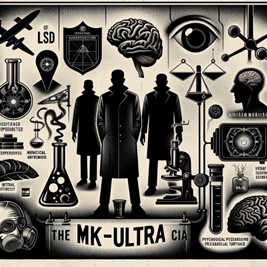
  • MK-Ultra: From Its Origins to Its Controversial Legacy

    By Scott J. Arnold

    MK-Ultra: From Its Origins to Its Controversial Legacy
    Introduction
    MK-Ultra was a secret CIA program that ran from the early 1950s to the early 1970s, aimed at developing mind control techniques and exploring the potential for manipulating human behavior through drugs, psychological torture, and other means. The program’s existence was kept secret for decades and has since been recognized as one of the most controversial and unethical experiments in U.S. history. This article explores the origins, methods, key figures, and the lasting impact of MK-Ultra.
    1. Origins of MK-Ultra
    MK-Ultra was launched in 1953 as a response to fears that the Soviet Union, China, and North Korea were developing mind control techniques for use in interrogations and espionage. The program was part of a broader CIA initiative to understand and develop psychological and chemical means of controlling human behavior.
    • Project Artichoke and Bluebird: Before MK-Ultra, the CIA conducted smaller programs like Project Artichoke and Project Bluebird, which tested interrogation techniques and mind control tactics. These earlier efforts laid the groundwork for the more ambitious MK-Ultra.
    • The Role of Allen Dulles: CIA Director Allen Dulles approved MK-Ultra, tasking Dr. Sidney Gottlieb, a chemist known for his unconventional methods, to oversee the project. Dulles’s support allowed the program to operate with little oversight, leading to widespread abuses.
    2. Goals and Methods of MK-Ultra
    The primary goal of MK-Ultra was to develop techniques that could be used to control and manipulate human behavior, including extracting information during interrogations and creating “programmed” individuals capable of carrying out tasks against their will.
    • Use of LSD and Other Drugs: One of the most infamous aspects of MK-Ultra was its experimentation with LSD, a powerful hallucinogenic drug. The CIA tested LSD on both willing and unwitting subjects, including CIA employees, military personnel, prisoners, and civilians, often without their consent.
    • Sensory Deprivation and Psychological Torture: In addition to drugs, MK-Ultra employed sensory deprivation, isolation, and psychological torture techniques in attempts to break down individuals’ minds and alter their thought patterns. These methods were often cruel and had lasting psychological effects on the subjects.
    3. Unethical Experiments and Human Rights Violations
    The unethical nature of MK-Ultra’s experiments has been widely condemned. The program’s lack of consent, coercive tactics, and harmful outcomes violated basic human rights and ethical standards, leading to significant long-term damage for many participants.
    • Experiments on Prisoners and Mental Patients: Many of MK-Ultra’s experiments were conducted on vulnerable populations, including prisoners and psychiatric patients, who were often coerced into participation or unaware of what was being done to them.
    • The Death of Frank Olson: One of the most tragic outcomes of MK-Ultra was the death of Frank Olson, a CIA scientist who was covertly dosed with LSD by his colleagues. Olson’s subsequent mental breakdown and death, officially ruled a suicide, raised questions about the program’s recklessness and disregard for human life.
    4. Involvement of Medical Professionals and Institutions
    MK-Ultra’s reach extended into reputable medical institutions, universities, and hospitals across the United States and Canada. Many doctors and researchers participated, often unaware they were part of a CIA operation.
    • Dr. Ewen Cameron and the Allan Memorial Institute: Dr. Ewen Cameron, a prominent psychiatrist in Montreal, conducted some of the most extreme MK-Ultra experiments at the Allan Memorial Institute. His “psychic driving” techniques, which involved intense electroconvulsive therapy, drug-induced comas, and repetitive audio messages, caused severe and permanent damage to patients.
    • Funding through Front Organizations: To conceal its involvement, the CIA funneled money through front organizations, such as the Society for the Investigation of Human Ecology, to fund MK-Ultra experiments. This allowed the program to operate covertly and shield participants from scrutiny.
    5. The Collapse of MK-Ultra and Congressional Investigations
    MK-Ultra remained secret until the early 1970s when the program was exposed during a series of congressional hearings and investigations. Public outrage over the abuses of MK-Ultra led to increased scrutiny of the CIA’s activities and reforms in oversight and accountability.
    • The Church Committee and Rockefeller Commission: In 1975, the Church Committee and the Rockefeller Commission conducted investigations into illegal CIA activities, including MK-Ultra. Their findings exposed the full scope of the program’s unethical experiments and highlighted the need for greater oversight of intelligence agencies.
    • Destruction of Records: In an attempt to cover up the program’s activities, CIA Director Richard Helms ordered the destruction of most MK-Ultra records in 1973. However, some documents survived, providing crucial evidence of the program’s operations.
    6. Impact on Victims and Legal Repercussions
    The victims of MK-Ultra’s experiments suffered long-term psychological and physical effects. Lawsuits filed by survivors and their families sought compensation and recognition for the harm caused, but many found it difficult to hold the government accountable.
    • Legal Battles and Settlements: Several lawsuits were brought against the CIA by MK-Ultra victims, including a landmark case by Frank Olson’s family. Some victims received financial settlements, but many were left without justice due to the challenges of proving the government’s culpability.
    • Long-Term Psychological Damage: The experiments conducted under MK-Ultra left many participants with severe mental health issues, including PTSD, depression, and anxiety. The program’s disregard for the well-being of its subjects had lasting consequences for individuals and their families.
    7. Influence on Popular Culture and Media
    MK-Ultra has become a symbol of government overreach and abuse of power, influencing popular culture and conspiracy theories for decades. The program has been referenced in books, movies, and television shows, often depicted as emblematic of dark and secretive government operations.
    • Films and Documentaries: MK-Ultra has inspired numerous films and documentaries, such as “The Manchurian Candidate” and “Wormwood,” which explore themes of mind control, government conspiracy, and ethical violations. These portrayals have kept the legacy of MK-Ultra alive in public discourse.
    • Role in Conspiracy Theories: The secrecy and shocking nature of MK-Ultra have fueled numerous conspiracy theories about government mind control programs, including unfounded claims that similar experiments continue to this day. These theories reflect ongoing distrust of government power and transparency.
    8. The Legacy of MK-Ultra in Modern Psychology and Ethics
    MK-Ultra’s legacy extends beyond its immediate impact, influencing modern ethical standards in psychology, psychiatry, and research. The revelations about MK-Ultra led to significant changes in how experiments involving human subjects are conducted and regulated.
    • Institutional Review Boards (IRBs): The exposure of MK-Ultra’s abuses prompted the establishment of Institutional Review Boards to oversee and regulate research involving human subjects. These boards ensure that experiments meet ethical standards and that participants are fully informed and give consent.
    • Changes in Psychiatric Practices: The controversial practices employed during MK-Ultra have also prompted introspection within the psychiatric community, leading to reforms that emphasize patient rights, informed consent, and the ethical limits of treatment.
    9. Ongoing Debates and Calls for Transparency
    The full extent of MK-Ultra’s activities remains shrouded in mystery due to the destruction of records and the secretive nature of the program. Ongoing debates continue over the need for greater transparency and accountability from intelligence agencies.
    • FOIA Requests and Declassified Documents: Efforts to uncover more information about MK-Ultra continue, with researchers and journalists filing Freedom of Information Act (FOIA) requests to access previously classified documents. These efforts aim to piece together the full story of MK-Ultra.
    • Lessons for Modern Intelligence Operations: The legacy of MK-Ultra serves as a cautionary tale about the dangers of unchecked government power and the ethical implications of covert research. The program’s history underscores the need for robust oversight of intelligence and military activities.
    10. Conclusion: The Dark Legacy of MK-Ultra
    MK-Ultra remains one of the most disturbing examples of government abuse of power in modern history. Its experiments violated the rights and dignity of thousands of individuals, leaving a lasting impact on victims and their families. The program’s exposure highlighted the need for greater accountability and ethical standards in research and intelligence operations.
    As a symbol of secrecy, unethical experimentation, and the potential dangers of unchecked authority, MK-Ultra’s legacy continues to resonate. Its history serves as a reminder of the importance of transparency, human rights, and ethical considerations in all areas of government and scientific inquiry.


  • Michael Jackson: The Life, Music, and Legacy of the King of Pop

    By Scott J. Arnold

    Michael Jackson: The Life, Music, and Legacy of the King of Pop
    1. Introduction: Michael Jackson – The King of Pop
    Michael Jackson, known as the King of Pop, was one of the most influential and iconic entertainers in history. His extraordinary talent, groundbreaking music, innovative dance moves, and larger-than-life persona captivated audiences worldwide. From his beginnings as a child star with the Jackson 5 to his record-breaking solo career, Jackson revolutionized the music industry and redefined popular culture. Despite his achievements, his life was marred by personal struggles, controversies, and legal battles that complicated his legacy. Michael Jackson’s story is a mix of unparalleled success, profound influence, and enduring impact on music and entertainment.
    2. Early Life: Growing Up in Gary, Indiana
    Michael Joseph Jackson was born on August 29, 1958, in Gary, Indiana, the eighth of ten children in the Jackson family. His father, Joseph Jackson, was a strict disciplinarian who saw the potential for his children to escape their working-class roots through music. The Jackson children, particularly Michael, showed remarkable talent from an early age. Michael’s natural charisma, vocal ability, and dance skills quickly set him apart.
    The Jackson brothers formed the Jackson 5 in the mid-1960s, and under their father’s management, they performed in talent shows and small venues. By 1969, the group signed with Motown Records, and their debut single, “I Want You Back,” skyrocketed to number one on the Billboard Hot 100. Michael, as the lead singer, became the face of the group, capturing the hearts of fans with his infectious energy and incredible voice.
    3. The Jackson 5: Motown’s Youngest Stars
    The Jackson 5 became one of Motown’s biggest acts, scoring hits like “ABC,” “The Love You Save,” and “I’ll Be There.” Michael’s youthful voice and magnetic stage presence helped the group become international stars. They were the first group to have their first four singles reach number one on the Billboard charts, a testament to their widespread appeal.
    However, life in the spotlight was not easy. The pressures of performing, recording, and constantly being on tour took a toll on the young Jacksons, especially Michael. Despite the challenges, Michael’s time with the Jackson 5 laid the foundation for his future success and provided him with invaluable experience in the music industry.
    4. Breaking Away: Michael’s Solo Career Takes Off
    By the mid-1970s, Michael began to express a desire for greater creative control and artistic independence. He released his first solo album with Motown, Got to Be There (1972), while still performing with the Jackson 5. However, it wasn’t until he left Motown and signed with Epic Records that his solo career truly began to soar.
    In 1979, Jackson released Off the Wall, a Quincy Jones-produced album that marked his transition from child star to adult superstar. The album was a commercial and critical success, blending pop, funk, and disco elements in hits like “Don’t Stop ’Til You Get Enough” and “Rock with You.” Off the Wall established Jackson as a force to be reckoned with in the music industry and set the stage for his next groundbreaking project.
    5. The Thriller Phenomenon: Breaking Records and Redefining Music
    In 1982, Jackson released Thriller, the album that would forever change the music industry. Produced by Quincy Jones, Thriller was a genre-defying masterpiece that combined elements of pop, rock, R&B, and funk. The album’s success was unprecedented, becoming the best-selling album of all time with over 66 million copies sold worldwide. Thriller spawned seven top-ten singles, including “Billie Jean,” “Beat It,” and the title track, “Thriller,” which became iconic in their own right.
    The album’s music videos were equally groundbreaking. The “Thriller” video, directed by John Landis, was more than just a music video—it was a 14-minute short film that showcased Jackson’s innovative choreography, storytelling, and flair for the theatrical. The “Thriller” video set new standards for music videos and remains one of the most famous and influential videos in history.
    6. The Moonwalk and Iconic Performances
    Michael Jackson was not just a singer; he was a performer who redefined what it meant to be a pop star. His dance moves, particularly the Moonwalk, became synonymous with his name. Jackson first performed the Moonwalk during his performance of “Billie Jean” on the 1983 Motown 25: Yesterday, Today, Forever television special. The performance was a cultural moment that solidified Jackson’s status as the King of Pop.
    Jackson’s live performances were theatrical, high-energy spectacles that combined elaborate choreography, special effects, and his distinctive vocal style. Tours such as the Bad World Tour, Dangerous World Tour, and HIStory World Tour drew millions of fans, showcasing his ability to captivate audiences on a global scale.
    7. The Bad Era: Continued Success and Artistic Evolution
    Following the success of Thriller, Jackson released Bad in 1987, an album that continued his streak of commercial success. Bad produced five number-one singles on the Billboard Hot 100, including “Bad,” “Man in the Mirror,” and “The Way You Make Me Feel.” The album’s accompanying tour was a record-breaking global event, demonstrating Jackson’s unparalleled popularity.
    Bad was notable for Jackson’s increased involvement in the songwriting and production process, reflecting his growing desire to shape his music and image. The album’s themes of self-reflection, social justice, and personal growth showcased a more mature side of Jackson’s artistry, further cementing his position as one of the most influential artists of his time.
    8. Controversy and Tabloid Sensation: The Price of Fame
    Despite his professional success, Michael Jackson’s personal life was plagued by controversy. His changing appearance, including his lightening skin tone and multiple plastic surgeries, sparked widespread speculation and criticism. Jackson revealed that he had vitiligo, a skin condition that causes loss of pigmentation, but the public’s fascination with his physical transformation fueled tabloid rumors and relentless media scrutiny.
    Jackson’s eccentric lifestyle, his Neverland Ranch, and his friendships with young children also attracted negative attention. The media often portrayed him as a reclusive and enigmatic figure, and his relationships were frequently the subject of gossip. The intense public scrutiny took a toll on Jackson’s mental health, contributing to his increasingly isolated and private life.
    9. Dangerous and HIStory: Social Commentary and Musical Evolution
    In the 1990s, Jackson continued to explore new musical directions with the release of Dangerous (1991) and HIStory: Past, Present and Future, Book I (1995). Dangerous included hits like “Black or White,” “Remember the Time,” and “Heal the World,” and was notable for its use of new jack swing—a fusion of hip-hop, pop, and R&B.
    HIStory was both a greatest hits collection and a deeply personal album that reflected Jackson’s response to the intense media scrutiny and legal battles he faced. Songs like “Scream” (a duet with his sister Janet Jackson), “They Don’t Care About Us,” and “Earth Song” showcased his anger, frustration, and activism, addressing themes of injustice, environmentalism, and resilience.
    10. Legal Troubles: Accusations and the Impact on Jackson’s Legacy
    The most significant controversies of Jackson’s life came in the form of child molestation accusations. In 1993, Jackson was accused of sexually abusing a 13-year-old boy, leading to a highly publicized investigation. Jackson settled the case out of court, and no criminal charges were filed. However, the accusations damaged his reputation, and the media scrutiny intensified.
    In 2005, Jackson faced another set of child molestation charges, leading to a highly publicized trial. After a lengthy legal battle, Jackson was acquitted of all charges, but the trial had a profound impact on his personal and professional life. The legal troubles, combined with his financial difficulties and declining health, marked a dark period in Jackson’s later years.
    11. Final Years: Comeback Plans and Untimely Death
    In 2009, Jackson announced his plans for a comeback with the “This Is It” concert series, set to take place in London. The concerts were highly anticipated and sold out within hours, signaling that Jackson still had a massive fan base eager to see him perform. The comeback was meant to mark his return to the stage and reclaim his status as a music icon.
    However, the world was shocked when Jackson died on June 25, 2009, from acute propofol and benzodiazepine intoxication at his home in Los Angeles. His death was ruled a homicide, and his personal physician, Dr. Conrad Murray, was found guilty of involuntary manslaughter. Jackson’s untimely death at the age of 50 sent shockwaves around the globe, and millions mourned the loss of a cultural icon.
    12. The Legacy of Michael Jackson: Music, Dance, and Cultural Impact
    Michael Jackson’s influence on music and popular culture is immeasurable. He broke down racial barriers, pioneered the modern music video, and set new standards for performance and showmanship. His innovative approach to music, blending genres and pushing creative boundaries, changed the landscape of pop music forever.
    Jackson’s humanitarian efforts, including his work with the Heal the World Foundation and his contributions to various charities, reflected his desire to make a positive impact beyond the stage. His songs often carried messages of unity, hope, and social justice, resonating with fans across generations.
    13. The Enduring Influence: Artists Inspired by Jackson
    Michael Jackson’s influence can be seen in countless artists who cite him as an inspiration, including Beyoncé, Usher, Justin Timberlake, Chris Brown, and Bruno Mars. His groundbreaking work in music, dance, and visual storytelling continues to inspire new generations of performers who strive to emulate his energy, creativity, and stage presence.
    The Moonwalk, his signature dance move, remains a symbol of his unparalleled skill as a performer. Jackson’s music videos, such as “Thriller,” “Smooth Criminal,” and “Bad,” set a new standard for visual storytelling in music and have influenced the way artists approach the art form.
    14. Controversies and Complex Legacy: Navigating the Duality of Fame
    While Jackson’s musical achievements are celebrated, his legacy is also marked by the controversies that surrounded his personal life. The child molestation accusations, ongoing debates about his changing appearance, and the intense media scrutiny he faced complicate the narrative of his career. For many, Jackson represents both a musical genius and a deeply troubled figure whose personal demons overshadowed his later years.
    Jackson’s legacy continues to be a topic of discussion, with documentaries, books, and media coverage exploring his life and the allegations against him. Balancing his artistic contributions with the complexities of his personal life remains a challenge for fans, critics, and historians alike.
    15. Conclusion: Michael Jackson’s Lasting Legacy
    Michael Jackson was a once-in-a-lifetime artist whose impact on music, dance, and popular culture remains unparalleled. His contributions as a performer, innovator, and humanitarian have left an indelible mark on the world. Despite the controversies and challenges that marred his life, Jackson’s talent, creativity, and influence continue to resonate.
    Michael Jackson’s legacy as the King of Pop endures not only through his music but also through the countless artists, fans, and cultural moments he inspired. His story is one of triumph, tragedy, and the complex nature of fame, reflecting both the heights of artistic achievement and the depths of personal struggle. The world may never see another entertainer quite like Michael Jackson, whose music and message will continue to inspire for generations to come.
     

  • MI6: From Its Origins to Present Day

    By Scott J. Arnold

    MI6: From Its Origins to Present Day
    Introduction
    The Secret Intelligence Service (SIS), commonly known as MI6, is the United Kingdom’s foreign intelligence service. Founded in the early 20th century, MI6 has played a crucial role in protecting Britain’s national security through intelligence gathering, espionage, and covert operations. This article traces the history of MI6 from its inception to its current role in global intelligence, highlighting its significant missions and evolving challenges.
    1. Origins and Formation of MI6
    MI6 was officially founded in 1909 as part of the Secret Service Bureau, created to address the growing threat of German espionage in the years leading up to World War I. Originally focused on countering German spies, the bureau quickly evolved into an international intelligence agency.
    • Early Mission: MI6 was initially tasked with overseas intelligence gathering to protect Britain’s interests. The agency’s early years were marked by secrecy and a focus on espionage against enemy nations, particularly during World War I.
    • Key Figures: Mansfield Smith-Cumming, known simply as “C,” became the first head of MI6. His leadership established the traditions and secrecy that would define the agency, including the use of code names and covert operations.
    2. MI6 During World War II
    World War II was a pivotal period for MI6, as it expanded its operations across Europe, Africa, and Asia to gather intelligence on Nazi Germany and its allies. The agency’s work was critical to the Allied war effort.
    • Operation Double Cross: MI6 played a crucial role in the Double Cross System, which turned captured German spies into double agents. This operation successfully fed false information to the Nazis, aiding Allied military strategies, including the D-Day invasion.
    • Collaboration with SOE: MI6 worked closely with the Special Operations Executive (SOE) to support resistance movements in occupied territories. The agency’s operatives coordinated sabotage missions and provided vital intelligence to the Allied forces.
    3. The Cold War Era: Espionage and Counterintelligence
    The Cold War era marked a period of intense rivalry between MI6 and Soviet intelligence services, particularly the KGB. MI6 focused heavily on espionage, counterintelligence, and covert actions to counter Soviet influence.
    • The Cambridge Five Scandal: One of MI6’s most significant challenges during the Cold War was the exposure of the Cambridge Five, a group of British spies who were secretly working for the Soviet Union. Their betrayal severely compromised MI6 operations and led to a major shake-up within the agency.
    • Successes in Eastern Europe: Despite setbacks, MI6 achieved several successes during the Cold War, including intelligence operations in Eastern Europe that provided crucial insights into Soviet military capabilities and political developments.
    4. The Role of MI6 in the Middle East
    MI6 has a long history of involvement in the Middle East, where it has worked to safeguard British interests, counter terrorism, and navigate the complex geopolitical landscape of the region.
    • The 1953 Iranian Coup: MI6, in collaboration with the CIA, orchestrated Operation Ajax, which led to the overthrow of Iranian Prime Minister Mohammad Mossadegh. The operation aimed to prevent Iran from aligning with the Soviet Union and to secure Western access to Iranian oil.
    • Counterterrorism in the Middle East: In recent decades, MI6 has been deeply involved in counterterrorism efforts across the Middle East, working to disrupt terrorist networks and prevent attacks against British and allied interests.
    5. MI6 and the Fight Against Terrorism
    The rise of global terrorism in the late 20th and early 21st centuries has significantly influenced MI6’s mission. The agency has focused on intelligence gathering and counterterrorism operations to protect the UK from threats posed by groups such as al-Qaeda and ISIS.
    • The Lockerbie Investigation: Following the bombing of Pan Am Flight 103 over Lockerbie, Scotland, MI6 played a key role in investigating the attack, which was linked to Libyan intelligence operatives. The agency’s work was crucial in securing international sanctions against Libya.
    • Post-9/11 Operations: After the September 11 attacks, MI6 intensified its collaboration with international partners, including the CIA, to track down al-Qaeda operatives and dismantle terrorist cells worldwide. The agency’s intelligence has been vital in preventing attacks on British soil.
    6. Modern Challenges: Cybersecurity and Espionage
    MI6 faces evolving challenges in the digital age, including cyber espionage, state-sponsored hacking, and the increasing use of technology in intelligence operations. The agency has adapted by enhancing its cyber capabilities and integrating technology into its intelligence strategies.
    • Cyber Threats: MI6 has focused on countering cyber threats from hostile states, including Russia and China. The agency works to protect critical infrastructure and prevent cyberattacks that could compromise national security.
    • Information Warfare: MI6 plays a key role in combating information warfare and disinformation campaigns that seek to destabilize Western democracies. The agency’s work in intelligence gathering and analysis helps protect the UK from these emerging threats.
    7. The Role of MI6 in International Partnerships
    MI6 works closely with international intelligence agencies, including the CIA, Mossad, and others, to share intelligence and coordinate operations. These partnerships are critical in addressing shared global threats, such as terrorism, espionage, and nuclear proliferation.
    • The Five Eyes Alliance: MI6 is a key member of the Five Eyes alliance, a global intelligence-sharing network that includes the United States, Canada, Australia, and New Zealand. This alliance enhances MI6’s ability to gather intelligence and respond to threats in real-time.
    • Joint Operations and Successes: MI6 has been involved in numerous joint operations, such as tracking terrorist financing, disrupting human trafficking networks, and countering international drug smuggling. These collaborations have been instrumental in enhancing global security.
    8. MI6’s Public Image and Secrecy
    Unlike other intelligence agencies, MI6 maintained a low public profile for much of its history, with the British government refusing to officially acknowledge its existence until 1994. The agency’s culture of secrecy has both protected its operations and fueled intrigue about its activities.
    • James Bond and Cultural Impact: The fictional spy James Bond, created by author Ian Fleming, has shaped public perceptions of MI6. While the Bond series romanticizes espionage, it has also brought attention to the agency’s real-world role in protecting national security.
    • Efforts to Modernize and Communicate: In recent years, MI6 has made efforts to engage more openly with the public, including the release of historical records and outreach efforts to recruit a diverse workforce. These steps are part of a broader strategy to adapt to modern challenges while maintaining the agency’s core values.
    9. Internal Reforms and Future Directions
    MI6 has undergone significant reforms to adapt to the changing nature of intelligence work. The agency has focused on modernizing its operations, improving diversity, and integrating new technologies to enhance its effectiveness.
    • Recruitment and Diversity Initiatives: MI6 has sought to diversify its workforce, recruiting talent from a wide range of backgrounds and emphasizing skills in technology, languages, and analysis. These efforts are aimed at building a more adaptable and innovative intelligence service.
    • Technological Advancements: The integration of artificial intelligence, data analytics, and cyber capabilities has transformed MI6’s approach to intelligence gathering. The agency continues to invest in cutting-edge technology to stay ahead of adversaries in an increasingly digital world.
    10. Conclusion: The Legacy and Future of MI6
    MI6’s legacy is marked by its role in some of the most significant intelligence operations of the past century. From its early days countering German spies to its current efforts against global terrorism and cyber threats, MI6 remains a cornerstone of the UK’s national security apparatus.
    As MI6 continues to evolve, its commitment to adapting to new challenges and maintaining international partnerships will be key to its success. The agency’s ability to balance secrecy with transparency, innovation with tradition, and intelligence with diplomacy will define its future in an ever-changing world.
     

  • The Real-Life Experiments Behind “The Men Who Stare at Goats”

    By Scott J. Arnold

    The Real-Life Experiments Behind “The Men Who Stare at Goats”
    1. Introduction: Fact Meets Fiction in Military Psychic Research
    “The Men Who Stare at Goats” is a satirical book by Jon Ronson, later adapted into a film, that humorously explores the U.S. military’s secretive and bizarre experiments with psychic phenomena during the Cold War. While the book and movie exaggerate some events for comedic effect, they are rooted in real-life programs conducted by the U.S. military and intelligence agencies. These experiments sought to harness paranormal abilities, such as remote viewing, telepathy, and psychokinesis, as potential tools for espionage and warfare. This article delves into the true stories behind the myths, highlighting the strange intersection of science, mysticism, and military ambition.
    2. The Origins of Psychic Research in the Military: Cold War Paranoia
    The U.S. military’s interest in psychic phenomena began during the height of the Cold War, fueled by fears that the Soviet Union was exploring similar capabilities. Reports suggested that the Soviets were investing heavily in parapsychology, attempting to develop psychic spies who could gather intelligence without leaving their posts. In response, U.S. military and intelligence agencies launched their own research programs, hoping to keep pace with what they perceived as a potential new front in the arms race. The idea was to explore whether psychic abilities could provide strategic advantages in intelligence gathering and warfare.
    3. The Establishment of Project Stargate: The CIA’s Foray into the Paranormal
    One of the most well-known programs associated with psychic research was Project Stargate, a series of secret projects conducted by the CIA, Defense Intelligence Agency (DIA), and U.S. Army. Launched in the 1970s, Stargate aimed to investigate the potential of remote viewing—a form of extrasensory perception (ESP) in which individuals attempt to visualize distant or unseen locations, objects, or events. Remote viewers, sometimes referred to as “psychic spies,” were trained to focus their minds on specific targets, often with surprising and occasionally useful results.
    4. Key Figures in Military Psychic Research: From Psychics to Soldiers
    Several key figures played pivotal roles in the development and execution of psychic research programs within the military:
    • Major General Albert Stubblebine: A strong proponent of psychic warfare, Stubblebine believed in the potential of mind over matter and pushed for further exploration of psychic abilities within the Army. He famously attempted to walk through walls as part of his experiments with psychokinesis, though without success.
    • Ingo Swann: A prominent psychic and artist, Swann is often credited with pioneering remote viewing techniques used in military research. His work with the Stanford Research Institute (SRI), a key contractor for the CIA’s psychic programs, helped establish protocols for training psychic spies.
    • Pat Price: Another key remote viewer, Price was known for his detailed and accurate descriptions of military installations, often impressing his handlers with his seemingly impossible insights. His work suggested that remote viewing might have practical intelligence applications.
    5. Remote Viewing Experiments: Peering into the Unknown
    Remote viewing was the primary focus of military psychic research, and the experiments conducted under Project Stargate were both intriguing and controversial. In one famous instance, Ingo Swann was asked to remotely view Jupiter before NASA’s Pioneer 10 spacecraft reached the planet. Swann accurately described the presence of rings around Jupiter, which was later confirmed by the spacecraft—a detail that had not been known at the time of his viewing.
    Other remote viewers were tasked with attempting to locate hostages, identify foreign military installations, or describe classified Soviet activities. The results were often mixed, with some sessions producing remarkably accurate descriptions, while others were less reliable. Despite the variability, the program continued for years, fueled by the belief that even a small success could provide a valuable intelligence edge.
    6. Psychokinesis and the Power of the Mind: The Goats Experiment
    One of the more bizarre aspects of military psychic research involved experiments with psychokinesis—the ability to move or influence objects using the mind alone. This idea was famously dramatized in “The Men Who Stare at Goats,” where soldiers were trained to kill goats using their minds. While there is no verified evidence that anyone succeeded in killing animals this way, the experiments did take place, reflecting the extreme lengths the military was willing to explore.
    The goats were part of a broader series of tests to determine whether psychic influence could affect biological systems, such as slowing a heartbeat or disrupting electrical signals in the body. Although these experiments failed to produce scientifically valid results, they highlighted the willingness of military officials to consider unconventional approaches to warfare.
    7. The Psychological and Ethical Implications: Mind Control and Manipulation
    The military’s exploration of psychic phenomena raised significant ethical questions, particularly around the use of psychological manipulation and mind control. Some experiments ventured into areas like telepathy and influencing behavior at a distance, blurring the lines between scientific inquiry and psychological warfare. Concerns were raised about the potential misuse of such techniques, especially if they fell into the wrong hands.
    The psychological toll on participants was also a concern, as some remote viewers reported feeling mentally drained or psychologically affected by their work. The blurred boundaries between scientific research, mysticism, and military objectives often left participants questioning the ethical implications of their involvement.
    8. Scientific Scrutiny and Skepticism: Evaluating the Evidence
    The scientific community has largely been skeptical of the claims made by military psychic research programs. Critics argue that the results of remote viewing and other psychic experiments could be attributed to chance, subconscious cues, or even subtle fraud. Rigorous double-blind studies often failed to replicate the successes claimed by the military, leading to widespread criticism of the methodology and validity of the research.
    Despite these criticisms, some researchers involved in Project Stargate and similar programs continued to advocate for the potential of psychic phenomena, arguing that the unexplained successes warranted further investigation. However, the lack of concrete, reproducible evidence ultimately undermined the credibility of these programs.
    9. The End of Project Stargate: Closure and Legacy
    By the mid-1990s, Project Stargate and other psychic research programs were officially shut down, deemed to have produced insufficient results to justify continued funding. A 1995 CIA report concluded that the information gathered through remote viewing was vague, inconsistent, and often inaccurate. The report recommended the termination of the program, marking the end of an era of government-funded psychic research.
    Despite its closure, the legacy of Project Stargate endures, capturing the public’s imagination and inspiring books, movies, and ongoing debates about the nature of the human mind. The experiments conducted during the Cold War remain a fascinating example of how fear, ambition, and curiosity can drive the pursuit of the unknown.
    10. The Ongoing Fascination with Military Psychic Research
    Today, the story of military psychic research serves as a reminder of the extraordinary lengths to which governments will go in the pursuit of strategic advantage. While mainstream science has largely dismissed the validity of psychic phenomena, the idea of using the mind as a weapon continues to intrigue the public. The narrative of “The Men Who Stare at Goats” is not just a quirky footnote in military history—it’s a reflection of humanity’s enduring fascination with the unexplained and the boundaries of human potential.
    Conclusion: Between Science and the Supernatural
    The real-life experiments that inspired “The Men Who Stare at Goats” reveal a hidden chapter of military history where the line between science and the supernatural was often blurred. While the results were far from conclusive, these programs highlight the lengths to which the military was willing to explore uncharted territory in the name of national security. As we continue to push the boundaries of human knowledge, the story of the psychic spies serves as both a cautionary tale and a testament to the power of imagination in the pursuit of the unknown.