
Blog

  • The History of the Spice Trade

    By Scott J. Arnold

    The History of the Spice Trade: From Ancient Routes to Global Empires
    The spice trade is one of the oldest and most influential commercial activities in human history, shaping economies, cultures, and empires for centuries. Spices like pepper, cinnamon, cloves, and nutmeg were once considered precious commodities, worth their weight in gold, and the desire to control their trade routes sparked exploration, conflict, and the rise and fall of great powers. This article delves into the history of the spice trade across 15 key chapters, exploring its origins, impact, and legacy.
    1. Ancient Beginnings: The Origins of the Spice Trade
    The spice trade dates back to ancient times, with evidence of spices being traded across the Indian Ocean, Arabian Peninsula, and Mediterranean as early as 2000 BCE. Spices were used for flavoring, medicine, and religious rituals. The earliest known spice routes connected Southeast Asia, India, and China with the Middle East, Egypt, and Rome. Spices like cinnamon and cassia from Sri Lanka, pepper from India, and cloves from the Moluccas (Spice Islands) were highly prized in ancient civilizations.
    2. The Silk Road and Early Trade Networks
    The Silk Road, a network of land and sea routes connecting China to the Mediterranean, played a crucial role in the early spice trade. Spices traveled along with silk, precious stones, and other luxury goods. Arabian and Indian merchants were the primary intermediaries, bringing spices from the East to Roman and Greek markets. The demand for spices in Europe was driven by their use in cooking, preservation, and medicine, making them a symbol of wealth and status.
    3. The Rise of the Roman Empire and Spice Consumption
    The Roman Empire was one of the earliest major consumers of spices, importing large quantities from India and Arabia. Spices were used to flavor food, create perfumes, and prepare medicines. Roman demand for spices was so high that it created a significant trade imbalance with the East, draining Roman coffers. Spices became symbols of luxury and power in Roman society, influencing the empire’s trade policies and contributing to its economic complexity.
    4. The Islamic Golden Age and Control of Spice Routes
    During the Islamic Golden Age (8th to 13th centuries), Muslim traders dominated the spice trade. The rise of powerful Islamic empires, including the Abbasids and the Fatimids, gave Muslim merchants control over key spice routes. Baghdad, Cairo, and other Islamic cities became major centers of trade, where spices from the East were exchanged for gold, silver, and other goods. The Islamic world’s strategic location between Europe and Asia allowed it to control the flow of spices to European markets.
    5. The Role of the Venetians and Genoese in European Trade
    By the Middle Ages, Venice and Genoa emerged as dominant players in the European spice trade. These Italian city-states established trade networks that connected Europe with the Levant, acting as intermediaries between Muslim traders and European markets. Venetian merchants, in particular, became immensely wealthy by importing spices from Alexandria and selling them at a premium across Europe. This monopoly on the spice trade contributed to Venice’s rise as a major economic and maritime power.
    6. The Age of Exploration: Seeking a Direct Route to Spices
    The European Age of Exploration in the 15th and 16th centuries was driven largely by the desire to bypass Middle Eastern and Venetian monopolies on the spice trade. Portuguese and Spanish explorers, motivated by the promise of wealth and the spread of Christianity, sought new routes to the spice-rich lands of Asia. Figures like Christopher Columbus, Vasco da Gama, and Ferdinand Magellan embarked on perilous voyages that would eventually alter the course of world history.
    7. Vasco da Gama and the Portuguese Spice Monopoly
    In 1498, Portuguese explorer Vasco da Gama became the first European to reach India by sea, landing in Calicut (modern-day Kozhikode). This direct sea route to the spice markets of Asia allowed Portugal to establish a monopoly over the spice trade. The Portuguese built forts, established trading posts, and used naval power to control key ports along the Indian Ocean, from East Africa to the Spice Islands. Their dominance reshaped the global spice trade, cutting out traditional Middle Eastern intermediaries.
    8. The Dutch East India Company: Conquest and Control
    In the early 17th century, the Dutch East India Company (VOC) emerged as a dominant force in the spice trade. The VOC established a powerful trading empire in Southeast Asia, particularly in the Spice Islands (modern-day Indonesia), where they monopolized the production and trade of cloves, nutmeg, and mace. The Dutch used brutal tactics, including military force and coercive diplomacy, to control spice-producing regions, often exploiting local populations and resources.
    9. The English East India Company and the Rivalry for Spices
    The English East India Company, founded in 1600, became a major competitor to the Dutch in the spice trade. The English focused on establishing trading posts in India and Southeast Asia, often clashing with the Dutch over control of spice-rich territories. Although the English were initially less successful than the Dutch, they gradually expanded their influence, eventually shifting their focus from spices to other lucrative commodities like tea and textiles.
    10. The Spice Wars: Conflict in the East Indies
    The intense rivalry between European powers for control of the spice trade led to a series of conflicts known as the Spice Wars. The Dutch and the English fought numerous naval battles and engaged in diplomatic maneuvering to secure access to the most profitable spice-producing regions. These conflicts not only shaped the geopolitics of Southeast Asia but also had far-reaching consequences for European colonial expansion.
    11. The Role of Spices in European Cuisine and Medicine
    Spices transformed European cuisine, adding exotic flavors and aromas that were previously unknown. They were used to preserve meat, enhance the taste of bland foods, and create complex dishes that showcased wealth and sophistication. Beyond the kitchen, spices played a crucial role in medicine, with many believed to have healing properties. Spices like cinnamon, ginger, and pepper were prescribed for various ailments, from digestive issues to infections.
    12. The Decline of the Spice Trade’s Influence
    By the 18th century, the dominance of the spice trade began to wane as new agricultural practices, botanical knowledge, and the discovery of alternative trade goods reduced the global dependence on spices. European colonizers began to cultivate spices in their own territories, breaking the traditional monopolies held by Southeast Asian producers. Additionally, the rise of new global commodities, such as sugar, coffee, and tea, shifted economic focus away from spices.
    13. The Impact of the Spice Trade on Globalization
    The spice trade played a pivotal role in the early stages of globalization, connecting distant cultures, economies, and peoples. It facilitated the exchange of not just goods, but also ideas, technologies, and diseases. The trade routes established by spice merchants laid the foundations for global commerce, influencing everything from shipping technology to financial systems. The cultural exchanges prompted by the spice trade helped shape the modern world, blending traditions and cuisines across continents.
    14. The Environmental and Social Costs of the Spice Trade
    The spice trade had significant environmental and social impacts on the regions where spices were produced. In the quest for control, European powers often exploited local labor, destroyed ecosystems, and disrupted traditional ways of life. The introduction of plantation agriculture led to deforestation and the displacement of indigenous communities. The legacy of these practices can still be seen today in the environmental and social challenges faced by many spice-producing regions.
    15. The Legacy of the Spice Trade in Modern Times
    The legacy of the spice trade is still evident today in the global culinary landscape, economic systems, and cultural exchanges. Spices remain a staple in kitchens worldwide, and their trade continues to be an important economic activity for many countries. The history of the spice trade offers valuable lessons about the complexities of global commerce, the impacts of colonialism, and the enduring power of cultural connections forged through trade.
    Conclusion
    The history of the spice trade is a rich and complex narrative that spans thousands of years, shaping the development of civilizations and the course of world history. From ancient trade routes to the rise of global empires, the desire for spices drove exploration, conflict, and innovation. The spice trade’s influence extended far beyond economics, impacting cultures, cuisines, and societies in ways that continue to resonate today.
    As we look back on this history, we see not only the story of commerce but also the interconnectedness of human societies and the profound impact of global trade on the development of the modern world.
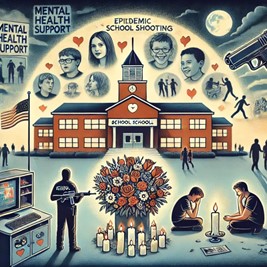


  • The Epidemic of School Shootings: Causes, Impact, & Solutions

    By Scott J. Arnold

    The Epidemic of School Shootings: Causes, Impact, and Solutions
    Introduction
    School shootings have become a harrowing and all-too-frequent occurrence in the United States, marking an alarming trend that has left communities, educators, parents, and students grappling with fear, grief, and unanswered questions. What was once unthinkable is now a recurring headline, with each incident reigniting debates over gun control, mental health, and societal influences. Understanding the complex web of factors contributing to school shootings is crucial in addressing this epidemic. This article delves into the causes, impact, and potential solutions to the crisis of school shootings, exploring the various elements that fuel this tragic phenomenon.
    1. The Rise of School Shootings: A Troubling Trend
    The rise in school shootings over the past few decades has shocked and horrified the nation. While school violence is not a new issue, the frequency and lethality of shootings have increased significantly, with many of the deadliest incidents occurring in recent years. According to studies, the number of active shooter incidents in U.S. schools has grown dramatically, with students and staff increasingly vulnerable to sudden, unpredictable violence.
    Several factors contribute to this disturbing trend, including the accessibility of firearms, the influence of media, and broader societal issues such as bullying, social isolation, and untreated mental health problems. School shootings have occurred at all levels of education, from elementary schools to universities, and affect communities of all sizes and demographics. The randomness of these attacks has shattered the perception of schools as safe havens for learning, replacing it with a pervasive sense of fear and uncertainty.
    Each shooting leaves behind a trail of devastation that extends far beyond the immediate victims, affecting entire communities and prompting nationwide calls for change. The rising number of school shootings reflects deeper issues within society, making it clear that this is not just a problem of security, but a complex crisis that requires a multifaceted approach to address.
    2. The Role of Gun Accessibility: Easy Access to Firearms
    One of the most significant factors contributing to the epidemic of school shootings is the easy access to firearms in the United States. The U.S. has one of the highest rates of gun ownership in the world, with millions of guns circulating within the population. This prevalence of firearms, combined with relatively lax gun control laws in many states, makes it alarmingly easy for individuals, including minors, to acquire weapons.
    In many school shooting cases, perpetrators use firearms that are legally owned by family members or obtained through illegal means. The lack of secure storage practices, such as locking guns away or using gun safes, often enables shooters to access weapons without significant barriers. Additionally, the availability of high-capacity magazines and semi-automatic rifles has increased the lethality of these attacks, allowing shooters to inflict maximum harm in a short period.
    Efforts to enact stricter gun control measures, such as universal background checks, red flag laws, and restrictions on assault weapons, have faced intense political opposition. The deeply ingrained gun culture in the U.S., combined with powerful lobbying efforts from gun rights organizations, has made meaningful reform challenging to achieve. However, without addressing the issue of gun accessibility, efforts to reduce the frequency and severity of school shootings will remain limited.
    3. Mental Health Crisis: The Role of Untreated Mental Illness
    Mental health is a critical factor in understanding the motives and actions of school shooters. Many perpetrators exhibit signs of severe mental distress before committing their attacks, including depression, anxiety, personality disorders, and suicidal ideation. The intersection of untreated mental health issues and access to firearms creates a volatile situation where individuals may resort to violence as a means of expressing their anger, despair, or desire for revenge.
    Despite the clear need for mental health support, the U.S. faces a shortage of mental health professionals, especially in schools. Many schools lack the resources to provide adequate counseling services, leaving students without the help they need to manage emotional and psychological challenges. Additionally, the stigma surrounding mental illness often prevents individuals from seeking the treatment they need, further exacerbating the problem.
    Addressing the mental health crisis requires a comprehensive approach that includes increasing access to mental health care, reducing the stigma associated with seeking help, and integrating mental health education into school curricula. Early intervention programs that identify and support at-risk students can play a significant role in preventing violent outcomes. However, mental health support alone is not enough; it must be part of a broader strategy that addresses the root causes of violence and provides meaningful alternatives to those in crisis.
    4. Social Isolation and Bullying: The Impact of Marginalization
    Many school shooters have a history of social isolation, bullying, and feelings of being marginalized by their peers. These experiences can contribute to a sense of alienation and resentment, driving individuals to lash out in violent ways. Bullying, whether physical, verbal, or cyberbullying, can have severe psychological effects, leading to depression, anxiety, and a deep sense of hopelessness.
    The rise of social media has amplified these issues, as online platforms provide a venue for harassment, exclusion, and negative social comparisons. For some, the constant barrage of negativity can push them toward extreme actions. In several high-profile cases, shooters have cited bullying and social rejection as motivations for their attacks, seeking to reclaim a sense of power or inflict pain on those they feel have wronged them.
    Schools play a crucial role in identifying and addressing bullying, but efforts are often inconsistent and vary widely between districts. Anti-bullying programs, while well-intentioned, sometimes fail to address the deeper social dynamics that contribute to students feeling isolated or targeted. Creating a more inclusive and supportive school environment, where all students feel valued and connected, is essential in reducing the risk of violence.
    5. The Influence of Media and Glorification of Violence
    The media plays a powerful role in shaping perceptions of school shootings and may inadvertently contribute to the problem. Extensive coverage of these incidents can sensationalize the perpetrators, turning them into infamous figures whose actions are dissected and publicized worldwide. For individuals seeking notoriety or revenge, this media attention can serve as a perverse form of validation, encouraging copycat behavior.
    The influence of violent video games, movies, and other media has also been a topic of debate. While research on the direct link between violent media and real-world violence is inconclusive, there is concern that exposure to violent content can desensitize individuals to the consequences of violence and reinforce aggressive tendencies. For those already struggling with mental health issues or social isolation, these media portrayals may serve as a catalyst, pushing them toward violent action.
    To mitigate these effects, media outlets are encouraged to focus less on the perpetrators and more on the victims and broader societal issues. Responsible reporting that avoids glorification and instead emphasizes the devastating impact of these tragedies can help reduce the appeal of school shootings as a means of gaining attention or notoriety.
    6. The Impact on Students, Families, and Communities
    The aftermath of a school shooting extends far beyond the immediate loss of life. Survivors, families, and entire communities are left to grapple with the trauma, fear, and grief that follow such violent events. For students who witness these tragedies, the psychological impact can be profound, leading to long-term mental health issues such as post-traumatic stress disorder (PTSD), anxiety, and depression.
    Parents, too, are deeply affected, struggling with the fear of sending their children to school each day. The once-assumed safety of educational environments has been shattered, replaced by active shooter drills, metal detectors, and increased security measures. While these precautions are intended to protect students, they also serve as constant reminders of the potential for violence, heightening anxiety and disrupting the learning environment.
    Communities affected by school shootings often rally together in the wake of tragedy, but the emotional scars can linger for years. Memorials and anniversaries of these events renew the pain for those who have lost loved ones, making recovery a long and challenging process. The collective trauma of school shootings highlights the urgent need for comprehensive support systems that address both the immediate and long-term impacts on survivors and communities.
    7. The Political Divide: Gun Control, Policy, and Inaction
    The political debate surrounding school shootings is deeply divisive, with gun control at the center of the conflict. Proponents of stricter gun laws argue that measures such as universal background checks, age restrictions, and bans on high-capacity magazines are essential to reducing gun violence in schools. Opponents, however, often cite the Second Amendment and argue that such regulations infringe upon individual freedoms.
    The political stalemate has led to repeated cycles of inaction, where proposed reforms are met with fierce opposition and ultimately fail to pass. This gridlock has left many feeling frustrated and powerless, as the urgency to address the epidemic of school shootings is continually overshadowed by political infighting.
    Efforts to find common ground have included bipartisan proposals for red flag laws, which allow authorities to temporarily remove firearms from individuals deemed a threat to themselves or others. While these measures show promise, their implementation has been inconsistent, and significant legislative change remains elusive.
    8. Solutions and the Path Forward: Preventing Future Tragedies
    Addressing the epidemic of school shootings requires a comprehensive approach that combines prevention, intervention, and policy reform. Key areas of focus include:
    • Enhanced School Security: While security measures such as metal detectors and armed guards can provide a sense of safety, they are not a panacea. Schools must balance physical security with creating a welcoming environment where students feel supported.
    • Mental Health Support: Expanding access to mental health services in schools is critical. Schools should prioritize hiring counselors, social workers, and psychologists who can provide early intervention and ongoing support for students in need.
    • Community and Family Engagement: Engaging families and communities in violence prevention efforts can help identify at-risk individuals and provide support before crises escalate. Community programs that promote positive social interactions and mentorship can reduce feelings of isolation and alienation.
    • Gun Control Measures: Implementing evidence-based gun control policies, such as background checks and secure storage laws, can


  • How to Avoid Online and Phone Scams

    By Scott J. Arnold

    How to Avoid Online and Phone Scams: A Practical Guide to Protect Yourself
    In an increasingly digital world, online and phone scams have become a persistent threat. Scammers are constantly devising new ways to trick unsuspecting victims into giving away personal information, money, or access to their accounts. While technology has made our lives more convenient, it has also opened the door to sophisticated and often hard-to-detect scams. From phishing emails and fraudulent phone calls to fake websites and identity theft, the tactics used by scammers are varied and ever-evolving. This article provides practical advice on how to avoid falling victim to these scams and safeguard your personal information.
    1. Understanding Common Scams: Know What to Look Out For
    To protect yourself from scams, it’s crucial to be aware of the most common tactics used by scammers. Here are some of the most prevalent types of online and phone scams:
    • Phishing Emails and Texts: Phishing involves scammers posing as legitimate companies or individuals to trick you into revealing sensitive information, such as passwords, credit card numbers, or Social Security numbers. These messages often contain urgent language, claiming there’s an issue with your account or that you’ve won a prize.
    • Tech Support Scams: Scammers call or pop up on your computer, claiming to be from well-known companies like Microsoft or Apple, and say they’ve detected a virus on your computer. They’ll ask for remote access to fix the problem, which allows them to steal your information or install malicious software.
    • IRS and Government Impersonation Scams: These scams involve callers pretending to be from the IRS, Social Security Administration, or another government agency, demanding immediate payment or threatening legal action. They often ask for payment via gift cards, wire transfers, or other non-traceable methods.
    • Online Shopping Scams: Fake online stores lure customers with unbeatable deals, only to steal their money or send counterfeit goods. Sometimes, they’ll capture your credit card information for fraudulent use.
    • Romance Scams: Scammers create fake profiles on dating sites and social media platforms to build relationships with their victims. Once trust is established, they often claim to be in a financial crisis and ask for money.
    • Lottery and Prize Scams: Scammers tell victims they’ve won a large sum of money or a prize, but they must pay taxes or fees upfront to claim it. In reality, there’s no prize, and the money sent is lost.
    2. Recognizing Red Flags: How to Identify a Scam
    Recognizing the warning signs of a scam is your first line of defense. Here are key red flags that indicate you might be dealing with a scam:
    • Unsolicited Contact: If you receive a call, email, or message from someone you didn’t contact first, be cautious. Legitimate companies typically don’t reach out unexpectedly to ask for personal information.
    • Urgent or Threatening Language: Scammers often use fear tactics to pressure you into immediate action. If someone is threatening legal action, arrest, or financial harm, it’s likely a scam.
    • Requests for Personal Information: Legitimate companies will never ask you to provide sensitive information like your Social Security number, passwords, or credit card details via email, phone, or text.
    • Unusual Payment Methods: Scammers often ask for payment in ways that are hard to trace, such as gift cards, wire transfers, or cryptocurrency. No legitimate organization will ask for payment in this manner.
    • Too Good to Be True Offers: If an offer seems too good to be true—such as winning a contest you didn’t enter or receiving an incredibly low price on a product—it probably is. Scammers use these offers to lure victims into providing personal information or making a purchase.
    • Poor Grammar and Spelling: Many scam messages contain noticeable errors in grammar, spelling, or formatting, which can be a telltale sign of fraud. Professional companies typically proofread their communications carefully.
    3. Protecting Yourself: Steps to Avoid Falling Victim
    To avoid becoming a victim of online and phone scams, it’s important to take proactive steps to protect yourself and your information. Here are practical tips to enhance your security:
    • Verify the Source: If you receive a suspicious message or call, verify the source before taking any action. Contact the company or person directly using a verified phone number or official website, not the contact information provided in the message.
    • Do Not Share Personal Information: Never share sensitive information, such as Social Security numbers, passwords, or bank details, over the phone or online unless you are absolutely certain of the recipient’s identity.
    • Use Strong, Unique Passwords: Create strong passwords that combine letters, numbers, and symbols, and avoid using the same password across multiple accounts. Consider using a password manager to keep track of your credentials securely.
    • Enable Two-Factor Authentication (2FA): Wherever possible, enable two-factor authentication for an extra layer of security. This requires you to verify your identity with a second method, such as a text message or authentication app, before accessing your account.
    • Update Software Regularly: Keep your devices, apps, and software up to date to protect against security vulnerabilities. Regular updates help patch known issues that scammers may exploit.
    • Be Skeptical of Links and Attachments: Avoid clicking on links or downloading attachments from unknown or suspicious emails, texts, or messages. These could be phishing attempts or contain malware.
    • Check for Secure Websites: Before entering any personal or payment information online, ensure the website is secure. Look for “https” at the beginning of the URL and a padlock icon, which indicate a secure connection.
    • Register Your Number on the Do Not Call List: Registering your phone number on the National Do Not Call Registry can help reduce the number of telemarketing calls you receive. While it won’t stop scammers, it can limit unwanted legitimate sales calls.
    4. What to Do If You’ve Been Scammed: Immediate Actions to Take
    Even with the best precautions, it’s still possible to fall victim to a scam. If you believe you’ve been scammed, act quickly to minimize the damage:
    • Report the Scam: Report the incident to the Federal Trade Commission (FTC) at ReportFraud.ftc.gov, the Internet Crime Complaint Center (IC3) at ic3.gov for online scams, or your local consumer protection agency. Reporting helps authorities track scams and take action against fraudsters.
    • Contact Your Bank or Credit Card Company: If you’ve shared financial information or made a payment, contact your bank or credit card company immediately. They can help you stop transactions, issue a new card, or monitor your account for suspicious activity.
    • Change Your Passwords: If you’ve shared passwords with a scammer, change them immediately. Update your passwords on any accounts that use similar credentials, and consider enabling two-factor authentication.
    • Monitor Your Credit Report: Keep an eye on your credit report for any unauthorized accounts or activity. You can request a free credit report annually from each of the three major credit bureaus (Equifax, Experian, and TransUnion) at AnnualCreditReport.com.
    • Freeze Your Credit: If you believe your identity has been compromised, consider freezing your credit to prevent scammers from opening new accounts in your name. A credit freeze restricts access to your credit report, making it harder for thieves to commit fraud.
    • Stay Vigilant: Scammers are constantly evolving their tactics, so it’s important to remain vigilant and skeptical of unsolicited communications. Continue to educate yourself about new types of scams and share what you learn with friends and family to help protect them as well.
    Conclusion: Stay Informed and Stay Safe
    Avoiding online and phone scams requires a combination of awareness, skepticism, and proactive security measures. By understanding common scam tactics, recognizing the warning signs, and implementing protective strategies, you can significantly reduce your risk of becoming a victim. Remember, the best defense against scammers is to stay informed and trust your instincts—if something feels off, it probably is. Protect your information, verify before you trust, and stay one step ahead of those looking to take advantage of you.


  • The Satanic Verses” by Salman Rushdie, published in 1988

    By Scott J. Arnold

    ”The Satanic Verses” by Salman Rushdie, published in 1988, is one of the most controversial books in modern history, sparking intense debates, protests, and violent reactions across the globe. The novel’s reception led to widespread outrage, accusations of blasphemy, and even death threats against the author. Below is an in-depth examination of the reasons behind the intense reactions and controversies surrounding “The Satanic Verses,” organized into ten sections.
    1. Overview of “The Satanic Verses”
    “The Satanic Verses” is a complex and multilayered novel that blends elements of magical realism, satire, and historical fiction. It centers on two Indian expatriates, Gibreel Farishta and Saladin Chamcha, who survive a terrorist attack on a plane and experience surreal transformations. The novel’s narrative weaves between their modern-day experiences and allegorical retellings of Islamic history, including fictionalized versions of the Prophet Muhammad’s life, which sparked outrage among many Muslims.
    2. Perceived Blasphemy Against Islam
    At the heart of the controversy is the perception that the novel insults Islam and its sacred beliefs. The title “The Satanic Verses” refers to a disputed historical episode, where the Prophet Muhammad is said to have momentarily spoken verses that acknowledged pagan goddesses but later retracted them as having been influenced by Satan. Although this episode is debated among scholars, many Muslims found its fictional portrayal deeply offensive, accusing Rushdie of mocking the Prophet and questioning the integrity of Islamic revelations.
    3. Characterization of the Prophet Muhammad
    Rushdie’s portrayal of the Prophet Muhammad, thinly veiled as a character named Mahound, was seen as highly disrespectful. Critics argued that the character’s depiction as a flawed, humanized figure and the novel’s irreverent tone toward sacred events and figures amounted to blasphemy. This portrayal was interpreted as a direct insult to the Prophet, one of the most revered figures in Islam.
    4. Satirical Depictions of Religious Texts and Beliefs
    The novel’s use of satire to depict religious texts and practices angered many readers. Passages that reimagined religious narratives, including angelic and demonic characters, were perceived as a mockery of Islamic teachings. Satirical interpretations of Islamic history, such as a brothel featuring prostitutes named after the Prophet’s wives, were particularly inflammatory, leading to accusations that Rushdie was purposefully denigrating Islam.
    5. Cultural and Political Context of Publication
    The book’s release came at a time of heightened religious and political tensions, particularly in the Muslim world. The rise of political Islam and a growing sense of cultural defensiveness against Western influence made many Muslims particularly sensitive to perceived slights against their faith. The book’s Western publication was viewed as part of a broader pattern of disrespect and cultural imperialism, intensifying the backlash.
    6. The Fatwa and Call for Rushdie’s Death
    The most dramatic consequence of the book’s publication was the fatwa issued by Ayatollah Khomeini, the Supreme Leader of Iran, in 1989. Khomeini condemned Rushdie to death, calling the novel blasphemous and encouraging Muslims to execute the author. The fatwa was not just a condemnation of the book but also a significant political statement, underscoring the Iranian regime’s willingness to use religious authority to intervene in global cultural matters.
    7. Global Protests and Violent Reactions
    The publication of “The Satanic Verses” led to widespread protests in many countries, including violent demonstrations, book burnings, and riots. In some cases, protests turned deadly; for example, 12 people died in clashes in Mumbai, India. Bookstores were threatened, and in some countries, including Pakistan and South Africa, the book was banned outright. These reactions highlighted the profound cultural rift between those defending freedom of expression and those seeking to protect religious sensibilities.
    8. Attacks on Translators and Publishers
    The controversy extended beyond Rushdie himself, as those associated with the book also faced threats and violence. Several translators and publishers of “The Satanic Verses” were attacked; the Japanese translator was murdered, and the Italian translator was stabbed but survived. These violent incidents underscored the global reach and severity of the outrage, creating an atmosphere of fear and censorship.
    9. Debate Over Freedom of Expression vs. Respect for Religion
    The controversy surrounding “The Satanic Verses” sparked a broader debate about the limits of free speech and the need to respect religious beliefs. Supporters of Rushdie argued that freedom of expression, including the right to criticize and satirize religion, is a fundamental human right. Opponents, however, claimed that the novel crossed the line into hate speech and blasphemy, arguing that such expressions should be limited to protect religious communities from harm.
    10. Long-Term Impact on Literature and Censorship
    “The Satanic Verses” controversy had a profound impact on the literary world, prompting ongoing discussions about censorship, religious sensitivity, and the responsibilities of writers. The backlash led to increased self-censorship among publishers wary of offending religious groups. It also sparked ongoing debates about the role of literature in challenging societal norms and the consequences for authors who dare to tackle taboo subjects.
    Conclusion
    The furor over “The Satanic Verses” is a complex interplay of religious beliefs, cultural identity, and political power. The novel’s perceived blasphemy, coupled with its publication during a period of heightened religious sensitivity, led to an unprecedented international backlash. While some see the controversy as a defense of religious sanctity, others view it as a stark reminder of the threats to freedom of expression. The legacy of “The Satanic Verses” continues to influence debates about literature, religion, and the boundaries of free speech in a globalized world.


  • An Exclusive Interview with Governor Ron DeSantis by S.J. Arnold

    By Scott J. Arnold

    Leading Florida Forward: An Exclusive Interview with Governor Ron DeSantis by S.J. Arnold
    S.J. Arnold: Governor DeSantis, thank you for taking the time to speak with me today. You’ve made a significant impact as Florida’s governor, especially in recent years. How has your experience as governor shaped your views on leadership and governance?
    Ron DeSantis: Thank you, S.J. It’s great to be here. Being the governor of Florida has been an incredible experience. It’s a responsibility I take very seriously because the decisions we make affect millions of people. One of the biggest things I’ve learned is that leadership means standing firm on your principles, even when it’s not popular. We’ve faced a lot of challenges, from hurricanes to the COVID-19 pandemic, and the key is to stay focused on what’s best for the people of Florida. My goal has always been to promote freedom, create opportunities, and make our state a place where everyone can thrive.
    S.J. Arnold: Your approach to handling the COVID-19 pandemic has been both praised and criticized. Looking back, how do you evaluate your response, and what do you think were the most important decisions you made?
    Ron DeSantis: The pandemic was an unprecedented challenge, and our response was guided by the belief that people should have the freedom to make their own choices. We kept Florida open when others were shutting down, and we resisted mandates that infringed on personal liberties. We focused on protecting the vulnerable, especially seniors, while also keeping our economy running and kids in school. I believe the data shows we made the right call—Florida’s economy bounced back stronger, and our students didn’t lose a year of education. We stood up for parents’ rights, businesses, and individual freedom, and I’m proud of that.
    S.J. Arnold: Education has been a major focus of your administration, particularly your stance on curriculum content and parental involvement. Can you talk about why these issues are so important to you?
    Ron DeSantis: Education is the foundation of our society, and parents have a fundamental right to be involved in their children’s education. We’ve made it a priority to promote parental rights and transparency in schools. We’ve banned critical race theory in our classrooms because we believe in teaching kids how to think, not what to think. We’ve also expanded school choice, so parents can choose the best educational environment for their children. The goal is to provide high-quality education that prepares students for success without imposing ideological agendas on them.
    S.J. Arnold: You’ve also been a strong advocate for law enforcement and public safety. How do you view the current state of policing and crime in Florida, and what measures have you implemented to support law enforcement?
    Ron DeSantis: Supporting law enforcement is one of my top priorities. Florida is a law-and-order state, and we’ve taken steps to ensure our communities remain safe. We’ve increased funding for police departments, provided bonuses for first responders, and passed legislation to hold rioters accountable. We’ve seen the results—crime rates in Florida are among the lowest they’ve been in decades. We reject the defund-the-police movement and stand with those who put their lives on the line every day to protect us. It’s about creating an environment where citizens feel safe and where law enforcement has the resources they need to do their jobs effectively.
    S.J. Arnold: You’ve made headlines for your battles with big tech companies, particularly regarding censorship and data privacy. What’s your stance on the role of big tech in today’s society?
    Ron DeSantis: Big tech companies wield enormous power over our lives, often censoring voices and controlling the flow of information. That’s a threat to free speech and a free society. We’ve taken action in Florida to hold these companies accountable, with laws that prevent platforms from de-platforming political candidates and citizens based on viewpoint discrimination. People deserve to speak their minds without fear of being silenced by Silicon Valley giants. We need more transparency, more accountability, and ultimately, more competition in the tech space to protect our freedoms.
    S.J. Arnold: One of the most contentious issues in recent years has been your stance on immigration and border security. How do you view Florida’s role in the broader national conversation about immigration?
    Ron DeSantis: Immigration is a federal responsibility, but the impacts are felt at the state level. In Florida, we’ve been proactive in enforcing the rule of law. We’ve banned sanctuary cities, worked to stop the flow of illegal immigration, and held the Biden administration accountable for its failure to secure the border. We believe in legal immigration, but we cannot allow our laws to be ignored. The unchecked flow of illegal immigrants impacts our communities, schools, healthcare system, and public safety. Florida stands for the rule of law, and we’ll continue to fight for secure borders and immigration policies that work for our citizens.
    S.J. Arnold: You’ve been a vocal critic of the current administration on several fronts, including economic policy and inflation. What do you think needs to change to get the national economy back on track?
    Ron DeSantis: The economic policies coming out of Washington right now are hurting American families. Inflation is sky-high, energy prices are through the roof, and reckless spending is driving our debt through the ceiling. What we need is a return to fiscal responsibility—cutting unnecessary spending, reducing the tax burden, and unleashing American energy production. In Florida, we’ve proven that low taxes and limited government can lead to economic growth. We’ve created jobs, kept our businesses open, and maintained a budget surplus. Washington could learn a thing or two from Florida’s success.
    S.J. Arnold: Looking ahead, what are your goals for Florida, and do you have any thoughts about potentially running for higher office in the future?
    Ron DeSantis: My focus right now is on Florida. We’ve got a lot of work to do, and I’m committed to making our state the best place to live, work, and raise a family. As for the future, I’ve always said that you can’t predict what’s ahead, but I’ll continue to fight for the values that I believe in—freedom, opportunity, and the rule of law. Whatever the future holds, my commitment to serving the people of Florida and standing up for what’s right won’t change.
    S.J. Arnold: Finally, Governor, what do you want your legacy to be when people look back on your time in office?
    Ron DeSantis: I want to be remembered as a governor who stood up for his principles, who wasn’t afraid to take on the tough fights, and who always put the people of Florida first. We’ve accomplished a lot, but there’s always more to do. My hope is that we’ve set a standard for what effective, principled leadership looks like and that we’ve inspired others to continue fighting for freedom and the American way of life.
    S.J. Arnold: Governor DeSantis, thank you for your time and for sharing your thoughts with us today. It’s been a pleasure.
    Ron DeSantis: Thank you, S.J. It’s been great talking with you. I appreciate the opportunity to discuss what we’re doing in Florida and the future of our great state.
    This interview with Governor Ron DeSantis offers a comprehensive look at his approach to leadership, his policies, and his vision for Florida and the country. His commitment to his principles and the people of Florida remains at the forefront of his governorship.


  • Robert Plant: The Golden God of Rock and Roll

    By Scott J. Arnold

    Robert Plant: The Golden God of Rock and Roll
    1. Introduction: The Voice of Rock – Robert Plant’s Enduring Legacy
    Robert Plant, known as the iconic frontman of Led Zeppelin, is one of the most influential vocalists in rock history. With his powerful voice, charismatic stage presence, and lyrical depth, Plant redefined the role of the rock singer and became a symbol of 1970s rock excess and mystique. Beyond his work with Led Zeppelin, Plant’s solo career has been marked by constant reinvention, experimentation, and a deep passion for exploring new musical landscapes. Plant’s legacy is not just one of vocal prowess but of artistic evolution, making him a revered figure in the music world.
    2. Early Life: Roots in the Midlands
    Robert Anthony Plant was born on August 20, 1948, in West Bromwich, England, and raised in the nearby town of Kidderminster. From a young age, Plant was fascinated by music, particularly rock and roll, blues, and folk. He was inspired by early rock icons like Elvis Presley and blues legends such as Robert Johnson and Howlin’ Wolf, whose emotional intensity and raw power would deeply influence his vocal style.
    Plant’s teenage years were marked by a restless pursuit of music. He dropped out of school to immerse himself in the local blues scene, performing with various bands and honing his craft. Despite his parents’ concerns about his unconventional career path, Plant’s passion for music drove him forward, and he soon became a standout performer in the Midlands’ vibrant underground music scene.
    3. The Formation of Led Zeppelin: A New Era of Rock
    Plant’s life changed forever when he was recruited by guitarist Jimmy Page to join a new band, initially called the New Yardbirds, which would soon become Led Zeppelin. Plant brought along his friend, drummer John Bonham, completing the lineup with bassist John Paul Jones. From their first rehearsals, it was clear that this was a band like no other; their chemistry was electric, and their sound was groundbreaking.
    Led Zeppelin’s self-titled debut album, released in 1969, was an immediate success, blending blues, rock, and psychedelia in a way that had never been heard before. Plant’s powerful voice, characterized by its wide range, high-pitched wails, and emotive delivery, became the band’s signature. Songs like “Dazed and Confused” and “Communication Breakdown” showcased Plant’s vocal versatility and raw energy, setting the stage for the band’s meteoric rise.
    4. Led Zeppelin’s Meteoric Rise: Defining a Generation
    Throughout the 1970s, Led Zeppelin became one of the most successful and influential rock bands in the world, releasing a string of iconic albums that redefined the genre. Plant’s voice was at the heart of the band’s sound, driving songs like “Whole Lotta Love,” “Black Dog,” and “Immigrant Song” with a primal intensity that captivated audiences.
    Plant’s stage presence was equally magnetic. With his long blonde hair, unbuttoned shirts, and confident swagger, he embodied the archetype of the rock frontman. Dubbed the “Golden God” by the press, Plant’s performances were a mix of raw sexuality, mysticism, and sheer power. His lyrical contributions, often drawing from mythology, fantasy, and personal experiences, added a layer of depth and intrigue to the band’s music.
    5. The Making of Stairway to Heaven: A Rock Masterpiece
    One of the defining moments of Plant’s career was the creation of “Stairway to Heaven,” widely considered one of the greatest rock songs of all time. Released on the band’s fourth album in 1971, the song’s lyrical narrative, shifting dynamics, and haunting vocals made it an instant classic. Plant’s voice moved from a gentle whisper to a powerful crescendo, capturing the song’s spiritual and emotional journey.
    “Stairway to Heaven” became more than just a song; it became an anthem of the 1970s, embodying the hopes, dreams, and disillusionments of a generation. Plant’s lyrics, though often cryptic, resonated deeply with fans, and his vocal performance remains a benchmark of rock excellence. The song’s enduring popularity and influence on rock music are a testament to Plant’s artistic vision and vocal prowess.
    6. Tragedy and Triumph: Personal Struggles and Musical Evolution
    While Led Zeppelin’s success was unparalleled, Plant’s journey was marked by personal tragedy. In 1975, he was involved in a serious car accident in Greece that left him with severe injuries, sidelining the band for months. This period of physical and emotional recovery had a profound impact on Plant, leading to more introspective and experimental music.
    Tragedy struck again in 1977 when Plant’s five-year-old son, Karac, died suddenly from a stomach virus. Devastated by the loss, Plant considered leaving music altogether. However, with the support of his bandmates, he channeled his grief into his work, resulting in the emotionally charged album In Through the Out Door (1979). The album’s reflective tone and Plant’s soulful vocals reflected his journey through pain and resilience.
    7. The End of Led Zeppelin: A New Chapter Begins
    Led Zeppelin’s run came to an abrupt end in 1980 with the death of drummer John Bonham. Bonham’s passing was a devastating blow to Plant and the band, and they decided to disband rather than continue without their friend and musical anchor. For Plant, it marked the end of an era and the beginning of a new chapter as a solo artist.
    Determined to forge his own path, Plant embarked on a solo career that would see him explore new musical styles and push the boundaries of his artistry. His first solo album, Pictures at Eleven (1982), was a departure from Led Zeppelin’s heavy rock sound, incorporating elements of new wave, synthesizers, and contemporary rock. The album was well-received, establishing Plant as a viable solo artist in the post-Zeppelin world.
    8. Solo Success: Reinventing Himself in the 1980s
    Throughout the 1980s, Plant continued to evolve as an artist, releasing a series of successful solo albums that showcased his willingness to experiment and embrace new sounds. Albums like The Principle of Moments (1983), featuring the hit “Big Log,” and Now and Zen (1988), with its mix of rock and pop influences, highlighted Plant’s ability to adapt to changing musical landscapes.
    Plant’s solo work was characterized by a sense of freedom and exploration. He collaborated with a variety of musicians, drawing from diverse influences such as world music, electronica, and roots rock. His willingness to reinvent himself and defy expectations kept his music fresh and relevant, even as the rock scene around him continued to change.
    9. The Page and Plant Reunion: Revisiting the Past
    In the 1990s, Plant reunited with Jimmy Page for a series of projects that revisited their Led Zeppelin legacy while exploring new musical directions. Their 1994 album No Quarter: Jimmy Page and Robert Plant Unledded featured reimagined versions of classic Zeppelin songs alongside new material, blending rock with Middle Eastern and North African influences.
    The success of the Page and Plant collaboration culminated in a world tour that delighted fans and reintroduced Plant’s iconic voice to a new generation. The reunion showcased Plant’s enduring connection to his Zeppelin roots, but it also underscored his desire to keep moving forward creatively rather than simply relive past glories.
    10. Exploring Americana and Folk: Raising Sand and Beyond
    In 2007, Plant embarked on a highly successful collaboration with bluegrass singer Alison Krauss, resulting in the critically acclaimed album Raising Sand. Produced by T Bone Burnett, the album featured a blend of Americana, blues, and folk, highlighting the seamless blend of Plant’s and Krauss’s voices. Raising Sand won five Grammy Awards, including Album of the Year, and showcased Plant’s ability to transcend genres and create something entirely new.
    The success of Raising Sand marked another high point in Plant’s career, reaffirming his status as an artist willing to take risks and explore uncharted territory. His subsequent solo work, including albums like Band of Joy (2010) and Carry Fire (2017), continued this trend, drawing on a rich tapestry of global influences and showcasing Plant’s enduring passion for musical discovery.
    11. Legacy and Influence: Shaping the Sound of Rock
    Robert Plant’s impact on rock music is immeasurable. As the voice of Led Zeppelin, he helped define the sound of hard rock and heavy metal, influencing countless singers and bands. Plant’s vocal style—marked by powerful wails, dynamic range, and a distinct mix of blues and mysticism—set the standard for rock vocalists and continues to inspire new generations of musicians.
    Beyond his vocal prowess, Plant’s adventurous spirit and commitment to artistic evolution have set him apart. His willingness to break away from his Zeppelin legacy and explore new musical landscapes has made him a revered figure not just in rock but across a broad spectrum of music. Artists from various genres, including rock, folk, and even hip-hop, have cited Plant’s work as a source of inspiration.
    12. Conclusion: The Enduring Legacy of Robert Plant
    Robert Plant’s career is a testament to the power of artistic reinvention and the enduring appeal of rock and roll. From his early days with Led Zeppelin to his innovative solo projects, Plant has never stopped exploring, pushing boundaries, and challenging himself as an artist. His voice, once described as the “sound of rock itself,” remains one of the most recognizable and celebrated in music history.
    Plant’s legacy is not just about his contributions to Led Zeppelin or his status as a rock icon; it is about his journey as an artist who has never been afraid to take risks and follow his muse. Whether belting out epic rock anthems or delving into the subtleties of folk and world music, Plant’s work continues to resonate with audiences around the world. As a musician, a performer, and a creative force, Robert Plant stands as a true pioneer whose influence will be felt for generations to come.
     

  • Interview with Former President Ronald Reagan in 1989

    By Scott J. Arnold

    A conversation between S.J. Arnold and former President Ronald Reagan in 1989  in his political career, and his vision for America’s future.
    Title: A Final Reflection: An Exclusive Interview with Ronald Reagan by S.J. Arnold
    S.J. Arnold: President Reagan, it’s an honor to speak with you today as you reflect on your time in office and your impact on the country. Now that you’ve left the White House, how does it feel to look back on your eight years as President?
    Ronald Reagan: Thank you, S.J., it’s wonderful to be here with you. Looking back, I feel a great sense of pride and gratitude. Serving as President was the greatest honor of my life. We faced many challenges, but I believe we made a real difference. From turning around the economy to standing up to communism, we brought the American spirit back. I’m proud of what we accomplished, but I’m also grateful for the incredible people who helped along the way, from my advisors to the American people who believed in our vision.
    S.J. Arnold: Your presidency is often credited with revitalizing the American economy after a period of stagnation. What do you consider your most significant achievements in economic policy?
    Ronald Reagan: When I took office, the country was struggling with high inflation, high taxes, and a lack of confidence. We knew something had to change, and we had to make some tough decisions. Cutting taxes, reducing regulations, and promoting free-market principles were at the heart of our strategy. We believed that by unleashing the power of the American people, we could turn things around, and that’s exactly what happened. The economic boom of the 1980s, the creation of millions of jobs, and the restoration of confidence in our future—those are achievements I’m very proud of.
    S.J. Arnold: You often spoke about the need to reduce the size of government. How do you feel about the progress you made in that regard?
    Ronald Reagan: I came to Washington with a simple belief: government isn’t the solution to our problems; government is the problem. We worked hard to reduce the size of government, cut spending where we could, and empower the private sector. Of course, there’s always more work to be done, and I wish we could have made more cuts in some areas. But I believe we shifted the national conversation and showed that the American people, not the government, are the true engine of our prosperity.
    S.J. Arnold: One of the defining moments of your presidency was your stance against the Soviet Union and your role in ending the Cold War. What was your approach to dealing with such a formidable adversary?
    Ronald Reagan: From the very beginning, I knew that we had to stand firm against the Soviet Union. Peace through strength was our motto. We rebuilt our military, strengthened our alliances, and made it clear that the United States would not back down. But it wasn’t just about military power; it was also about showing the world the strength of our values—freedom, democracy, and human dignity. When I called the Soviet Union the “evil empire,” it wasn’t just rhetoric; it was a statement of truth. And when I stood at the Berlin Wall and said, “Mr. Gorbachev, tear down this wall,” it was a call for change. I believe those moments helped push the Soviet Union toward reform and ultimately, toward collapse.
    S.J. Arnold: Your relationship with Mikhail Gorbachev was a crucial element in easing tensions between the two superpowers. How do you view your interactions with him now?
    Ronald Reagan: Mikhail Gorbachev was a different kind of Soviet leader. He was willing to talk, to negotiate, and to listen. We didn’t agree on everything—far from it—but we built a relationship based on mutual respect. Our meetings in Geneva, Reykjavik, and Washington were pivotal moments. We were able to negotiate significant arms reductions, and I think we both recognized that the Cold War could not go on forever. Gorbachev showed courage in pursuing reforms, and I respect him for that. Our dialogue proved that even the deepest divisions could be bridged through open communication.
    S.J. Arnold: The Strategic Defense Initiative (SDI), often called “Star Wars,” was one of the most ambitious defense projects of your presidency. What do you think its legacy will be?
    Ronald Reagan: SDI was a bold idea, and many people were skeptical. But I believed it was our responsibility to explore every possible means of protecting the American people. The idea was to develop a missile defense system that could make nuclear weapons obsolete. While the technology wasn’t fully realized during my time in office, the concept changed the strategic landscape. It sent a message to the Soviets that the arms race couldn’t continue as it had, and it contributed to the broader push for arms reductions. I think history will view SDI as an important step toward a safer world.
    S.J. Arnold: One of your most enduring legacies is your ability to communicate with the American people, often referred to as “The Great Communicator.” What was your approach to connecting with the public?
    Ronald Reagan: I’ve always believed that the American people deserve to hear directly from their President, in plain and honest terms. Whether it was a speech, a press conference, or a fireside chat, I always tried to speak from the heart and say what I truly believed. I think people appreciated that. I never saw myself as speaking down to anyone; I was speaking with them, as one American to another. It was important to me that people felt involved and understood what we were trying to do, even when the decisions were difficult.
    S.J. Arnold: The Iran-Contra affair was a significant controversy during your administration. Looking back, how do you reflect on that period?
    Ronald Reagan: The Iran-Contra affair was a very difficult time, and it’s something I regret. Mistakes were made, and I take full responsibility for them. Our goal was always to support our allies and promote freedom, but the execution was flawed. I learned a lot from that experience, and it reinforced the importance of transparency and oversight. The key lesson is that even the best intentions can go astray if not carefully managed. I worked hard to regain the trust of the American people, and I hope they know that everything we did was always intended to serve the greater good.
    S.J. Arnold: As you leave public office, what do you hope your legacy will be, and what advice would you give to future leaders?
    Ronald Reagan: I hope people remember me as someone who loved this country deeply and who fought every day to make it better. I tried to restore faith in America, to show that we are a shining city on a hill, and that freedom is worth defending. My advice to future leaders is simple: never lose sight of the values that make this country great. Be optimistic, believe in the power of the American people, and always stand up for what’s right, even when it’s hard. America’s best days are always ahead of her, as long as we stay true to who we are.
    S.J. Arnold: Mr. President, thank you so much for your time and for sharing your reflections with us. It’s been a pleasure.
    Ronald Reagan: Thank you, S.J. It’s been a joy to look back and share these memories. God bless you, and God bless America.
    This concludes our exclusive interview with Ronald Reagan, providing a rare glimpse into the thoughts and reflections of a man who shaped a pivotal era in American history. His words continue to resonate, reminding us of the power of leadership, conviction, and hope.


  • Quantum Physics and String Theory

    By Scott J. Arnold

    Quantum Physics and String Theory: Unveiling the Secrets of the Universe
    1. Introduction to Quantum Physics: The Science of the Small
    Quantum physics, or quantum mechanics, is the branch of physics that deals with the behavior of matter and energy at the smallest scales—at the level of atoms and subatomic particles. Unlike classical physics, which describes the world in terms of deterministic laws (like Newton’s laws of motion), quantum physics introduces a world where particles can exist in multiple states at once, interact in ways that defy common sense, and behave probabilistically rather than predictably. The development of quantum physics in the early 20th century revolutionized our understanding of nature, challenging long-held notions of reality.
    2. The Foundations of Quantum Mechanics: Key Principles and Discoveries
    Quantum physics rests on several foundational principles that distinguish it from classical physics:
    • Wave-Particle Duality: One of the most surprising features of quantum mechanics is that particles, such as electrons and photons, can behave both as particles and as waves. This dual nature was famously demonstrated in the double-slit experiment, where particles create an interference pattern when not observed but act like particles when measured.
    • Superposition: Quantum objects can exist in multiple states simultaneously. For example, an electron can be in multiple positions at once until it is measured. This concept is exemplified by Schrödinger’s cat thought experiment, where a cat in a box can be simultaneously alive and dead until observed.
    • Quantum Entanglement: Particles can become entangled, meaning their states are linked regardless of the distance separating them. A change in one particle’s state instantaneously affects the other, a phenomenon that Einstein famously called “spooky action at a distance.”
    • Uncertainty Principle: Formulated by Werner Heisenberg, this principle states that certain pairs of physical properties, like position and momentum, cannot be simultaneously known with arbitrary precision. This uncertainty is not due to limitations in measurement but is inherent in the nature of quantum systems.
    3. The Mathematical Framework: Quantum States and Probabilities
    Quantum mechanics relies heavily on mathematics to describe the behavior of particles. The state of a quantum system is represented by a mathematical object called a wave function, usually denoted by the Greek letter psi (Ψ). The wave function contains all the information about a system and is used to calculate probabilities of various outcomes.
    The wave function itself does not provide definitive answers but instead offers probabilities of where a particle might be found or how it might behave when observed. This probabilistic nature of quantum physics challenges the deterministic worldview of classical mechanics, suggesting that at a fundamental level, nature operates on probabilities rather than certainties.
    4. Quantum Field Theory: Unifying Particles and Forces
    Quantum physics extends beyond individual particles through quantum field theory (QFT), which combines quantum mechanics with special relativity. QFT describes particles as excitations in underlying fields that permeate space and time. For example, photons are seen as excitations of the electromagnetic field. This approach allows physicists to describe how particles interact and how forces operate at quantum scales.
    Quantum electrodynamics (QED), the quantum field theory of electromagnetism, successfully explains the interactions between light and matter with remarkable precision. Other quantum field theories describe the strong and weak nuclear forces, which govern the interactions of particles inside atomic nuclei. These theories form the backbone of the Standard Model of particle physics, the most successful description of the fundamental particles and forces known today.
    5. The Limitations of the Standard Model: A Need for New Physics
    Despite its successes, the Standard Model is incomplete. It does not include gravity, the weakest yet most familiar force, nor does it explain dark matter and dark energy, which make up most of the universe. The Standard Model also fails to reconcile the quantum world with Einstein’s general theory of relativity, which describes gravity as the curvature of spacetime.
    Physicists have long sought a unified theory—a “theory of everything”—that would bridge the gap between quantum mechanics and general relativity, providing a comprehensive understanding of all fundamental forces. It is in this context that string theory emerges as a promising, though still unproven, framework.
    6. An Introduction to String Theory: Beyond Point Particles
    String theory is a theoretical framework that attempts to describe the fundamental building blocks of the universe not as zero-dimensional point particles but as one-dimensional strings. These tiny strings, which vibrate at different frequencies, are proposed to be the basic units that make up all particles and forces. Depending on how these strings vibrate, they manifest as different particles—photons, electrons, quarks, and even gravitons, the hypothetical particles of gravity.
    String theory suggests that all forces and matter in the universe are interconnected, unified by the vibrations of these tiny strings. This perspective offers a potential path toward reconciling quantum mechanics with general relativity, providing a single, cohesive description of the universe.
    7. The Many Dimensions of String Theory: A Higher-Dimensional Universe
    One of the most mind-bending aspects of string theory is its requirement for extra dimensions beyond the familiar three dimensions of space and one of time. Most versions of string theory propose a universe with 10 or 11 dimensions. These additional dimensions are compactified, or curled up so tightly that they are imperceptible to us.
    These extra dimensions allow string theory to encompass gravity and other forces within its framework. The shapes and sizes of these hidden dimensions influence how strings vibrate, ultimately determining the properties of particles in our observable universe. This higher-dimensional view offers a radical rethinking of the nature of space and time.
    8. M-Theory: The Unifying Framework of String Theories
    M-theory emerged in the 1990s as an extension of string theory that unifies its various versions into a single, overarching framework. M-theory introduces an 11th dimension and posits that strings can also exist as higher-dimensional objects called branes (short for membranes). These branes can have multiple dimensions and are believed to play a crucial role in the dynamics of the universe.
    M-theory’s ability to unite different string theories suggests that it could be the long-sought “theory of everything.” However, M-theory is still highly theoretical and lacks experimental evidence. Its mathematical complexity and the challenge of testing its predictions continue to be major hurdles.
    9. Experimental Challenges and the Future of String Theory
    Testing string theory is incredibly difficult because the strings are theorized to be on the Planck scale, far smaller than anything we can currently observe. This makes direct experimental verification nearly impossible with current technology. Efforts to find indirect evidence, such as discovering supersymmetric particles predicted by string theory or detecting signatures of extra dimensions, are ongoing but have yet to yield conclusive results.
    Despite these challenges, string theory has inspired new ways of thinking about space, time, and the nature of reality. It has influenced fields beyond physics, including mathematics and cosmology, and continues to drive the search for a deeper understanding of the universe.
    10. The Philosophical Implications: Reality, Dimensions, and the Nature of the Universe
    The implications of quantum physics and string theory extend beyond science, touching on deep philosophical questions about the nature of reality. Quantum mechanics challenges our classical notions of cause and effect, introducing a universe governed by probabilities and uncertainty. String theory, with its extra dimensions and hidden structures, suggests that reality is far more complex than our everyday experiences suggest.
    These theories prompt us to reconsider what we know about the universe, from the smallest scales of particles to the vastness of the cosmos. As researchers continue to push the boundaries of knowledge, quantum physics and string theory remain at the forefront of humanity’s quest to understand the fundamental nature of existence.
    Conclusion: The Unfinished Journey of Quantum Physics and String Theory
    Quantum physics and string theory represent two of the most profound and challenging areas of modern science. They offer glimpses into the fundamental workings of the universe, revealing a reality that is both wondrous and enigmatic. While much remains to be discovered, the pursuit of these theories drives the ongoing effort to unlock the deepest secrets of nature, pushing the limits of human understanding.
     

  • Unlocking the Power of Quantum Computers: How They Work

    By Scott J. Arnold

    Unlocking the Power of Quantum Computers: How They Work and What They Mean for the Future
    1. Introduction: The Quantum Revolution in Computing
    Quantum computing is one of the most groundbreaking technological advancements of the 21st century. Unlike classical computers, which use bits as the basic unit of information, quantum computers use quantum bits, or qubits, which harness the unique properties of quantum mechanics. Quantum computers have the potential to solve complex problems exponentially faster than traditional computers, promising transformative applications in cryptography, materials science, artificial intelligence, and more. This article explores how quantum computers work, the principles behind them, and their potential impact on the future.
    2. The Basics of Classical Computing: A Foundation for Understanding Quantum
    To appreciate how quantum computers differ from classical ones, it’s important to understand the basics of classical computing. Classical computers process information using bits, which can represent a state of either 0 or 1. These bits form the foundation of all data processing, with operations performed by logical gates that manipulate these binary values. Even the most powerful supercomputers rely on this binary system, executing calculations through a series of precise, deterministic steps.
    However, this binary approach limits classical computers when faced with certain types of problems, particularly those involving large-scale data, complex simulations, or optimization tasks that require exploring many possibilities simultaneously. Quantum computers, in contrast, leverage the principles of quantum mechanics to perform operations that are fundamentally different from anything achievable by classical means.
    3. Quantum Mechanics: The Science Behind Quantum Computing
    Quantum mechanics is a branch of physics that deals with the behavior of particles at the smallest scales, such as atoms and subatomic particles. It introduces several counterintuitive concepts that form the basis of quantum computing:
    • Superposition: In quantum mechanics, particles can exist in multiple states simultaneously. A qubit, unlike a classical bit, can represent both 0 and 1 at the same time due to superposition. This property allows quantum computers to process a vast number of possibilities at once, greatly enhancing their computational power.
    • Entanglement: Entanglement is a phenomenon where two or more qubits become linked, such that the state of one qubit is directly related to the state of another, regardless of the distance between them. This interconnectedness allows quantum computers to perform complex calculations more efficiently than classical computers, as changes to one qubit instantaneously affect its entangled partners.
    • Quantum Interference: Quantum interference involves the combination of multiple quantum states to amplify correct outcomes and cancel out incorrect ones. This ability to manipulate probabilities is key to quantum algorithms, allowing quantum computers to zero in on solutions much faster than classical counterparts.
    4. The Building Blocks of Quantum Computing: Qubits and Quantum Gates
    The core unit of quantum computing is the qubit. Qubits are typically realized using various physical systems, such as atoms, ions, photons, or superconducting circuits. Unlike classical bits, qubits can be in a state of 0, 1, or both at the same time (superposition). This ability to exist in multiple states simultaneously is what gives quantum computers their potential to solve problems exponentially faster than classical computers.
    Quantum gates are the operations that manipulate qubits, similar to how classical gates manipulate bits. However, quantum gates work on superpositions and entangled states, enabling complex transformations that are impossible in classical logic. The most commonly used quantum gates include:
    • Hadamard Gate: Creates superposition, turning a qubit into a state that is equally likely to be 0 or 1.
    • CNOT Gate (Controlled-NOT): Entangles two qubits, making their states dependent on one another.
    • Pauli-X, Y, and Z Gates: Rotate qubits around the axes of the Bloch sphere, altering their quantum state.
    These gates are combined in quantum circuits to perform specific computations, with the sequence of gates determining the outcome of the quantum algorithm.
    5. Quantum Algorithms: Solving Problems Beyond Classical Limits
    Quantum algorithms are specially designed to exploit the properties of qubits, such as superposition and entanglement. Some of the most notable quantum algorithms include:
    • Shor’s Algorithm: Used for factoring large numbers, Shor’s algorithm can break widely used encryption methods like RSA, posing a significant threat to current cybersecurity systems. Classical algorithms struggle with factoring large numbers, but Shor’s algorithm can do it efficiently using quantum principles.
    • Grover’s Algorithm: This algorithm provides a quadratic speedup for unsorted database searches, meaning it can find specific items much faster than classical methods. Grover’s algorithm demonstrates the potential for quantum speedup in solving search and optimization problems.
    • Quantum Simulation: One of the most promising applications of quantum computing is in simulating quantum systems, such as molecules and materials. These simulations can provide insights into chemical reactions, drug discovery, and material design that are beyond the reach of classical computers.
    6. Quantum Hardware: The Challenges of Building a Quantum Computer
    Building a functional quantum computer is an immense technical challenge due to the delicate nature of qubits. Qubits are highly susceptible to errors from environmental noise, temperature fluctuations, and electromagnetic interference. To mitigate these issues, quantum computers operate at temperatures near absolute zero, often requiring sophisticated cryogenic systems.
    Several approaches to quantum hardware are currently being explored:
    • Superconducting Qubits: Used by companies like IBM and Google, these qubits are created using superconducting circuits cooled to near absolute zero. They are relatively easy to control but are prone to decoherence (loss of quantum state).
    • Trapped Ions: Trapped ions are qubits made from charged atoms held in place by electromagnetic fields. These qubits have long coherence times and high fidelity but are slower to manipulate than superconducting qubits.
    • Topological Qubits: A more theoretical approach, topological qubits aim to store information in the shape of the qubit’s quantum state, making them more robust against errors. Microsoft is a major proponent of this technology, although practical topological qubits are still in development.
    7. Error Correction: Overcoming the Fragility of Qubits
    Error correction is a critical component of quantum computing due to the fragility of qubits. Unlike classical bits, which are relatively stable, qubits can easily lose their state due to external disturbances. Quantum error correction uses redundant encoding of qubits to detect and correct errors without directly measuring the qubits’ states, which would collapse their superpositions.
    The most common error correction method is the surface code, which uses a grid of physical qubits to protect logical qubits. This redundancy helps maintain the integrity of quantum information, but it requires a large number of physical qubits, making scalability a significant challenge.
    8. The Potential Applications of Quantum Computing: From Cryptography to Medicine
    Quantum computing promises transformative applications across various fields:
    • Cryptography: While quantum computers pose a threat to current encryption methods, they also offer new, quantum-resistant cryptographic techniques. Quantum key distribution, for example, uses the principles of quantum mechanics to create secure communication channels that are theoretically immune to eavesdropping.
    • Optimization Problems: Quantum computers excel at solving complex optimization problems, such as supply chain logistics, financial modeling, and traffic management, where the goal is to find the best solution among many possibilities.
    • Drug Discovery and Materials Science: By simulating molecular interactions at the quantum level, quantum computers can revolutionize drug discovery and materials science, enabling the design of new drugs, catalysts, and materials with unprecedented precision.
    9. Current Leaders in Quantum Computing: Who’s at the Forefront?
    Several companies and research institutions are leading the race to build practical quantum computers:
    • IBM: One of the pioneers of quantum computing, IBM offers cloud-based access to its quantum processors through the IBM Quantum Experience platform, allowing researchers and developers to experiment with quantum algorithms.
    • Google: Google made headlines in 2019 when its quantum computer, Sycamore, achieved “quantum supremacy” by solving a specific problem faster than any classical supercomputer could. This milestone demonstrated the potential of quantum computing to outperform classical machines.
    • Microsoft: Microsoft is developing a unique approach based on topological qubits and has created the Azure Quantum platform, integrating quantum computing with classical cloud services.
    • D-Wave: D-Wave focuses on quantum annealing, a specialized form of quantum computing designed for optimization problems. While not a universal quantum computer, D-Wave’s systems have shown practical applications in industries like logistics and finance.
    10. The Road Ahead: Overcoming Challenges to Reach Quantum Advantage
    While the potential of quantum computing is vast, significant challenges remain. Scaling up the number of qubits, reducing error rates, and developing robust quantum algorithms are critical steps toward achieving “quantum advantage”—the point at which quantum computers can solve practical problems faster and more efficiently than classical computers.
    Researchers are exploring hybrid approaches that combine quantum and classical computing, leveraging the strengths of both systems to tackle complex problems. As the field advances, quantum computing is expected to transition from a purely theoretical endeavor to a practical tool with real-world impact.
    11. Ethical and Security Considerations: The Double-Edged Sword of Quantum Power
    Quantum computing poses both opportunities and risks. The ability to break current encryption standards threatens global cybersecurity, prompting a race to develop quantum-resistant cryptography. Moreover, the power of quantum computing raises ethical questions about access, control, and the potential for misuse.
    As quantum technology develops, it will be crucial to establish international standards, ethical guidelines, and security protocols to ensure that its benefits are harnessed responsibly.
    12. Conclusion: The Quantum Future – A New Era of Computing
    Quantum computing is poised to revolutionize how we understand and interact with the world, offering unprecedented computational power that could solve some of the most complex challenges in science, medicine, and technology. While still in its early stages, the rapid advancements in quantum research suggest that the future of computing lies not in silicon chips but in the strange, counterintuitive world of quantum mechanics. As we stand on the brink of a new computing era, quantum technology promises to reshape the future in ways we are only beginning to imagine.


  • Modern Healthcare in the USA: Profit vs. Healing

    By Scott J. Arnold

    Modern Healthcare in the USA: The Bureaucratic Shift from Healing to Profit
    Modern healthcare in the United States is a complex, multi-trillion-dollar industry that, in many ways, prioritizes profit over patient care. Rather than being run primarily by doctors focused on healing, it has become dominated by bureaucrats, administrators, and corporate interests. This article explores 15 critical aspects of how the healthcare system in the USA has shifted from a patient-centered model to one driven by profit, emphasizing long-term treatments over cures.
    1. The Rise of Bureaucracy in Healthcare
    Over the past few decades, healthcare in the USA has seen a dramatic rise in bureaucracy. Administrators, insurance companies, and regulatory bodies now have significant control over how healthcare is delivered. Hospitals, once run primarily by physicians, are now often managed by MBAs and business professionals who prioritize financial performance over medical outcomes. This shift has led to a system where paperwork, protocols, and profit margins often dictate patient care.
    2. The Influence of Insurance Companies
    Insurance companies wield enormous power in the U.S. healthcare system. They decide which treatments are covered, which medications are approved, and how much doctors are reimbursed for their services. This control extends beyond financial decisions, as insurers can effectively dictate the course of a patient’s care. Physicians are often pressured to choose treatments based on what insurance will cover, rather than what is medically best for the patient.
    3. Pharmaceutical Industry: Profits Over Cures
    The pharmaceutical industry is one of the most profitable sectors in the U.S. economy, but its business model is built on long-term treatment rather than curing diseases. Medications that manage symptoms but require lifelong use are far more profitable than one-time cures. For instance, treatments for chronic conditions like diabetes, heart disease, and autoimmune disorders are designed to be taken indefinitely, generating continuous revenue for drug companies.
    4. The High Cost of Drug Development and Marketing
    Developing a new drug is a costly and lengthy process, often taking over a decade and costing billions of dollars. However, much of this cost is not in the actual science but in marketing and navigating regulatory hurdles. Pharmaceutical companies spend billions on marketing to doctors and consumers, often promoting new, expensive drugs over older, cheaper, and sometimes more effective alternatives. This emphasis on marketing drives up prices and prioritizes profit over patient access to affordable care.
    5. The Role of Hospitals as For-Profit Entities
    Many hospitals in the USA operate as for-profit entities, focusing on financial performance alongside patient care. These hospitals are often run like businesses, with a strong emphasis on billing, efficiency, and maximizing revenue. This business model can lead to a focus on high-cost treatments, unnecessary procedures, and other profit-driven decisions that may not align with the best interests of patients.
    6. Over-Treatment and Defensive Medicine
    The fear of lawsuits and the desire to maximize revenue often lead to over-treatment in American healthcare. Defensive medicine—where doctors order excessive tests, procedures, and referrals to protect themselves from legal liability—is common. These practices drive up healthcare costs and expose patients to unnecessary risks, all while prioritizing financial security over genuine medical need.
    7. Profitability of Chronic Disease Management
    Chronic diseases like diabetes, hypertension, and obesity are incredibly profitable for the healthcare industry. Managing these conditions requires frequent doctor visits, ongoing medication, and continual monitoring, creating a steady revenue stream. The focus is often on managing symptoms rather than addressing the root causes or finding potential cures, as long-term treatment provides a more predictable and lucrative business model.
    8. The Administrative Burden on Doctors
    Doctors in the USA spend a significant portion of their time on administrative tasks rather than patient care. They are required to navigate complex insurance rules, complete extensive documentation, and meet numerous regulatory requirements. This administrative burden contributes to physician burnout and reduces the time available for direct patient interaction, shifting the focus from healing to meeting bureaucratic demands.
    9. The Impact of Medical Device Companies
    Medical device companies are another powerful player in the healthcare system, often driving up costs through aggressive marketing and the introduction of new, expensive technologies. While some innovations are genuinely beneficial, others are promoted primarily for profit, regardless of their actual impact on patient outcomes. Hospitals and doctors may feel pressured to use the latest devices, even when cheaper, established options are available.
    10. The Disconnect Between Care Providers and Patients
    The bureaucratization of healthcare has created a disconnect between care providers and patients. Decisions about patient care are often made by administrators, insurance adjusters, or corporate executives who are far removed from the bedside. This separation undermines the doctor-patient relationship and can lead to care that is impersonal, inefficient, and misaligned with the needs of the individual.
    11. Exploiting the Lack of Transparency in Pricing
    Healthcare pricing in the USA is notoriously opaque, with little correlation between cost and quality. Hospitals and providers often have different prices for the same service, depending on the patient’s insurance. Patients are frequently unaware of the costs until after treatment, making it difficult to make informed decisions. This lack of transparency benefits providers and insurers at the expense of patients, who are left to navigate a confusing and costly system.
    12. The Role of Private Equity in Healthcare
    Private equity firms have increasingly invested in healthcare, buying up hospitals, nursing homes, and outpatient clinics. These firms prioritize profit, often cutting costs by reducing staff, limiting services, or pushing high-margin procedures. While these strategies boost financial returns, they can degrade the quality of care, prioritize lucrative treatments over necessary ones, and contribute to a system that values profit over patient outcomes.
    13. The Influence of Lobbying and Political Contributions
    The healthcare industry spends billions on lobbying and political contributions to influence policy in its favor. Pharmaceutical companies, insurance providers, and hospital groups are among the top spenders in Washington, D.C. This political influence helps shape regulations that protect profits, resist price controls, and maintain the status quo, often at the expense of meaningful healthcare reform that could benefit patients.
    14. The Erosion of Preventive Care
    Preventive care, which aims to keep people healthy and reduce the need for expensive treatments, often receives less attention and funding than it deserves. The current system rewards intervention over prevention, leading to underinvestment in services that could reduce the incidence of chronic diseases and improve overall public health. This imbalance reflects a focus on treating illness rather than promoting long-term wellness.
    15. The Ethical Dilemma: Balancing Profit and Patient Care
    At the heart of the American healthcare system lies an ethical dilemma: how to balance the need for profit with the imperative to provide quality care. The current structure often skews toward profit maximization, creating conflicts of interest that can compromise patient outcomes. Physicians, hospitals, and other healthcare providers must navigate this complex landscape, where financial incentives frequently conflict with the goal of healing.
    Conclusion
    Modern healthcare in the USA is heavily influenced by bureaucratic forces, financial interests, and a profit-driven mindset that often prioritizes long-term treatment over curing diseases. While the system provides some of the most advanced medical care in the world, its focus on profitability creates barriers to true patient-centered care. Addressing these challenges requires a fundamental shift in how healthcare is organized, financed, and delivered—one that places the well-being of patients above the bottom line.
    Efforts to reform the system must tackle the entrenched interests of insurance companies, pharmaceutical firms, and healthcare administrators, while empowering doctors to make decisions based on medical necessity rather than financial incentives. Only by re-centering healthcare on the needs of patients can the U.S. hope to create a system that truly heals rather than merely treats.