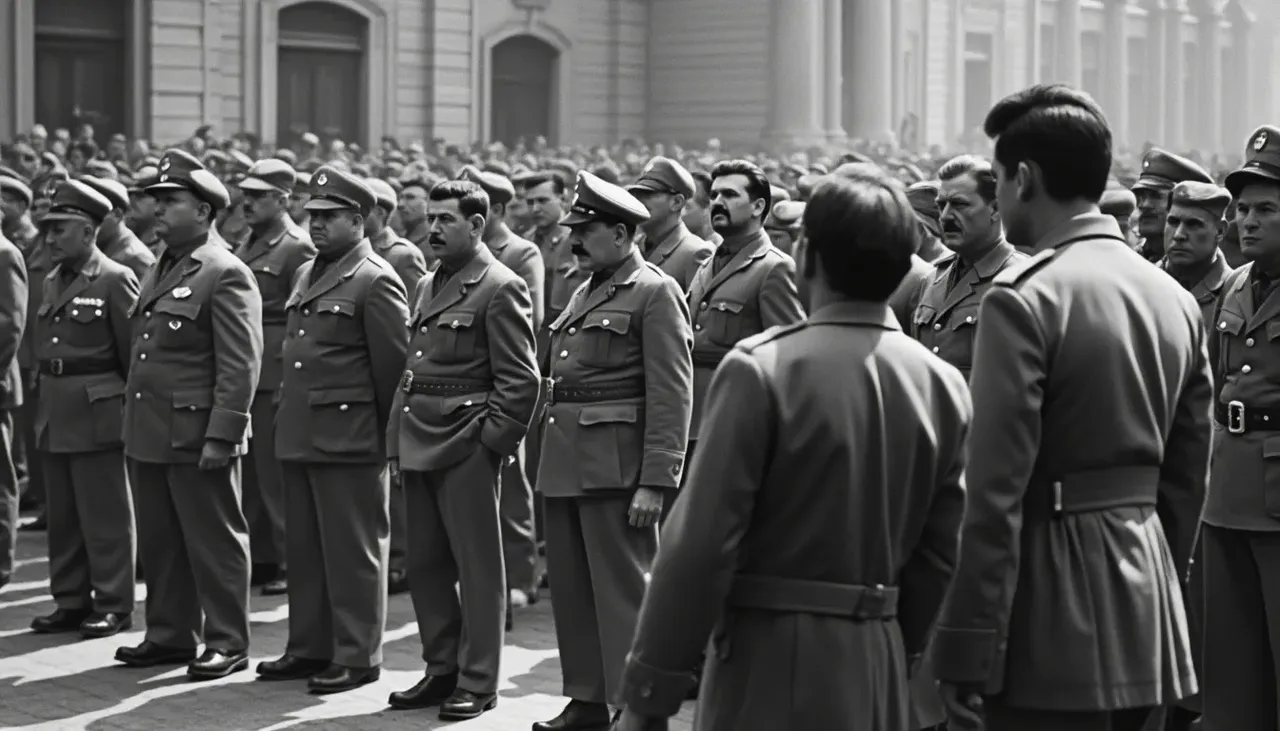
Joseph Stalin’s Brutal Dictatorship: A Reign of Terror and Death
Introduction (1-2 pages)
Introduction to Joseph Stalin: Brief overview of Stalin as the leader of the Soviet Union from the mid-1920s until his death in 1953. Mention his impact on the Soviet Union and the world.
The Scope of the Atrocities: Introduce the scale of the atrocities committed during Stalin’s reign, with millions of people dying due to state violence, forced collectivization, purges, labor camps, and famine.
Thesis Statement: Stalin’s dictatorship was marked by brutal repression, mass murder, and policies that resulted in the deaths of millions of Soviet citizens. This paper will explore Stalin’s rise to power, the key events that defined his dictatorship, and the horrific consequences for the Soviet people.
Chapter 1: Stalin’s Rise to Power (2 pages)
Background of the Bolshevik Revolution (1917): Provide context on the Russian Revolution of 1917, which brought the Bolsheviks to power under Vladimir Lenin. Stalin played a key role in the revolution and the early days of the Soviet Union.
Stalin’s Early Career: Describe Stalin’s role in the Bolshevik Party and his ascent through the ranks, focusing on his positions as Commissar for Nationalities and General Secretary of the Communist Party, which gave him control over party appointments.
Consolidation of Power After Lenin’s Death (1924): Explain how Stalin outmaneuvered rivals like Leon Trotsky, Grigory Zinoviev, and Lev Kamenev to become the undisputed leader of the Soviet Union by the late 1920s. This chapter should focus on Stalin’s cunning political tactics and use of alliances to neutralize his opponents.
Chapter 2: The Great Purge and Political Repression (3 pages)
Introduction to the Great Purge (1936-1938): Define the Great Purge as one of the bloodiest chapters in Soviet history, where Stalin sought to eliminate anyone he perceived as a threat to his rule.
Show Trials and Execution of Political Rivals: Discuss the show trials of prominent Bolshevik leaders, military officers, and intellectuals. Focus on how Stalin used false accusations of treason, espionage, and sabotage to justify executions and imprisonments.
The NKVD’s Role: Explain the role of the NKVD (Soviet secret police) in carrying out the arrests, torture, and executions during the Purge. The NKVD was instrumental in terrorizing the population and enforcing Stalin’s total control.
Impact on the Military and Government: Detail how Stalin’s purges decimated the Red Army, removing a large portion of its experienced officers, and purged millions of people from government, industry, and academia. The purges left the Soviet Union vulnerable, particularly as World War II approached.
Chapter 3: Collectivization and the Forced Famine (3 pages)
Introduction to Stalin’s Economic Policies: Introduce Stalin’s economic vision of rapidly industrializing the Soviet Union through state control of agriculture and industry.
Collectivization of Agriculture (1929-1933): Discuss Stalin’s policy of forced collectivization, where small peasant farms were merged into large, state-controlled collective farms. The policy was met with fierce resistance from the peasantry, especially the kulaks (wealthier peasants).
Dekulakization and Brutal Repression: Detail the campaign to “liquidate the kulaks as a class,” which involved mass deportations, arrests, and executions of peasants accused of resisting collectivization. Many were sent to labor camps, and entire villages were destroyed.
The Holodomor and Famine in Ukraine: Focus on the man-made famine in Ukraine, known as the Holodomor (1932-1933), which was caused by the forced requisition of grain and other foodstuffs to meet Stalin’s industrialization goals. Millions of Ukrainians starved to death, and the famine was used as a tool to crush nationalist sentiment and resistance to Soviet rule.
Famine in Other Soviet Regions: Mention the broader Soviet famine that affected other regions, such as Kazakhstan and parts of Russia. The famine resulted in the deaths of millions of people across the Soviet Union.
Chapter 4: The Gulag System and Forced Labor (2-3 pages)
Introduction to the Gulags: Define the Gulag system of labor camps where millions of political prisoners, criminals, and “enemies of the state” were sent to work under brutal conditions.
Expansion of the Gulag System: Discuss how Stalin expanded the use of labor camps during the Great Purge and in the 1930s and 1940s. The camps were used as a tool for economic development, with prisoners working on infrastructure projects like the White Sea-Baltic Canal and mining operations in Siberia.
Conditions in the Camps: Describe the horrific conditions in the Gulags, where prisoners were subjected to starvation, overwork, exposure to the elements, and rampant disease. Many did not survive the brutal conditions.
Death Toll and Long-Term Impact: Provide an estimate of the death toll from the Gulag system. Historians estimate that between 1.5 and 2 million people died in the camps, while millions more suffered irreparable physical and psychological damage.
Chapter 5: World War II and Stalin’s Brutality (2-3 pages)
Stalin’s Role in World War II: Introduce Stalin’s leadership during World War II, highlighting both his strategic decisions and the human cost of his wartime policies.
The Nazi-Soviet Pact (1939): Discuss the Molotov-Ribbentrop Pact between Stalin and Hitler, which allowed the Soviet Union to invade Eastern Poland and annex the Baltic States. Stalin’s initial collaboration with Nazi Germany is a controversial aspect of his leadership.
Soviet Losses in the War: Detail the immense human cost of World War II for the Soviet Union, with estimates of 20-27 million Soviet deaths, including civilians and soldiers. Stalin’s military decisions, such as refusing to evacuate civilians or retreat strategically, contributed to heavy losses.
The Siege of Leningrad and Battle of Stalingrad: Provide specific examples of Stalin’s brutal wartime strategies, including the Siege of Leningrad, where Stalin refused to allow civilians to flee, resulting in the deaths of over a million people due to starvation and exposure. Discuss the Battle of Stalingrad, where Stalin’s “Not a Step Back” policy led to immense Soviet casualties.
Post-War Purges: After the war, Stalin continued to purge suspected enemies, including returning Soviet POWs who had been held in German camps. These soldiers were viewed as traitors and often sent to the Gulag or executed.
Chapter 6: Stalin’s Cult of Personality and Propaganda (2 pages)
The Creation of a Cult of Personality: Discuss how Stalin used propaganda to build a cult of personality around himself, presenting himself as the “Father of Nations” and the savior of the Soviet Union.
State Control of Media and Art: Explain how Stalin controlled the press, literature, art, and film to promote his image and suppress dissenting voices. Artists and writers who failed to conform to the state’s demands were often imprisoned or executed.
Propaganda and Education: Detail how Stalin used the education system to indoctrinate Soviet citizens, particularly the youth, to view him as infallible. Schoolchildren were taught to revere Stalin as a near-divine figure, and any criticism of him was treated as treason.
Chapter 7: The Human Toll of Stalin’s Rule (2-3 pages)
Estimating the Death Toll: Provide estimates of how many people died as a direct result of Stalin’s policies. While numbers vary, historians generally estimate that Stalin’s dictatorship resulted in the deaths of between 15 and 20 million people through purges, executions, forced labor, and famines. Some estimates go as high as 25-30 million when including war casualties.
Personal Accounts and Survivor Stories: Include examples of personal testimonies and survivor accounts from those who lived through Stalin’s terror, including Gulag survivors, famine victims, and families of those purged.
The Lasting Psychological and Cultural Impact: Discuss the long-term psychological impact of Stalin’s terror on Soviet society. The pervasive fear and distrust that Stalin’s regime created left deep scars on Soviet culture and shaped the Soviet Union’s trajectory for decades.
Chapter 8: Stalin’s Death and Legacy (1-2 pages)
Stalin’s Death in 1953: Detail the circumstances of Stalin’s death and the immediate reactions within the Soviet Union. His death marked the end of one of the most brutal regimes in modern history.
The Khrushchev Thaw and De-Stalinization: Discuss how Stalin’s successor, Nikita Khrushchev, denounced Stalin’s crimes in his “Secret Speech” in 1956 and began a process of de-Stalinization. Monuments to Stalin were removed, political prisoners were released, and some of the worst excesses of his regime were exposed.
Stalin’s Controversial Legacy: Conclude by examining how Stalin remains a controversial figure in both Russia and the world. While he is remembered as a ruthless dictator responsible for millions of deaths, some still view him as a strong leader who modernized the Soviet Union and led it to victory in World War II.
Conclusion: The Brutality and Tragedy of Stalin’s Dictatorship (1-2 pages)
Summarizing Stalin’s Brutality: Recap the major points of Stalin’s brutal dictatorship, from the Great Purge and forced collectivization to the Gulag system and famines.
The Human Cost: Emphasize the enormous human cost of Stalin’s rule, with millions of Soviet citizens suffering under his repressive policies.
Stalin’s Place in History: Reflect on Stalin’s complex legacy as both a tyrant who inflicted unspeakable suffering on his own people and a leader who left an indelible mark on world history.
Leave a Reply