Japan’s Plan to Use Biological Warfare on San Diego: A Close Call in World War II
As World War II entered its final phases in 1945, Japan, increasingly desperate, was willing to employ extreme measures in an attempt to turn the tide of the war. One of the most horrifying of these plans was “Operation Cherry Blossoms at Night,” a secret strategy that involved launching a biological attack on the United States using the plague. The target was San Diego, California, a major military hub on the West Coast.
The aim of this operation was to release plague-infected fleas into the civilian population of San Diego, causing widespread disease, panic, and death. This attack was intended to cripple the American war effort and perhaps buy Japan more time as it faced the devastating consequences of the ongoing Allied military campaign. However, this terrifying plan was never executed. Japan surrendered five weeks before it was scheduled to be carried out, sparing the United States from what could have been a catastrophic biological attack on its civilian population.
This 15-page article will explore the origins of Japan’s biological weapons program, the development of Operation Cherry Blossoms at Night, and the factors that prevented this deadly attack from taking place. We will also examine the broader implications of biological warfare during World War II and the lasting lessons this near-miss provides for the future of warfare and international security.
Japan’s Biological Weapons Program: Unit 731
To understand Japan’s plan to unleash a biological weapon on the United States, it is necessary to first explore the country’s biological warfare program during World War II. The roots of this program can be traced back to Unit 731, a covert research and development unit of the Imperial Japanese Army that specialized in biological and chemical warfare.
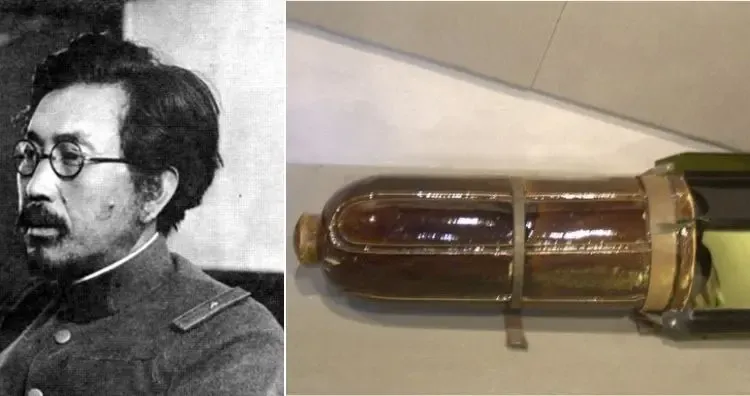
Unit 731 was established in 1935 under the leadership of General Shiro Ishii, a physician and microbiologist who became the mastermind behind Japan’s biological warfare efforts. The unit was headquartered in the Pingfang district of Harbin, in Japanese-occupied Manchuria (now part of China), and its mission was to develop weapons that could spread deadly diseases such as the plague, anthrax, cholera, and typhoid.
What set Unit 731 apart from other military research programs was its appalling use of human subjects in its experiments. Thousands of Chinese civilians, prisoners of war, and other individuals deemed expendable by the Japanese military were subjected to gruesome experiments without anesthesia. Victims were intentionally infected with deadly pathogens, subjected to vivisections, and used as test subjects for various biological weapons. The atrocities committed by Unit 731 were among the most heinous war crimes of the 20th century.
One of the primary biological agents that Unit 731 focused on was Yersinia pestis, the bacterium responsible for causing the plague. The plague, also known as the Black Death, had a devastating impact on human populations in history, and the Japanese saw it as an effective tool for biological warfare. Unit 731 developed bombs filled with plague-infected fleas, which could be dropped over enemy territory to spread the disease.
While much of Unit 731’s work was initially focused on China, where biological agents were deployed against Chinese civilians and soldiers, Japan’s war planners increasingly considered the possibility of using these weapons against the United States as the war progressed.
The Concept of Operation Cherry Blossoms at Night
As Japan’s situation grew increasingly dire in 1945, military leaders began to explore unconventional methods to counter the overwhelming power of the United States and its Allies. Despite the rapid advances of Allied forces in the Pacific and the devastating bombing campaigns against Japanese cities, Japan’s leadership remained unwilling to surrender. Instead, they sought ways to inflict maximum damage on the United States in the hopes of forcing a negotiated settlement or at least staving off an invasion of the Japanese home islands.
It was in this context that Operation Cherry Blossoms at Night was conceived. The operation was named after the cherry blossom, a symbol of beauty and transience in Japanese culture, but the plan itself was anything but poetic. It called for a biological attack on the U.S. mainland, specifically targeting the city of San Diego, which was a major military and naval hub on the West Coast.
The plan was ambitious and ruthless. Unit 731 would provide plague-infected fleas, which would be loaded into specially designed bombs. These bombs would then be carried by Kamikaze pilots—volunteer suicide pilots—on long-range submarines known as I-400-class submarines. The submarines were equipped with aircraft-launching capabilities, and the plan called for them to travel across the Pacific Ocean and launch their plague-laden aircraft near San Diego.
Once the planes were launched, they would drop the infected fleas over the city, where the fleas would spread the plague among the civilian population. The plague, which can be transmitted through flea bites and respiratory droplets, would quickly spread, leading to widespread disease, panic, and potentially tens of thousands of deaths. Given that medical treatments for the plague were limited at the time, such an attack could have caused devastating consequences.
The goal of the operation was not only to cause mass casualties but also to undermine American morale and disrupt the U.S. war effort. Japan’s leaders hoped that by bringing the war to American soil and causing widespread panic, they could force the United States to reconsider its demand for Japan’s unconditional surrender.
The Timing of the Attack
The plan for Operation Cherry Blossoms at Night was drawn up in the spring of 1945, as Japan was on the verge of defeat. However, executing such an audacious and complex operation required careful planning and coordination, and it was not something that could be carried out overnight.
According to historical records, the attack was scheduled to take place in September 1945, at the height of the summer flea season when the warm weather would facilitate the spread of the plague. The Japanese believed that the heat and dense population in San Diego would make the biological attack even more effective.
However, events in the war would ultimately conspire to prevent the attack from taking place. In the summer of 1945, the United States dropped atomic bombs on the Japanese cities of Hiroshima and Nagasaki on August 6 and 9, respectively. These bombings, along with the Soviet Union’s declaration of war on Japan, led to Japan’s surrender on August 15, 1945. The surrender came just five weeks before Operation Cherry Blossoms at Night was scheduled to be carried out.
Why the Attack Was Never Executed
Several factors contributed to the failure of Japan’s biological attack plan, beyond the country’s eventual surrender in August 1945. One major challenge was the logistical difficulty of carrying out such an operation across the vast Pacific Ocean. While Japan had developed long-range submarines capable of carrying aircraft, the mission would have required an extraordinary level of coordination, precision, and luck.
The I-400-class submarines would have had to avoid detection by American naval forces, which were heavily patrolling the Pacific, and they would have needed to launch their aircraft undetected near the U.S. mainland. The Kamikaze pilots would then have had to successfully release the biological agents over San Diego without being intercepted by American air defenses.
Furthermore, the risk of the operation backfiring was significant. If the operation failed, or if the planes carrying the biological agents were shot down before they could release their payload, the Japanese pilots or submariners could be captured, and the biological weapons could fall into American hands. This would have not only revealed Japan’s biological warfare capabilities but also opened the door to potential retaliation.
Despite these challenges, Japan’s leadership, particularly those within the military high command, remained committed to pursuing Operation Cherry Blossoms at Night. However, Japan’s rapidly deteriorating situation in the war, combined with the overwhelming devastation caused by the atomic bombings, forced the government to reconsider its options. In the end, Japan’s surrender spared the United States from what could have been one of the deadliest biological attacks in history.
The Threat of Biological Warfare in World War II
Japan was not the only country to explore the use of biological weapons during World War II. Both the United States and Great Britain had developed their own biological warfare programs, albeit with different objectives and degrees of success. However, what set Japan’s program apart was the willingness to use these weapons against civilian populations.
Biological warfare posed a particularly insidious threat during World War II because of the difficulty of defending against it. Unlike conventional weapons, which cause immediate damage, biological agents could spread silently and invisibly, infecting large numbers of people before symptoms appeared. This made them a particularly appealing option for military leaders seeking to maximize casualties and create chaos.
The potential for biological warfare to cause mass casualties was recognized early in the war, and the Allies took steps to prepare for the possibility of such an attack. In the United States, the government established the War Research Service (WRS) in 1942 to investigate the use of biological agents for defensive purposes. At the same time, American scientists conducted experiments on the effects of biological agents, including anthrax and botulinum toxin, in order to develop countermeasures.
Fortunately, the use of biological weapons was limited during World War II, with most countries opting to rely on more conventional weapons of mass destruction, such as bombs and artillery. However, Japan’s willingness to use biological agents against civilian populations in China and its plans to do the same against the United States underscored the terrifying potential of such weapons.
The Legacy of Operation Cherry Blossoms at Night
The discovery of Japan’s biological warfare plans, including Operation Cherry Blossoms at Night, came to light after the war, during the investigations into the activities of Unit 731. Many of the scientists and military personnel involved in Japan’s biological warfare program were granted immunity by the United States in exchange for sharing their research, a controversial decision that has been widely criticized by historians and human rights advocates.
The near-miss of Operation Cherry Blossoms at Night serves as a stark reminder of the dangers posed by biological warfare, even today. The capacity for biological weapons to cause mass casualties and incite panic remains a significant concern for modern governments and international security agencies. Advances in biotechnology and synthetic biology have made it easier for state and non-state actors to potentially develop and deploy biological agents, increasing the risk of future biological attacks.
The story of Japan’s plan to launch a plague attack on San Diego also highlights the ethical challenges associated with warfare and the use of weapons of mass destruction. The willingness of Japan’s leadership to target civilian populations with such a deadly and indiscriminate weapon underscores the lengths to which nations will sometimes go in the pursuit of victory, even at the cost of human life.
Conclusion: A Narrow Escape
Operation Cherry Blossoms at Night, Japan’s plan to unleash a biological weapon on San Diego, California, stands as one of the most chilling what-ifs of World War II. The fact that the operation was never carried out due to Japan’s surrender is a testament to the fragile nature of history and the fine line between catastrophe and salvation. Had the war continued for just a few more weeks, the United States could have faced a devastating biological attack on its civilian population, potentially altering the course of the war and post-war history.
The story of Japan’s biological warfare program, and the near-miss of Operation Cherry Blossoms at Night, serves as a sobering reminder of the horrors of war and the ever-present threat of weapons of mass destruction. In a world that continues to grapple with the challenges of warfare and global security, the lessons of this dark chapter in history remain as relevant as ever.
Leave a Reply