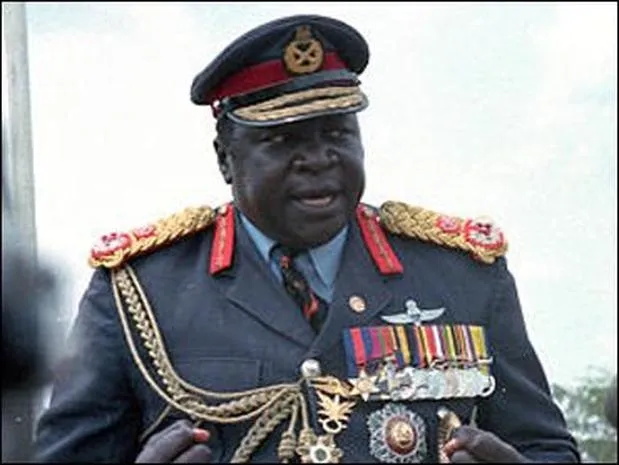
Idi Amin Dada: The Rise, Rule, and Legacy of Uganda’s Dictator
Page 1: Introduction
Idi Amin Dada, also known as the Butcher of Uganda, was one of the most notorious and brutal dictators in African history. Amin seized power in Uganda in 1971 and ruled the country through terror, violence, and erratic policies until his ousting in 1979. His regime is estimated to have been responsible for the deaths of between 100,000 and 500,000 people due to political repression, ethnic cleansing, and state-sponsored murder. Amin’s rule left Uganda economically devastated and socially fractured, with lasting impacts that continue to affect the country to this day.
This expansion will trace Amin’s rise to power, the nature of his authoritarian rule, and his fall from power. It will also analyze his lasting impact on Uganda and his legacy in African and world history, as well as the psychological and political factors that made him one of the most infamous figures of the 20th century.
Page 2: Early Life and Military Career
Idi Amin was born around 1925 in Koboko, in what was then the British Protectorate of Uganda. His exact birth date is disputed, but he came from the Kakwa ethnic group, a minority group in northwestern Uganda. He received little formal education and spent his youth working odd jobs before joining the King’s African Rifles (KAR), a regiment of the British colonial army, in 1946 as a cook.
Despite his humble beginnings, Amin quickly rose through the ranks, gaining a reputation as a formidable soldier during his service in Burma, Somalia, and Kenya during the British colonial campaigns. Amin participated in the suppression of the Mau Mau uprising in Kenya in the 1950s, which further established him as a loyal and ruthless military figure. By the time Uganda achieved independence from Britain in 1962, Amin had become one of the highest-ranking officers in the Ugandan army.
In the early years of post-colonial Uganda, Amin forged a close alliance with Prime Minister and later President Milton Obote, who relied on Amin’s military skills to secure his own political position. This relationship would later sour, setting the stage for Amin’s coup against Obote.
Page 3: The 1971 Coup and Amin’s Seizure of Power
In 1971, tensions between Idi Amin and Milton Obote reached a breaking point. Obote, who had become increasingly authoritarian himself, began to distrust Amin, particularly over financial irregularities and Amin’s growing influence within the military. Fearing that Obote would soon move against him, Amin launched a military coup on January 25, 1971, while Obote was attending a Commonwealth conference in Singapore.
The coup was swift and largely bloodless. Amin declared himself President of Uganda, suspended the constitution, and dissolved Parliament. Initially, Amin’s rise to power was met with popular support, as many Ugandans were dissatisfied with Obote’s authoritarian rule and economic mismanagement. Amin promised to restore democracy, release political prisoners, and improve the living conditions of ordinary Ugandans. However, these promises were quickly abandoned as Amin began consolidating power and ruling through violence and fear.
Page 4: The Establishment of a Dictatorship
Upon assuming power, Amin wasted no time in turning Uganda into a military dictatorship. He promoted himself to Field Marshal and filled key government positions with military officers and members of his own Kakwa, Lugbara, and Nubian ethnic groups. Amin’s rule was marked by extreme brutality, and he began eliminating any perceived threats to his regime, starting with those loyal to Obote.
Amin’s use of state-sponsored violence became evident early in his rule. He ordered the mass execution of army officers suspected of loyalty to Obote, as well as the systematic purge of the Acholi and Langi ethnic groups within the military, who were seen as Obote’s base of support. Over the next few years, thousands of military personnel, politicians, and civilians would be arrested, tortured, and executed under Amin’s orders.
Amin also established a network of secret police, known as the State Research Bureau, to spy on civilians and suppress dissent. Political opponents, journalists, and intellectuals were arrested, tortured, and often killed. Fear permeated every level of society, and Uganda descended into a state of terror under Amin’s rule.
Page 5: Ethnic Cleansing and Political Repression
One of the most defining and brutal aspects of Amin’s rule was his use of ethnic cleansing as a tool of political control. Amin, who himself came from a minority ethnic group, viewed many of Uganda’s ethnic groups, particularly the Acholi and Langi, as threats to his regime due to their association with the previous government of Milton Obote. As a result, these groups became targets of systematic repression.
Amin’s security forces engaged in the mass murder of thousands of Acholi and Langi people, often rounding them up in military barracks or prisons before executing them. The International Commission of Jurists estimated that at least 80,000 people were killed during Amin’s first few years in power, though some estimates place the death toll as high as 500,000 by the end of his regime.
In addition to targeting ethnic groups, Amin’s regime was characterized by the repression of any potential political rivals. Opposition parties were banned, and Amin declared himself President for Life in 1976. Political dissenters, real or imagined, were brutally silenced through torture and extrajudicial killings.
Page 6: The Expulsion of Asians from Uganda
One of Amin’s most infamous and economically devastating decisions came in August 1972, when he ordered the expulsion of Uganda’s Asian minority, giving them 90 days to leave the country. This community, mainly of Indian origin, had played a vital role in Uganda’s economy, particularly in trade, industry, and finance.
Amin justified the expulsion by accusing the Asian community of exploiting Uganda’s resources and preventing economic progress for indigenous Ugandans. He also framed the expulsion as an act of African nationalism, declaring that he was returning Uganda to its rightful owners. Approximately 60,000 Asians, many of them Ugandan citizens, were forced to leave the country, abandoning their businesses and property.
The expulsion of the Asian community had devastating consequences for Uganda’s economy. With much of the country’s entrepreneurial and managerial class gone, industries collapsed, and Uganda’s economy rapidly declined. The businesses left behind by Asians were handed over to Amin’s loyalists, many of whom lacked the skills or experience to manage them, further exacerbating the economic crisis.
Page 7: The Collapse of the Ugandan Economy
By the mid-1970s, Uganda’s economy was in freefall. The expulsion of Asians had decimated the business sector, while Amin’s government failed to address growing inflation, corruption, and mismanagement. Agricultural production, which was the backbone of Uganda’s economy, also suffered as farms were neglected and mismanaged by inexperienced administrators.
Amin’s government relied heavily on foreign aid, particularly from Libya, under the leadership of Muammar Gaddafi, and Saudi Arabia. However, aid alone could not compensate for the regime’s incompetence in economic management. Uganda’s coffee industry, a major export, suffered from declining production, and the country was plunged into widespread poverty and hunger.
Amin’s military spending also drained the national treasury. He lavished resources on himself and the military elite, purchasing expensive weapons and vehicles while ordinary Ugandans struggled to survive. His extravagant lifestyle, including numerous palaces, luxury cars, and an elaborate system of patronage, contrasted sharply with the poverty faced by the average citizen.
Page 8: Relations with Foreign Powers and International Image
Amin’s foreign relations were marked by erratic and often bizarre behavior, which further isolated Uganda from the international community. Initially, Amin had the support of Britain and Israel, both of which had assisted Uganda militarily. However, in 1972, Amin expelled Israeli advisers from the country, aligning himself instead with Libya, Saudi Arabia, and the Soviet Union. Amin declared himself a champion of Pan-Africanism and frequently spoke out against Western imperialism.
His relations with the West deteriorated rapidly, particularly with Britain, after Amin made a series of inflammatory statements. In one instance, he sent a telegram to Queen Elizabeth II, congratulating her on the 25th anniversary of her ascension to the throne and offering to “take over” the governance of Britain if necessary. Amin also declared himself “King of Scotland” in a bizarre diplomatic stunt.
Amin’s anti-Western rhetoric and erratic policies earned him a reputation as a madman on the international stage. His brutality and human rights abuses, particularly his involvement in the murder of political dissidents, also attracted condemnation from human rights organizations and foreign governments. By the late 1970s, Uganda was increasingly isolated, with few international allies left.
Page 9: The Entebbe Raid (1976)
One of the most dramatic international incidents during Amin’s rule was the Entebbe hostage crisis in 1976. On June 27, 1976, Air France Flight 139 was hijacked by members of the Popular Front for the Liberation of Palestine – External Operations (PFLP-EO), who were supported by German Revolutionary Cells. The plane, carrying 248 passengers, was diverted to Entebbe Airport in Uganda, where the hijackers took the passengers hostage, demanding the release of Palestinian prisoners.
Amin allowed the hijackers to land and supported their demands, which further alienated him from the international community. The crisis ended on July 4, 1976, when Israeli commandos launched a daring rescue operation, storming the airport and freeing 102 hostages. The success of the Entebbe Raid embarrassed Amin, exposing his complicity in international terrorism.
The incident damaged Amin’s reputation globally, particularly in the West, and further isolated Uganda diplomatically. The Entebbe Raid is remembered as one of the most successful hostage rescue missions in history, but it also marked the beginning of the end for Amin’s regime, which would soon face growing opposition both domestically and internationally.
Page 10: The Fall of Idi Amin
By the late 1970s, Amin’s regime was in deep crisis. The economy was in shambles, and dissent against his brutal rule was growing. His decision to invade Tanzania in 1978, in an attempt to annex the Kagera region, proved to be a disastrous miscalculation. The invasion provoked a strong response from Tanzanian President Julius Nyerere, who mobilized the Tanzanian military to launch a counteroffensive.
The Ugandan-Tanzanian War (1978-1979) culminated in the Tanzanian army and Ugandan exiles, including supporters of Milton Obote, launching a full-scale invasion of Uganda. Amin’s poorly trained and demoralized forces were no match for the Tanzanian military, and in April 1979, Amin was forced to flee the capital, Kampala. His regime quickly collapsed, and Milton Obote was restored to power.
Amin fled to Libya before eventually settling in Saudi Arabia, where he lived in exile until his death in 2003. Although he expressed a desire to return to Uganda, he remained in exile for the rest of his life, living in relative luxury in Jeddah, shielded from international prosecution.
Page 11: Life in Exile and Death
After his downfall, Amin lived quietly in Saudi Arabia, under the protection of the Saudi royal family. Despite calls for his extradition to face justice for his crimes, Amin was never prosecuted, and he lived out his remaining years in relative comfort. In interviews, Amin never expressed regret for his actions, claiming that everything he did was in the interest of Uganda.
Amin died on August 16, 2003, in a hospital in Jeddah, Saudi Arabia, due to kidney failure. His death marked the end of an era in Uganda’s history, but his legacy continues to haunt the country. Amin was buried in Saudi Arabia, and his death was met with a mix of relief and lingering resentment by Ugandans, many of whom had suffered under his brutal rule.
While he was in exile, many Ugandans continued to bear the scars of his regime—both physically and psychologically. The chaos and devastation left in the wake of Amin’s rule required years of rebuilding, and the social and economic trauma his regime inflicted on the country is still felt today.
Page 12: Legacy and Impact on Uganda
Idi Amin’s legacy is a deeply divisive one. For many Ugandans and observers worldwide, he is remembered primarily as a tyrant whose rule brought about untold suffering and devastation. His regime left behind a country deeply divided along ethnic lines, with a shattered economy and a broken social fabric. The deaths of hundreds of thousands of Ugandans, widespread torture, and repression marked his time in power as one of the darkest periods in Uganda’s history.
However, there are some who recall Amin as a symbol of African nationalism and defiance against Western imperialism, particularly for his expulsion of Asians and his outspoken rhetoric against Western powers. Some Ugandans still view him as a leader who, despite his brutality, stood up for Uganda’s sovereignty.
Amin’s impact on Uganda and Africa as a whole cannot be understated. He set a precedent for military dictatorship in the region and demonstrated the dangers of unchecked authoritarianism. Uganda’s recovery from the damage caused by his rule was slow and painful, and the effects of his policies lingered for decades after his downfall. His legacy remains a cautionary tale about the perils of absolute power and the catastrophic consequences of a leader who governs through fear and violence.
Leave a Reply