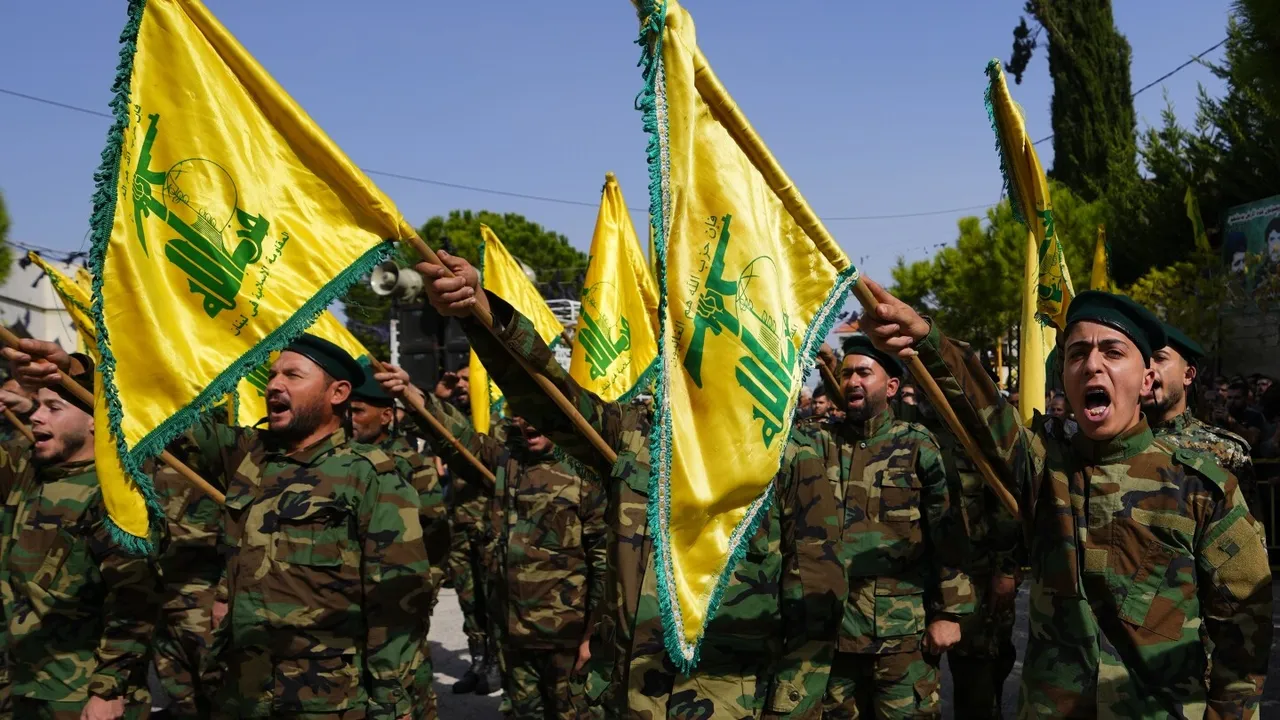
Hezbollah (Hizbollah), a terrorist organization
A comprehensive 12-page article on Hezbollah (Hizbollah), a terrorist organization would examine its origins, ideology, regional and global operations, political and military tactics, and its impact on Middle East geopolitics and international security. Here’s an outline for the structure of such an article, offering an in-depth look at Hezbollah as a multifaceted organization that operates both as a political party in Lebanon and a militant group designated as a terrorist organization by many countries.
Page 1: Introduction
Overview of Hezbollah: Briefly introduce Hezbollah, outlining its dual role as both a political party and a militant organization. Highlight its status as a designated terrorist organization by the United States, the European Union, and several other countries.
Purpose of the article: Lay out the key aspects to be explored in this article, including Hezbollah’s origins, ideology, regional influence, military strategies, and its implications for global terrorism and security.
Page 2: Origins of Hezbollah
Founding in the early 1980s: Explore Hezbollah’s origins in the aftermath of the Israeli invasion of Lebanon in 1982, describing the context of the Lebanese Civil War, Shiite disenfranchisement, and the role of Iran in its formation.
Influence of the 1979 Iranian Revolution: Examine how Iran’s Islamic Revolution inspired Hezbollah’s founders and how Iran, through its Islamic Revolutionary Guard Corps (IRGC), provided financial, military, and ideological support.
Hezbollah’s founding principles: Discuss its foundational ideology, including resistance to Israeli occupation, its advocacy for an Islamic state in Lebanon, and its loyalty to Iran’s Supreme Leader.
Page 3: Ideology and Objectives
Hezbollah’s guiding ideology: Explore the group’s commitment to Shiite Islamist principles, its interpretation of political Islam, and its allegiance to the Iranian regime.
Hezbollah’s main objectives: Analyze Hezbollah’s long-standing goals, which include the destruction of Israel, the promotion of Shiite political power in Lebanon, and opposition to Western influence in the Middle East.
Iran-Hezbollah nexus: Highlight the strategic alliance between Hezbollah and Iran, including Hezbollah’s role as Iran’s proxy in the region, advancing Tehran’s geopolitical interests.
Page 4: Hezbollah’s Role in Lebanese Politics
The political wing: Examine how Hezbollah has evolved into a dominant political force in Lebanon, participating in elections and holding seats in the Lebanese parliament. Discuss its role in forming political coalitions.
Provision of social services: Explore Hezbollah’s social welfare programs, including healthcare, education, and infrastructure, which have helped the group gain support among Lebanon’s Shiite population.
Balancing politics and militancy: Discuss how Hezbollah maintains a balance between its political activities and its militant operations, often using its political platform to shield its military operations from scrutiny.
Page 5: Military Structure and Capabilities
Hezbollah’s military wing: Provide an overview of Hezbollah’s military structure, including its elite fighting force, the Islamic Resistance, and its use of guerrilla tactics, paramilitary operations, and asymmetrical warfare.
Weapons and funding: Examine the sources of Hezbollah’s weapons and funding, including Iranian military support, fundraising through charitable networks, and illicit activities such as drug trafficking and money laundering.
Hezbollah’s fighting capabilities: Analyze Hezbollah’s military strength, including its arsenal of rockets, anti-tank missiles, and advanced military training, which have enabled it to challenge Israel and operate in other conflict zones.
Page 6: Hezbollah’s Conflict with Israel
First Israeli-Hezbollah clashes (1980s): Describe the early clashes between Hezbollah and Israel in southern Lebanon, focusing on Hezbollah’s role in resisting Israeli occupation and its growing military strength during the 1980s.
1992-2006 escalation: Examine the growing intensity of hostilities between Hezbollah and Israel, including the 1992 assassination of Hezbollah’s leader Abbas al-Musawi, which led to an escalation of the conflict.
2006 Israel-Hezbollah War: Provide an in-depth look at the 2006 war between Israel and Hezbollah, including Hezbollah’s use of rockets and guerrilla tactics, the destruction caused in Lebanon, and how the war ended in a stalemate. Assess how Hezbollah emerged stronger and more popular among Lebanese after the conflict.
Page 7: Hezbollah’s Involvement in the Syrian Civil War
Support for Bashar al-Assad: Analyze Hezbollah’s intervention in the Syrian Civil War, where it fought on behalf of the Assad regime against rebel forces, thereby extending Iran’s influence in the region.
Hezbollah’s role in turning the tide of the war: Discuss Hezbollah’s critical role in bolstering Assad’s forces, particularly in key battles such as the recapture of Qusayr and Aleppo.
Regional implications of Hezbollah’s involvement: Explore how Hezbollah’s participation in the Syrian conflict has increased sectarian tensions in the region, solidified its alliance with Iran, and strengthened its ties with Russia.
Page 8: Global Operations and Terrorist Activities
Terrorist designation: Explain why Hezbollah has been designated a terrorist organization by multiple countries, focusing on its involvement in terrorist activities across the globe.
International operations: Discuss Hezbollah’s global reach, including its cells in Latin America, Africa, and Europe, where it engages in fundraising, recruitment, and illicit activities.
Major terrorist attacks attributed to Hezbollah: Analyze high-profile attacks linked to Hezbollah, including the 1983 Beirut barracks bombings, the 1994 bombing of the AMIA Jewish community center in Argentina, and other incidents targeting Israeli and Jewish interests worldwide.
Page 9: Hezbollah’s Relationship with Other Militant Groups
Alliance with Hamas and Palestinian groups: Examine Hezbollah’s ties with Palestinian militant groups, particularly Hamas, and its support for the Palestinian cause against Israel.
Links to al-Qaeda and other jihadist groups: Explore Hezbollah’s complex relationship with Sunni jihadist organizations, including occasional cooperation with al-Qaeda-linked groups, despite sectarian differences.
Hezbollah and the Houthis in Yemen: Discuss Hezbollah’s involvement in Yemen, where it has reportedly provided training and support to the Iranian-backed Houthi rebels in their fight against the Saudi-led coalition.
Page 10: Hezbollah’s Influence on Regional Geopolitics
Hezbollah as a regional power broker: Discuss Hezbollah’s role in shaping regional politics in the Middle East, including its influence in Lebanon, Syria, Iraq, and Yemen.
Iran’s “axis of resistance”: Examine Hezbollah’s place within Iran’s broader strategy to create an “axis of resistance” against Israel, the U.S., and their allies in the Middle East.
Hezbollah’s rivalry with Saudi Arabia: Analyze Hezbollah’s role in the broader Sunni-Shiite rivalry between Iran and Saudi Arabia, including its opposition to Saudi influence in Lebanon and the wider region.
Page 11: Hezbollah and Western Counterterrorism Efforts
U.S. and European efforts to curb Hezbollah: Explore the measures taken by the U.S. and Europe to counter Hezbollah’s influence, including sanctions, financial restrictions, and diplomatic pressure.
Designating Hezbollah’s political and military wings: Discuss the debate in Europe and other regions about whether to designate Hezbollah’s political and military wings separately, as some countries do not recognize the political wing as a terrorist entity.
Hezbollah’s response to international pressure: Analyze how Hezbollah has adapted to sanctions and counterterrorism efforts, including its use of alternative financial networks and its increased involvement in transnational criminal activities.
Page 12: Future of Hezbollah and Conclusion
Hezbollah’s evolving role: Discuss Hezbollah’s potential future trajectory as both a political and militant organization, considering its continued involvement in regional conflicts and its growing influence in Lebanon’s political system.
Challenges and threats: Examine the challenges Hezbollah faces, including internal divisions, growing public dissatisfaction in Lebanon due to economic crises, and increased international scrutiny of its operations.
Conclusion: Summarize the key points of the article, emphasizing Hezbollah’s unique position as a hybrid organization that operates as both a political party and a militant group, and its lasting impact on Middle East geopolitics and global security.
Leave a Reply