Author: admin

  • Mara Salvatrucha (MS-13) El Salvador Gang

    By Scott J. Arnold

    Mara Salvatrucha (MS-13) El Salvador Gang

    Mara Salvatrucha (MS-13)

    Mara Salvatrucha (MS-13), international gang involved in drug and human smuggling, prostitution, murder, and extortion, among other illegal activities. It was founded in Los Angeles in the 1980s by immigrants from El Salvador and later spread throughout the United States, Central America, and Canada, gaining a reputation for extreme violence.

    The gang’s origins can be traced to El Salvador in the 1970s, when the country was on the brink of a civil war between government forces and the insurgent group Farabundo Martí National Liberation Front (FMLN), which claimed to represent Salvadorans in the bottom social and economic tiers. The bloody conflict left some 900,000 people displaced, thousands of whom fled to the United States and migrated to largely Hispanic areas of southern Los Angeles. Most of these areas in Los Angeles were already inundated with powerful Mexican gangs who preyed on weaker cultural groups. So as not to be victimized, former members of the FMLN and other refugees formed Mara Salvatrucha in the early 1980s; according to some sources, the name derived from the slang terms mara (“gang”) and salvatruchas (“street-tough Salvadorans”).

    Despite a steady increase in membership—aided by the recruitment of immigrants who had fled unrest in Guatemala and Nicaragua—Mara Salvatrucha struggled against rival gangs. In order to strengthen its position, in the early 1990s it formed an alliance with the Mexican Mafia, a powerful gang also based in Los Angeles. During this time, Mara Salvatrucha became known as MS-13, reportedly because M was the 13th letter of the alphabet.

    In the ensuing years, Mara Salvatrucha became one of the most powerful yet loosely structured gangs in the Northern Hemisphere and was especially known for brutality; its motto was “kill, rape, and control.” By the early 21st century, MS-13 was reportedly active in nearly every U.S. state and the District of Columbia. In addition, it operated in a number of Central American countries, especially El Salvador. With no formal leadership, cliques of gang members operated with relative independence, making it more difficult for law enforcement to limit their influence. MS-13 members were responsible for brutal gang wars, murder, prostitution, drug smuggling, human trafficking, and illegal transport of aliens across the United States–Mexico border. The gang also sought alliances with other organized crime entities, including Mexican drug cartels. Financial gain was the primary goal shared in these alliances, and relationships among gangs became more sophisticated, thus providing access to technology and weapons that increased gangs’ ability to carry out lethal acts against a larger section of society.

    Government officials expressed extreme concern about Mara Salvatrucha because of its ties to powerful ex-paramilitary members in El Salvador. In the mid-1990s, changes in U.S. immigration laws allowed deportations of convicted criminals, including many gang members. Salvadoran officials claimed that many deported gang members returned to the disorganized neighborhoods of El Salvador and other Central American countries in search of eager converts. Youthful recruits from severely impoverished neighborhoods found discipline, purpose, and income. Many then found their way back into the United States illegally, thus increasing the problem in that country. In response, in 2004 the U.S. Federal Bureau of Investigation (FBI) created a gang task force dedicated to MS-13.

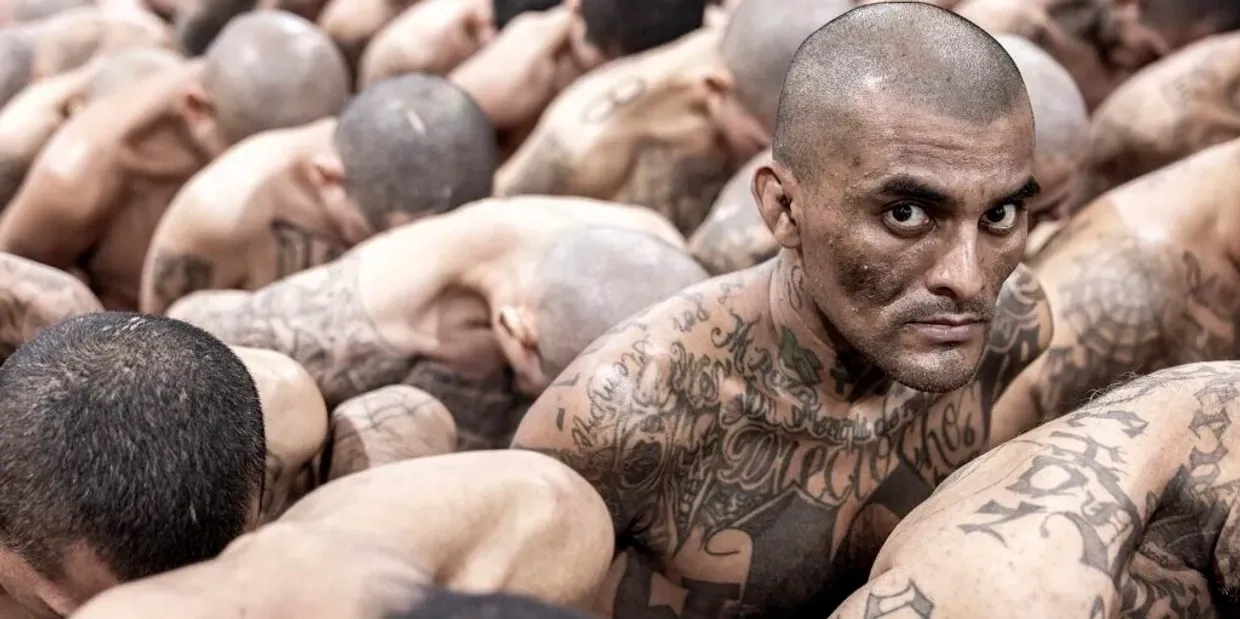
    According to FBI statistics, Mara Salvatrucha had between 6,000 and 10,000 members in the United States in the early 21st century. Reports gave upwards of 50,000 in Central America. Although most members come from Hispanic cultures, MS-13 includes African Americans as well. The majority of its members are between the ages of 11 and 40, and they are easily identified through very visible tattoos, often on the face.

  • Lady Godiva: Exploration of the Legendary Figure.

    By Scott J. Arnold

    Lady Godiva: A Comprehensive 12-Page Exploration of the Legendary Figure

    Lady Godiva’s tale is one of the most enduring legends from medieval England. Known for her daring ride through the streets of Coventry, clothed only in her long hair, Lady Godiva has become a symbol of courage, generosity, and defiance. The story, which blends historical fact with legend, has inspired countless retellings in art, literature, and popular culture. In this 12-page analysis, we will explore the life of Lady Godiva, the historical context of her famous ride, the significance of her story, and its cultural legacy over the centuries.
    1. The Historical Lady Godiva: Fact vs. Fiction
    1.1. Who Was Lady Godiva?

    Lady Godiva, or Godgifu (an Old English name meaning “gift of God”), was a real historical figure who lived in 11th-century England. She was married to Leofric, Earl of Mercia, one of the most powerful noblemen in England during the reign of King Edward the Confessor.

    Her Noble Status: Godiva was a wealthy and influential Anglo-Saxon noblewoman, known for her piety and charitable works. Along with her husband, she was a significant landowner, with estates in Coventry, Warwickshire, and other regions.

    1.2. Leofric, Earl of Mercia

    Leofric, Godiva’s husband, played a crucial role in English politics during a time of considerable upheaval. As one of the most powerful earls in the kingdom, Leofric was a key figure in maintaining order in the Midlands and had close ties to King Edward the Confessor.

    Leofric’s Influence: Leofric was known for his military and political might, but historical records also suggest that he was a devout man who supported the construction of religious institutions, including monasteries and churches.

    2. The Legendary Ride: Lady Godiva’s Protest
    2.1. The Core of the Legend

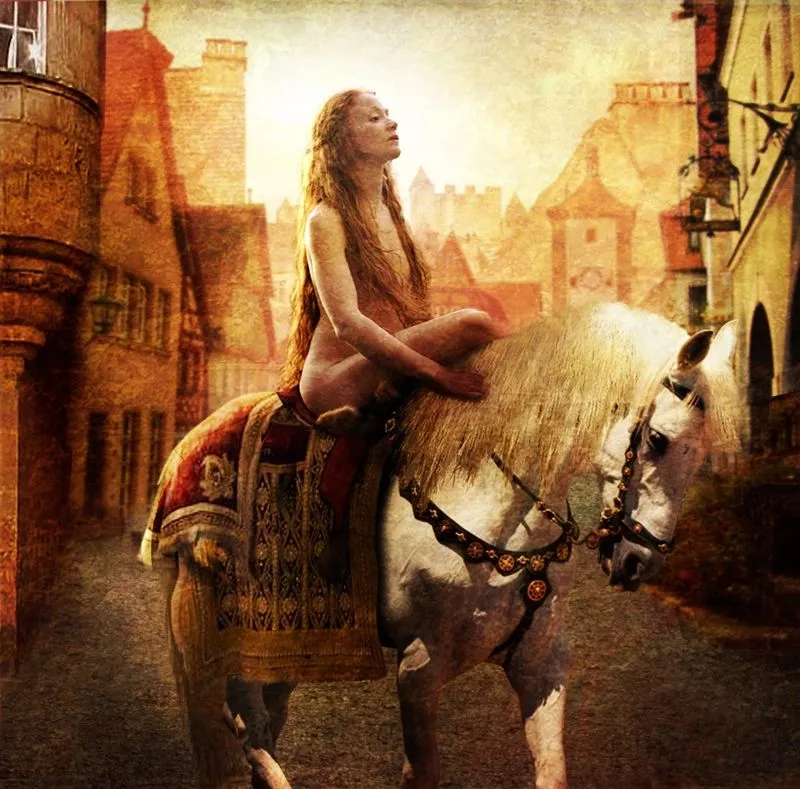
    According to the famous legend, Lady Godiva rode naked through the streets of Coventry to protest her husband’s oppressive taxation of the townspeople. The legend states that Godiva pleaded with her husband to lower the taxes, but Leofric refused, setting what he thought was an impossible condition: he would lower the taxes if she rode naked through the town. To his surprise, she accepted the challenge.

    The Ride Itself: Lady Godiva’s ride is said to have taken place while she was covered only by her long hair, which concealed her body from view. Out of respect for her, the people of Coventry were ordered to stay indoors with their windows shuttered, so no one would see her.

    2.2. The “Peeping Tom” Element

    One of the later additions to the legend is the character of “Peeping Tom,” a curious tailor who defied the order to stay indoors and peeked at Godiva during her ride. As punishment for his disobedience, he was struck blind.

    Symbolism of “Peeping Tom”: This aspect of the legend emphasizes the respect the townspeople had for Godiva, as well as the idea of punishment for violating her dignity.

    2.3. The Historical Accuracy of the Ride

    While Lady Godiva was indeed a real person, there is no direct evidence that her famous ride ever took place. The story first appeared in written form centuries after her death, in the 12th century, in the chronicles of Roger of Wendover.

    Roger of Wendover’s Account: Wendover’s account is the earliest written version of the story, though it is more likely an embellishment or creation than a historical fact. The legend reflects the cultural values of the time, particularly themes of humility, generosity, and defiance against authority.

    3. The Political Context: Taxes and Power in 11th-Century England
    3.1. Anglo-Saxon Taxation

    The central issue in the Lady Godiva legend is taxation. During the time of Leofric and Godiva, taxes were a significant burden on both peasants and townspeople, often imposed to support military campaigns, royal projects, or local governance.

    Leofric’s Taxes on Coventry: The legend claims that Leofric imposed heavy taxes on the people of Coventry, causing widespread suffering. In reality, Leofric, as the Earl of Mercia, would have had control over local taxes, though there is no specific historical record of him raising taxes to an oppressive level.

    3.2. Feudal Society and Power Structures

    In feudal England, the noble class held immense power over local economies. Earls like Leofric had the authority to levy taxes, administer justice, and control land. However, their actions were often constrained by their relationships with the king and other nobles.

    Godiva’s Influence as a Noblewoman: As the wife of one of the most powerful men in England, Godiva would have had significant influence in the local community, particularly through her charitable works. Her legendary ride can be seen as a metaphor for using personal influence to protect the vulnerable.

    4. Religious Devotion and Charitable Works
    4.1. Godiva’s Religious Piety

    Both Godiva and Leofric were known for their religious devotion. They were patrons of various religious institutions, including monasteries and churches, which played a central role in medieval society.

    St. Mary’s Monastery: One of the most significant religious contributions made by Godiva and Leofric was the founding of St. Mary’s Monastery in Coventry. This act of piety demonstrated their commitment to the Church and their desire to ensure the spiritual well-being of their community.

    4.2. Medieval Charitable Traditions

    Noblewomen like Godiva often played a key role in charitable activities during the medieval period. In a time when the Church was a major provider of social services, Godiva’s donations and charitable efforts would have been significant.

    Endowments and Donations: In addition to founding religious institutions, Godiva and Leofric donated large sums of money and land to support the Church. These actions reflected the values of the time, where wealth was often used to secure divine favor and ensure salvation.

    5. Gender and Power in Medieval Society
    5.1. Women’s Roles in Feudal England

    While medieval society was largely patriarchal, noblewomen like Lady Godiva could wield considerable influence, especially through their marriages and control of estates. Women in noble families were often responsible for managing households, overseeing agricultural production, and serving as patrons of the arts and religion.

    Godiva’s Authority: As the wife of an earl, Godiva would have had substantial authority in her own right. Her role as a landowner and benefactor of the Church suggests that she had a significant say in the management of her and her husband’s wealth.

    5.2. The Feminist Interpretation of Godiva’s Ride

    In modern times, Lady Godiva’s ride has been interpreted as an act of defiance and empowerment. The image of a woman challenging authority and standing up for the oppressed has resonated with feminist scholars and activists.

    Challenging Male Authority: Godiva’s ride can be seen as a symbolic challenge to male authority, particularly that of her husband. Her willingness to make such a bold statement suggests that women could—and did—exercise agency in medieval society, even within the constraints of a patriarchal system.

    6. The Evolution of the Legend in the Middle Ages
    6.1. Medieval Chronicles and the Spread of the Legend

    The legend of Lady Godiva spread during the medieval period, evolving as it was passed down through oral tradition and written chronicles. The story took on new layers of symbolism, reflecting the values and concerns of the time.

    Romanticization of the Story: As the legend spread, it became more romanticized, with later writers adding elements such as the “Peeping Tom” character and emphasizing Godiva’s modesty and virtue.

    6.2. Religious Interpretations

    Some medieval commentators interpreted Lady Godiva’s ride as a religious allegory, viewing her as a figure of Christian humility and sacrifice. Her willingness to expose herself for the sake of the common people was seen as a Christ-like act of selflessness.

    Godiva as a Saintly Figure: In some accounts, Godiva was portrayed as a quasi-saintly figure, whose ride represented her devotion to the poor and oppressed. While she was never canonized, her legend took on a moral and religious significance in the medieval imagination.

    7. The Renaissance and Enlightenment: Godiva in Art and Literature
    7.1. Renaissance Depictions of Godiva

    During the Renaissance, the story of Lady Godiva was revived and depicted in paintings, poetry, and plays. Artists and writers were fascinated by the image of the virtuous noblewoman who defied convention to stand up for her people.

    Allegorical Interpretations: In Renaissance art, Lady Godiva’s ride was often depicted allegorically, symbolizing civic virtue, self-sacrifice, and the power of women’s modesty. Her long hair, which covered her naked body, became a symbol of her purity and moral strength.

    7.2. Literary Works on Godiva

    Writers such as John Speed and Richard Grafton included the story of Lady Godiva in their histories of England, adding to its status as a national legend. Godiva’s story became a way to reflect on themes of power, taxation, and civic duty.

    Popularization in Literature: As literacy rates increased, the story of Lady Godiva became more widely known, spreading beyond elite circles and entering popular culture.

    8. Victorian Morality and the Godiva Legend
    8.1. Tennyson’s “Godiva”

    One of the most famous literary adaptations of the Godiva legend came in the Victorian era, with Alfred, Lord Tennyson’s poem Godiva, published in 1842. Tennyson’s version of the story emphasized Lady Godiva’s purity and selflessness, aligning her with Victorian ideals of womanhood.

    Godiva as a Moral Example: In Tennyson’s poem, Godiva is portrayed as a moral exemplar, whose willingness to sacrifice her modesty for the greater good made her a symbol of civic virtue. Her ride was seen as an act of quiet heroism, reflecting Victorian values of duty, self-sacrifice, and charity.

    8.2. Victorian Art and Imagery

    The 19th century also saw an explosion of visual art depicting Lady Godiva. Artists like John Collier and Edmund Blair Leighton painted romanticized images of Godiva’s ride, often emphasizing her beauty and modesty.

    Godiva in Pre-Raphaelite Art: The Pre-Raphaelite painters, who were known for their interest in medieval and mythological subjects, found inspiration in the Godiva legend. Their paintings often depicted her as an ethereal, almost otherworldly figure, representing both beauty and moral strength.

    9. Godiva in Popular Culture and Folklore
    9.1. Godiva in Modern Media

    Lady Godiva has continued to captivate audiences in modern times, with her story appearing in films, television shows, and other media. Her image has become iconic, often symbolizing rebellion, sacrifice, and feminine power.

    Film and Television Adaptations: Films such as Lady Godiva of Coventry (1955) and references to Godiva in modern television shows reflect the enduring appeal of her legend. Her story has been adapted to fit various genres, from historical drama to romantic fantasy.

    9.2. Folklore and Festivals

    The legend of Lady Godiva remains an important part of Coventry’s cultural heritage. The annual Godiva Procession, which dates back to the 17th century, celebrates her legacy and draws visitors to the city.

    Coventry’s Godiva Festival: Today, Coventry’s Godiva Festival is one of the largest free music festivals in the UK, combining music, art, and history to celebrate the city’s most famous figure. The festival includes a ceremonial procession featuring a symbolic representation of Lady Godiva’s ride.

    10. Feminist Interpretations of Lady Godiva
    10.1. Godiva as a Feminist Icon

    In recent years, Lady Godiva has been reinterpreted as a feminist icon. Her willingness to challenge her husband’s authority and her commitment to social justice have resonated with women’s rights movements.

    Godiva and Women’s Autonomy: Godiva’s decision to ride naked through the streets can be seen as a radical assertion of bodily autonomy and agency. In this interpretation, her nudity is not a symbol of vulnerability but of empowerment.

    10.2. Reclaiming Godiva in Feminist Art

    Feminist artists have used the image of Lady Godiva to challenge traditional gender roles and explore themes of power, control, and the female body. Her story has been reimagined as a critique of patriarchal systems and a celebration of women’s strength.

    Contemporary Art: Modern visual artists and performers have drawn on the Godiva legend in their work, using her story to explore issues of gender, sexuality, and political activism.

    11. The Global Influence of the Godiva Legend
    11.1. Godiva in International Art and Literature

    Although Lady Godiva is a distinctly English figure, her legend has transcended national borders, appearing in art and literature around the world. The themes of power, protest, and self-sacrifice resonate across cultures.

    French and Italian Interpretations: In France and Italy, the Godiva legend has been adapted into operas, plays, and visual art, often emphasizing the themes of civic duty and personal sacrifice.

    11.2. The Chocolate Connection: Godiva as a Commercial Symbol

    The famous Belgian chocolate company, Godiva, was named after Lady Godiva in the 1920s, capitalizing on the association between luxury, beauty, and nobility. Today, Godiva chocolates are sold around the world, and the brand’s logo features an image of Lady Godiva on her horse.

    The Commercialization of Godiva: While the use of Lady Godiva’s image for commercial purposes may seem far removed from the original legend, it reflects the enduring appeal of her story as a symbol of elegance and generosity.

    12. Conclusion: The Enduring Legacy of Lady Godiva

    Lady Godiva’s story has survived for nearly a thousand years, evolving from a medieval legend into a powerful symbol of defiance, virtue, and feminine strength. Whether viewed as a historical figure, a moral exemplar, or a feminist icon, Lady Godiva continues to inspire people around the world.

    A Symbol of Justice and Sacrifice: At the heart of the Godiva legend is the theme of justice—the idea that one person can stand up against injustice, even at great personal cost. Her story has become a metaphor for the struggle for fairness and equality, a message that remains relevant in modern times.
    The Complexity of the Legend: While the historical accuracy of Lady Godiva’s ride remains uncertain, its symbolic meaning has grown more complex over the centuries. Whether as a protest against oppression, an act of civic responsibility, or a display of female autonomy, the legend of Lady Godiva endures as a testament to the power of myth and storytelling.

    Conclusion: Lady Godiva Through the Ages

    Lady Godiva’s tale is one of history’s most enduring legends, rooted in both fact and fiction. Over the centuries, her story has been reinterpreted and adapted to reflect the cultural and social values of different eras. Whether seen as a champion of the poor, a feminist icon, or a figure of moral purity, Lady Godiva’s legacy continues to inspire, challenging us to think about power, protest, and personal sacrifice in new ways. Her story reminds us that even legends can hold timeless lessons about justice, courage, and the pursuit of equality.
  • Sweetheart Grips: A Tale of Love and War

    By Scott J. Arnold

    Sweetheart Grips: A Tale of Love and War

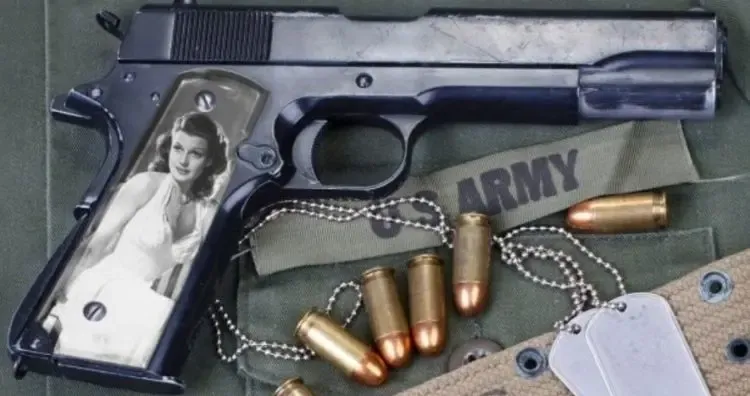
    During World War II, soldiers on the frontlines found themselves far from the comforts of home and the loved ones they left behind. As they faced the horrors of war, many sought ways to carry a personal piece of their lives with them—a reminder of what they were fighting for. One poignant expression of this emotional connection was the creation of “sweetheart grips,” a unique and touching form of customization for their firearms. These grips were fashioned by soldiers themselves using Plexiglas salvaged from downed aircraft. Inside, soldiers would place photographs of their sweethearts, wives, children, or family members. The sweetheart grips not only served as a source of comfort but also symbolized the intersection of war and personal life, love and duty.

    This article explores the history of sweetheart grips, their construction, significance, and the emotional and cultural meaning they held for soldiers and their loved ones during the war.
    Origins of Sweetheart Grips

    The tradition of customizing weapons is as old as warfare itself. Soldiers throughout history have personalized their equipment to reflect their personalities, victories, or cultural symbols. However, the concept of sweetheart grips arose uniquely during World War II, when soldiers found themselves separated from their loved ones for extended periods. During this time, the materials available to soldiers—such as Plexiglas—combined with the emotional need for a reminder of home, resulted in a creative, practical, and sentimental way for soldiers to stay connected to their families.

    Plexiglas, or polymethyl methacrylate (PMMA), was a relatively new material during the war, introduced in the 1930s. Its durability and lightweight nature made it an ideal material for the cockpits of aircraft, especially fighter planes and bombers. When these aircraft were damaged or destroyed in combat, soldiers would scavenge pieces of Plexiglas from the wreckage. This material could be cut and shaped easily, making it perfect for crafting transparent pistol grips.

    As soldiers longed to keep a visual reminder of their loved ones close by, they began to create custom grips for their pistols. By placing photographs of wives, girlfriends, children, or even pin-up girls beneath the clear Plexiglas, they personalized their firearms in a way that was both functional and deeply meaningful. The photographs were usually carefully cut to fit the shape of the grip, and in some cases, soldiers would add inscriptions or decorations to further customize the design.
    Crafting the Grips: Innovation on the Frontlines

    The process of making sweetheart grips required both ingenuity and craftsmanship. While some soldiers had access to basic tools like knives or files, others had to make do with whatever was available to them in the field. Using small saws or heated blades, they would cut the Plexiglas to match the shape of their pistol grips, usually for sidearms like the Colt M1911, one of the most common service pistols during the war.

    Once the shape was cut, the soldiers would sand down the edges to ensure a smooth fit on the gun’s handle. They would then choose a cherished photograph to place under the Plexiglas. These photos were usually sent from home in letters or carried by soldiers when they left for war. Soldiers often trimmed the photographs carefully to fit the contours of the grips, ensuring the image was perfectly framed by the Plexiglas.

    In some cases, soldiers added additional embellishments to their sweetheart grips. Using small tools or even makeshift engraving devices, they might etch their loved ones’ names, messages, or dates onto the Plexiglas. Others painted the backs of the grips to highlight the photograph more vividly. Despite the hardships of wartime, soldiers poured their creativity into this small but significant project, resulting in grips that were not just functional but deeply personal.
    The Emotional Significance of Sweetheart Grips

    For many soldiers, their weapons were an extension of themselves—tools for survival in the harshest of environments. Personalizing these weapons gave them a sense of individuality in a situation where uniformity and regulations often stripped away personal identity. Sweetheart grips were one way for soldiers to reclaim a sense of self, and more importantly, to carry a constant reminder of the people they loved most.

    The photographs placed under the Plexiglas often showed the faces of wives, girlfriends, or fiancées waiting for the soldier’s safe return. These images were powerful motivators, a visual connection to the soldier’s life back home. As they faced combat, fear, and uncertainty, these photographs provided emotional strength and a sense of purpose. Soldiers would often look at the photographs in quiet moments, drawing comfort from the thought that someone was waiting for them to come home.

    For many soldiers, the grips also served as a form of mental and emotional grounding. War often strips individuals of control over their circumstances. In the heat of battle, when death and destruction surrounded them, these simple photographs offered solace. No matter how chaotic the world around them became, the images of their loved ones under the grips remained a source of peace.

    In a broader sense, sweetheart grips represented the tension between love and war. The duality of holding a weapon—a tool of destruction—encased with a photograph of someone beloved is symbolic of the difficult choices soldiers faced. They were tasked with taking lives in the name of duty while yearning for the life they had left behind. The grips, in this way, were both a reminder of why they fought and the life they hoped to return to.
    Love Letters in Plexiglas: Messages from the Frontline

    While photographs were the most common inserts in sweetheart grips, some soldiers went further by incorporating small love letters or messages from their partners into the grips. These tiny notes were folded neatly under the Plexiglas, serving as tangible tokens of affection that could be read or simply carried as a source of strength.

    In many cases, these letters reflected the deep longing and emotional distance felt by soldiers and their partners. Soldiers often faced long deployments with little communication from home. Letters could take weeks or months to arrive, and soldiers lived with the constant uncertainty of whether their loved ones were safe or if they would ever return home. The sweetheart grips, with their enclosed notes or photographs, became a way to carry those letters with them at all times.

    Some soldiers would etch romantic inscriptions on the grips themselves, such as “Yours Forever” or “Until We Meet Again,” immortalizing their affection in a way that transcended the distance and dangers they faced. These notes often took on heightened significance as the war dragged on and the chances of returning home seemed increasingly uncertain.
    The Role of Pin-Up Girls in Sweetheart Grips

    Not all sweetheart grips contained images of personal loved ones. For many soldiers, photographs of pin-up girls—glamorous actresses or models of the time—served as a comforting reminder of the world outside the battlefield. During World War II, pin-up culture was widespread, with images of Hollywood stars like Betty Grable, Rita Hayworth, and Veronica Lake adorning lockers, barracks, and even planes.

    Pin-up girls were seen as a symbol of beauty, femininity, and normalcy during a time when soldiers were surrounded by the grim realities of war. By including pin-up images in their sweetheart grips, soldiers sought to preserve a sense of joy and escapism, a reminder of the better things in life. While these grips lacked the personal connection of a loved one’s photo, they still carried deep emotional meaning for soldiers seeking comfort amidst the horrors of battle.
    A Symbol of Survival

    Beyond their emotional and sentimental value, sweetheart grips were also viewed as talismans of survival. Many soldiers believed that these grips brought them luck in combat, offering protection as they faced danger. The photos of their loved ones became symbols of hope and resilience, giving soldiers a psychological edge as they confronted the realities of war.

    In some instances, soldiers who survived harrowing encounters credited their sweetheart grips with giving them the courage to persevere. The belief that these grips offered a connection to home was enough to bolster a soldier’s spirit, helping them endure the long months and years of fighting. These grips, with their carefully preserved images, were not merely accessories; they were lifelines to the emotional core of the soldiers who carried them.
    Sweetheart Grips and the Home Front

    While sweetheart grips provided comfort to soldiers in the field, they also had an important connection to the home front. Women who sent photos to their husbands, fiancés, or boyfriends often understood that these images would be placed in sweetheart grips. The practice was widely known among soldiers, and many women sent specific photographs intended for this purpose.

    For families and loved ones, knowing that their image was accompanying a soldier into battle brought both pride and sorrow. They knew their soldier faced immense danger but took comfort in knowing that they could offer emotional support, even from afar. The practice of creating sweetheart grips thus became a shared experience, bridging the gap between the war front and the home front.
    After the War: A Lasting Legacy

    With the end of World War II in 1945, many soldiers returned home, bringing with them the sweetheart grips that had accompanied them through the conflict. For some, these grips became cherished keepsakes, symbols of the love and hope that had sustained them during the war. Others passed them down to their children or displayed them as reminders of their service.

    Sweetheart grips, with their intimate connection to both war and personal life, have since become collectors’ items. Military enthusiasts and historians prize these grips not only for their craftsmanship but for the emotional stories they tell. Each grip is a unique artifact, bearing witness to the personal experiences of soldiers who fought in one of history’s most devastating wars.
    Conclusion: Love in the Face of War

    The tradition of sweetheart grips is a testament to the power of love and the human need for connection, even in the darkest of times. Soldiers who created these grips found a way to carry a piece of home with them, a reminder of what they were fighting for. The grips served as a personal expression of identity, a talisman for survival, and a symbol of the deep emotional bonds that endure in times of war.

    As we look back on World War II and the sacrifices made by those who served, sweetheart grips offer a poignant glimpse into the personal lives of soldiers. They remind us that, amidst the violence and chaos of war, the human heart still yearns for love, connection, and the hope of a better tomorrow.

  • The Albanian mafia.

    By Scott J. Arnold

    The Albanian mafia

    Introduction

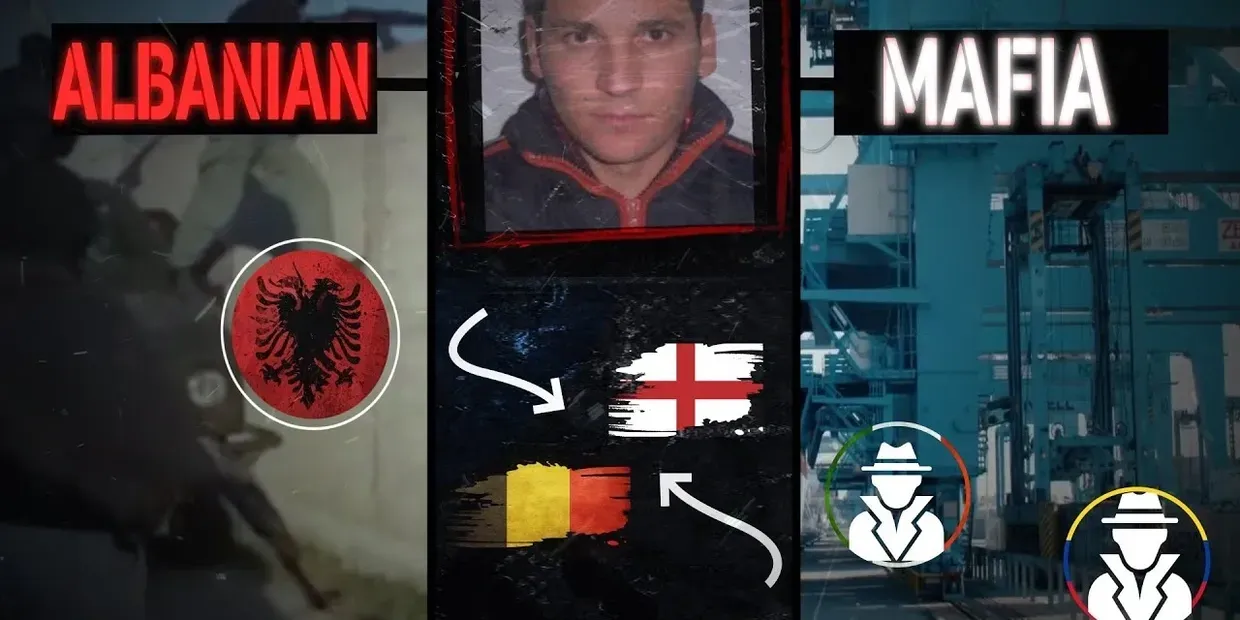
    The Albanian mafia, also known as Mafia Shqiptare, is a powerful organized crime group based in Albania and composed of ethnic Albanians. Active globally since the 1990s, this network has developed into a significant force in the underworld, notorious for its complex and resilient structures, violent enforcement methods, and widespread involvement in various criminal enterprises, including drug trafficking, arms smuggling, human trafficking, and extortion.
    Structure and Composition

    The Albanian mafia is known for its hierarchical clan system, characterized by tightly-knit family-based structures. Each clan operates independently, with a clear chain of command that ensures loyalty and secrecy among its members. The family heads, known as “Krye” or bosses, oversee operations with the help of underbosses and other key figures who manage different aspects of the criminal enterprise.

    Membership is often based on blood relations and familial ties, making it incredibly difficult for outsiders to infiltrate these groups. Clan members maintain a code of conduct rooted in traditional Albanian values, such as “besa” (a term denoting trust and loyalty), which reinforces internal discipline and the strict adherence to group norms.
    International Activities and Influence

    The Albanian mafia’s influence extends far beyond Albania, with a significant presence in Europe, North America, South America, and other parts of the world. They have established themselves in key drug trafficking routes, particularly in collaboration with Italian organized crime groups like the ‘Ndrangheta, with whom they control substantial portions of the cocaine market in Europe.

    In countries like Italy, Belgium, France, Germany, and the UK, the Albanian mafia is heavily involved in a variety of illegal activities, including narcotics distribution, human trafficking, and violent crimes. In North America, particularly in the United States, Albanian-American crime groups like the Rudaj Organization have garnered attention for their operations in New York City.

    The mafia’s operations are supported by complex networks that integrate seamlessly into local criminal environments, making them difficult for law enforcement to combat. Their adaptability and strong international connections have allowed them to monopolize certain illegal markets, such as the trafficking of arms and humans, often working in partnership with other major crime organizations.
    Codes of Conduct and Rituals

    One of the distinctive features of the Albanian mafia is its adherence to traditional codes of conduct, which play a crucial role in maintaining order and loyalty within the group. The concept of “besa,” an ancient Albanian code of honor that emphasizes loyalty and trust, serves as a binding force for members. Breaking this code is considered one of the gravest offenses, often met with severe consequences.
    Prominent Clans and Members

    The Albanian mafia is composed of several influential clans, each operating in different regions within Albania and internationally. These clans control various illegal activities, often using violence and intimidation to maintain their dominance. Some prominent figures have gained notoriety for their roles in large-scale criminal operations and their connections with political figures, further highlighting the mafia’s deep-rooted influence.
    Origins and Rise to Power

    The Albanian mafia’s roots trace back to the chaotic political and economic conditions of Albania in the early 1990s, following the fall of communism. As the state’s control weakened, criminal groups rapidly formed, taking advantage of the vacuum in law enforcement. These groups were initially small-time smugglers and racketeers but quickly expanded into more profitable activities as they established themselves internationally.
    Expansion into Europe and Beyond

    The Albanian mafia became particularly powerful in Italy, where they initially cooperated with Sicilian and Calabrian crime groups to smuggle cigarettes, arms, and drugs. By the late 1990s, the Albanians had cemented their role in the European drug trade, handling significant portions of the heroin and cocaine markets. They used Albania’s strategic position along the Adriatic Sea as a gateway to Europe, trafficking illicit goods through Greece, Italy, and into the broader continent.

    Their ability to form alliances with local criminal organizations, such as the Sicilian Mafia and the ‘Ndrangheta, helped them secure drug routes and expand their influence. In the UK, the Albanian mafia has been instrumental in the sex trafficking industry, where they are notorious for their brutal enforcement tactics and exploitation of vulnerable individuals.
    Activities and Tactics

    The Albanian mafia is involved in a wide array of illegal activities, including:

    Drug Trafficking: The group plays a major role in the global drug trade, dealing mainly in heroin, cocaine, and cannabis. They often act as middlemen between South American cartels and European markets, efficiently managing drug routes across international borders.
    Human Trafficking and Prostitution Rings: The Albanian mafia has a significant presence in human trafficking, especially in the trafficking of women for prostitution. They lure women from Eastern Europe and Africa under false pretenses, subjecting them to forced labor and exploitation.
    Arms Smuggling: In addition to drugs, the Albanian mafia is deeply involved in the trafficking of weapons, often trading arms that originate from the Balkan conflicts of the 1990s. They have been linked to providing illegal firearms to other criminal organizations and conflict zones.
    Extortion and Racketeering: Extortion is a primary source of income for the mafia, using intimidation and violence to control businesses and demand protection money. They are known for their ruthless enforcement, often using threats and physical violence to maintain control.

    Relations with Other Criminal Organizations

    The Albanian mafia’s success is partly due to its strategic alliances with other criminal groups. Their cooperation with Italian Mafia families, Russian organized crime groups, and South American cartels allows them to operate across a diverse range of illegal markets. These partnerships have been mutually beneficial, helping the Albanian mafia gain access to established trafficking routes and markets.
    Law Enforcement Challenges

    The Albanian mafia’s secretive structure and use of traditional codes of conduct pose significant challenges to law enforcement agencies. Members are often bound by “omertà” (a code of silence) and family loyalty, making them impervious to infiltration by authorities. Additionally, their international reach complicates efforts to dismantle the organization, as law enforcement agencies must coordinate across multiple jurisdictions to address their activities.

    Despite numerous high-profile arrests and crackdowns, the Albanian mafia has shown a remarkable ability to adapt and persist. Their operations are highly decentralized, allowing them to continue functioning even when key members are apprehended.
    Impact on Albania and Global Perception

    The influence of the Albanian mafia extends beyond criminal enterprises; it has significantly impacted Albania’s political and economic landscape. Corruption within the government and law enforcement has often been linked to mafia operations, with bribes and intimidation being used to protect their interests. This has led to a tarnished global image for Albania, with the country often being associated with organized crime and corruption.
    Conclusion

    The Albanian mafia’s rise to prominence is a testament to its adaptability, strategic alliances, and ruthless enforcement methods. With operations spanning drug trafficking, human smuggling, and more, they remain one of the most formidable and elusive organized crime groups in the world. Their continued presence underscores the challenges of combating transnational organized crime in the modern era.

  • The CIA’s Bizarre Cold War Plan: XL Condoms Labeled “Medium” to Intimidate the Soviets.

    By Scott J. Arnold

    The CIA’s Bizarre Cold War Plan: XL Condoms Labeled “Medium” to Intimidate the Soviets

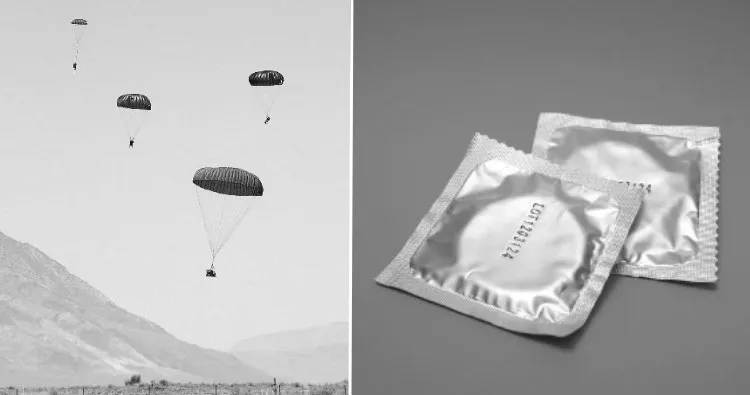
    During the height of the Cold War, both the United States and the Soviet Union engaged in numerous psychological operations (PSYOPs) designed to confuse, demoralize, or intimidate the other side. These operations ranged from elaborate misinformation campaigns to bizarre and outlandish proposals. One of the strangest ideas ever considered by the CIA was a plan to drop extra-large condoms labeled as “medium” onto Soviet territory, with the intention of making Soviet citizens believe that American men were anatomically superior, and by extension, that the U.S. was more powerful as a nation.

    Though it never came to fruition, the plan stands as a curious example of the lengths to which the CIA and U.S. military strategists were willing to go to assert dominance during the Cold War, often through psychological warfare rather than direct confrontation. This proposal sought to exploit sexual insecurities and the perceived link between physical attributes and military strength, turning an anatomical comparison into a potential symbol of American superiority.
    The Origins of the Plan

    The Cold War was an era marked by intense rivalry between the United States and the Soviet Union, with both superpowers vying for global influence. Alongside the arms race and the space race, there was a quieter but equally potent battle for psychological supremacy. Psychological warfare was seen as an effective means to undermine the morale of the enemy, and both the CIA and the KGB engaged in numerous PSYOPs during the conflict.

    The idea to drop condoms labeled “medium” as a tactic in this psychological battle emerged from the broader context of Cold War strategizing, where anything that could weaken the confidence of the Soviet population or its leadership was considered a potential asset. The CIA’s thinking was simple: if the Soviets believed that American men were physically larger or stronger, they might internalize this as a sign that the U.S. was also superior in other areas—most importantly, in terms of military strength and technological advancement.

    Sexuality and masculinity have long been tied to perceptions of power, and the plan to drop XL condoms with misleading labels aimed to exploit this psychological association. By distributing condoms that were significantly larger than standard sizes and labeling them “medium,” the CIA hoped to send a message that American men were not only bigger but that their “average” was far beyond what the Soviets could measure up to.
    The Psychological Aspect: Undermining Soviet Morale

    At the core of the plan was the belief that people are easily swayed by subtle, psychological messages that challenge their own sense of identity or self-worth. The CIA hoped that the Soviet military and public would perceive the larger-than-normal condoms as proof that American men were physically superior, leading to a subtle but potentially demoralizing sense of inferiority.

    In a society like the Soviet Union, where the state promoted images of strength, unity, and power, planting seeds of doubt about even seemingly trivial matters—such as physical attributes—could be an effective psychological weapon. If the condoms made Soviet soldiers, men, and officials feel less physically imposing in comparison to their American counterparts, it could erode their confidence in their own superiority, and by extension, the strength of the Soviet state.

    The tactic relied on symbolic communication, using sexual innuendo to assert American dominance without firing a single shot. While it may seem humorous, the underlying goal was serious: to undermine the morale of Soviet citizens and soldiers, potentially leading to a weakening of the Soviet resolve in the broader geopolitical struggle.
    Why the Plan Was Never Executed

    Despite the creativity of the idea, the plan to drop condoms labeled “medium” was never put into action. There are several reasons why it likely remained just a proposal on the drawing board:

    Risk of Backfiring: The psychological tactic, while potentially clever, could have backfired if the Soviets saw through the ploy and exposed the plan as propaganda. This could have embarrassed the U.S. and reduced the credibility of its PSYOPs.
    Logistical Challenges: Dropping condoms over Soviet territory would have required significant resources and risked detection. It also wasn’t clear how widespread the distribution would need to be to achieve the desired effect.
    Ethical and Diplomatic Concerns: While the Cold War was characterized by numerous covert operations and intelligence tactics, the idea of dropping condoms to demoralize an enemy population might have been seen as too crude or undignified for the CIA or U.S. military leadership. There was also the concern that such a tactic could strain diplomatic relations further.
    Lack of Proven Effectiveness: Though it might have worked on a symbolic level, there was no guarantee that the plan would have had any measurable impact on Soviet morale. It was ultimately considered too far-fetched or impractical compared to other psychological warfare tactics that were already in use.

    Cold War Psychological Warfare: A Broader Context

    The Cold War was full of strange and creative ideas designed to manipulate public perception. Some notable examples include:

    Operation Mongoose: A series of covert CIA operations aimed at destabilizing the regime of Cuban leader Fidel Castro. These included everything from attempts to assassinate Castro to absurd plots to discredit him by making his beard fall out.
    Operation Northwoods: A proposed (but ultimately rejected) plan to stage fake terrorist attacks on U.S. soil to justify military intervention in Cuba.
    Radio Free Europe: A long-running program that broadcast anti-Soviet propaganda and news to Eastern Bloc countries, attempting to weaken Soviet control over their satellite states.

    In the grand scheme of Cold War psychological operations, the condom plan stands out as one of the most unusual, demonstrating the lengths to which intelligence agencies were willing to go to gain an edge over their adversaries. While many other PSYOPs involved more direct political or military themes, the condom plan took a different approach, attempting to undermine Soviet pride in a very personal and intimate way.
    Conclusion: A Cold War Oddity

    The CIA’s plan to drop XL condoms labeled “medium” on Soviet territory is one of the strangest—and least known—episodes of the Cold War. While it was never executed, the mere fact that it was considered highlights the creativity (and sometimes absurdity) that defined psychological warfare during this period. The plan was emblematic of the larger effort to weaken the Soviet Union not just militarily but psychologically, using every tool at the U.S.’s disposal, no matter how unconventional.

    Though it remains a footnote in the long history of Cold War espionage and propaganda, the condom plan is a reminder of how psychological tactics were employed to influence perception and morale on both sides of the Iron Curtain.

  • The Crips are a primarily African-American alliance of street gangs

    By Scott J. Arnold

    The Crips are a primarily African-American alliance of street gangs

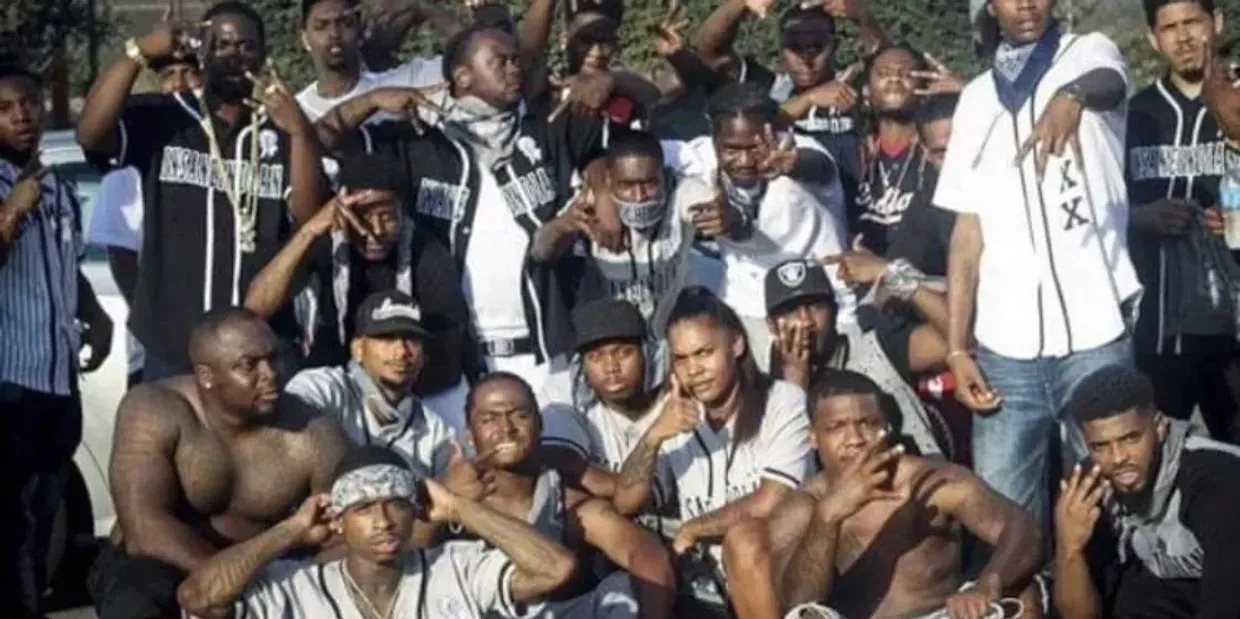
    The Crips are a primarily African-American alliance of street gangs that are based in the coastal regions of Southern California. Founded in Los Angeles, California, in 1969, mainly by Raymond Washington and Stanley Williams, the Crips began as an alliance between two autonomous gangs, and developed into a loosely connected network of individual “sets”, often engaged in open warfare with one another. Its members have traditionally worn blue clothing since around 1973.

    The Crips are one of the largest and most violent associations of street gangs in the United States. With an estimated 30,000 to 35,000 members in 2008,[4] the gangs’ members have been involved in murders, robberies and drug dealing, among other crimes. They have a long and bitter rivalry with the Bloods.

    Some self-identified Crips have been convicted of federal racketeering.
    Etymology

    Main article: Debate over the origins of the Crips gang

    Some sources suggest that the original name for the alliance, “Cribs”, was narrowed down from a list of many options and chosen unanimously from three final choices, over the Black Overlords and the Assassins. Cribs was chosen to reflect the young age of the majority of the gang members. The name evolved into “Crips” when gang members began carrying around canes to display their “pimp” status. People in the neighborhood then began calling them cripples, or “Crips” for short. In February 1972 the Los Angeles Times used the term.

    Another source suggests “Crips” may have evolved from “Cripplers”, a 1970s street gang in Watts, of which Washington was a member. The name had no political, organizational, cryptic, or acronymic meaning, though some have suggested it stands for “Common Revolution In Progress”, a backronym. According to the film Bastards of the Party, directed by a member of the Bloods, the name represented “Community Revolutionary Interparty Service” or “Community Reform Interparty Service”.
    History

    Main article: Debate over the origins of the Crips gang

    Gang activity in South Central Los Angeles has its roots in a variety of factors dating to the 1950s, including: post-World War II economic decline leading to joblessness and poverty; racial segregation of young African American men, who were excluded from organizations such as the Boy Scouts, leading to the formation of black “street clubs”; and the waning of black nationalist organizations such as the Black Panther Party and the Black Power Movement.

    Stanley “Tookie” Williams met Raymond Lee Washington in 1969, and the two decided to unite their local gang members from the west and east sides of South Central Los Angeles in order to battle neighboring street gangs. Most of the members were 17 years old. Williams however appears to discount the sometimes-cited founding date of 1969 in his memoir, Blue Rage, Black Redemption.

    In his memoir, Williams also refuted claims that the group was a spin-off of the Black Panther Party or formed for a community agenda, writing that it “depicted a fighting alliance against street gangs—nothing more, nothing less.” Washington, who attended Fremont High School, was the leader of the East Side Crips, and Williams, who attended Washington High School, led the West Side Crips.

    Williams recalled that a blue bandana was first worn by Crips founding member Curtis “Buddha” Morrow, as a part of his color-coordinated clothing of blue Levis, a blue shirt, and dark blue suspenders. A blue bandana was worn in tribute to Morrow after he was shot and killed on February 23, 1973. The color then became associated with Crips.

    By 1978, there were 45 Crip gangs, called sets, in Los Angeles. They were heavily involved in the production of PCP, marijuana and amphetamines. On March 11, 1979, Williams, a member of the Westside Crips, was arrested for four murders and on August 9, 1979, Washington was gunned down. Washington had been against Crip infighting and after his death several Crip sets started fighting against each other. The Crips’ leadership was dismantled, prompting a deadly gang war between the Rollin’ 60 Neighborhood Crips and Eight Tray Gangster Crips that led nearby Crip sets to choose sides and align themselves with either the Neighborhood Crips or the Gangster Crips, waging large-scale war in South Central and other cities. The East Coast Crips (from East Los Angeles) and the Hoover Crips directly severed their alliance after Washington’s death. By 1980, the Crips were in turmoil, warring with the Bloods and against each other.

  • The Bloods are a primarily African-American street gang which was founded in Los Angeles, California

    By Scott J. Arnold

    The Bloods are a primarily African-American street gang which was founded in Los Angeles, California

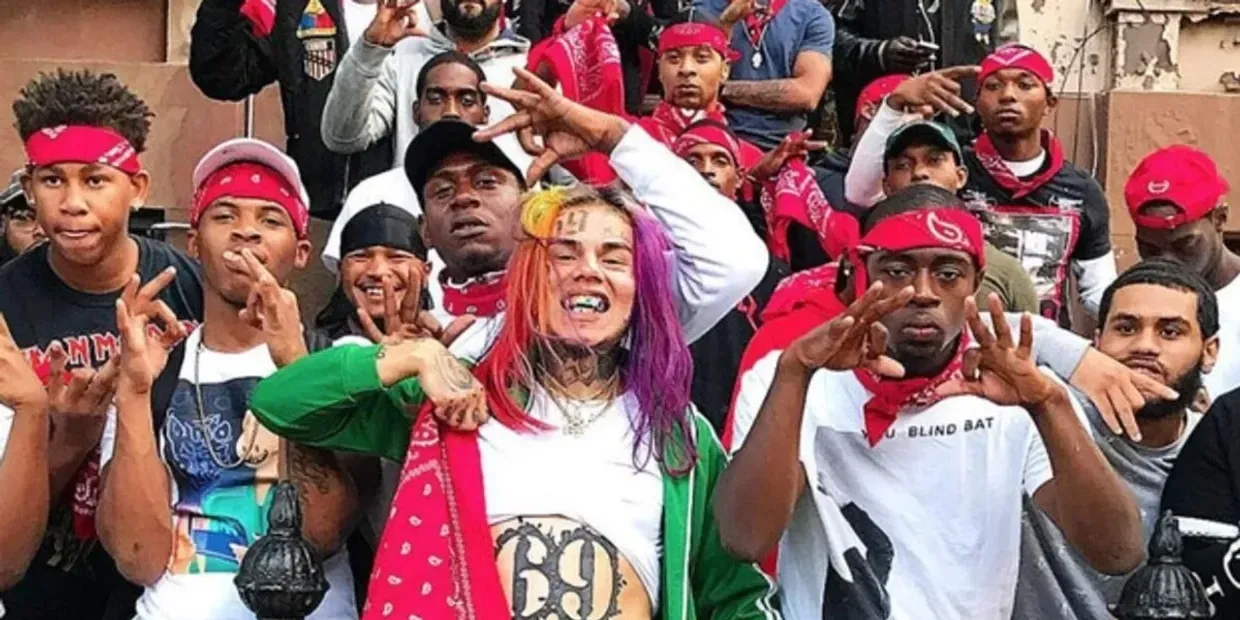
    The Bloods are a primarily African-American street gang which was founded in Los Angeles, California. The gang is widely known for its rivalry with the Crips. It is identified by the red color worn by its members and by particular gang symbols, including distinctive hand signs.

    The Bloods comprise various subgroups known as “sets”, among which significant differences exist, such as colors, clothing, operations, and political ideas that may be in open conflict with each other. Since the gang’s creation, it has branched throughout the United States.
    History

    The Bloods gang was formed initially to compete against the influence of the Crips in Los Angeles. The rivalry originated in the late 1960s when Raymond Washington and other Crips attacked Sylvester Scott and Benson Owens, two students at Centennial High School in Compton, California. As a result, Scott formed the Piru Street Boys, the first “Bloods” gang. Owens subsequently established the West Piru gang. The Bloods was initially formed to provide members protection from the Crips. Many of the non-Crip gangs used to call one another “blood”. On March 21, 1972, shortly after a concert featuring Wilson Pickett and Curtis Mayfield, 20 youths belonging to the Crips attacked and robbed Robert Ballou Jr. outside the Hollywood Palladium. Ballou was beaten to death after refusing to give up his leather jacket. The sensational media coverage of the crime and the continued assaults by the Crips increased their notoriety. Several non-Crips gangs formed during this period were no match for the Crips and became concerned with the escalating Crip attacks. The Pirus, Black P. Stones, Athens Park Boys and other gangs not aligned with the Crips often clashed with them. On June 5, 1972, three months after Ballou’s murder, Fredrick “Lil Country” Garret was murdered by a Westside Crip. This marked the first Crips murder against another gang member and motivated non-Crip gangs to align with each other. The Brims struck back on August 4, 1972, by murdering Thomas Ellis, an original Westside Crip. By late 1972, the Pirus held a meeting in their neighborhood to discuss growing Crip pressure and intimidation. Several gangs that felt victimized by the Crips joined the Pirus to create a new federation of non-Crips neighborhoods. This alliance became the Bloods. The Pirus are therefore considered the founders of the Bloods.

    By 1978, there were 15 Blood sets. Crips still outnumbered Bloods 3 to 1. To assert their power, the Bloods became increasingly violent. During the 1980s, Bloods began distributing crack cocaine in Los Angeles. Blood membership soon rose dramatically as did the number of states in which they were present. These increases were primarily driven by profits from crack cocaine distribution. The huge profits allowed members to relocate to other cities and states.
    United Blood Nation

    Main article: United Blood Nation

    “Bloods” is a universal term used to refer to West Coast Bloods and United Blood Nation (UBN, also known as the East Coast Bloods). These two groups are traditionally distinct, but both call themselves “Bloods”. UBN started in 1993 in Rikers Island’s George Motchan Detention Center (GMDC) to form protection from the Latin Kings and Ñetas who were targeting African-American gang members. UBN is a loose confederation of predominantly African-American street gangs. Once released from prison, UBN leaders went back to their New York neighborhoods, where they retained the Bloods name and started recruiting members. UBN has between 7,000 and 15,000 members in the Eastern US. It makes its income through various criminal activities, including distribution of crack cocaine and smuggling drugs into prison.

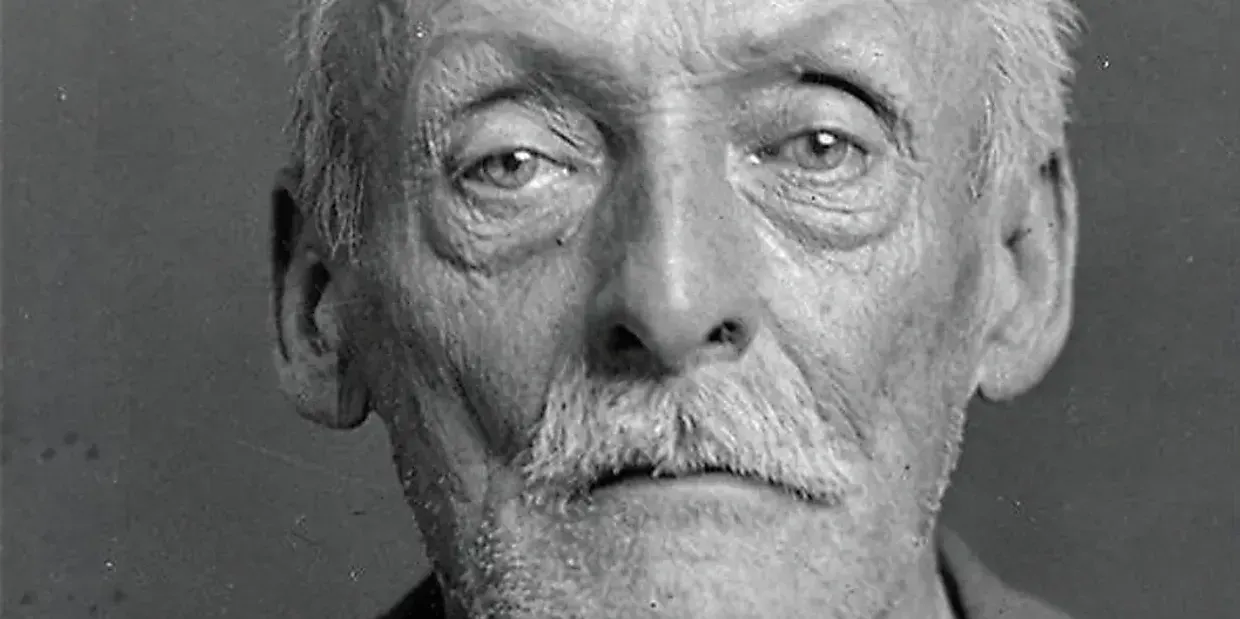
  • THE BROOKLYN VAMPIRE Albert Fish

    By Scott J. Arnold

    THE BROOKLYN VAMPIRE Albert Fish

    Additional Information

    Albert Fish: The Brooklyn Vampire – A Detailed Exploration

    Introduction to Albert Fish

    Albert Fish, infamously known as “The Brooklyn Vampire,” “The Werewolf of Wysteria,” and “The Gray Man,” was one of the most monstrous serial killers in American history. Born on May 19, 1870, Fish was responsible for the abduction, torture, and murder of several children, acts fueled by his deeply twisted and sadistic desires. His crimes were so grotesque that they continue to horrify the public and haunt true crime discussions to this day. This expansion explores Fish’s life, crimes, psychological profile, and the cultural impact of his heinous acts.
    Early Life and Psychological Development

    Albert Fish was born Hamilton Howard Fish in Washington, D.C., into a deeply troubled family plagued by mental illness. His father, Randall Fish, was 75 years old at the time of Albert’s birth, and his mother, Ellen Fish, struggled to care for her children after her husband’s death. Multiple relatives suffered from severe mental disorders, including hallucinations, religious mania, and extreme delusions, foreshadowing Fish’s own descent into madness.

    Fish’s troubled upbringing included a stint at St. John’s Orphanage, where he was frequently beaten and abused. Rather than shying away from the violence, young Albert developed a perverse pleasure in pain, a trait that would define his later crimes. He began to associate physical suffering with sexual gratification, setting the stage for his future acts of cruelty.

    By his early twenties, Fish was engaging in various forms of self-mutilation, including embedding needles into his body and inserting wool soaked in lighter fluid into his anus and setting it on fire. These acts were not only demonstrations of extreme masochism but also expressions of his inner torment and growing insanity.
    The Dark Descent: Criminal Acts and the Infamous Letters

    Fish’s criminal activities began in earnest during the 1920s. He claimed to have targeted young boys and girls in New York, though the exact number of his victims remains unknown. Fish’s modus operandi was to lure children away from their families, often using the promise of food or money, before subjecting them to unspeakable torture and murder. He confessed to having cannibalistic tendencies, eating the flesh of his victims to satisfy his deeply rooted psychosexual needs.

    One of the most infamous and heart-wrenching aspects of Fish’s crimes was his penchant for sending detailed letters to the families of his victims, describing the horrors he inflicted. The most notorious of these was the letter sent to the family of Grace Budd, a 10-year-old girl Fish abducted, murdered, and cannibalized in 1928. In the letter, Fish detailed how he lured Grace away by pretending to be a family friend, only to take her to a secluded location where he carried out his gruesome plans.

    The letter’s description of the murder was beyond macabre, recounting how Fish not only killed Grace but also cooked parts of her body. It was this letter, filled with chilling specifics, that ultimately led to Fish’s arrest in 1934 when the Budd family provided it to the police, helping them track Fish down.
    Psychological Profile: Diagnosing the Brooklyn Vampire

    Albert Fish’s actions prompted extensive psychological evaluation, both during his trial and in the years since. Diagnosed with severe paraphilic disorders, including pedophilia, sadism, masochism, and psychopathy, Fish represented a complex case of overlapping mental illnesses. Experts noted his ability to mask his true nature behind a seemingly harmless exterior—an elderly, frail man who looked more like a grandfather than a monster.

    Fish’s fantasies often blended extreme religious fervor with violent sexual obsessions. He believed he was divinely chosen to inflict pain, which he rationalized through bizarre and delusional interpretations of scripture. His habit of inserting needles into his groin and abdomen, discovered via X-ray after his arrest, was just one of the many examples of his extreme need for self-punishment and suffering.

    Despite these findings, the court determined that Fish was sane enough to stand trial. His defense argued insanity, pointing to his uncontrollable urges and severe mental illness. However, the jury was unconvinced, swayed by the sheer brutality of his crimes and Fish’s own chilling confessions. He was sentenced to death and executed in the electric chair at Sing Sing Prison in 1936.
    Cultural Impact and Legacy

    Albert Fish’s case left an indelible mark on American society, serving as a terrifying reminder of the darkness that can lurk behind seemingly ordinary facades. Fish has since been the subject of numerous books, documentaries, and true crime series, each attempting to dissect the mind of one of the most depraved individuals in criminal history. His story continues to be a morbid fascination for those drawn to the study of abnormal psychology and criminal behavior.

    The fear generated by Fish’s crimes also fueled urban legends and folklore, solidifying his place in the pantheon of America’s most notorious killers. The nickname “The Brooklyn Vampire” evokes a sense of dread that transcends time, reminding us of the inherent vulnerability of innocence when faced with true evil.

    Fish’s tale is not just a grim chapter in the annals of crime; it’s a sobering commentary on the consequences of untreated mental illness, the flaws in early 20th-century criminal justice, and the enduring power of human depravity. His case remains a benchmark for forensic psychology, demonstrating the depths of psychopathic behavior and the complexities involved in understanding such a profoundly disturbed mind.

  • The FBI: From Its Origins to the Present Day

    By Scott J. Arnold

    The FBI: From Its Origins to the Present Day
    Introduction
    The Federal Bureau of Investigation (FBI) is one of the most renowned and influential law enforcement and intelligence agencies in the United States. Founded in the early 20th century, the FBI has evolved from a small investigative unit into a powerful organization that combats a wide range of criminal and national security threats. This article explores the history of the FBI, from its creation to its modern-day role in combating terrorism, cybercrime, organized crime, and other significant challenges.
    1. Origins and Early Years of the FBI
    The FBI was founded on July 26, 1908, as the Bureau of Investigation (BOI). It was created during the presidency of Theodore Roosevelt to address the growing need for a federal investigative body that could tackle interstate crime, which was becoming increasingly difficult for local law enforcement to manage.
    • Formation of the Bureau of Investigation: The BOI was established by Attorney General Charles Bonaparte, who hired special agents to investigate crimes across state lines. Initially, the BOI focused on white-collar crimes, such as antitrust violations, land fraud, and banking crimes.
    • The Mann Act and Early Investigations: One of the early focuses of the BOI was enforcing the Mann Act, which prohibited the transportation of women across state lines for immoral purposes. This early work helped establish the BOI’s role in investigating federal crimes and set the foundation for its future growth.
    2. The FBI During Prohibition and the Gangster Era
    The Prohibition era (1920–1933) marked a significant turning point for the BOI as it began to expand its operations to combat organized crime and bootlegging. This period saw the rise of notorious criminals like Al Capone, John Dillinger, and Bonnie and Clyde, whose activities highlighted the need for a more robust federal law enforcement presence.
    • The War on Gangsters: The BOI, restructured under Director J. Edgar Hoover, took on organized crime figures with increased vigor, employing new investigative techniques and expanding its jurisdiction. The agency gained public recognition as it tracked down and apprehended some of the most dangerous criminals of the time.
    • Renaming to the FBI: In 1935, the BOI was officially renamed the Federal Bureau of Investigation (FBI), reflecting its broader mission and expanding responsibilities. Hoover’s leadership during this era established the FBI as the premier federal law enforcement agency in the United States.
    3. J. Edgar Hoover’s Influence and the FBI’s Rise
    J. Edgar Hoover served as the Director of the FBI from 1924 until his death in 1972, making him one of the most influential figures in the history of the agency. Under his leadership, the FBI grew in power and scope, implementing a rigorous organizational structure and pioneering new investigative methods.
    • Modernization and Expansion: Hoover introduced numerous reforms, including the establishment of the FBI Laboratory in 1932, which brought forensic science into criminal investigations. He also emphasized the importance of professionalism, training, and the use of advanced technology.
    • Focus on Domestic Surveillance: During the Cold War, Hoover expanded the FBI’s focus to include counterintelligence and domestic surveillance, targeting suspected communists, civil rights activists, and other groups deemed subversive. While these efforts were often justified as necessary for national security, they also drew criticism for infringing on civil liberties.
    4. The FBI’s Role During World War II and the Cold War
    World War II and the subsequent Cold War era saw the FBI deeply involved in counterintelligence, espionage, and domestic security. The agency played a crucial role in identifying and neutralizing Nazi spies, saboteurs, and other threats to national security.
    • Espionage and Counterintelligence Efforts: The FBI’s focus shifted heavily towards counterespionage during the Cold War. Hoover’s obsession with rooting out communist influences led to the investigation of thousands of Americans, including government employees, Hollywood figures, and academics.
    • The Red Scare and McCarthyism: The FBI’s role during the Red Scare included working closely with Senator Joseph McCarthy and other politicians who sought to expose alleged communist infiltration of the U.S. government. This period was marked by widespread paranoia, accusations, and often unfounded investigations that damaged many careers and lives.
    5. Civil Rights Movement and FBI Controversies
    The 1960s brought significant challenges and controversies for the FBI as it navigated the complexities of the Civil Rights Movement, Vietnam War protests, and rising social unrest. Hoover’s FBI was often at odds with the era’s prominent civil rights leaders, including Dr. Martin Luther King Jr.
    • COINTELPRO (Counter Intelligence Program): COINTELPRO was a covert FBI initiative aimed at surveilling, infiltrating, and disrupting civil rights organizations, anti-war movements, and other groups perceived as subversive. The program’s tactics included wiretapping, harassment, and disinformation campaigns, drawing sharp criticism for violating constitutional rights.
    • Surveillance of Martin Luther King Jr.: The FBI’s surveillance of Dr. King, including attempts to discredit him, remains one of the most controversial episodes in the agency’s history. The FBI’s actions were widely condemned and are often cited as examples of government overreach and abuse of power.
    6. The FBI’s Transition and Reform Post-Hoover
    Following Hoover’s death in 1972, the FBI underwent significant changes aimed at reforming the agency’s practices and restoring public trust. Congress increased oversight, and new leadership sought to distance the FBI from Hoover’s legacy of secrecy and surveillance abuses.
    • Church Committee Investigations: The 1975 Senate investigations, known as the Church Committee, exposed widespread abuses of power by the FBI, CIA, and other intelligence agencies. The committee’s findings led to increased congressional oversight and the establishment of legal safeguards against domestic spying.
    • Introduction of Legal Reforms: Reforms introduced during the 1970s included stricter guidelines on surveillance, the requirement of court orders for wiretaps, and the creation of the Foreign Intelligence Surveillance Court (FISC) to oversee national security investigations.
    7. Fighting Organized Crime and the War on Drugs
    The 1980s and 1990s saw the FBI intensify its focus on combating organized crime, corruption, and the burgeoning drug trade. The agency played a pivotal role in dismantling major crime families and addressing the growing influence of drug cartels.
    • Operation Greylord and Public Corruption: The FBI’s Operation Greylord targeted judicial corruption in Chicago, resulting in the convictions of numerous judges, lawyers, and law enforcement officials. The operation highlighted the agency’s efforts to root out corruption within public institutions.
    • War on Drugs: The FBI joined forces with other federal agencies, such as the Drug Enforcement Administration (DEA), to combat drug trafficking and organized crime. The agency targeted major drug networks, including the notorious Medellín and Cali cartels, using sophisticated surveillance, undercover operations, and international cooperation.
    8. The FBI’s Role in Counterterrorism and the Post-9/11 Era
    The September 11, 2001, terrorist attacks fundamentally changed the FBI’s priorities, leading to a dramatic shift towards counterterrorism and national security. The agency reorganized to address the growing threat posed by international terrorist organizations, such as al-Qaeda.
    • Creation of the Joint Terrorism Task Forces (JTTFs): The FBI established JTTFs across the country to coordinate counterterrorism efforts between federal, state, and local law enforcement agencies. These task forces became critical in identifying and preventing terrorist plots.
    • Enhanced Surveillance and Controversies: In the wake of 9/11, the FBI gained expanded surveillance powers under the USA PATRIOT Act, including increased authority to monitor communications, financial transactions, and travel. While these measures aimed to enhance national security, they also raised concerns about privacy and civil liberties.
    9. Cybersecurity, Espionage, and Modern Challenges
    In recent years, the FBI has faced evolving threats in the digital age, including cybercrime, ransomware, and state-sponsored hacking. The agency’s focus has expanded to include combating cybersecurity threats that jeopardize national security, economic stability, and public safety.
    • Cyber Division and Digital Forensics: The FBI’s Cyber Division was established to address the growing complexity of cybercrime and cyber espionage. The agency works closely with private sector partners, foreign governments, and other U.S. agencies to identify, disrupt, and prosecute cybercriminals.
    • High-Profile Espionage Cases: The FBI continues to play a key role in counterintelligence efforts against foreign espionage. High-profile cases, such as the investigation of Russian interference in U.S. elections, highlight the ongoing challenges the FBI faces in safeguarding national security.
    10. The Future of the FBI and Its Ongoing Mission
    As the FBI continues to adapt to new challenges, its mission remains rooted in protecting the United States from a wide range of threats, including terrorism, cybercrime, espionage, and organized crime. The agency’s ability to evolve in response to emerging dangers will be critical to its continued success.
    • Balancing Security and Civil Liberties: The FBI must navigate the delicate balance between ensuring national security and respecting individual rights. Transparency, accountability, and adherence to the rule of law will be essential as the agency confronts the complex landscape of modern threats.
    • Commitment to Justice and Public Trust: As the FBI moves forward, its commitment to justice, integrity, and public service will remain at the core of its mission. The agency’s legacy is shaped by its successes, challenges, and efforts to uphold the principles that define American law enforcement.
    The FBI’s history is a testament to its resilience and adaptability in the face of evolving threats. From its origins tackling organized crime to its modern-day role in counterterrorism and cybersecurity, the FBI continues to be a vital force in protecting the United States and its citizens.
     

  • The History of the Oil Industry

    By Scott J. Arnold

    The History of the Oil Industry: From Ancient Beginnings to Modern Dominance
    The oil industry has shaped the modern world in profound ways, fueling the rise of industrial economies, geopolitical conflicts, technological advancements, and environmental concerns. From its early use in ancient times to its emergence as the most critical energy source of the modern era, the oil industry’s history is a tale of innovation, exploitation, and global transformation. This article explores 15 key chapters in the history of the oil industry, highlighting the discoveries, developments, and impacts that have defined its journey.
    1. Ancient Beginnings: Early Uses of Oil
    The history of oil dates back thousands of years. Ancient civilizations, including the Babylonians, Egyptians, and Chinese, used natural seepages of oil for various purposes. Oil was employed as a waterproofing agent for boats, a binding material in construction, and as a medicinal ointment. In ancient Mesopotamia, asphalt derived from oil was used to build structures and roads. These early uses of oil laid the groundwork for its later significance as a critical resource.
    2. The Birth of the Modern Oil Industry: The First Commercial Well
    The modern oil industry began in 1859 when Edwin Drake drilled the first successful commercial oil well in Titusville, Pennsylvania. This event marked the beginning of the Pennsylvania oil boom and set the stage for the global expansion of the oil industry. Drake’s success demonstrated the viability of drilling as a method for oil extraction, leading to a rapid increase in oil production and a new era of economic growth driven by this valuable resource.
    3. The Rise of John D. Rockefeller and Standard Oil
    The late 19th century saw the rise of John D. Rockefeller, who founded Standard Oil in 1870. Rockefeller revolutionized the oil industry through aggressive business practices, including vertical integration and monopolistic control. Standard Oil dominated the American oil market, controlling nearly 90% of the nation’s oil refining capacity at its peak. Rockefeller’s influence helped shape the modern corporate structure of the oil industry, but also led to significant backlash and legal battles that culminated in the breakup of Standard Oil in 1911 under antitrust laws.
    4. The Discovery of Oil in the Middle East
    The discovery of oil in the Middle East in the early 20th century transformed the region and the global oil industry. In 1908, oil was discovered in Persia (modern-day Iran), marking the beginning of the Middle Eastern oil boom. The British-controlled Anglo-Persian Oil Company (later BP) was instrumental in developing these reserves. The vast oil wealth of the Middle East would eventually make it the world’s most critical oil-producing region, with profound implications for global geopolitics.
    5. The Role of Oil in World War I and II
    Oil played a crucial role in both World Wars, fueling military machinery such as tanks, airplanes, and naval fleets. During World War I, control of oil supplies became a strategic priority, with nations vying for access to resources. In World War II, oil was even more critical, influencing key battles and strategies. The Allied powers’ access to abundant oil reserves, compared to the Axis powers’ shortages, was a significant factor in the outcome of the war. The conflict underscored oil’s strategic importance and solidified its status as a key element of national security.
    6. The Post-War Boom and the Rise of Major Oil Companies
    The post-World War II era saw the expansion of the global oil industry, driven by rapid industrialization and the growing demand for energy. Major oil companies, known as the “Seven Sisters” (including BP, Shell, Exxon, and others), dominated the global market, controlling production, refining, and distribution. These companies played a pivotal role in shaping the oil industry’s structure, negotiating concessions with oil-rich nations, and investing heavily in exploration and production around the world.
    7. The Formation of OPEC and the Shift in Power
    The Organization of the Petroleum Exporting Countries (OPEC) was formed in 1960 by Iran, Iraq, Kuwait, Saudi Arabia, and Venezuela to coordinate and unify petroleum policies among member countries. OPEC aimed to assert greater control over oil production and pricing, challenging the dominance of Western oil companies. The 1970s oil shocks, triggered by OPEC’s embargoes and production cuts, demonstrated the organization’s power to influence global oil markets and marked a significant shift in the balance of power in the oil industry.
    8. The 1973 Oil Crisis and Its Global Impact
    The 1973 oil crisis was a watershed moment in the history of the oil industry. In response to Western support for Israel during the Yom Kippur War, OPEC imposed an oil embargo on the United States and other nations, leading to a dramatic spike in oil prices and widespread economic disruption. The crisis exposed the vulnerabilities of oil-dependent economies and prompted efforts to diversify energy sources, improve energy efficiency, and reduce reliance on Middle Eastern oil.
    9. The North Sea Oil Boom and New Frontiers
    The discovery of significant oil reserves in the North Sea during the 1970s and 1980s marked the beginning of a new era for the oil industry. The North Sea oil boom brought economic prosperity to the United Kingdom and Norway, reduced Europe’s dependence on Middle Eastern oil, and demonstrated the potential of offshore drilling. Technological advancements in drilling and exploration allowed the industry to access previously untapped resources, pushing the boundaries of what was possible in oil extraction.
    10. The Environmental Movement and the Oil Industry
    The rise of the environmental movement in the 20th century brought increased scrutiny to the oil industry’s impact on the planet. Oil spills, air pollution, and the industry’s contribution to climate change became major public concerns. Incidents like the 1989 Exxon Valdez spill and the 2010 Deepwater Horizon disaster highlighted the environmental risks associated with oil production. The industry faced growing pressure to adopt cleaner practices, invest in renewable energy, and address its role in global warming.
    11. The Gulf War and Oil as a Catalyst for Conflict
    The 1990-1991 Gulf War underscored the geopolitical importance of oil. Iraq’s invasion of Kuwait was partly motivated by oil-related disputes, and the subsequent U.S.-led military intervention aimed to protect the region’s oil supplies. The war highlighted the strategic significance of the Persian Gulf and reinforced the idea that control over oil resources could be a catalyst for international conflict.
    12. The Rise of National Oil Companies
    In recent decades, national oil companies (NOCs) have become dominant players in the global oil industry. Countries like Saudi Arabia (Saudi Aramco), Russia (Gazprom), and China (CNPC) have developed powerful state-owned enterprises that control vast oil reserves. These NOCs have challenged the traditional dominance of Western oil majors and shifted the center of power within the industry, reflecting the growing influence of resource-rich nations.
    13. Technological Advancements: Shale Oil and Fracking
    Technological innovations such as hydraulic fracturing (fracking) and horizontal drilling have revolutionized the oil industry in the 21st century. The U.S. shale oil boom, driven by these technologies, transformed the country from a major oil importer to one of the world’s leading producers. Fracking has sparked debates over environmental concerns, but it has also reshaped global oil markets by increasing supply and altering traditional trade dynamics.
    14. The Oil Industry in the Age of Climate Change
    As concerns about climate change intensify, the oil industry faces unprecedented challenges. The global push to reduce carbon emissions and transition to renewable energy sources threatens the long-term viability of oil as the world’s primary energy source. Major oil companies are increasingly investing in cleaner technologies, but the industry’s historical reliance on fossil fuels makes this transition complex and fraught with economic implications.
    15. The Future of the Oil Industry: Challenges and Opportunities
    The future of the oil industry is uncertain, shaped by a mix of challenges and opportunities. While oil remains a critical component of the global energy mix, the rise of electric vehicles, renewable energy, and stringent climate policies are reshaping the landscape. The industry must navigate a path that balances continued demand for oil with the need to address environmental and societal pressures. Innovation, adaptation, and a commitment to sustainability will be key to the oil industry’s ability to remain relevant in a changing world.
    Conclusion
    The history of the oil industry is a complex narrative of discovery, exploitation, innovation, and conflict. From its ancient origins to its central role in shaping the modern world, oil has been both a boon and a burden for humanity. As the industry faces new challenges in the 21st century, its future will depend on its ability to evolve and respond to the demands of a world increasingly aware of the environmental costs of fossil fuels.
    The oil industry’s legacy is undeniable, but its future will be defined by its willingness to confront the consequences of its past and adapt to a rapidly changing energy landscape.