The USA Has a Unusual High Infant Mortality Rates
The High Infant Male Mortality Rate in the United States
The High Infant Male Mortality Rate in the United States
Introduction
Biological Factors Affecting Male Infant Mortality
Preterm Births and Male Vulnerability
Socioeconomic and Healthcare Disparities
Racial and Ethnic Disparities in Infant Mortality
Birth Defects and Congenital Conditions in Male Infants
Sudden Infant Death Syndrome (SIDS)
Maternal Health and Prenatal Behavior
Cultural and Policy Differences in Healthcare
Conclusion: Addressing Infant Male Mortality in the U.S.
Chapter 1: Introduction
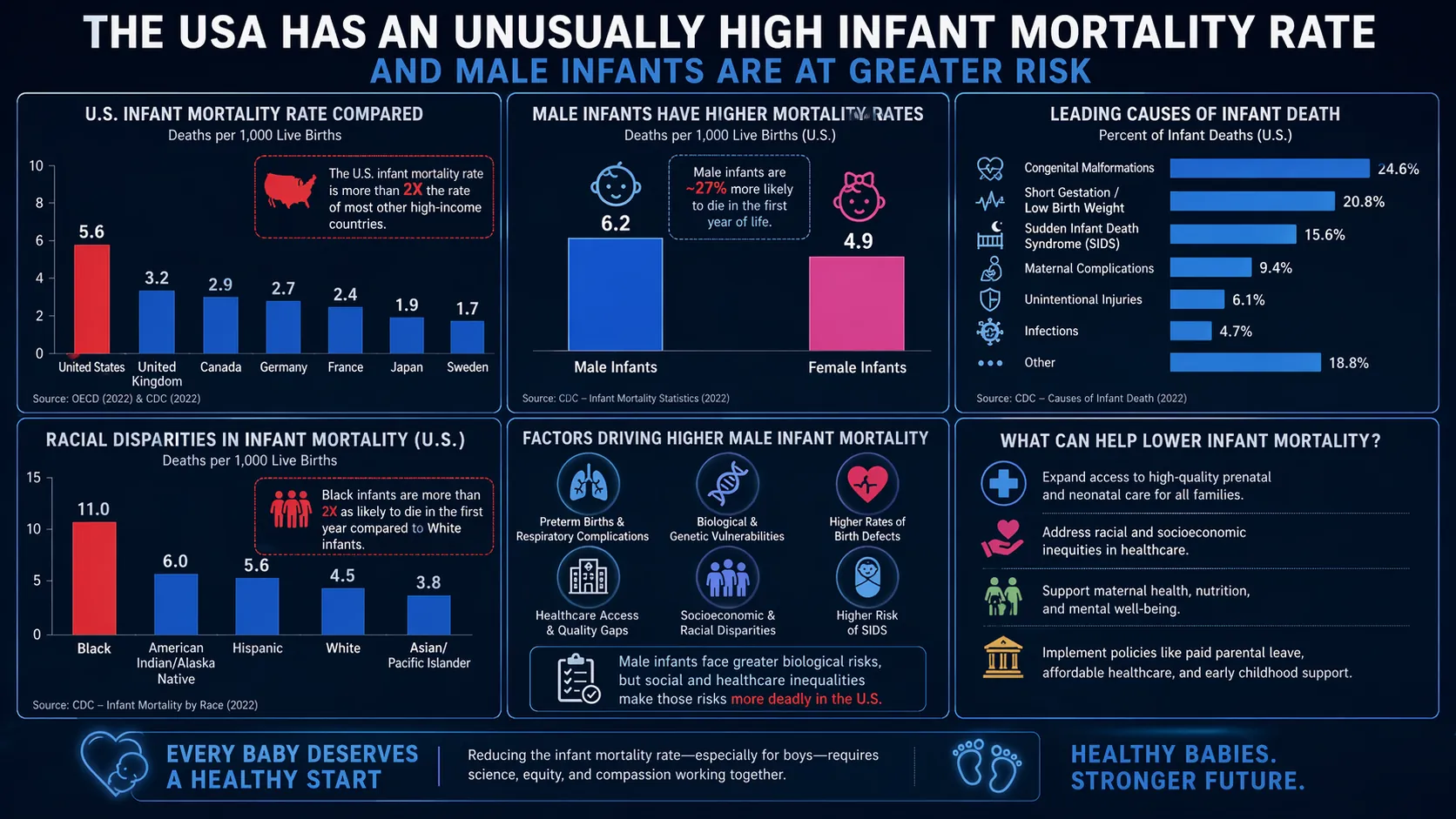
The United States has a relatively high infant mortality rate compared to other high-income countries, and this includes a notable discrepancy in the mortality rates between male and female infants. Research shows that male infants are more vulnerable to death in the first year of life. While there are complex factors at play, these include a mix of biological differences, healthcare system inefficiencies, socioeconomic disparities, and maternal health factors.
Male infants tend to have a higher risk of death due to certain health complications that affect them more frequently or more severely than female infants. Additionally, the U.S. healthcare system faces significant inequalities, leading to worse outcomes for disadvantaged populations. This document provides a comprehensive look at why the U.S. has a higher infant male death rate, examining the various factors that contribute to this issue and the broader implications for public health.
Chapter 2: Biological Factors Affecting Male Infant Mortality
One of the primary reasons why male infants face a higher risk of death than female infants is due to inherent biological vulnerabilities. Research shows that male infants are generally at a disadvantage in several key areas related to early development.
Higher Vulnerability at Birth
Male infants are biologically more fragile at birth than females. Studies have consistently shown that male fetuses grow at a faster rate, which increases the risk of preterm birth (birth before 37 weeks of gestation). Preterm birth is a major cause of infant mortality, and male infants are more prone to complications such as underdeveloped lungs, which increases the likelihood of respiratory distress syndrome (RDS).
Male infants are also more prone to neonatal sepsis, an infection that can lead to systemic inflammation and organ failure. Their immune systems tend to be weaker in the early stages of life, making them more susceptible to infections. This biological disadvantage increases their mortality rate in the neonatal period.
Genetic Factors
Certain genetic conditions disproportionately affect males. Many of these conditions are linked to the X chromosome, such as hemophilia and Duchenne muscular dystrophy, which only require one defective X chromosome for males to express the disease. Since males have only one X chromosome, unlike females who have two, they are more likely to suffer from these X-linked disorders.
Developmental Differences
Male fetuses tend to be larger than female fetuses, which can lead to more difficult deliveries. Larger babies are more likely to experience complications during childbirth, such as shoulder dystocia, where the baby’s shoulder gets stuck during delivery. These complications can result in birth injuries that increase the risk of death.
Additionally, male infants are more likely to have delayed development of their central nervous system, which can affect their ability to regulate breathing and temperature, further increasing their vulnerability in the neonatal period.
Chapter 3: Preterm Births and Male Vulnerability
One of the leading causes of infant mortality in the U.S. is preterm birth, and male infants are more likely to be born prematurely than females. Premature birth puts infants at higher risk for a range of health complications, including respiratory issues, neurological problems, and infections.
Complications of Premature Birth
Male infants born prematurely face greater challenges in their development than their female counterparts. Some of the most common complications for preterm male infants include:
Respiratory Distress Syndrome (RDS): Preterm males are more likely to suffer from RDS, as their lungs are less developed at birth. The lack of surfactant—a substance that helps keep the air sacs in the lungs open—makes it difficult for these infants to breathe properly.
Intraventricular Hemorrhage: Preterm male infants are also at a higher risk for intraventricular hemorrhage (bleeding in the brain), which can lead to long-term neurological damage or death.
Necrotizing Enterocolitis: This severe intestinal disease, which affects preterm infants, disproportionately affects male babies, causing inflammation and tissue death in the intestines.
The U.S. has one of the highest rates of preterm birth among developed nations, and the complications that arise from preterm birth are a significant contributor to the higher infant mortality rate, particularly for male infants.
Chapter 4: Socioeconomic and Healthcare Disparities
One of the most significant contributors to high infant mortality in the U.S. is the vast disparity in access to healthcare. The U.S. healthcare system is fragmented, and there are large gaps in access to prenatal, neonatal, and postnatal care, especially for lower-income families and minority populations.
Access to Prenatal and Neonatal Care
Many low-income families struggle to access quality prenatal care, which is essential for monitoring maternal and fetal health throughout pregnancy. Without regular prenatal care, complications such as preterm labor, gestational diabetes, and preeclampsia may go undetected, increasing the risk of poor birth outcomes, particularly for male infants, who are more biologically vulnerable.
Access to neonatal intensive care units (NICUs), where premature and critically ill infants receive specialized care, is also unevenly distributed across the U.S. Infants born in rural or underserved urban areas may face delays in receiving the care they need, contributing to higher mortality rates. Male infants, who are more likely to be born with complications, are disproportionately affected by this lack of access.
Healthcare Costs and Underinsurance
The high cost of healthcare in the U.S. can be a barrier to receiving timely and adequate care. Families who are uninsured or underinsured may delay or forgo important prenatal and neonatal services due to financial constraints. This lack of access can lead to worsened outcomes for male infants, who require more frequent and intensive medical interventions during their early life.
Chapter 5: Racial and Ethnic Disparities in Infant Mortality
Racial and ethnic disparities in infant mortality are a well-documented problem in the U.S., and these disparities are particularly pronounced for male infants. Black infants, in particular, have significantly higher infant mortality rates compared to white infants, and this racial gap affects male infants disproportionately.
Systemic Inequality and Health Outcomes
Structural inequalities, including racism, poverty, and access to care, play a major role in driving these disparities. Black women, for example, are more likely to experience chronic stress during pregnancy due to systemic racism, which increases the risk of preterm birth. Black male infants are also more likely to be born in low-resource settings, where healthcare options may be limited.
Health Disparities and Preterm Birth
Black infants are more likely to be born prematurely, and as mentioned earlier, male infants face greater challenges related to preterm birth. In addition, Black mothers are more likely to experience complications during pregnancy, such as hypertension and diabetes, which contribute to higher rates of infant mortality. These systemic health disparities disproportionately affect male infants in Black communities, where the combination of biological vulnerability and socioeconomic disadvantage results in higher death rates.
Chapter 6: Birth Defects and Congenital Conditions in Male Infants
Another major factor contributing to the higher male infant mortality rate in the U.S. is the prevalence of birth defects and congenital conditions that disproportionately affect males.
Higher Incidence of Birth Defects in Males
Males are more likely to be born with certain congenital abnormalities, such as:
Heart defects: Male infants are at a higher risk for congenital heart defects, including conditions like hypoplastic left heart syndrome, which require immediate and often complex medical intervention.
Diaphragmatic hernia: This condition, where the diaphragm does not form properly and allows abdominal organs to move into the chest cavity, is more common in male infants and can be life-threatening.
Neural tube defects: Boys are more susceptible to neural tube defects like spina bifida, which can result in severe physical disabilities and higher mortality rates.
These congenital conditions contribute significantly to infant mortality, particularly for male infants, who are more prone to these birth defects than their female counterparts.
Chapter 7: Sudden Infant Death Syndrome (SIDS)
Sudden Infant Death Syndrome (SIDS) is a leading cause of death for infants in the U.S., and it disproportionately affects male infants.
Why Are Males at Greater Risk?
While the exact cause of SIDS remains unknown, research has shown that male infants are at a higher risk of SIDS than females. This increased risk may be due to a combination of biological, developmental, and environmental factors. Male infants tend to have slower development of the central nervous system, which may affect their ability to regulate breathing and heart rate during sleep.
Additionally, environmental factors such as unsafe sleep practices (e.g., placing infants on their stomachs or using soft bedding) can exacerbate the risk of SIDS, particularly in more vulnerable male infants.
Chapter 8: Maternal Health and Prenatal Behavior
The health and behavior of the mother during pregnancy play a critical role in infant outcomes. Certain maternal conditions and behaviors can increase the risk of adverse outcomes, particularly for male infants, who may be more susceptible to these influences.
Maternal Health Conditions
Poor maternal health, including conditions like obesity, hypertension, and diabetes, is associated with higher rates of preterm birth and birth complications. Male infants, due to their biological vulnerabilities, are more likely to be affected by these complications.
Substance Use and Environmental Exposure
Maternal substance use, including smoking, alcohol, and drug use during pregnancy, can have severe consequences for infant health. Male infants, in particular, are more likely to suffer from complications related to fetal alcohol syndrome, low birth weight, and developmental delays if exposed to harmful substances in utero.
Environmental factors, such as exposure to pollutants and toxins, can also increase the risk of adverse birth outcomes, particularly for male infants. Poor maternal nutrition and stress during pregnancy can further exacerbate these risks.
Chapter 9: Cultural and Policy Differences in Healthcare
In comparison to other high-income countries, the U.S. has a healthcare system that lacks certain structural supports that could help reduce infant mortality, particularly among male infants.
Lack of Paid Parental Leave
The U.S. is one of the few high-income countries that does not have a national paid parental leave policy. This lack of support can negatively affect infant care, as many mothers return to work prematurely, reducing opportunities for breastfeeding and essential bonding during the first critical months of life. Male infants, who tend to need more intensive care and attention in the early months, are particularly vulnerable to the effects of reduced parental leave.
Fragmented Healthcare System
The U.S. healthcare system is fragmented, with varying levels of access depending on geography, income, and insurance status. This creates a system where some infants receive high-quality care while others do not, depending on where they live and their family’s financial situation. Male infants, who often require more medical interventions due to their higher rates of birth complications, are disproportionately affected by these healthcare disparities.
Chapter 10: Conclusion: Addressing Infant Male Mortality in the U.S.
The high infant male mortality rate in the United States is the result of a complex interplay of biological, socioeconomic, and healthcare factors. Male infants are more biologically vulnerable to certain health conditions, including premature birth, birth defects, and SIDS. These vulnerabilities are compounded by systemic issues within the U.S. healthcare system, such as inequalities in access to quality care, racial disparities, and the lack of comprehensive support for families during pregnancy and early infancy.
Addressing the high infant male mortality rate will require targeted interventions at multiple levels. These include:
Improving access to prenatal and neonatal care, especially for low-income and minority families.
Expanding programs that address racial and socioeconomic disparities in healthcare.
Promoting maternal health education and support services to reduce the risks associated with preterm birth and substance exposure.
Implementing policies that provide better support for new mothers and families, such as paid parental leave and expanded healthcare coverage.
Leave a Reply