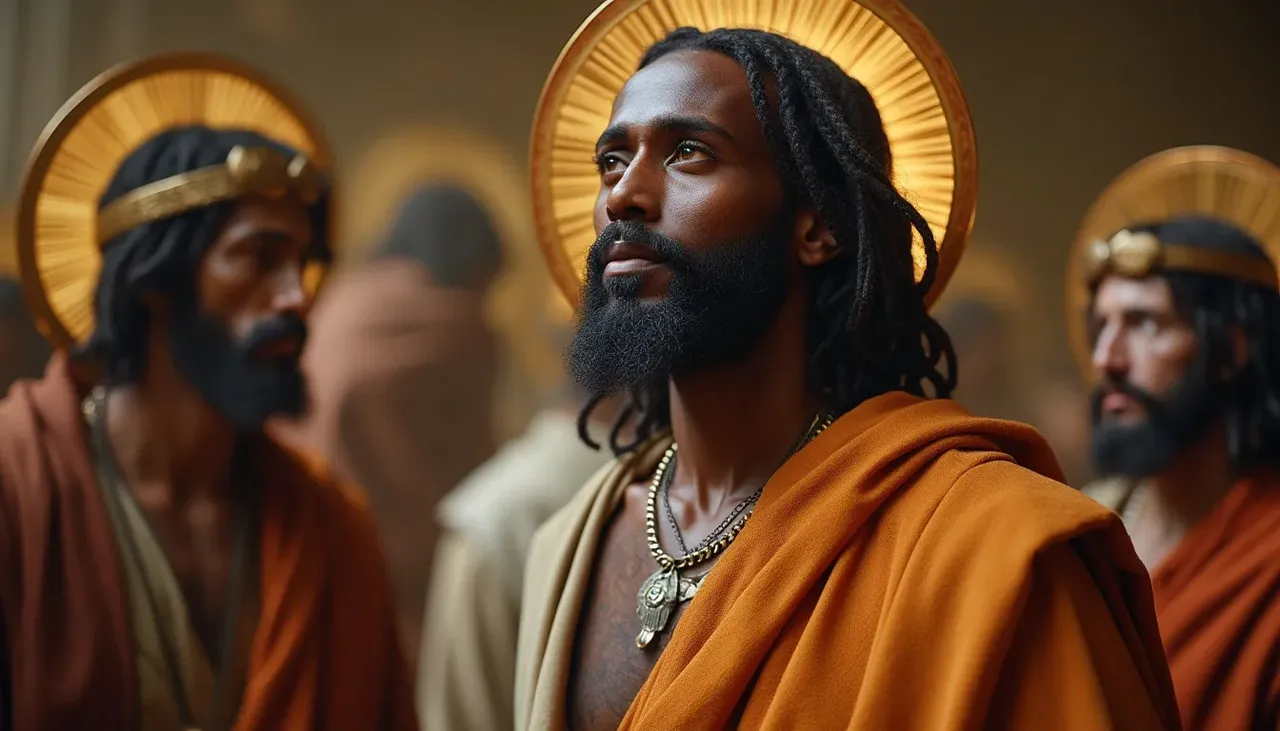
The Theory that Jesus Was Black: A Comprehensive 12-Page Exploration
The image of Jesus Christ has been depicted in countless forms throughout history, but one of the most enduring debates centers around the question of his race and ethnicity. While Western art has traditionally portrayed Jesus as a white, European-looking figure, a growing body of scholarship and cultural discussion suggests that Jesus may have been Black, or at least of darker skin tone, based on historical, geographic, and anthropological evidence. In this 12-page analysis, we will explore the theory that Jesus was Black, examining historical context, biblical descriptions, and modern interpretations. We will also discuss the cultural, social, and political implications of this theory and its impact on religious communities.
1. The Traditional Image of Jesus in Western Art and Culture
1.1. Western Depictions of Jesus
For centuries, Western art and popular culture have depicted Jesus Christ as a white man with European features—light skin, blue or brown eyes, and long, brown or blond hair. This image of Jesus, which emerged during the Renaissance, has become the standard representation in much of the Christian world.
The Influence of European Art: Artists such as Leonardo da Vinci, Michelangelo, and others from the Renaissance period created iconic images of Jesus that reflected European aesthetics and ideals. These depictions shaped the perception of Jesus for generations and are still prevalent in churches, literature, and media today.
1.2. Colonialism and the Spread of the White Jesus
The spread of Christianity during the age of European colonialism further solidified the image of a white Jesus. As missionaries traveled to Africa, Asia, and the Americas, they often brought with them European images of Jesus, imposing Western ideals of race and divinity on colonized peoples.
The Role of Christian Missionaries: European missionaries not only spread the Christian faith but also Europeanized versions of Jesus, which often aligned with the racial hierarchies of colonial societies. This association between whiteness and divinity reinforced Eurocentric racial constructs.
2. Geography and Ethnicity: Jesus as a Man of the Middle East
2.1. The Historical and Geographic Context of Jesus’ Life
Jesus was born in Bethlehem, in the region of Judea, which is located in modern-day Palestine. He grew up in Nazareth, a small village in Galilee. This geographic region is part of the ancient Near East, a melting pot of cultures and ethnicities, but predominantly populated by Semitic peoples.
The Ethnic Composition of Judea and Galilee: The inhabitants of Judea and Galilee during Jesus’ time would have been Semitic, meaning they were likely of a darker skin tone than the white, European image of Jesus typically depicted in Western art.
2.2. Physical Descriptions in Historical Records
There are no direct descriptions of Jesus’ physical appearance in the canonical gospels of the New Testament. However, historical and anthropological evidence can give us some clues about what people in that region and time might have looked like.
Jesus as a Typical Middle Eastern Man: Based on the appearance of people from that region in the 1st century CE, Jesus would likely have had olive or dark skin, dark hair, and dark eyes. This challenges the traditional white European depictions of Jesus and brings him closer to the ethnic identity of the people of the Middle East.
2.3. Roman Descriptions of the Jewish People
Historical records from Roman historians, such as Tacitus and Suetonius, describe the physical appearance of Jewish people in the ancient world as having darker skin and curly hair, features that align more with what modern people might consider African or Middle Eastern traits.
Jewish Ethnic Identity: These descriptions suggest that the Jewish people of Jesus’ time, including Jesus himself, would have had features commonly associated with darker-skinned peoples from the Near East, further complicating the image of Jesus as a light-skinned European.
3. Biblical Descriptions and Symbolism
3.1. The Lack of a Physical Description in the Gospels
The New Testament provides no explicit physical description of Jesus, which has led to centuries of interpretation and artistic representation. This omission has allowed various cultures to envision Jesus in a way that aligns with their own social and racial contexts.
Jesus in the Bible: While the gospels focus on Jesus’ teachings and actions, they leave his physical appearance open to interpretation. This has led to a wide range of depictions of Jesus throughout history, from the white Jesus of Renaissance Europe to the Black Jesus of certain African and African-American traditions.
3.2. Symbolic Descriptions in the Old Testament
Some proponents of the theory that Jesus was Black point to symbolic descriptions in the Old Testament, particularly in the Song of Solomon, which includes the line: “I am black but comely, O ye daughters of Jerusalem” (Song of Solomon 1:5). While this verse is often interpreted metaphorically, it has been used to support the idea of a darker-skinned Jesus.
Interpretations of Old Testament Symbolism: Although the Song of Solomon is traditionally understood as a poetic dialogue, some have interpreted it as a reflection of the diversity of skin tones in the region and a potential indication of Jesus’ darker complexion.
3.3. Revelation and the Apocalyptic Vision of Jesus
In the Book of Revelation, there is a vision of the resurrected Jesus that describes him with hair “like wool” and feet “like burnished bronze” (Revelation 1:14-15). Some scholars and interpreters argue that these descriptions suggest a Black or darker-skinned Jesus, with the “wool” referring to tightly curled hair and the “bronze” indicating a dark complexion.
Debates Over the Revelation Description: While this passage has been interpreted in various ways, the imagery has been embraced by some who advocate for the idea that Jesus was Black, or at least not the light-skinned figure traditionally depicted in Western art.
4. The Theory of Black Jesus in African-American Theology
4.1. The Emergence of the Black Jesus in African-American Churches
In African-American religious traditions, the figure of Jesus has often been reimagined as Black, reflecting the lived experiences of Black communities in America. This reinterpretation of Jesus as Black is rooted in the desire to see Jesus as a figure of empowerment and solidarity with the oppressed.
Jesus as a Symbol of Liberation: For many African-Americans, particularly during the Civil Rights Movement, the image of a Black Jesus became a powerful symbol of resistance against white supremacy and racial oppression. Jesus, as a liberator of the poor and downtrodden, was seen as a figure who understood the suffering of Black people in America.
4.2. James Cone and Black Liberation Theology
One of the most influential voices in the development of Black Liberation Theology was James H. Cone, an African-American theologian who argued that Jesus must be understood as Black in order to fully identify with the oppressed. In his groundbreaking work Black Theology and Black Power (1969), Cone presented Jesus as a symbol of Black liberation.
Cone’s Vision of a Black Jesus: Cone believed that the traditional white image of Jesus was a product of white supremacy and that a Black Jesus was essential for the empowerment and spiritual liberation of Black people. He argued that Jesus’ identification with the poor and oppressed aligned him with the struggles of African-Americans.
4.3. Cultural Reinterpretations of Jesus in the Black Church
The concept of a Black Jesus has been embraced by many African-American churches, where religious art, sermons, and music often depict Jesus as Black. This reimagining of Jesus serves as both a spiritual and cultural affirmation for Black Christians, offering them a figure of divinity who reflects their own identity.
The Role of the Black Jesus in African-American Identity: By presenting Jesus as Black, African-American churches offer a counter-narrative to the dominant image of a white Jesus. This shift not only challenges historical representations of race in Christianity but also fosters a sense of pride and belonging within the Black community.
5. Afrocentric Interpretations of Jesus in Global Contexts
5.1. Jesus in African Christianity
In many African nations, where Christianity has become the dominant religion, the image of Jesus is often depicted as African or Black. This is particularly true in regions where Afrocentric interpretations of biblical stories have taken root, emphasizing the African heritage of biblical figures.
Ethiopian Christianity and the Black Jesus: The Ethiopian Orthodox Church, one of the oldest Christian communities in the world, has long depicted biblical figures, including Jesus, as Black. This tradition reflects the ancient Christian heritage of Ethiopia and challenges Western portrayals of Jesus as white.
5.2. Pan-Africanism and the Reclamation of Religious Icons
During the Pan-African movement of the 20th century, African leaders and intellectuals sought to reclaim African history and identity from colonial distortions. Part of this movement involved reinterpreting religious figures, including Jesus, as Black or African, to reflect the shared heritage and dignity of African peoples.
Jesus as a Symbol of African Unity: In the context of Pan-Africanism, the image of a Black Jesus became a symbol of unity and resistance against colonialism. By presenting Jesus as African, Pan-African thinkers sought to counter the colonial narrative that associated whiteness with divinity and Blackness with inferiority.
5.3. Jesus in African Diaspora Religions
In the African diaspora, particularly in the Caribbean and Latin America, Jesus has been reimagined as Black or Afro-indigenous in various religious traditions. In syncretic religions such as Santería, Vodou, and Rastafarianism, depictions of Jesus and other religious figures often reflect the African heritage of the practitioners.
Rastafarianism and the Black Christ: In Rastafarianism, a religious movement that emerged in Jamaica in the 1930s, Jesus is often portrayed as Black, and the movement’s followers see themselves as descendants of the ancient Israelites. This identification with a Black Jesus reinforces the Rastafarian belief in Black empowerment and the rejection of white colonial values.
6. The Political and Social Implications of a Black Jesus
6.1. Challenging White Supremacy in Religion
The theory that Jesus was Black challenges centuries of religious art and theology that have presented him as white. This challenge is not just about historical accuracy; it is also about confronting the racial hierarchies that have been reinforced by religious imagery.
Deconstructing the White Jesus: The image of a white Jesus has often been used to justify the dominance of white, Eurocentric culture in Christian societies. By questioning this image, scholars and activists seek to dismantle the association between whiteness and divinity, promoting a more inclusive vision of Christianity.
6.2. The Role of Jesus in Social Justice Movements
The reimagining of Jesus as Black has been embraced by various social justice movements, particularly those that focus on racial equality and anti-colonialism. For many activists, a Black Jesus represents a figure of solidarity with marginalized and oppressed communities, making him a powerful symbol for social change.
Jesus as a Revolutionary: In the context of social justice movements, Jesus is often portrayed as a revolutionary who challenges the status quo and advocates for the poor and oppressed. This interpretation aligns with the idea of a Black Jesus, who stands in opposition to systems of racial and economic injustice.
6.3. The Impact on Christian Communities
The debate over Jesus’ race has sparked significant discussions within Christian communities, particularly among those seeking to reconcile their faith with issues of race and equality. For some, the image of a Black Jesus offers a more relatable and empowering figure, while for others, it challenges long-held beliefs and traditions.
The Struggle for Representation in Religious Imagery: The question of how Jesus should be depicted continues to be a point of contention in many Christian communities. As more churches embrace diverse representations of Jesus, the image of a Black Jesus is becoming an important part of the broader conversation about race, religion, and identity.
7. Scientific and Anthropological Insights into Jesus’ Appearance
7.1. Forensic Reconstruction of Jesus’ Face
In recent years, forensic anthropologists and scientists have attempted to reconstruct what Jesus might have looked like based on skeletal remains and other data from the region where he lived. These reconstructions typically depict Jesus as a man with Middle Eastern features, including darker skin, curly hair, and a robust build.
The Scientific Approach to Jesus’ Appearance: Using skulls from the 1st century CE found in the region of Judea, forensic scientists have created composite images that suggest Jesus would have had features common to Semitic peoples of that time. These reconstructions challenge the white, European depictions of Jesus and support the idea that he was a man of color.
7.2. Genetic and Anthropological Evidence
Genetic studies of modern Middle Eastern populations, along with archaeological evidence, indicate that the people living in the region during Jesus’ time would have had a diverse range of skin tones, but were generally darker than the European depictions of Jesus in Western art.
The Genetics of Ancient Judea: Studies of ancient populations in the Levant region suggest that the people of Judea, including Jesus, would likely have had a mix of genetic traits that reflect both African and Middle Eastern ancestry, further supporting the idea that Jesus was not white.
8. Conclusion: The Importance of Reimagining Jesus
The theory that Jesus was Black is not just a question of historical accuracy; it is a broader conversation about race, representation, and the power of religious imagery. By reimagining Jesus as Black or as a person of color, scholars and activists seek to challenge the dominant narrative that has long associated divinity with whiteness.
A New Vision of Jesus for a Diverse World: In an increasingly diverse and globalized world, the image of Jesus is being reinterpreted to reflect the many different cultures and communities that follow his teachings. The idea of a Black Jesus offers a more inclusive vision of Christianity, one that speaks to the experiences of marginalized people around the world.
The Ongoing Debate: The debate over Jesus’ race will likely continue for years to come, as more people engage with the historical and cultural context of his life. Whether or not Jesus was Black, the question itself encourages deeper reflection on the role of religion in shaping our understanding of identity, race, and justice.
Leave a Reply