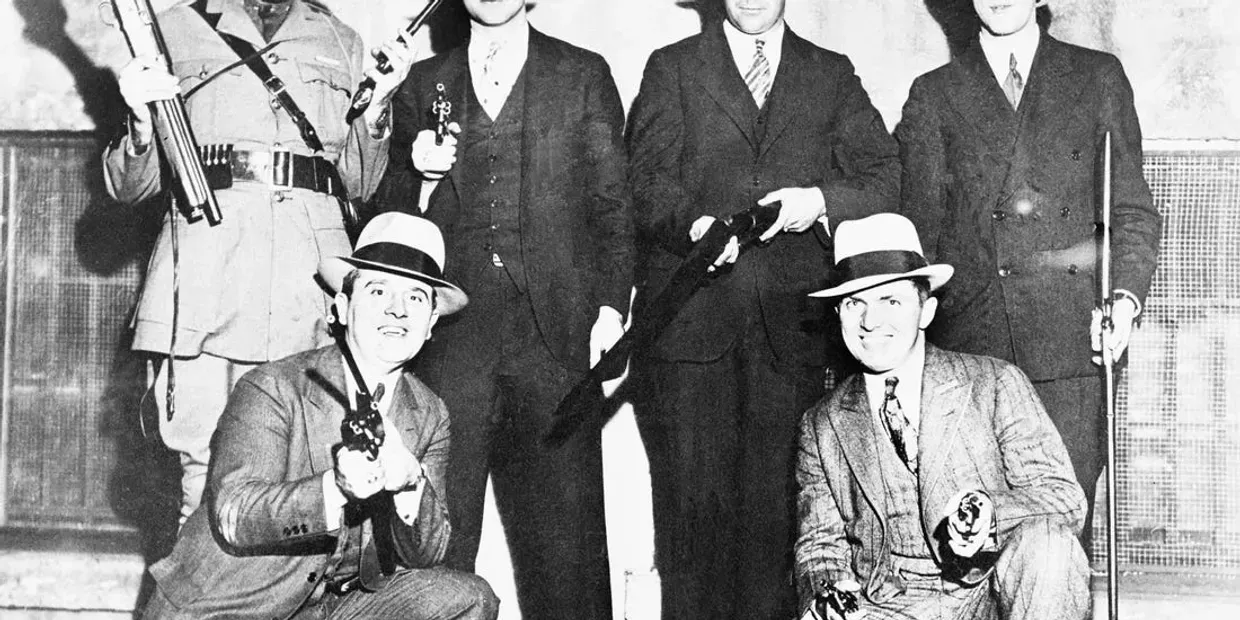
The Sicilian Mafia
Sicilian Mafia Overview
Name: Sicilian Mafia, also known as Cosa Nostra (Italian for “Our Thing”).
Founding Location: Sicily, Italy, during the mid-19th century.
Territory: Predominantly operates in western Sicily, especially in Palermo, Trapani, and Agrigento, but has influence worldwide due to migration.
Ethnicity: Primarily Sicilian, though it has also adapted to operate in other regions through Sicilian emigrants.
Membership: Around 5,500 members, with a structure based on familial and territorial ties.
Criminal Activities: Involved in protection racketeering, extortion, drug trafficking, vote buying, bid rigging, loan sharking, illegal gambling, kidnapping, and contract killings. They also control construction, waste management, and other local industries.
Structure and Operations
Basic Unit – The Family: The Mafia is organized into small, local groups known as families or clans. Each family claims sovereignty over a specific territory, such as a town, village, or city neighborhood.
Hierarchy:
Boss (Capofamiglia): The leader of the family who makes major decisions.
Underboss (Capo Bastone): Second-in-command who oversees the family’s day-to-day operations.
Consigliere: An adviser who mediates disputes and offers counsel.
Capodecina: Leaders of small groups within the family, each consisting of about ten soldiers.
Soldiers (Soldati): The foot soldiers who carry out orders and enforce the Mafia’s will.
Associates: Non-members who assist the Mafia without being fully initiated, such as corrupt officials and businessmen.
Commission: A governing body that helps resolve disputes between families, regulates criminal activities, and maintains order within the Mafia ranks.
Key Rituals and Codes of Conduct
Initiation Ceremony: New members undergo a formal ceremony involving symbolic acts, such as blood oaths and burning images of saints, to signify loyalty and secrecy.
Omertà: The code of silence that prohibits members from cooperating with law enforcement; breaking this code often results in death.
Ten Commandments: A set of rules discovered by police in 2007 that dictate Mafia behavior, including respect for fellow members, no association with police, and mandatory availability for Mafia activities.
Historical Context
Origins: The Mafia arose during Sicily’s transition from feudalism to capitalism, filling the void left by weakened state authority. It provided protection, arbitration, and enforcement services where the state was ineffective.
Early Expansion: By the late 19th century, the Mafia was deeply entrenched in Sicilian society, influencing local politics and protecting landowners, businessmen, and criminals alike.
Fascist Suppression: Under Benito Mussolini, a major crackdown in the 1920s led to thousands of arrests and significantly weakened the Mafia. However, it survived underground and later resurged.
Post-War Revival: After World War II, the Allied occupation inadvertently reinstated Mafia figures into positions of power. The post-war economic boom, particularly in construction, allowed the Mafia to reassert its influence in Sicily.
The Sack of Palermo: In the 1950s and 60s, Mafia-connected politicians facilitated rapid and often illegal construction, leading to urban sprawl and economic gain for the Mafia at the expense of historical preservation.
Major Mafia Wars
First Mafia War (1962-1963): A violent conflict between Mafia families triggered by disputes over drug profits. It led to public outcry and mass arrests.
Second Mafia War (1981-1983): Initiated by the Corleonesi clan under Salvatore Riina, this conflict resulted in the deaths of hundreds of Mafia members and dramatically reshaped the power dynamics within the organization.
Modern Mafia Activities
Drug Trafficking: Since the 1970s, the Sicilian Mafia has been heavily involved in heroin trafficking, particularly to the United States, where it established distribution networks.
Bid Rigging and Construction: The Mafia continues to control public and private contracts through intimidation, bribery, and collusion, making substantial profits from construction and waste management.
Money Laundering and Fraud: The Mafia invests in legitimate businesses to launder money from illicit activities. Recent investigations revealed extensive operations in gambling and real estate.
Protection Rackets (Pizzo): The Mafia demands protection money from businesses, ensuring “protection” against theft, vandalism, and rival criminals.
Political Influence and Corruption
Vote Buying: The Mafia has long influenced local elections by securing votes for favored politicians, who, in turn, provide legal and financial protection to the Mafia’s interests.
Infiltration of Local Governments: Mafia members or affiliates often hold positions of power in local government, allowing them to steer contracts and influence policy decisions.
Reputation and Use of Violence
Violence as a Tool: The Mafia’s power is rooted in its reputation for violence, particularly the ability to carry out murders with impunity. This reputation deters rivals and enforces compliance among clients and enemies.
High-Profile Murders: The assassinations of anti-Mafia judges Giovanni Falcone and Paolo Borsellino in the early 1990s were major turning points, prompting a severe crackdown by the Italian state.
Recent Developments and Current Status
Operation Pax Mafiosa: Under Bernardo Provenzano, the Mafia adopted a strategy of low-profile operations, reducing violence to avoid law enforcement scrutiny.
Continued Law Enforcement Pressure: The arrest of numerous Mafia bosses and informants turning state witnesses has weakened the organization, but it remains resilient.
International Reach: The Sicilian Mafia maintains connections with other organized crime groups worldwide, including the American Mafia, the ‘Ndrangheta in Calabria, and the Camorra in Naples.
Exploitation of Migrant Crisis: Recent investigations revealed the Mafia’s involvement in exploiting refugee reception centers for profit, highlighting its adaptability in finding new revenue streams.
Cultural Impact
Deep Social Roots: The Mafia’s influence extends beyond crime, affecting the cultural, economic, and social fabric of Sicily. It often positions itself as a provider of order in a region historically marked by governmental neglect.
Efforts to Combat the Mafia: Anti-Mafia organizations like Addiopizzo encourage businesses to reject Mafia demands for protection money, reflecting a growing public movement against organized crime.
Leave a Reply