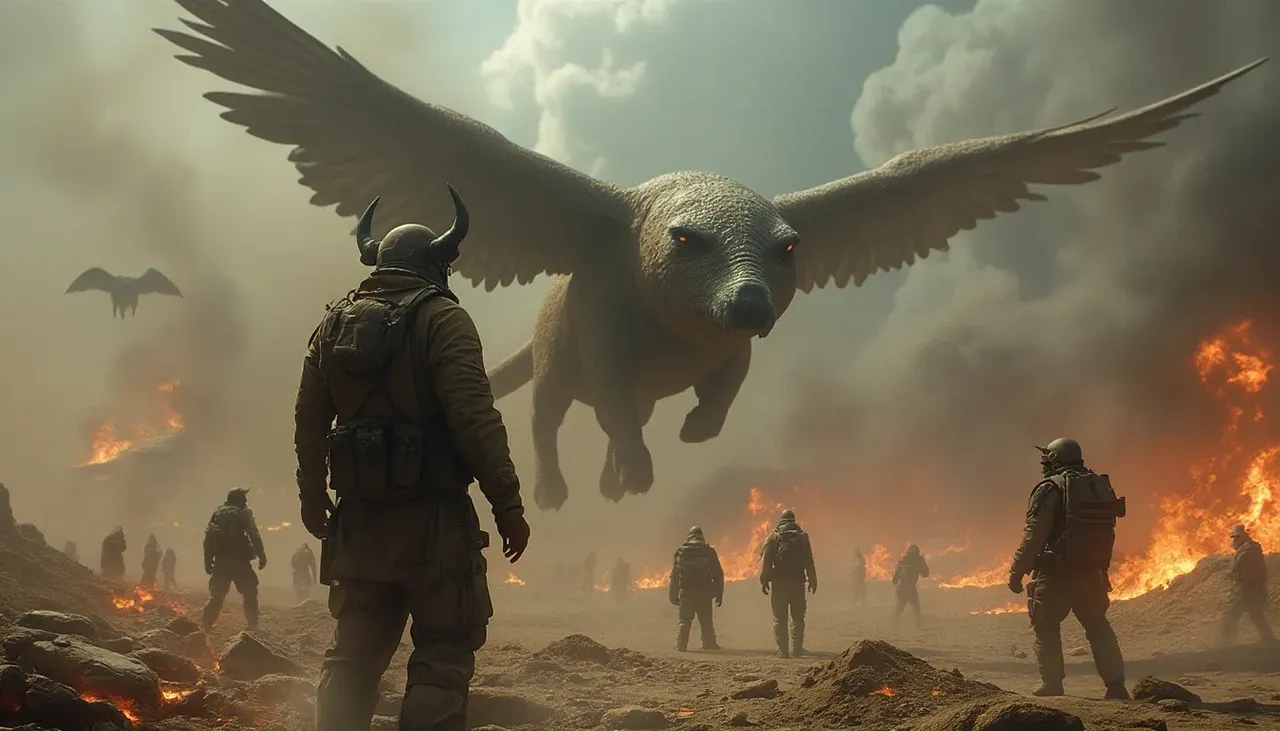
The potential global consequences of the demise of the United States.
Page 1: Introduction
Overview of the USA’s global role: The United States has been a global superpower since World War II, shaping the international order through its political, military, economic, and cultural dominance. Its influence reaches every corner of the globe, making its potential demise a transformative event with wide-reaching implications.
Purpose of the article: This article explores the consequences of the U.S.’s hypothetical demise, analyzing the ripple effects on global systems. The demise could occur through various scenarios: economic collapse, political instability, civil conflict, or global isolation. Each scenario would profoundly impact the international community.
Potential scenarios of demise: These include the U.S. collapsing internally due to political fragmentation or economic failure, or externally due to military defeat or global isolation following failed foreign policy decisions.
Page 2: Economic Fallout and Global Trade
U.S. as the global economic engine: The U.S. accounts for nearly a quarter of the world’s gross domestic product (GDP) and is home to some of the most powerful multinational corporations, financial institutions, and technological innovators. The U.S. dollar serves as the world’s primary reserve currency, underpinning global trade and financial markets. The U.S. is also a key driver of global consumption, importing trillions of dollars’ worth of goods annually.
Impact on global trade: Should the U.S. economy collapse, international trade would be severely disrupted. Countries dependent on U.S. markets, such as China, Mexico, and Canada, would face massive export losses. Global supply chains, especially in sectors like electronics, automobiles, and pharmaceuticals, would unravel, leading to economic turmoil in both developed and developing nations.
Dollar collapse and financial crisis: If the U.S. dollar were to lose its status as the global reserve currency, international markets would face unprecedented volatility. Many countries hold large reserves of U.S. dollars and treasuries, so their financial stability would be at risk. A shift to alternative currencies, such as the Euro, Chinese Yuan, or even cryptocurrencies, could create power struggles in the international monetary system, sparking inflation, currency wars, and financial crises.
Page 3: Political Consequences and Global Governance
U.S. leadership in global institutions: The U.S. plays a central role in international organizations like the United Nations (UN), NATO, the World Trade Organization (WTO), and the International Monetary Fund (IMF). U.S. influence is often decisive in global decision-making, from peacekeeping to trade regulations. A U.S. collapse would lead to dysfunction within these organizations, leaving them weaker and less capable of addressing global crises.
Rise of alternative powers: The demise of the U.S. would create a vacuum in global leadership, likely filled by rising powers such as China, Russia, or India. These nations may push for a multipolar world order, where regional powers dominate rather than a single superpower. However, this shift could lead to increased tensions, as emerging powers compete for dominance and influence.
Democratic backsliding: Without the U.S. championing democracy and human rights globally, authoritarian regimes could become emboldened. The absence of U.S. diplomatic and military support for pro-democracy movements might result in the weakening of democratic institutions, not just in fragile states, but also in established democracies facing internal challenges.
Page 4: Military Consequences and Global Security
U.S. military as a stabilizing force: The U.S. military is the most powerful in the world, with bases in over 70 countries, ensuring stability in critical regions such as Europe, Asia, and the Middle East. The U.S. Navy ensures safe global shipping routes, and its presence in conflict zones often prevents further escalation. The U.S. also plays a leading role in peacekeeping and counterterrorism efforts.
Impact on NATO and alliances: NATO, the cornerstone of European security, relies heavily on U.S. military capabilities. Without U.S. leadership, NATO’s deterrent power would be significantly weakened, emboldening adversaries like Russia to pursue more aggressive policies in Eastern Europe and beyond. U.S. military alliances with Japan, South Korea, and Israel would also crumble, destabilizing Asia and the Middle East.
Arms race and global militarization: With the U.S. out of the picture, a global arms race could ensue. Countries feeling insecure about their borders may dramatically increase military spending. The proliferation of nuclear weapons could accelerate as regional powers seek to protect themselves without relying on U.S. security guarantees, leading to a more unstable and dangerous world.
Page 5: Geopolitical Shifts and Regional Conflicts
Asia-Pacific region: The U.S. has been a critical player in balancing power in the Asia-Pacific, particularly in countering China’s growing influence. Without U.S. involvement, China could assert dominance over disputed territories like Taiwan, the South China Sea, and the East China Sea. This would reshape regional geopolitics, possibly leading to conflicts with Japan, South Korea, or even Australia.
Middle East instability: The U.S. has historically played a significant role in stabilizing the Middle East, whether through military interventions, diplomatic efforts, or economic support. Its demise would create a power vacuum, allowing regional powers such as Iran, Saudi Arabia, and Turkey to vie for influence. Ongoing conflicts in Yemen, Syria, and Iraq could worsen without U.S. mediation, and Israel might find itself isolated and vulnerable to external threats.
Europe and Russia: Europe’s security landscape would be fundamentally altered by the U.S.’s absence, particularly with the weakening or dissolution of NATO. Russia could exploit this opportunity to expand its influence over former Soviet states and possibly reassert control over parts of Eastern Europe. Countries like Poland and the Baltic states would be particularly vulnerable without U.S. protection.
Page 6: Global Economy and Trade Alliances
Disruption of global trade agreements: Existing global trade agreements, such as the United States-Mexico-Canada Agreement (USMCA), the Trans-Pacific Partnership (TPP), and others, would collapse or need to be renegotiated. This would create trade barriers, tariffs, and trade wars between nations as they struggle to secure access to markets and resources without U.S. involvement. Global trade would slow, hurting economies that rely on export-driven growth.
Rise of regional trade blocs: In the absence of U.S. economic leadership, regional trade blocs could emerge as key players. China might spearhead an Asian trade bloc, while Germany could lead Europe. These regional powers would dominate global trade flows, but protectionist policies could make trade less efficient and more prone to disputes.
Technological innovation slowdown: The U.S. has been a leader in technological innovation, particularly in Silicon Valley. The collapse of U.S. tech companies and research institutions would significantly slow down technological advancements globally. China, Europe, and India would likely take over as the new centers of innovation, but the loss of U.S. contributions would lead to delays in breakthroughs in fields such as artificial intelligence, biotechnology, and clean energy.
Page 7: The Fall of American Soft Power and Cultural Influence
Decline of American cultural exports: American culture, through its movies, music, fashion, and social media, has been a significant soft power tool, spreading U.S. influence across the globe. The demise of the U.S. would weaken Hollywood’s dominance, reduce the global influence of American companies like Netflix and Disney, and create space for other countries’ cultures to rise.
Loss of influence over global norms: The U.S. has been instrumental in spreading liberal democratic values, free markets, and human rights. Its demise could lead to a shift in global norms, with authoritarian states like China or Russia promoting alternative systems. Countries may move away from liberal democracy and embrace authoritarian capitalism or hybrid regimes.
Impact on global education and research: The U.S. is home to many of the world’s top universities and research institutions. The decline of U.S. educational influence would weaken global academic collaboration and innovation. Countries like China and Germany might fill the void, but the loss of the U.S.’s academic leadership would be felt worldwide, particularly in fields like medical research and space exploration.
Page 8: Technological and Cybersecurity Impacts
Cybersecurity threats: As one of the leading countries in cybersecurity, the U.S. plays a critical role in defending global digital infrastructure. Its fall would leave significant gaps, making cyber-attacks from rogue states, criminal organizations, or hacker groups more common and harder to counter. Global digital communications, financial systems, and infrastructure could become vulnerable to frequent disruptions.
Disruption of technological infrastructure: Many of the world’s leading tech companies, including those that provide cloud computing, data storage, and social media platforms, are based in the U.S. The collapse of these companies would disrupt global connectivity and digital services. Countries would need to quickly develop alternatives, and the internet itself could become more fragmented and less open.
Space and defense technology: The U.S. has led the world in space exploration and military space technology. Without U.S. leadership, China and Russia would likely dominate space exploration and the militarization of space. The lack of U.S. involvement in international space cooperation would slow down advancements in space science and technology.
Page 9: Humanitarian and Global Aid Consequences
Decline of U.S. foreign aid: The U.S. is the largest contributor to global foreign aid, helping to fight poverty, disease, and food insecurity in developing countries. Its demise would create a massive funding gap, leaving millions of people without critical resources. Countries and organizations reliant on U.S. aid would face severe economic and humanitarian crises.
Global health crises: The U.S. has played a pivotal role in combating global health challenges, from eradicating diseases to providing support during pandemics. Without U.S. support, global health infrastructure would weaken, making it harder to contain future pandemics and leading to higher mortality rates in poorer countries.
Impact on international organizations: The U.S. has provided significant funding and leadership to international aid organizations like the United Nations, the World Health Organization (WHO), and the World Food Programme (WFP). These organizations would struggle to continue their operations without U.S. backing, leading to reduced capacity to address humanitarian crises.
Page 10: Environmental Impact
Climate change leadership: The U.S. has been a key player in global climate change negotiations, including the Paris Agreement. Without U.S. leadership, international efforts to combat climate change would be weakened. Countries may scale back their commitments to reduce carbon emissions, slowing progress in the fight against global warming.
Resource exploitation and conflict: The absence of U.S. involvement in managing global resources could lead to increased competition for resources like oil, water, and minerals. Countries may engage in resource wars, destabilizing regions such as the Arctic, the Middle East, and Africa, where valuable resources are concentrated.
Shift toward new energy powers: With the U.S. no longer leading global energy policy, other countries, particularly China and Russia, could dominate the energy market. This could shift global energy policies toward less environmentally sustainable practices, particularly if coal and oil become more dominant.
Page 11: Rise of Authoritarianism and Global Power Shifts
Authoritarian regimes filling the vacuum: The fall of the U.S. would embolden authoritarian regimes to assert more influence in the international sphere. Countries like China, Russia, Turkey, and Saudi Arabia could use the power vacuum to spread their influence and model of governance, leading to a decline in global human rights standards.
Impact on global human rights: The absence of U.S. advocacy for human rights would weaken global efforts to promote freedoms such as speech, assembly, and political participation. International organizations and activists would lose a powerful ally, potentially leading to the erosion of hard-won human rights gains.
Multipolar world order: Without a dominant superpower, the world would likely shift to a multipolar order, where multiple regional powers—China, Russia, India, and the European Union—compete for global influence. This competition could lead to increased geopolitical tensions, more frequent conflicts, and less stable international relations.
Page 12: Conclusion and Long-Term Global Implications
Summary of key points: The demise of the United States would have profound implications for the world, leading to economic disruption, political instability, military insecurity, and cultural shifts. The interconnectedness of global systems means that the fall of a superpower like the U.S. would affect every country on the planet.
Potential for new global leadership: Countries like China, the European Union, and Russia may rise to fill the void left by the U.S., but none may have the same capacity to maintain global stability. The resulting power struggles could reshape international relations for decades to come.
Final thoughts on global resilience: While the fall of the U.S. would bring about significant challenges, the international community might find ways to adapt. New global governance structures could emerge to address these challenges, and nations may need to work together more closely to prevent widespread conflict and collapse.
Leave a Reply