The Navajo Code Talkers: A Legacy of Unbreakable Communication in World War II
In the midst of World War II, as global powers battled across Europe and the Pacific, communication played an essential role in military operations. Secure, fast, and reliable communication channels were crucial for transmitting orders, coordinating attacks, and ensuring the success of strategic missions. The challenge of keeping military communication secure from enemy interception was a constant struggle. In response to this challenge, the United States made a groundbreaking decision: to enlist the language skills of the Navajo people. These Native Americans, known as the “Navajo Code Talkers,” created a military code using their language that was not only effective but unbreakable.
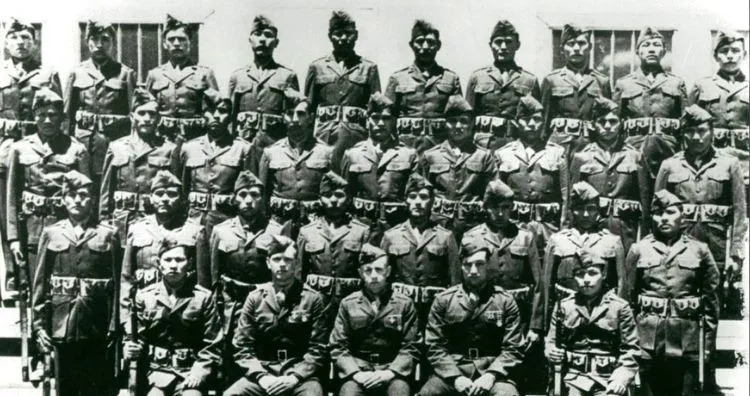
Over 400 Navajo men would serve as Code Talkers during the war, but it all began with 29 brave recruits who developed the first code. Their efforts helped the Allied forces gain a crucial advantage in the Pacific theater, and their legacy remains an enduring symbol of patriotism, ingenuity, and resilience. This article explores the history of the Navajo Code Talkers, their unique contributions to World War II, and the lasting impact they had on both the war effort and Native American communities.
The Challenge of Secure Communication in World War II
During World War II, effective communication was vital to military success. Both the Axis and Allied forces developed increasingly sophisticated technology to intercept, decode, and disrupt enemy communications. Radio transmissions, in particular, were vulnerable to interception, which made the use of codes and encryption essential.
However, existing codes and encryption methods had limitations. Military forces used a variety of complex cipher machines, such as the German Enigma machine, which allowed for secure communication—at least temporarily. The Allies eventually broke the Enigma code, giving them a significant advantage over German forces. Similarly, the Japanese Imperial Army used codes to secure their transmissions, which the United States managed to break over time.
This constant battle of codebreaking and re-coding meant that military planners were always on the lookout for more secure methods of communication. In the Pacific theater, where the U.S. faced Japan, the complexity of the warfare demanded quick, efficient, and secure communication, especially during high-stakes operations such as beach landings and naval assaults. The existing encryption methods, while effective, were often slow to encode and decode, causing dangerous delays in transmitting important information during battle.
It was in this context that the idea of using Native American languages—specifically, the Navajo language—was proposed as a solution to the problem of secure communication.
The Origins of the Navajo Code Talkers
The idea of using Native American languages in military communication was not entirely new. During World War I, Choctaw soldiers had been used as “code talkers” to send secure messages for American forces fighting in Europe. Their language was unfamiliar to the Germans, making it an effective means of communication. Inspired by this success, military leaders in World War II sought to apply a similar strategy, this time using the Navajo language, which was considered even more secure due to its unique characteristics.
The Navajo language (or Diné Bizaad) was ideally suited for creating a military code for several reasons. First, it was an unwritten language, meaning that there were no dictionaries or written records of the language that could be used to decipher it. Second, the language was highly complex, with subtle tonal variations and syntax that made it difficult for non-native speakers to learn. Furthermore, very few people outside of the Navajo Nation spoke the language, reducing the chances of enemy forces even attempting to understand it.
The idea of using Navajo speakers for code work was initially proposed by Philip Johnston, a World War I veteran and civil engineer who had grown up on a Navajo reservation in Arizona. Johnston, who spoke Navajo fluently, realized that the language could be adapted for military purposes, and in early 1942, he pitched the idea to the U.S. Marine Corps.
Johnston’s idea was met with interest, but military leaders were skeptical. The Marine Corps needed to see proof that the Navajo language could be effectively used in combat communication. In February 1942, Johnston arranged a demonstration at Camp Elliott, California. Four Navajo men took part in the demonstration, sending and receiving coded messages in Navajo. The results were impressive: the Navajo code was quick, accurate, and—most importantly—unintelligible to anyone who did not speak the language.
Following this successful demonstration, the Marine Corps authorized the recruitment of 29 Navajo men to develop and test a formal code based on their language. These 29 individuals would become the first group of Navajo Code Talkers, paving the way for the program’s expansion.
Developing the Navajo Code
Once recruited, the 29 Navajo Code Talkers were tasked with creating a comprehensive code that could be used for all types of military communication. They needed to develop a system that would allow for the rapid transmission of tactical messages, including information about troop movements, artillery positions, and attack plans, while maintaining absolute security.
The task was challenging. The Navajo language itself did not have words for many modern military terms, such as “tank,” “machine gun,” or “battleship.” To solve this problem, the Code Talkers developed a system of word substitutions, in which Navajo words were used to represent military concepts. For example, the Navajo word for “turtle” (chay-da-gahi) was used to represent a tank, and the word for “chicken hawk” (gini) was used for a dive bomber.
In addition to these word substitutions, the Navajo Code Talkers developed an alphabet system in which Navajo words were used to spell out English letters. Each letter of the English alphabet was represented by a Navajo word that began with the same sound as the letter. For instance, the letter “A” could be represented by the Navajo word “wol-la-chee” (ant), while “B” could be represented by “shush” (bear). This system allowed the Code Talkers to transmit more complex messages, such as names and locations, that required spelling.
The code they developed was deliberately complex and designed to be indecipherable even to a Navajo speaker who was unfamiliar with the system. In total, the initial code consisted of approximately 211 words, although it would be expanded over the course of the war to include more than 400 terms.
Once the code was finalized, the Navajo Code Talkers underwent intense training to ensure that they could use it quickly and accurately under combat conditions. Speed was essential, as battlefield communications often needed to be transmitted in a matter of seconds to avoid detection or interference by the enemy.
The development of the Navajo code was a remarkable achievement, combining linguistic creativity with military precision. It would go on to play a crucial role in the success of Allied operations in the Pacific theater.
The Role of the Navajo Code Talkers in the Pacific Theater
The Navajo Code Talkers were deployed throughout the Pacific theater, where their code would prove invaluable in some of the war’s most critical battles. From the Battle of Guadalcanal to Iwo Jima, the Code Talkers transmitted thousands of messages, often under fire, and their work was instrumental in coordinating attacks, artillery strikes, and troop movements.
Battle of Guadalcanal
The first major deployment of the Navajo Code Talkers occurred during the Battle of Guadalcanal in August 1942. This six-month-long campaign was one of the first major offensives by the Allied forces against Japan, and it was critical to gaining control of the Pacific. The Navajo Code Talkers played a key role in securing communication between ground forces and naval support, ensuring that orders could be transmitted without fear of enemy interception.
The Code Talkers were placed in the most dangerous parts of the battlefield, often stationed on the front lines to transmit real-time information about enemy positions and reinforcements. Their ability to communicate quickly and securely helped U.S. forces maintain the upper hand, even when the Japanese attempted to jam or intercept radio transmissions.
The Battle of Iwo Jima
Perhaps the most famous example of the Code Talkers’ effectiveness came during the Battle of Iwo Jima in February 1945. The invasion of Iwo Jima was one of the most brutal battles of the war, with U.S. Marines facing fierce resistance from Japanese forces entrenched on the island. In this high-stakes environment, secure communication was essential to coordinating attacks and providing support to frontline troops.
Over the course of the battle, Navajo Code Talkers transmitted more than 800 messages without a single error. One of the Marine Corps’ signal officers later credited the Code Talkers with making the difference in the battle, stating that “were it not for the Navajos, the Marines would never have taken Iwo Jima.”
The speed and accuracy of the Navajo code allowed U.S. forces to stay ahead of the Japanese, despite the intensity of the fighting. Even when messages were intercepted by the enemy, the code remained impenetrable. Japanese intelligence officers, who had successfully broken other American codes during the war, were left baffled by the Navajo language, which they could not understand or translate.
Okinawa and the Final Stages of the War
The Navajo Code Talkers continued to play a vital role in the final stages of the Pacific campaign, including the Battle of Okinawa in 1945. This was the largest amphibious assault in the Pacific theater, and the Code Talkers once again ensured that communication lines remained secure and efficient during the intense fighting.
Throughout the war, the Code Talkers’ contributions went beyond simply transmitting messages. Their work helped save countless lives by preventing misunderstandings, reducing the time it took to send orders, and ensuring that vital information reached its destination without delay.
The Secrecy of the Code Talkers’ Work
Despite the crucial role that the Navajo Code Talkers played in the war, their work remained classified for many years after the conflict ended. The U.S. military considered the Navajo code so valuable that it was kept secret in case it needed to be used again in future conflicts. As a result, the Code Talkers were not publicly recognized for their contributions to the war effort, and many returned home to their reservations without the honors they deserved.
For the Navajo Code Talkers, this secrecy was both a point of pride and a source of frustration. They had fulfilled their duty to their country, but they were unable to share their experiences with their families or communities. It would not be until decades later that their achievements were fully acknowledged.
Recognition and Legacy
The Navajo Code Talkers’ contributions to World War II were finally recognized in the 1960s when the code was declassified, and their role in the war effort was made public. Since then, the Code Talkers have been honored in various ways, both in the United States and abroad.
In 1982, President Ronald Reagan declared August 14 “Navajo Code Talkers Day,” a day dedicated to honoring the service and sacrifices of the Code Talkers. In 2001, President George W. Bush awarded the Congressional Gold Medal to the original 29 Navajo Code Talkers, with silver medals given to the remaining members of the program.
Monuments and memorials dedicated to the Navajo Code Talkers have been erected across the country, including a statue at the Navajo Nation capital in Window Rock, Arizona. Their story has also been featured in books, documentaries, and films, ensuring that future generations remember their contributions to the war effort.
Cultural Significance
The Navajo Code Talkers’ story is not only a tale of military innovation but also one of cultural resilience. During a time when Native Americans were often marginalized and their cultures suppressed, the Navajo language became a critical tool in the fight for freedom and democracy. The success of the Code Talkers helped to highlight the importance of Native American languages and cultures, which had long been threatened by U.S. government policies aimed at assimilation.
For the Navajo people, the legacy of the Code Talkers is a source of immense pride. Their contributions to the war effort demonstrated the strength and value of their language and culture, and their service helped to change perceptions of Native Americans in the broader American society.
Conclusion: An Unbreakable Legacy
The Navajo Code Talkers played a pivotal role in securing victory for the Allied forces in the Pacific theater during World War II. Their ingenuity, courage, and dedication created a code that was never broken by the enemy, ensuring the success of critical military operations. Their story is one of patriotism, cultural pride, and a unique contribution to the history of warfare.
Though their efforts were long unrecognized, the Navajo Code Talkers have since been honored as national heroes, and their legacy continues to inspire future generations. They are a reminder of the power of language, the importance of cultural diversity, and the enduring contributions of Native Americans to the fabric of the United States.
Leave a Reply