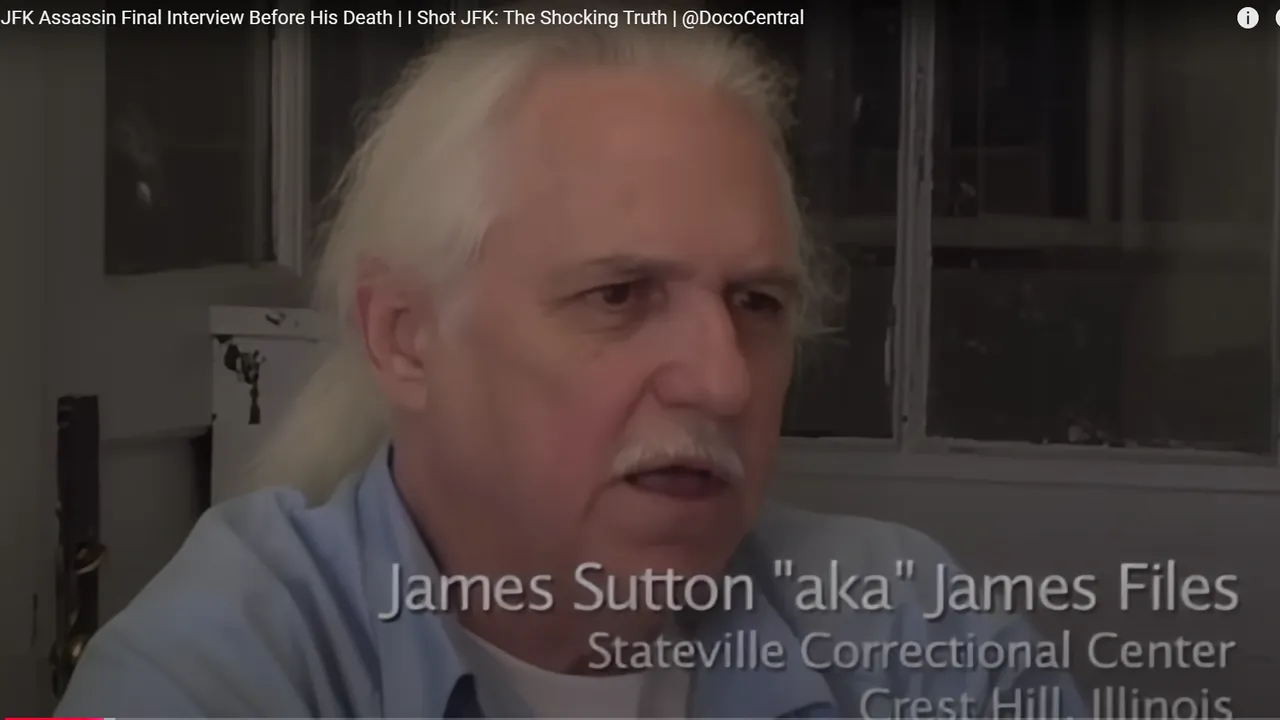
The JFK Assassination: Mafia Hitman James Files’ Deathbed Confession—A New Chapter in an Enduring Mystery
The JFK Assassination: Mafia Hitman James Files’ Deathbed Confession—A New Chapter in an Enduring Mystery
The assassination of President John F. Kennedy on November 22, 1963, remains one of the most enduring mysteries of the 20th century. While the Warren Commission concluded that Lee Harvey Oswald acted alone, decades of skepticism and conspiracy theories have surrounded the case. In a dramatic twist, James Files, a self-proclaimed Chicago Mafia hitman, has delivered a deathbed confession, claiming responsibility for the fatal shot that ended Kennedy’s life. His story, if true, could upend the official narrative and reshape the understanding of this pivotal moment in American history.
Watch the full account here: James Files JFK Confession.
The Historical Context: Motives and Power Struggles
The Kennedy presidency was marked by bold initiatives and fierce opposition. Domestically, Kennedy’s administration cracked down on organized crime, with Attorney General Robert F. Kennedy aggressively pursuing Mafia leaders. Internationally, JFK’s handling of the Bay of Pigs invasion, his push for nuclear disarmament, and his rumored plans to end U.S. involvement in Vietnam alienated powerful factions within the government, military, and intelligence communities.
Organized crime figures such as Sam Giancana, Carlos Marcello, and Santo Trafficante Jr. reportedly felt betrayed by the Kennedys. Joseph P. Kennedy, JFK’s father, allegedly enlisted Mafia support to secure his son’s election but failed to shield the organization from the administration’s subsequent crackdown. Files claims that these tensions culminated in a carefully orchestrated plot to assassinate the president, with the Mafia serving as the executioners for a broader conspiracy involving rogue CIA agents and anti-Castro Cuban exiles.
James Files’ Account: A Chilling Confession
Files, who claims ties to both the Chicago Mafia and CIA operatives, provides a detailed account of the assassination:
Position and Weaponry: Files alleges he was stationed on the grassy knoll, behind the picket fence in Dealey Plaza. Armed with a .222 Remington Fireball—a compact, precise rifle—he claims to have delivered the fatal headshot to Kennedy as the motorcade passed.
A Coordinated Plot: According to Files, the assassination was not a lone operation. Oswald was positioned in the Texas School Book Depository as a decoy, while other shooters were stationed strategically to ensure success. Files describes a triangulation of crossfire, a military-style tactic designed to leave no escape for the target.
The Kill Shot: Files contends he aimed for Kennedy’s head, pulling the trigger at the precise moment the motorcade slowed. He claims to have bitten the spent casing to leave a personal mark before discarding it at the scene. Years later, a casing matching Files’ description was reportedly discovered by a researcher, lending some credence to his story.
Forensic Evidence and Eyewitness Accounts
Files’ confession aligns with several pieces of evidence and witness testimony that have fueled conspiracy theories over the years:
The Zapruder Film: The infamous footage shows Kennedy’s head snapping backward, which many interpret as consistent with a shot from the front—the direction of the grassy knoll. The Warren Commission attributed this motion to a neurological reaction, but Files’ claim offers a simpler explanation.
Eyewitness Reports: Multiple witnesses reported hearing gunshots from the grassy knoll and seeing suspicious activity near the picket fence. However, these accounts were largely dismissed or ignored by the Warren Commission.
Ballistics Evidence: Critics of the lone gunman theory point to discrepancies in the trajectory of the bullets. Files’ description of using a .222 Remington Fireball matches the precision and characteristics needed to deliver the fatal shot.
Acoustic Analysis: In 1978, the House Select Committee on Assassinations (HSCA) concluded that acoustic evidence suggested the presence of at least two shooters. Files’ confession supports this finding, challenging the notion that Oswald acted alone.
Reactions from Experts and Notable Figures
The public and expert reactions to Files’ confession have been deeply divided:
Supporters of Files’ Story: Many conspiracy theorists see Files’ account as a long-awaited vindication of their belief in a broader plot. Some forensic experts argue that his story aligns with physical and circumstantial evidence, particularly the direction of Kennedy’s head movement and the acoustic analysis from the HSCA.
Skeptics: Critics argue that Files’ claims lack concrete corroboration. Files has made similar statements in the past, and his criminal background raises questions about his credibility. Historian Gerald Posner, author of Case Closed, dismisses Files’ confession as part of a pattern of dubious claims that emerge periodically to capitalize on public interest.
Former Intelligence Officials: Some former CIA operatives have dismissed Files’ claims as implausible, asserting that any conspiracy involving such a large number of participants would have been impossible to keep secret for decades.
Public Figures: Robert F. Kennedy Jr., a longtime skeptic of the lone gunman theory, has called for renewed investigations into the assassination. While he has not explicitly endorsed Files’ story, he supports the idea that the true circumstances of his uncle’s death remain obscured.
The Mafia and the CIA: A Complex Partnership
Files’ allegations implicate both the Mafia and elements of the CIA, highlighting a murky collaboration between organized crime and government agencies. In the early 1960s, the CIA recruited Mafia operatives for assassination attempts against Fidel Castro. Files claims that this partnership extended to the plot against Kennedy, uniting disparate factions with a common goal: to remove a president perceived as a threat to their interests.
This alleged collaboration raises troubling questions about the extent to which rogue elements within the government and criminal organizations were willing to go to protect their power and influence.
The Legacy of JFK’s Assassination
James Files’ confession adds a provocative new layer to the JFK assassination saga, but it also underscores the enduring uncertainty surrounding the event. Despite decades of investigations, including the Warren Commission and the HSCA, the case remains shrouded in mystery.
If Files’ account is ever fully substantiated, it would not only vindicate conspiracy theorists but also reveal a dark chapter in American history—a moment when power, corruption, and betrayal converged to alter the course of the nation.
A Call for Transparency
Files’ confession has reignited calls for greater transparency and the release of classified documents related to the assassination. In recent years, the U.S. government has declassified thousands of files, but critical documents remain withheld, fueling speculation about what they might reveal.
As the world continues to grapple with the implications of Files’ story, one thing is clear: the assassination of John F. Kennedy remains a haunting reminder of the fragility of democracy and the shadowy forces that can shape history.+
Leave a Reply