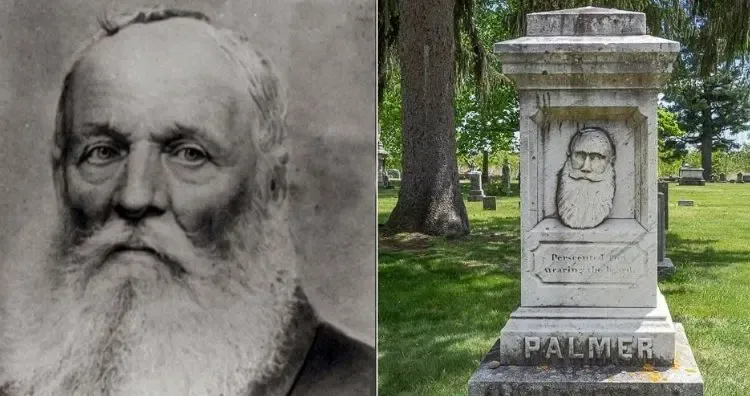
Persecuted for Wearing the Beard: The Remarkable Life of Joseph Palmer
Introduction: Joseph Palmer’s Stand Against Societal Norms
The introduction sets the stage for Joseph Palmer’s life and the central conflict that defined him: his persecution for simply wearing a beard in an era that demanded conformity.
The Beard as Rebellion: Palmer’s decision to keep his beard defied social norms of the time. His persecution in the 1830s serves as a window into how society often treats non-conformity with violence and derision.
The Impact of His Defiance: By the time of his death in 1873, beards were not only acceptable but fashionable, a striking irony given his earlier persecution.
Themes of Individualism: His story resonates with themes of personal liberty, self-expression, and resistance to societal norms, making him a symbol of standing against the tide of conformity.
Chapter 1: The Early Life of Joseph Palmer
To understand why Palmer’s beard became so significant, it’s essential to look at his early life and the values that shaped him.
Background and Upbringing: Born in 1799 in Leominster, Massachusetts, Palmer grew up in a post-Revolutionary War America, a period marked by rapid social and political changes. His upbringing as a farmer in a small community taught him self-reliance, which likely fueled his independent mindset.
Religious and Philosophical Influences: Palmer was deeply religious, and his personal beliefs may have influenced his views on appearance and non-conformity. Whether his beard was a religious statement or a form of self-expression, Palmer viewed it as integral to his identity.
Personality and Character: Descriptions of Palmer often emphasize his rugged individualism and firm moral convictions. These traits made him steadfast in the face of persecution, qualities that would define his legacy.
Chapter 2: The Cultural and Social Climate of the 1830s
To fully grasp the persecution Palmer faced, it is crucial to understand the cultural environment of 1830s America.
Cultural Norms on Grooming: During this period, facial hair was largely associated with slovenliness, vice, or rebellion. The clean-shaven face was a sign of respectability and cleanliness. Palmer’s refusal to conform to these grooming standards was seen as a direct affront to social decency.
The Influence of Industrialization: As America became more industrialized, rigid social norms dictated behavior and appearance. Palmer’s beard represented a rejection of this conformist trend, aligning him with the burgeoning countercultural movements of the time.
Moral and Religious Attitudes: Puritanical values were still influential in shaping public opinion, and outward appearances were considered reflections of inward morality. A bearded man was often seen as rebellious, or worse, morally corrupt, and Palmer’s persecution mirrored broader anxieties about social change.
Chapter 3: Palmer’s Beard and the Infamous Attack
This chapter dives into the event that would change the course of Palmer’s life and make him a symbol of resistance.
The Attack: In 1830, four armed men accosted Palmer in an attempt to forcibly shave off his beard. The attack wasn’t merely an act of mockery but a violent attempt to assert societal control over Palmer’s personal choices. Armed with scissors and razors, the attackers sought to strip Palmer of what they saw as an affront to decency.
Palmer’s Defense: Rather than submit, Palmer defended himself, physically resisting the attempt to shave him. His refusal to bow to violence demonstrated his deep conviction that personal expression should not be dictated by societal pressure.
Aftermath of the Incident: Palmer’s resistance to the attack led to his arrest rather than the prosecution of his attackers. He was charged with disturbing the peace, an absurdity that reflected society’s obsession with conformity. His arrest and subsequent mistreatment in jail solidified his image as a man persecuted for simply being different.
Chapter 4: Arrest and Imprisonment
Palmer’s imprisonment is a key part of his story and underscores the severity of societal reactions to non-conformity.
Conditions in Jail: Palmer’s treatment in jail was harsh. He was reportedly mistreated by authorities who sought to humiliate him further. He was offered freedom multiple times if only he agreed to shave, but Palmer remained resolute, refusing to give up his beard even under duress.
Public Reaction: Initially, Palmer’s plight was met with ridicule, but as his story spread, some began to see him as a victim of an unjust system. Palmer’s case became a rallying point for those who questioned the limits of societal control over individual liberties.
Palmer’s Philosophy on Resistance: Throughout his imprisonment, Palmer’s letters and statements reflected his deep commitment to personal liberty. He saw his beard not merely as a fashion statement but as a symbol of his right to self-determination. His refusal to shave was, in essence, a declaration of independence from societal norms.
Chapter 5: Utopian Communities and Palmer’s Role in the Fruitlands
Joseph Palmer was a member of the Fruitlands, a short-lived utopian community. This chapter will explore how his involvement in such a radical experiment reflected his broader rejection of mainstream values.
The Fruitlands Community: Fruitlands was founded by transcendentalists such as Bronson Alcott and Charles Lane in the 1840s. The community was dedicated to creating a self-sufficient, agrarian society that rejected materialism and societal conventions.
Palmer’s Role in the Community: As a member of Fruitlands, Palmer was part of a movement that sought to create a new society based on personal freedom and simplicity. His refusal to conform to societal standards regarding his beard fit well with the ideals of the community.
The Decline of Fruitlands: Despite its lofty goals, the Fruitlands experiment failed after only a few years, but Palmer’s involvement speaks to his lifelong commitment to living outside conventional society. His story within Fruitlands reveals how deeply Palmer valued independence and non-conformity.
Chapter 6: Beards and Social Conformity: A Broader Historical Perspective
This chapter takes a broader look at how beards have been perceived throughout history and across cultures.
Beards as Rebellion: Historically, beards have often been associated with non-conformity and rebellion. In many cultures, facial hair was seen as a marker of religious or political dissent, making Palmer part of a long tradition of defiant bearded men.
Historical Figures with Beards: In the 19th century, prominent figures such as Abraham Lincoln and Charles Darwin would later help to make beards fashionable. However, before this shift, men like Palmer who grew beards were seen as countercultural figures.
Cultural and Political Shifts: The shift from beards being a symbol of rebellion to a mark of respectability by the late 19th century shows how societal norms evolve. Palmer’s story illustrates how people can be punished for choices that later become accepted.
Chapter 7: The Legacy of Joseph Palmer This chapter focuses on Palmer’s legacy and how his story continues to resonate in modern discussions of individuality and resistance.
The Irony of Fashion: By the time Palmer died in 1873, beards had become a fashionable symbol of masculinity and wisdom. His story highlights the absurdity of persecution for something that later became widely accepted.
Palmer’s Gravestone: The inscription on Palmer’s gravestone, “Persecuted for Wearing the Beard,” serves as a lasting reminder of the personal cost of non-conformity. His gravestone has become a symbol of resistance to arbitrary societal norms.
Modern Parallels: Palmer’s fight for the right to wear a beard can be seen as part of a broader historical struggle for personal freedom. His story parallels modern debates about body autonomy, personal expression, and the limits of societal control.
Conclusion: A Lasting Symbol of Resistance
Joseph Palmer’s life may seem like a small footnote in American history, but his story resonates with broader themes of individuality, freedom, and resistance. His refusal to shave his beard became a battle for personal liberty, and his persecution is a reminder of how societies often seek to suppress those who deviate from the norm.
Palmer’s legacy endures not only in the gravestone that marks his defiance but also in the broader history of resistance to conformity. His life is a reminder that the struggle for personal freedom often comes at a cost, but it is also a testament to the power of standing by one’s principles in the face of societal pressure. In a world where fashion and social norms are constantly shifting, Palmer’s story offers a timeless lesson about the importance of staying true to oneself, no matter the consequences.
Leave a Reply