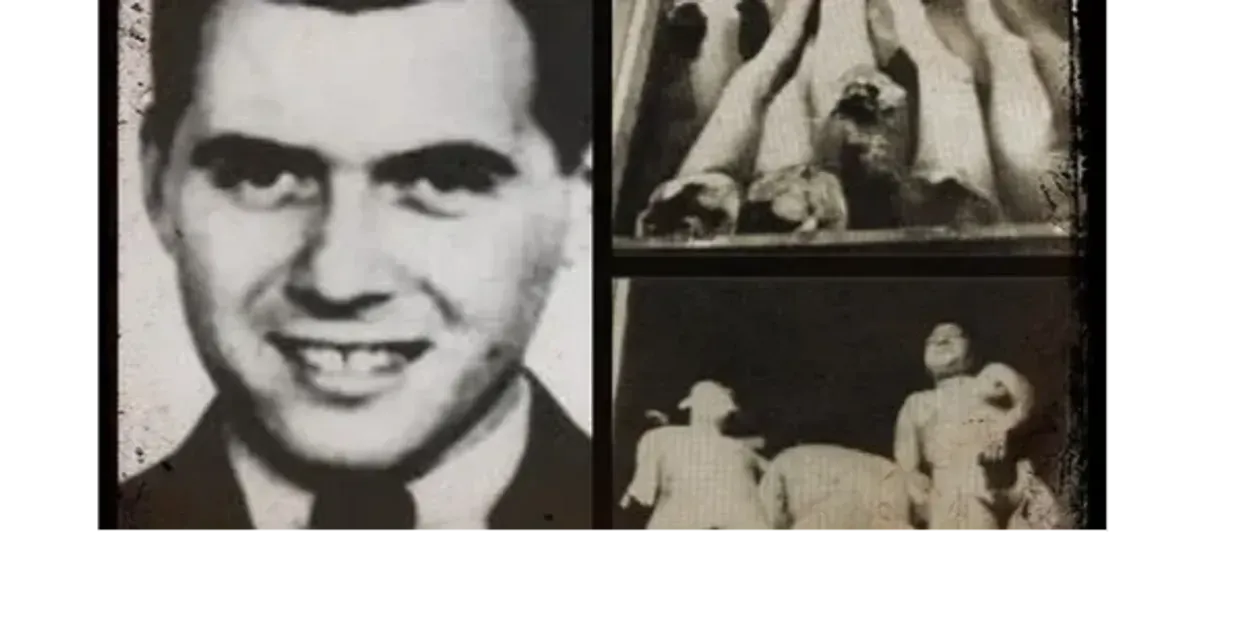
Dr. Josef Mengele: The Angel of Death
Introduction to Josef Mengele
Josef Mengele, notoriously known as the “Angel of Death,” was a German SS officer and physician at the Auschwitz-Birkenau concentration camp during World War II. Born on March 16, 1911, in Günzburg, Germany, Mengele became one of the most infamous figures of the Holocaust due to his inhumane medical experiments on prisoners, particularly twins, and his ruthless selection process that sent countless to their deaths. Mengele’s work at Auschwitz and his subsequent escape from justice have made him a symbol of Nazi cruelty and the dark intersection of science and atrocity. This article explores Mengele’s background, his gruesome work at Auschwitz, his post-war life, and the lasting legacy of his crimes.
Early Life and Rise within the Nazi Regime
Josef Mengele was born into a well-to-do Bavarian family, the eldest of three sons. His father owned a successful agricultural machinery company, and the family was respected in their local community. Mengele was a bright and ambitious student, excelling in school and displaying a keen interest in anthropology and medicine. He earned his Ph.D. in anthropology from the University of Munich in 1935, followed by a medical degree in 1938. Mengele’s academic pursuits were heavily influenced by the growing tide of eugenics and racial theory in Nazi Germany, which sought to justify Aryan supremacy and the persecution of those deemed “racially inferior.”
Mengele joined the Nazi Party in 1937 and the SS in 1938, quickly rising through the ranks due to his academic credentials and unwavering commitment to Nazi ideology. In 1940, he was drafted into the Wehrmacht and later transferred to the Waffen-SS, where he served as a medical officer. Mengele distinguished himself on the Eastern Front, earning the Iron Cross for bravery. However, a severe injury in 1942 led to his reassignment away from the front lines, setting the stage for his transfer to Auschwitz in May 1943.
The Horrors of Auschwitz: Medical Experiments and Selections
At Auschwitz, Mengele was appointed Chief Physician of the Romani camp sector and soon became one of the camp’s most feared and recognizable figures. His primary duties involved the selection process on the arrival ramps, where he determined which prisoners would be sent to forced labor and which would be sent directly to the gas chambers. Mengele’s demeanor during these selections was disturbingly calm and indifferent, often performing his deadly tasks with a smile or casual flick of the wrist.
However, it was his role as a medical experimenter that cemented his infamy. Mengele was particularly fascinated by twins, dwarfs, and individuals with genetic anomalies, whom he saw as opportunities to advance his research on heredity. He conducted brutal experiments without anesthesia, subjecting his subjects to injections of chemicals, surgeries, and dissections. Twins were his primary focus; he would conduct experiments on one twin and use the other as a control, often leading to the death of both.
Some of the most horrifying of Mengele’s experiments included attempts to change eye color by injecting chemicals directly into the eyes of children, deliberately infecting twins with diseases to study the effects, and sewing twins together to create conjoined siblings. He would meticulously document his experiments, although much of his research was pseudoscientific and lacked any legitimate medical value. To Mengele, these prisoners were not human beings but disposable subjects for his twisted pursuits.
Mengele’s sadism extended beyond his formal experiments. He was known to perform random surgeries without anesthesia, amputate limbs unnecessarily, and subject prisoners to extreme cold or heat to study the limits of human endurance. His callous disregard for human life made him a figure of terror among the inmates. Survivors often recalled Mengele’s almost childlike enthusiasm for his work, contrasting sharply with the pain and death he inflicted.
Escape from Justice and Post-War Life
As the Soviet Red Army advanced towards Auschwitz in January 1945, Mengele fled the camp, taking with him his medical records and disguising himself as a regular German soldier. He managed to evade capture initially and was briefly held by the Allies under a false name, but due to the chaotic post-war environment and lack of thorough documentation, he was released.
Mengele’s flight from justice continued for decades. He traveled through various safe houses in Germany before making his way to South America in 1949. With the help of Nazi sympathizers and a network of secret routes known as “ratlines,” Mengele settled in Argentina under the alias Helmut Gregor. He lived a relatively comfortable life, first in Argentina, then in Paraguay, and finally in Brazil, working as a farm manager and occasionally practicing medicine.
Despite several near captures and mounting international pressure, Mengele evaded justice for the rest of his life. He became increasingly paranoid and reclusive, particularly after the 1960 capture of Adolf Eichmann, another high-ranking Nazi living in Argentina. Fearing he would be next, Mengele frequently changed residences and identities, living in constant fear of being discovered.
Mengele’s health deteriorated in his later years, and he died of a stroke while swimming off the coast of Brazil in 1979. He was buried under the name Wolfgang Gerhard, and it was not until 1985 that his remains were positively identified, confirming his long, elusive escape from the retribution he so richly deserved.
The Legacy of Mengele’s Crimes
Josef Mengele’s legacy is one of horror and profound ethical violations that continue to haunt the field of medical ethics. His experiments, devoid of any moral or scientific justification, are now synonymous with the worst abuses of power and the perversion of medical science. Mengele’s work contributed nothing to legitimate medical knowledge; instead, it stands as a chilling example of what can happen when ideology overrides ethics.
The survivors of Mengele’s experiments, many of whom bore lifelong physical and psychological scars, have testified extensively about the atrocities they endured. Their stories have been instrumental in keeping the memory of Mengele’s victims alive and ensuring that the lessons of the Holocaust are not forgotten. The term “Angel of Death” remains indelibly associated with Mengele, symbolizing the profound evil he embodied.
Mengele’s escape and unpunished death also underscore the failures of post-war justice systems, which allowed many high-profile Nazis to live out their lives in relative peace. His case has become a focal point in discussions about accountability, the pursuit of justice, and the need for international cooperation in bringing war criminals to justice.
Mengele’s actions serve as a grim reminder of the potential for scientific knowledge to be misused in the service of inhumanity. His story is not just a dark chapter in history but also a cautionary tale about the ethical responsibilities of those in positions of power, especially within the medical and scientific communities. As long as his name is remembered, it will be as a symbol of unrestrained cruelty, a testament to the victims of his horrific experiments, and a reminder of the consequences when morality is sacrificed for ideology.
Leave a Reply