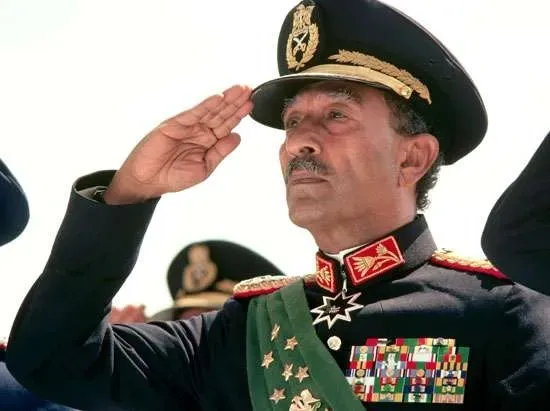
Anwar Sadat: Egypt’s Visionary Leader and the Path to Peace
Page 1: Introduction
Anwar Sadat, the third president of Egypt, was a transformative figure in Middle Eastern politics. His presidency, from 1970 until his assassination in 1981, marked a pivotal shift in Egypt’s domestic policies and its relations with both its Arab neighbors and the world. Sadat is perhaps most famously remembered for his bold decision to make peace with Israel, a move that reshaped the political landscape of the Middle East and earned him the Nobel Peace Prize in 1978, shared with Israeli Prime Minister Menachem Begin.
However, Sadat’s legacy is multifaceted, as he also faced considerable domestic challenges, from economic reform efforts to political dissent, particularly from Islamist groups. This expanded discussion will trace Sadat’s life, rise to power, his leadership during the October War (Yom Kippur War), his dramatic peace initiative with Israel, and the complex legacy he left behind in both Egypt and the broader Arab world.
Page 2: Early Life and Military Career
Anwar Sadat was born on December 25, 1918, in Mit Abu al-Kum, a small village in northern Egypt. He came from a modest family background; his father was an Egyptian clerk, and his mother was Sudanese. From an early age, Sadat was influenced by nationalism and the anti-colonial movement that sought to liberate Egypt from British control.
Sadat attended the Royal Military Academy in Cairo, where he graduated in 1938 and joined the Egyptian army. It was during his early military career that he became involved in underground nationalist movements. He was deeply influenced by leaders such as Gamal Abdel Nasser, with whom he shared anti-imperialist sentiments. Sadat’s involvement in the Egyptian nationalist struggle led to his arrest in the 1940s, including imprisonment for collaborating with Axis forces during World War II, as he sought foreign support to oust British rule.
Despite these early setbacks, Sadat’s determination to rid Egypt of foreign domination grew stronger, and after his release from prison, he continued his military career, aligning himself closely with Nasser and the Free Officers Movement that would eventually lead the 1952 revolution, overthrowing Egypt’s monarchy and ending British influence in the country.
Page 3: Role in the Free Officers Revolution and Rise to Power
Anwar Sadat played a crucial role in the Free Officers Movement, a secret group of military officers who plotted the overthrow of King Farouk and the Egyptian monarchy in 1952. Though not as prominent a figure as Gamal Abdel Nasser, Sadat was a loyal and trusted member of the group. After the success of the coup, Sadat’s loyalty to Nasser ensured his rapid rise within the government.
During Nasser’s presidency, Sadat held various positions, including Minister of State, Speaker of the National Assembly, and Vice President. While Nasser dominated Egypt’s political landscape, Sadat remained in his shadow, playing a largely ceremonial role. However, Sadat’s long-standing loyalty and close ties to Nasser meant that he was viewed as a natural successor, particularly because he was not perceived as a threat to Nasser’s powerful inner circle.
Following Nasser’s sudden death from a heart attack in 1970, Sadat assumed the presidency, initially seen as a weak transitional figure. Many of Nasser’s closest allies expected Sadat to be a mere placeholder, someone they could easily control. However, Sadat quickly proved his political acumen, outmaneuvering rivals and consolidating power through a series of purges that removed key figures of Nasser’s regime in what became known as the Corrective Revolution.
Page 4: The Corrective Revolution and Breaking with Nasserism
Once in power, Sadat sought to differentiate his leadership from that of Nasser, whose socialist policies and pan-Arabism had dominated Egypt’s political landscape for nearly two decades. While Sadat maintained Nasser’s core principles, particularly his nationalist stance, he began to shift Egypt’s economic and foreign policies in significant ways.
In May 1971, Sadat launched the Corrective Revolution, a political purge aimed at consolidating his control and eliminating rivals who were aligned with Nasser’s old guard. Several high-ranking officials, including Vice President Ali Sabri and other prominent Nasserists, were arrested or forced to resign. This bold move solidified Sadat’s hold on power and allowed him to pursue his own vision for Egypt’s future.
Economically, Sadat broke with Nasser’s socialist policies by introducing the Infitah, or “open-door” policy, which aimed to liberalize the economy by encouraging foreign investment and privatization. Sadat’s economic reforms were intended to modernize Egypt and reduce the inefficiencies of state-run enterprises, but they also led to growing income inequality and social discontent among the working class, who had benefited from Nasser’s populist policies.
Page 5: The October War (Yom Kippur War) of 1973
One of Anwar Sadat’s most defining moments as a leader came during the October War (also known as the Yom Kippur War) in 1973. By the early 1970s, Egypt was still reeling from its humiliating defeat in the 1967 Six-Day War against Israel, in which Israel had seized the Sinai Peninsula, the Golan Heights, and other territories from Egypt, Syria, and Jordan.
Sadat understood that Egypt needed to restore its national pride and regain control of the Sinai Peninsula. However, he also realized that a military victory alone would not solve Egypt’s problems. In 1972, Sadat expelled Soviet military advisers, signaling his intention to move Egypt away from Soviet dependence and improve relations with the West.
On October 6, 1973, Egypt and Syria launched a surprise attack on Israeli forces during Yom Kippur, the holiest day in Judaism. The Egyptian army crossed the Suez Canal and advanced into the Sinai Peninsula, initially overwhelming Israeli forces. The war lasted for three weeks and resulted in heavy casualties on both sides. While Israel ultimately regained the upper hand, the war was viewed as a psychological and strategic victory for Egypt, as it shattered the myth of Israeli invincibility and paved the way for future negotiations.
The October War elevated Sadat’s standing in the Arab world and gave him the political leverage he needed to pursue peace with Israel. It also helped restore Egypt’s sense of dignity, which had been lost in the 1967 defeat.
Page 6: The Road to Peace with Israel
Following the October War, Sadat began to focus on achieving a diplomatic solution to the Israeli-Egyptian conflict. He believed that lasting peace with Israel was essential for Egypt’s economic recovery and political stability. This was a bold and controversial shift in policy, as most Arab nations continued to refuse recognition of Israel.
In November 1977, in a historic and unprecedented move, Sadat shocked the world by announcing that he was willing to go to Jerusalem to negotiate peace. True to his word, Sadat made an official visit to Jerusalem, where he addressed the Israeli Knesset, calling for an end to the state of war and outlining his vision for peace between Israel and its Arab neighbors.
This move was widely praised by the international community, particularly by the United States, which played a crucial role in mediating between Egypt and Israel. However, Sadat’s decision to engage with Israel was deeply unpopular in the Arab world, where many viewed it as a betrayal of the Palestinian cause and pan-Arab solidarity.
Page 7: Camp David Accords
The Jerusalem visit led to a series of negotiations between Egypt, Israel, and the United States. These talks culminated in the Camp David Accords of 1978, brokered by U.S. President Jimmy Carter. The accords established a framework for peace between Egypt and Israel, with Israel agreeing to withdraw from the Sinai Peninsula and Egypt becoming the first Arab country to officially recognize Israel.
The Camp David Accords were a diplomatic breakthrough and a significant achievement for Sadat. In 1978, he and Israeli Prime Minister Menachem Begin were awarded the Nobel Peace Prize for their efforts to achieve peace in the Middle East.
While the accords were hailed as a victory for diplomacy, they also came at a cost. Many Arab countries, including Syria, Iraq, and Libya, condemned the peace agreement and severed diplomatic ties with Egypt. Sadat became increasingly isolated in the Arab world, and Egypt was suspended from the Arab League until 1989. Despite the criticism, Sadat remained committed to his vision of peace, believing that it was the only path to long-term stability and prosperity for Egypt.
Page 8: Economic Reforms and Social Unrest
Domestically, Sadat’s Infitah (open-door policy) sought to liberalize Egypt’s economy by attracting foreign investment and reducing the state’s role in the economy. While the policy led to some economic growth, it also created income disparities and contributed to rising inflation. Many Egyptians, particularly the urban poor and working class, felt that the benefits of economic reform were concentrated in the hands of a wealthy elite.
In January 1977, Sadat faced a major crisis when his government announced the removal of subsidies on basic food items such as bread, rice, and cooking oil. This decision, made under pressure from international financial institutions, led to widespread riots in Cairo and other major cities, known as the “Bread Riots.” The protests were so intense that Sadat was forced to backtrack and restore the subsidies.
The economic difficulties were compounded by growing political dissent. Sadat’s peace initiatives and his rapprochement with the West angered many within the military, leftist groups, and emerging Islamist factions. The government responded to dissent with increasing repression, including the arrest of political opponents and the suppression of the press.
Page 9: Islamist Opposition and Growing Threats
Throughout his presidency, Sadat faced growing opposition from Islamist movements in Egypt, particularly after the signing of the peace treaty with Israel. Many Islamists viewed Sadat as a traitor to the Arab and Muslim world for making peace with Israel and adopting Western-style economic policies.
The Muslim Brotherhood, which had been suppressed under Nasser, reemerged as a powerful political force during Sadat’s rule. Though initially tolerant of the Brotherhood, Sadat later turned against Islamist groups as they began to openly challenge his government’s legitimacy.
In addition, radical Islamist groups such as Al-Gama’a al-Islamiyya and Egyptian Islamic Jihad grew in strength and influence. These groups rejected Sadat’s secular government and sought to establish an Islamic state in Egypt. Tensions between the government and Islamist groups increased throughout the late 1970s, with many radicals viewing Sadat’s peace with Israel as the ultimate betrayal.
By 1981, Sadat’s government had become increasingly repressive in its efforts to quell Islamist dissent. In September 1981, Sadat ordered a massive crackdown, arresting over 1,500 political dissidents, including Islamists, leftists, intellectuals, and members of the Coptic Christian community. This move only heightened tensions and set the stage for his assassination.
Page 10: Assassination of Anwar Sadat
On October 6, 1981, during a military parade in Cairo commemorating Egypt’s victories in the October War, Anwar Sadat was assassinated by members of Egyptian Islamic Jihad, a radical Islamist group that opposed his policies. The attack was carried out by Lieutenant Khalid Islambouli and other conspirators who infiltrated the parade under the guise of participating in the celebration.
As Sadat stood to acknowledge the crowd, Islambouli and his accomplices attacked, firing automatic weapons and throwing grenades. Sadat was hit multiple times and died shortly thereafter. Several others were killed or wounded in the attack, including foreign dignitaries who had been invited to attend the parade.
Sadat’s assassination shocked the world and marked a turning point in Egypt’s history. While his death was celebrated by some of his enemies, particularly Islamist extremists, it also underscored the deep divisions within Egypt and the challenges that lay ahead for his successor, Hosni Mubarak.
Page 11: Legacy of Anwar Sadat
Anwar Sadat’s legacy is complex and deeply polarizing. To many in the West and among his supporters in Egypt, Sadat is remembered as a visionary leader who had the courage to break with the past and pursue a path of peace and reconciliation. His decision to make peace with Israel, though controversial, fundamentally changed the dynamics of the Middle East and laid the groundwork for future peace agreements between Israel and its Arab neighbors.
Sadat’s efforts to modernize Egypt’s economy through Infitah and to realign Egypt’s foreign policy away from the Soviet Union toward the West also had a lasting impact. His policies opened Egypt to the global economy and secured vital U.S. aid, though they also contributed to growing economic inequality and discontent among the lower classes.
However, Sadat’s legacy is also marred by the political repression and economic hardships that marked his later years in power. His autocratic style of governance, particularly his crackdown on dissent in 1981, alienated many Egyptians and contributed to the rise of Islamist extremism in the country.
Page 12: Conclusion
Anwar Sadat remains one of the most significant figures in modern Egyptian history. His leadership during the October War, his bold peace initiative with Israel, and his efforts to reshape Egypt’s political and economic landscape left an indelible mark on both his country and the region. While his policies were divisive, his willingness to take risks for peace ultimately earned him a place in history as a leader who sought to transcend the deep-seated conflicts of the Middle East.
Sadat’s legacy is still debated today. For some, he was a hero of peace, while for others, he was a leader who abandoned Arab unity for the sake of rapprochement with Israel and the West. Nevertheless, Sadat’s role in shaping the course of Egyptian and Middle Eastern history remains undeniable, and his assassination stands as a tragic reminder of the challenges faced by leaders who dare to change the status quo.
Leave a Reply