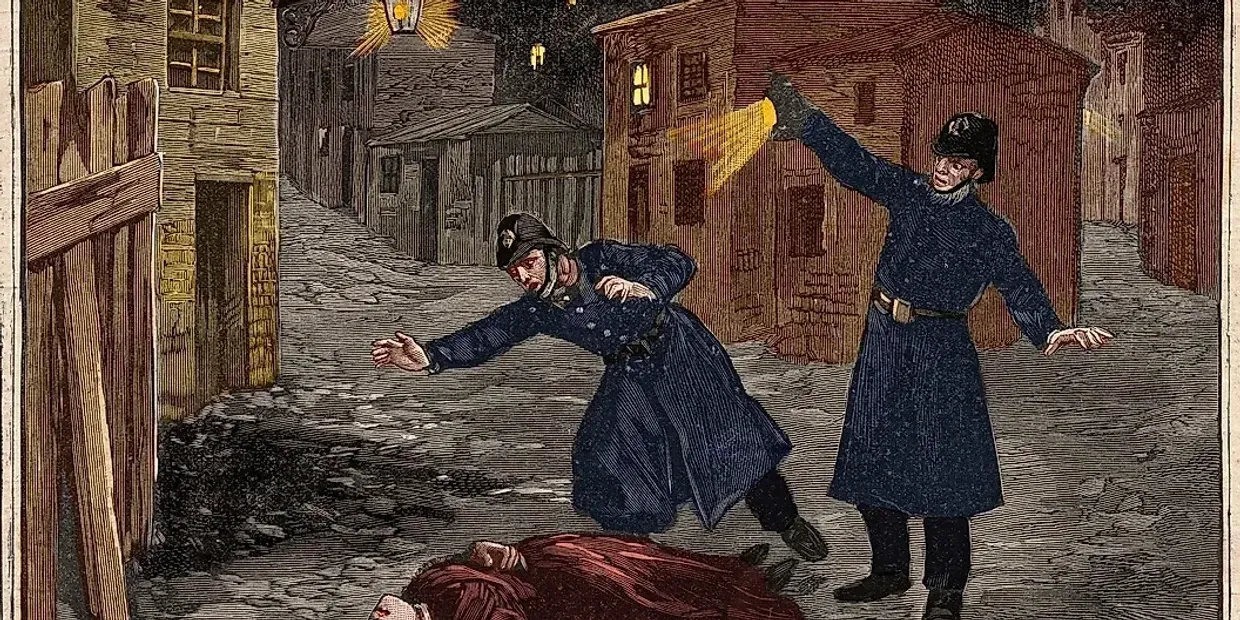
JACK THE RIPPER
Introduction
Jack the Ripper is one of history’s most infamous serial killers, known for a series of brutal murders in the Whitechapel district of London in 1888. The identity of the killer remains a mystery, captivating the public’s imagination for over a century. The name “Jack the Ripper” originated from a letter, possibly a hoax, sent to the press during the murders. The killer targeted women, mostly prostitutes, and his gruesome methods set him apart, sparking fear and fascination.
The Whitechapel Murders
The murders attributed to Jack the Ripper occurred between August and November 1888. The canonical five victims—Mary Ann Nichols, Annie Chapman, Elizabeth Stride, Catherine Eddowes, and Mary Jane Kelly—were all murdered in a manner that suggested profound rage and a certain level of anatomical knowledge, as many were found with their throats slashed and bodies mutilated. The locations of the murders, all within a small area, indicate the killer’s intimate familiarity with Whitechapel.
Investigations and Public Panic
The police investigation into the Ripper murders was unprecedented, involving hundreds of interviews, door-to-door inquiries, and forensic attempts that were rudimentary by modern standards. However, the lack of witnesses, the dark and foggy streets of East London, and the disorganized nature of early forensic science hampered efforts to catch the killer. The media’s sensationalist coverage fueled public panic, and many letters, some claiming to be from the killer himself, were sent to newspapers and the police, though their authenticity remains disputed.
The failure of the police to apprehend the killer led to widespread criticism and calls for the resignation of officials in charge, including Police Commissioner Sir Charles Warren. The case exposed the growing social and economic disparities in Victorian London, highlighting the dire conditions in which many of the victims lived.
Theories and Suspects
Over the years, numerous suspects have been proposed, ranging from prominent figures like Prince Albert Victor, the Duke of Clarence, to more plausible candidates such as Montague John Druitt, a barrister with a troubled history, and Aaron Kosminski, a Polish barber who was committed to an asylum shortly after the murders. Another strong candidate is Francis Tumblety, an American quack doctor with a known hatred of women. Despite extensive research and countless theories, no conclusive evidence has ever identified the Ripper.
Legacy and Cultural Impact
Jack the Ripper has become a cultural icon, representing the darker side of Victorian London and the ultimate unsolved mystery. The case has inspired countless books, films, and television series, often portraying the Ripper as a symbol of chaos and the unknown. The Ripper’s legend continues to intrigue true crime enthusiasts, historians, and conspiracy theorists alike, with new theories and evidence occasionally emerging, although none have definitively solved the mystery.
The enduring fascination with Jack the Ripper reflects a broader societal obsession with unsolved crimes and the human desire to understand what drives someone to commit such heinous acts. His legacy is a testament to the power of mystery and the chilling reality that, sometimes, justice is never served.
Conclusion
Jack the Ripper remains an enigmatic figure whose brutal crimes shook 19th-century London and left an indelible mark on the collective consciousness. Despite the passage of time and advances in forensic science, the Ripper’s true identity continues to elude both professionals and amateur sleuths. His story is not just about the terror he unleashed but also about the era’s social complexities, highlighting the vulnerabilities of a rapidly changing society.
The enduring mystery of Jack the Ripper will likely never be fully solved, but it serves as a chilling reminder of humanity’s darker instincts and the allure of the unknown. The Ripper’s story lives on, a shadowy figure lurking in the fog of Victorian London, forever beyond reach but never forgotten.
Leave a Reply