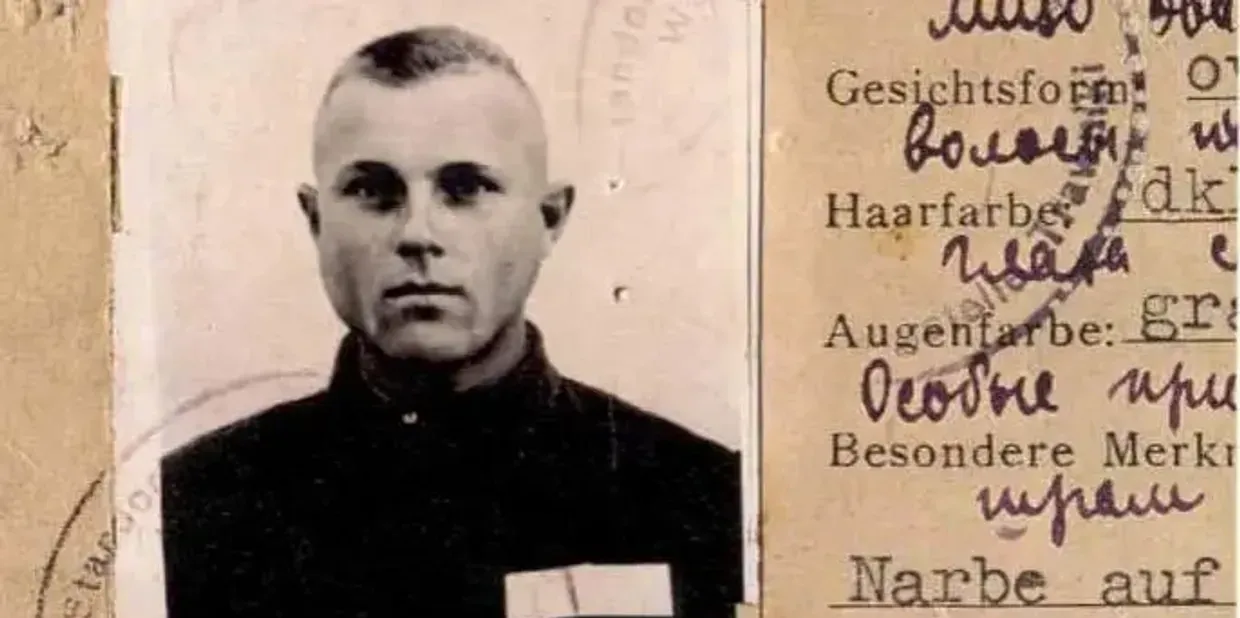
IVAN THE TERRIBLE John Demjanjuk
Introduction to John Demjanjuk
John Demjanjuk, a retired Ukrainian-American autoworker, became one of the most controversial figures of post-World War II justice due to his alleged involvement as a Nazi war criminal. Born Ivan Mykolaiovych Demjanjuk on April 3, 1920, in Ukraine, Demjanjuk was accused of being “Ivan the Terrible,” a notoriously brutal guard at the Treblinka extermination camp. His case spanned decades, involving numerous trials, deportations, and appeals, reflecting the complexities and challenges of prosecuting war crimes long after the events took place. Demjanjuk’s story is not only a legal drama but also a profound exploration of identity, memory, and the quest for justice.
Early Life and World War II Involvement
John Demjanjuk was born in the Ukrainian village of Dubovi Makharyntsi, then part of the Soviet Union. During his youth, Ukraine was ravaged by political upheaval, famine, and war, deeply affecting his upbringing. In 1941, during World War II, Demjanjuk was drafted into the Soviet Red Army to fight against the invading German forces. However, in 1942, he was captured by the Germans during the Battle of Kerch and became a prisoner of war.
It was during his time as a POW that Demjanjuk allegedly began collaborating with the Nazis. According to prosecutors, he volunteered to serve as a guard at several Nazi concentration camps, including Sobibor, Majdanek, and Flossenbürg, and was trained at the SS Trawniki training camp, which specifically prepared non-German volunteers to assist in Nazi extermination efforts. His most notorious alleged role was at Treblinka, where he was accused of being the sadistic guard known as “Ivan the Terrible,” who operated the gas chambers and was responsible for torturing and killing thousands of Jewish prisoners.
Emigration to the United States and Life as a Family Man
After the war, Demjanjuk lived in displaced persons camps in Germany before immigrating to the United States in 1952 with his wife and daughter. He settled in the Cleveland suburb of Seven Hills, Ohio, where he found work as an autoworker at the Ford Motor Company. Demjanjuk lived a relatively quiet life, becoming a naturalized U.S. citizen in 1958. He was known to friends and neighbors as a hardworking and unassuming family man who showed no outward signs of his past.
However, his past began to catch up with him in the 1970s when survivors of the Holocaust identified him as Ivan the Terrible. The U.S. government accused him of lying about his involvement with the Nazis on his immigration paperwork, sparking the first of many legal battles that would define the rest of his life.
The First Trial: Ivan the Terrible at Treblinka
In 1981, Demjanjuk was stripped of his U.S. citizenship and extradited to Israel in 1986 to stand trial for war crimes. The prosecution charged him with being Ivan the Terrible, responsible for the mass murder of Jews at Treblinka. His trial in Israel was one of the most significant war crimes trials since the Nuremberg Trials, drawing international attention and fierce debate.
The trial featured harrowing testimonies from Holocaust survivors who vividly recalled Ivan the Terrible’s brutality. Demjanjuk maintained his innocence throughout, insisting that he was never at Treblinka and that he was a victim of mistaken identity. His defense argued that Demjanjuk was not Ivan the Terrible but rather a POW who had been wrongfully accused.
In 1988, Demjanjuk was found guilty and sentenced to death by hanging. However, new evidence emerged in 1991 when the Soviet Union collapsed, revealing KGB archives that suggested another man, Ivan Marchenko, was Ivan the Terrible. The Israeli Supreme Court overturned Demjanjuk’s conviction in 1993, ruling that the new evidence raised reasonable doubt about his identity. Demjanjuk returned to the United States, where his citizenship was eventually restored.
The Second Trial: Guard at Sobibor
Despite his acquittal in Israel, Demjanjuk’s legal troubles were far from over. In 2001, the U.S. Department of Justice accused him of being a guard at the Sobibor extermination camp, based on evidence that included identification documents from Nazi archives, which placed him at Sobibor and other camps. His U.S. citizenship was revoked once more, and after years of legal wrangling, he was deported to Germany in 2009 to stand trial for his role in the Holocaust.
The trial in Munich was groundbreaking because Demjanjuk was not accused of any specific acts of murder but rather of being complicit in the Nazi extermination machine. Prosecutors argued that as a guard at Sobibor, Demjanjuk was directly involved in the operation of the gas chambers that killed over 28,000 Jews, regardless of whether he personally committed acts of violence. This approach marked a significant shift in the prosecution of Holocaust perpetrators, focusing on participation in the system rather than individual acts.
Demjanjuk, by then in his late 80s and in poor health, sat in court in a wheelchair, maintaining his innocence and claiming that he was a victim of Soviet and Nazi manipulation. In 2011, Demjanjuk was convicted and sentenced to five years in prison. However, due to his age and health, he was released pending appeal and spent the remainder of his life in a nursing home. He died in 2012, still insisting on his innocence, and his appeal was never resolved, leaving his conviction technically not finalized under German law.
The Controversy and Legacy of John Demjanjuk
John Demjanjuk’s case remains one of the most complex and debated in the history of Holocaust justice. His story touches on profound issues of identity, the passage of time, and the limits of legal evidence in prosecuting historical crimes. To some, Demjanjuk was a symbol of the relentless pursuit of justice, an unrepentant Nazi who evaded accountability for decades. To others, he was an old man wrongfully accused, caught in the crossfire of a flawed legal system and shifting political agendas.
The Demjanjuk trials also highlighted the difficulties in prosecuting war criminals decades after their crimes, when evidence is often incomplete, and memories have faded. The shift in focus during his German trial—from proving individual acts of murder to establishing complicity in the broader Nazi system—set a precedent for how low-level participants in genocidal regimes could be held accountable.
Demjanjuk’s case continues to provoke debate about the nature of justice for Holocaust perpetrators. Was his conviction a triumph of accountability, or did it raise uncomfortable questions about the fairness of prosecuting someone so far removed from their alleged crimes? The trials revealed the challenges of confronting history, the human cost of war crimes, and the moral imperative to remember the victims.
Demjanjuk’s life, from a Ukrainian farm boy to a defendant in some of the most significant war crimes trials of the 20th and 21st centuries, is a stark reminder of the enduring legacy of the Holocaust. His story is not just about guilt or innocence but about the complex interplay of memory, justice, and the unyielding pursuit of truth in the shadow of unimaginable horror.
Leave a Reply