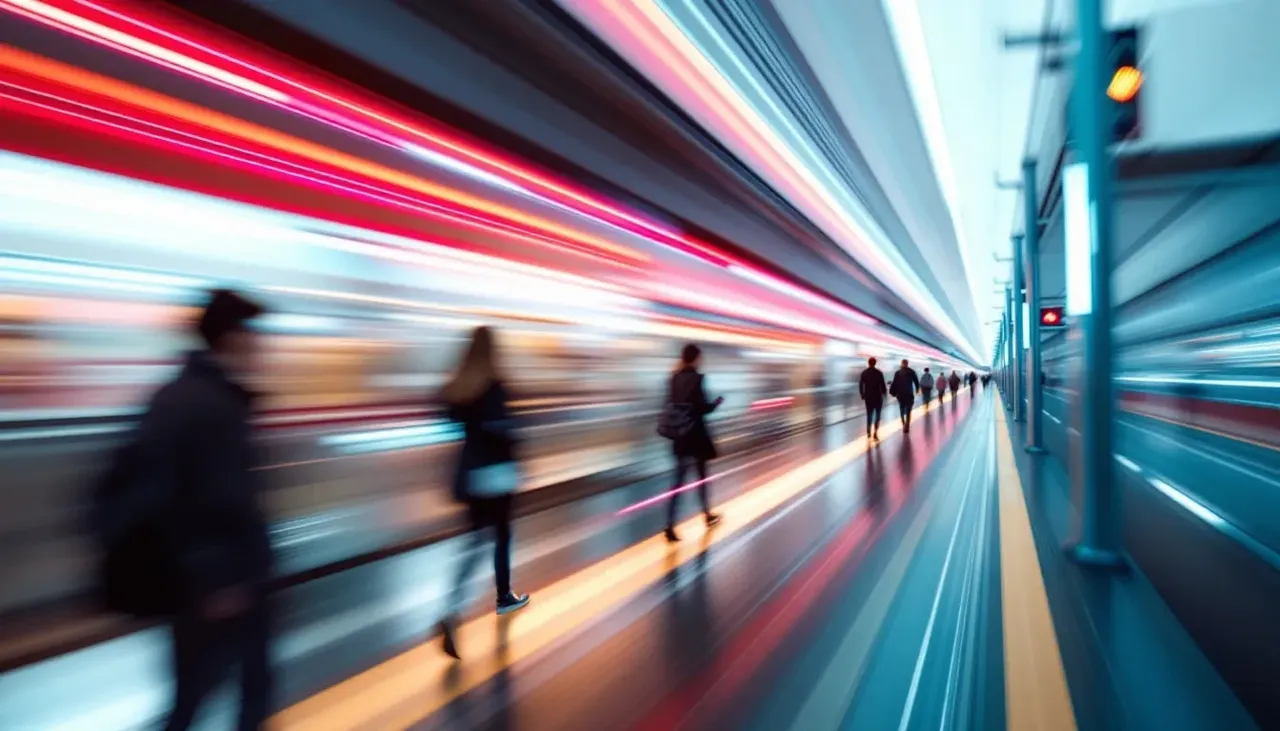
The perception that time has been passing faster since COVID
Introduction
Since the COVID-19 pandemic began in early 2020, many individuals have reported a strange sensation: time seems to be passing faster. Days, weeks, and even months seem to blend together, with the years since the start of the pandemic feeling like a blur. This sense of accelerated time has sparked a global conversation, with people trying to understand why it feels like time is slipping away faster than ever before. While time itself is constant, the way humans perceive it is deeply influenced by changes in routine, emotional states, societal factors, and even technology. This article delves into the psychological and environmental factors that contribute to the feeling of time speeding up, particularly in the context of the COVID-19 pandemic.
The Subjectivity of Time Perception
Before diving into the pandemic-specific causes, it is important to understand that the perception of time is inherently subjective. Human beings don’t experience time in a linear way. Our brains rely on external stimuli, routines, and events to organize time. The more varied and distinct our experiences, the more we feel like time is passing at a regular pace. Conversely, repetitive or monotonous experiences compress our perception of time, leading us to feel like it is moving more quickly.
This subjectivity is key to understanding why so many people feel that time has sped up during the pandemic. With fewer novel experiences and more routine-filled days, the human brain has fewer markers to distinguish one day from the next, resulting in the sensation that time is flying by.
The Psychological Impact of Pandemic Life
The COVID-19 pandemic caused an unprecedented disruption in daily life across the globe. It forced many people into quarantine, remote work, or limited social interactions, all of which drastically altered normal routines. As mentioned earlier, routine and monotony play a significant role in time perception. When life becomes a series of repetitive actions—such as working from home, staying indoors, or limiting social interactions—the brain doesn’t have to process as much new information, which leads to a blurring of time.
Additionally, the pandemic introduced new emotional and psychological stressors that impact how we perceive time. Fear, anxiety, and uncertainty about the future heightened stress levels for many individuals. When people are stressed or anxious, they often focus more on the present moment and immediate concerns, rather than long-term planning. This focus on the present can make weeks and months seem to blur together when looking back, creating the impression that time passed more quickly than it actually did.
The Role of Emotional States in Time Perception
Emotions have a powerful effect on how we experience time. During the pandemic, many individuals experienced high levels of stress, uncertainty, and fear. These emotional states can distort our sense of time, particularly when they are sustained over long periods. In short, emotional intensity—whether positive or negative—can stretch or compress time perception.
In normal circumstances, people go through a variety of emotional states in a day, whether it’s excitement, frustration, joy, or sadness. These variations create “emotional bookmarks” in the mind, allowing us to differentiate one day from another. During the pandemic, many people experienced prolonged periods of anxiety or even numbness, where emotional highs and lows were less pronounced. This flattening of emotional experiences can compress time perception, making months seem to vanish in hindsight.
The Impact of Routine and Monotony
The pandemic-induced routine is one of the most significant factors contributing to the acceleration of time perception. For many, daily life during the pandemic followed a predictable and monotonous pattern: waking up, working remotely, limited social interaction, and repeating the cycle day after day. Without the variability of pre-pandemic life—commuting, attending events, dining out, traveling, etc.—time started to feel compressed.
Monotony accelerates the perception of time because the brain doesn’t have to process novel information. Studies have shown that novel experiences make time feel like it’s passing more slowly, as the brain pays more attention to processing unfamiliar events. In contrast, routine experiences are processed more quickly, making time feel like it’s moving faster. This is why vacations or new experiences can feel long and enriching, while a week spent working the same job from home can feel like it disappeared in an instant.
Isolation and Social Distancing
Isolation and social distancing, two of the pandemic’s hallmark features, also played a significant role in altering time perception. Humans are inherently social beings, and interactions with others provide a structure for how we perceive time. Social events—such as meeting friends for dinner, attending parties, or celebrating holidays—serve as markers in our minds that help us organize our memories. When these interactions are reduced or eliminated, time becomes harder to track.
For example, before the pandemic, people might have punctuated their year with vacations, family gatherings, birthdays, or professional events. These events help break the flow of time and allow people to mark the passage of weeks or months. During lockdowns, many of these events were canceled or postponed, leaving people without the usual markers that help them perceive time in a more regular and structured way.
The Digital Overload
The pandemic forced a massive shift to digital platforms, with people spending more time than ever in front of screens—whether for work, socializing, or entertainment. This digital overload has contributed to the feeling that time is passing quickly. The fast-paced nature of digital life, with constant updates, social media notifications, and a barrage of information, leaves little room for introspection or reflection. When life is experienced at a rapid digital pace, it can distort time perception.
Moreover, the shift to remote work blurred the boundaries between professional and personal life, leading to longer working hours and fewer breaks. Without the structure provided by commuting or distinct work environments, many people found it hard to distinguish between weekdays and weekends, further fueling the sense that time was moving quickly.
The Role of Technology in Time Compression
Technology has accelerated the pace of life for years, and this trend was amplified during the pandemic. The near-constant use of social media, news apps, and streaming services created a digital environment where people were constantly engaged but not always meaningfully. The consumption of short-form content—like social media posts, tweets, and video snippets—further compressed time, as the brain adapted to processing information rapidly.
Streaming services and binge-watching TV shows also contributed to time compression. In pre-pandemic times, people might have watched one episode of a show per week, stretching the experience over months. During the pandemic, many turned to binge-watching entire seasons or series over a weekend, compressing months of entertainment into a few days. This rapid consumption of content contributed to the feeling that time was moving faster.
Societal Shifts and the Collective Experience of Time
One of the unique aspects of the COVID-19 pandemic is that it was a global event. Nearly everyone experienced some form of disruption, whether it was lockdowns, remote work, or social isolation. This collective experience of time has contributed to the perception that time is moving faster. In a way, the pandemic created a shared narrative of time compression, where large groups of people felt that life had been put on pause, even as the calendar months flew by.
The societal shifts caused by the pandemic, such as remote work, the rise of e-commerce, and changes in education, also contributed to time compression. These changes happened rapidly and forced people to adapt quickly, leaving little time for reflection. The rapid pace of societal change during the pandemic, combined with the lack of structure in daily life, has created a sense of disorientation about how much time has actually passed.
The Science Behind Time Dilation and Time Compression
Psychologists have long studied the phenomenon of time dilation (the feeling that time is dragging) and time compression (the feeling that time is speeding up). These concepts help explain why time seemed to pass both quickly and slowly during the pandemic.
At the start of the pandemic, many people experienced time dilation. The uncertainty and fear associated with the virus, as well as the sudden changes to daily life, made time feel like it was dragging. This effect is common during stressful situations, where the brain becomes hyper-aware of immediate surroundings and focuses on survival.
However, as the pandemic wore on, people adapted to the new normal, and time compression became more common. The repetitive nature of pandemic life, combined with the lack of novel experiences, made time feel like it was moving faster. This shift from time dilation to time compression reflects the brain’s adaptation to long-term stress and monotony.
Temporal Displacement and the Loss of Milestones
Another important factor in the perception of time passing quickly during the pandemic is the concept of temporal displacement. Many people feel like they lost entire years to the pandemic because they were unable to celebrate milestones, such as weddings, graduations, birthdays, or vacations. These milestones serve as important markers of time, and when they are taken away, it can feel like time has slipped by unnoticed.
This loss of milestones has led to a widespread feeling of temporal displacement, where people feel disconnected from the passage of time. Without the usual events to mark the year, many people feel like they have lost control over their own sense of time, contributing to the perception that the pandemic years have flown by.
Broader Societal Changes Post-Pandemic
As the world continues to adapt to life after the pandemic, it is likely that our perception of time will shift once again. The return of social events, travel, and in-person interactions will help reintroduce the markers that help us track time more effectively. However, the acceleration of digital life and the blurring of work-life boundaries may continue to compress time perception for many people.
One of the lasting effects of the pandemic may be a heightened awareness of how quickly time passes and a renewed focus on making the most of each moment. As society moves forward, individuals may seek to regain control over their sense of time by prioritizing meaningful experiences, reducing digital overload, and creating boundaries between work and personal life.
Conclusion
The feeling that time has been speeding up since the COVID-19 pandemic is the result of a complex interplay of psychological, emotional, technological, and societal factors. While time itself remains constant, our perception of it is shaped by our experiences, routines, and emotional states. The monotony of pandemic life, combined with the acceleration of digital technology and the loss of social interactions, has compressed our sense of time, making it feel like the past few years have flown by. As the world emerges from the pandemic, it will be fascinating to see how our relationship with time evolves in the post-pandemic era.
Leave a Reply