vSupply Chain Protection Act: Ensuring Economic and Public Safety in Critical Sectors
Introduction
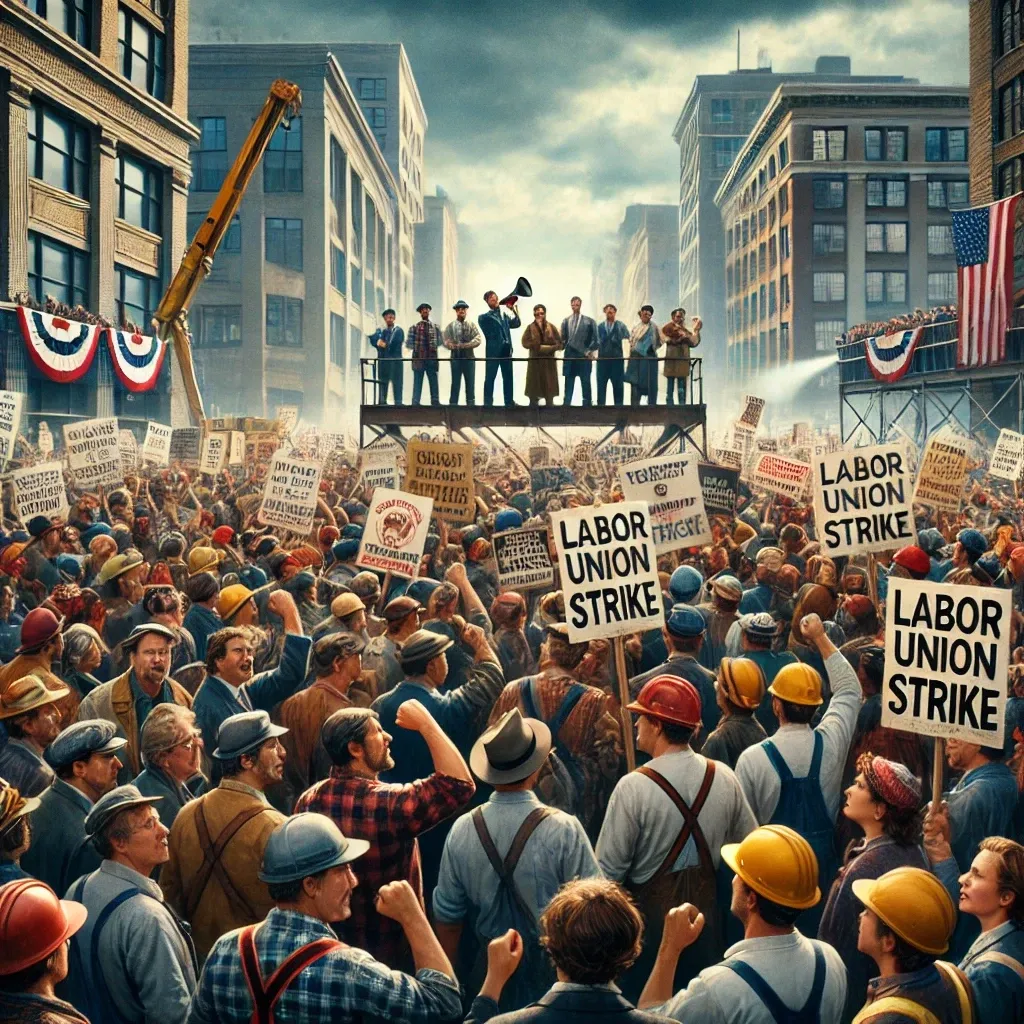
The Supply Chain Protection Act is a legislative proposal aimed at safeguarding the national economy and public welfare by minimizing the impact of labor strikes in critical sectors. While recognizing the right of workers to organize and strike, the Act introduces mechanisms to prevent severe disruptions to industries essential to national security, health, and economic stability. The Act strikes a balance between protecting labor rights and ensuring the continuous flow of essential goods and services to prevent economic damage, physical harm, and loss of life.
Purpose and Intent
The core purpose of the Supply Chain Protection Act is twofold:
Protect the Economy: To ensure that strikes or labor disputes in key industries do not disrupt the nation’s ability to produce, distribute, and access essential goods and services.
Protect Public Safety: To prevent situations where labor actions lead to physical harm or death, especially in sectors like healthcare, food, and energy.
This Act is intended to ensure that critical sectors remain operational during labor strikes while still preserving the rights of workers to bargain collectively and strike when necessary.
Key Provisions of the Supply Chain Protection Act
1. Designation of Critical Sectors
The Act identifies and defines critical sectors of the economy, where disruptions could have severe consequences for the nation’s stability or public welfare. These sectors include:
Healthcare and pharmaceuticals: Hospitals, medical equipment, and drug production
Energy production and distribution: Oil, gas, electricity
Food production and distribution
Water supply and sanitation
Transportation and logistics: Shipping, air, rail, and trucking
Defense and aerospace manufacturing
Information technology and telecommunications
Critical infrastructure maintenance and construction: Highways, bridges, utilities
The Department of Commerce or a newly created Supply Chain Protection Agency will be responsible for periodically reviewing and updating the list of critical sectors based on national security needs, economic impact, and public safety concerns.
2. Mandatory Arbitration in Critical Sectors
Before a strike can occur in any sector designated as critical, the Act requires the following:
Arbitration Process: Unions and employers must first enter into a mandatory arbitration process overseen by a federal arbitration board. This process aims to resolve disputes before any work stoppage can take place.
Time Limit: If no resolution is reached within a set period (e.g., 30 days), the union retains the right to strike. However, a minimum operational capacity will be enforced to ensure that essential services continue.
This measure ensures that disputes can be resolved through negotiation without causing immediate harm to the economy or public health.
3. Supply Chain Continuity Requirements
To further mitigate the risks posed by strikes, the Act mandates that a minimum level of operational capacity be maintained in critical sectors during labor actions:
Essential Workforce: Critical employees, such as emergency room doctors, food distribution workers, or power plant operators, may be required to continue working during strikes. These workers would receive special compensation, such as hazard pay, to ensure essential services remain functional.
Industry Standards: The minimum level of service required during strikes will be defined by industry-specific standards, as set by federal agencies. Failure to comply will lead to penalties.
4. Financial Penalties for Supply Chain Disruptions
When a strike or labor action results in significant supply chain disruption, the Act allows for the imposition of financial penalties on unions and employers:
Fines: Unions and employers could face fines based on the financial losses incurred by the disruption of goods and services.
Levies: Additional levies may be imposed to cover indirect damages, such as business losses or disruptions to downstream industries dependent on the supply chain.
These penalties are designed to deter unnecessary strikes in critical sectors and encourage unions and employers to seek arbitration before engaging in disruptive labor actions.
5. Exemptions for Non-Critical Sectors
Strikes in non-critical sectors will not be affected by this Act. These sectors will continue to be governed by existing labor laws, such as the National Labor Relations Act (NLRA) and Taft-Hartley Act, which uphold workers’ rights to organize and strike freely.
6. Emergency Powers
In times of national emergency, such as war, pandemics, or natural disasters, the President may invoke emergency powers under this Act:
Temporary Suspension of Strikes: The government may suspend strikes in critical sectors for the duration of the emergency to ensure public safety and economic continuity.
Federal Mediation: During this period, federal mediators will oversee negotiations between unions and employers to resolve disputes without further disruption.
Criminal Liability for Harm or Death
7. Criminal Consequences for Physical Harm or Death Due to Disruptions
In cases where a strike or labor action causes serious physical harm or death due to the disruption of critical goods and services, responsible parties may face criminal prosecution. The following provisions apply:
Direct Harm: If individuals suffer injury, illness, or death because they were deprived of essential goods or services, such as healthcare, medication, or food, the responsible parties could face criminal charges.
Union and Employer Accountability: Union leaders and corporate executives could be prosecuted if they are found to have willfully caused or exacerbated the disruption, particularly if they failed to comply with arbitration or refused to maintain minimum operational standards.
The Department of Justice (DOJ) will investigate such incidents in coordination with the Department of Health and Human Services (HHS) and other relevant agencies.
Criminal Charges
Potential criminal charges for those found responsible for life-threatening disruptions include:
Negligence: For failure to adhere to safety or operational guidelines.
Manslaughter: For disruptions that lead directly to death.
Reckless Endangerment: For actions that willfully ignored the well-being of the public.
Standards of Proof and Sentencing
Prosecutors must demonstrate a direct causal link between the supply chain disruption and the harm or death caused.
Sentences may include prison time, fines, or suspensions of union or corporate leadership roles.
This section is designed to hold both unions and employers accountable when their actions lead to severe harm, particularly in sectors where continuous service is critical to human life.
8. Strategic National Supply Reserve
To mitigate the risks of supply chain disruptions, the Act creates a Strategic National Supply Reserve, ensuring that vital goods such as medical supplies, food, and fuel remain available in case of labor disruptions:
The Supply Chain Protection Agency will oversee this reserve and manage distribution during strikes or emergencies.
Enforcement and Oversight
Supply Chain Protection Agency: This newly created federal agency, under the Department of Commerce, will:
Oversee the enforcement of the Act.
Coordinate arbitration processes and monitor compliance with minimum operational standards.
Report violations and supply chain disruptions to the DOJ for further action.
Department of Justice (DOJ): The DOJ will investigate and prosecute criminal cases arising from supply chain disruptions that cause harm or death.
Judicial Review: The U.S. Supreme Court will have jurisdiction over any legal challenges to the Act to ensure that it aligns with constitutional protections for labor rights.
Conclusion
The Supply Chain Protection Act offers a balanced solution to the complex issue of labor strikes in critical sectors. It ensures that the public and economy are shielded from the most damaging effects of strikes while preserving workers’ rights to bargain collectively. With measures like mandatory arbitration, minimum operational requirements, and criminal liability for harm or death, the Act is designed to protect the nation’s vital supply chains and the health and safety of its citizens.
By ensuring accountability for both unions and employers, the Act encourages responsible negotiation and collaboration in industries where lives and the economy are at stake.
Leave a Reply