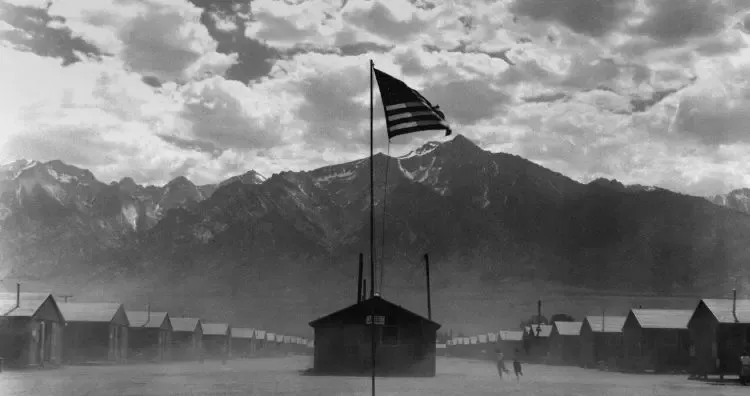
The Internment of Japanese Americans During World War II: A Dark Chapter in American History
During World War II, more than 120,000 Japanese Americans were forcibly removed from their homes and held captive in concentration camps across the United States. This mass internment was not based on any evidence of wrongdoing or disloyalty but rather on widespread fear, prejudice, and racism. The U.S. government’s decision to target and incarcerate individuals solely because of their Japanese ancestry is now recognized as one of the most egregious human rights violations in American history. Yet, it would take more than four decades for the government to publicly acknowledge this act and offer an official apology.
This article explores the history of Japanese American internment, the impact it had on the lives of those affected, and the long struggle for justice and recognition. From the panic following the attack on Pearl Harbor to the eventual formal apology in 1988, the internment of Japanese Americans remains a stark reminder of the dangers of racial discrimination, especially in times of national crisis.
The Context: Pearl Harbor and Anti-Japanese Sentiment
The internment of Japanese Americans was directly triggered by Japan’s surprise attack on Pearl Harbor on December 7, 1941. The attack, which resulted in the deaths of over 2,400 Americans and the destruction of much of the U.S. Pacific Fleet, thrust the United States into World War II. The attack also ignited widespread fear and suspicion toward Japanese Americans, particularly on the West Coast, where the majority of Japanese immigrants and their descendants lived.
Anti-Japanese sentiment had existed in the United States long before Pearl Harbor. Since the late 19th century, Japanese immigrants had faced discrimination and exclusion in American society. Laws such as the Immigration Act of 1924 had banned Japanese immigration altogether, reflecting a long-standing prejudice against Asian communities. Many Americans, particularly in California, viewed Japanese immigrants and their descendants as an economic threat, accusing them of taking jobs and land from white citizens.
After the attack on Pearl Harbor, this prejudice quickly escalated into outright hostility. Rumors circulated that Japanese Americans were working as spies for the Japanese government or might aid an invasion of the West Coast. Despite a lack of evidence to support these claims, the public, media, and government officials began calling for action against the Japanese American community.
Executive Order 9066: The Legal Basis for Internment
On February 19, 1942, President Franklin D. Roosevelt signed Executive Order 9066, authorizing the military to designate certain areas as “military zones” and exclude anyone deemed a threat to national security from these zones. Although the order did not explicitly mention Japanese Americans, it was used almost exclusively to target them.
Under the authority of this executive order, the U.S. military began forcibly removing Japanese Americans from their homes on the West Coast. Over 120,000 Japanese Americans—most of whom were U.S. citizens by birth—were rounded up and sent to internment camps. Many had only days or weeks to pack up their belongings and sell or abandon their property. They were allowed to bring only what they could carry, leaving behind homes, businesses, and possessions.
For Japanese Americans, the experience was devastating. Families were uprooted from their communities and stripped of their rights without any due process. The overwhelming majority had no connection to Japan’s military actions and had never shown any signs of disloyalty to the United States. Yet, they were treated as enemies by their own government, simply because of their ethnicity.
Life in the Internment Camps
The internment camps, often referred to as “relocation centers” by the government, were located in remote areas of the United States, including deserts and mountains. There were ten main camps, with some of the largest located in places like Manzanar, California; Tule Lake, California; Heart Mountain, Wyoming; and Topaz, Utah. These camps were surrounded by barbed wire and guarded by military personnel, making them de facto prisons.
Conditions in the camps were harsh. Japanese Americans were housed in makeshift barracks that provided little protection from the extreme weather, whether it was the scorching heat of the desert or the biting cold of the mountains. Families often had to share small, cramped quarters, with little privacy. The facilities were bare and inadequate, with poor sanitation, limited medical care, and a shortage of basic supplies.
Interned Japanese Americans were subject to strict regulations and surveillance. They were not free to come and go as they pleased and were under constant watch by armed guards. Despite these hardships, many internees tried to make the best of their situation. They established schools, churches, and community organizations within the camps, and some were allowed to work on nearby farms or in factories to contribute to the war effort.
However, the psychological toll of internment was immense. Many Japanese Americans, especially the Issei (first-generation immigrants) and Nisei (second-generation, U.S.-born citizens), felt a profound sense of betrayal. They had built their lives in America, only to be treated as enemies by the country they considered home. For many, the scars of internment would last a lifetime.
The Legal Challenges and the Fight for Justice
Even as the internment camps were established, there were those who challenged the constitutionality of Executive Order 9066. Several Japanese Americans, including Fred Korematsu, Gordon Hirabayashi, and Minoru Yasui, refused to comply with the internment orders and were arrested. These individuals fought their cases all the way to the U.S. Supreme Court, arguing that their internment violated their constitutional rights.
In the 1944 case Korematsu v. United States, the Supreme Court upheld the legality of the internment, ruling that the wartime necessity of national security outweighed Korematsu’s individual rights. This decision was deeply controversial and remains one of the most criticized rulings in the Court’s history. It was a stark reminder of how fear and prejudice can lead to the erosion of civil liberties, even in a democracy.
Despite the Supreme Court’s ruling, there was growing opposition to the internment policy, particularly as the war drew to a close. In December 1944, the government announced that the internment camps would be closed, and by the end of 1945, most Japanese Americans had been released. However, returning to their pre-war lives was far from easy. Many had lost their homes, businesses, and savings, and they faced ongoing discrimination and hostility from the public.
The Long Road to Redress and Recognition
For decades after the war, the U.S. government refused to acknowledge the injustice of Japanese American internment. The survivors of internment were left to rebuild their lives without any formal apology or compensation for the losses they had suffered. However, the Japanese American community and its allies continued to fight for recognition and justice.
In the 1970s and 1980s, a growing movement for redress gained momentum. Japanese American activists, scholars, and politicians pushed for an official acknowledgment of the internment as a violation of civil rights. The Japanese American Citizens League (JACL) played a central role in advocating for redress, and many former internees began to share their stories publicly, helping to raise awareness about the injustice they had endured.
This movement culminated in the formation of the Commission on Wartime Relocation and Internment of Civilians (CWRIC), established by Congress in 1980. The commission held hearings across the country, gathering testimony from former internees and their families. In 1983, the commission released its report, titled “Personal Justice Denied,” which concluded that the internment was not justified by military necessity but was instead the result of “race prejudice, war hysteria, and a failure of political leadership.”
The report called for a formal apology and reparations for the survivors of internment, setting the stage for legislative action.
The Civil Liberties Act of 1988: A Formal Apology
In 1988, more than four decades after the internment began, President Ronald Reagan signed the Civil Liberties Act of 1988 into law. The act provided a formal apology from the U.S. government for the internment of Japanese Americans and offered reparations to surviving internees. Each survivor was awarded $20,000 in compensation—a symbolic gesture, given the immense financial and emotional losses they had endured.
In his remarks upon signing the legislation, President Reagan stated:
“Here we admit a wrong; here we reaffirm our commitment as a nation to equal justice under the law.”
The Civil Liberties Act of 1988 was a significant victory for the Japanese American community, but it also served as a broader reminder of the importance of protecting civil liberties, especially during times of crisis. The internment of Japanese Americans was a dark chapter in American history, but the official acknowledgment of the injustice and the efforts to redress it represented a step toward healing and reconciliation.
Legacy of the Japanese American Internment
The internment of Japanese Americans during World War II remains a cautionary tale about the dangers of racial discrimination and the erosion of civil rights in times of fear and uncertainty. The decision to incarcerate over 120,000 people, most of whom were American citizens, without due process was a profound violation of the principles of justice and equality.
The legacy of internment is still felt today, not only by the Japanese American community but by all Americans who value civil liberties. It serves as a reminder that the rights of minority groups can be easily threatened when fear and prejudice are allowed to override the rule of law.
In recent years, the story of Japanese American internment has been included in educational curricula across the United States, ensuring that future generations learn from this painful history. Monuments and memorials have been erected to honor the memory of those who were interned, including the Japanese American National Museum in Los Angeles and the Manzanar National Historic Site in California.
Moreover, the struggle for justice and recognition continues to inspire other movements for civil rights and equality, reminding us that the fight against racism and discrimination is ongoing.
Conclusion: A Warning from History
The internment of Japanese Americans during World War II was a tragic violation of civil rights driven by fear, prejudice, and wartime hysteria. More than 120,000 people were incarcerated not because of any proven threat but because of their race. The U.S. government’s decision to target an entire community based on unfounded suspicions stands as a stark reminder of how quickly democratic values can be undermined in times of crisis.
It took over 40 years for the U.S. government to formally acknowledge its wrongdoing and offer an apology to the survivors of internment. The Civil Liberties Act of 1988 was an important step toward justice, but the scars of internment remain. As we reflect on this dark chapter in history, we are reminded of the need to remain vigilant in protecting the rights of all people, especially during moments of national fear and uncertainty.
The story of Japanese American internment is a powerful warning about the consequences of allowing racial prejudice to dictate policy and a testament to the resilience of those who endured this injustice and fought for recognition.
Leave a Reply