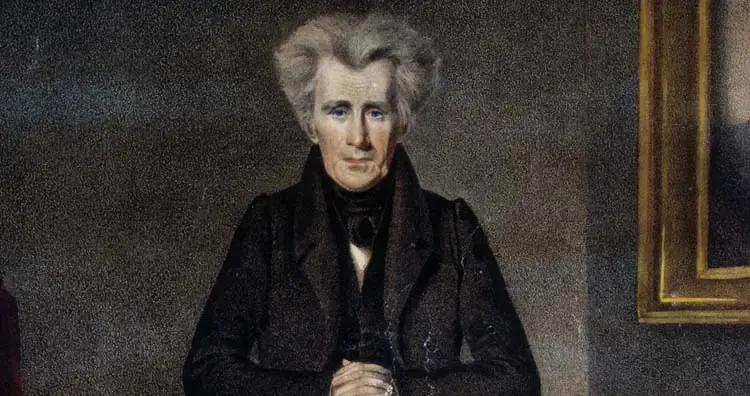
The First Assassination Attempt on a U.S. President: Andrew Jackson’s Remarkable Survival in 1835
On January 30, 1835, Andrew Jackson, the seventh president of the United States, narrowly survived the first recorded assassination attempt on a sitting U.S. president. This remarkable incident took place at the U.S. Capitol in Washington, D.C., and was notable not only for its historical significance but also for its bizarre and dramatic outcome. The would-be assassin approached Jackson, attempted to shoot him twice with two separate pistols, both of which misfired. Infuriated, the 67-year-old Jackson proceeded to defend himself, beating the attacker with his cane.
This extraordinary event has since become one of the most legendary episodes in American political history, demonstrating both the peril faced by public figures and the indomitable spirit of one of the nation’s most controversial presidents.
The Incident: The Assassination Attempt at the Capitol
On the day of the attack, President Jackson was attending the funeral of South Carolina Congressman Warren R. Davis at the U.S. Capitol. As Jackson was leaving the Capitol after the service, a man named Richard Lawrence, an unemployed house painter, approached the president. Lawrence had been following Jackson and believed that the president’s policies were to blame for his personal misfortunes.
Lawrence suddenly pulled out a pistol and aimed it directly at Jackson, who was only a few feet away. He pulled the trigger, but the gun misfired. Despite the close range, the weapon failed to discharge. Undeterred, Lawrence produced a second pistol and fired again at Jackson. In an extraordinary twist of fate, the second gun also misfired.
Both of Lawrence’s pistols had malfunctioned, a highly improbable event. Later testing of the pistols showed that they were in good working order, making the double misfire a remarkable stroke of luck for Jackson. Some estimates suggest that the chance of both pistols misfiring was 1 in 125,000.
Jackson’s Reaction: A Furious Counterattack
Andrew Jackson, who was known for his fiery temper and combativeness, did not react passively to the attack. When the second pistol misfired, the enraged president charged at Lawrence, beating him with his cane. Jackson, a veteran of numerous battles and duels, was not one to back down from a fight, even at his advanced age. Witnesses reported that Jackson continued to strike the assailant until bystanders, including members of Jackson’s entourage and Tennessee Congressman Davy Crockett, intervened and restrained Lawrence.
The scene was chaotic, but Jackson’s reaction demonstrated his toughness and defiance, qualities that had earned him the nickname “Old Hickory” for his resilience. The crowd quickly subdued Lawrence, and he was taken into custody.
The Would-Be Assassin: Richard Lawrence
Richard Lawrence, the man behind the assassination attempt, was later found to be mentally ill. During his trial, it was revealed that Lawrence believed he was the true King of England and that Jackson had somehow prevented him from claiming his rightful inheritance. He also believed that Jackson’s policies, particularly his opposition to the Second Bank of the United States, had caused his financial ruin.
Lawrence’s mental instability became apparent during his trial, where he rambled incoherently and claimed to be royalty. He was ultimately found not guilty by reason of insanity and was committed to an asylum, where he spent the rest of his life.
The Aftermath and Legacy
The assassination attempt on Andrew Jackson marked the first time in American history that a sitting president had been targeted for assassination. The fact that Jackson survived not because of any intervention by security but due to the incredible misfire of both pistols added an almost mythical quality to the event.
The incident also reinforced Jackson’s reputation as a tough and unyielding leader. Despite his age and the sudden nature of the attack, Jackson’s instinct was to fight back rather than flee or seek protection. This episode became emblematic of Jackson’s larger-than-life persona and the combative spirit with which he approached both his political and personal battles.
In the years that followed, Jackson’s close call with death became a subject of great interest, and many viewed his survival as a sign of his fortitude or even divine intervention. His presidency continued for several more years, during which he continued to pursue his policies, including the dismantling of the Second Bank, which he had already vetoed in 1832.
Conclusion: A Legendary Survival
The attempted assassination of Andrew Jackson in 1835 remains one of the most fascinating and improbable episodes in U.S. presidential history. Jackson’s quick and furious response, coupled with the double misfire of his assailant’s pistols, created a story that has endured as a testament to Jackson’s toughness and resilience.
Though the attack did not succeed, it served as a reminder of the dangers faced by public figures, particularly those as controversial as Jackson. As the first assassination attempt on a sitting U.S. president, it also foreshadowed the many threats and actual assassinations that would follow in American history.
Today, the story of Andrew Jackson’s survival and his determined defense of himself with his cane continues to captivate and is emblematic of his fiery and combative leadership style.
Leave a Reply