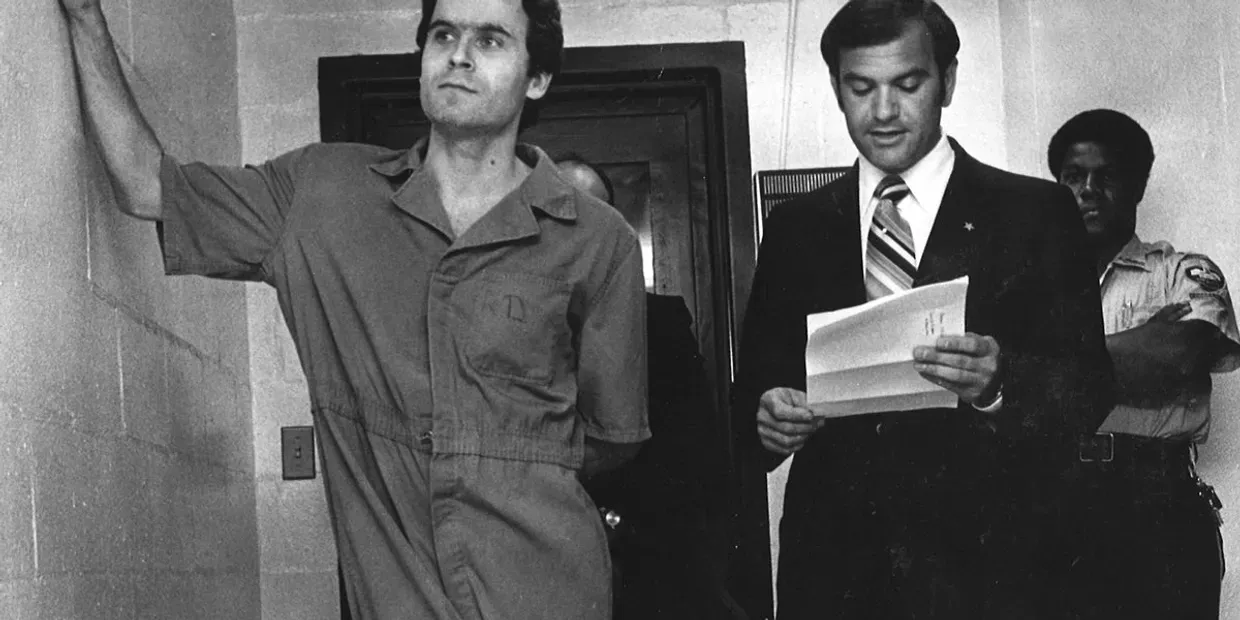
Ted Bundy
Introduction
Ted Bundy is one of America’s most notorious serial killers, responsible for the murders of at least 30 young women across several states in the 1970s. His charm, intelligence, and manipulative personality allowed him to blend into society while committing heinous crimes, making him a unique and terrifying figure in criminal history. Bundy’s ability to deceive those around him, including his closest friends and law enforcement, has cemented his legacy as a chilling example of a psychopathic killer hidden behind a veneer of normalcy.
Early Life and Psychological Background
Theodore Robert Bundy was born on November 24, 1946, in Burlington, Vermont. He had a troubled upbringing, marked by confusion about his parentage and a difficult relationship with his grandfather, who was reportedly abusive. Bundy was raised believing that his grandparents were his parents and that his mother was his older sister, a lie that would later contribute to his identity struggles and psychological issues.
Bundy’s early life was marked by signs of antisocial behavior, such as an obsession with voyeurism and theft. He excelled academically and appeared outwardly normal, but underneath, he harbored deep-seated anger, particularly towards women who resembled figures from his past. His relationships were often manipulative, and he developed a need to dominate and control others, a trait that would later define his criminal behavior.
Crimes and Modus Operandi
Bundy’s killing spree began in the mid-1970s, targeting young, attractive women, often lured by feigning injury or impersonating authority figures to gain their trust. He would typically approach his victims in public places, asking for help with tasks like loading items into his car. Once the victim was close enough, he would overpower them, often using blunt force, and abduct them.
Bundy’s crimes were marked by extreme violence, including sexual assault, bludgeoning, and strangulation. He would often revisit the bodies, displaying signs of necrophilia, and would sometimes decapitate his victims, keeping their heads as trophies. His methodical approach, coupled with his ability to adapt his tactics, allowed him to evade capture for years, moving from state to state to avoid detection.
Arrest and Escapes
Bundy was first arrested in Utah in 1975 for attempted kidnapping, but his involvement in multiple murders was not yet fully realized by authorities. He escaped from custody twice, once from a courthouse library and again from a jail cell in Colorado, exploiting gaps in security. During his second escape, he made his way to Florida, where he committed his final known murders, including the brutal attacks at the Chi Omega sorority house at Florida State University.
His capture in Florida marked the end of his reign of terror. Bundy’s time on the run highlighted both his cunning and the failures of the criminal justice system, which was ill-equipped to handle a predator of his sophistication.
Trial and Execution
Bundy’s trial was one of the first to be televised nationally, captivating audiences with his confident demeanor and courtroom theatrics. Despite his legal background, Bundy’s decision to represent himself only underscored his narcissism and belief in his own ability to manipulate the system. He was convicted of the Chi Omega murders and sentenced to death in 1979.
Throughout his imprisonment, Bundy remained in the public eye, conducting interviews in which he maintained his innocence or downplayed his culpability, further manipulating those around him. In his final days, facing imminent execution, Bundy confessed to additional murders, revealing the true scale of his atrocities.
Ted Bundy was executed in the electric chair on January 24, 1989. His death brought a sense of closure to the families of his victims, but his case continues to fascinate and horrify, serving as a chilling reminder of the potential for evil hidden behind a mask of normalcy.
Legacy and Cultural Impact
Ted Bundy’s legacy as a killer who used his charm and intelligence to deceive both his victims and society has made him a lasting figure in popular culture. His story has been the subject of numerous books, documentaries, and films, exploring the complexities of his personality and the shocking nature of his crimes. Bundy’s case has also had a significant impact on the study of criminal psychology, offering insights into the mind of a psychopath who outwardly appeared trustworthy and charming.
Bundy’s life and crimes continue to serve as a cautionary tale about the dangers of blind trust and the ability of individuals to mask their true intentions. He remains a symbol of the darkness that can lie beneath a seemingly perfect facade, a reminder of the importance of vigilance in the face of evil.
Conclusion
Ted Bundy’s story is one of deception, brutality, and the unsettling realization that monsters can walk among us in plain sight. His intelligence, charisma, and ability to manipulate those around him made him one of the most dangerous serial killers in American history. Bundy’s crimes not only shattered the lives of his victims and their families but also left an indelible mark on the collective consciousness, serving as a sobering reminder of humanity’s capacity for evil.
Leave a Reply