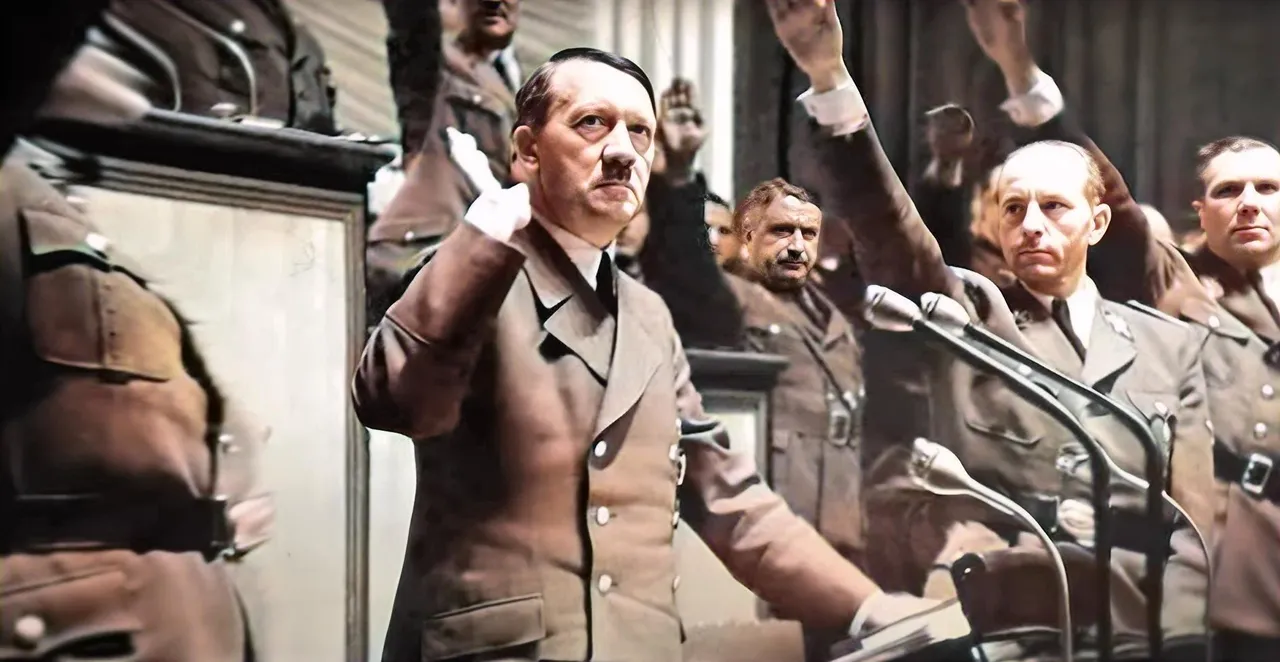
How Hitler Manipulated a Whole Country: A Comprehensive 15-Page Analysis
Adolf Hitler’s rise to power and his ability to manipulate an entire nation remains one of history’s most profound and troubling phenomena. His use of propaganda, psychological manipulation, exploitation of societal fears, and authoritarian control allowed him to mold public opinion, consolidate power, and ultimately lead Germany into a catastrophic war and genocide. In this 15-page analysis, we will examine the methods Hitler employed to manipulate Germany, transforming it from a democratic society into a totalitarian regime that carried out one of the worst atrocities in human history.
1. The Historical Context: Post-World War I Germany
1.1. The Treaty of Versailles and National Humiliation
After Germany’s defeat in World War I, the Treaty of Versailles in 1919 imposed harsh reparations and territorial losses on the country. Many Germans viewed the treaty as a national humiliation, and it became a powerful symbol of injustice that Hitler exploited to rally the public.
The “Stab-in-the-Back” Myth: Hitler promoted the idea that Germany had not truly been defeated in the war but had been betrayed by internal enemies, particularly Jews, communists, and socialists. This conspiracy theory fueled anti-Semitic and nationalist sentiment.
1.2. Economic Instability and the Great Depression
Germany faced severe economic hardships during the 1920s, with hyperinflation, unemployment, and political instability creating fertile ground for extremist ideologies.
Exploiting Economic Desperation: Hitler capitalized on widespread economic distress, presenting himself as the only leader who could restore order and prosperity. The Great Depression of 1929 further destabilized Germany, leading many to turn to radical solutions.
2. The Power of Charisma: Hitler’s Leadership Style
2.1. The Cult of Personality
Hitler developed a powerful cult of personality, presenting himself as a messianic figure destined to lead Germany to greatness. Through speeches, propaganda, and public appearances, he cultivated an image of invincibility and supreme leadership.
Hitler’s Oratory Skills: Hitler was a gifted orator who used emotional appeals, repetition, and symbolism to capture the attention and loyalty of his audiences. His speeches often stirred deep emotions, promising national rebirth and revenge on those who had supposedly wronged Germany.
2.2. Presenting a Unified Vision
Hitler simplified complex political and social issues into a black-and-white worldview, dividing the world into friends and enemies. He promised to unify Germany under a single, powerful leadership and eliminate all internal and external threats.
Us vs. Them Mentality: By creating clear enemies (such as Jews, communists, and foreign powers), Hitler made it easier for people to rally behind his cause. His vision of a pure, unified Aryan state appealed to those who felt disillusioned by the fractured and unstable Weimar Republic.
3. The Role of Propaganda: Shaping Public Opinion
3.1. The Ministry of Propaganda
Joseph Goebbels, Hitler’s Minister of Propaganda, played a crucial role in manipulating public opinion. Under Goebbels’ direction, the Nazi regime used mass media to shape how Germans perceived reality.
Controlling Information: The Nazi government tightly controlled newspapers, radio broadcasts, films, and other media to ensure that only pro-Nazi messages were disseminated. Opposition voices were silenced, creating an environment where dissent was dangerous and often fatal.
3.2. The Use of Symbols and Slogans
The swastika, the Nazi salute, and slogans such as “Ein Volk, ein Reich, ein Führer” (“One People, One Empire, One Leader”) became powerful symbols of Nazi unity and strength.
Simplifying Complex Ideas: By distilling the Nazi ideology into easy-to-remember symbols and slogans, Hitler and his propagandists made it easy for average Germans to embrace and repeat these ideas. The constant repetition of these symbols reinforced loyalty to the regime.
3.3. Creating Enemies Through Propaganda
Propaganda depicted Jews, communists, and other marginalized groups as subhuman threats to German society. Cartoons, posters, and films portrayed these groups in degrading and dehumanizing ways, justifying their persecution.
The Eternal Jew: One of the most notorious Nazi propaganda films, The Eternal Jew, presented Jews as parasitic, immoral, and dangerous. This form of propaganda reinforced long-standing anti-Semitic beliefs and fueled public support for the Holocaust.
4. Exploiting Fear and Insecurity
4.1. Fear of Communism
In the aftermath of World War I, the Russian Revolution of 1917 and the rise of communism became a source of fear for many Europeans, including Germans. Hitler used the fear of communism as a tool to justify his rise to power.
The Reichstag Fire: In 1933, the Reichstag (German parliament) building was set on fire, and the Nazis blamed communists for the act. Hitler used the fire as a pretext to crack down on communists and suspend civil liberties, framing himself as the protector of Germany from communist revolution.
4.2. The Fear of Economic Collapse
Hitler played on the fear of economic collapse by promising to restore jobs, rebuild the economy, and create a prosperous, self-sufficient Germany. His message of hope and stability resonated with those suffering from the Great Depression.
Infrastructure Projects: Massive public works projects, such as the construction of the autobahn (highway system), were promoted as symbols of national rejuvenation. These projects helped reduce unemployment and solidified Hitler’s image as a leader who could deliver on his promises.
5. The Role of Anti-Semitism: Scapegoating and Dehumanization
5.1. Historical Anti-Semitism
Anti-Semitism was deeply ingrained in European history long before Hitler came to power. Many Germans held anti-Semitic beliefs, which Hitler and the Nazi party exploited and amplified.
Jews as Scapegoats: Hitler blamed Jews for Germany’s defeat in World War I, the economic hardships of the Weimar Republic, and the spread of communism. By presenting Jews as the source of all Germany’s problems, Hitler provided the public with a clear scapegoat.
5.2. Nuremberg Laws and Legalized Persecution
In 1935, the Nazi government passed the Nuremberg Laws, which stripped Jews of their citizenship and imposed severe restrictions on their rights. This marked the beginning of the systematic persecution of Jews in Germany.
Dehumanization of Jews: Nazi propaganda depicted Jews as vermin, parasites, and enemies of the state. This dehumanization made it easier for ordinary Germans to accept or participate in the atrocities of the Holocaust.
5.3. The Final Solution
Hitler’s ultimate plan for the Jewish people, known as the Final Solution, was the systematic extermination of six million Jews during the Holocaust. By the time the world became fully aware of the horrors of the Holocaust, it was too late to prevent the mass genocide.
6. Political Manipulation: The Rise of a Dictatorship
6.1. Undermining Democracy
Hitler skillfully manipulated Germany’s democratic system to gain power legally. After being appointed Chancellor in 1933, he used legal means to dismantle democratic institutions and establish a totalitarian regime.
The Enabling Act: Passed in 1933, the Enabling Act gave Hitler the authority to enact laws without the Reichstag’s consent, effectively granting him dictatorial powers. With this, Hitler eliminated the last checks on his power.
6.2. The Elimination of Political Opponents
Hitler used intimidation, violence, and legal means to eliminate political opposition. The Gestapo (secret police) and SS (paramilitary organization) targeted communists, socialists, trade unions, and any other groups that could threaten Hitler’s authority.
Night of the Long Knives: In 1934, Hitler ordered a purge of the SA (Sturmabteilung), a paramilitary group that had helped him rise to power. The purge, known as the Night of the Long Knives, eliminated many of Hitler’s political rivals and consolidated his control over the military and government.
6.3. Controlling the Military
By securing the loyalty of the military, Hitler gained the ability to use force both domestically and internationally. His promise to rebuild and rearm Germany after the restrictions of the Treaty of Versailles earned him the support of the armed forces.
7. Hitler’s Vision of Nationalism and Racial Purity
7.1. The Idea of Lebensraum (Living Space)
Hitler’s vision for Germany included the expansion of its territory to provide “living space” (Lebensraum) for the Aryan race. This concept was central to Nazi ideology and justified Hitler’s aggressive foreign policy.
Eastern Expansion: Hitler aimed to conquer Eastern Europe, particularly Poland and the Soviet Union, to provide land for German settlers. The non-Aryan populations in these regions were to be enslaved or exterminated.
7.2. The Concept of the Master Race
Nazi ideology centered on the belief in the superiority of the Aryan race. Hitler promoted the idea that Germans were the “master race,” destined to dominate all others.
Eugenics and Racial Purification: Hitler’s regime implemented eugenics programs designed to eliminate those deemed “unfit,” including Jews, Romani people, disabled individuals, and others. The goal was to create a racially pure, Aryan society.
8. Social Engineering: Creating a Totalitarian State
8.1. Education and Indoctrination
The Nazi regime took control of the education system, using schools to indoctrinate young Germans with Nazi ideology. Textbooks were rewritten to reflect Nazi views on race, history, and nationalism.
Hitler Youth: The Hitler Youth organization was created to indoctrinate boys and girls from a young age, training them to become loyal supporters of the Nazi regime. By controlling youth education, Hitler ensured that future generations would be loyal to his ideology.
8.2. Censorship and the Control of Culture
The Nazis censored literature, art, music, and films that did not align with Nazi ideology. Works by Jewish authors, communists, and modernist artists were banned, and the regime promoted art and culture that glorified Aryan ideals.
Book Burnings: In 1933, the Nazis organized mass book burnings, destroying works by Jewish, socialist, and liberal authors. This was part of the broader effort to control culture and eliminate dissenting ideas.
9. Hitler’s Expansion of Power: From Chancellor to Dictator
9.1. The Elimination of Civil Liberties
After securing control of the government, Hitler quickly moved to eliminate civil liberties. The Reichstag Fire Decree of 1933 suspended basic rights, including freedom of speech, assembly, and the press.
Police State Tactics: Hitler used the Gestapo to silence critics, arrest political opponents, and create a climate of fear. People who spoke out against the regime were often imprisoned or executed.
9.2. The Fuhrer Principle
Hitler promoted the concept of the “Fuhrerprinzip” (Leader Principle), which stated that ultimate authority rested with the leader and that all Germans owed absolute obedience to Hitler.
Consolidating Power: By combining the positions of Chancellor and President after the death of President Hindenburg in 1934, Hitler became both the head of government and state, solidifying his role as the unchallenged dictator of Germany.
10. The Role of Fear and Terror in Hitler’s Regime
10.1. The Use of Fear to Maintain Control
Fear was one of Hitler’s most effective tools in controlling the German population. The threat of arrest, imprisonment, or execution kept many Germans in line and prevented open opposition to the regime.
Concentration Camps: The Nazi regime established concentration camps to imprison and eliminate political opponents, Jews, and other groups deemed undesirable. The fear of being sent to these camps created a powerful deterrent against dissent.
10.2. The SS and Gestapo
The SS (Schutzstaffel) and Gestapo (secret police) were instrumental in maintaining Hitler’s control over Germany. They carried out purges, arrested dissidents, and enforced Nazi policies with brutal efficiency.
Public Spectacles of Punishment: The regime often made public examples of those who opposed it, using executions, trials, and purges to show the consequences of disobedience.
11. How Hitler Used Propaganda to Shape National Identity
11.1. Propaganda as a Tool for Unity
Hitler’s use of propaganda extended beyond controlling information; it was also used to shape national identity. By constantly reinforcing the idea of a unified, superior Aryan nation, Hitler fostered a sense of pride and belonging among Germans.
Mass Rallies and Public Displays: The Nazis organized massive public rallies, such as the annual Nuremberg Rallies, to showcase the power and unity of the regime. These events were carefully choreographed to inspire loyalty and awe among the German people.
11.2. Rewriting History
The Nazi regime sought to rewrite history in a way that glorified Germany’s past and erased inconvenient facts. School curricula, public monuments, and cultural narratives were altered to reflect the Nazi version of history, portraying Germany as a victim of betrayal and injustice.
The Myth of the Aryan Race: Nazi propaganda emphasized the idea that Germany’s problems could be traced back to the corruption of its racial purity. By creating a historical narrative that justified their racial policies, the Nazis were able to garner support for their genocidal actions.
12. Hitler’s Control of the Economy: Promises of Prosperity
12.1. Economic Recovery and National Pride
Hitler’s promise to restore Germany’s economy was a key factor in his rise to power. By reducing unemployment and launching massive infrastructure projects, Hitler won the support of many Germans who had suffered through years of economic hardship.
Autarky and Self-Sufficiency: Hitler promoted the idea of autarky, or national self-sufficiency, as a way to free Germany from dependence on foreign nations. This included rearmament and the production of goods that had previously been imported.
12.2. The Role of War in the Economy
Hitler’s economic policies were ultimately unsustainable and reliant on expansion and war. The rearmament of Germany and the conquest of new territories provided the economic growth and resources needed to keep the economy afloat.
War Economy: As Germany prepared for war, the economy became increasingly militarized, with industries focused on producing weapons, vehicles, and other materials for the war effort. This focus on war fueled nationalistic fervor and kept the population distracted from the regime’s more destructive policies.
13. The Use of Education and Youth Organizations to Shape the Future
13.1. Nazi Control of Education
The Nazis viewed education as a critical tool for shaping the future of the German nation. Schools were used to indoctrinate children with Nazi ideology, teaching them about the superiority of the Aryan race and the importance of loyalty to Hitler.
Curriculum Changes: Subjects like history, biology, and physical education were altered to promote Nazi ideals. History lessons glorified Germany’s past and justified its present, while biology focused on racial purity and eugenics.
13.2. Hitler Youth and the Indoctrination of Children
The Hitler Youth organization played a central role in shaping the minds of young Germans. Boys were trained to be loyal soldiers, while girls were prepared to be mothers of the next Aryan generation.
Youth as the Future of Nazism: By indoctrinating children at a young age, the Nazis ensured that the next generation would be even more loyal and fanatical than their parents. The Hitler Youth also served as a recruitment tool for the military and the SS.
14. Manipulating Religion and Moral Authority
14.1. Hitler’s Relationship with Christianity
Although Hitler and the Nazi Party were largely secular, they sought to manipulate Christianity to serve their own purposes. Hitler presented himself as a defender of Christian values against the threat of atheistic communism, while at the same time undermining the church’s authority.
Creating a Nationalized Christianity: The Nazis attempted to co-opt Christianity by promoting a “German Christian” movement that aligned religious teachings with Nazi ideology. This included removing references to Judaism from Christian doctrine and emphasizing nationalist themes.
14.2. Suppressing Religious Dissent
Religious leaders who opposed Hitler’s regime, such as members of the Confessing Church or Catholic clergy, were persecuted and sometimes imprisoned. By suppressing religious dissent, Hitler eliminated one of the few potential sources of opposition to his rule.
The Role of Faith in Nazi Ideology: While Hitler manipulated religion to his advantage, the regime also promoted a quasi-religious cult of personality around Hitler himself. This secular faith in the “Führer” became a substitute for traditional religious belief for many Germans.
15. The Aftermath: The Legacy of Hitler’s Manipulation
15.1. The Destruction of Germany
Hitler’s manipulation of Germany had devastating consequences. By the end of World War II, Germany was left in ruins, millions were dead, and the country was divided between East and West. The promises of prosperity and national greatness that Hitler had used to manipulate the population had led to total destruction.
15.2. The Lessons of History
Hitler’s ability to manipulate an entire country serves as a cautionary tale about the dangers of authoritarianism, propaganda, and the power of charismatic leadership. It demonstrates how fear, economic hardship, and nationalism can be exploited to undermine democracy and human rights.
The Importance of Critical Thinking: One of the key lessons from Hitler’s rise is the importance of a well-informed and critical populace. When people are encouraged to question authority and analyze information critically, it becomes more difficult for leaders to manipulate them.
15.3. The Responsibility of Remembering
Remembering the horrors of Hitler’s manipulation is crucial for preventing similar events in the future. By studying how Hitler manipulated a whole country, we can better understand how to safeguard democracy and prevent the rise of future tyrants.
Conclusion: Understanding the Methods of Hitler’s Manipulation
Adolf Hitler’s rise to power and manipulation of Germany was a complex process that relied on a combination of propaganda, fear, scapegoating, and charismatic leadership. By exploiting the economic, political, and social anxieties of the time, Hitler was able to consolidate power and lead the nation into one of the darkest periods of human history. His legacy serves as a powerful reminder of the importance of vigilance, critical thinking, and the defense of democratic values.
Leave a Reply