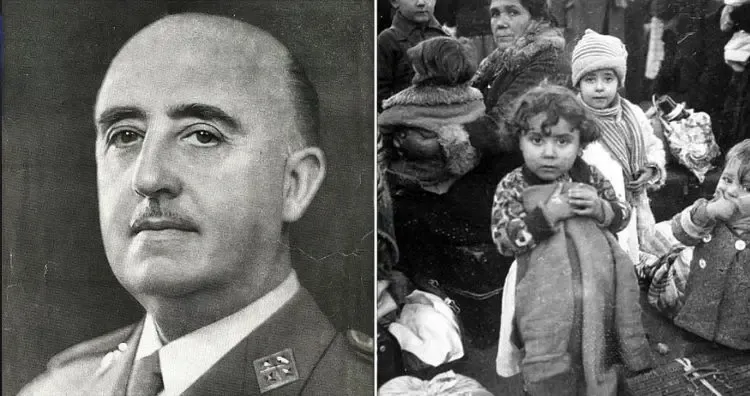
The Stolen Babies of Spain: A Dark Legacy Under Francisco Franco’s Regime
Under the dictatorship of Francisco Franco, Spain became the site of one of the most harrowing and wide-reaching human rights abuses of the 20th century: the systematic theft of babies from vulnerable mothers, particularly those who were poor, anti-fascist, or viewed as politically or ideologically undesirable. Between the late 1930s and 1980, up to 300,000 babies were stolen and given to families loyal to Franco’s authoritarian regime.
This orchestrated scheme, carried out by a network of doctors, nuns, and other officials, began during the Spanish Civil War (1936–1939) and continued well after Franco’s death in 1975. The practice was originally rooted in the regime’s efforts to suppress political dissent and control the population, but it eventually evolved into a highly profitable and ideologically driven operation that spanned decades. This article will explore the origins of this horrific scheme, the methods used to steal the babies, the psychological and social impact on the victims, and the eventual exposure of this dark chapter in Spanish history.
The Origins: Franco’s Ideological Battle Against “Reds” and the Poor
The origins of the baby thefts can be traced back to the aftermath of the Spanish Civil War, which pitted Franco’s nationalist forces against the Republicans, a coalition of left-wing groups, including communists, socialists, and anarchists. Franco’s victory in 1939 cemented his rule over Spain, and with it came a brutal campaign to eradicate any remaining opposition. Those who had supported the Republicans or held leftist or liberal views were viewed as enemies of the state, or “reds,” and became the target of severe repression.
Franco’s regime was built on a foundation of fascism, nationalism, and Catholicism, with a strong emphasis on traditional family values. The regime sought to purify Spanish society by eliminating those it deemed morally, politically, or racially inferior. Franco’s ideology viewed Republican families and leftist sympathizers as morally corrupt and dangerous, particularly if they were poor or came from working-class backgrounds. This created the conditions for a radical form of social engineering, which saw babies as a means of creating a “purer” and more ideologically aligned society.
Initially, the baby-stealing scheme targeted women who were imprisoned for supporting the Republican side during the civil war. These women were often labeled as “degenerate” or “unfit” to raise children. Their babies were forcibly taken from them in maternity wards or hospitals and given to families who were loyal to Franco’s ideology. These adoptive families were usually well-connected, middle-class, and Catholic, ensuring that the children would be raised with Francoist values.
What began as a politically motivated act of repression soon evolved into a wider practice that would encompass not only Republican sympathizers but also poor, unmarried women and those whom the regime considered socially or morally undesirable.
The Role of Doctors, Nuns, and Religious Institutions
The operation to steal babies and distribute them to Francoist families relied on a network of complicit doctors, nurses, and nuns, many of whom were members of Catholic religious orders. These individuals operated in hospitals, clinics, and religious institutions across Spain. They played a central role in identifying babies to be stolen, falsifying birth records, and facilitating the illegal adoptions.
Many of the babies were taken immediately after birth. In some cases, mothers were told that their babies had died shortly after delivery. The mothers were often shown false death certificates, and in some instances, they were not allowed to see the bodies of their supposedly deceased children. The babies were then handed over to adoptive families, and the biological parents were left in grief and confusion, unaware that their children were still alive.
The Catholic Church, which was closely aligned with Franco’s regime, played a significant role in this practice. Nuns and priests in particular were involved in facilitating the adoptions and perpetuating the belief that these actions were morally justified. They believed that by removing children from “degenerate” or “immoral” environments and placing them in devout, Catholic households, they were saving their souls and ensuring a better future for them.
Dr. Eduardo Vela, a gynecologist and prominent figure in the baby-stealing network, became one of the most notorious individuals implicated in this operation. He ran the San Ramón Clinic in Madrid, one of the facilities known for stealing babies. Vela, along with other medical professionals, was responsible for coordinating the illegal adoptions and manipulating the medical records of newborns.
The Expansion of the Scheme: Profit and Power
Over time, the baby-stealing scheme expanded beyond its initial political motivations. What began as a means of punishing political opponents and erasing leftist influence became a lucrative business. The demand for babies from wealthy, childless couples grew, and the network of doctors, nuns, and hospital administrators began to profit from the illegal adoptions.
In addition to political dissidents, unmarried mothers, or those who were poor or vulnerable, became frequent targets. The regime, deeply conservative and aligned with the teachings of the Catholic Church, stigmatized unmarried women who had children out of wedlock. These women were often sent to religious-run maternity homes or hospitals, where their babies were taken from them shortly after birth. These mothers were deemed “unfit” by the regime and were sometimes coerced into signing adoption papers, often under the guise of being told it was for the good of the child.
The babies were then sold to well-off Francoist families, with the adoptive parents often paying significant sums for the “adoption.” This network of baby trafficking, facilitated by trusted figures within hospitals and religious institutions, ensured that the operation continued for decades, motivated by both ideological fervor and financial gain.
The Continued Operation After Franco’s Death
Despite Francisco Franco’s death in 1975 and the subsequent transition of Spain to democracy, the baby-stealing operation continued well into the late 1970s and even the early 1980s. The network that had been created during Franco’s regime remained in place, and the cultural stigmas against unwed mothers and the poor persisted. The infrastructure, both physical and institutional, that had supported the theft of babies under Franco was not dismantled after his death.
In fact, the illegal adoptions did not fully stop until 1980, five years after Franco’s death, when Spain began to implement democratic reforms. By this time, thousands of babies had been stolen from their biological mothers and placed in Francoist families, with little or no documentation of the adoptions. Many of the birth records had been falsified, and the true parentage of these children had been erased, leaving biological families with no means of discovering what had happened to their babies.
The Impact on Families and Victims
The impact of this widespread baby theft was devastating for both the biological mothers and the stolen children. Many mothers spent their entire lives believing that their babies had died at birth, only to learn decades later that their children had been taken from them and given to other families. The psychological trauma of losing a child, coupled with the betrayal of the medical and religious institutions they had trusted, left deep emotional scars on these women.
For the stolen children, the revelation of their true origins often came as a profound shock. Many grew up in loving families, unaware of the circumstances of their adoption. Others may have suspected that something was amiss, but they lacked the means to investigate their backgrounds due to falsified records. The discovery that they had been stolen from their biological parents and raised by adoptive families complicit in the scheme created feelings of anger, confusion, and a sense of loss about their true identities.
One of the key challenges for families affected by this tragedy has been the difficulty in proving their cases. Because birth records were altered or destroyed, it is often impossible to trace the true parentage of those who were stolen. For many, the search for answers has been long and painful, with little closure.
The Exposure of the Scandal and the Quest for Justice
The scandal of the stolen babies was not widely known until decades after the practice had ended. In the 1990s, some survivors began to uncover the truth about their origins, often through DNA testing or the discovery of inconsistencies in their birth records. As more people came forward with their stories, the scale of the baby thefts became apparent.
The issue gained significant attention in the early 2000s, when Spanish investigative journalists, activists, and lawyers began to uncover more evidence of the widespread nature of the operation. Anadir, an organization founded by victims of the stolen babies scandal, played a crucial role in bringing attention to the issue and advocating for justice.
In 2011, the Spanish government launched an official investigation into the matter, but efforts to prosecute those responsible have been slow and met with resistance. Many of the individuals involved in the baby thefts, including doctors and nuns, are now elderly, and some have passed away. Despite this, survivors and their families continue to seek justice and recognition for the crimes committed against them.
One of the few high-profile cases involved Dr. Eduardo Vela, who was put on trial in 2018 for his role in the illegal adoption of a baby in 1969. While Vela was found guilty of the charges, he was ultimately not sentenced to prison due to the statute of limitations. This outcome was deeply disappointing to many victims and highlighted the challenges in holding perpetrators accountable for their actions.
The Legacy of the Stolen Babies
The stolen babies scandal in Spain remains one of the darkest legacies of Francisco Franco’s regime. It is a testament to the ways in which authoritarian governments can manipulate and control their populations, using even the most vulnerable members of society as tools for political and ideological ends. The complicity of doctors, nurses, nuns, and other officials in this widespread abuse underscores the deep entanglement between the state and religious institutions during Franco’s rule.
For the thousands of families affected by the theft of their children, the search for justice and closure continues. Many stolen babies are now adults, some in their 40s or 50s, still grappling with the discovery of their true origins. For their biological mothers, the pain of having their children taken from them—often without explanation or consent—remains an open wound.
The scandal of the stolen babies serves as a reminder of the long-lasting consequences of authoritarian rule and the importance of safeguarding human rights, especially for the most vulnerable members of society. It also highlights the need for truth and accountability in addressing historical injustices, ensuring that such abuses are never repeated.
Conclusion: A Legacy of Injustice and the Search for Truth
The systematic theft of up to 300,000 babies under Franco’s dictatorship represents one of the most horrifying examples of state-sanctioned human rights abuses in modern history. Driven by a mixture of political ideology, religious zealotry, and profit, the network of doctors, nuns, and officials who participated in the scheme tore apart countless families and destroyed the lives of many.
While Spain has made some efforts to acknowledge this dark chapter in its history, the path to justice has been slow and fraught with obstacles. The stolen babies scandal remains an ongoing source of pain for those affected, and the quest for truth and accountability continues.
This tragic story serves as a stark reminder of the dangers posed by unchecked state power and the lengths to which authoritarian regimes will go to control their populations. It also underscores the enduring importance of truth, justice, and the protection of human rights for all people, regardless of their political beliefs, social status, or background.
Leave a Reply