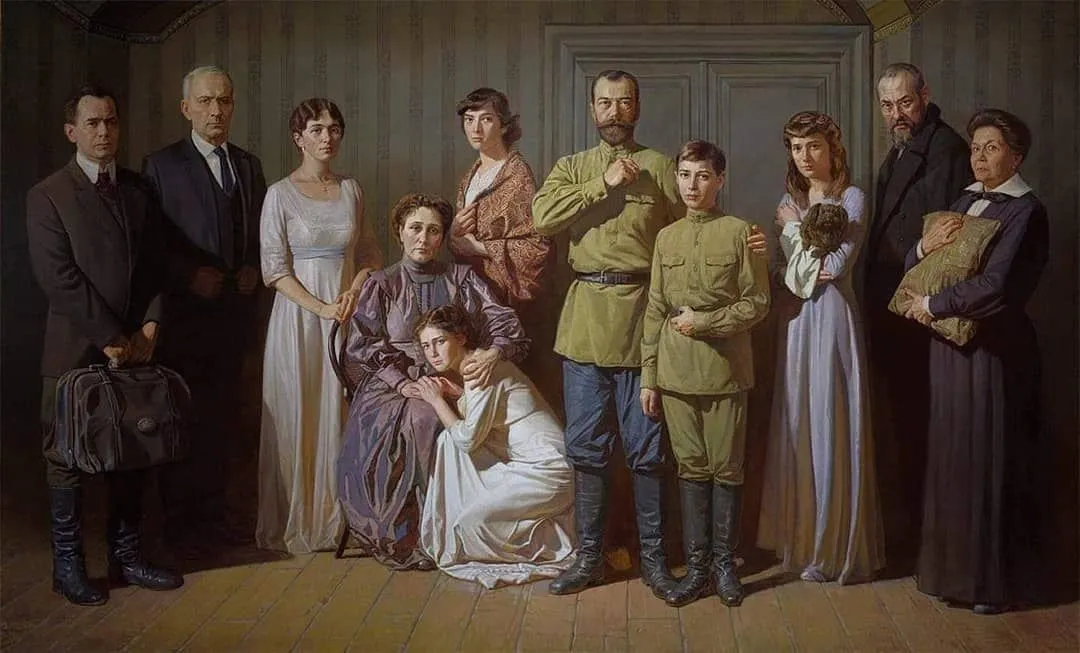
The Romanovs the Russian imperial family ruled from 1613 to 1917
A comprehensive article on The Romanovs—the Russian imperial family that ruled from 1613 to 1917—would cover their rise to power, the dynasty’s notable rulers, the social and political changes they oversaw, their role in shaping Russian history, the fall of the Romanovs during the Russian Revolution, and the lasting legacy of the family. This structure will offer a detailed examination of the Romanovs’ influence over Russia and the world, leading to their tragic end.
Here’s a structured outline for a detailed article on the Romanov dynasty:
Page 1: Introduction
Overview of the Romanov dynasty: Introduce the Romanov family, who ruled Russia for over 300 years, from 1613 until the Russian Revolution in 1917. Highlight the dynasty’s importance in shaping Russian history, as well as their tragic downfall.
Purpose of the article: Lay out the key aspects to be explored in this article, such as the Romanovs’ rise to power, their governance, key rulers, major historical events, and their eventual demise.
Page 2: Origins of the Romanov Dynasty
Rise to power (1613): Explain the establishment of the Romanov dynasty during the Time of Troubles, a period of political crisis and social unrest in Russia. Mikhail Romanov, a 16-year-old boyar, was elected as tsar, marking the beginning of the Romanov rule.
Background of the Romanov family: Discuss the Romanov family’s noble origins, tracing their lineage back to influential Russian families, and the role of the Zemsky Sobor (Russian Assembly) in choosing Mikhail Romanov as the new tsar.
Consolidation of power: Explore how the Romanovs consolidated their power in the early years of the dynasty, stabilizing the Russian state and forming alliances with influential factions within the Russian nobility.
Page 3: Early Romanov Rulers
Mikhail I (1613–1645): Examine Mikhail Romanov’s reign, focusing on his efforts to restore order to Russia after the Time of Troubles and his relationship with the boyars (noble class). Discuss his policies aimed at rebuilding the economy and establishing peace.
Alexis I (1645–1676): Analyze the reign of Alexis I, known for expanding Russia’s territory and implementing important domestic reforms, such as the Sobornoye Ulozheniye (a legal code) of 1649. Highlight his efforts to centralize authority.
The Raskol (Schism) in the Russian Orthodox Church: Discuss the religious schism that occurred during Alexis I’s reign, which divided the Orthodox Church and created lasting tensions within Russian society.
Page 4: Peter the Great and the Modernization of Russia
Peter the Great (1682–1725): Explore the reign of Peter the Great, one of the most transformative figures in Russian history. Focus on his efforts to modernize Russia by introducing Western European technology, military tactics, and cultural practices.
Westernization policies: Examine Peter’s reforms, such as the introduction of Western dress, the establishment of new industries, and the modernization of the Russian military. Discuss his efforts to reduce the power of the boyars and centralize the tsar’s authority.
Expansion of the Russian Empire: Analyze Peter’s military campaigns, including the Great Northern War against Sweden, which established Russia as a major European power and gained access to the Baltic Sea, leading to the founding of St. Petersburg.
Page 5: Catherine the Great and the Golden Age of the Romanovs
Catherine the Great (1762–1796): Explore Catherine’s rise to power following the overthrow of her husband, Peter III, and her reign as one of the most successful and enlightened monarchs of the Romanov dynasty.
Enlightenment influence: Discuss Catherine’s engagement with Enlightenment thinkers like Voltaire and Diderot, her efforts to modernize Russian governance, law, and education, and her attempts to reform serfdom (though largely unsuccessful).
Territorial expansion: Examine Catherine’s foreign policy, which included the successful expansion of Russia’s borders through wars with the Ottoman Empire, the annexation of Crimea, and the partitions of Poland.
Page 6: The Romanovs and Russian Society
Serfdom under the Romanovs: Analyze the role of serfdom in Russian society during the Romanov era, focusing on the legal and economic status of the serfs, who made up the majority of the population.
Peasant uprisings: Discuss major peasant revolts, such as the Pugachev Rebellion (1773–1775) during Catherine the Great’s reign, and the Romanovs’ responses to these uprisings.
The role of the Orthodox Church: Examine the relationship between the Romanov rulers and the Russian Orthodox Church, highlighting the importance of religion in legitimizing Romanov rule and maintaining social order.
Page 7: The Decembrist Revolt and the Push for Reform
Alexander I (1801–1825): Explore the reign of Alexander I, including his role in defeating Napoleon during the French invasion of Russia in 1812, as well as his attempts at political reform.
The Decembrist Revolt (1825): Discuss the failed Decembrist Revolt, in which a group of Russian army officers and noblemen attempted to force the Romanovs to implement constitutional reforms and abolish serfdom. Analyze its long-term impact on Russian politics.
Nicholas I (1825–1855): Examine the reign of Nicholas I, characterized by a strict autocratic rule, his suppression of liberal movements, and his commitment to the principles of Orthodoxy, autocracy, and nationalism.
Page 8: Reform and Reaction under Alexander II
Alexander II (1855–1881): Discuss Alexander II’s reign, often remembered as a period of reform, including the emancipation of the serfs in 1861, which freed millions of peasants from bondage.
Modernization efforts: Analyze Alexander’s other reforms, such as changes in the judiciary, military, and local government, aimed at modernizing Russia and addressing growing social and economic pressures.
Assassination of Alexander II: Explore the growing discontent with Alexander II’s reforms, which were seen as insufficient by some and too radical by others, culminating in his assassination by revolutionary terrorists in 1881.
Page 9: Nicholas II and the Decline of the Romanovs
Nicholas II (1894–1917): Analyze the reign of Nicholas II, the last Romanov emperor, whose autocratic rule and inability to address Russia’s economic and political challenges led to the dynasty’s downfall.
The 1905 Revolution: Discuss the 1905 Revolution, sparked by discontent over poor working conditions, political repression, and the Russo-Japanese War. Examine how Nicholas responded with the October Manifesto, which promised reforms, but maintained much of his autocratic power.
World War I and the Romanovs’ crisis: Explore how World War I exacerbated Russia’s internal problems, including military defeats, economic collapse, and rising discontent, leading to the February Revolution of 1917.
Page 10: The Fall of the Romanovs
The February Revolution (1917): Detail the events of the February Revolution, which forced Nicholas II to abdicate the throne, ending over 300 years of Romanov rule.
Provisional Government: Discuss the formation of the Provisional Government following Nicholas’ abdication and the power vacuum it created in Russian politics.
House arrest of the Romanov family: Explore the Romanov family’s imprisonment by the Bolsheviks and their fate as political prisoners.
Page 11: The Execution of the Romanov Family
Imprisonment in Ekaterinburg: Describe the final months of Nicholas II, his wife Alexandra, their five children, and a few loyal servants in the Ipatiev House in Ekaterinburg.
The execution (July 17, 1918): Provide a detailed account of the Romanov family’s execution by Bolshevik forces, ordered by local Soviet authorities, as a means of preventing any possible return of the monarchy.
Aftermath and the burial of the Romanovs: Discuss the secrecy surrounding the execution and burial of the Romanovs, as well as the eventual discovery of their remains in the 1990s.
Page 12: The Legacy of the Romanovs
The Romanovs in Russian memory: Examine the legacy of the Romanov dynasty in modern Russia, including the post-Soviet rehabilitation of the family and their canonization by the Russian Orthodox Church in 2000.
The Romanovs and the monarchy debate: Discuss the debate over the Romanovs’ historical role and the movement among some Russians for a restoration of the monarchy.
Cultural legacy: Explore the influence of the Romanov family on Russian culture, art, and architecture, as well as their depiction in popular culture, including literature, films, and documentaries.
Conclusion: Summarize the enduring impact of the Romanov dynasty on Russian history, from their rise to power in the 17th century to their tragic fall in 1917, and reflect on how the Romanovs continue to shape Russia’s national identity.
Leave a Reply