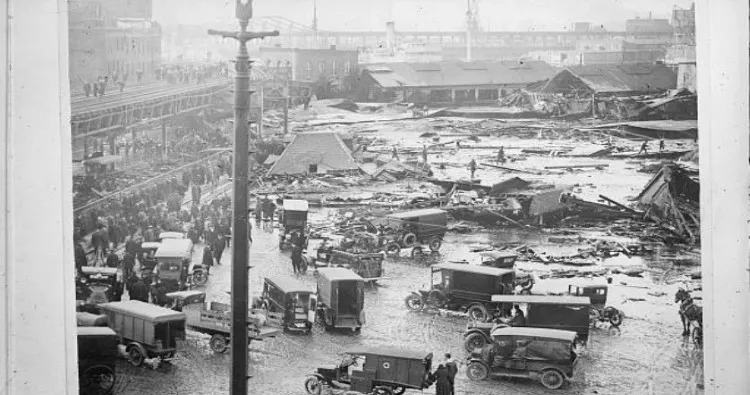
The Great Molasses Flood: Boston’s Sticky Disaster of 1919
On January 15, 1919, one of the most bizarre and devastating disasters in American history struck the North End of Boston, Massachusetts. A massive storage tank filled with 2.3 million gallons of molasses burst open, unleashing a thick, sticky wave of molasses that tore through the streets at an estimated speed of 35 miles per hour. The flood claimed the lives of 21 people, injured 150 more, and caused widespread destruction.
Known as the Great Molasses Flood, this tragic event is remembered not only for its oddity but also for the devastation it caused and the lasting impact it had on safety regulations and engineering practices in the United States. This article examines the events leading up to the disaster, the chaotic aftermath, and the legacy of the Great Molasses Flood.
The Molasses Tank and Its Purpose
The massive molasses tank that caused the disaster belonged to the United States Industrial Alcohol Company (USIA), which used the molasses to produce industrial alcohol for making munitions and other products. Molasses was a key ingredient in the production of ethanol, which was in high demand during World War I. The tank was located at 529 Commercial Street in Boston’s densely populated North End, an area primarily inhabited by Italian immigrants.
Standing 50 feet tall and 90 feet in diameter, the steel tank could hold up to 2.3 million gallons of molasses. The molasses arrived by ship from the Caribbean and was stored in the tank before being transported to distilleries.
From the beginning, the tank was poorly constructed. It was built in 1915 in a rush to capitalize on the wartime demand for industrial alcohol, and corners were cut during its construction. The steel walls of the tank were too thin, and it was known to leak molasses from the start. The company attempted to address these leaks by painting the tank brown to hide the seeping molasses, but they did not fix the underlying structural problems. Employees and residents of the area had long been concerned about the tank’s safety, but their warnings were ignored.
The Day of the Disaster
On the afternoon of January 15, 1919, the unthinkable happened. At approximately 12:30 p.m., the molasses tank ruptured, releasing a 15-foot-high wave of molasses that rushed through the streets of the North End. The wave moved at about 35 miles per hour, faster than many could react or escape. The molasses, being so dense and sticky, overwhelmed everything in its path, crushing buildings, throwing vehicles into the air, and trapping people and animals.
The sheer force of the explosion was enough to lift a streetcar off its tracks and destroy several buildings, including homes, businesses, and part of a fire station. The flood of molasses was so powerful that it knocked over horses and trapped them in the sticky substance, leading to their deaths. Some people were immediately crushed by the force of the wave, while others became stuck in the molasses and suffocated.
The unusual nature of the disaster made rescue efforts incredibly difficult. Firefighters, police officers, and volunteers struggled to move through the thick, knee-deep molasses to reach survivors. Many of those trapped in the flood could not be saved because the sticky substance made it nearly impossible to pull them out. It took hours, and in some cases, days, to recover bodies from the hardened molasses.
The Aftermath: Cleanup and Legal Battle
In the aftermath of the disaster, Boston’s North End was left in chaos. The molasses coated the streets, buildings, and everything else it touched. Cleanup efforts were long and arduous, taking weeks to remove the molasses from the streets and months to clean it from buildings, sidewalks, and the harbor. The molasses had seeped into the ground and even into the Boston Harbor, where it would remain for years. The city of Boston reportedly smelled of molasses on hot days for decades after the flood.
Beyond the physical destruction, the Great Molasses Flood led to a lengthy and contentious legal battle. Survivors of the disaster, along with the families of those who died, filed a class-action lawsuit against the United States Industrial Alcohol Company. The company initially claimed that the disaster was the result of anarchists who had planted a bomb near the tank as an act of sabotage. However, after a thorough investigation, it was determined that the true cause of the disaster was the poor construction of the tank and the company’s negligence in maintaining it.
The legal case, which lasted for more than five years, resulted in a ruling against USIA. The company was found liable for the disaster and ordered to pay more than $1 million in damages (equivalent to over $15 million today). The case also led to increased scrutiny of industrial safety practices and played a significant role in the development of stricter building codes and regulations for storage tanks and other industrial facilities.
Legacy of the Great Molasses Flood
The Great Molasses Flood remains one of the strangest and most tragic industrial disasters in American history. The sheer oddity of a deadly molasses flood has captured the public’s imagination for over a century, but the disaster’s human toll is a somber reminder of the importance of safety regulations and responsible engineering.
In addition to the lives lost and the destruction caused, the disaster led to significant reforms in industrial safety and engineering standards. The disaster underscored the need for more stringent oversight of construction projects and contributed to the push for greater corporate accountability in the years following the incident.
Today, the site of the Great Molasses Flood is marked by a plaque in Boston’s North End, commemorating the victims of the disaster. The flood has become a part of local lore, and stories of the event are passed down through generations, serving as a reminder of the fragility of human life in the face of preventable industrial accidents.
Conclusion: A Sticky Tragedy
The Great Molasses Flood of 1919 stands out in history not only for its unique nature but also for the tragic loss of life and the lessons it imparted about the dangers of cutting corners in industrial safety. As bizarre as the disaster may seem—being caused by a wave of sticky molasses—the consequences were devastating for the victims and their families. The disaster also had far-reaching impacts on industrial regulation and safety practices, leaving a lasting legacy that continues to influence construction and engineering standards today.
Though the flood is now more than a century in the past, it remains a poignant example of the importance of corporate responsibility and the need for vigilance in ensuring public safety.
Leave a Reply