Female Genital Mutilation: A Comprehensive Examination
Table of Contents
Introduction
Definition and Types of Female Genital Mutilation
Historical and Cultural Context of FGM
Prevalence and Geographic Distribution
Health Impacts of Female Genital Mutilation
Psychological and Social Consequences
Legal and Human Rights Perspectives
Efforts to Eradicate FGM
Role of International Organizations and NGOs
Case Studies of Communities Practicing FGM
Religion and FGM: Misconceptions and Realities
The Role of Gender Inequality and Patriarchy
Education and Awareness Campaigns
Voices of Survivors
FGM in Diaspora Communities
Legal Protections and Challenges in Prosecution
Cultural Sensitivity and Community Engagement
The Role of Healthcare Providers
Moving Forward: Strategies for Global Elimination
Conclusion
Chapter 1: Introduction
Female Genital Mutilation (FGM) is a harmful practice that affects millions of girls and women worldwide. It is an invasive procedure, often conducted under unsanitary conditions, which results in the partial or total removal of female genitalia for non-medical reasons. FGM is internationally recognized as a violation of human rights and a form of gender-based violence. Despite growing international opposition and ongoing efforts to eradicate the practice, it continues to persist in many countries, largely due to deep-rooted cultural, religious, and social pressures.
More than 200 million women and girls alive today have undergone FGM, most of them before the age of 15, according to the World Health Organization (WHO). The consequences of FGM are severe, ranging from immediate health complications to long-term psychological and reproductive health impacts. This comprehensive examination seeks to explore the cultural history, legal implications, and current global efforts aimed at eradicating the practice of FGM.
Chapter 2: Definition and Types of Female Genital Mutilation
Female Genital Mutilation (FGM) refers to any procedure involving the partial or total removal of the external female genitalia or other injury to the female genital organs for non-medical reasons. The practice varies significantly across communities, but all forms of FGM pose severe risks to the physical and mental health of women and girls.
Types of FGM (According to WHO)
Type I (Clitoridectomy): Partial or total removal of the clitoris, which is a sensitive part of the female genitalia essential for sexual pleasure. In some cases, only the clitoral hood is removed, while in more severe cases, the entire clitoris is excised.
Type II (Excision): The partial or total removal of the clitoris and the labia minora, with or without the removal of the labia majora. This type is common in parts of Africa and the Middle East and is believed to ensure chastity and sexual purity before marriage.
Type III (Infibulation): The narrowing of the vaginal opening by cutting and repositioning the labia to create a seal, leaving a small hole for the passage of urine and menstrual blood. This procedure is considered one of the most severe forms of FGM and is commonly practiced in Somalia and Sudan.
Type IV: This category includes all other harmful procedures to the female genitalia for non-medical reasons, such as pricking, piercing, incising, scraping, and cauterization.
Despite regional differences, all forms of FGM are harmful, serve no health benefit, and are internationally recognized as human rights violations.
Chapter 3: Historical and Cultural Context of FGM
Historical Origins
FGM has been practiced for over 2,000 years, although its exact origins remain unclear. It predates both Christianity and Islam, and historical records suggest that the practice existed in ancient Egypt, where it was performed on royal women to demonstrate their status. Over time, FGM spread to different regions, with varying cultural justifications attached to the practice.
Cultural Justifications
FGM is deeply entrenched in the social and cultural fabric of many communities. The reasons for the practice vary between regions, but several key factors remain consistent:
Rite of Passage: In many cultures, FGM marks a girl’s transition from childhood to womanhood. It is often performed as part of elaborate ceremonies and is regarded as a necessary preparation for marriage.
Preservation of Purity: FGM is often performed to maintain chastity and virginity before marriage. Communities view it as a way to control a woman’s sexual behavior and to ensure she remains faithful during marriage.
Marriageability: In some societies, girls who have not undergone FGM are considered unfit for marriage. The practice is believed to enhance cleanliness and fertility, making women more desirable to potential husbands.
Religious Beliefs: Although no religious texts explicitly call for FGM, the practice is often associated with Islam and Christianity in certain regions. Some practitioners believe that FGM is a religious requirement, despite widespread condemnation of the practice by religious scholars from both faiths.
Understanding the cultural and historical roots of FGM is essential to developing effective strategies to eradicate the practice. It also highlights the significant challenges in addressing the deeply ingrained nature of FGM in communities where it is seen as integral to social and religious identity.
Chapter 4: Prevalence and Geographic Distribution
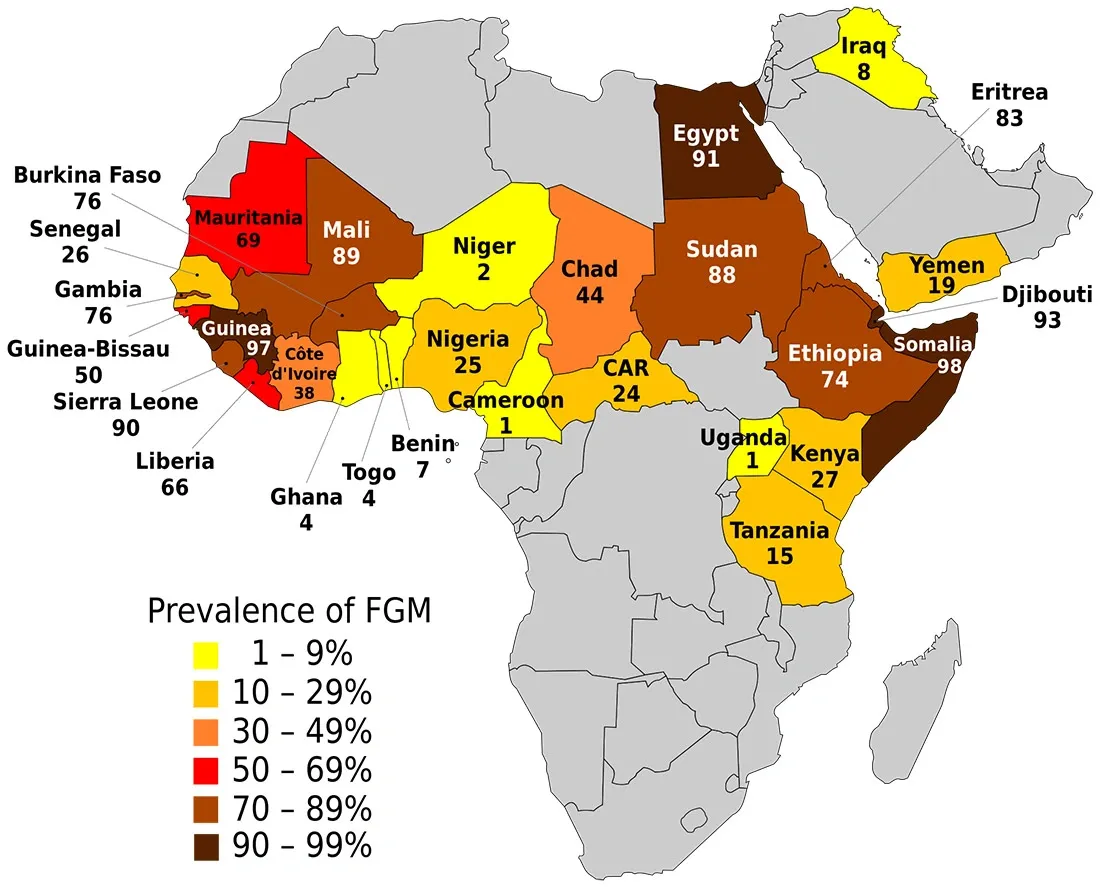
FGM is most prevalent in Africa, the Middle East, and parts of Asia, but it also occurs within diaspora communities around the world. According to the UNICEF and WHO, FGM is concentrated in 30 countries, particularly in Africa and the Middle East, where the practice is most widespread.
Prevalence by Region
Africa:
In countries such as Somalia, Guinea, and Djibouti, the prevalence of FGM exceeds 90% of the female population. In contrast, other countries like Kenya, Nigeria, and Ghana have reported declines in FGM prevalence due to growing advocacy and legal reforms.
Middle East and Asia:
In countries like Yemen and parts of Iraq, FGM is practiced, though its prevalence is lower compared to African nations. Southeast Asian countries such as Indonesia and Malaysia also practice less severe forms of FGM, categorized under Type IV.
Western Countries:
As a result of immigration and the movement of people from FGM-practicing countries, the practice has spread to Europe, North America, and Australia. In these regions, the practice often occurs clandestinely, with families sometimes sending girls back to their countries of origin for the procedure.
Global Trends
While the overall prevalence of FGM is declining in some areas due to advocacy and legislative efforts, the practice remains persistent in others. There is a growing recognition that targeted, culturally sensitive approaches are essential to addressing the root causes of FGM.
Chapter 5: Health Impacts of Female Genital Mutilation
The health consequences of FGM are significant and can last a lifetime. The immediate effects include severe pain, excessive bleeding, and infection, while long-term impacts may involve chronic pain, reproductive health complications, and psychological trauma.
Immediate Health Impacts
Severe Pain and Trauma: FGM is usually performed without anesthesia, causing excruciating pain and trauma for the girl or woman.
Hemorrhage: The cutting involved in FGM often leads to severe bleeding. In some cases, excessive blood loss can result in death, particularly in settings without adequate medical care.
Infections: Due to the unsanitary conditions in which FGM is often performed, girls are at risk of contracting infections such as tetanus and septicemia. The reuse of unsterilized instruments also increases the risk of HIV transmission.
Shock: Physical trauma and blood loss can cause shock, which can be life-threatening if not treated promptly.
Urinary Problems: Swelling and injury to the urethra during FGM can cause urinary retention, painful urination, and infections.
Long-Term Health Impacts
Chronic Pain: Many women experience long-term pain in the genital area, particularly during menstruation, urination, and sexual intercourse.
Reproductive Health Issues: Women who have undergone FGM face a higher risk of complications during pregnancy and childbirth, including obstructed labor, which can be life-threatening. Infibulation (Type III FGM) often requires women to undergo a surgical procedure to reopen the vaginal opening before giving birth.
Sexual Dysfunction: The removal of sensitive genital tissue, particularly the clitoris, leads to decreased sexual pleasure. Many women report difficulty in achieving orgasm or experiencing any sexual pleasure.
Infertility: In some cases, the scarring and infections resulting from FGM can cause infertility, further complicating the reproductive health of women.
Chapter 6: Psychological and Social Consequences
Beyond the physical health consequences, Female Genital Mutilation (FGM) has profound psychological and social effects. Many women and girls who have undergone FGM experience feelings of trauma, shame, and social isolation.
Psychological Consequences
Post-Traumatic Stress Disorder (PTSD): The trauma of undergoing FGM can lead to PTSD, manifesting as nightmares, flashbacks, anxiety, and depression. Girls who undergo the procedure at a young age may carry the emotional scars into adulthood.
Depression and Anxiety: The emotional toll of FGM is considerable. Many survivors suffer from chronic depression and anxiety due to the pain and trauma they endured, as well as the ongoing physical health problems that result from the procedure.
Sexual Dysfunction: The physical removal or alteration of genitalia can lead to significant sexual dysfunction, further compounding feelings of worthlessness or isolation in affected women. The inability to experience sexual pleasure can affect intimate relationships, leading to marital difficulties.
Social Consequences
Social Isolation: Women who reject FGM or speak out against the practice often face ostracism from their families and communities. This can lead to feelings of abandonment and isolation, as women may be seen as violating cultural norms.
Stigma and Shame: For many women who undergo FGM, there is a deep sense of shame associated with the procedure, particularly when they experience sexual or reproductive complications. This can result in feelings of inadequacy, especially in cultures where a woman’s worth is closely tied to her reproductive abilities.
Chapter 7: Legal and Human Rights Perspectives
Globally, Female Genital Mutilation (FGM) is recognized as a violation of the human rights of women and girls. International treaties and national laws have been enacted to protect women from this harmful practice, though enforcement remains a challenge in many regions.
International Human Rights Frameworks
Numerous international agreements call for the eradication of FGM:
Universal Declaration of Human Rights (UDHR): Protects the right to bodily integrity and condemns harmful practices that degrade human dignity.
Convention on the Elimination of All Forms of Discrimination Against Women (CEDAW): Calls for the elimination of harmful practices like FGM that discriminate against women and girls.
Convention on the Rights of the Child (CRC): Recognizes FGM as a violation of children’s rights and calls for its eradication as part of efforts to protect children from harmful traditional practices.
National Legal Frameworks
Many countries have enacted specific laws banning FGM, particularly in Africa, Europe, and North America. However, enforcing these laws remains a significant challenge, particularly in rural areas where the practice is deeply ingrained. In countries like Egypt, Kenya, and Sudan, governments have introduced legislation criminalizing FGM, yet prosecutions remain rare due to a combination of community support for the practice and a lack of political will.
Challenges in Enforcement
Cultural Resistance: In communities where FGM is seen as a vital part of cultural identity, laws banning the practice often face strong resistance. This cultural attachment to FGM makes enforcement difficult, as families may opt to perform the procedure in secret or travel to neighboring countries where FGM is not prosecuted.
Weak Legal Systems: In some countries, the lack of robust legal and healthcare systems hinders the enforcement of anti-FGM laws. Even when FGM is illegal, women and girls may have little access to protection or legal recourse.
Chapter 8: Efforts to Eradicate FGM
The global movement to end FGM has made significant progress in recent years, with many governments, international organizations, and NGOs taking action to raise awareness and implement strategies to eradicate the practice.
International Advocacy
International organizations such as the United Nations, WHO, and UNICEF have launched numerous initiatives aimed at eradicating FGM. These initiatives include public awareness campaigns, legal reforms, and the promotion of gender equality and education for girls.
Grassroots Efforts
At the community level, local activists and survivors of FGM have been instrumental in driving change. In countries like Kenya and Ethiopia, grassroots organizations work closely with communities to educate families about the dangers of FGM and provide alternative rites of passage for girls.
Engagement with Religious and Community Leaders
One of the most effective strategies in the fight against FGM has been engaging religious and community leaders who hold significant influence within their communities. When these leaders publicly denounce FGM, it can have a powerful impact on shifting cultural norms.
Chapter 9: Role of International Organizations and NGOs
Numerous international organizations and NGOs play a pivotal role in the fight against FGM. These groups work to raise awareness, support legal reforms, and provide resources to survivors of FGM.
UNICEF: Plays a leading role in advocating for the rights of children and women, focusing on ending harmful practices like FGM through education and outreach programs.
World Health Organization (WHO): Provides critical health information on the risks of FGM and works with governments to develop healthcare guidelines for treating FGM survivors.
Non-Governmental Organizations (NGOs): Grassroots organizations, such as Equality Now, The Orchid Project, and Forward UK, are actively involved in advocating for the rights of women and girls. They work on providing education, legal support, and healthcare for those affected by FGM.
Chapter 10: Case Studies of Communities Practicing FGM
To better understand the persistence of FGM, it is important to explore case studies from different communities where the practice remains widespread. In Somalia, for instance, nearly 98% of women have undergone FGM, making it one of the highest prevalence countries. Similarly, in Sudan, Type III FGM (infibulation) is common, and cultural practices linked to purity and marriageability make it difficult to eradicate the practice.
Chapter 11: Religion and FGM: Misconceptions and Realities
One of the most enduring myths about FGM is its association with religion. Although FGM is often justified on religious grounds, there is no major world religion that mandates the practice. This chapter explores how religious leaders and scholars have spoken out against FGM and how religious texts have been misinterpreted to justify the procedure.
Chapter 12: The Role of Gender Inequality and Patriarchy
FGM is closely tied to issues of gender inequality and patriarchal structures. The practice is used to control women’s sexuality and reinforce traditional gender roles that prioritize male dominance. This chapter will examine how patriarchal norms perpetuate FGM and how combating gender inequality is key to eradicating the practice.
Chapter 13: Education and Awareness Campaigns
Education plays a crucial role in changing attitudes towards FGM. In countries like Kenya and Nigeria, education and awareness campaigns have helped reduce the prevalence of FGM, particularly among younger generations. This chapter explores the impact of education in reducing FGM rates and empowering communities to abandon the practice.
Chapter 14: Voices of Survivors
The voices of survivors are central to the global movement to end FGM. Survivors of FGM have been instrumental in raising awareness about the practice and advocating for its eradication. This chapter highlights the personal stories of FGM survivors, focusing on their courage, resilience, and activism.
Chapter 15: FGM in Diaspora Communities
FGM is not confined to the countries where it originated. The practice has spread to diaspora communities in Europe, North America, and Australia. This chapter explores how FGM is practiced in immigrant communities, the challenges of enforcing anti-FGM laws in these regions, and the efforts to educate and protect at-risk girls.
Chapter 16: Legal Protections and Challenges in Prosecution
This chapter focuses on the legal protections in place to prevent FGM and the challenges involved in prosecuting those who continue to practice it. Despite the existence of anti-FGM laws in many countries, enforcement is often weak, and cultural resistance remains strong. The chapter also examines successful prosecutions and the lessons learned from those cases.
Chapter 17: Cultural Sensitivity and Community Engagement
Efforts to eliminate FGM must be carried out with cultural sensitivity to avoid alienating the communities in which the practice is entrenched. This chapter discusses the importance of working with communities to develop culturally appropriate alternatives to FGM and engaging families in the fight against the practice.
Chapter 18: The Role of Healthcare Providers
Healthcare providers are often on the front lines of identifying and treating the consequences of FGM. This chapter discusses the critical role that healthcare workers play in FGM prevention, including providing care for survivors, offering education, and reporting cases to the authorities.
Chapter 19: Moving Forward: Strategies for Global Elimination
Eradicating FGM requires a comprehensive, multi-faceted approach that includes legal reform, education, community engagement, and international cooperation. This chapter outlines the key strategies that have proven effective in reducing the practice and the steps that must be taken to achieve global elimination.
Chapter 20: Conclusion
Female Genital Mutilation (FGM) is a practice that has caused untold suffering for millions of women and girls worldwide. It is a violation of human rights and a manifestation of deeply rooted gender inequality. Despite the significant progress made in recent decades, much work remains to be done to ensure the eradication of this harmful practice. The global community must continue to advocate for the rights of women and girls, challenge harmful cultural norms, and empower survivors to speak out against FGM. Only by working together can we hope to achieve a future where no girl is subjected to the horrors of FGM.
This expanded document provides a comprehensive examination of FGM, from its historical roots to the global efforts to eradicate it. It underscores the importance of education, legal frameworks, and survivor advocacy in the fight to end this harmful practice.
Leave a Reply