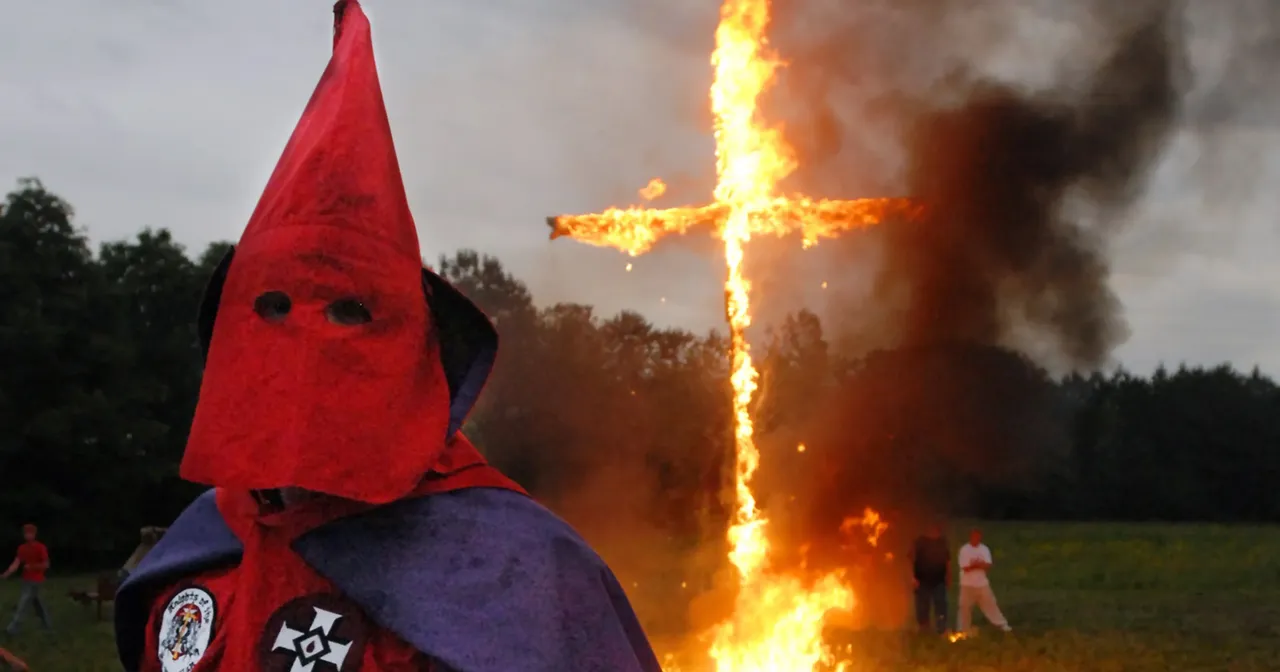
The Founding of the KKK by Democrats
1. Introduction (1 page)
Overview of the Ku Klux Klan:
The Ku Klux Klan (KKK) is one of the most infamous white supremacist organizations in American history. It has existed in several forms since its inception in the late 1860s, each iteration marked by violence, terrorism, and a commitment to racial segregation and white supremacy. Initially founded by Southern Democrats in the wake of the Civil War, the Klan was a reactionary force designed to resist Reconstruction policies and maintain the antebellum racial order. This 15-page exploration will examine the origins of the KKK, its relationship with the Democratic Party during Reconstruction, and the subsequent evolution of both the Klan and U.S. political parties.
Key Themes:
This analysis will cover how the Klan was formed by members of the Democratic Party in post-Civil War America, its goals, methods, and how the organization helped restore white supremacy in the South. Additionally, we will trace how political alignments have shifted over time, with the Democratic Party moving toward civil rights in the 20th century and the rise of the Republican Party in the South. The goal is to offer a balanced historical perspective, shedding light on the complexities of the Klan’s political affiliations and how both the Klan and political parties have evolved.
2. The Reconstruction Era (1865–1877) (1 page)
The End of the Civil War and Southern Reconstruction:
The Civil War (1861–1865) fundamentally reshaped the United States, particularly the Southern states that had seceded and fought to preserve slavery. After the Union victory, the Reconstruction Era (1865–1877) began, as the federal government implemented policies to rebuild the South and integrate formerly enslaved Black Americans into society. Radical Republicans in Congress, seeking to ensure civil rights and voting rights for freedmen, passed a series of constitutional amendments and civil rights acts.
Opposition from Southern Democrats:
Southern Democrats, who had dominated the pre-war political order and supported slavery, were vehemently opposed to Reconstruction. Many viewed the policies imposed by the Republican-controlled federal government as an attack on Southern traditions and white supremacy. The result was a violent backlash as white Southerners sought to reassert their dominance through both legal and extralegal means, with the Ku Klux Klan emerging as one of the most prominent groups leading this resistance.
3. The Founding of the KKK (1 page)
The Birth of the Klan in Tennessee:
The Ku Klux Klan was founded in December 1865 in Pulaski, Tennessee, by six Confederate veterans. Initially, the group was conceived as a fraternal social club for disillusioned Southern men in the aftermath of the Civil War. The name “Ku Klux Klan” was derived from the Greek word “kyklos” (meaning circle) combined with “Klan,” intended to evoke mystery and exclusivity. However, the Klan quickly evolved from a social group into a violent, paramilitary organization dedicated to restoring white supremacy by terrorizing Black Americans and their allies.
Early Leadership and Organization:
The KKK’s early leadership included Confederate General Nathan Bedford Forrest, who became the group’s first Grand Wizard. Under Forrest’s leadership, the Klan rapidly grew in size and influence. While its members operated under a veil of secrecy, the organization’s violent methods were clear: intimidation, lynching, and arson were used to suppress Black political and social advancement, especially targeting those who supported Reconstruction.
4. Goals and Methods of the Early KKK (2 pages)
Undermining Reconstruction and Black Progress:
The KKK’s primary objective was to dismantle the social and political gains made by Black Americans during Reconstruction. The 13th, 14th, and 15th Amendments to the U.S. Constitution had abolished slavery, granted citizenship to all people born in the U.S., and extended voting rights to Black men. The Klan saw these developments as a direct threat to the traditional racial hierarchy in the South, where white supremacy had been the norm for centuries. Their goal was to restore the Democratic Party’s control over Southern politics by any means necessary, including violence, intimidation, and murder.
Terror as a Tool:
The KKK employed widespread terror to suppress Black political participation. Black Americans who attempted to vote, run for office, or simply assert their civil rights became targets. The Klan also attacked white Republicans and Northern “carpetbaggers” who came to the South to support Reconstruction. The violence was systemic, aimed at creating a climate of fear that would keep Black people and their allies from challenging white Democratic control. These efforts were effective; in many parts of the South, voter turnout among Black Americans plummeted, and Republican officials were driven out of office.
Specific Acts of Violence:
Examples of Klan violence during this period abound. The KKK was responsible for countless acts of lynching, in which Black men were hanged or burned alive as public spectacles. Homes and churches were burned, and families terrorized. One of the most infamous incidents was the Colfax Massacre in Louisiana in 1873, where a white militia, including Klan members, killed over 100 Black men in a violent confrontation over a contested local election.
5. Political Alignment in the Post-Civil War South (2 pages)
Southern Democrats and White Supremacy:
The KKK’s efforts were aligned with the goals of the Democratic Party in the South, which sought to reclaim control from the Republicans. Southern Democrats, many of whom had been slaveholders before the war, viewed Reconstruction as a humiliating imposition by the North and a threat to their political power. The Klan’s violence, though not officially sanctioned by the Democratic Party, was tolerated and sometimes encouraged as it helped the Democrats regain political dominance.
Election Suppression:
The Klan played a key role in suppressing Black voter turnout in elections. In the years immediately following the Civil War, Black Americans—thanks to federal protections—had been able to vote and even win office in many Southern states. However, the Klan’s tactics of intimidation and violence during elections, such as threatening voters at polling places or attacking those who supported Republican candidates, led to a significant decline in Black political participation. This suppression allowed Southern Democrats to regain control of state legislatures and restore laws that entrenched segregation and racial inequality.
The “Redeemers” and Democratic Takeover:
By the mid-1870s, many Southern states had returned to Democratic control, thanks in part to the KKK’s campaign of terror. Southern Democrats, often called “Redeemers,” claimed they were saving the South from the corruption and misrule of Reconstruction. Once in power, Redeemer governments quickly enacted laws that rolled back civil rights advancements, laying the groundwork for the Jim Crow era.
6. Federal Intervention and the Klan’s Decline (1871) (1 page)
The Enforcement Acts:
In response to the widespread violence and political intimidation, the U.S. Congress passed a series of Enforcement Acts between 1870 and 1871. These laws were designed to protect the civil rights of Black Americans, particularly their right to vote. The most significant of these was the Ku Klux Klan Act of 1871, which made it a federal offense to interfere with voting rights or to engage in violent conspiracies aimed at depriving citizens of their constitutional rights.
Federal Prosecutions and the Klan’s Decline:
The Ku Klux Klan Act empowered federal authorities to prosecute Klan members, and President Ulysses S. Grant used these powers to launch a crackdown on the group. Federal troops were deployed to the South, and hundreds of Klan members were arrested and prosecuted. This federal intervention significantly weakened the Klan, and by the mid-1870s, the organization had largely been suppressed. However, while the KKK faded into the background, white supremacist violence continued under different guises, and the struggle for racial equality was far from over.
7. The Democratic Party’s Evolution (2 pages)
The Shift in Party Ideologies:
The Democratic Party of the 19th century was the party of the South, white supremacy, and opposition to civil rights for Black Americans. However, the party’s platform began to shift in the early 20th century. In the 1930s, President Franklin D. Roosevelt’s New Deal policies, aimed at addressing the Great Depression, expanded the federal government’s role in the economy and social welfare. While Southern Democrats were still resistant to racial integration, the party began to appeal more to working-class Americans, including Northern Black Americans.
The Dixiecrats and Resistance to Civil Rights:
In the 1940s and 1950s, the Democratic Party’s leadership began to support civil rights reforms, particularly under President Harry Truman, who desegregated the military. However, this led to a split within the party, as many Southern Democrats, known as “Dixiecrats,” vehemently opposed racial integration. In 1948, the Dixiecrats, led by South Carolina Governor Strom Thurmond, broke away from the national Democratic Party to form their own party, advocating for segregation and states’ rights.
The Democratic Party’s Shift to Civil Rights:
By the 1960s, the national Democratic Party had fully embraced the civil rights movement. Under the leadership of President John F. Kennedy and later President Lyndon B. Johnson, the party passed landmark legislation such as the Civil Rights Act of 1964 and the Voting Rights Act of 1965. These actions cemented the party’s transformation into the party of civil rights, leading to the defection of many white Southerners to the Republican Party.
8. The Civil Rights Movement and the KKK’s Revival (2 pages)
KKK Revival in Response to Civil Rights:
The civil rights movement of the 1950s and 1960s, which sought to end segregation and secure equal rights for Black Americans, led to a resurgence of KKK activity. In response to efforts to desegregate schools, public places, and workplaces, the Klan organized violent resistance. Bombings, assassinations, and attacks on civil rights activists were common, as the Klan sought to maintain white supremacy in the face of federal efforts to dismantle segregation.
Infamous Klan Violence During the Civil Rights Era:
One of the most notorious acts of Klan violence during this period was the bombing of the 16th Street Baptist Church in Birmingham, Alabama, in 1963, which killed four young Black girls. The Klan also played a role in the murders of civil rights workers during the Freedom Summer of 1964 in Mississippi, where three activists—James Chaney, Andrew Goodman, and Michael Schwerner—were killed by Klan members with the complicity of local law enforcement.
The Dixiecrat Defection:
As the national Democratic Party increasingly embraced civil rights, many Southern Democrats, or Dixiecrats, felt alienated. Politicians like Strom Thurmond switched allegiance to the Republican Party, signaling the beginning of a broader realignment in American politics. This shift was particularly evident in the South, where white voters who had traditionally supported the Democratic Party began voting Republican.
9. The KKK in Modern Times (2 pages)
Decline of the KKK:
By the late 20th century, the Klan had fragmented into smaller, less influential groups. Legal action, federal oversight, and growing public condemnation of racism led to a decline in Klan membership and activity. However, while the Klan’s power diminished, it remained a symbol of white supremacy in America.
Emergence of Other White Supremacist Groups:
Although the KKK’s influence has waned, other white supremacist and far-right groups have emerged to fill the void. Organizations like the Aryan Nations, the National Alliance, and the Proud Boys have adopted similar ideologies, using violence and intimidation to promote white nationalism. These groups often draw on the legacy of the KKK while distancing themselves from its now universally reviled image.
Political Realignment and Racial Politics Today:
Today, the political alignments that once defined the Klan’s connection to the Democratic Party have shifted dramatically. The Democratic Party is now seen as the party of civil rights and racial equality, while the Republican Party has absorbed much of the Southern white conservative base. Understanding this shift is crucial to comprehending the KKK’s place in American political history and the ongoing struggle for racial justice.
10. Conclusion (1 page)
Summary of Key Points:
The Ku Klux Klan’s founding by Southern Democrats in the aftermath of the Civil War reflects the deep racial and political divisions that have long plagued the United States. While the KKK was initially aligned with the Democratic Party, both the Klan and political parties have evolved over time. The Democratic Party’s shift toward civil rights in the 20th century and the rise of the Republican Party in the South illustrate how political affiliations can change, even as the legacy of the Klan’s white supremacist violence endures.
The Importance of Historical Context:
Understanding the history of the Klan and its relationship with political parties requires careful attention to context. While the KKK was indeed founded by members of the Democratic Party, it is vital to recognize how both the Klan and the parties have changed over time. Today, the Klan is a diminished force, but its legacy of hate and terror continues to shape discussions of race, politics, and justice in the United States.
Leave a Reply