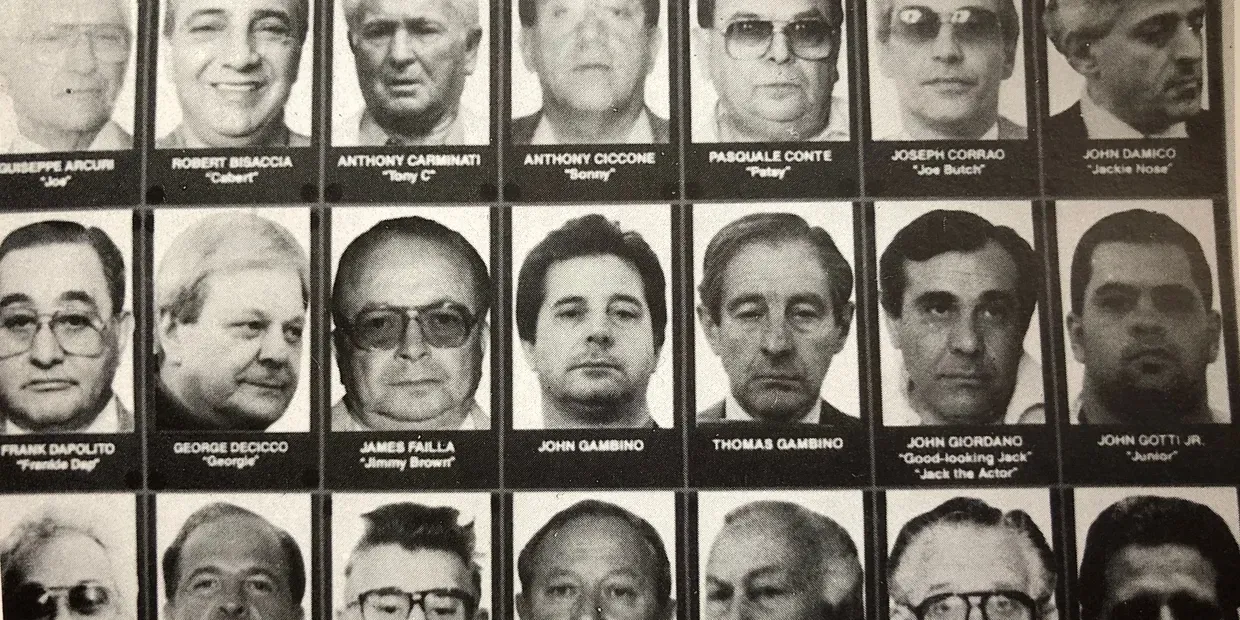
Gambino crime family
Introduction
The Gambino crime family, one of New York City’s “Five Families,” has been a cornerstone of organized crime in America since its formation in the early 20th century. Emerging from a wave of Italian-American Mafia organizations, the family’s history is intertwined with notorious mob figures, violent power struggles, and significant influence over various illegal enterprises.
Origins and Early History
The Gambino family originated from the D’Aquila gang, an early Sicilian Mafia group in New York City led by Salvatore D’Aquila in the 1910s. After D’Aquila’s assassination in 1928, the family underwent significant power shifts, leading to its first major leader, Vincent Mangano, in 1931. Under Mangano, the family expanded its operations, including gambling, extortion, and labor racketeering.
Rise of Carlo Gambino
Carlo Gambino took control of the family in 1957 after orchestrating the murder of Albert Anastasia, a powerful and feared leader known for his ruthless enforcement tactics. Gambino’s leadership marked a golden era for the family, solidifying its power and expanding its influence. He established strategic alliances, particularly with the Lucchese family, and avoided direct involvement in narcotics, which helped evade federal scrutiny. Gambino’s reign was defined by his low-profile style and effective control over various criminal enterprises.
Paul Castellano and Internal Conflict
Upon Gambino’s death in 1976, leadership passed to his cousin and brother-in-law, Paul Castellano, a businessman-like figure who emphasized white-collar crime over street-level operations. Castellano’s leadership sparked dissent within the family, especially among traditional mobsters who felt alienated by his approach and luxurious lifestyle. This discontent culminated in his assassination in 1985, orchestrated by John Gotti, a charismatic and ambitious capo.
John Gotti’s Leadership
John Gotti, often called “The Teflon Don” due to his ability to evade convictions, assumed control after Castellano’s death. Gotti’s flamboyant style and media presence marked a stark contrast to his predecessors. Under Gotti, the Gambino family engaged in drug trafficking, extortion, and other high-profile crimes, but his visibility and recklessness attracted intense law enforcement scrutiny. In 1992, Gotti was convicted on charges including murder and racketeering, largely due to the testimony of his underboss, Salvatore “Sammy the Bull” Gravano.
Post-Gotti Era and Decline
Following Gotti’s imprisonment, the family struggled with internal strife and external pressures from law enforcement. Leadership passed to Gotti’s son, John A. Gotti, who attempted to maintain control, but the family’s power continued to wane. The rise of cooperating witnesses and federal crackdowns severely weakened their operations.
Modern Day Activities
Today, the Gambino family remains active but significantly diminished compared to its peak. The organization continues to be involved in traditional Mafia activities such as loansharking, gambling, and racketeering, though they operate with a lower profile to avoid the intense surveillance that marked earlier decades.
Conclusion
The Gambino crime family’s history is a testament to the volatile and often violent nature of organized crime in America. From its early Sicilian roots to its modern-day operations, the family’s legacy is marked by power struggles, law enforcement battles, and a complex web of criminal activities that have profoundly impacted New York’s underworld. Despite numerous setbacks, the family remains a symbol of the enduring presence of the Mafia in American society.
Leave a Reply