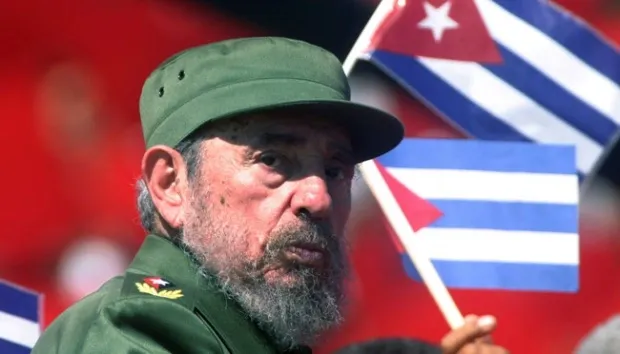
Fidel Castro: Revolutionary Leader and Icon of Cuba
Fidel Castro is one of the most iconic and controversial figures in modern history. His leadership of Cuba for almost five decades, from 1959 until his formal resignation in 2008, transformed the country into the first communist state in the Western Hemisphere. While Castro is revered by some as a champion of anti-imperialism and social justice, others criticize him for the repressive nature of his regime, the economic hardships Cuba endured, and the widespread human rights violations during his time in power. This expanded profile of Fidel Castro delves into his early life, revolutionary struggle, time as Cuba’s leader, and his global legacy.
Early Life and Education
Fidel Alejandro Castro Ruz was born on August 13, 1926, in Birán, Oriente Province, Cuba. He was the third child of Ángel Castro, a wealthy Spanish immigrant landowner, and Lina Ruz González, a domestic worker who later became Castro’s mother after his father divorced his first wife. Although Fidel grew up in relative wealth, he was exposed to the vast inequalities that existed between the rural peasants who worked on his father’s lands and the wealthier landowners.
Castro attended several prestigious Jesuit schools, including Colegio de Belén in Havana, where he developed a strong sense of Cuban nationalism. As a young man, he was deeply interested in history and was particularly inspired by Cuban independence figures like José Martí. This laid the foundation for Castro’s later revolutionary beliefs.
In 1945, Castro enrolled in the University of Havana to study law. It was here that he became politically active, joining student groups that advocated for reforms and a more inclusive Cuban government. While studying law, he was involved in student protests and became a charismatic leader within student movements. His involvement in politics took him to other Latin American countries, where he witnessed firsthand the influence of U.S. imperialism in the region, fueling his anti-imperialist sentiment.
Early Revolutionary Activities and Moncada Barracks Attack
After earning his law degree in 1950, Castro started a law practice in Havana but became increasingly frustrated by the corruption and inequality of the Cuban government under President Fulgencio Batista. Batista had seized power in a 1952 coup and quickly established a military dictatorship that was supported by the U.S. government.
Castro’s legal work defending poor Cubans further radicalized him, and he became determined to overthrow the Batista regime. On July 26, 1953, Castro and a group of 160 rebels launched an attack on the Moncada Barracks in Santiago de Cuba. The assault was intended to spark a nationwide uprising, but it failed disastrously. Many of Castro’s forces were killed or captured. Castro was arrested and sentenced to 15 years in prison, but during his trial, he delivered a powerful speech in his defense, ending with the famous declaration: “History will absolve me.”
Castro’s imprisonment, however, was short-lived. In 1955, under pressure from the public, Batista granted amnesty to many political prisoners, including Castro. Upon his release, Castro went into exile in Mexico, where he met fellow revolutionary Ernesto “Che” Guevara. This meeting would prove pivotal, as Guevara became one of Castro’s closest allies and a symbol of the Cuban Revolution.
The Cuban Revolution and Rise to Power
While in Mexico, Castro formed the 26th of July Movement, named after the failed Moncada Barracks attack. The movement’s goal was to overthrow Batista and establish a new government that would serve the interests of the Cuban people. In late 1956, Castro and 82 rebels, including Guevara, sailed from Mexico to Cuba aboard the yacht Granma. Upon arriving in Cuba, they were ambushed by Batista’s forces, and only a handful of the rebels survived. Castro, Guevara, and others retreated to the Sierra Maestra mountains, where they launched a guerrilla war against the Batista regime.
Over the next two years, Castro’s guerrilla army grew as it gained support from peasants, workers, and intellectuals disillusioned with Batista’s corruption and brutality. Castro’s forces engaged in a series of successful skirmishes against Batista’s army, who were demoralized and weakened by widespread desertions. The U.S. government, which had previously supported Batista, began to distance itself from him as the situation in Cuba deteriorated.
By December 1958, Batista’s regime was on the verge of collapse. On January 1, 1959, Batista fled the country, and Fidel Castro’s forces marched triumphantly into Havana, marking the successful culmination of the Cuban Revolution. Castro was hailed as a hero by many Cubans who hoped that his leadership would bring an end to corruption, inequality, and foreign interference in Cuban affairs.
Consolidation of Power and Marxist Ideology
After the revolution, Castro quickly moved to consolidate his power. Although he initially claimed to support democracy, Castro postponed elections indefinitely and established a one-party state. His government systematically dismantled opposition forces and imprisoned or executed political rivals, including many who had fought alongside him during the revolution.
One of the most significant shifts during Castro’s early rule was his alignment with the Soviet Union and the adoption of Marxist-Leninist ideology. While Castro did not initially declare his government to be socialist, by 1961, he openly embraced communism. He nationalized industries, including American-owned businesses, and implemented land reforms aimed at redistributing wealth. These moves, while popular among the Cuban poor, led to the deterioration of relations with the United States.
The U.S. government, alarmed by Castro’s alliance with the Soviet Union, attempted to overthrow him through various means, including economic embargoes and covert actions. The most famous of these efforts was the Bay of Pigs invasion in 1961, in which a CIA-sponsored force of Cuban exiles attempted to invade the island and overthrow Castro. The invasion was a complete failure, and Castro’s forces quickly defeated the invaders, further solidifying his grip on power.
Castro used the Bay of Pigs invasion to galvanize popular support, portraying the revolution as a defense of Cuban sovereignty against U.S. imperialism. It also pushed Cuba closer to the Soviet Union, which provided economic and military aid to the island nation.
Cuban Missile Crisis and Cold War Tensions
The Cuban Missile Crisis of October 1962 marked one of the most dangerous moments of the Cold War and brought the world to the brink of nuclear war. The crisis began when U.S. intelligence discovered Soviet nuclear missiles being installed in Cuba, just 90 miles off the coast of Florida. The presence of these missiles was a direct response to U.S. aggression against Cuba and the stationing of U.S. missiles in Turkey.
U.S. President John F. Kennedy demanded the removal of the missiles and imposed a naval blockade around Cuba to prevent further Soviet shipments. For 13 tense days, the world watched as the two superpowers stood on the edge of war. Castro, fearing a U.S. invasion, urged Soviet Premier Nikita Khrushchev to launch a preemptive nuclear strike if necessary.
Ultimately, the crisis was resolved through diplomatic negotiations, with the Soviet Union agreeing to remove its missiles from Cuba in exchange for a U.S. pledge not to invade the island. The U.S. also secretly agreed to remove its missiles from Turkey. While the crisis ended without conflict, it underscored the geopolitical importance of Cuba in the Cold War and cemented Castro’s role as a key player on the global stage.
Domestic Policies and Social Reforms
Domestically, Castro’s government implemented sweeping social reforms, many of which remain defining features of his legacy. Under his leadership, Cuba developed an extensive healthcare system that provided free medical services to all citizens. Despite the country’s limited resources, Cuba’s healthcare system achieved remarkable outcomes, with significant improvements in life expectancy, infant mortality rates, and disease control.
Education was another cornerstone of Castro’s domestic policies. The government launched a nationwide literacy campaign in the early 1960s, which dramatically reduced illiteracy rates. Education was made free and accessible to all Cubans, and the country developed a reputation for its high-quality education system, particularly in the fields of science and medicine.
However, these social achievements came at a high cost. Castro’s government severely restricted political freedoms, and Cuba became a one-party state where dissent was not tolerated. The government controlled the media, and political opponents were frequently imprisoned, executed, or forced into exile. Human rights organizations frequently condemned the regime for its lack of political freedoms, including freedom of speech, assembly, and the press.
The Cuban economy also faced significant challenges. Castro’s policy of nationalizing industries led to the withdrawal of U.S. investments, and the U.S. imposed a strict embargo on Cuba, which crippled the island’s economy. Cuba became heavily reliant on Soviet aid, particularly for oil and food imports. While Cuba’s social programs improved the quality of life for many, economic mismanagement and inefficiency left the country struggling with shortages of basic goods and services.
Internationalism and Global Influence
Throughout his time in power, Castro sought to export the Cuban Revolution to other parts of the world. His government provided support to revolutionary movements in Latin America, Africa, and Asia. Cuban troops and advisors were sent to Angola, Mozambique, and Ethiopia to support leftist governments and rebel groups, often aligning with Soviet interests during the Cold War.
In Latin America, Castro’s influence was particularly strong. Inspired by the Cuban Revolution, several leftist insurgencies attempted to overthrow governments in the region. One of the most famous of these was in Bolivia, where Che Guevara led a failed insurgency before being captured and executed in 1967. Castro’s support for revolutionary movements earned him admiration from leftist leaders and activists around the world, but it also led to further isolation from many Western countries.
Castro’s internationalism extended to humanitarian missions as well. Cuba became known for sending doctors and medical teams to developing countries, particularly in Africa and Latin America, as part of its commitment to socialist solidarity. This “medical diplomacy” not only helped bolster Cuba’s international reputation but also contributed to Castro’s image as a champion of the Global South.
Economic Struggles and the Special Period
The collapse of the Soviet Union in 1991 marked a turning point for Cuba. Without Soviet aid, the Cuban economy went into a tailspin, and the country entered what became known as the “Special Period.” The Special Period was characterized by severe shortages of food, fuel, and other essential goods. The Cuban government was forced to implement austerity measures, rationing, and limited market reforms to prevent economic collapse.
Castro’s ability to maintain power during this time was a testament to his resilience as a leader, but the Special Period also exposed the deep structural weaknesses of the Cuban economy. Tourism became one of the few sectors that generated foreign currency, and the government began to open the country to limited foreign investment. Despite these measures, the country continued to face significant economic challenges throughout the 1990s and 2000s.
Resignation and Final Years
In July 2006, Castro underwent emergency surgery for intestinal bleeding and temporarily transferred power to his younger brother, Raúl Castro. Due to his failing health, Fidel Castro officially resigned as President of Cuba in February 2008, ending nearly 50 years of rule. Raúl Castro formally succeeded him as Cuba’s leader and began implementing modest economic reforms, though the country’s political system remained largely unchanged.
Fidel Castro spent his final years writing and occasionally commenting on world events through his “Reflections” columns in Cuban state media. He remained an influential figure in Cuban society until his death on November 25, 2016, at the age of 90. His death was met with mixed reactions globally—while some mourned the loss of a revolutionary icon, others saw it as the end of an era of authoritarianism and repression in Cuba.
Legacy and Historical Impact
Fidel Castro’s legacy is one of the most polarizing in modern history. For his supporters, he is remembered as a hero who stood up to U.S. imperialism, brought education and healthcare to the masses, and supported revolutionary movements across the world. Castro’s vision of a socialist Cuba became a symbol of resistance to colonialism and capitalism, particularly in Latin America and Africa.
However, his critics view him as a dictator who ruled through repression, stifled political dissent, and presided over a stagnant economy that left many Cubans in poverty. Human rights abuses, including the imprisonment of political dissidents and the suppression of free speech, are also central to the darker aspects of his legacy.
Regardless of one’s perspective, there is no doubt that Castro left an indelible mark on Cuba and the world. His ability to maintain power in the face of immense challenges—both from within and outside the country—speaks to his skill as a leader and strategist. His vision of a socialist revolution in the Western Hemisphere reshaped Cuban society and inspired movements far beyond its shores.
Conclusion
Fidel Castro’s life and legacy are filled with contradictions. He was both a revolutionary hero and a repressive dictator. He improved the lives of many Cubans through education and healthcare, yet his economic policies led to widespread poverty and emigration. His defiance of the United States made him a symbol of anti-imperialism, but it also led to decades of economic hardship for the Cuban people.
As the world continues to assess Castro’s impact, it is clear that his influence will be felt for generations to come. Whether viewed as a champion of the oppressed or as a tyrant, Fidel Castro’s role in shaping the history of the 20th century is undeniable. His story is a testament to the power of ideology, the complexities of leadership, and the lasting consequences of revolution.
Leave a Reply