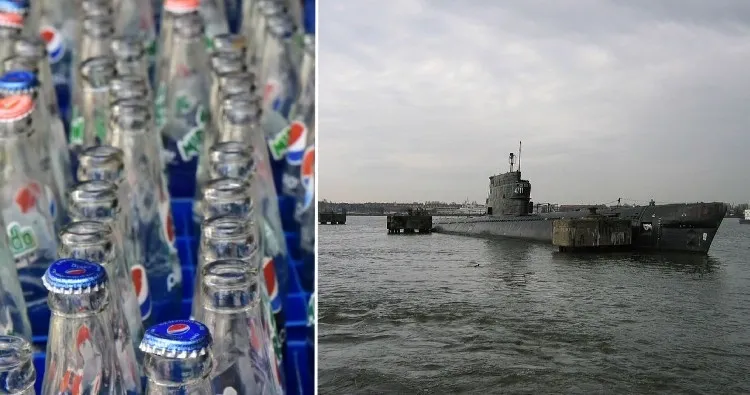
Pepsi’s Unusual Cold War Deal: When Pepsi Briefly Became a Naval Power in 1989
In 1989, PepsiCo, the American soft drink giant, made one of the most extraordinary deals in business history, briefly becoming the sixth-largest military power in the world—at least in terms of naval assets. This peculiar event occurred when the Soviet Union, facing economic difficulties and a shortage of hard currency, agreed to trade a fleet of military vessels, including warships and submarines, to Pepsi in exchange for Pepsi products.
This strange but true story is not only an example of Cold War-era economic desperation but also highlights how creative business deals were struck between the capitalist West and the communist East in an era of geopolitical tension and economic disparity. The deal became a symbol of how multinational corporations like Pepsi played a role in fostering relationships across the Iron Curtain during the late stages of the Cold War.
Background: Pepsi’s Entry into the Soviet Union
PepsiCo’s relationship with the Soviet Union began in the early 1970s. At that time, Richard Nixon, then president of the United States, and Leonid Brezhnev, the leader of the Soviet Union, were pursuing a policy of détente—a thawing of Cold War tensions. As part of this effort, PepsiCo struck a deal to become one of the first American consumer products sold in the Soviet Union.
In 1972, Donald M. Kendall, PepsiCo’s CEO and a close friend of Nixon, helped broker a historic deal that brought Pepsi into Soviet markets. However, due to the ruble’s non-convertibility into U.S. dollars (meaning the Soviet currency could not be easily exchanged internationally), the Soviets had to find another way to pay for the Pepsi they were importing. The initial solution involved a barter agreement in which the Soviets traded Stolichnaya vodka for Pepsi syrup, which was then used to produce Pepsi within the USSR.
This arrangement worked well for years, with both Pepsi and Soviet consumers benefiting from the deal. However, by the late 1980s, Pepsi had expanded its operations in the Soviet Union, and the scale of its business had grown. The original barter agreement, based solely on vodka, was no longer sufficient to cover the growing demand for Pepsi products. As a result, a new trade agreement had to be negotiated.
The 1989 Naval Deal: Pepsi’s Fleet of Warships
In 1989, as the Soviet Union’s economic situation worsened, they once again faced the challenge of finding a way to pay PepsiCo. This time, they proposed something far more unusual: the Soviets offered Pepsi 17 submarines, a cruiser, a frigate, and a destroyer in exchange for a new supply of Pepsi products. The value of the ships and submarines was estimated at around $3 billion, and the deal represented one of the largest barters in Cold War history.
Pepsi briefly became, on paper, the owner of one of the world’s largest naval fleets, making it the sixth-largest military power by the number of vessels. However, the company had no interest in maintaining or operating a navy. Instead, Pepsi quickly sold the fleet to a Swedish company for scrap. Pepsi’s CEO at the time, Donald Kendall, reportedly quipped to a U.S. national security advisor, “We’re disarming the Soviet Union faster than you are!”, reflecting the oddity of a soft drink company temporarily possessing military assets.
Pepsi’s Strategic Positioning and Economic Impact
Pepsi’s deal with the Soviet Union was part of a broader strategy to secure a long-term foothold in the USSR, which was the world’s largest country by landmass and had a population of over 280 million people. By the late 1980s, Pepsi was not only a well-established brand in the Soviet Union but also an emblem of the gradual opening of Soviet society to Western consumer goods.
The 1989 naval trade was emblematic of the desperation the Soviet Union was experiencing as it faced economic collapse. The Soviet government’s inability to generate hard currency made creative barter deals like this one essential for acquiring Western goods. The Pepsi deal, which involved trading significant military assets for soft drinks, illustrated the extent of the Soviet Union’s economic troubles.
The Symbolism and Legacy of the Pepsi-Soviet Deal
The deal between Pepsi and the Soviet Union became a symbol of the changing dynamics of the Cold War. As the Soviet Union struggled to maintain its economy, global corporations like Pepsi were playing a more significant role in bridging the gap between East and West. The fact that the Soviet Union, a global superpower, had to trade warships for Pepsi represented the complex interplay between politics, economics, and consumer culture during the Cold War.
Moreover, the deal highlighted the power of multinational corporations during the Cold War era. Pepsi, along with other major companies, helped introduce Western products and culture into the Soviet Union. By the time the USSR collapsed in 1991, Pepsi had become a prominent player in the Soviet market, paving the way for other Western brands to enter the post-Soviet space.
While the deal itself remains a quirky and little-known episode in Cold War history, it also speaks to the broader trends of globalization and the role of businesses in shaping international relations during the late 20th century.
Conclusion: Pepsi’s Naval Deal and Its Cold War Significance
The 1989 deal in which Pepsi briefly became one of the largest naval powers in the world stands as one of the most unusual moments in Cold War history. By accepting a fleet of Soviet warships in exchange for Pepsi products, the company not only demonstrated its commitment to maintaining its business in the Soviet Union but also underscored the Soviet Union’s dire economic straits.
Though the warships were quickly sold for scrap, the story remains a fascinating and humorous example of how economic necessity can lead to some of the most extraordinary agreements. More than just a strange anecdote, the Pepsi-Soviet deal reflects the lengths to which companies and governments went during the Cold War to maintain economic ties, even as political tensions persisted.
Ultimately, this deal served as a reminder of the complex and sometimes bizarre ways in which capitalism and geopolitics intertwined during the Cold War, and how even a soft drink company could briefly find itself playing a role in global diplomacy.
Leave a Reply