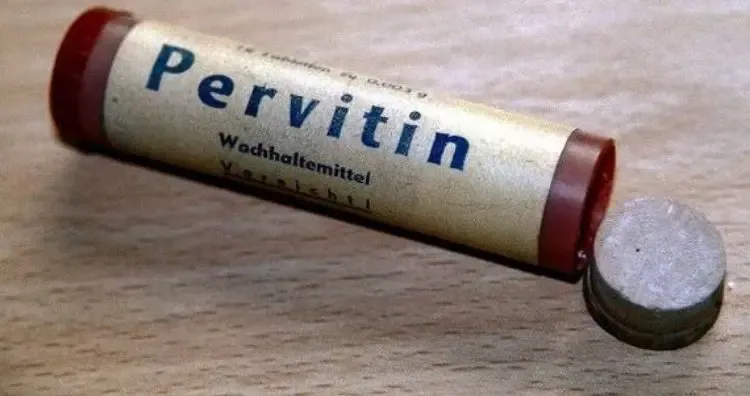
Pervitin: The Secret Weapon Behind the Blitzkrieg – How Crystal Meth Fueled the German Invasion of France
World War II is often remembered as a conflict that tested human endurance and the limits of technological innovation. While much attention has been given to the tanks, planes, and weapons that defined the battlefield, a less well-known but equally significant factor in the success of Nazi Germany’s early military campaigns was the widespread use of a stimulant drug known as Pervitin. A type of crystal methamphetamine, Pervitin allowed German soldiers to push the boundaries of human performance, staying awake and alert for extended periods and maintaining a near-superhuman level of endurance. Nowhere was this more evident than during the Blitzkrieg—the lightning-fast invasion of France through the Ardennes Mountains in 1940.
The German invasion of France was one of the most audacious and successful military operations in history, catching the Allies off guard and leading to the rapid fall of France. Much of this success has been attributed to the careful planning, speed, and mechanized mobility of the German forces. However, an often-overlooked element of this success was the soldiers’ reliance on Pervitin, a drug that gave them the physical and mental stamina to drive forward relentlessly for days without rest. This article explores the role of Pervitin in the Blitzkrieg, its effects on the soldiers, and the long-term consequences of its widespread use during the war.
The Origins of Pervitin: Methamphetamine for the Masses
Pervitin was first developed in the late 1930s by the Berlin-based pharmaceutical company Temmler Werke, which marketed it as a stimulant for both civilians and soldiers. The drug’s active ingredient, methamphetamine, is a powerful stimulant that affects the central nervous system. Methamphetamine increases the release of dopamine in the brain, resulting in heightened alertness, increased energy, and a sense of euphoria. It also suppresses the need for sleep, allowing users to stay awake and active for extended periods.
Initially, Pervitin was advertised as a “miracle drug” for the everyday German citizen. It was marketed to housewives, students, and factory workers as a way to enhance productivity and combat fatigue. The drug became so popular that it was even incorporated into chocolates sold to the public. However, the military potential of Pervitin was quickly recognized by the German Wehrmacht (the unified armed forces of Nazi Germany), and the drug was soon distributed to soldiers in large quantities.
With Pervitin, German military planners saw an opportunity to enhance the performance of their soldiers, particularly in the context of the fast-paced, high-intensity warfare that characterized the Blitzkrieg strategy. The drug would allow soldiers to fight longer, march farther, and stay focused despite the extreme physical and psychological demands of the battlefield.
Blitzkrieg: The Invasion of France
The German invasion of France in May 1940 was a stunning display of speed, coordination, and military might. The Blitzkrieg tactic, which had been used successfully during the invasion of Poland in 1939, involved rapid and overwhelming mechanized assaults designed to bypass enemy defenses and quickly incapacitate the opposition. Central to the Blitzkrieg strategy was the use of tanks, motorized infantry, and aircraft in tightly coordinated attacks that would strike deep into enemy territory before the defenders could react.
One of the most crucial aspects of the German plan was the decision to invade France through the Ardennes Forest—a heavily wooded and mountainous region that the French believed to be nearly impenetrable to large-scale mechanized forces. The French had focused their defenses along the Maginot Line, a series of fortifications on the French-German border, and left the Ardennes lightly defended, assuming that the Germans would not attempt to push their tanks through such difficult terrain.
However, the Germans saw the Ardennes as an opportunity. By launching a surprise attack through the forest, they could avoid the heavily fortified Maginot Line and strike directly at the heart of France. The success of this plan depended not only on the speed and coordination of the German forces but also on their ability to maintain a relentless pace over several days and nights.
Pervitin and the German Soldiers: Fuel for the Blitzkrieg
As German forces prepared for the invasion of France, military doctors distributed millions of Pervitin tablets to the soldiers. The drug became a key component of the German military’s logistics, with soldiers being encouraged to take the pills to combat fatigue and stay awake during the long, grueling days of the campaign. Reports from the time indicate that soldiers were given Pervitin in doses ranging from one to three tablets per day, though many took more than the recommended amount.
The effects of Pervitin were immediate and profound. Soldiers who took the drug reported feeling invincible, with heightened energy, increased confidence, and a sense of euphoria. More importantly, they were able to stay awake and alert for extended periods—often as long as three days and three nights without sleep. This gave the German forces a significant advantage during the Blitzkrieg, as they were able to maintain their rapid pace and keep their offensive moving forward without the need for rest.
For the soldiers tasked with pushing through the Ardennes, Pervitin became a lifeline. The challenging terrain and the need for constant vigilance made it impossible to stop for rest. Pervitin allowed the German troops to stay awake and focused as they navigated the dense forest, coordinated their movements, and engaged in combat with French forces. The drug also dulled their fear and anxiety, enabling them to press forward with relentless determination, even in the face of heavy resistance.
In the early days of the invasion, German soldiers used Pervitin to maintain their rapid advance, often marching or driving for 36 to 48 hours straight. The drug kept them awake and gave them the endurance to continue fighting even when their bodies were exhausted. This relentless pace caught the French and British forces off guard, allowing the Germans to break through their lines and advance deep into France in a matter of days.
The Consequences of Pervitin Use: Mental and Physical Toll
While Pervitin allowed the German soldiers to perform at an exceptional level during the Blitzkrieg, the drug came with serious side effects. Methamphetamine is a powerful and addictive substance, and its prolonged use can have devastating effects on both the mind and body. Many soldiers who took Pervitin during the invasion of France began to experience the negative consequences of the drug after days of continuous use.
One of the most immediate effects of Pervitin was extreme irritability and aggression. As the drug wore off, soldiers often became agitated, paranoid, and violent. The initial euphoria and sense of invincibility gave way to anxiety, confusion, and, in some cases, hallucinations. Some soldiers began to experience psychotic episodes, making them dangerous not only to the enemy but also to their fellow soldiers.
Physically, the lack of sleep combined with the overstimulation of the nervous system took a heavy toll. Soldiers began to suffer from exhaustion, heart palpitations, and nausea. The crash that followed the high of Pervitin left many soldiers in a state of near collapse, and some were unable to continue fighting after several days of continuous drug use.
Military doctors and officers began to notice the detrimental effects of Pervitin, but by then, the drug had become an integral part of the German war machine. Soldiers who had become dependent on the drug demanded more, and some units began to distribute it more freely in an attempt to maintain morale and performance. Despite the clear dangers, the drug continued to be used throughout the war, and many soldiers became addicted to it.
The Success of the Blitzkrieg and the Role of Pervitin
Despite the serious side effects of Pervitin, there is no doubt that the drug played a significant role in the success of the Blitzkrieg. The ability of the German soldiers to stay awake for days at a time, combined with their heightened energy and aggression, allowed the Wehrmacht to maintain the rapid pace of the invasion and overwhelm the French defenses. Within just six weeks of the invasion, France had fallen, and the German army had achieved one of the most stunning military victories in history.
The use of Pervitin during the invasion of France also set a precedent for its continued use throughout the war. German soldiers fighting on the Eastern Front and in North Africa were similarly supplied with the drug, which became a key part of the Wehrmacht’s strategy to maintain the momentum of their campaigns.
However, the long-term consequences of Pervitin use were devastating. Many soldiers who had become addicted to the drug struggled with withdrawal symptoms, and some suffered lasting psychological and physical damage. After the war, the use of methamphetamine was heavily restricted, but the legacy of Pervitin remained a dark chapter in the history of military medicine.
The Aftermath and Long-Term Consequences of Pervitin Use
The long-term consequences of Pervitin use during World War II extended far beyond the battlefield. For many German soldiers, the drug had a lasting impact on their mental and physical health. Reports from the post-war period indicate that numerous veterans continued to struggle with addiction to methamphetamine, and some suffered from permanent psychological damage as a result of their wartime drug use.
The widespread use of Pervitin also had broader implications for the German population. After the war, the production and distribution of Pervitin were heavily restricted, but the drug had already made its way into civilian life during the conflict. Many civilians, particularly those who worked in factories or other labor-intensive industries, had used Pervitin to boost their productivity during the war. As a result, methamphetamine addiction became a public health issue in the years following the war, with many people seeking treatment for the long-term effects of the drug.
The use of Pervitin also had a lasting impact on the field of military medicine. The drug’s ability to enhance performance and endurance, even at a great cost, led to further research into stimulants and other performance-enhancing substances for soldiers. While Pervitin itself was largely phased out after the war, the idea of using drugs to enhance military performance continued to be explored by various nations, including the United States and the Soviet Union, during the Cold War.
The Ethical Implications of Pervitin Use in Warfare
The use of Pervitin during World War II raises important ethical questions about the role of performance-enhancing drugs in warfare. While the drug undoubtedly helped German soldiers achieve extraordinary feats of endurance and stamina during the Blitzkrieg, it also exposed them to significant physical and psychological risks. The long-term effects of the drug, including addiction and mental health issues, highlight the dangers of relying on chemical substances to enhance human performance.
Moreover, the widespread use of Pervitin by the German military underscores the ways in which soldiers were treated as expendable commodities by their leaders. The distribution of a powerful and dangerous drug to young men, many of whom were not fully aware of the risks, speaks to the broader dehumanization of warfare, in which the health and well-being of individual soldiers were often sacrificed in the pursuit of military objectives.
Conclusion: Pervitin and the Legacy of the Blitzkrieg
The use of Pervitin during the Blitzkrieg and the invasion of France is a sobering reminder of the lengths to which military planners will go to gain an advantage on the battlefield. The drug allowed German soldiers to push beyond the limits of human endurance, staying awake for days on end as they stormed through the Ardennes Mountains and into the heart of France. However, the consequences of this chemical enhancement were profound, both for the soldiers who used it and for the broader course of the war.
While Pervitin helped fuel the rapid success of the German invasion, it also left a trail of physical and psychological devastation in its wake. The long-term consequences of the drug’s use during World War II continue to be felt, and the ethical questions it raises remain relevant to this day.
In the end, the story of Pervitin serves as a powerful reminder of the costs of war, not only in terms of lives lost but also in the toll it takes on those who fight. The Blitzkrieg, fueled in part by this dangerous drug, stands as both a testament to the ingenuity of military strategy and a cautionary tale about the dangers of pushing soldiers beyond their natural limits in the pursuit of victory.
Leave a Reply