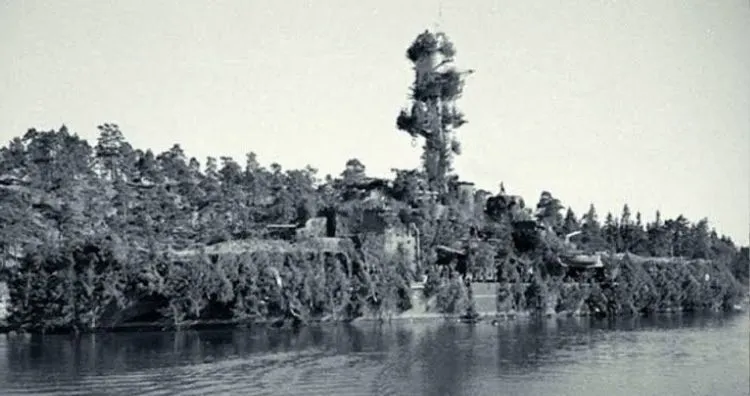
The Incredible Escape of the Dutch Minesweeper: Disguised as an Island
The Pacific Theater of World War II was a vast and dangerous battleground, with the Allies and the Japanese Imperial forces engaged in a fierce contest for dominance over the region’s seas. In this war of attrition, tactics were often unconventional, desperate, and ingenious. One of the most remarkable stories to emerge from this period is the daring escape of a Dutch minesweeper that managed to evade the Japanese Navy for eight days by disguising itself as an island.
The vessel in question, the HNLMS Abraham Crijnssen, was a small Dutch warship tasked with the dangerous job of clearing mines. Following the Japanese invasion of the Dutch East Indies in 1942, the Abraham Crijnssen found itself in grave danger, as enemy forces scoured the seas for any remaining Allied vessels. Facing almost certain destruction, the crew of the minesweeper hatched an audacious plan: they would transform their ship into a floating island to blend in with the surrounding environment and avoid detection.
This incredible feat of deception, creativity, and survival would see the Abraham Crijnssen evade capture and ultimately escape to Australia, where her story would become legendary. In this 15-page account, we explore the full history of the ship, the perilous circumstances that led to her disguise, the daring execution of the plan, and the legacy of one of World War II’s most extraordinary naval escapes.
The HNLMS Abraham Crijnssen: A Brief History
The Abraham Crijnssen was part of the Royal Netherlands Navy, a fleet that had been instrumental in protecting Dutch colonial interests in Southeast Asia, particularly in the resource-rich Dutch East Indies (modern-day Indonesia). The ship was named after a 17th-century Dutch naval commander, Abraham Crijnssen, who had earned a reputation for his daring and ingenuity during the Anglo-Dutch wars.
Launched in 1936, the Abraham Crijnssen was classified as a minesweeper, a type of warship designed to detect and clear naval mines—explosive devices that posed a deadly threat to military and civilian vessels. At 184 feet (56 meters) long and with a displacement of around 525 tons, the Abraham Crijnssen was relatively small compared to larger destroyers or battleships, but she was well-suited to her role. Her duties included sweeping minefields, escorting convoys, and conducting reconnaissance in dangerous waters.
By 1941, as the Pacific War intensified, the Abraham Crijnssen was stationed in the Dutch East Indies, a strategic region rich in oil, rubber, and other resources vital to the war effort. The Netherlands, along with Britain, the United States, and Australia, had formed the American-British-Dutch-Australian Command (ABDACOM) to defend the region from the rapid advance of Japanese forces.
However, despite the efforts of ABDACOM, the Japanese swiftly overran much of Southeast Asia, including the Dutch East Indies, in a series of coordinated attacks that culminated in the Battle of the Java Sea in February 1942. The battle was a disaster for the Allies, with many of their ships sunk or captured. With Japanese forces closing in, the Abraham Crijnssen and her crew faced the grim reality that they were alone, outgunned, and vulnerable in hostile waters.
The Situation in Early 1942: Dutch East Indies Falls to Japan
By early 1942, the Japanese military had launched a massive and highly effective campaign to capture the resource-rich territories of Southeast Asia. The fall of Singapore in February of that year had sent shockwaves throughout the Allied command, and soon after, the Dutch East Indies was under siege. The Japanese, intent on securing access to oil fields and other resources, targeted key locations such as Java, Sumatra, and Borneo.
The naval forces of the Dutch East Indies, including the Abraham Crijnssen, were stretched thin. They were vastly outnumbered by the superior Japanese fleet, which included battleships, aircraft carriers, destroyers, and submarines. As Japanese forces advanced, the situation for the Dutch fleet became increasingly desperate. Many ships were sunk or captured during the Battle of the Java Sea, leaving only a handful of vessels, including the Abraham Crijnssen, still operational.
With the Japanese navy patrolling the waters and Japanese aircraft dominating the skies, it was clear that any ship attempting to flee would face almost certain detection and destruction. Yet, surrender was not an option for the crew of the Abraham Crijnssen, who were determined to avoid capture at all costs. As the situation grew more perilous, the ship’s officers and crew began to devise a bold and unconventional plan: they would attempt to escape by disguising the minesweeper as an island.
The Audacious Plan: Disguising the Ship as an Island
The idea of disguising a ship as an island might seem outlandish at first, but for the crew of the Abraham Crijnssen, it was a stroke of genius born out of necessity. The minesweeper was a relatively small vessel, which made her more agile but also more vulnerable to enemy detection. The crew knew that if they attempted to flee openly, they would quickly be spotted by Japanese reconnaissance planes or warships.
Instead, they reasoned, if the ship could blend in with the numerous small islands and atolls that dotted the Indonesian archipelago, they might just be able to evade detection long enough to escape. The key to the plan was camouflage. By transforming the ship to look like a natural part of the landscape, the crew hoped to pass unnoticed by enemy forces.
The first step was to cover the decks of the Abraham Crijnssen with foliage. The crew cut down trees, shrubs, and other vegetation from nearby islands and used them to create a makeshift forest on the ship’s surface. The goal was to make the ship’s profile resemble that of a small, uninhabited island when viewed from the air or from a distance. In addition to the foliage, the crew also painted exposed surfaces of the ship, such as the metal hull, in shades of gray and brown to mimic the appearance of rocks and cliffs.
The disguise was remarkably effective. From a distance, the Abraham Crijnssen no longer looked like a warship but rather like a small, unassuming island. The next part of the plan involved timing: the ship would only move at night, under the cover of darkness, and would anchor close to shore during the day, blending in with the natural islands in the region.
This strategy was not without its risks. The crew knew that they would be vulnerable during the daylight hours, and if their camouflage failed, they could be spotted and attacked. But they also knew that their chances of survival were slim if they stayed put or attempted a conventional escape. The plan to disguise the ship as an island was their best hope of survival.
The Escape Begins: Eight Days of Evasion
On the night of February 26, 1942, the Abraham Crijnssen set sail from Surabaya, one of the last remaining Dutch strongholds in the East Indies, with the goal of reaching Australia. From the moment they left port, the crew was acutely aware of the dangers they faced. Japanese warships patrolled the seas, and reconnaissance planes scoured the waters for any remaining Allied vessels.
For eight harrowing days, the crew of the Abraham Crijnssen executed their daring plan. By night, the ship would navigate through the Indonesian archipelago, moving slowly and carefully to avoid detection. The captain, Lt. Commander A.J. van Miert, and his officers used their knowledge of the local geography to chart a course that would keep them as close to the islands as possible, minimizing their exposure to enemy forces.
Each morning, as the first light of dawn broke, the crew would anchor the ship near a small island or in a secluded bay. The ship, covered in trees and vegetation, blended seamlessly with its surroundings. The crew would remain as quiet as possible during the day, maintaining radio silence and minimizing any movements that might draw attention. The intense heat and humidity of the tropical climate added to the crew’s discomfort, but they endured these hardships knowing that their survival depended on the success of their disguise.
The journey was fraught with danger. On several occasions, Japanese planes flew overhead, scanning the waters for Allied ships. Each time, the crew held their breath, praying that their camouflage would hold. The tension was palpable, but the crew’s discipline and the effectiveness of the disguise kept them safe. On one occasion, a Japanese patrol boat passed within sight of the Abraham Crijnssen, but the ship’s camouflage was so effective that the patrol did not recognize the minesweeper as a warship.
The Final Stretch: Arrival in Australia
After eight days of evasion and near misses, the crew of the Abraham Crijnssen reached the open waters of the Indian Ocean. While they were still not entirely out of danger, the odds of encountering Japanese forces diminished as they moved farther from the Indonesian archipelago. The crew remained cautious, continuing to sail under the cover of darkness, but they began to feel a growing sense of hope that they might make it to safety.
Finally, on March 6, 1942, the Abraham Crijnssen arrived at the port of Fremantle, Australia. The crew was exhausted, having endured days of tension, heat, and uncertainty, but they were alive—and they had accomplished the seemingly impossible. The minesweeper, disguised as an island, had evaded one of the most powerful naval forces in the world and made it to safety.
The arrival of the Abraham Crijnssen in Australia was met with amazement by both the Dutch and Allied forces. The story of the minesweeper’s incredible escape quickly spread, becoming a symbol of the ingenuity and resilience of the Dutch navy in the face of overwhelming odds.
Aftermath and Legacy
The Abraham Crijnssen continued to serve in the war after her escape, joining the Allied forces in the Pacific Theater. She participated in various operations, including minesweeping and escort duties, and remained a valuable asset to the war effort.
The ship’s incredible escape became a legendary tale among sailors and military historians. The story of the minesweeper disguised as an island captured the imagination of people around the world, serving as a testament to the resourcefulness and determination of those who fought in World War II.
In the years following the war, the Abraham Crijnssen was restored and preserved as a museum ship. Today, she is part of the Dutch Navy Museum in Den Helder, where visitors can learn about her remarkable history and the daring escape that saved her crew. The ship stands as a living monument to the ingenuity of the Dutch sailors and the spirit of survival in the face of overwhelming odds.
The Importance of Deception in Warfare
The success of the Abraham Crijnssen’s escape is a prime example of the importance of deception in warfare. Throughout history, military leaders have used deception to outwit their enemies, whether through camouflage, feints, or misinformation. In the case of the Abraham Crijnssen, the crew’s ability to disguise their ship as an island allowed them to evade detection and escape a heavily patrolled and dangerous area.
This story highlights the fact that in war, survival often depends not just on firepower or superior numbers but also on creativity, resourcefulness, and the ability to adapt to changing circumstances. The crew of the Abraham Crijnssen demonstrated these qualities in abundance, transforming their small minesweeper into an island and outwitting the formidable Japanese navy.
The success of this operation also underscores the role of morale and leadership in difficult situations. The crew, under the command of Lt. Commander van Miert, maintained their discipline and focus throughout the ordeal, even when the odds seemed insurmountable. Their shared determination to survive and evade capture allowed them to execute the plan flawlessly, proving that even in the darkest of times, ingenuity and teamwork can triumph over adversity.
Conclusion: A Legacy of Ingenuity and Survival
The escape of the Abraham Crijnssen is one of the most remarkable naval stories of World War II. Against overwhelming odds, the crew of a small Dutch minesweeper managed to evade the Japanese navy for eight days by disguising their ship as an island. This daring and creative plan not only saved their lives but also became a symbol of the resilience and ingenuity of those who fought in the Pacific Theater.
The story of the Abraham Crijnssen serves as a reminder that in war, survival often depends on the ability to think outside the box, to adapt to changing circumstances, and to make the most of limited resources. It is a story of courage, determination, and the unbreakable human spirit in the face of danger.
Today, the Abraham Crijnssen continues to inspire new generations as a museum ship, standing as a testament to the extraordinary efforts of her crew and the enduring legacy of one of World War II’s most incredible naval escapes.
Leave a Reply