Author: admin

  • Overview of Prophet Muhammad’s significance in Islam

    By Scott J. Arnold

    Outline
    Introduction (1 page)
    • Overview of Prophet Muhammad’s significance in Islam.
    • His role as the last prophet and a central figure in shaping Islamic beliefs.
    Chapter 1: Early Life in Mecca (2 pages)
    • Birth and family background in 570 CE.
    • His upbringing, early challenges, and reputation as “Al-Amin” (the trustworthy).
    Chapter 2: The First Revelation and the Message of Islam (2 pages)
    • The first revelation in the Cave of Hira at age 40.
    • The early message of monotheism and social justice.
    Chapter 3: Persecution and Migration to Medina (Hijra) (2 pages)
    • The opposition Muhammad faced in Mecca.
    • The migration to Medina in 622 CE and the establishment of the first Muslim community.
    Chapter 4: The Medina Community and the Constitution (2 pages)
    • Formation of a unified community of Muslims, Jews, and other groups in Medina.
    • The drafting of the Constitution of Medina as a pioneering document of governance.
    Chapter 5: Battles and Challenges (2 pages)
    • The key battles (Badr, Uhud, and Khandaq) and their significance.
    • Internal and external challenges faced by the Muslim community.
    Chapter 6: The Conquest of Mecca and the Farewell Pilgrimage (2 pages)
    • The peaceful conquest of Mecca in 630 CE.
    • The significance of the Farewell Pilgrimage and Muhammad’s final sermon.
    Chapter 7: The Legacy of Prophet Muhammad (2 pages)
    • His teachings on peace, compassion, and justice.
    • The impact of his life on the development of Islamic civilization and beyond.
    Conclusion (1 page)
    • Reflection on Muhammad’s lasting influence on the world and his relevance today.
    Introduction
    Prophet Muhammad, born in 570 CE in Mecca, is one of the most influential figures in history. As the last prophet in Islam, his teachings form the foundation of the faith practiced by over a billion Muslims worldwide. Muhammad’s life is not just the story of a religious leader; it is a testament to resilience, compassion, and profound dedication to a divine mission that sought to guide humanity towards justice, equality, and spiritual fulfillment.
    Muhammad’s message of monotheism, social justice, and moral integrity revolutionized the Arabian Peninsula and set in motion the rapid spread of Islam across the world. His legacy transcends religion, touching aspects of law, governance, and human ethics. This book explores the life of Muhammad, examining how his actions, teachings, and leadership shaped a community and left an enduring impact that continues to resonate across cultures and generations.
    Chapter 1: Early Life in Mecca
    Birth and Family Background
    Muhammad was born in 570 CE in the city of Mecca, a bustling trade hub in the Arabian Peninsula. He belonged to the Quraysh tribe, a powerful and respected clan in Mecca, though his family was not wealthy. His father, Abdullah, died before he was born, and his mother, Amina, passed away when he was just six years old, leaving him orphaned at a young age.
    Raised by his grandfather, Abdul Muttalib, and later by his uncle, Abu Talib, Muhammad grew up in a world of tribal traditions, social inequality, and rampant polytheism. Despite his early hardships, Muhammad developed a reputation for honesty and integrity, earning the nickname “Al-Amin,” meaning “the trustworthy.” He worked as a merchant and was known for his fair dealings, earning respect from those around him.
    Marriage to Khadijah
    At the age of 25, Muhammad entered the service of Khadijah, a wealthy widow and successful businesswoman in Mecca. Impressed by his honesty and business acumen, Khadijah proposed marriage to him, and they became a loving and supportive couple. Khadijah played a crucial role in Muhammad’s life, providing emotional and financial support during his early years of prophethood.
    Together, they had four daughters and two sons, though both sons died in infancy. Khadijah’s unwavering faith in Muhammad’s mission was instrumental, especially during the early years when he faced intense opposition. Her support exemplifies the importance of partnership and mutual respect in Muhammad’s life.
    Search for Spiritual Truth
    Despite the commercial success and comfort of his life, Muhammad was deeply troubled by the social injustices, moral decay, and idolatry prevalent in Mecca. He often retreated to the Cave of Hira in the mountains surrounding the city, seeking solitude and reflection. It was during one of these retreats, at the age of 40, that his life would change forever with the first revelation of the Quran.
    Chapter 2: The First Revelation and the Message of Islam
    The First Revelation
    In 610 CE, during the month of Ramadan, Muhammad received his first revelation from the angel Gabriel while meditating in the Cave of Hira. This moment marked the beginning of his prophethood. Gabriel commanded him to “Read!” and though Muhammad was illiterate, the angel’s words would be seared into his memory. The first verses revealed to him were from Surah Al-Alaq, emphasizing the power and knowledge of God.
    Shaken by the experience, Muhammad rushed home to Khadijah, who comforted him and reassured him of his integrity and sanity. She became the first person to accept his message, affirming her belief in his divine mission. Khadijah’s support was pivotal as Muhammad began to spread the message of Islam.
    The Early Message: Monotheism and Social Reform
    Muhammad’s early teachings focused on monotheism—the belief in one God, Allah, who was merciful, just, and the creator of all. He called on people to abandon their worship of idols and to embrace a life of righteousness, charity, and humility. His message also emphasized social justice, advocating for the rights of the poor, orphans, and women, challenging the entrenched inequalities of Meccan society.
    The first converts to Islam were close family and friends, including his cousin Ali, his close friend Abu Bakr, and his adopted son Zaid. As the number of believers grew, so did the hostility from the Quraysh, who saw Muhammad’s teachings as a direct threat to their traditional power and the lucrative trade associated with the Kaaba, which housed idols worshipped by various tribes.
    The Struggle for Acceptance
    As Muhammad’s message began to spread, he and his followers faced increasing persecution. The Quraysh leaders viewed Islam as a radical departure from their ancestral religion and an economic threat. They attempted to discredit Muhammad, calling him a madman, a poet, and a sorcerer. Despite these challenges, Muhammad’s commitment to his mission never wavered.
    Muhammad’s message resonated with many of the marginalized in society—slaves, women, and the poor—who found hope in his call for equality and compassion. This growing support, however, only intensified the opposition, leading to boycotts, social ostracism, and, for some early Muslims, torture and death.
    Chapter 3: Persecution and Migration to Medina (Hijra)
    Intensifying Persecution
    As Muhammad’s followers increased, so did the severity of persecution in Mecca. The Quraysh intensified their efforts to silence him, imposing economic and social boycotts against the Muslims, cutting them off from vital trade and social connections. Muhammad himself was targeted with slander and threats, but his determination only strengthened his resolve.
    The loss of his beloved wife, Khadijah, and his uncle Abu Talib, his main protector within the Quraysh, marked a particularly difficult period known as the Year of Sorrow. With his key supporters gone, Muhammad’s position in Mecca became increasingly precarious, prompting him to seek refuge and new opportunities for his message elsewhere.
    The Migration to Medina (Hijra)
    In 622 CE, facing escalating threats, Muhammad received an invitation from the people of Yathrib (later known as Medina) to mediate disputes and bring peace to their divided city. Recognizing this as a divine opportunity, Muhammad and his followers undertook the Hijra, a migration that marked a turning point in Islamic history. The Hijra was not just a physical journey; it was a strategic and spiritual move that allowed the Muslim community to grow in strength and number.
    Upon arriving in Medina, Muhammad was welcomed as a leader and arbitrator. He quickly set about uniting the city’s diverse population of Muslims, Jews, and other groups under a new social and political framework. The Hijra signified not only a new beginning for Muhammad and his followers but also the establishment of the first Muslim state, where the principles of Islamic governance would be put into practice.
    Chapter 4: The Medina Community and the Constitution and Chapter 5: Battles and Challenges.
    Chapter 4: The Medina Community and the Constitution
    Establishing a New Community
    Upon his arrival in Medina, Muhammad faced the challenge of uniting a city marked by division and conflict. Medina was home to various tribes, including the Aws and Khazraj, who had been locked in a long-standing feud. Additionally, the city housed Jewish tribes and other smaller groups, each with their own interests and alliances. Muhammad’s mission was to bring these disparate groups together under a common framework that would ensure peace and stability.
    One of Muhammad’s first acts was to establish a mosque in Medina, which served not only as a place of worship but also as a community center and the heart of the new Islamic state. The mosque symbolized the unity of the Muslim community (Ummah) and provided a space where spiritual, social, and political matters could be addressed. Through regular gatherings and sermons, Muhammad emphasized the values of brotherhood, mutual support, and justice.
    The Constitution of Medina
    To formalize the relationships between the various groups in Medina, Muhammad drafted the Constitution of Medina, also known as the Charter of Medina. This document was groundbreaking, as it outlined the rights and responsibilities of all inhabitants of the city, regardless of their religious or tribal affiliations. It established a sense of shared citizenship, creating a unified community with Muhammad at its helm.
    The Constitution of Medina recognized the rights of Jews, Muslims, and other groups to practice their religions freely, while also ensuring collective security and mutual defense. It emphasized the importance of justice and equality before the law, making all members of the community accountable to the same standards. This early form of social contract was a revolutionary step in governance, highlighting Muhammad’s vision of a cohesive society built on principles of respect, cooperation, and shared responsibility.
    Building a Model Society
    Under Muhammad’s leadership, Medina began to flourish. Social reforms were implemented to address the needs of the poor, orphans, and marginalized individuals. Zakat, a form of charitable giving, was institutionalized as a means of redistributing wealth and supporting those in need. Muhammad also introduced legal and ethical guidelines that promoted fairness in trade, protected property rights, and discouraged exploitative practices.
    Muhammad’s emphasis on education, social welfare, and justice helped create a model society that contrasted sharply with the tribalism and social inequalities prevalent in Mecca. The sense of unity and purpose within the community strengthened the Muslims’ resolve and laid the foundation for the rapid expansion of Islam in the years to come.
    Chapter 5: Battles and Challenges
    The Battle of Badr
    The peace and stability Muhammad sought in Medina were soon threatened by ongoing hostilities with the Quraysh of Mecca. The Meccans, resentful of Muhammad’s growing influence, were determined to crush the new Muslim community. Tensions culminated in 624 CE with the Battle of Badr, the first major military confrontation between the Muslims and the Quraysh.
    Despite being vastly outnumbered, the Muslims achieved a decisive victory at Badr, which was seen as a miraculous affirmation of divine support. The victory bolstered the morale of the Muslim community and solidified Muhammad’s leadership. The battle also marked a turning point in the conflict between Mecca and Medina, demonstrating that the Muslims were a formidable force not to be underestimated.
    The Battle of Uhud and the Lessons Learned
    Following their defeat at Badr, the Quraysh sought revenge and launched an attack on Medina in 625 CE, resulting in the Battle of Uhud. This time, the Muslims were caught off guard, and a critical tactical error led to their defeat. Many Muslims were wounded, and Muhammad himself was injured during the battle. The loss at Uhud was a sobering experience for the Muslim community, highlighting the importance of discipline, unity, and adherence to Muhammad’s guidance.
    Despite the setback, Muhammad used the experience as a teaching moment, emphasizing resilience and the need to remain steadfast in faith. The battle also reinforced the strategic importance of Medina’s defenses, prompting Muhammad to strengthen the city’s fortifications and prepare for future confrontations.
    The Battle of the Trench (Khandaq)
    In 627 CE, the Quraysh, along with several allied tribes, mounted a massive siege against Medina, known as the Battle of the Trench (Khandaq). Facing overwhelming odds, Muhammad employed a novel defensive strategy: digging a trench around the city to thwart the enemy’s advance. This tactic, suggested by a Persian convert named Salman al-Farsi, proved highly effective and caught the attacking forces off guard.
    The siege dragged on for weeks, but the trench prevented the Meccans from breaching Medina’s defenses. Eventually, the coalition forces, unable to sustain the prolonged siege, withdrew in frustration. The successful defense of Medina was a turning point, solidifying Muhammad’s reputation as a brilliant leader and strategist. The battle also underscored the importance of unity and innovation in the face of adversity.
    Internal Challenges and the Hypocrites
    While external threats posed significant challenges, Muhammad also had to contend with internal dissent within the Muslim community. Some individuals, known as the Munafiqun (hypocrites), outwardly professed Islam but secretly undermined Muhammad’s authority. Led by Abdullah ibn Ubayy, these individuals often sought to sow discord, particularly during times of crisis.
    Muhammad dealt with internal dissent through patience, wisdom, and diplomacy, striving to maintain the integrity and cohesion of the community. He emphasized the importance of sincerity in faith and mutual support, warning against divisiveness and deceit. His handling of internal challenges demonstrated his commitment to fostering a just and unified society, even in the face of complex social dynamics.
    The Treaty of Hudaybiyyah
    In 628 CE, Muhammad made a bold move by seeking a truce with the Quraysh. After years of conflict, he proposed a pilgrimage to Mecca, signaling a desire for peace. Although tensions were high, negotiations led to the Treaty of Hudaybiyyah, a ten-year truce that allowed Muslims to visit Mecca the following year without fear of attack.
    The treaty was initially met with mixed reactions among Muhammad’s followers, as some saw it as a compromise that favored the Quraysh. However, the truce proved to be a strategic victory, allowing the Muslims to spread their message peacefully and gain new converts. It also paved the way for the eventual conquest of Mecca, demonstrating Muhammad’s astute leadership and diplomatic acumen.

    Chapter 6: The Conquest of Mecca and the Farewell Pilgrimage
    The Conquest of Mecca
    By 630 CE, the truce established by the Treaty of Hudaybiyyah was broken by the Quraysh and their allies, reigniting tensions between Mecca and Medina. In response, Muhammad assembled a formidable force of 10,000 Muslims and marched towards Mecca. Despite their numbers, Muhammad sought a peaceful resolution and instructed his followers to avoid unnecessary bloodshed.
    The Muslims entered Mecca with minimal resistance, and Muhammad’s forces took control of the city almost without a fight. This moment marked a significant turning point; the once persecuted and exiled community had returned as victors, reclaiming the city that was the birthplace of their faith. Upon entering the Kaaba, Muhammad ordered the removal and destruction of the idols, restoring the sanctuary to its original monotheistic purpose.
    Muhammad’s Act of Mercy
    Despite years of hostility and persecution, Muhammad displayed remarkable clemency towards the people of Mecca. He granted amnesty to his former enemies, declaring that no one who sought refuge in their homes, in the Kaaba, or with key community leaders would be harmed. This act of mercy, known as “the Day of Mercy,” underscored Muhammad’s commitment to forgiveness and reconciliation.
    His magnanimous approach helped to win over many of the Meccans, including prominent Quraysh leaders who converted to Islam, recognizing the integrity and wisdom of Muhammad’s leadership. The conquest of Mecca was not just a military victory; it was a moral triumph that showcased the core Islamic principles of mercy, justice, and compassion.
    The Destruction of Idolatry and the Reformation of Society
    With Mecca under Muslim control, Muhammad set about reforming the social and religious fabric of the city. He abolished practices that were deeply entrenched in pre-Islamic Arabian society, such as idol worship, infanticide, and blood feuds. His reforms aimed to establish a community based on ethical monotheism, equality, and respect for human rights.
    Muhammad also delivered sermons that emphasized the unity of humanity, declaring that all people were equal in the eyes of God, regardless of their race, tribe, or social status. These teachings resonated deeply, particularly in a society long divided by tribalism and class distinctions. The transformation of Mecca served as a powerful example of how Islamic principles could bring about positive social change.
    The Farewell Pilgrimage
    In 632 CE, Muhammad performed his first and only Hajj, known as the Farewell Pilgrimage. During this journey, he delivered his final sermon on the plains of Arafat, encapsulating the core messages of his prophethood. In this profound address, Muhammad emphasized the sanctity of life, the importance of justice, and the equality of all people, stating, “There is no superiority of an Arab over a non-Arab, nor of a non-Arab over an Arab, nor of a white person over a black person, nor of a black person over a white person, except through piety and good action.”
    He urged his followers to uphold the rights of women, to treat one another with kindness, and to remain steadfast in their faith. He reminded them of their duty to one another and to God, calling for the protection of each other’s lives, property, and honor. The Farewell Sermon was a culmination of Muhammad’s teachings, offering guidance that continues to resonate with Muslims around the world.
    Muhammad’s Final Days
    Shortly after returning to Medina, Muhammad fell ill. Despite his declining health, he continued to lead his community and provide guidance to his followers. On June 8, 632 CE, at the age of 63, Muhammad passed away, leaving behind a unified and rapidly growing community of believers. His death marked the end of an era but also the beginning of a new chapter for the Muslim Ummah.
    Muhammad’s legacy was not defined solely by his religious teachings but also by his exemplary character, leadership, and profound commitment to justice and compassion. He left behind a model of ethical conduct that has continued to inspire millions of people, both within and beyond the Muslim world.
    Chapter 7: The Legacy of Prophet Muhammad
    Teachings of Peace, Compassion, and Justice
    Prophet Muhammad’s teachings are grounded in the principles of peace, compassion, and justice. He emphasized the importance of mercy and kindness in all aspects of life, urging his followers to care for the poor, respect their neighbors, and seek justice for the oppressed. His actions served as a practical guide for living a righteous life, and his teachings on ethical behavior have had a lasting impact on Islamic culture and law.
    Muhammad’s message extended beyond personal piety; he sought to create a society where justice prevailed, where the weak were protected, and where human dignity was upheld. His teachings on the importance of education, the rights of women, and the fair treatment of all individuals continue to inform Islamic values and inspire social reforms.
    Influence on Islamic Civilization
    The impact of Muhammad’s life and teachings extends far beyond religious devotion. Under his leadership, the early Muslim community laid the foundations for a civilization that would make remarkable contributions to science, medicine, literature, art, and philosophy. Islamic civilization flourished, drawing on Muhammad’s emphasis on knowledge, inquiry, and moral responsibility.
    Muhammad’s model of governance, characterized by consultation, accountability, and ethical leadership, influenced the development of Islamic political thought. The legal and ethical systems derived from his teachings continue to shape the lives of Muslims worldwide, providing guidance on issues ranging from family matters to international relations.
    Muhammad as a Model for Humanity
    For Muslims, Muhammad is not only the final prophet but also the ultimate role model. His life is seen as an example of how to live with integrity, humility, and a deep sense of purpose. His commitment to truth, his patience in adversity, and his unwavering faith are qualities that continue to inspire believers in their daily lives.
    His legacy is preserved in the hadith (sayings and actions of the Prophet), which serve as a guide for Muslims seeking to emulate his character. These texts provide insights into Muhammad’s interactions, decisions, and the compassion he showed to all people, regardless of their faith or status.
    Global Impact and Continued Relevance
    Muhammad’s influence extends far beyond the Muslim community. His teachings on human dignity, social justice, and the importance of knowledge resonate across cultures and religions. He is recognized not just as a religious leader, but as a reformer, peacemaker, and visionary whose message transcended his time and place.
    In today’s world, Muhammad’s emphasis on compassion, dialogue, and respect for diversity offers valuable lessons for addressing modern challenges. His legacy reminds us of the importance of standing up for justice, caring for those in need, and striving to build communities based on mutual respect and understanding.
    Conclusion
    The life of Prophet Muhammad is a profound narrative of faith, resilience, and transformative leadership. From his humble beginnings in Mecca to his role as the leader of a unified Muslim community, Muhammad’s journey was marked by unwavering dedication to his mission and an unshakeable commitment to the values of justice, compassion, and peace.
    Muhammad’s teachings continue to shape the lives of millions, offering guidance, inspiration, and a model for ethical conduct. His legacy is not confined to the pages of history but lives on in the hearts of those who follow his path. As we reflect on his life, we are reminded that the principles he championed—mercy, equality, and integrity—are timeless values that hold the power to unite and uplift humanity.
    Muhammad’s story is one of hope, resilience, and the enduring power of faith. His message, born in the deserts of Arabia, has touched every corner of the globe, calling on all of us to strive for a better, more just, and compassionate world.

     

  • Audie Murphy: The Soldier, Actor, and American Hero

    By Scott J. Arnold

    Audie Murphy: The Soldier, Actor, and American Hero
    1. Introduction: Audie Murphy – A Hero for the Ages
    Audie Murphy is remembered as one of the most legendary figures of World War II, a true American hero who rose from humble beginnings to become the most decorated U.S. soldier of the war. Murphy’s bravery on the battlefield, combined with his later success as a Hollywood actor and author, made him a symbol of courage and resilience. Despite his fame, Murphy’s life was marked by personal struggles, including battles with post-traumatic stress disorder (PTSD). His story is one of extraordinary achievements, resilience in the face of adversity, and a lasting impact on American culture.
    2. Early Life: From Poverty to the Battlefront
    Audie Leon Murphy was born on June 20, 1925, in Kingston, Texas, into a large family struggling with poverty. He was the seventh of twelve children, and his father abandoned the family when Murphy was just a boy. To support his family, Murphy dropped out of school in fifth grade and worked a series of odd jobs, including picking cotton and hunting small game, which honed his sharpshooting skills.
    Murphy’s early life was marked by hardship, but it also instilled in him a fierce sense of responsibility and determination. When his mother died in 1941, Murphy, then only 16 years old, was left to care for his younger siblings. It was this sense of duty that motivated him to enlist in the military, hoping to provide for his family and serve his country during World War II.
    3. Military Service: From Enlistment to the European Theater
    Murphy attempted to enlist in the military shortly after the attack on Pearl Harbor, but he was initially rejected due to his small stature and youthful appearance. At 5 feet 5 inches tall and weighing only 112 pounds, he did not meet the minimum physical requirements for the Marines or the Navy. However, in June 1942, the Army accepted him, and he was sent to basic training at Camp Wolters, Texas, before being assigned to the 3rd Infantry Division.
    Murphy’s early military career was unremarkable, but his determination and willingness to learn quickly set him apart. He was deployed to North Africa, and then to Italy, where he saw his first combat during the Allied invasion of Sicily. It was in Europe that Murphy’s courage, leadership, and combat skills would earn him an unparalleled reputation.
    4. The Making of a Hero: Murphy’s Valor in World War II
    Audie Murphy’s heroism reached its peak during the European campaign, particularly in the battles of Italy and France. His most famous actions occurred in January 1945 near Holtzwihr, France, where he single-handedly held off an entire German company during a counterattack, despite being wounded. Murphy mounted an abandoned, burning tank destroyer and used its .50 caliber machine gun to repel the enemy, calling in artillery strikes even as he fired on advancing German soldiers.
    For nearly an hour, Murphy held his ground against overwhelming odds, inflicting significant casualties on the enemy and preventing his position from being overrun. His actions allowed his unit to regroup and launch a counterattack that ultimately secured the area. For his extraordinary bravery, Murphy was awarded the Medal of Honor, the highest military decoration in the United States.
    5. A Record of Valor: Decorations and Awards
    By the end of World War II, Audie Murphy had earned nearly every combat award available from the U.S. Army, including the Distinguished Service Cross, two Silver Stars, and the Bronze Star. He was also awarded the French Legion of Honour, the Croix de Guerre with Palm, and the Belgian Croix de Guerre for his actions in Europe. In total, he received 33 military awards and decorations, making him the most decorated American combat soldier of the war.
    Murphy’s impressive array of honors reflects not just his courage but also his leadership and determination. He was promoted to second lieutenant on the battlefield, an unusual and significant honor for someone who had enlisted as a private and had no formal officer training.
    6. Post-War Challenges: Returning to Civilian Life and Hollywood Stardom
    Returning home as a national hero, Murphy faced the difficult transition to civilian life. Like many veterans, he struggled with the aftereffects of combat, including nightmares, depression, and what was then called “battle fatigue,” now known as PTSD. Despite his fame, Murphy had difficulty finding his place in post-war America.
    Murphy was invited to Hollywood by actor James Cagney, who saw potential in the young war hero’s rugged good looks and charisma. Although his early attempts at acting were met with limited success, Murphy’s perseverance paid off, and he began to land roles in Westerns and war films. His breakout role came in 1955 when he starred as himself in To Hell and Back, a film adaptation of his autobiography, which became one of the highest-grossing movies of the decade.
    7. Hollywood Career: From War Hero to Western Star
    Murphy’s acting career spanned over 20 years, during which he appeared in more than 40 films, mostly Westerns and war movies. Although he was not a classically trained actor, his natural screen presence and authenticity resonated with audiences. His portrayals often mirrored his real-life experiences, and he became known for playing tough, determined characters who embodied the American spirit.
    Some of Murphy’s notable films include The Red Badge of Courage (1951), Destry (1954), and Ride Clear of Diablo (1954). Although he never achieved the critical acclaim of some of his contemporaries, Murphy’s work in film solidified his place as a Hollywood star and allowed him to continue sharing the values of courage and honor that defined his life.
    8. Battling Demons: Murphy’s Struggles with PTSD and Addiction
    Despite his public success, Murphy’s personal life was fraught with challenges. He suffered from PTSD, which manifested as insomnia, depression, and a short temper. In an era when mental health issues were poorly understood and stigmatized, Murphy’s struggles were often kept out of the public eye. He self-medicated with sleeping pills, particularly Placidyl, to cope with his symptoms, leading to addiction.
    Murphy’s willingness to speak openly about his experiences with PTSD, especially during a time when few veterans discussed their mental health struggles, was groundbreaking. He used his platform to advocate for better treatment of veterans, helping to destigmatize PTSD and raise awareness of the psychological toll of war.
    9. Audie Murphy the Writer: To Hell and Back and Literary Contributions
    In addition to his film career, Murphy was an accomplished writer. His 1949 autobiography, To Hell and Back, detailed his wartime experiences with unflinching honesty. The book was a bestseller and further cemented Murphy’s reputation as a war hero, offering readers an intimate look at the realities of combat.
    Murphy also wrote poetry and song lyrics, drawing from his personal experiences and the emotional weight of his military service. His literary works provided an outlet for his trauma and allowed him to connect with others who had faced similar challenges.
    10. Personal Life: Family, Relationships, and Public Image
    Murphy’s personal life was marked by both joy and turmoil. He was married twice, first to actress Wanda Hendrix in 1949, a brief and tumultuous marriage that ended in divorce. He later married Pamela Archer, a former airline stewardess, in 1951. The couple had two sons, Terry and James, and their marriage lasted until Murphy’s death in 1971.
    Despite his fame, Murphy remained humble and devoted to his family. He often shunned the Hollywood spotlight, preferring to spend time on his ranch in Texas. However, his personal struggles and financial difficulties occasionally made headlines, adding a layer of complexity to his public image.
    11. The Tragic End: Audie Murphy’s Untimely Death
    Audie Murphy’s life came to a tragic end on May 28, 1971, when he died in a plane crash near Catawba, Virginia. He was 45 years old. Murphy was flying on a private plane during a business trip when the aircraft encountered bad weather and crashed into Brush Mountain. His death was a significant loss, and the nation mourned the passing of one of its most beloved heroes.
    Murphy was buried with full military honors at Arlington National Cemetery, where his gravesite remains one of the most visited. His headstone is inscribed simply, in accordance with his wishes, listing only his name, birth and death dates, and noting his status as a Medal of Honor recipient.
    12. Legacy: Audie Murphy’s Enduring Impact on American Culture
    Audie Murphy’s legacy is defined by his extraordinary bravery, his contributions to film and literature, and his advocacy for veterans. He is remembered not just as a war hero but also as a symbol of resilience and integrity. His life story continues to inspire new generations, serving as a testament to the strength of the human spirit.
    Murphy’s contributions to the understanding of PTSD have been particularly influential. His willingness to share his struggles helped pave the way for more open discussions about the mental health of veterans. Today, his legacy is honored through various memorials, military installations, and educational programs that bear his name.
    Conclusion: The Legend of Audie Murphy
    Audie Murphy’s life was one of extraordinary achievements and profound challenges. From his humble beginnings in rural Texas to the battlefields of Europe and the silver screens of Hollywood, Murphy embodied the values of courage, determination, and resilience. His story is a powerful reminder of the sacrifices made by those who serve and the ongoing struggles many face upon returning home. Audie Murphy remains an enduring symbol of American heroism, a man whose legacy continues to inspire and uplift.
     

  • The Life and Legacy of Moses

    By Scott J. Arnold

    The Life and Legacy of Moses
    Outline
    Introduction (1 page)
    • Overview of Moses’ importance in religious history.
    • His role as a prophet, leader, and lawgiver in the Abrahamic traditions.
    Chapter 1: Birth and Early Life in Egypt (2 pages)
    • Background on the Israelites in Egypt and the Pharaoh’s decree.
    • Moses’ miraculous survival as a baby and his upbringing in the Egyptian palace.
    Chapter 2: The Call at the Burning Bush (2 pages)
    • Moses’ life in Midian after fleeing Egypt.
    • The encounter with God at the burning bush and his mission to free the Israelites.
    Chapter 3: Confronting Pharaoh and the Ten Plagues (2 pages)
    • Moses’ return to Egypt and confrontation with Pharaoh.
    • The ten plagues as signs and wonders, leading to the Israelites’ release.
    Chapter 4: The Exodus and the Parting of the Red Sea (2 pages)
    • The dramatic escape from Egypt and the miraculous crossing of the Red Sea.
    • God’s protection and guidance during the Israelites’ journey.
    Chapter 5: The Covenant at Mount Sinai (2 pages)
    • Arrival at Mount Sinai and the giving of the Ten Commandments.
    • The significance of the covenant between God and the Israelites.
    Chapter 6: Challenges in the Wilderness (2 pages)
    • The Israelites’ struggles with faith, disobedience, and leadership challenges.
    • Moses’ role in guiding, judging, and interceding for the people.
    Chapter 7: Moses’ Final Days and Legacy (2 pages)
    • Moses’ final address to the Israelites and his death on Mount Nebo.
    • His enduring legacy as a prophet, leader, and lawgiver.
    Conclusion (1 page)
    • Reflection on Moses’ impact on religious thought, law, and leadership.
    Introduction
    Moses stands as one of the most revered figures in the history of the world’s great religions. Recognized as a prophet, leader, and lawgiver, Moses is central to Judaism, Christianity, and Islam. His story, which spans from humble beginnings in Egypt to leading the Israelites to the Promised Land’s threshold, embodies themes of liberation, faith, and divine guidance.
    Moses is not just a historical figure; he is a symbol of resilience and an unwavering commitment to God’s will. His life’s journey—marked by dramatic events like the Ten Plagues, the Exodus, and the receiving of the Ten Commandments—has been a source of inspiration for millions throughout the centuries. This narrative delves into the life of Moses, exploring his profound impact on religious thought and his enduring legacy as one of history’s most significant leaders.
    Chapter 1: Birth and Early Life in Egypt
    The Israelites in Egypt
    The story of Moses begins against the backdrop of hardship and oppression. The Israelites, descendants of Abraham, Isaac, and Jacob, had settled in Egypt during a time of famine, welcomed by the Pharaoh of Joseph’s era. However, as generations passed, the Israelites grew in number, and a new Pharaoh, fearful of their increasing population, enslaved them to prevent any threat to his rule.
    Pharaoh’s oppression of the Israelites was brutal, involving forced labor and harsh conditions. In a desperate attempt to curb the Israelite population, he issued a cruel edict: every newborn Hebrew boy was to be thrown into the Nile River. This decree set the stage for Moses’ dramatic entry into history.
    The Birth and Rescue of Moses
    Amidst this climate of fear and oppression, Moses was born to Amram and Jochebed, members of the Levite tribe. Recognizing the danger, Jochebed hid her infant son for three months, but when she could no longer keep him concealed, she made a bold and desperate decision. She placed Moses in a basket made of reeds, waterproofed with tar and pitch, and set him afloat on the Nile River, entrusting her baby to God’s protection.
    The basket drifted to a spot where Pharaoh’s daughter came to bathe. She discovered the crying baby and, moved with compassion, decided to adopt him, raising him as her own son in the Egyptian palace. Through a remarkable twist of fate, Moses’ own mother was brought in to nurse him, allowing her to stay close to her son during his early years.
    Growing Up in the Palace
    Moses grew up amidst the grandeur of Pharaoh’s palace, receiving an education in the arts, sciences, and military tactics of the Egyptians. Though he was raised as an Egyptian prince, Moses was aware of his Hebrew heritage, and his heart remained with his people. This dual identity—being both a part of the ruling elite and an outsider with deep ties to the oppressed—shaped Moses’ character and set the stage for his future role as a leader and liberator.
    Moses’ upbringing in the palace gave him unique insights into the workings of Egyptian power and the plight of his fellow Hebrews. As he matured, the tension between his privileged position and his empathy for his people’s suffering became increasingly difficult to bear, leading to a defining moment that would change the course of his life.
    Chapter 2: The Call at the Burning Bush
    Moses Flees to Midian
    The turning point came when Moses, witnessing an Egyptian beating a Hebrew slave, intervened in anger and killed the Egyptian. Fearing the consequences of his actions, Moses fled Egypt and sought refuge in the land of Midian, far from Pharaoh’s reach. In Midian, Moses found a new life, marrying Zipporah, the daughter of Jethro, a Midianite priest, and working as a shepherd.
    For forty years, Moses lived in relative obscurity, tending flocks in the wilderness. His time in Midian was a period of reflection and preparation, though he did not yet know the magnitude of the mission that lay ahead. It was in this solitude that God would call Moses to his true purpose.
    The Burning Bush: A Divine Encounter
    One day, while tending his sheep near Mount Horeb, Moses saw a strange and wondrous sight: a bush that was engulfed in flames but was not consumed. Curious, he approached, and from within the flames, God spoke to him, calling out, “Moses, Moses!” Trembling with awe, Moses responded, “Here I am.”
    God revealed Himself as the God of Abraham, Isaac, and Jacob, and declared that He had heard the cries of the Israelites in Egypt. God commanded Moses to return to Egypt and lead His people out of bondage to the Promised Land. Overwhelmed, Moses hesitated, doubting his ability to confront Pharaoh and lead such a daunting mission.
    Moses’ Reluctance and God’s Reassurance
    Moses expressed his fears and insecurities, questioning why he, a simple shepherd with a troubled past, was chosen for such a monumental task. God reassured him, promising to be with him and to guide his every step. To bolster Moses’ confidence, God provided miraculous signs, such as turning Moses’ staff into a serpent and making his hand temporarily leprous and then healing it.
    Despite these signs, Moses remained hesitant, worried about his speaking abilities. In response, God appointed Moses’ brother, Aaron, to act as his spokesman, providing Moses with the support he needed to fulfill his mission. Armed with the assurance of God’s presence, Moses set out for Egypt, ready to confront Pharaoh and demand the liberation of his people.
    Chapter 3: Confronting Pharaoh and the Ten Plagues
    Moses and Aaron Confront Pharaoh
    Returning to Egypt, Moses and Aaron approached Pharaoh with a simple but powerful message from God: “Let my people go, so that they may worship me in the wilderness.” Pharaoh, arrogant and dismissive, refused their request, questioning the authority of the God of the Hebrews and hardening his heart against Moses’ pleas.
    In response, God sent a series of plagues upon Egypt, each designed to demonstrate His power and to challenge the authority of the Egyptian gods. The plagues grew increasingly severe, affecting every aspect of Egyptian life and challenging Pharaoh’s resolve.
    The Ten Plagues: Signs of God’s Power
    The ten plagues were devastating acts that showcased God’s power over nature and the futility of Pharaoh’s defiance:
    1. The Nile Turned to Blood: The lifeblood of Egypt, the Nile River, was turned to blood, causing widespread death of fish and a shortage of clean water.
    2. Frogs: Swarms of frogs invaded every corner of Egyptian life, disrupting daily routines.
    3. Lice: Dust turned into lice, infesting people and animals alike.
    4. Flies: Swarms of flies descended on Egypt, causing chaos and discomfort.
    5. Livestock Disease: A deadly pestilence struck Egypt’s livestock, decimating their herds.
    6. Boils: Painful boils afflicted the Egyptians, affecting their health and morale.
    7. Hail: A catastrophic hailstorm destroyed crops and property, highlighting nature’s fury.
    8. Locusts: Swarms of locusts consumed what was left of Egypt’s vegetation.
    9. Darkness: A thick darkness enveloped Egypt for three days, symbolizing despair and helplessness.
    10. The Death of the Firstborn: The final and most devastating plague was the death of the firstborn sons of Egypt, including Pharaoh’s own son, marking the breaking point.
    Pharaoh’s Reluctant Surrender
    The tenth plague, the death of the firstborn, was the most harrowing. Instructed by God, the Israelites marked their doorposts with the blood of a lamb, which protected their households from the plague, an event commemorated as the first Passover. Stricken with grief and fear, Pharaoh finally relented, ordering Moses to take the Israelites and leave Egypt.
    This climactic moment marked the end of centuries of bondage and the beginning of a new chapter for the Israelites as they prepared to leave Egypt under Moses’ leadership. However, the journey to freedom was just beginning, and the trials ahead would test Moses and his people in ways they could scarcely imagine.
    Would you like me to continue with Chapter 4: The Exodus and the Parting of the Red Sea and Chapter 5: The Covenant at Mount Sinai, or focus on adjustments to the current chapters?
    Chapter 4: The Exodus and the Parting of the Red Sea
    The Journey Begins: The Exodus from Egypt
    With Pharaoh’s reluctant permission, the Israelites gathered their families, livestock, and belongings, and began their journey out of Egypt. They numbered in the hundreds of thousands, a massive group that moved together in a great exodus. Moses led them, guided by a divine presence manifesting as a pillar of cloud by day and a pillar of fire by night, which signified God’s protection and guidance on this perilous journey.
    The departure from Egypt was not only a physical liberation but also a spiritual transformation. The Israelites, who had lived under the yoke of slavery for generations, were now free to worship their God without fear. Yet, freedom also brought new challenges, as the Israelites had to trust in God and Moses’ leadership as they ventured into the unknown wilderness.
    Pharaoh’s Change of Heart and the Pursuit
    Despite initially granting the Israelites their freedom, Pharaoh soon regretted his decision. Consumed by anger and a sense of betrayal, he mustered his chariots and army, determined to recapture the fleeing slaves. As the Israelites camped by the shores of the Red Sea, they found themselves trapped between the impassable waters and Pharaoh’s advancing forces.
    Panic and fear spread among the Israelites as they realized their predicament. They cried out to Moses, questioning why he had led them out of Egypt only to face certain death. In response, Moses urged them to have faith in God’s deliverance, proclaiming, “Do not be afraid. Stand firm and you will see the deliverance the Lord will bring you today.”
    The Miracle of the Red Sea
    In one of the most dramatic moments of the Exodus narrative, God instructed Moses to stretch out his staff over the waters. In a miraculous display of divine power, the Red Sea parted, creating a path of dry land through the midst of the waters. The Israelites crossed safely to the other side, with the towering walls of water standing as a testament to God’s protection.
    As Pharaoh’s chariots pursued, the waters of the sea returned to their place, engulfing the Egyptian army and bringing a decisive end to the pursuit. This event marked the final and complete deliverance of the Israelites from Egyptian bondage. The miraculous crossing of the Red Sea became a defining moment in Israelite history, celebrated in songs and stories for generations as a powerful demonstration of God’s saving power.
    A New Chapter in the Wilderness
    Freed from the immediate threat of Pharaoh’s forces, the Israelites found themselves in the wilderness—a vast, uncharted territory that would test their faith, resolve, and unity. They sang songs of praise, led by Moses and his sister Miriam, celebrating their escape and expressing gratitude to God. However, the journey ahead would not be easy, and the newfound freedom came with its own set of challenges and uncertainties.
    The Red Sea crossing was not just a miraculous event; it was a turning point that symbolized the beginning of a new covenantal relationship between God and His people. As they ventured deeper into the wilderness, the Israelites would need to learn to rely on God’s provision, guidance, and laws to shape their identity as a nation.
    Chapter 5: The Covenant at Mount Sinai
    Arrival at Mount Sinai
    After weeks of traveling through the harsh desert terrain, the Israelites arrived at the foot of Mount Sinai, also known as Mount Horeb. This was a place of profound spiritual significance, where Moses had first encountered God at the burning bush. Now, it was here that God would establish a formal covenant with the Israelites, setting them apart as His chosen people.
    The Israelites camped at the base of the mountain, and Moses ascended to meet with God. The entire mountain was enveloped in smoke, thunder, and lightning, signaling God’s powerful presence. This awe-inspiring display emphasized the gravity of the moment: God was about to give His law to the people, setting the foundation for their religious and social identity.
    The Giving of the Ten Commandments
    On Mount Sinai, God delivered the Ten Commandments to Moses, inscribing them on two tablets of stone. These commandments were more than just laws; they were divine instructions that outlined the moral and ethical framework for the Israelites. The commandments covered key aspects of worship, social conduct, and personal behavior, emphasizing the importance of honoring God, respecting others, and living justly.
    The Ten Commandments included:
    1. You shall have no other gods before me.
    2. You shall not make for yourself an idol.
    3. You shall not misuse the name of the Lord your God.
    4. Remember the Sabbath day by keeping it holy.
    5. Honor your father and your mother.
    6. You shall not murder.
    7. You shall not commit adultery.
    8. You shall not steal.
    9. You shall not give false testimony against your neighbor.
    10. You shall not covet.
    These commandments became the cornerstone of Israelite law and are revered in Judaism, Christianity, and Islam as fundamental ethical principles. They established a unique relationship between God and the Israelites, marked by mutual commitment and responsibility.
    The Covenant and the Law
    Beyond the Ten Commandments, God gave Moses additional laws and instructions that governed various aspects of daily life, including civil, criminal, and religious practices. These laws were intended to create a just and holy society, reflecting God’s will in every aspect of communal and personal life.
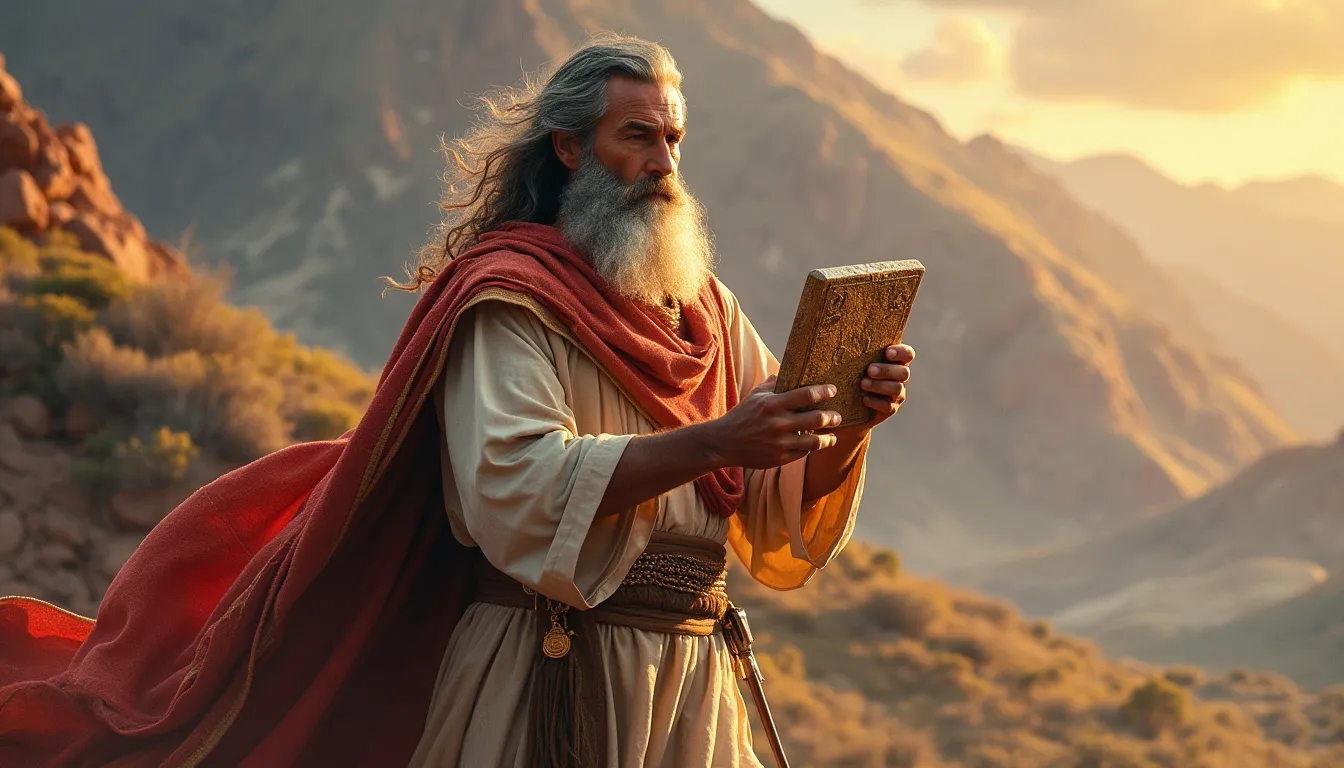
    The covenant at Sinai was sealed through a solemn ceremony. Moses built an altar at the foot of the mountain and offered sacrifices, and the people pledged their allegiance to God’s laws, saying, “All that the Lord has spoken we will do.” This covenant was a binding agreement that defined the Israelites as God’s people and set the standards by which they were to live.
    The Golden Calf and Moses’ Intercession
    While Moses remained on the mountain receiving the law, the Israelites grew restless. In a moment of fear and impatience, they persuaded Aaron to create a golden calf, which they worshipped as a representation of God. This act of idolatry was a grave violation of the newly given commandments and threatened the covenant relationship.
    When Moses descended from the mountain and saw the idolatry, he was furious. He smashed the tablets of the law in anger and rebuked the people for their disobedience. Moses’ reaction underscored the seriousness of the Israelites’ betrayal and the need for repentance.
    Moses interceded on behalf of the Israelites, pleading with God to forgive their transgression. God’s willingness to forgive, despite the people’s failings, highlighted His mercy and reaffirmed the covenant. Moses was given a new set of tablets, symbolizing the restoration of the relationship between God and His people.
    Building the Tabernacle: A Sign of God’s Presence
    Following the covenant, God instructed Moses and the Israelites to construct the Tabernacle, a portable sanctuary that would serve as a place of worship and a symbol of God’s presence among His people. The Tabernacle was meticulously designed, with specific instructions for its construction, furnishings, and the role of the priests.
    The building of the Tabernacle was a communal effort, with everyone contributing materials and labor. It represented a tangible connection to God and served as a constant reminder of His guidance and care. The Tabernacle became the center of Israelite worship, a sacred space where sacrifices were offered, and God’s presence was made manifest.
    Chapter 6: Challenges in the Wilderness
    The Struggles of the Israelite Journey
    As the Israelites continued their journey through the wilderness, their initial joy at escaping Egypt was often overshadowed by the hardships of desert life. The reality of daily survival—scarcity of food, water, and the harsh conditions—tested the faith and patience of the people. Moses, as their leader, faced the enormous task of guiding and maintaining the morale of a large, often restless population.
    One of the first challenges was the lack of water. The Israelites, finding themselves in a barren landscape, quickly became thirsty and began to grumble against Moses. In response, God instructed Moses to strike a rock with his staff, miraculously bringing forth water to sustain the people. This event underscored the Israelites’ reliance on divine provision and tested their willingness to trust in God’s care.
    Manna and Quail: God’s Provision
    Food shortages soon became another point of contention. The Israelites reminisced about the food they had in Egypt, expressing their dissatisfaction with the uncertainty of desert life. In response, God provided manna, a miraculous bread-like substance that appeared on the ground each morning. The manna was a daily reminder of God’s provision, teaching the Israelites to depend on Him for their sustenance.
    In addition to manna, God also sent quail to provide meat for the people. However, when the Israelites began to hoard the food against God’s instructions, it spoiled, illustrating the importance of obedience and the perils of greed. These incidents in the wilderness served as ongoing lessons about faith, gratitude, and the need to trust in God’s plan, even in times of hardship.
    Rebellion and Discontent
    Despite God’s continuous provision, the Israelites frequently struggled with discontent, disobedience, and a lack of faith. One of the most notable instances of rebellion occurred when Moses sent twelve spies to scout the Promised Land. Upon their return, ten of the spies reported that the land, though fertile, was inhabited by powerful giants, instilling fear among the people. Only Joshua and Caleb, two of the spies, urged faith in God’s promise, insisting that the Israelites could conquer the land with divine help.
    The people’s fear and refusal to enter the land led to God’s decree that the current generation, except for Joshua and Caleb, would not enter the Promised Land. Instead, they would wander in the wilderness for forty years until a new generation, raised in faith and obedience, was ready to take possession of the land. This period of wandering was marked by further challenges, including rebellions, disease, and ongoing struggles to maintain unity and faith.
    Leadership Challenges: Moses’ Burden
    Moses faced immense pressure as the leader of a frequently rebellious and complaining people. He often interceded on their behalf, pleading with God to forgive their transgressions and spare them from divine punishment. Despite his close relationship with God, Moses was not immune to the frustrations of leadership. On one occasion, in response to the people’s incessant complaints about water, Moses struck a rock twice instead of speaking to it as God had commanded. This act of disobedience, born out of frustration, led to God’s decision that Moses would not enter the Promised Land.
    Moses’ struggles highlight the human side of his character. He was a man of profound faith and perseverance, but he was also subject to the same emotions and failings as the people he led. Despite his moments of weakness, Moses remained a steadfast leader, guiding the Israelites through trials and maintaining his commitment to God’s mission.
    The Bronze Serpent: A Symbol of Healing
    One of the more striking episodes during the Israelites’ wilderness journey was the incident of the bronze serpent. When the people, once again rebelling, were afflicted by a plague of venomous snakes, Moses prayed for their deliverance. God instructed Moses to make a bronze serpent and place it on a pole, telling the people that anyone who looked upon it would be healed. This symbol of healing became a powerful reminder of the consequences of disobedience and the mercy available through repentance and faith.
    The bronze serpent also served as a foreshadowing of deeper spiritual truths, symbolizing the need to look beyond the immediate and trust in God’s power to save. The story encapsulated the ongoing theme of the wilderness journey: a community learning to navigate the complexities of faith, obedience, and divine guidance in the face of continual challenges.
    Chapter 7: Moses’ Final Days and Legacy
    Moses’ Final Address to the Israelites
    As the Israelites’ forty years of wandering drew to a close, they stood on the plains of Moab, poised to enter the Promised Land. Moses, now an old man, knew that his journey was coming to an end. In his final days, he gathered the people to deliver a series of speeches that would serve as both a farewell and a reaffirmation of the covenant between God and His chosen people.
    These speeches, recorded in the Book of Deuteronomy, were Moses’ last opportunity to impart wisdom, laws, and guidance to the Israelites. He recounted their history, reminding them of the miracles they had witnessed and the lessons they had learned in the wilderness. He exhorted them to remain faithful to God’s commandments, warning of the consequences of disobedience but also promising blessings for those who kept the covenant.
    Moses’ final address was a passionate plea for the people to choose life by loving God, obeying His voice, and holding fast to His laws. His words reflected a deep love for the Israelites and a desire for them to succeed in the land they were about to inherit. Despite his own inability to enter the Promised Land, Moses’ focus remained on the future of his people and their relationship with God.
    The Appointment of Joshua
    Recognizing the need for a strong leader to succeed him, Moses, under God’s direction, appointed Joshua as his successor. Joshua had been a faithful companion and a courageous leader, having served as one of the two spies who had advocated for faith in God’s promises. Moses laid his hands on Joshua in a public ceremony, imparting his blessing and transferring leadership to the younger man.
    Moses’ support of Joshua emphasized the continuity of God’s plan and the importance of strong, faithful leadership. He encouraged the people to be courageous and to trust in God’s guidance as they faced the challenges of conquering and settling the Promised Land. Joshua’s leadership marked a new chapter for the Israelites, one that would build on the foundation laid by Moses.
    Moses’ Death on Mount Nebo
    In his final act, Moses climbed Mount Nebo, where God allowed him to see the Promised Land from a distance. From this vantage point, Moses beheld the land of Canaan—lush, fertile, and filled with promise. Though he would not enter it, the sight was a powerful confirmation of the journey he had led his people on and the fulfillment of God’s promise to the patriarchs.
    Moses died on Mount Nebo, and God Himself buried him in an unknown grave, a testament to Moses’ unique relationship with the divine. His death marked the end of an era, but his legacy lived on in the laws, teachings, and stories that shaped the identity of the Israelite people. Moses was mourned deeply by the Israelites, who recognized him as the greatest prophet and leader they had ever known.
    Moses’ Legacy as Prophet, Lawgiver, and Leader
    Moses’ impact extended far beyond his lifetime. As the lawgiver who brought the Ten Commandments and the covenant, he established the moral and legal foundation for the Israelite nation. His role as a prophet was unparalleled, as he spoke with God face to face and guided his people with divine wisdom.
    Moses is revered in Judaism, Christianity, and Islam, not only for his leadership but also for his deep faith, humility, and dedication to his people. His life story is a powerful testament to the transformative power of faith, perseverance, and the willingness to stand up for justice and righteousness, even in the face of overwhelming challenges.
    Moses’ legacy continues to inspire countless individuals, serving as a reminder that one person, guided by faith and courage, can change the course of history. His journey from the Nile River to Mount Nebo is more than a story of a great leader; it is a profound narrative of human struggle, divine purpose, and the enduring quest for freedom and faith.
    Conclusion
    The life of Moses is one of the most compelling stories in religious history. From his miraculous birth and survival against the odds, to his role as a liberator and lawgiver, Moses’ journey was marked by divine encounters, personal challenges, and a steadfast commitment to God’s mission. His legacy as a prophet, leader, and mediator between God and His people remains central to the faith and traditions of billions worldwide.
    Moses’ teachings continue to resonate, offering timeless lessons about leadership, faith, and the responsibilities of freedom. His story is a powerful reminder of the importance of courage, obedience, and the pursuit of justice. As a man who stood up to the greatest power of his time, guided his people through adversity, and laid the foundation for a nation, Moses’ life exemplifies the profound impact one individual can have on the world.

  • The Evolution of the Auto Industry

    By Scott J. Arnold

    The Evolution of the Auto Industry: From the Model T to Electric Vehicles
    Introduction
    The automobile industry has undergone a dramatic transformation over the past century, evolving from a fledgling sector producing simple, hand-crafted vehicles to a global powerhouse driving technological innovation and shaping modern society. From the invention of the internal combustion engine and the rise of mass production to the current push towards electric and autonomous vehicles, the evolution of the auto industry reflects broader changes in technology, economy, and consumer culture. This article traces the key milestones in the auto industry’s development, exploring how technological advancements, market dynamics, and societal shifts have shaped the cars we drive today.
    1. The Birth of the Automobile: Pioneering Innovators and Early Challenges
    The origins of the auto industry can be traced back to the late 19th century, when early inventors experimented with self-propelled vehicles powered by steam, electricity, and internal combustion engines.
    • Early Innovations: The first practical automobile is credited to Karl Benz, who developed the Benz Patent-Motorwagen in 1886. Powered by an internal combustion engine, this three-wheeled vehicle set the stage for the development of modern cars. Around the same time, other inventors like Gottlieb Daimler, Wilhelm Maybach, and Émile Levassor were also working on early automobiles.
    • The Internal Combustion Engine: The development of the internal combustion engine, particularly the gasoline-powered engine, was a critical breakthrough. This technology offered greater power and efficiency compared to steam engines and was more suitable for the emerging automobile market. By the early 20th century, gasoline-powered cars had become the dominant mode of personal transportation.
    • Challenges in Early Production: The early auto industry faced numerous challenges, including high production costs, limited infrastructure, and a lack of standardized parts. Most cars were custom-built and expensive, making them accessible only to the wealthy. The market was fragmented, with hundreds of small manufacturers competing for a relatively small customer base.
    Despite these challenges, the potential of the automobile as a transformative technology was clear, setting the stage for the industry’s first major revolution: mass production.
    2. The Age of Mass Production: Henry Ford and the Rise of the Assembly Line
    The introduction of mass production techniques in the early 20th century revolutionized the auto industry, making cars more affordable and accessible to the general public.
    • Henry Ford and the Model T: In 1908, Henry Ford introduced the Model T, a simple, reliable, and affordable car that quickly became a sensation. The key to Ford’s success was his innovative use of the assembly line, which allowed for the efficient and standardized production of vehicles. By breaking down the manufacturing process into simple, repetitive tasks, Ford significantly reduced production time and costs.
    • The Assembly Line Revolution: The assembly line transformed not only the auto industry but also manufacturing as a whole. By 1913, Ford’s Highland Park plant was producing a Model T every 93 minutes, and by the 1920s, Ford was producing more cars than all other automakers combined. The assembly line allowed Ford to reduce the price of the Model T to as low as $260, making it affordable for millions of Americans.
    • The Rise of General Motors and Market Competition: While Ford dominated the early market, competitors like General Motors (GM) began to challenge Ford’s single-model approach. Under the leadership of Alfred P. Sloan, GM introduced a strategy of offering a range of models at different price points, appealing to consumers’ desire for variety and status. This approach helped GM surpass Ford in sales by the 1930s.
    The age of mass production marked a turning point for the auto industry, transforming cars from luxury items into essential tools of daily life and establishing the United States as the world’s leading auto producer.
    3. The Post-War Boom: Innovation, Style, and the Rise of Global Competition
    The post-World War II era ushered in a period of economic prosperity, technological innovation, and intense competition that reshaped the auto industry.
    • The Golden Age of American Cars: The 1950s and 1960s are often considered the golden age of American automobiles, characterized by bold designs, powerful engines, and a focus on comfort and style. Automakers introduced iconic models like the Chevrolet Bel Air, Ford Mustang, and Cadillac Eldorado, capturing the spirit of American optimism and consumerism.
    • Technological Advancements: During this period, automakers introduced numerous technological innovations, including automatic transmissions, power steering, air conditioning, and advanced safety features like seat belts. The focus on performance and convenience helped drive consumer demand and cemented the car as a symbol of freedom and individuality.
    • The Rise of Japan and European Competition: By the 1970s, Japanese and European automakers began to challenge the dominance of American manufacturers. Companies like Toyota, Honda, and Volkswagen introduced compact, fuel-efficient cars that appealed to consumers facing rising fuel prices and environmental concerns. The Japanese emphasis on quality, reliability, and efficiency helped these brands gain a foothold in the global market.
    • The Oil Crisis and Industry Challenges: The 1973 oil crisis exposed the vulnerability of the auto industry to external economic shocks. As fuel prices soared, demand for large, gas-guzzling American cars plummeted, and consumers turned to smaller, more efficient imports. The crisis forced American automakers to rethink their strategies, leading to a renewed focus on fuel efficiency and innovation.
    The post-war era was a time of both triumph and challenge for the auto industry, as automakers navigated shifting consumer preferences, increased competition, and the need to adapt to a changing world.
    4. The Digital Revolution: Electronics, Safety, and the Rise of the SUV
    The late 20th and early 21st centuries saw the integration of digital technology into automobiles, transforming the driving experience and reshaping the industry once again.
    • The Introduction of Electronics: The 1980s and 1990s marked the beginning of the digital revolution in automobiles, with the introduction of electronic fuel injection, anti-lock brakes, and onboard computers. These technologies improved vehicle performance, safety, and fuel efficiency, setting the stage for more advanced innovations in the years to come.
    • Safety and Emissions Regulations: Growing awareness of environmental and safety issues led to increased government regulation, including stricter emissions standards and mandatory safety features. Automakers responded by developing cleaner engines, catalytic converters, and advanced safety systems like airbags and electronic stability control.
    • The Rise of the SUV: The 1990s also saw the rise of the sport utility vehicle (SUV), which combined the off-road capabilities of a truck with the comfort of a passenger car. SUVs quickly became a favorite among consumers, driving sales and profits for automakers. However, their popularity also raised concerns about fuel consumption and environmental impact.
    • Luxury and Performance Brands: During this period, luxury and performance brands like BMW, Mercedes-Benz, and Lexus gained prominence, offering advanced technology, superior craftsmanship, and high-performance engines. The competition among luxury brands pushed the entire industry to innovate and improve.
    The digital revolution brought new levels of sophistication to the auto industry, enhancing safety, performance, and consumer choice. As technology continued to evolve, the stage was set for the next major transformation: the shift to electric and autonomous vehicles.
    5. The Green Revolution: Hybrid, Electric, and Autonomous Vehicles
    The 21st century has been defined by the push towards sustainability, with the auto industry leading the charge through the development of hybrid, electric, and autonomous vehicles.
    • The Rise of Hybrid Vehicles: Toyota’s introduction of the Prius in 1997 marked the beginning of the hybrid revolution. The Prius, with its combination of a gasoline engine and electric motor, offered improved fuel efficiency and reduced emissions. It quickly became a symbol of environmental consciousness and a stepping stone towards fully electric vehicles.
    • The Electric Vehicle Boom: The launch of the Tesla Roadster in 2008 and the subsequent release of the Tesla Model S in 2012 revitalized interest in electric vehicles (EVs). Tesla’s sleek designs, impressive range, and performance shattered the stereotype of EVs as slow and unattractive, setting new standards for the industry. Other automakers, including GM, Nissan, and BMW, soon followed with their own EV offerings.
    • Autonomous Driving Technology: Advances in artificial intelligence, sensors, and connectivity have brought autonomous driving closer to reality. Companies like Waymo, Tesla, and traditional automakers are developing self-driving technologies that promise to reduce accidents, improve traffic flow, and provide new mobility options for those unable to drive.
    • Challenges and Infrastructure Needs: The shift to electric and autonomous vehicles has not been without challenges. Issues such as battery range, charging infrastructure, regulatory hurdles, and consumer acceptance continue to shape the development of these technologies. Governments and companies are investing heavily in building the necessary infrastructure to support widespread EV adoption.
    The green revolution represents a fundamental shift in the auto industry, driven by the need to reduce emissions, improve energy efficiency, and embrace new technologies that promise to redefine mobility.
    6. The Future of the Auto Industry: Innovation, Connectivity, and Mobility as a Service
    As the auto industry moves into the future, it is poised for even more transformative changes that will redefine the concept of mobility.
    • Connected and Smart Vehicles: The integration of advanced connectivity technologies, including 5G and the Internet of Things (IoT), is turning cars into smart devices on wheels. Connected vehicles can communicate with each other and with infrastructure, enabling features like real-time traffic updates, predictive maintenance, and enhanced safety.
    • Mobility as a Service (MaaS): The traditional model of car ownership is evolving as consumers increasingly turn to alternative mobility solutions. Ride-sharing, car-sharing, and subscription services are gaining popularity, offering flexibility and convenience without the costs and responsibilities of ownership. Companies like Uber, Lyft, and Zipcar are at the forefront of this shift, challenging automakers to rethink their business models.
    • Sustainability and Circular Economy: The focus on sustainability extends beyond the vehicles themselves to the entire lifecycle of production, use, and disposal. Automakers are exploring ways to reduce their environmental impact through sustainable materials, recycling, and circular economy principles that minimize waste and resource use.
    • Advanced Driver Assistance Systems (ADAS): The continued development of ADAS features, such as adaptive cruise control, lane-keeping assist, and automated emergency braking, is enhancing safety and moving the industry closer to fully autonomous driving. These systems are becoming standard in new vehicles, offering drivers increased confidence and reducing the likelihood of accidents.
    • The Role of Artificial Intelligence: AI is playing an increasingly important role in the auto industry, from enhancing autonomous driving capabilities to optimizing supply chains and personalizing the driver experience. AI-driven analytics and predictive modeling are helping automakers design better products and improve customer satisfaction.
    The future of the auto industry is one of innovation, connectivity, and a commitment to sustainable mobility solutions. As technology continues to evolve, the cars of tomorrow will be smarter, cleaner, and more integrated into the fabric of everyday life.
    Conclusion
    The evolution of the auto industry is a story of constant innovation, adaptation, and transformation. From the earliest days of handcrafted vehicles to the era of mass production, digital integration, and the current push towards electric and autonomous technology, the industry has continually reinvented itself to meet the changing needs of society. As we look to the future, the auto industry will play a pivotal role in shaping the way we move, connect, and live. With a focus on sustainability, advanced technology, and new business models, the cars of tomorrow promise to be more than just modes of transportation—they will be key players in the ongoing evolution of modern life.
     

  • The Conflicted Life of Jesus of Nazareth

    By Scott J. Arnold

    The Conflicted Life of Jesus of Nazareth
    Outline
    Introduction (1 page)
    • Overview of Jesus’ life, highlighting the conflicts and challenges he faced.
    • His role as a central figure in Christianity and his impact on world history.
    Chapter 1: Early Life and Background (2 pages)
    • Birth in Bethlehem and the circumstances surrounding his early life.
    • Growing up in Nazareth and his family background.
    Chapter 2: The Beginning of His Ministry (2 pages)
    • Baptism by John the Baptist and the significance of this event.
    • The temptation in the wilderness and its symbolic conflicts.
    Chapter 3: Teachings and Miracles (2 pages)
    • Key teachings such as the Beatitudes and the Sermon on the Mount.
    • Miracles and their role in his ministry and how they generated both admiration and skepticism.
    Chapter 4: Conflict with Religious Authorities (2 pages)
    • Jesus’ challenges to the Pharisees, Sadducees, and other religious leaders.
    • His critiques of religious hypocrisy and legalism.
    Chapter 5: The Gathering Storm: Growing Opposition (2 pages)
    • The growing tension between Jesus and the religious establishment.
    • Key events like the cleansing of the Temple that heightened conflicts.
    Chapter 6: The Last Supper and Betrayal (2 pages)
    • The Last Supper, its significance, and Jesus’ awareness of his impending betrayal.
    • Judas Iscariot’s betrayal and the conflict it represented.
    Chapter 7: Trial, Crucifixion, and Death (2 pages)
    • The trial before Pilate and the conflicted decisions leading to the crucifixion.
    • The suffering and death of Jesus on the cross.
    Conclusion (1 page)
    • Reflection on the conflicted nature of Jesus’ life and his enduring impact.
    Introduction
    Jesus of Nazareth is one of the most influential figures in human history, revered by billions as the Messiah in Christianity and respected as a prophet in other religions. However, his life was marked by conflict, controversy, and challenges that defined his mission and legacy. From his humble beginnings in Bethlehem to his crucifixion on a Roman cross, Jesus navigated a life filled with tension between divine purpose and earthly opposition.
    Jesus’ message of love, forgiveness, and the Kingdom of God challenged the social, political, and religious norms of his time, often placing him at odds with powerful authorities. His life was a journey of profound spiritual significance but also of human struggle, betrayal, and sacrifice. This narrative delves into the conflicted nature of Jesus’ life, exploring how his teachings and actions sparked admiration, fear, and ultimately, a movement that would change the world forever.
    Chapter 1: Early Life and Background
    Birth in Bethlehem and the Prophecies
    Jesus was born in Bethlehem around 4 BCE, during the reign of King Herod the Great. His birth fulfilled ancient prophecies that foretold the coming of a Messiah who would save the people of Israel. According to the Gospels, Jesus’ mother, Mary, was a young virgin engaged to Joseph, a carpenter. The angel Gabriel appeared to Mary, announcing that she would conceive a child through the Holy Spirit and that her son would be called the Son of God.
    The circumstances of Jesus’ birth were humble and fraught with difficulty. Due to a Roman census, Mary and Joseph traveled from Nazareth to Bethlehem, where Jesus was born in a stable because there was no room at the inn. This lowly beginning contrasted sharply with the grandeur often expected of a king or savior and foreshadowed the conflicts that would characterize Jesus’ life.
    The Gospel accounts also mention the visit of the Magi, wise men from the East who brought gifts and recognized Jesus as a significant figure. This event alarmed King Herod, who feared the rise of a new “king of the Jews.” In a bid to eliminate this perceived threat, Herod ordered the massacre of all male infants in Bethlehem, forcing Mary and Joseph to flee to Egypt with their newborn son—a harrowing start that highlighted the dangers surrounding Jesus from the very beginning.
    Growing Up in Nazareth
    After the death of Herod, the family returned to Nazareth, a small town in Galilee. Little is known about Jesus’ childhood, but the Gospels suggest that he grew up in a devout Jewish household, learning the traditions and laws of his faith. As a young man, Jesus would have been well-acquainted with the scriptures, and he likely spent time working alongside Joseph as a carpenter.
    The scarcity of details about Jesus’ early life has led to much speculation, but it is clear that these formative years were spent in relative obscurity. This period allowed Jesus to grow in wisdom and understanding, setting the stage for his public ministry. At the age of twelve, he was found in the Temple in Jerusalem, engaging with teachers and astonishing them with his knowledge. Even at this young age, Jesus demonstrated an awareness of his unique relationship with God, referring to the Temple as “my Father’s house.”
    Family Dynamics and Early Influences
    Jesus’ family played a significant role in his early development. Mary’s influence is particularly noted, as she pondered the miraculous events surrounding Jesus’ birth and upbringing in her heart. Joseph’s presence as a guiding figure provided Jesus with a strong foundation of faith and work ethic, though Joseph is believed to have died before Jesus began his public ministry.
    Jesus also had siblings, including James, who would later become a prominent leader in the early Christian church. The dynamics within his family were not without tension; at various points during his ministry, his family expressed concern about his actions and message, reflecting the broader conflicts that characterized Jesus’ life.
    The early years of Jesus in Nazareth were marked by simplicity, faith, and quiet preparation. However, this calm would soon give way to the turbulence of his public life, where he would step into the role of teacher, healer, and the often-misunderstood Messiah.
    Chapter 2: The Beginning of His Ministry
    Baptism by John the Baptist
    Jesus’ public ministry began with his baptism by John the Baptist, a fiery prophet who preached repentance and the coming of the Kingdom of God. John’s baptism was a call to spiritual renewal, and many flocked to the Jordan River to be baptized by him, including Jesus. This moment was a pivotal turning point, marking the beginning of Jesus’ mission.
    As Jesus was baptized, the heavens opened, and the Holy Spirit descended upon him in the form of a dove. A voice from heaven declared, “This is my beloved Son, with whom I am well pleased.” This divine affirmation not only validated Jesus’ mission but also publicly identified him as God’s chosen one. However, this event also set Jesus on a path that would be filled with challenges, as he would now openly confront the social and spiritual ills of his time.
    The Temptation in the Wilderness
    Following his baptism, Jesus was led by the Spirit into the wilderness, where he fasted for forty days and was tempted by the devil. This period of testing was a critical moment that revealed the internal and external conflicts Jesus would face throughout his ministry. The temptations presented by Satan—turning stones into bread, throwing himself from the Temple to be saved by angels, and gaining all the kingdoms of the world in exchange for worship—were not merely tests of power but challenges to Jesus’ identity and mission.
    Jesus’ refusal to succumb to these temptations demonstrated his steadfast commitment to his divine calling and his rejection of worldly power and influence. By choosing obedience to God over self-interest, Jesus set the tone for his ministry, which would be characterized by humility, self-sacrifice, and a focus on serving others. This event also foreshadowed the spiritual battles that would define his conflicted journey, as he would continually face opposition from both human and spiritual adversaries.
    Calling the Disciples and the Beginning of His Ministry
    After emerging from the wilderness, Jesus began to gather his first followers, calling ordinary men—fishermen, a tax collector, and others—to join him as his disciples. These twelve men would become his closest companions, learning from his teachings, witnessing his miracles, and eventually carrying forward his message after his death.
    Jesus’ choice of disciples was unconventional. He did not seek out the wealthy, powerful, or influential; instead, he called those who were often marginalized or overlooked. This decision underscored one of the central themes of his ministry: God’s kingdom was accessible to all, especially the humble and the outcast.
    As Jesus began to teach, perform miracles, and travel throughout Galilee and Judea, his reputation grew rapidly. Crowds followed him wherever he went, eager to hear his message of hope and healing. However, with this growing popularity came increasing scrutiny and conflict, particularly from the religious authorities who viewed his teachings as a threat to their power and traditions.
    Chapter 3: Teachings and Miracles
    Key Teachings: The Beatitudes and the Sermon on the Mount
    One of Jesus’ most famous teachings, the Sermon on the Mount, encapsulated the core of his message and set the tone for his ministry. Delivered on a hillside to a large gathering, the sermon included the Beatitudes, a series of blessings that highlighted the values of the Kingdom of God. Jesus pronounced blessings on the poor in spirit, the meek, the merciful, and the persecuted, turning conventional wisdom about power and success on its head.
    The Beatitudes, along with the rest of the sermon, emphasized inner transformation, righteousness, and the importance of a heart aligned with God’s will. Jesus taught that outward religious observance was meaningless without genuine love, humility, and a commitment to justice. He challenged his listeners to be salt and light in the world, living out their faith in ways that made a tangible difference.
    Jesus’ teachings often conflicted with established norms, promoting a radical vision of God’s kingdom that favored the marginalized and called for forgiveness, compassion, and peacemaking. Concepts such as loving one’s enemies, turning the other cheek, and giving without expecting anything in return were revolutionary and often difficult for his audience to accept. These teachings not only set Jesus apart from other religious leaders of his time but also set the stage for the mounting tensions that would define his ministry.
    Parables: Teaching Through Stories
    Jesus frequently used parables—simple, yet profound stories with moral and spiritual lessons—to convey his message. The parables were accessible and relatable, drawing on everyday experiences such as farming, shepherding, and family life to illustrate deeper truths about God’s kingdom. Through stories like the Parable of the Good Samaritan, the Prodigal Son, and the Sower, Jesus challenged his listeners to rethink their assumptions about God, faith, and human relationships.
    The Parable of the Good Samaritan, for example, confronted the prejudices of the time by depicting a despised Samaritan as the true neighbor who showed mercy, while religious figures failed to act compassionately. Similarly, the Parable of the Prodigal Son emphasized forgiveness and the boundless love of God, portraying a father who welcomes his wayward son back with open arms.
    These stories were powerful tools that allowed Jesus to teach complex spiritual concepts in a way that was engaging and thought-provoking. However, the parables also served as a dividing line; while they offered insight to those who were open-hearted, they confounded and frustrated those who opposed Jesus’ message, further highlighting the conflicted nature of his ministry.
    Miracles: Signs of Authority and Conflict
    Miracles were a significant aspect of Jesus’ ministry, serving as signs of his divine authority and compassion. He healed the sick, restored sight to the blind, cast out demons, and even raised the dead. These acts of power drew large crowds and inspired many to believe in his message. The miracles demonstrated Jesus’ authority over nature, illness, and spiritual forces, reinforcing his claims about the coming of God’s kingdom.
    One of the most notable miracles was the feeding of the 5,000, where Jesus multiplied five loaves of bread and two fish to feed a vast crowd. This event not only showcased his miraculous power but also symbolized his role as the provider of spiritual nourishment. Similarly, the raising of Lazarus from the dead was a powerful testament to Jesus’ authority over life and death, foreshadowing his own resurrection.
    However, the miracles also generated significant conflict. While many were awed and inspired, others, particularly the religious leaders, viewed Jesus’ acts as a threat to their authority. They accused him of violating the Sabbath, consorting with sinners, and blasphemously claiming powers that only God could possess. The miracles, instead of unifying his audience, often served to deepen the divide between those who believed in him and those who saw him as a dangerous disruptor.
    Chapter 4: Conflict with Religious Authorities
    Challenges to the Pharisees and Sadducees
    Jesus’ relationship with the religious authorities of his time was marked by intense conflict. The Pharisees, Sadducees, and scribes were the religious elite, responsible for interpreting the Jewish law and maintaining religious practices. However, Jesus frequently criticized these leaders for their hypocrisy, legalism, and failure to live out the spirit of the law they so ardently upheld.
    One of the central points of contention was Jesus’ approach to the Sabbath. The Pharisees, who strictly adhered to Sabbath regulations, often clashed with Jesus when he healed on the Sabbath or allowed his disciples to pick grain. Jesus defended his actions by emphasizing the purpose of the Sabbath as a day of rest and mercy, stating that “the Sabbath was made for man, not man for the Sabbath.” His assertion that “the Son of Man is Lord of the Sabbath” further provoked the religious leaders, as it suggested a divine authority that challenged their own.
    Jesus’ critiques were not limited to specific practices but extended to the very heart of the religious system. He accused the Pharisees of being “whitewashed tombs”—outwardly righteous but inwardly corrupt. He condemned their emphasis on outward piety, such as lengthy prayers and public fasting, while neglecting the weightier matters of justice, mercy, and faithfulness. These confrontations were not just theological disputes; they struck at the core of the religious establishment’s identity and power.
    The Cleansing of the Temple
    One of the most dramatic moments of conflict between Jesus and the religious authorities was the cleansing of the Temple. Jesus entered the Temple in Jerusalem and found it filled with money changers and merchants selling sacrificial animals. Enraged by the commercialization of this sacred space, Jesus overturned the tables, drove out the traders, and declared, “My house shall be called a house of prayer, but you are making it a den of robbers.”
    This act was a direct challenge to the religious leadership, who were complicit in the Temple’s commercial activities. The cleansing of the Temple was not only a protest against corruption but also a prophetic sign that Jesus was redefining what it meant to worship God. It heightened the animosity between Jesus and the religious leaders, who saw his actions as a direct threat to their authority and financial interests.
    Accusations of Blasphemy
    Jesus’ growing influence and his claims about his relationship with God led to accusations of blasphemy from the religious authorities. He often spoke of God as his Father, and on several occasions, he made statements that were seen as equating himself with God. When Jesus declared, “Before Abraham was, I am,” he used the sacred name of God, Yahweh, a statement that shocked and infuriated his opponents.
    These perceived blasphemies were not just religious offenses; they were seen as direct challenges to the very foundations of Jewish belief. The religious leaders repeatedly attempted to trap Jesus with questions about the law, hoping to discredit him or provoke a response that would justify his arrest. However, Jesus’ wisdom and understanding of the scriptures often turned their traps back on them, further frustrating his opponents.
    The Growing Threat to Power
    As Jesus continued to teach, heal, and attract followers, the religious authorities grew increasingly alarmed. They feared that Jesus’ growing popularity could lead to social unrest, particularly during volatile periods like the Passover festival. The Roman occupiers closely monitored any movements that threatened public order, and the religious leaders worried that Jesus’ actions could provoke Roman intervention, endangering their own positions.
    The leaders’ fear of losing their power and influence drove them to conspire against Jesus, seeking a way to arrest and silence him without inciting a public uproar. This conflict between Jesus and the religious establishment was not just a clash of ideologies; it was a battle for control over the spiritual direction of the people. The stage was set for a final confrontation that would lead to betrayal, trial, and the ultimate sacrifice.
    Chapter 5: The Gathering Storm: Growing Opposition
    Mounting Tensions and the Plot Against Jesus
    As Jesus’ ministry continued, the tension between him and the religious authorities escalated. His teachings, miracles, and growing popularity among the common people increasingly threatened the established order. The Pharisees, Sadducees, and chief priests found themselves at odds with Jesus’ message, which often highlighted their hypocrisy, greed, and failure to uphold true justice and compassion.
    The Gospels describe various attempts by the religious leaders to entrap Jesus. They questioned him about paying taxes to Caesar, hoping to catch him in a statement that could be used against him either by the Roman authorities or by the Jewish people. Jesus’ response, “Render unto Caesar what is Caesar’s, and unto God what is God’s,” deftly avoided their trap while reinforcing his message of spiritual priorities over political entanglements.
    This growing opposition wasn’t just about religious disputes; it was a struggle for control over the hearts and minds of the people. The religious leaders feared that Jesus’ influence could undermine their authority, destabilize the social order, and draw the ire of the Roman occupiers. The situation became increasingly volatile, with the religious authorities determined to find a way to neutralize the threat posed by Jesus.
    The Raising of Lazarus and Its Consequences
    One of the most dramatic events leading up to Jesus’ final days was the raising of Lazarus from the dead. Lazarus, a close friend of Jesus, had been dead for four days when Jesus arrived at his tomb. In front of a crowd of mourners, Jesus called Lazarus out of the tomb, restoring him to life in a miraculous display of divine power. This event not only reinforced Jesus’ authority over life and death but also solidified his status as a formidable figure in the eyes of both his followers and his enemies.
    The raising of Lazarus had far-reaching implications. Word of the miracle spread rapidly, drawing even more people to Jesus. The religious authorities, however, saw it as the final straw. They feared that if Jesus continued to perform such signs, everyone would believe in him, potentially sparking a rebellion that would bring harsh retribution from the Romans. In response, the chief priests and Pharisees convened a council and began to plot how they might put Jesus to death, viewing his elimination as necessary for the preservation of their power and the security of the nation.
    The Triumphal Entry into Jerusalem
    As Jesus approached Jerusalem for the Passover festival, he entered the city riding on a donkey, fulfilling the prophecy of Zechariah: “Behold, your king is coming to you, humble, and mounted on a donkey.” This event, known as the Triumphal Entry, was a public declaration of Jesus’ messianic identity, and it was met with great enthusiasm by the crowds, who waved palm branches and shouted, “Hosanna! Blessed is he who comes in the name of the Lord!”
    While the people celebrated Jesus as a potential deliverer, this act further alarmed the religious leaders. They saw his entry into Jerusalem, with its clear messianic overtones, as a direct challenge to their authority and a dangerous provocation that could incite unrest. The Triumphal Entry heightened the sense of urgency among the leaders to find a way to arrest Jesus before his influence grew even stronger.
    The Cleansing of the Temple: A Direct Confrontation
    Shortly after entering Jerusalem, Jesus went to the Temple, where he found it overrun with merchants and money changers exploiting the faithful who came to worship. Enraged by the desecration of this sacred space, Jesus drove out the merchants, overturning their tables and declaring, “My house shall be called a house of prayer, but you have made it a den of robbers.”
    This act of cleansing the Temple was not just an expression of righteous anger; it was a direct confrontation with the religious authorities who profited from the Temple’s commercial activities. By driving out the merchants, Jesus struck at the economic heart of the Temple establishment, further inflaming the anger of the chief priests and scribes.
    The cleansing of the Temple was a bold and provocative action that underscored the deep conflicts at play. It demonstrated Jesus’ commitment to purifying worship and reclaiming the Temple as a place dedicated to God, free from corruption. However, it also solidified the leaders’ resolve to stop Jesus, as they now viewed him not only as a theological threat but also as a disruptor of their financial interests.
    The Anointing at Bethany: Preparing for What Lies Ahead
    In the days leading up to his arrest, Jesus was anointed by a woman in Bethany, who poured expensive perfume on his head and feet. This act of devotion, which Jesus described as preparation for his burial, foreshadowed the imminent events of his passion and death. While some of the disciples, particularly Judas Iscariot, criticized the act as wasteful, Jesus defended the woman, recognizing the significance of her gesture.
    The anointing at Bethany highlighted the growing sense of inevitability surrounding Jesus’ fate. It was a moment of profound symbolism, acknowledging both the honor due to Jesus and the looming sacrifice that would define his final days. As the storm clouds of opposition gathered, Jesus remained focused on his mission, fully aware of the suffering that awaited him.
    Chapter 6: The Last Supper and Betrayal
    The Last Supper: A Final Gathering with the Disciples
    On the night before his arrest, Jesus gathered with his disciples in an upper room to celebrate the Passover meal, an event that would become known as the Last Supper. This meal was not only a commemoration of the Israelites’ liberation from Egypt but also a moment of deep personal significance, as Jesus used it to impart final teachings and prepare his disciples for what was to come.
    During the meal, Jesus took bread, blessed it, broke it, and gave it to his disciples, saying, “This is my body, which is given for you.” He then took a cup of wine, saying, “This is my blood of the covenant, which is poured out for many.” These actions, which would form the basis of the Christian practice of Communion, symbolized Jesus’ impending sacrifice and the establishment of a new covenant between God and humanity.
    The Last Supper was also marked by tension and foreboding. Jesus openly spoke of betrayal, shocking his disciples by revealing that one of them would soon betray him. Despite their protests, Jesus identified Judas Iscariot as the betrayer, setting in motion the events that would lead to his arrest. This moment underscored the deep conflict that had been simmering among the disciples, as they struggled to comprehend the gravity of the situation.
    The Agony in the Garden of Gethsemane
    Following the meal, Jesus and his disciples went to the Garden of Gethsemane, where Jesus spent time in intense prayer. He asked his closest disciples—Peter, James, and John—to keep watch with him, but they repeatedly fell asleep, unable to grasp the weight of the moment. In the garden, Jesus wrestled with the full awareness of the suffering he was about to endure, praying, “Father, if it is possible, let this cup pass from me; yet not my will, but yours be done.”
    This moment in Gethsemane revealed the profound internal conflict Jesus faced. Fully human, he experienced fear, anguish, and a desire to avoid the pain that awaited him. Yet, fully divine, he submitted to God’s will, demonstrating ultimate obedience and trust. The agony in the garden was a powerful testament to the dual nature of Jesus—both God and man—and the sacrifices inherent in his mission.
    The Betrayal and Arrest of Jesus
    As Jesus finished praying, a group of soldiers and religious officials, led by Judas Iscariot, arrived in the garden to arrest him. Judas identified Jesus with a kiss, a sign of betrayal that would forever mark him as the traitor in Christian tradition. Despite the chaos that ensued, Jesus remained calm, admonishing Peter when he drew his sword in an attempt to defend him.
    The arrest of Jesus marked the beginning of his final conflict with the powers that opposed him. Taken into custody, he was led away to face a series of trials before the religious and political authorities. The betrayal by one of his own disciples highlighted the deep sense of abandonment and the human cost of his mission. Even as he was led away, Jesus continued to embody the principles of forgiveness, compassion, and unwavering commitment to his divine calling.
    Chapter 7: Trial, Crucifixion, and Death
    The Trials Before the Sanhedrin and Pilate
    Following his arrest, Jesus was brought before the Sanhedrin, the Jewish council of religious leaders, for questioning. The trial was fraught with irregularities and conducted hastily during the night, violating standard legal procedures of the time. The council accused Jesus of blasphemy for claiming to be the Son of God and threatened their religious authority. Witnesses were brought forward, but their testimonies were inconsistent and contradictory, reflecting the desperation of the council to find a reason to condemn Jesus.
    During the questioning, Jesus remained mostly silent, refusing to defend himself against the false accusations. When directly asked if he was the Messiah, the Son of God, Jesus affirmed it, sealing his fate in the eyes of the council. They declared him guilty of blasphemy, a crime punishable by death according to Jewish law. However, because the Roman authorities had stripped the Jewish leaders of the power to execute, they brought Jesus before the Roman governor, Pontius Pilate, to seek the death penalty.
    Pilate, a Roman official more concerned with maintaining order than religious disputes, initially found no fault in Jesus. Recognizing that the charges against Jesus were rooted in envy, Pilate was reluctant to execute him. However, when faced with increasing pressure from the crowd stirred up by the chief priests, Pilate attempted to placate the masses by offering to release Jesus as part of the Passover amnesty tradition. The crowd, however, demanded the release of Barabbas, a known criminal, instead.
    Despite his reservations, Pilate ultimately yielded to the crowd’s demands. After a symbolic act of washing his hands to absolve himself of responsibility, Pilate sentenced Jesus to be scourged and crucified. The decision was driven more by political expediency and fear of unrest than by any genuine belief in Jesus’ guilt. This trial encapsulated the complex web of religious, social, and political conflicts that defined the last days of Jesus’ life.
    The Path to Golgotha: The Way of the Cross
    Following his condemnation, Jesus was subjected to brutal treatment by Roman soldiers. He was mocked, beaten, and crowned with thorns in a cruel parody of his claim to kingship. Weakened by the scourging, Jesus was forced to carry his cross through the streets of Jerusalem to the place of execution, a journey known as the Via Dolorosa, or “Way of Sorrows.”
    The procession was marked by a mix of jeering crowds and grieving followers. Along the way, Jesus stumbled under the weight of the cross, and Simon of Cyrene was compelled to help him carry it. This moment of shared suffering symbolized the burdens borne by humanity and the sacrifices made in the pursuit of redemption.
    Upon reaching Golgotha, meaning “Place of the Skull,” Jesus was nailed to the cross, an excruciating method of execution reserved for the most severe offenders. Above his head, a sign was placed reading “Jesus of Nazareth, King of the Jews,” a final mocking statement of his claim to be the Messiah. As he hung on the cross, Jesus experienced the ultimate human suffering—physical agony, public humiliation, and the sense of abandonment, even crying out, “My God, my God, why have you forsaken me?”
    The Crucifixion: A Sacrificial Death
    Jesus’ crucifixion lasted for several hours, during which he spoke words that reflected his character and mission. He asked God to forgive those who were crucifying him, saying, “Father, forgive them, for they know not what they do.” To the repentant thief crucified beside him, Jesus offered hope, promising, “Today you will be with me in paradise.” In his final moments, Jesus entrusted his mother, Mary, to the care of his disciple John, illustrating his compassion even in the face of death.
    At around three in the afternoon, Jesus uttered his last words, “It is finished,” and then surrendered his spirit. The Gospels describe supernatural events occurring at the moment of his death—the curtain of the Temple was torn in two, symbolizing the end of the separation between God and humanity, and there was darkness and an earthquake. These events underscored the cosmic significance of Jesus’ sacrifice, which Christians believe was the atonement for the sins of the world.
    The Roman centurion overseeing the execution, struck by the events he witnessed, declared, “Surely this man was the Son of God,” highlighting the impact of Jesus’ death even on those who were not his followers. Jesus’ body was taken down from the cross and laid in a tomb provided by Joseph of Arimathea, a wealthy member of the Sanhedrin who had secretly followed Jesus. A stone was rolled across the entrance, and guards were placed to secure the tomb, preventing any tampering.
    The Conflicted Reactions to Jesus’ Death
    The death of Jesus was met with a range of reactions. For his disciples and followers, it was a moment of profound grief, confusion, and despair. They had believed Jesus to be the Messiah, the one who would redeem Israel, but his crucifixion seemed to shatter all their hopes. The religious leaders, on the other hand, saw his death as a necessary end to a dangerous movement that threatened their power.
    Yet, even in death, Jesus’ influence continued to ripple through Jerusalem and beyond. Rumors of his resurrection began to circulate just days after his burial, fueling both faith and skepticism. For many, the crucifixion did not mark the end of Jesus’ story but the beginning of a transformative movement that would reshape history.
    Conclusion
    The life of Jesus of Nazareth was marked by conflict, controversy, and profound spiritual significance. From his humble birth to his revolutionary teachings, from his clashes with religious authorities to his sacrificial death on the cross, Jesus’ journey was one of both human struggle and divine purpose. His message of love, forgiveness, and the Kingdom of God challenged the social, religious, and political norms of his time, often placing him at odds with the established order.
    Despite the conflicts and ultimate sacrifice, Jesus’ impact on the world has been unparalleled. His teachings continue to inspire billions, shaping moral, ethical, and spiritual values across cultures and generations. The conflicted nature of his life—revered by some, reviled by others—reflects the complexities of his mission and the transformative power of his legacy.
    Jesus’ death on the cross, viewed by Christians as the ultimate act of love and redemption, marked the climax of a life lived in constant tension between divine calling and human opposition. His resurrection, celebrated as the triumph of life over death, serves as a testament to the enduring hope that Jesus’ life offers to the world. The conflicted life of Jesus of Nazareth remains a profound and enduring narrative, one that invites reflection on the nature of faith, sacrifice, and the human condition.

  • Avocado Cartel, Green Gold

    By Scott J. Arnold

    The Avocado Mafia: The Dark Side of the Green Gold Industry
    Introduction
    Avocados, often dubbed “green gold,” have become a staple of modern diets worldwide, celebrated for their creamy texture, health benefits, and versatility. However, behind the rise of this beloved fruit lies a darker story involving organized crime, violence, and exploitation. The lucrative avocado trade, particularly in regions like Mexico, has attracted criminal organizations known as the “avocado mafia.” These groups have taken control of the avocado supply chain, extorting farmers, threatening lives, and corrupting local governments. This article explores the hidden world of the avocado mafia, examining its origins, impact on the industry, and the ongoing battle to reclaim the trade from the grip of organized crime.
    1. The Rise of Avocados: From Humble Fruit to Global Obsession
    Avocados have enjoyed a meteoric rise in popularity over the past few decades, transforming from a niche fruit to a global sensation. This surge in demand has been fueled by a combination of health trends, social media, and the fruit’s versatility in dishes ranging from salads and smoothies to the ever-popular avocado toast.
    • Health Benefits: Avocados are rich in healthy monounsaturated fats, fiber, vitamins, and minerals, making them a favorite among health-conscious consumers. Their nutrient profile has earned them a reputation as a superfood, particularly among millennials and those following plant-based diets.
    • Global Demand: The global avocado market has grown exponentially, with countries like the United States, Canada, and European nations leading in consumption. In the U.S. alone, avocado imports have more than doubled in the last two decades, with Americans consuming over 2.6 billion pounds of avocados annually.
    • The Mexican Avocado Boom: Mexico is the world’s largest producer of avocados, accounting for nearly 45% of global supply. The state of Michoacán, often referred to as the “avocado capital of the world,” is the only region in Mexico authorized to export avocados to the United States due to its unique climate and soil conditions.
    The soaring demand for avocados has turned the fruit into a multi-billion-dollar industry, attracting not only legitimate farmers and businesses but also criminal organizations seeking to capitalize on the boom.
    2. The Emergence of the Avocado Mafia: Crime Infiltrates the Industry
    The avocado boom has not gone unnoticed by organized crime groups, particularly in Mexico, where cartels and local gangs have increasingly turned their attention to the lucrative avocado trade. Known as the “avocado mafia,” these criminal organizations use violence, intimidation, and corruption to control the industry.
    • Extortion and Protection Rackets: Avocado farmers in Michoacán and other regions are often forced to pay “protection fees” to criminal groups in exchange for safety. Those who refuse to comply face threats, property damage, or even murder. The extortion rates can be as high as 30-50% of a farmer’s earnings, significantly cutting into their profits and creating a climate of fear.
    • Control of Land and Resources: The avocado mafia often takes control of farmland, forcing owners to sell or lease their land under duress. Some cartels have diversified into directly managing avocado plantations, taking over production and distribution to maximize their profits.
    • Corruption of Local Authorities: The influence of the avocado mafia extends beyond farmers to local officials and law enforcement. Corruption is rampant, with some police officers, politicians, and government workers complicit in protecting cartel interests. This corruption makes it nearly impossible for farmers to seek help or justice, as those who are supposed to protect them are often part of the problem.
    • Supply Chain Infiltration: Criminal groups have also infiltrated the broader supply chain, including packing houses and transportation networks. By controlling multiple points of the supply chain, the avocado mafia ensures that a significant portion of the profits flows into their hands, further entrenching their power.
    The avocado mafia’s infiltration of the industry has turned a simple fruit into a battleground, where violence and coercion are used to control a trade that should be driven by honest labor and fair business practices.
    3. The Human Cost: Violence, Fear, and Exploitation
    The human cost of the avocado mafia’s influence on the industry is staggering, affecting not only the farmers and workers directly involved but also entire communities.
    • Violence and Intimidation: The presence of the avocado mafia has led to a surge in violence in key growing regions, with frequent reports of kidnappings, murders, and arson. Farmers, their families, and workers live in constant fear of reprisal, knowing that any perceived disobedience could result in deadly consequences.
    • Exploitation of Labor: Beyond extortion, the avocado mafia often exploits laborers, including migrant workers, by paying them low wages and subjecting them to poor working conditions. The lack of oversight and the pervasive influence of crime make it easy for these groups to take advantage of vulnerable populations.
    • Environmental Degradation: The avocado mafia’s pursuit of profits often comes at the expense of the environment. Illegal deforestation is rampant in some areas, as cartels clear land to expand avocado production, contributing to soil erosion, loss of biodiversity, and other environmental impacts. This destruction is often done without regard for local communities or environmental regulations.
    • Psychological Toll: The psychological impact on those living under the control of the avocado mafia cannot be understated. The constant threat of violence, financial insecurity, and lack of recourse take a heavy toll on mental health, leading to anxiety, depression, and a sense of hopelessness among those affected.
    The human and environmental costs of the avocado mafia’s operations are a stark reminder that the true price of avocados is far higher than what consumers see on grocery store shelves.
    4. Efforts to Combat the Avocado Mafia: Challenges and Resistance
    Efforts to combat the influence of the avocado mafia face significant challenges, given the entrenched power of criminal organizations and the pervasive corruption within local authorities. However, there are ongoing initiatives aimed at reclaiming the avocado trade from the grip of organized crime.
    • Government Crackdowns: The Mexican government has periodically launched military and police operations to target the avocado mafia and reclaim control of affected regions. These operations often involve raids, arrests, and the destruction of illegal operations. However, the effectiveness of these efforts is often hampered by corruption and the cartels’ ability to regroup.
    • Community Self-Defense Groups: In some regions, communities have taken matters into their own hands by forming self-defense groups, known as autodefensas, to protect themselves from the avocado mafia. These groups are made up of local farmers, workers, and residents who band together to patrol their communities and resist criminal extortion. While these groups provide a measure of security, they also operate in a legal gray area and have faced accusations of vigilantism.
    • International Pressure and Certification Programs: International buyers and organizations have begun to pressure Mexican suppliers to ensure that avocados are sourced ethically and without criminal involvement. Certification programs that verify the legitimacy of supply chains are being developed, aiming to create a “clean” avocado market. However, the complexity of the supply chain makes enforcement difficult, and many certified operations still face threats from criminal groups.
    • Consumer Awareness: Raising awareness among consumers about the realities of the avocado trade can help drive demand for ethically sourced products. Initiatives that encourage consumers to buy certified avocados, support local farmers, and advocate for fair trade practices can contribute to reducing the influence of the avocado mafia.
    Despite these efforts, the battle against the avocado mafia is far from over. The challenges of corruption, violence, and entrenched criminal networks continue to pose significant obstacles to reclaiming the industry.
    5. The Broader Implications: The Intersection of Agriculture and Organized Crime
    The story of the avocado mafia is not just about avocados—it highlights a broader issue at the intersection of agriculture, organized crime, and globalization. The increasing involvement of criminal groups in legitimate industries poses a threat to global supply chains, economic stability, and community well-being.
    • Globalization and Vulnerability: As global demand for agricultural products grows, so too does the opportunity for criminal organizations to exploit these markets. The avocado industry is just one example of how lucrative agricultural trades can attract organized crime, turning food commodities into battlegrounds for power and control.
    • Impact on Other Industries: The influence of organized crime is not limited to avocados. Similar issues have been documented in other agricultural sectors, including coffee, cacao, and timber. The encroachment of criminal groups into these industries threatens to undermine efforts to promote sustainable, ethical, and fair trade practices.
    • Economic Consequences: The economic impact of organized crime on agricultural industries is profound. Extortion, violence, and corruption drive up costs, reduce investment, and destabilize markets, ultimately affecting consumers, businesses, and entire economies. The inability to secure supply chains from criminal interference can have far-reaching consequences for global trade.
    The avocado mafia serves as a stark reminder of the need for robust legal frameworks, international cooperation, and concerted efforts to protect agricultural industries from the influence of organized crime.
    6. Moving Forward: Creating a Fair and Sustainable Avocado Industry
    Addressing the influence of the avocado mafia requires a multifaceted approach that includes government action, community resilience, and consumer responsibility. Moving forward, the goal must be to create a fair, sustainable, and crime-free avocado industry that benefits all stakeholders.
    • Strengthening Legal and Institutional Frameworks: Governments must take decisive action to combat organized crime, reduce corruption, and strengthen legal protections for farmers and workers. This includes providing resources for law enforcement, implementing anti-corruption measures, and supporting community-led initiatives to resist criminal influence.
    • Empowering Farmers and Workers: Empowering farmers through access to fair financing, market opportunities, and educational programs can reduce their vulnerability to extortion. Building cooperatives and networks that enable farmers to pool resources and negotiate better terms can help strengthen their position within the market.
    • Promoting Ethical Consumerism: Consumers play a crucial role in driving change by demanding ethically sourced products and supporting companies that prioritize fair trade and sustainability. Public awareness campaigns that highlight the human and environmental costs of the avocado trade can help shift consumer behavior toward more responsible purchasing decisions.
    • Fostering International Cooperation: The fight against the avocado mafia is not limited to Mexico; it requires international cooperation to disrupt criminal networks, enforce regulations, and support sustainable agriculture. Governments, businesses, and NGOs must work together to create a transparent and accountable global supply chain.
    By addressing the root causes of the avocado mafia’s influence and working toward a more sustainable and equitable industry, it is possible to reclaim the avocado trade from the grip of organized crime and ensure that the benefits of this beloved fruit are shared by all.
    Conclusion
    The rise of the avocado mafia reveals the darker side of the global avocado industry, where violence, exploitation, and corruption have turned a simple fruit into a source of fear and conflict. As the demand for avocados continues to grow, it is crucial to address the influence of organized crime and work towards a fairer, safer, and more sustainable industry. Through collective action, awareness, and a commitment to ethical practices, it is possible to combat the avocado mafia and create a future where the green gold is harvested with dignity, justice, and respect for all.
     

  • the Life and History of Buddha

    By Scott J. Arnold

    the Life and History of Buddha
    1. Introduction
    ◦ Brief overview of Buddha’s life and his significance in history.
    ◦ Importance of Buddha’s teachings in the modern world.
    2. Birth and Early Life (Siddhartha Gautama)
    ◦ Birth in Lumbini, Nepal around 563 BCE.
    ◦ His royal lineage as the prince of the Shakya clan.
    ◦ Early life of luxury and seclusion in the palace.
    3. The Four Sights and Quest for Enlightenment
    ◦ Siddhartha’s exposure to old age, sickness, death, and a wandering ascetic.
    ◦ Realization of the impermanence of worldly pleasures.
    ◦ Decision to renounce his royal life in search of the truth.
    4. Years of Asceticism
    ◦ Joining ascetic groups and practicing extreme forms of self-denial.
    ◦ Realizing the futility of extreme asceticism and the importance of the “Middle Way.”
    5. The Enlightenment at Bodh Gaya
    ◦ Siddhartha’s meditation under the Bodhi tree.
    ◦ Overcoming temptations and distractions from Mara, the evil one.
    ◦ Attainment of Enlightenment and becoming the Buddha, “The Awakened One.”
    6. Teachings and the First Sermon
    ◦ The First Sermon at Sarnath: The Dharma Wheel and the Four Noble Truths.
    ◦ Introduction of the Eightfold Path as a guide to end suffering.
    ◦ Core teachings: impermanence, suffering, and the concept of no-self (Anatta).
    7. Establishment of the Sangha
    ◦ Formation of the monastic community (Sangha) of monks and nuns.
    ◦ Key disciples: Ananda, Sariputta, and Mahakassapa.
    ◦ Spreading the teachings throughout northern India.
    8. Buddha’s Approach to Social Issues
    ◦ His views on caste, gender equality, and the inclusion of all social classes in the Sangha.
    ◦ Approach to non-violence (Ahimsa) and ethical living.
    9. Encounters with Kings and Commoners
    ◦ Interaction with prominent figures like King Bimbisara of Magadha and King Pasenadi of Kosala.
    ◦ Stories of converting notorious figures like Angulimala, the bandit.
    10. Miracles and Mystical Teachings
    • Accounts of Buddha’s miracles and supernatural events, such as the twin miracle at Shravasti.
    • The role of these miracles in spreading his teachings.
    1. Final Days and Parinirvana
    • Buddha’s final journey to Kushinagar.
    • His last words encouraging disciples to strive diligently for their own liberation.
    • Attainment of Parinirvana (final Nirvana) at the age of 80.
    1. The Spread of Buddhism After Buddha’s Death
    • The First Buddhist Council and the preservation of Buddha’s teachings.
    • Spread of Buddhism to Sri Lanka, Southeast Asia, and eventually to China and Japan.
    • Ashoka the Great’s role in promoting Buddhism.
    1. Legacy and Influence
    • The impact of Buddha’s teachings on philosophy, ethics, and meditation.
    • Influence on art, literature, and architecture (stupas, temples, statues).
    • Modern-day relevance of mindfulness and Buddhist philosophy.
    1. Conclusion
    • Buddha’s enduring legacy as a teacher of compassion, wisdom, and inner peace.
    • Reflection on how his life and teachings continue to inspire millions worldwide.
    1. Introduction
    This section sets the stage for understanding the historical and spiritual significance of Buddha. Begin by briefly describing Buddha as one of the most influential spiritual leaders in world history. Highlight how his teachings have shaped cultures, philosophies, and religions, not just in Asia but globally. Discuss the relevance of his teachings in today’s world, such as mindfulness, compassion, and the pursuit of a meaningful life.
    Key Points:
    • Introduce Siddhartha Gautama as the founder of Buddhism.
    • Highlight the influence of his teachings on millions of people across centuries.
    • Mention the universality of his message and its relevance in contemporary society.
    2. Birth and Early Life (Siddhartha Gautama)
    This section details Buddha’s early years. Siddhartha Gautama was born into a royal family in Lumbini, around 563 BCE. Describe his upbringing in the luxury of Kapilavastu and how his father, King Suddhodana, tried to shield him from the harsh realities of life.
    Key Points:
    • Birth story: The prophecy that Siddhartha would either be a great king or a spiritual leader.
    • Life in the palace: Surrounded by luxury, his early training in martial arts, literature, and statecraft.
    • Marriage to Yasodhara and the birth of his son, Rahula.
    Anecdote: The dream of his mother, Queen Maya, about a white elephant entering her side, symbolizing Siddhartha’s future greatness.
    3. The Four Sights and Quest for Enlightenment
    This section focuses on the pivotal moment that altered Siddhartha’s life path. Despite being confined to the palace, Siddhartha ventured outside and encountered four sights: an old man, a sick person, a dead body, and a wandering ascetic. These encounters deeply affected him and led him to question the nature of life, suffering, and death.
    Key Points:
    • Describe each of the four sights in detail and how they impacted Siddhartha.
    • His inner turmoil and the beginning of his spiritual quest.
    • Decision to renounce his life as a prince and pursue spiritual enlightenment.
    Anecdote: Siddhartha leaving the palace at night, bidding farewell to his sleeping wife and son, symbolizing his ultimate sacrifice.
    4. Years of Asceticism
    After renouncing his royal life, Siddhartha sought guidance from various spiritual teachers. However, after years of practicing extreme asceticism and meditation, he realized that self-mortification was not the path to enlightenment.
    Key Points:
    • Study under renowned teachers such as Alara Kalama and Uddaka Ramaputta.
    • Extreme ascetic practices, including prolonged fasting and meditation in harsh conditions.
    • Realization of the “Middle Way” as a balance between self-indulgence and self-denial.
    Anecdote: Siddhartha collapsing from hunger and being revived by a village girl, Sujata, who offered him rice milk, symbolizing the turning point towards the Middle Way.
    5. The Enlightenment at Bodh Gaya
    Siddhartha’s enlightenment under the Bodhi tree is the most significant moment of his life. Describe his meditative journey, the temptations of Mara (the embodiment of evil), and the final realization that led him to become the Buddha.
    Key Points:
    • Meditation under the Bodhi tree at Bodh Gaya.
    • Mara’s attempts to distract Siddhartha, including sending his daughters and a host of demons.
    • The moment of enlightenment: realization of the Four Noble Truths and the nature of suffering.
    Anecdote: The Earth-touching gesture (Bhumisparsha mudra), where Buddha calls the earth as his witness against Mara’s challenges.
    6. Teachings and the First Sermon
    After his enlightenment, Buddha delivered his first sermon at Sarnath, known as the “Setting in Motion the Wheel of Dharma.” He introduced the Four Noble Truths and the Eightfold Path, which form the core of Buddhist teachings.
    Key Points:
    • Explanation of the Four Noble Truths: suffering, its cause, its cessation, and the path leading to its cessation.
    • The Eightfold Path as a guide to ethical conduct, mental discipline, and wisdom.
    • The significance of the Dharma (teachings) and the Sangha (community).
    Anecdote: The story of the five ascetics who initially abandoned Buddha but later became his first disciples.
    7. Establishment of the Sangha
    Buddha established the Sangha, a community of monks and nuns dedicated to practicing and spreading his teachings. Highlight the importance of the Sangha in preserving and disseminating the Dharma.
    Key Points:
    • Rules and codes of conduct for monks and nuns.
    • Inclusion of women in the Sangha, led by his stepmother, Mahapajapati Gotami.
    • The growth of the monastic community and its role in society.
    Anecdote: The conversion of Angulimala, a feared bandit, into a peaceful monk through Buddha’s compassion.
    8. Buddha’s Approach to Social Issues
    Buddha’s teachings went beyond spiritual matters and addressed social issues like the caste system and gender equality. He challenged the social norms of his time, advocating for equality and ethical behavior.
    Key Points:
    • Critique of the caste system and emphasis on individual merit over birthright.
    • Buddha’s teachings on non-violence, right speech, and right action.
    • Inclusion of marginalized groups and his interactions with people from all walks of life.
    Anecdote: Buddha’s encounter with Sunita, a low-caste street sweeper, whom he accepted as a disciple.
    9. Encounters with Kings and Commoners
    Buddha interacted with rulers, merchants, and commoners, spreading his message to all. His teachings transcended social and economic boundaries, resonating with both the powerful and the powerless.
    Key Points:
    • Meetings with King Bimbisara and King Pasenadi, who became followers of his teachings.
    • Stories of lay followers like Anathapindika, a wealthy merchant who became a major benefactor.
    • Buddha’s advice to rulers on righteous governance and the welfare of their subjects.
    Anecdote: The story of Kisagotami, a grieving mother who learns the truth of impermanence from Buddha.
    10. Miracles and Mystical Teachings
    While Buddha emphasized the practical aspects of his teachings, many accounts highlight miraculous events that demonstrated his wisdom and compassion.
    Key Points:
    • The twin miracle at Shravasti, where Buddha simultaneously emitted flames and water.
    • His ability to read minds, predict future events, and perform supernatural feats.
    • The role of these miracles in inspiring faith among followers.
    Anecdote: The calming of a raging elephant through Buddha’s peaceful demeanor.
     
    11. Final Days and Parinirvana
    Buddha’s last journey to Kushinagar and his final teachings reflect his focus on impermanence and the importance of personal diligence in spiritual practice.
    Key Points:
    • His last meal offered by a blacksmith named Cunda.
    • Final teachings encouraging his followers to be a light unto themselves.
    • Passing into Parinirvana, the state beyond suffering.
    Anecdote: Buddha’s last words: “All conditioned things are subject to decay. Strive on with diligence.”
    12. The Spread of Buddhism After Buddha’s Death
    Following Buddha’s death, his disciples worked tirelessly to preserve his teachings, resulting in the spread of Buddhism across Asia.
    Key Points:
    • The First Buddhist Council and the recitation of Buddha’s teachings.
    • King Ashoka’s role in promoting Buddhism as a state religion.
    • The spread of Buddhism to Sri Lanka, Southeast Asia, China, and Japan.
    Anecdote: Ashoka’s transformation from a ruthless conqueror to a devout Buddhist and promoter of non-violence.
    13. Legacy and Influence
    Buddha’s teachings have influenced art, philosophy, and culture for centuries. This section explores his lasting impact on various aspects of life.
    Key Points:
    • Influence on art and architecture, including the construction of stupas and statues.
    • The integration of Buddhist philosophy into ethical and meditative practices.
    • The rise of modern-day mindfulness practices rooted in Buddhist teachings.
    Anecdote: The role of Buddhist art in preserving cultural heritage in places like Ajanta Caves and Borobudur.
    14. Conclusion
    Summarize the key lessons from Buddha’s life and teachings, reflecting on their continued relevance. Encourage readers to find inspiration in Buddha’s journey of self-discovery, compassion, and wisdom.
    Key Points:
    • Recap Buddha’s journey from prince to enlightened teacher.
    • Emphasize the timeless nature of his teachings.
    • Reflect on the personal and global significance of following the path of mindfulness and compassion.

  • The Rise of Digital Money: Finance and the Global Economy

    By Scott J. Arnold

    The Rise of Digital Money: Transforming Finance and the Global Economy
    Introduction
    Digital money is revolutionizing the way we think about currency, transactions, and the global economy. From cryptocurrencies like Bitcoin and Ethereum to central bank digital currencies (CBDCs) and digital payment systems like PayPal and Venmo, digital money is reshaping financial systems and challenging traditional banking models. As digital money gains traction, it raises important questions about privacy, security, economic stability, and the future of cash. This article explores the rise of digital money, the different forms it takes, the advantages and challenges it presents, and its impact on the future of finance.
    1. Understanding Digital Money: A New Era of Currency
    Digital money refers to any form of currency that exists electronically rather than in physical form. Unlike traditional cash, digital money can be transferred instantly across the globe, offering greater convenience and efficiency for transactions. Digital money encompasses a broad range of technologies, including cryptocurrencies, stablecoins, CBDCs, and digital wallets.
    • Cryptocurrencies: Cryptocurrencies like Bitcoin, Ethereum, and Litecoin are decentralized digital currencies that operate on blockchain technology. They are not controlled by any central authority, such as a government or bank, and instead rely on cryptographic techniques to secure transactions. Cryptocurrencies offer a new way to transfer value without intermediaries, but they are also highly volatile and have faced regulatory scrutiny.
    • Stablecoins: Stablecoins are a type of cryptocurrency designed to maintain a stable value by being pegged to a reserve asset, such as the U.S. dollar or gold. Examples include Tether (USDT) and USD Coin (USDC). Stablecoins aim to combine the benefits of digital money with the stability of traditional currencies, making them more suitable for everyday transactions.
    • Central Bank Digital Currencies (CBDCs): CBDCs are digital versions of a country’s national currency issued and regulated by the central bank. Unlike cryptocurrencies, CBDCs are backed by the government and are considered legal tender. Countries like China, Sweden, and the Bahamas have already launched pilot programs for CBDCs, and many other nations are exploring the potential benefits and challenges of adopting them.
    • Digital Payment Systems: Digital wallets and payment platforms, such as PayPal, Venmo, Apple Pay, and Google Wallet, have become increasingly popular for everyday transactions. These platforms allow users to send and receive money digitally, often linked to traditional bank accounts or credit cards, making financial transactions more accessible and efficient.
    2. The Advantages of Digital Money: Speed, Accessibility, and Efficiency
    The rise of digital money offers several advantages over traditional cash and banking systems, making it an attractive option for individuals, businesses, and governments alike.
    • Speed and Convenience: Digital money allows for near-instantaneous transactions, reducing the need for physical cash and eliminating delays associated with traditional banking processes. This speed is particularly valuable for international transactions, which can often take days or incur high fees when processed through conventional banks.
    • Accessibility and Financial Inclusion: Digital money has the potential to improve financial inclusion by providing access to financial services for the unbanked and underbanked populations. In many developing countries, access to traditional banking is limited, but mobile phones and digital wallets can provide a means of saving, sending, and receiving money without the need for a physical bank.
    • Reduced Costs: Digital transactions can be cheaper than cash handling or traditional banking fees. By reducing the need for physical infrastructure, such as bank branches and ATMs, digital money can lower the overall costs associated with maintaining a currency system. This is especially beneficial for small businesses and consumers who face high fees for cash-based or card-based transactions.
    • Enhanced Transparency and Traceability: Digital money, especially when used within blockchain systems, offers increased transparency and traceability. Transactions can be recorded in a secure, immutable ledger, which can help reduce fraud, tax evasion, and money laundering. Governments and regulatory bodies are increasingly interested in the potential of digital money to improve compliance and oversight.
    3. The Challenges of Digital Money: Security, Privacy, and Volatility
    Despite its many advantages, digital money also presents significant challenges that need to be addressed to ensure its safe and effective use.
    • Security Risks: Digital money is vulnerable to cyberattacks, hacking, and other forms of digital crime. Cryptocurrencies, in particular, have been targeted by hackers who exploit vulnerabilities in exchanges and wallets to steal funds. Ensuring the security of digital money requires robust cybersecurity measures, including encryption, multi-factor authentication, and secure storage solutions.
    • Privacy Concerns: Digital money can be both a blessing and a curse when it comes to privacy. While some forms of digital money, like Bitcoin, offer a degree of anonymity, others, especially CBDCs, could enable governments to monitor transactions more closely. This increased oversight could be used to combat crime, but it also raises concerns about surveillance and the erosion of financial privacy.
    • Volatility: Cryptocurrencies are notorious for their price volatility, which can make them unsuitable for everyday transactions or as a store of value. Large price swings can lead to significant financial losses, deterring many people from using cryptocurrencies as a reliable means of exchange. Stablecoins aim to address this issue by pegging their value to stable assets, but they are not immune to market fluctuations and regulatory challenges.
    • Regulatory Challenges: The rapid growth of digital money has outpaced existing regulatory frameworks, leading to uncertainty and fragmented policies across different jurisdictions. Governments and regulators are grappling with how to manage the risks associated with digital money, including fraud, money laundering, and consumer protection. Finding a balance between innovation and regulation is a critical challenge that will shape the future of digital money.
    4. The Impact on Traditional Banking: Disruption and Adaptation
    The rise of digital money poses both a threat and an opportunity for traditional banking institutions. As more consumers and businesses turn to digital payment platforms, cryptocurrencies, and other forms of digital money, banks are being forced to adapt or risk becoming obsolete.
    • Disintermediation: Digital money has the potential to bypass traditional banks altogether, reducing the need for intermediaries in financial transactions. Cryptocurrencies, for example, enable peer-to-peer transfers without the need for a bank account, disrupting the traditional banking model. This disintermediation threatens banks’ core business models, particularly those that rely on transaction fees and lending services.
    • Innovation and Integration: In response to the rise of digital money, many banks are embracing digital transformation by integrating new technologies into their services. Some banks are partnering with fintech companies to offer digital wallets, blockchain-based solutions, and cryptocurrency services to their customers. Others are exploring the development of their own digital currencies or joining consortiums to pilot CBDCs.
    • Competition and Collaboration: The competitive landscape of finance is rapidly changing, with banks, fintech companies, and tech giants all vying for dominance in the digital money space. While competition can drive innovation, there is also an opportunity for collaboration between traditional financial institutions and new digital players. Banks that can successfully integrate digital money into their offerings are likely to remain relevant in the evolving financial ecosystem.
    5. Central Bank Digital Currencies (CBDCs): The Future of State-Issued Digital Money
    One of the most significant developments in the digital money space is the exploration and implementation of CBDCs by central banks around the world. Unlike cryptocurrencies, CBDCs are issued and regulated by central banks, making them official legal tender.
    • Advantages of CBDCs: CBDCs offer several potential benefits, including increased efficiency in payments, reduced costs associated with cash management, and improved financial inclusion. By providing a digital alternative to cash, CBDCs can modernize payment systems and enhance monetary policy effectiveness.
    • Challenges of CBDCs: The introduction of CBDCs also raises important questions about privacy, security, and the impact on the existing banking system. Central banks must carefully design CBDCs to balance the need for privacy with the need for transparency and oversight. Additionally, there are concerns about how CBDCs could affect commercial banks, potentially leading to disintermediation and changes in how banks manage deposits and loans.
    • Global Race for CBDCs: Countries like China have taken the lead in developing and testing CBDCs, with the digital yuan already in pilot phases across major cities. Other countries, including the U.S., the EU, and Japan, are actively researching and exploring the potential for their own digital currencies. The adoption of CBDCs could reshape global finance, influencing everything from international trade to monetary sovereignty.
    6. The Future of Digital Money: Opportunities and Uncertainties
    The future of digital money is full of both opportunities and uncertainties. As technology continues to evolve, digital money has the potential to redefine the way we think about money, banking, and financial transactions.
    • Integration with Emerging Technologies: Digital money is likely to be integrated with other emerging technologies, such as artificial intelligence (AI), blockchain, and the Internet of Things (IoT). These integrations could enable smart contracts, automated payments, and new business models that were previously unimaginable.
    • Economic Implications: The widespread adoption of digital money could have significant economic implications, including changes in how monetary policy is conducted, the potential for more efficient cross-border payments, and the reduction of the informal economy. However, it also poses risks to financial stability, particularly if digital money displaces traditional banking and alters the balance of the financial system.
    • Regulation and Governance: The future of digital money will depend heavily on how it is regulated and governed. Policymakers will need to address issues of consumer protection, anti-money laundering, and cybersecurity while fostering an environment that encourages innovation. The development of international standards and cooperation between regulators will be crucial in ensuring that digital money contributes to a stable and inclusive financial system.
    Conclusion
    Digital money is transforming the financial landscape, offering new opportunities for convenience, efficiency, and inclusion. From cryptocurrencies and stablecoins to CBDCs and digital payment systems, the rise of digital money is reshaping how we think about currency and transactions. While digital money presents numerous benefits, it also poses significant challenges that must be carefully managed to ensure its safe and effective use. As we move forward, the continued evolution of digital money will require a balance between innovation, regulation, and a commitment to serving the needs of a rapidly changing global economy.


  • the Life and History of Ahura Mazda

    By Scott J. Arnold

    the Life and History of Ahura Mazda
    1. Introduction to Ahura Mazda
    ◦ Overview of Ahura Mazda as the supreme god in Zoroastrianism.
    ◦ Importance of Ahura Mazda in the context of ancient Persian religion and his influence on other religious traditions.
    2. Origins and Early Depictions
    ◦ The beginnings of Ahura Mazda in ancient Persian beliefs.
    ◦ Zarathustra (Zoroaster) and the revelation of Ahura Mazda as the one true god.
    ◦ Ahura Mazda’s role in the Gathas, the oldest Zoroastrian texts attributed to Zoroaster.
    3. Attributes and Characteristics of Ahura Mazda
    ◦ Depiction as the creator, sustainer, and all-knowing deity.
    ◦ Representation as the embodiment of light, wisdom, and truth.
    ◦ Contrast with Angra Mainyu (Ahriman), the spirit of evil and chaos.
    4. Ahura Mazda in Zoroastrian Cosmology
    ◦ Role as the creator of the universe, order (Asha), and the guardian of cosmic balance.
    ◦ Creation myth: how Ahura Mazda brought the world into existence.
    ◦ The dualistic nature of Zoroastrian cosmology, with Ahura Mazda as the force of good.
    5. Ahura Mazda and the Concept of Asha (Truth and Order)
    ◦ Asha as the fundamental principle governing the universe.
    ◦ Ahura Mazda’s connection to Asha and his expectation for humans to follow it.
    ◦ The importance of living a life aligned with truth, righteousness, and order.
    6. Ahura Mazda and the Role of Free Will
    ◦ Zoroastrian belief in free will and the choice between good (Ahura Mazda) and evil (Ahriman).
    ◦ Ahura Mazda’s guidance through good thoughts, good words, and good deeds.
    ◦ Moral responsibility in the battle against evil.
    7. Worship and Rituals Associated with Ahura Mazda
    ◦ The role of fire temples and the symbolism of fire as a representation of Ahura Mazda’s light and purity.
    ◦ Key rituals, prayers, and ceremonies dedicated to Ahura Mazda.
    ◦ Importance of the Yasna, the central liturgical ceremony involving the recitation of sacred texts.
    8. Ahura Mazda in Historical Context: Achaemenid Empire
    ◦ The rise of Zoroastrianism under the Achaemenid Empire, especially during the reign of Cyrus the Great, Darius I, and Xerxes I.
    ◦ Inscriptions and royal proclamations referencing Ahura Mazda as the protector of the king and empire.
    ◦ Influence on Persian governance and the concept of divine kingship.
    9. Ahura Mazda and the Sassanian Empire
    ◦ The Sassanian period as the peak of Zoroastrian influence and state endorsement of Ahura Mazda.
    ◦ The development of religious texts and formalization of Zoroastrian doctrine during this period.
    ◦ Conflict with emerging religions, including Christianity and Islam.
    10. Ahura Mazda’s Influence on Other Religions
    ◦ Impact on Abrahamic religions, especially the concepts of heaven, hell, and the final judgment.
    ◦ Ahura Mazda’s influence on dualistic religious thought and the concept of monotheism.
    ◦ Zoroastrian ideas that may have influenced early Judaism and Christianity.
    11. Modern-Day Worship and Legacy of Ahura Mazda
    ◦ The role of Ahura Mazda in contemporary Zoroastrianism, especially among the Parsi and Irani communities.
    ◦ Challenges faced by Zoroastrians today and the preservation of Ahura Mazda’s teachings.
    ◦ Revival of interest in Zoroastrianism and its principles in the modern world.
    12. Conclusion
    ◦ Recap of Ahura Mazda’s significance as a symbol of light, wisdom, and moral righteousness.
    ◦ Reflection on the enduring legacy of Ahura Mazda and his teachings in the context of religious history.
    ◦ The relevance of Zoroastrian values in today’s ethical and spiritual landscape.
    1. Introduction to Ahura Mazda
    Begin with an introduction that sets the stage for understanding Ahura Mazda’s role in Zoroastrianism. Highlight his unique position as the first monotheistic deity in history, predating other major monotheistic religions.
    Key Points:
    • Ahura Mazda is the central deity in Zoroastrianism, worshipped as the supreme god of light, wisdom, and truth.
    • His significance in shaping ancient Persian culture and religion.
    • Importance of Ahura Mazda in the teachings of the prophet Zoroaster (Zarathustra).
    2. Origins and Early Depictions
    Explore the origins of Ahura Mazda in ancient Indo-Iranian religious traditions. Detail the transformative vision of Zoroaster, who identified Ahura Mazda as the one true god, rejecting the polytheistic practices of the time.
    Key Points:
    • Zoroaster’s revelation and the reformation of religious beliefs centered around Ahura Mazda.
    • Early texts and depictions, especially in the Gathas, the hymns composed by Zoroaster.
    • Ahura Mazda’s early iconography and symbolism.
    3. Attributes and Characteristics of Ahura Mazda
    This section delves into the nature of Ahura Mazda, emphasizing his attributes as an all-powerful, all-knowing, and benevolent god. Discuss his personification of wisdom and his role as the ultimate judge of souls.
    Key Points:
    • Attributes: omniscience, omnipotence, and omnipresence.
    • Ahura Mazda as the “Wise Lord” and his association with light and wisdom.
    • The contrast between Ahura Mazda’s divine order and Angra Mainyu’s chaos.
    4. Ahura Mazda in Zoroastrian Cosmology
    Describe Ahura Mazda’s role as the creator of the universe and the eternal adversary of evil. Explain Zoroastrian cosmology, including the struggle between good and evil, which is central to Zoroastrian beliefs.
    Key Points:
    • Creation of the physical and spiritual worlds by Ahura Mazda.
    • The cosmic battle between Ahura Mazda and Angra Mainyu.
    • Zoroastrian eschatology: the ultimate triumph of good over evil.
    5. Ahura Mazda and the Concept of Asha (Truth and Order)
    Highlight the concept of Asha, the divine order that Ahura Mazda upholds. Discuss how Asha is central to Zoroastrian ethics and the way followers are expected to live their lives.
    Key Points:
    • Asha as the divine law of truth, order, and righteousness.
    • Ahura Mazda’s embodiment of Asha and its application in the moral realm.
    • The significance of Asha in guiding Zoroastrian thought and action.
    6. Ahura Mazda and the Role of Free Will
    Zoroastrianism places a strong emphasis on free will and moral choice. Explain how Ahura Mazda provides guidance but allows humans to choose between good and evil, reflecting personal responsibility.
    Key Points:
    • The doctrine of free will and its implications for individual responsibility.
    • Encouragement of followers to choose the path of good thoughts, good words, and good deeds.
    • Ahura Mazda’s role as a guide rather than a controller of fate.
    7. Worship and Rituals Associated with Ahura Mazda
    Describe the rituals, prayers, and worship practices dedicated to Ahura Mazda. Highlight the importance of fire as a symbol of purity and the presence of Ahura Mazda.
    Key Points:
    • The role of fire temples and the sacred fire as a symbol of Ahura Mazda’s presence.
    • Rituals like the Yasna ceremony and the recitation of the Avesta.
    • Daily prayers and the importance of maintaining personal and spiritual purity.
    8. Ahura Mazda in Historical Context: Achaemenid Empire
    Examine how Ahura Mazda was venerated by the rulers of the Achaemenid Empire, the first Persian Empire. Discuss how inscriptions and royal proclamations reflect the relationship between the king and Ahura Mazda.
    Key Points:
    • Darius the Great’s inscriptions and their emphasis on Ahura Mazda’s favor.
    • The influence of Ahura Mazda on Persian governance and the concept of divine right.
    • The spread of Zoroastrianism as a state religion under the Achaemenid rulers.
    9. Ahura Mazda and the Sassanian Empire
    Discuss the height of Zoroastrianism during the Sassanian period, when Ahura Mazda was closely associated with state power. Highlight the formalization of religious practices and the consolidation of Zoroastrian doctrine.
    Key Points:
    • The Sassanian kings’ devotion to Ahura Mazda and the integration of Zoroastrianism into the state.
    • Development of the Zoroastrian priesthood and religious texts.
    • Challenges faced by Zoroastrianism from emerging religions during this period.
    10. Ahura Mazda’s Influence on Other Religions
    Explore the influence of Ahura Mazda on the development of other religions, especially regarding concepts like monotheism, judgment, and dualism.
    Key Points:
    • Possible influences on Judaism, Christianity, and later Islam.
    • Zoroastrian ideas of heaven, hell, and the final judgment.
    • The concept of the battle between good and evil as seen in other religious traditions.
    11. Modern-Day Worship and Legacy of Ahura Mazda
    Examine how Ahura Mazda is worshipped today and the challenges faced by Zoroastrian communities. Discuss efforts to preserve Ahura Mazda’s teachings in the modern world.
    Key Points:
    • The role of the Parsi and Irani Zoroastrians in maintaining traditional worship practices.
    • The influence of Ahura Mazda in contemporary ethical and spiritual discourse.
    • Revival movements and the adaptation of Zoroastrianism to modern values.
    12. Conclusion
    Conclude with a reflection on Ahura Mazda’s enduring legacy. Summarize his role as a guiding force of wisdom and truth, emphasizing the relevance of Zoroastrian values in today’s world.
    Key Points:
    • Recap Ahura Mazda’s significance in Zoroastrianism and world religious history.
    • Reflect on the teachings of Ahura Mazda and their application to modern ethical challenges.
    • The lasting impact of Ahura Mazda’s principles on humanity’s quest for truth and justice.
     

  • Project Blue Book: From Its Origins to Its Legacy

    By Scott J. Arnold

    Project Blue Book: From Its Origins to Its Legacy
    Introduction
    Project Blue Book was the United States Air Force’s official investigation into unidentified flying objects (UFOs) that ran from 1952 to 1969. It was the third and longest of a series of studies aimed at determining whether UFOs posed a threat to national security and to analyze UFO-related phenomena scientifically. This article explores the origins, operations, findings, and legacy of Project Blue Book, highlighting its impact on public perception of UFOs and government transparency.
    1. Origins of Project Blue Book
    Project Blue Book was established in response to growing public and military concern over the increasing number of UFO sightings in the post-World War II era. The project was a continuation of earlier Air Force programs, including Project Sign (1947-1949) and Project Grudge (1949-1951), which also investigated UFO sightings but were criticized for their lack of scientific rigor.
    • Project Sign and Grudge: Project Sign was the first official Air Force investigation, which initially considered extraterrestrial origins seriously. However, by the time Project Grudge began, the tone had shifted to a more skeptical approach, often dismissing sightings as misidentified natural phenomena or hoaxes.
    • Need for a Scientific Approach: Public pressure, fueled by sensationalized media reports and high-profile sightings, led to the establishment of Project Blue Book in 1952, aiming to provide a more systematic and scientific analysis of UFO phenomena.
    2. The Structure and Mission of Project Blue Book
    Project Blue Book was headquartered at Wright-Patterson Air Force Base in Ohio and was staffed by a small team of military personnel and civilian contractors. The project’s objectives were to determine whether UFOs were a threat to national security and to scientifically analyze UFO-related data.
    • The Role of J. Allen Hynek: One of the key figures in Project Blue Book was Dr. J. Allen Hynek, an astronomer who served as the project’s chief scientific consultant. Initially a skeptic, Hynek later became more open to the possibility of extraterrestrial visitation as he reviewed hundreds of credible sightings.
    • Procedures and Methods: Project Blue Book received and analyzed UFO reports from the public, military personnel, and other government agencies. Investigators conducted interviews, reviewed photographic evidence, and attempted to correlate sightings with known aircraft or natural phenomena.
    3. High-Profile UFO Cases Investigated by Project Blue Book
    Throughout its operation, Project Blue Book investigated thousands of UFO sightings, including several high-profile cases that captured the public’s imagination and remain controversial to this day.
    • The Washington, D.C. UFO Incident (1952): One of the most significant cases occurred in July 1952, when multiple UFOs were detected on radar over Washington, D.C., leading to jet scrambles and widespread media coverage. Project Blue Book attributed the sightings to temperature inversions, though many questioned this explanation.
    • The Lonnie Zamora Incident (1964): In New Mexico, police officer Lonnie Zamora reported seeing an egg-shaped craft that landed near Socorro. Physical evidence, including burned ground and landing marks, lent credibility to Zamora’s account, making it one of the most puzzling cases investigated by Blue Book.
    4. The Condon Report and the Decline of Project Blue Book
    In the mid-1960s, pressure mounted on the Air Force to provide a more definitive answer about the reality of UFOs. This led to the commissioning of the University of Colorado’s Condon Committee, led by physicist Dr. Edward Condon, to conduct an independent scientific review of Blue Book’s findings.
    • The Condon Report (1969): The Condon Report concluded that further study of UFOs was unlikely to yield significant scientific discoveries and recommended that Project Blue Book be terminated. This conclusion was controversial, as many critics felt that the report ignored credible cases and failed to address the unexplained.
    • Closure of Project Blue Book: Following the release of the Condon Report, the Air Force officially terminated Project Blue Book on December 17, 1969. The program’s closure marked the end of the U.S. government’s official investigation into UFOs, though public interest in the phenomenon continued to grow.
    5. Findings and Statistics of Project Blue Book
    During its operation, Project Blue Book investigated 12,618 reported UFO sightings. The vast majority were explained as misidentified aircraft, weather balloons, astronomical objects, or other natural phenomena. However, a small percentage of cases remained classified as “unknown,” meaning they could not be easily explained.
    • Breakdown of Sightings: According to Blue Book’s final statistics, about 701 cases were classified as “unknown.” These cases often involved multiple witnesses, physical evidence, or clear radar returns that could not be attributed to conventional explanations.
    • Criticism of Explanations: Critics argued that Blue Book’s efforts were biased towards debunking sightings rather than genuinely investigating them. Some accused the project of dismissing evidence too quickly or providing insufficiently researched explanations.
    6. Project Blue Book and Public Perception of UFOs
    Project Blue Book played a significant role in shaping public perception of UFOs during the 1950s and 1960s. While the project sought to reassure the public by downplaying the significance of UFO sightings, it also fueled conspiracy theories and skepticism about government transparency.
    • Media Coverage and Public Reactions: Blue Book’s investigations were often covered in newspapers, magazines, and television, leading to increased public awareness and debate about the reality of UFOs. High-profile cases, in particular, sparked widespread speculation.
    • Influence on Pop Culture: The project’s investigations inspired countless books, movies, and television shows that depicted UFOs as mysterious and potentially extraterrestrial. This cultural impact further embedded the idea of government secrecy surrounding UFOs in the public consciousness.
    7. Legacy and Declassified Files
    The legacy of Project Blue Book extends far beyond its official closure. In the decades that followed, the release of declassified Blue Book files provided researchers and the public with insight into the U.S. government’s handling of UFO investigations.
    • Declassified Documents: In 1976, the National Archives made Project Blue Book’s files publicly accessible, allowing independent researchers to analyze the data. The release of these documents reignited interest in UFOs and led to renewed calls for transparency.
    • Impact on Ufology: Project Blue Book’s files remain a foundational resource for ufologists and researchers, offering a historical record of reported sightings and the government’s responses. The project’s findings continue to be scrutinized and debated by those seeking answers to the UFO mystery.
    8. Ongoing Interest and Modern Investigations
    Although Project Blue Book officially ended in 1969, interest in UFOs has never waned. Modern investigations, including the Pentagon’s Advanced Aerospace Threat Identification Program (AATIP) and the U.S. Navy’s reporting guidelines on unidentified aerial phenomena (UAPs), reflect a renewed official interest in the phenomenon.
    • Pentagon’s UAP Task Force: In recent years, the Pentagon has confirmed the existence of UAPs and released videos showing unexplained encounters between Navy pilots and unidentified objects. These modern revelations have drawn comparisons to the Blue Book era and have prompted calls for a new, transparent investigation.
    • Public and Congressional Interest: The ongoing interest in UFOs has reached the halls of Congress, with lawmakers requesting greater transparency and the release of more information. This renewed attention highlights the enduring mystery and fascination surrounding the topic.
    9. Criticism and Conspiracy Theories
    Project Blue Book has been the subject of numerous conspiracy theories, with some alleging that the program was part of a larger government cover-up of extraterrestrial visitation. Critics argue that Blue Book’s main function was not to investigate UFOs but to control public perception and debunk sightings.
    • Claims of a Cover-Up: Many UFO enthusiasts believe that Project Blue Book was merely a public-facing effort while the real investigations were conducted secretly by other government agencies. The persistence of unexplained cases has fueled speculation about withheld information.
    • Skeptical Perspectives: Skeptics, however, argue that the vast majority of Blue Book cases were explained satisfactorily and that the project’s findings were consistent with scientific principles. They maintain that the lack of concrete evidence for extraterrestrial origins supports a more cautious approach.
    10. Conclusion: The Enduring Legacy of Project Blue Book
    Project Blue Book remains one of the most well-known and controversial government investigations into UFOs. Its legacy is a complex mix of scientific inquiry, public fascination, and conspiracy. While the project officially concluded that UFOs posed no threat to national security, the enduring mysteries and unexplained cases continue to captivate the public.
    The lessons of Project Blue Book resonate today as modern investigations grapple with similar questions about the nature of unidentified aerial phenomena. Whether seen as a genuine attempt to understand UFOs or as a government effort to control public perception, Project Blue Book’s impact on UFO history is undeniable.